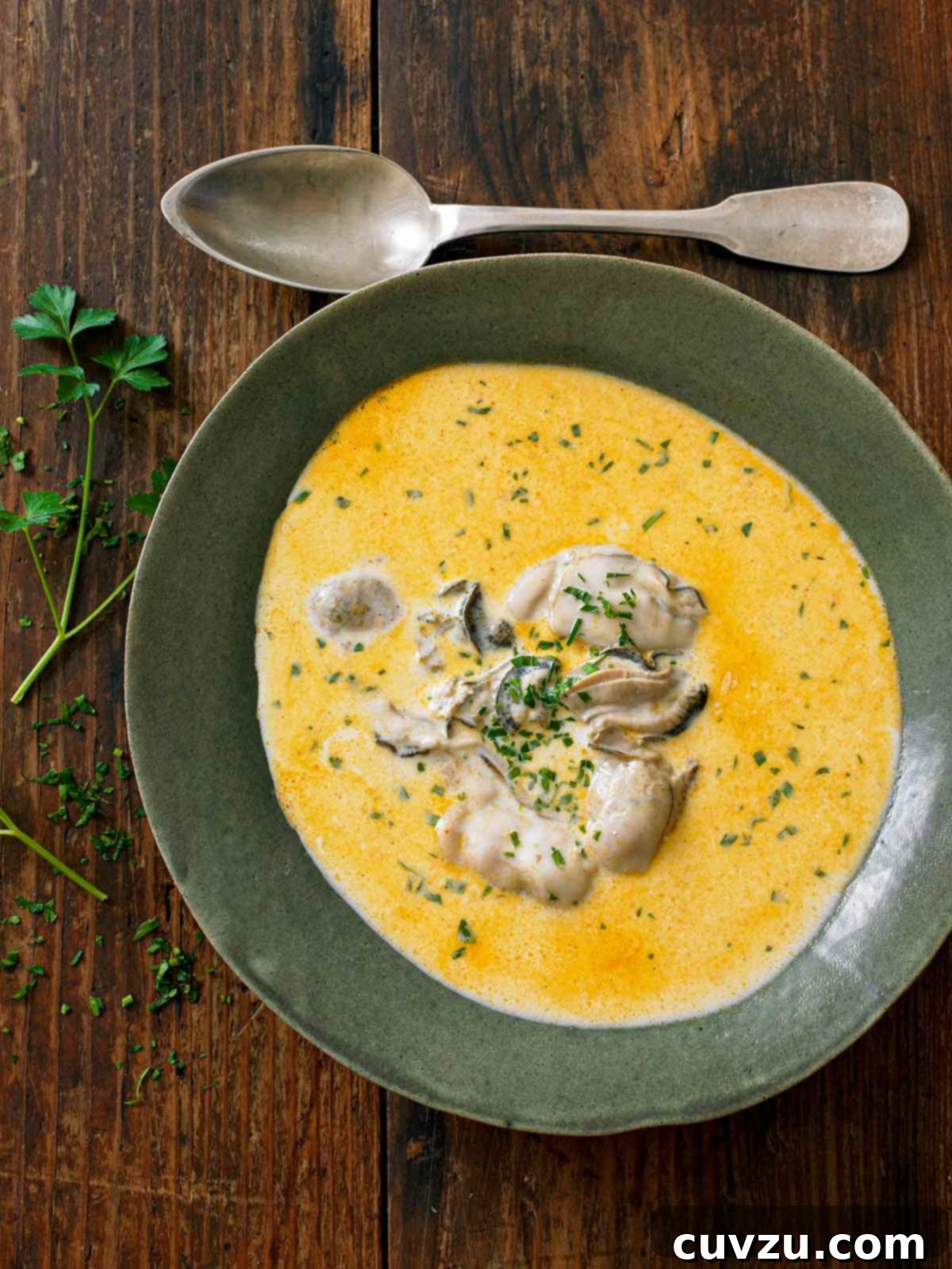
The Ultimate Creamy Oyster Stew Recipe: An Elegant Holiday Delight
Few dishes combine elegance and ease quite like Diane Morgan’s creamy oyster stew. With its incredibly rich flavor and inviting, pearly white appearance, this classic recipe seems far more complex than it actually is. It’s a testament to simple, high-quality ingredients, transforming them into a luxurious starter or light main course that will truly impress your guests. Whether you’re hosting a festive holiday gathering or simply craving a comforting seafood classic, this oyster stew is guaranteed to be a memorable addition to your table.
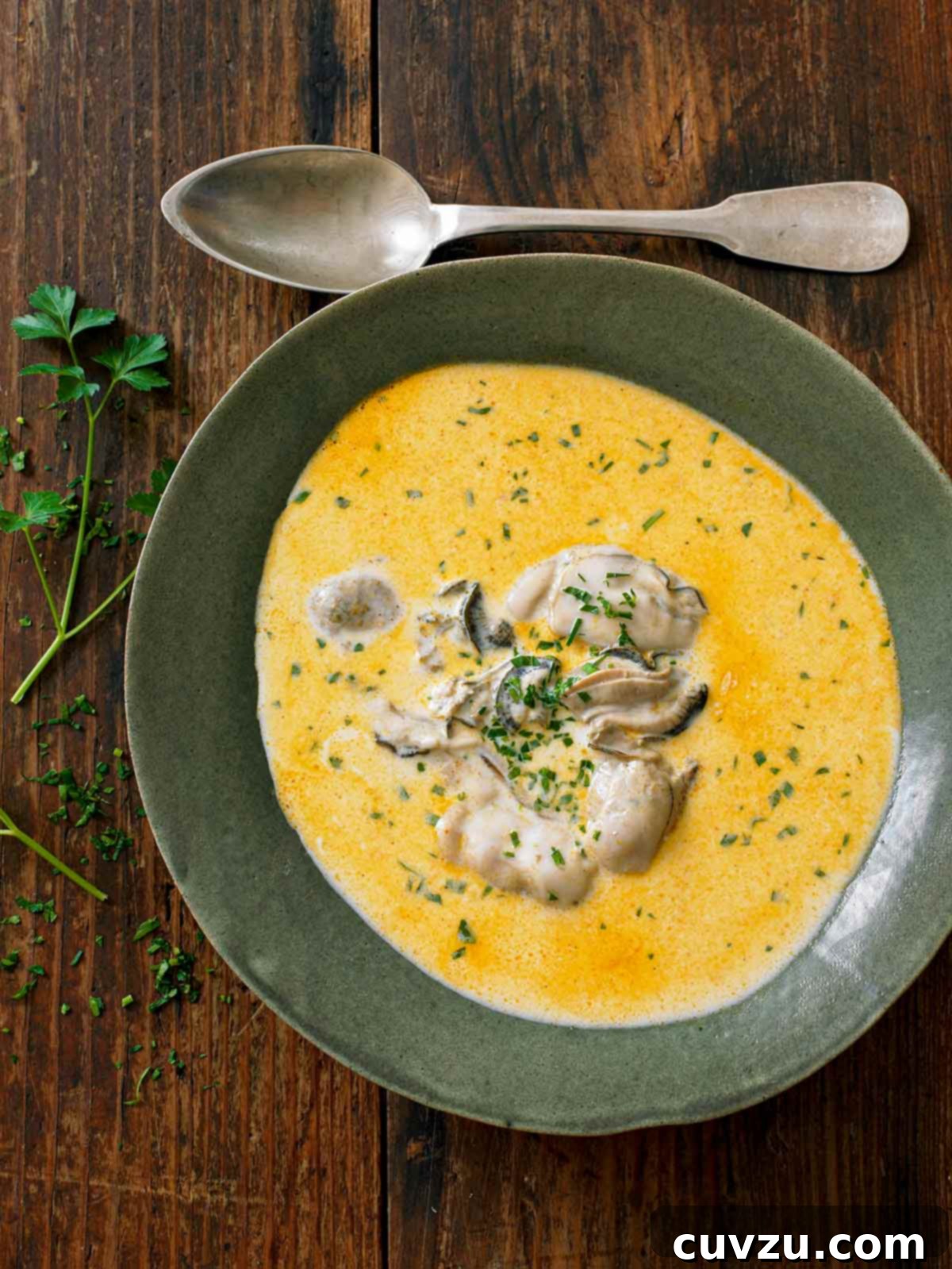
Quick Glance: Your Oyster Stew Essentials
- What it is: A timeless and comforting seafood stew, featuring delicate, plump oysters gently simmered in a sumptuous, velvety broth. The base is crafted from whole milk, rich heavy cream, generous butter, and a hint of warming sweet paprika and nutmeg, creating an unparalleled depth of flavor.
- Why you’ll adore it: This stew is celebrated for its remarkable speed and sophisticated charm. It’s the quintessential first course for cherished holiday celebrations like Christmas Eve, Christmas Day, or New Year’s Day, coming together in a mere 20 minutes from start to finish. Its simplicity belies its impressive taste, making it an ideal choice for effortless entertaining.
- How to master it: The secret lies in a brief, gentle preparation. Begin by lightly sautéing the fresh oysters in seasoned butter until their edges just begin to curl – a sign of perfect tenderness. Then, carefully warm them in a luxurious blend of milk and cream, ensuring the stew never boils to preserve its creamy texture and prevent the oysters from toughening. Serve immediately for optimal enjoyment.

Featured Review
“This was part of our Christmas lunch, and it was fantastic. The best thing about this, besides being sweet and oceanic with just a hint of spice from the paprika and nutmeg, was I put it together in 20 minutes. Really. Twenty minutes. We always have oyster stew on Christmas, it’s a tradition we’ve kept for years, and moving forward this will be our go-to recipe.”
— Alan
The Enduring Legacy of Oyster Stew: A Taste of American History
The story of oysters in North America is a rich tapestry woven through centuries of culinary tradition. Long before European settlers arrived, Native Americans along the Atlantic coast harvested and cherished oysters, alongside clams and lobsters, as a vital food source. Their knowledge of the sea and its bounty was profound, utilizing these bivalves not just for sustenance but also for their shells in tools and decorative items.
When English colonists first landed on these shores, they were astonished by the sheer abundance and remarkable size of the oysters found in the teeming coastal waters. It’s widely believed that indigenous peoples shared their expertise with the new arrivals, teaching them efficient methods to tong or secure these bivalves and even how to preserve them by drying for sustenance during harsh winters. This invaluable exchange of knowledge was crucial to the early settlers’ survival and quickly led to oysters becoming a foundational element of colonial diets, prized for their accessibility and rich flavor.
Throughout the nineteenth century, oysters solidified their status as the most beloved seafood along the Eastern seaboard. Oyster saloons became commonplace in bustling cities like New York and Baltimore, offering both raw and roasted oysters in various forms to eager patrons from all walks of life. These establishments were vibrant social hubs, showcasing the oyster’s widespread appeal. Historical cookbooks from this era are filled with a diverse array of oyster preparations: classic oyster stew, hearty oyster soup, savory oyster pies, and rich oyster stuffings for poultry.
This diverse culinary heritage underscores the oyster’s versatility and its deep roots in American cuisine. A bowl of oyster stew, therefore, offers more than just a meal—it’s a delicious connection to centuries of history, tradition, and the bounty of the sea that has sustained generations. —Diane Morgan
Why Diane Morgan’s Oyster Stew Is a Must-Try Culinary Experience
What sets Diane Morgan’s oyster stew recipe apart, making it a truly essential dish for any seafood enthusiast? It’s the perfect harmony of refined simplicity and profound decadence. This stew isn’t merely about assembling ingredients; it’s a celebration of the delicate, subtly sweet flavor of fresh oysters, supported by a carefully curated cast of complementary elements that elevate them to a starring role. The thoughtful combination of full-bodied whole milk and luxurious heavy cream creates an incredibly luscious, velvety texture that coats the palate beautifully, offering a comforting richness without ever feeling overly heavy or cloying.
The foundation of this exquisite dish is laid with generous unsalted butter, providing a rich, smooth canvas upon which the other flavors can artfully unfold. A tablespoon of Worcestershire sauce is a subtle yet crucial addition, introducing a delicate umami depth and a touch of tang. This bright counterpoint expertly balances the inherent creaminess, ensuring the stew remains complex and intriguing rather than one-dimensional.
However, it is the thoughtful inclusion of sweet paprika and freshly grated nutmeg that truly transforms this recipe into something extraordinary. The paprika not only imparts a gentle, warming spice but also contributes a beautiful, inviting rosy hue to the broth. Freshly grated nutmeg, an often-underestimated spice in savory dishes, adds an unexpected layer of sophisticated, aromatic warmth that exquisitely complements the briny sweetness of the oysters. Finally, a touch of celery salt rounds out the seasoning, providing a savory backbone that enhances the overall oceanic profile and brings all the flavors into perfect cohesion.
Each spoonful delivers a delightful burst of sweet, tender, and briny oyster, meticulously enveloped in a fragrant, creamy broth. The spice notes are just prominent enough to intrigue the palate without ever overpowering the delicate seafood. It’s a comforting embrace, ideally suited for chilly evenings, festive holiday gatherings, or as an elegant and impressive kickoff to any special meal. This recipe masterfully demonstrates that extraordinary flavor doesn’t demand an exhaustive ingredient list or complex culinary techniques; instead, it thrives on the quality of its components and a masterful understanding of flavor balance.
Expert Tips for Crafting the Perfect Oyster Stew
Choosing and Preparing Your Oysters for Optimal Flavor
- Uncompromising Freshness: For an oyster stew that truly shines, the paramount rule is freshness. Always procure your oysters from a reputable fishmonger or market known for their quality seafood. “Extra-small shucked oysters” are particularly well-suited for this recipe due to their tender texture and quick cooking time, which helps prevent them from becoming tough.
- Preserve the Precious Liquor: The natural liquid in which shucked oysters are packed, known as “oyster liquor,” is an invaluable source of concentrated oceanic flavor. Do not discard it! This briny essence is crucial for adding authentic depth to your stew. Always drain the oysters through a fine-mesh sieve, meticulously reserving all the liquor. This step also ensures any potential tiny shell fragments are removed.
- Shucked or Unshucked: While shucking fresh oysters can be a satisfying endeavor, for the expediency required by this quick stew recipe, high-quality pre-shucked oysters in their own liquor are a perfectly acceptable and convenient choice that significantly reduces preparation time without compromising taste.
The Art of Simmering: Precision in Cooking and Temperature Control
- Gentle Heat for Delicate Oysters: Oysters are incredibly delicate and notoriously prone to becoming rubbery if subjected to excessive heat or prolonged cooking. The recipe’s instruction to “cook just until the edges of the oysters curl” is your critical cue. This transformation typically occurs very rapidly, often within a mere minute or two of simmering. Maintain a vigilant watch to ensure they reach this perfect tender stage and no further.
- The Cardinal Rule: Never Boil the Cream: Once the milk and cream are introduced to the saucepan, the stew must be heated through very gently over consistently low heat. Stir the mixture occasionally to ensure even heating and to prevent scorching, but under no circumstances should it be allowed to come to a vigorous boil. High heat can cause the dairy to “break,” resulting in a curdled or separated texture, which detracts significantly from the desired smooth, velvety consistency. A low, gentle simmer is paramount for maintaining the stew’s luxurious mouthfeel.
- Seasoning to Perfection: Always taste and adjust your seasoning throughout the cooking process. The inherent saltiness of oysters and their liquor will vary, so add kosher or sea salt and freshly ground white pepper incrementally until the flavors achieve a harmonious balance. For those who appreciate a slightly more pronounced aromatic note, a tiny pinch more paprika or nutmeg can be incorporated at the very end.
Enhancing Your Experience: Serving Suggestions and Thoughtful Pairings
- Fresh Garnish for Visual and Flavor Brightness: A generous sprinkle of minced fresh flat-leaf parsley not only adds a welcome pop of vibrant green color, enhancing the stew’s visual appeal, but also introduces a fresh, herbaceous note that beautifully cuts through and brightens the richness of the creamy broth. A dusting of additional sweet paprika can further accentuate its inviting hue.
- The Perfect Accompaniment: Oyster stew is wonderfully complemented by a variety of breads, ideal for soaking up every last drop of the delectable broth. Classic choices include slices of warm, crusty baguette, light and flaky oyster crackers, or freshly baked buttermilk biscuits.
- Curated Wine Pairing: To elevate your dining experience, pair this creamy oyster stew with a crisp, dry white wine. Excellent choices include a bright Sauvignon Blanc, a refreshing Pinot Grigio, or an unoaked Chardonnay. Their acidity and subtle fruit notes provide a delightful contrast to the stew’s richness and enhance the oceanic flavors.
Make Ahead — Or Not? The Definitive Note on Preparation Time
We completely understand the appeal of preparing holiday dinner components in advance; it undoubtedly simplifies the often-hectic process of entertaining. However, for a dish as inherently delicate and surprisingly straightforward as this oyster stew, timing is everything. It is unequivocally best when made fresh, right before serving. As the esteemed author, Diane Morgan, herself wisely advises, “Although it can be gently reheated successfully, oyster stew is best when made right before serving. Have everything measured and ready to cook—the stew is super simple to put together.”
The primary reasons for this strong recommendation lie in both the oysters’ delicate texture and the creamy base. Reheating, even if done gently, can cause the tender oysters to become tough and rubbery, thereby losing their prized plump and succulent appeal. Moreover, dairy-based sauces, particularly those rich in cream, can sometimes “break” or curdle upon reheating, especially if they are exposed to even slightly high temperatures. This curdling compromises the stew’s luxurious, smooth, and velvety consistency, which is a hallmark of this recipe.
To ensure you achieve the ultimate taste and texture experience, we strongly encourage a last-minute preparation for this dish. The excellent news is that its remarkably quick cooking time—just 20 minutes from start to finish—makes this entirely feasible and stress-free, even amidst the busiest moments of holiday meal preparations. Simply gather and prep all your ingredients beforehand, and the final assembly will be a breeze, allowing you to serve a truly spectacular stew.
Diane Morgan’s Classic Oyster Stew Recipe
Oyster Stew
For oyster lovers, this oyster stew is simply irresistible. The harmonious blend of cream, butter, paprika, and small, tender oysters creates a divine culinary experience.
Recipe by David Leite, adapted from Diane Morgan
Ingredients
- 1 pint (about 30) extra-small shucked oysters in their liquor
- 4 tablespoons unsalted butter
- 1 tablespoon Worcestershire sauce
- 1 1/2 teaspoons sweet paprika
- 1/2 teaspoon celery salt
- 2 cups whole milk
- 1 cup heavy cream
- 1/4 teaspoon freshly grated nutmeg
- Kosher or sea salt, to taste
- Freshly ground white pepper, to taste
- 2 tablespoons minced flat-leaf parsley leaves, for garnish
Instructions
- Prepare Oysters: Drain the oysters through a fine-mesh sieve placed over a small bowl. This collects all the valuable oyster liquor. Set the drained oysters aside and reserve their liquor.
- Sauté Oysters: In a medium saucepan, melt the unsalted butter over medium heat. Stir in the Worcestershire sauce, sweet paprika, and celery salt until well combined and fragrant. Add the drained oysters to the saucepan and bring the mixture to a gentle simmer. Cook just until the edges of the oysters begin to curl, which should take only a minute or two. Be careful not to overcook them, as this can make them tough.
- Build the Stew: Pour the reserved oyster liquor into the pan with the oysters and return the mixture to a simmer. Next, add the whole milk, heavy cream, and freshly grated nutmeg. Reduce the heat to low. Continue to cook, stirring occasionally, until the stew is heated through to your desired temperature. It is crucial at this stage to prevent the oyster stew from boiling, as high heat can cause the dairy to curdle and the oysters to toughen.
- Season and Serve: Taste the stew and season generously with kosher or sea salt and freshly ground white pepper as needed. Ladle the hot oyster stew into a warmed tureen or individual serving bowls. Garnish each serving with the minced flat-leaf parsley leaves for a burst of freshness and color. Serve immediately and enjoy!
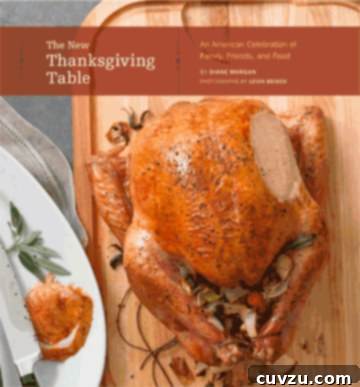
Adapted From
The New Thanksgiving Table by Diane Morgan
Buy On Amazon
Nutrition Facts
Nutrition information is automatically calculated and provided as an approximation. It should not be considered a substitute for professional nutritional advice.
Calories: 298 kcal
Carbohydrates: 8 g
Protein: 8 g
Fat: 26 g
Saturated Fat: 16 g
Monounsaturated Fat: 7 g
Trans Fat: 1 g
Cholesterol: 114 mg
Sodium: 341 mg
Fiber: 1 g
Sugar: 5 g
More Delightful Seafood Stews & Chowders
North Carolina Clam Chowder
2 hrs
Portuguese Fish Chowder
2 hrs 15 mins
Cod and Chorizo Stew
1 hr
Provençale Fish Soup
1 hr 5 mins
Your Culinary Journey: Share Your Experience
If you make this exquisite oyster stew recipe, or any dish from our collection, we’d love to hear from you! Consider leaving a review, a star rating, and your best photo in the comments below. Your feedback and culinary creations inspire us all. – David
Featured Review
“This recipe is super simple and delicious! I added a little cayenne pepper and some fresh crushed garlic! Definitely a go-to recipe! Thank you!”
— Keith Lockner
Insights from Our Recipe Testers
Duane DeMello
Duane, a seasoned home cook and one of our dedicated recipe testers, found this oyster stew to be remarkably simple to prepare, yet highly impressive for an elegant dinner party starter. He highlighted the minimal ingredient list as a key factor in its quick and easy preparation. “By having all the ingredients out in front of you at the onset, this dish is literally put together in a matter of minutes,” he noted, emphasizing its efficiency for entertainers who value both speed and sophistication.
He particularly appreciated the visual appeal of the finished dish, describing how “the coloring imparted by the paprika provided a nice yellow effect to the broth, which, coupled with the vibrant green of the flat-leaf Italian parsley, offered an eye-pleasing contrast.” Duane also shared a clever serving tip: “I used square Japanese porcelain bowls and purposely mounded the oysters up in the middle of each bowl. I then topped the oysters with the parsley.” His only caveat, a crucial one for stew perfection, was “not to scald the milk and be sure to turn down the heat to simmer as you watch for the oyster edges to curl,” a testament to the delicacy of the dish. His final verdict? “Enjoy.”
Sarah Thompson
Sarah, an avid seafood enthusiast and another one of our meticulous recipe testers, lauded the stew for its comforting quality and profound flavor despite its swift preparation. “I’m always skeptical of recipes that promise ‘quick and elegant,’ but this oyster stew genuinely delivers on both fronts,” she enthusiastically remarked. “The balance of savory, sweet, and oceanic notes is absolutely spot on, and the texture is simply divine – so smooth, creamy, and utterly satisfying.”
She echoed Duane’s sentiment regarding the importance of ingredient quality: “Using fresh, good-quality oysters makes all the difference here. You really taste the essence of the sea in every bite.” Sarah also shared a minor personal adjustment for those who enjoy a bit more zest, suggesting, “For those who enjoy a little extra kick, a tiny pinch of white pepper or even a dash of hot sauce added at the table can elevate it further, but it’s truly perfect as is.” She found it to be an ideal fit for a sophisticated brunch, a luxurious appetizer for a dinner party, or a light, yet profoundly satisfying, main course.
Frequently Asked Questions About Oyster Stew
What kind of oysters are best for oyster stew?
For oyster stew, smaller, more tender oysters are generally preferred as they cook quickly and maintain a delicate texture. “Extra-small shucked oysters” are often considered ideal. While any fresh oyster can technically be used, varieties like Bluepoints, Malpeques, or Kumamotos offer a lovely briny sweetness and plump texture that complements the creamy base beautifully. Always prioritize freshness and purchase from a reputable fishmonger to ensure the best quality.
Can I use frozen oysters for this recipe?
While fresh oysters are highly recommended for the best flavor and texture, you can use frozen shucked oysters as a convenient alternative if fresh are unavailable. Ensure you thaw them completely in the refrigerator overnight. Drain them thoroughly, making sure to reserve any liquid that thaws out, as this is their valuable liquor. Keep in mind that frozen oysters may have a slightly firmer texture and a less intense briny flavor compared to their fresh counterparts. Cook them very gently, just until their edges curl, to prevent them from becoming tough and rubbery.
How do I prevent the milk and cream from curdling in my stew?
Preventing curdling is crucial for achieving a smooth and velvety oyster stew. The key is to avoid high heat. Always add the milk and cream when the pan is on low heat, and never let the stew come to a rapid, rolling boil once these dairy components are incorporated. Stir occasionally to distribute heat evenly and prevent the bottom from scorching. An advanced tip is to temper the milk and cream by gently warming them in a separate saucepan before adding them to the oysters and liquor. This helps stabilize the temperature difference and further reduces the risk of curdling.
What can I serve with oyster stew?
Oyster stew is wonderfully versatile and pairs perfectly with simple accompaniments that allow its rich, delicate flavor to remain the star. Classic choices include slices of warm, crusty French bread, soft buttered rolls, or traditional oyster crackers for dipping and soaking up the delicious broth. For a more substantial meal or to add textural contrast, a light green salad with a bright vinaigrette dressing offers a refreshing counterpoint, or consider serving it alongside roasted asparagus, sautéed spinach, or green beans.
Can I add other ingredients to the oyster stew to customize it?
This traditional recipe is beloved for its elegant simplicity, which deliberately allows the natural flavor of the oysters to be the star. However, if you wish to subtly experiment and personalize your stew, a finely diced shallot or a single clove of minced garlic can be gently sautéed in the butter before adding the oysters for an extra layer of aromatic depth. Some variations might also include a small splash of dry sherry or white wine for added complexity and richness. Just remember that with such a delicate dish, less is often more; any additions should be subtle and carefully chosen to complement, rather than overpower, the exquisite main flavors.
Conclusion: A Timeless Classic Awaiting Your Table
Diane Morgan’s oyster stew is more than just a recipe; it’s an invitation to savor a piece of culinary history, masterfully transformed into a contemporary delight. Its elegant simplicity, combined with its rich, comforting, and deeply satisfying flavors, makes it an unparalleled choice for holiday gatherings, special occasions, or any evening that calls for something truly magnificent. By carefully following these straightforward steps and incorporating our expert tips, you can effortlessly create a dish that is both impressive and profoundly delicious.
So, gather your freshest oysters, prepare your luxurious creamy base, and get ready to indulge in a truly magnificent seafood experience that will captivate your senses. Embrace the warmth, honor the tradition, and revel in the exquisite taste of this timeless American classic. We hope it becomes a cherished part of your culinary repertoire for years to come.