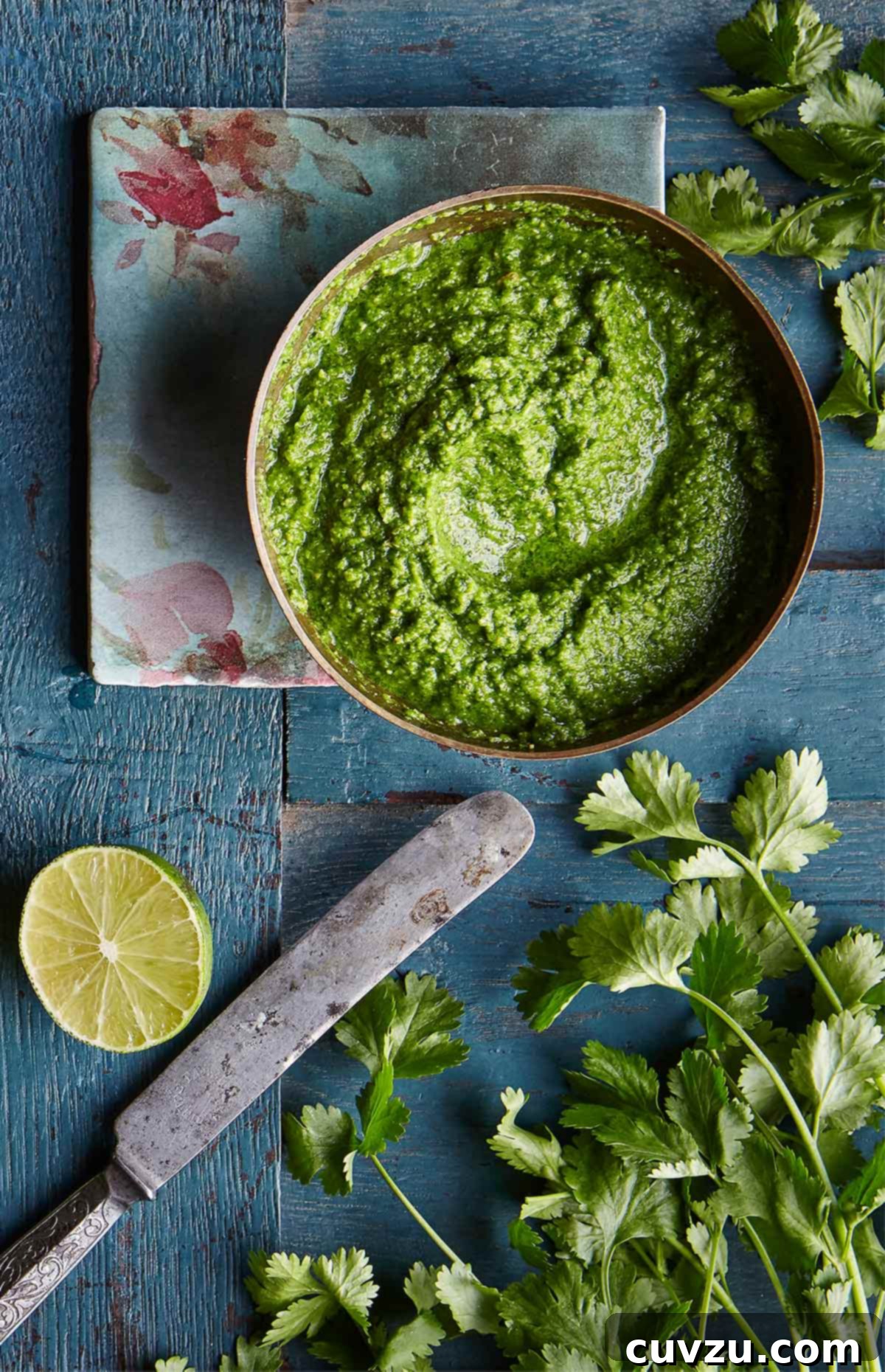
The Ultimate Cilantro Peanut Chutney: A Vibrant Indian Dip for Every Dish
Discover the magic of a homemade Cilantro Peanut Chutney – a truly fresh, aromatic, and undeniably addictive condiment that promises to elevate almost any meal. This incredible recipe expertly blends the vibrant freshness of cilantro and mint with the zesty kick of garlic, onions, and green chiles. But what truly sets it apart is the surprising yet delightful addition of peanuts, introducing a subtle depth of umami and a satisfying texture that you won’t soon forget. Trust us, once you try this chutney, it will become an indispensable staple in your kitchen.
Chetna Makan’s Love Affair with Chutney: A Culinary Philosophy
Renowned chef and author Chetna Makan, celebrated for her contributions to Indian cuisine, shares a profound appreciation for the humble chutney. “I have shared a coriander chutney recipe in every cookbook that I’ve written,” she reveals, underscoring her deep affection for this simple yet profoundly flavorful condiment. This dedication is a testament to the versatility and transformative power of chutney, highlighting that there are countless ways to prepare and enjoy it. Chetna’s consistent recommendation? Always keep a small bowl of fresh chutney in your refrigerator. She attests to its uncanny ability to complement virtually any dish, proving that a well-made chutney can effortlessly enhance your everyday dining experience. Her passion inspires home cooks to embrace the simplicity and deliciousness of fresh, vibrant chutneys.
Explore More Fragrant Indian Recipes
Dive deeper into the rich tapestry of Indian flavors with these other tantalizing recipes. From savory breakfasts to comforting side dishes, Indian cuisine offers a spectrum of aromas and tastes that are both exciting and deeply satisfying.
Chetna Makan’s “30-Minute Indian”: Mastering Quick & Flavorful Cuisine
Inspired by the philosophy of bringing authentic Indian flavors to busy modern kitchens, Chetna Makan’s cookbook, “Chetna’s 30-Minute Indian,” offers a treasure trove of quick and easy recipes. This book empowers home cooks to create incredibly flavorful Indian dishes without spending hours in the kitchen. The Cilantro Peanut Chutney featured here is a perfect example of the fresh, vibrant, and accessible recipes you can expect from Chetna’s expertise, designed to deliver maximum taste with minimal effort. It’s an essential guide for anyone looking to incorporate the rich culinary traditions of India into their daily cooking.
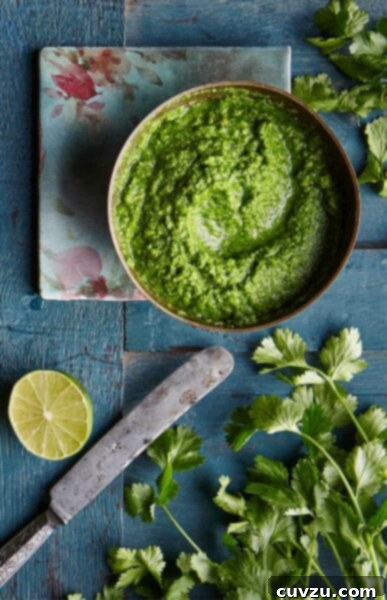
Cilantro Peanut Chutney: A Zesty & Nutty Delight
Recipe by David Leite
Condiments, Sauce, Dip
Indian
12
servings | approximately 1 1/2 cups
40
kcal per serving
15
5
20
Ingredients
- 1 ounce raw peanuts
- 1 small (5 1/2 ounces) red or yellow onion, roughly chopped
- 2 garlic cloves, roughly chopped
- 2 green chiles, such as jalapeño or serrano (2 ounces | 55 g), seeded, if desired, and roughly chopped
- 2 cups (1 1/2 oz) fresh cilantro leaves*
- 1 cup (3/4 oz) fresh mint leaves
- 1 teaspoon granulated sugar
- 1/2 teaspoon salt
- Juice of 1/2 lime (about 1 tablespoon)
- 5 tablespoons water
Instructions
-
In a small skillet over low heat, dry-roast the raw peanuts until they turn golden, which typically takes about 3 to 4 minutes. This step enhances their nutty flavor and aroma.
☞ TESTER TIP: If you already have dry-roasted peanuts on hand, you can conveniently skip this toasting step and proceed directly to the next stage.
-
Carefully transfer the roasted peanuts into a blender or food processor. Add all the remaining ingredients as listed. Blend thoroughly until the mixture becomes smooth and creamy, which should take approximately 90 seconds. Ensure there are no large chunks remaining.
-
Once prepared, store the chutney in an airtight container. It will keep beautifully in the refrigerator for 4 to 5 days, maintaining its vibrant flavor and freshness.
Notes on Ingredients & Preparation
*What is Cilantro? Understanding This Divisive Herb
Cilantro is a culinary herb that evokes strong opinions, often dividing people into two camps: those who love its fresh, citrusy notes, and those who perceive it as tasting like soap. This genetic predisposition, affecting nearly 25% of the population, is due to specific olfactory receptor genes that detect certain aldehydes in cilantro. Despite this, countless individuals adore its unique flavor and incorporate it into a multitude of dishes worldwide.
In North America, “cilantro” refers specifically to the leaves of the Coriandrum sativum plant. The seeds of this very same plant are known as “coriander.” Essentially, coriander is the plant, and cilantro is its leafy green part, while coriander seeds are, as the name suggests, the seeds. All parts of the coriander plant, with the exception of its flowers, are commonly used in various cuisines.
Beyond the leaves, cilantro root is a staple in many Southeast Asian cuisines, particularly Thai cooking, where it forms the aromatic base for curries and pastes. The leaves and seeds, each offering distinct flavor profiles, are utilized extensively across the globe. For those curious but hesitant to try cilantro due to its polarizing reputation, cooking the leaves can significantly reduce their pungency, making it a gentler introduction to its unique taste.

Adapted From
Chetna’s 30-Minute Indian
Buy On Amazon
Nutrition Facts (Per Serving)
Serving: 1 serving
Calories: 40 kcal
Carbohydrates: 6 g
Protein: 2 g
Fat: 2 g
Saturated Fat: 1 g
Monounsaturated Fat: 1 g
Sodium: 147 mg
Fiber: 3 g
Sugar: 1 g
Nutrition information is automatically calculated and should be used as an approximation.
Tried this recipe?
Mention @leitesculinaria or tag #leitesculinaria on Instagram!
What Our Recipe Testers Loved About This Chutney
Our dedicated team of recipe testers put this Cilantro Peanut Chutney to the test, and the reviews are in! From its vibrant flavor profile to its incredible versatility, this chutney has won over palates and become a new favorite. Read on to see their enthusiastic feedback and discover fresh ways to enjoy this delightful condiment.
Jennifer Mallock
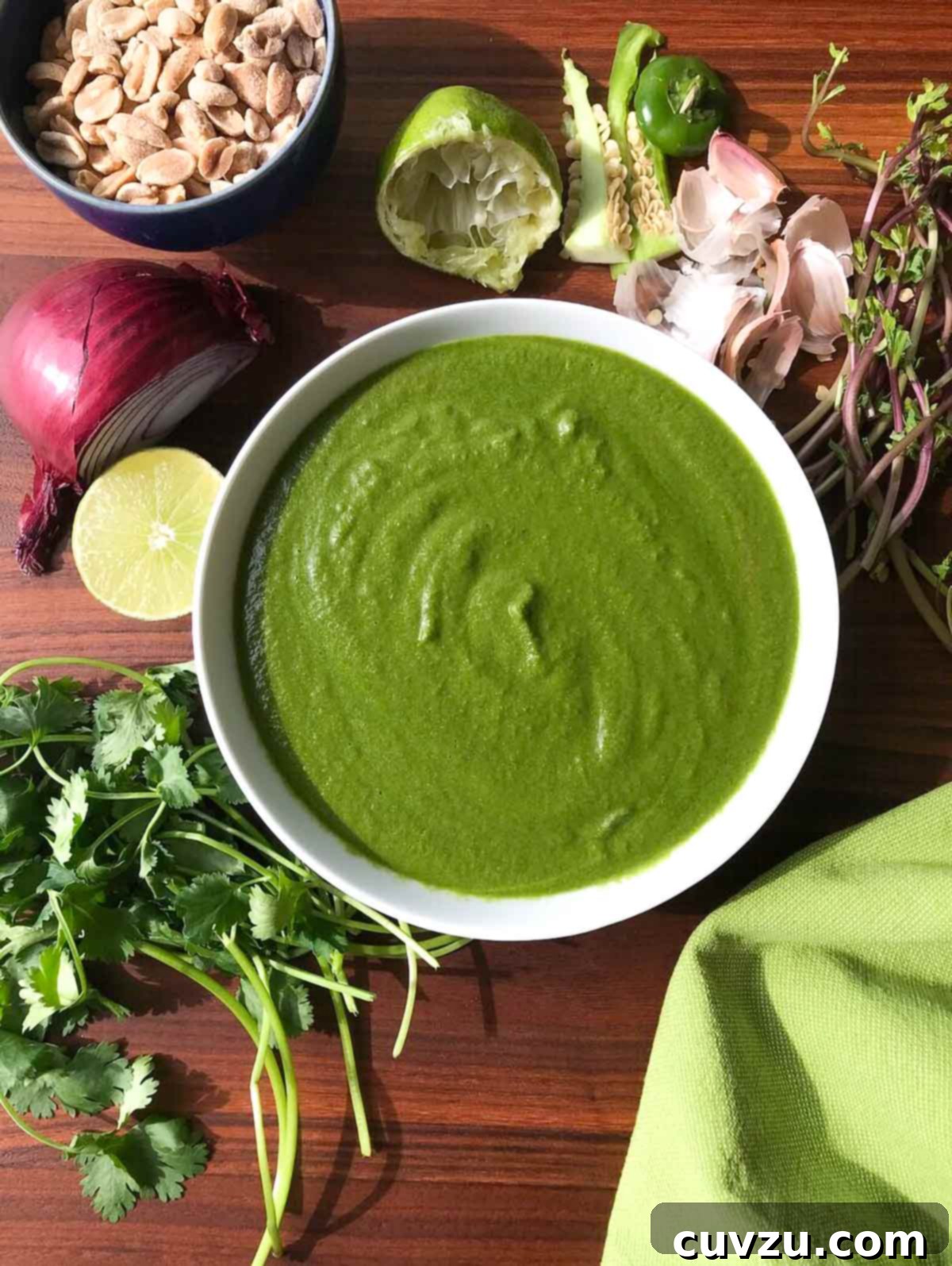
Jennifer Mallock raved about this cilantro peanut chutney, describing it as “bright, complex, and totally addictive.” She and her family enjoyed it so much that they polished it off with warmed naan as a snack the very next day. Preparation was swift, taking only 35 minutes from start to finish, with most of that time dedicated to picking the herb leaves. Jennifer shared a clever tip for efficiency: in the future, she plans to simply shave the delicate tops of the cilantro bunch directly into her blender, saving time and reducing waste while still capturing the flavorful, edible stems.
While making the recipe as written, Jennifer opted to remove the stem and seeds from her green chile for a milder heat. After an initial taste test, she found herself craving a bit more salt and lime, noting that the strength and freshness of aromatics can cause slight batch variations. This was easily remedied with a quick pinch of salt and an extra squeeze of lime to achieve her desired balance.
Regarding storage, Jennifer kept her chutney in a glass jar in the refrigerator. By day three, she observed that its vibrant color had noticeably darkened, and the taste had mellowed, becoming slightly grassier. Her solution? Enjoy the chutney within two days of making it—a task she found delightful, not challenging. She paired it successfully with chicken, naan, and eggs before it ran out, declaring, “It’s so good you could eat it on a piece of wood!” Jennifer also envisions stirring this versatile condiment into soups, serving it over rice, or using it as a vibrant dip for vegetables.
Joanna Burnett
Joanna Burnett praised this cilantro peanut chutney as “a wonderful sauce to have on hand,” highlighting its incredible versatility. She noted how easily it complemented a diverse range of foods, making it a perfect accompaniment for almost any meal. Her culinary explorations included pairing it with fish, chicken, various vegetables, potatoes, and even topping an omelet, with delicious results across the board. Joanna emphasized that the fresh herbs and subtle spice in the chutney are truly capable of livening up any dish, adding a burst of flavor that transforms ordinary meals into something special.
Marcia L.
Marcia L. enthusiastically declared this cilantro peanut chutney a “winner.” She admired its simple beauty and its distinctly fresh, summery taste, regardless of the season. Her initial sampling immediately after blending was delicious, but she found it even better the next morning. By then, the mint had mellowed slightly, though she noted a desire for a stronger cilantro presence. Despite this, the flavors remained bright, and the color stayed gorgeous. Marcia eagerly anticipates making this chutney again when her orange mint breaks dormancy, suggesting exciting variations.
Marcia integrated the chutney into several dishes, proving its adaptability. She paired it with an inside-out cheese burrito filled with scrambled eggs, rice, and zucchini, used it as a dip for roasted potato wedges, served it alongside cumin-scented grilled lamb chops and grilled cod, and even spread it on her avocado toast. Marcia concluded her review with a clear endorsement: “we loved it!”
Supratha Thinakaran
Supratha Thinakaran, being intimately familiar with similar recipes, guaranteed that a well-made cilantro peanut chutney is an excellent complement to a wide array of dishes. She highlighted its key attributes: “so vibrant, refreshing, and easy to make.” Her confidence in the recipe stems from personal experience, reinforcing the idea that this chutney is a reliable and delicious addition to any kitchen seeking to add a burst of fresh flavor.
Jenny Howard
Jenny Howard found this cilantro peanut chutney to be “verdant and layered with flavor.” She meticulously described its intricate taste profile: the bright freshness from mint and cilantro, a lively pop of acidity from lime, a bold depth contributed by garlic and onion, and the crucial background accent from peanuts. This nutty element, she observed, is almost elusive in identity but “does a world of good to bring everything together,” adding a delightful complexity without dominating.
Jenny was particularly impressed that the recipe uses no oil, yet achieves such a rich consistency. She lauded its ridiculous ease of preparation and the flexibility to customize it to individual taste, along with its generous yield. She plans to enjoy it with naan, reserving plenty for stirring into basmati rice, topping scrambled eggs, or spreading on hearty roast beef or turkey sandwiches.
Looking ahead, Jenny anticipates making a few minor adjustments for her next batch. She intends to use a medium-sized onion for a more pronounced flavor, incorporate peppers with a bit more heat if available, and keep a whole lime on hand to fine-tune the seasoning at the end, ensuring perfect balance every time.
Jack V.
While acknowledging his unwavering loyalty to Meera Sodha’s Lilli chatni from “Made In India,” Jack V. readily admitted that this cilantro peanut chutney is “a seriously good chutney” with a powerful punch of brightness from the mint. He was particularly impressed by its ability to maintain its vibrant color over several days, making it a convenient staple. Jack enjoyed it on a variety of dishes, from naan and roasted vegetables to grilled chicken and fried eggs, showcasing its wide appeal.
For future preparations, Jack plans to use a little less onion, as he found the allium flavor slightly strong—though he conceded this might be due to only finding giant onions. He also intends to add a bit more lime juice to achieve a perfect balance against the sugar, tailoring the chutney to his personal preference for tanginess. His insights highlight the adaptability of the recipe to individual tastes.