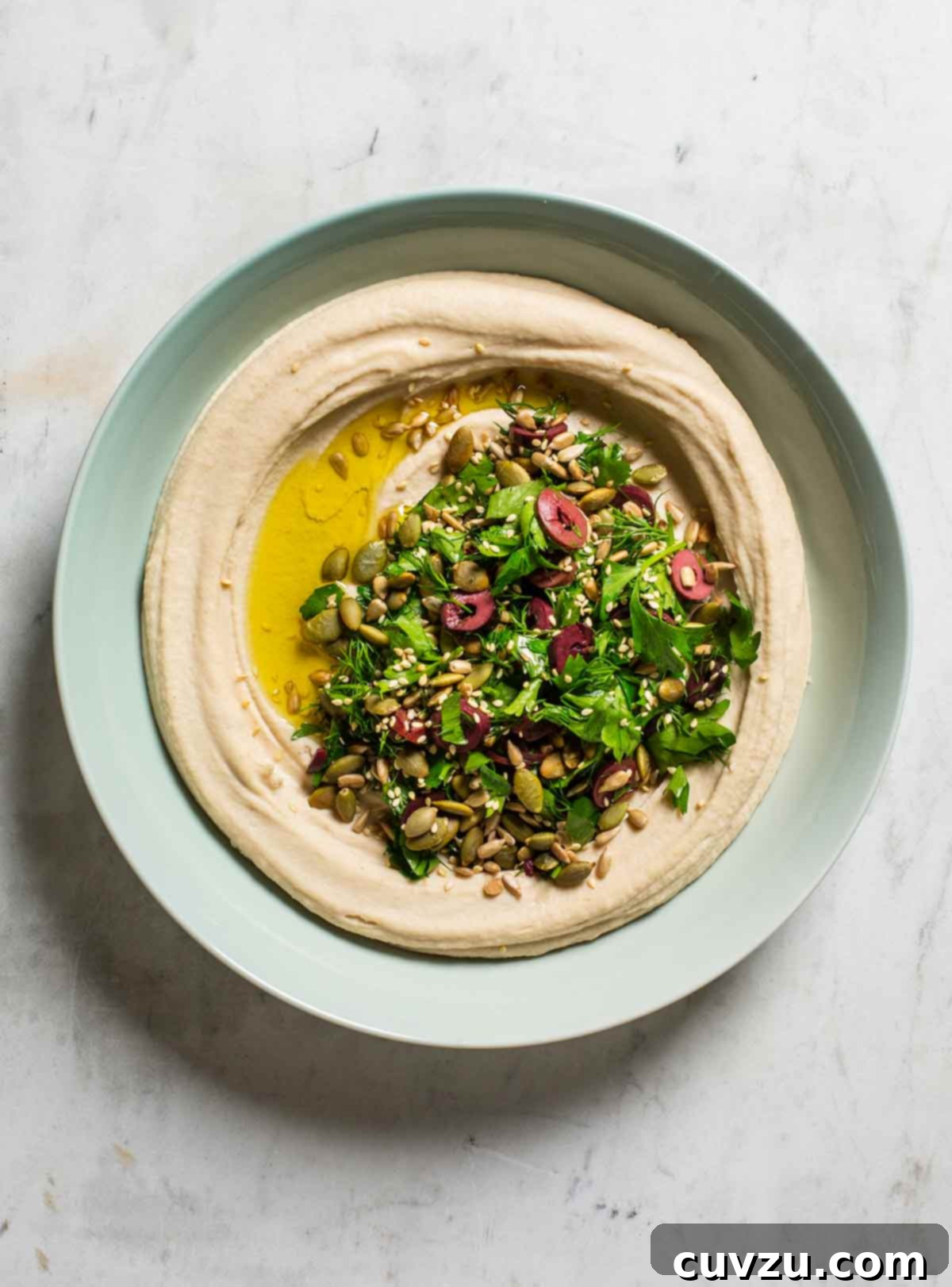
Unlock a world of creamy, flavorful possibilities with this exquisite White Bean Hummus recipe. It captures all the beloved notes of garlic, bright lemon, and nutty tahini that make traditional hummus so irresistible, yet it gracefully sidesteps chickpeas in favor of tender, cooked white beans. The result is a dip that is not only delightfully smooth but also refreshingly unique, perfect for any occasion. To elevate this dip further, it’s generously adorned with a vibrant medley of fresh herbs, briny olives, and a trio of crunchy seeds, transforming a simple spread into a gourmet experience. Whether you’re a hummus aficionado or seeking a new culinary adventure, this white bean rendition promises to impress.
The Secret to Ultra-Smooth White Bean Hummus
This distinct hummus offers a wonderfully familiar flavor profile, showcasing the robust notes of garlic, the zesty tang of lemon, and the earthy depth of tahini. These bold elements are perfectly balanced by the mild, almost subtly sweet “canvas” provided by the white beans. Achieving an impeccably smooth and uniform texture is paramount for this dip. Our method begins with carefully selected dried white tepary or cannellini beans, which are first meticulously picked over and rinsed. The crucial next step involves soaking and then cooking these beans in a specialized solution of baking soda and salt. This seemingly simple addition plays a vital role in accelerating the breakdown of the beans’ tough pectin exterior, ensuring they become incredibly soft and yielding. The result is a velvety-smooth puree that stands in delightful contrast to many coarser hummus preparations.
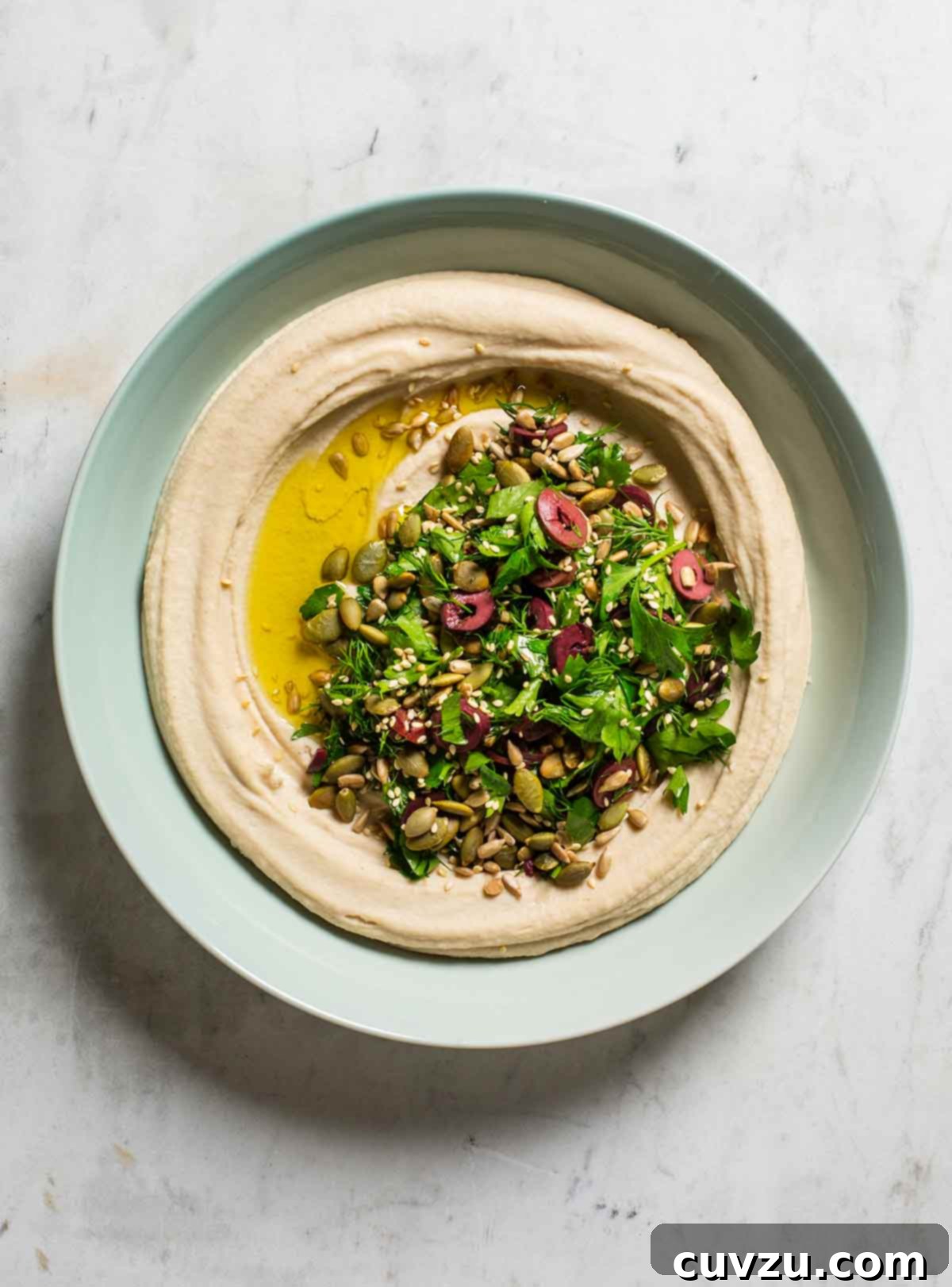
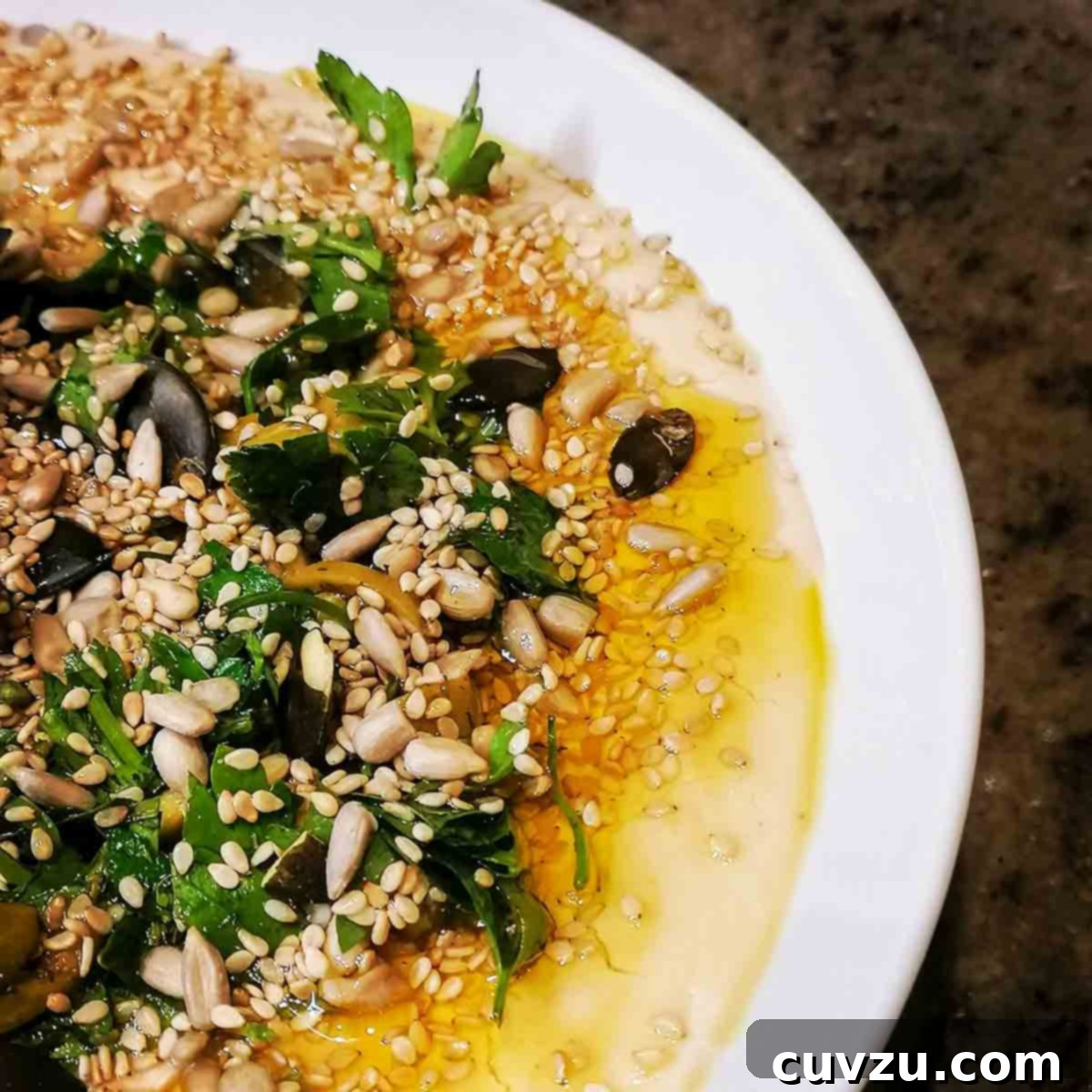
Beyond its inherent creamy texture and balanced flavors, this white bean hummus is truly fancied up with a fresh herb salad that is deceptively simple to assemble yet bursts with complex flavors and textural contrasts. It combines the bright, peppery notes of fresh parsley with the subtle, anisy freshness of dill. Briny kalamata olives add a delightful saltiness, while a trio of nutty, crunchy seeds—pepitas (pumpkin seeds), sunflower seeds, and sesame seeds—provides an irresistible textural counterpoint. This thoughtful topping not only enhances the visual appeal but also adds layers of taste that make each spoonful an exciting experience. Despite its gourmet presentation, this hummus keeps surprisingly well in the refrigerator, maintaining its freshness and vibrant flavors. However, we have a strong suspicion that once you experience its exquisite taste and perfect texture, extended storage might not be necessary at all!
Why Choose White Bean Hummus?
While traditional chickpea hummus holds a cherished place in the hearts of many, white bean hummus offers a delightful alternative for various reasons. For those with chickpea allergies or intolerances, it provides a safe yet equally satisfying option to enjoy a creamy, savory dip. Beyond dietary considerations, white beans inherently possess a milder, slightly sweeter flavor and a naturally creamier texture when puréed, often resulting in an exceptionally smooth hummus that some find even more appealing than its chickpea counterpart. This variation allows for a lighter base that beautifully carries the bright, aromatic notes of lemon, garlic, and herbs. It’s an excellent way to introduce variety into your healthy snack repertoire or to simply explore new dimensions of a beloved classic. Its versatility makes it a fantastic addition to Mediterranean spreads, as a sandwich condiment, or as a wholesome appetizer.
Beyond the Traditional: Exploring Other Hummus Varieties
We understand and deeply respect that many culinary purists insist hummus isn’t “the real deal” unless it’s crafted exclusively from chickpeas. For those who love the classic but are open to playful variations, a simple sprinkle of everything bagel seasoning on your traditional hummus can deliver an unexpected and incredibly satisfying twist—you certainly won’t be disappointed!
However, for the adventurous palates among us, those who simply can’t get enough of healthy, creamy dips in any delightful form, or importantly, for individuals navigating a chickpea allergy or intolerance, the culinary world offers a rich tapestry of alternatives. We’ve previously championed delicious innovations such as our slow cooker sweet potato hummus, which offers a unique earthy sweetness, and a classic white bean dip that provides a similar creamy experience. This white bean hummus recipe stands proudly among these non-traditional yet equally delicious interpretations, proving that creativity in the kitchen knows no bounds.
White Bean Hummus FAQs
The primary distinction, as you’ve likely gathered, lies in the main ingredient: white bean hummus is prepared using white beans (such as cannellini or tepary beans), whereas traditional hummus relies on chickpeas (also known as garbanzo beans). Both versions share a similar aromatic and tangy flavor profile, typically seasoned with tahini, fresh lemon juice, garlic, and cumin. However, the white bean rendition generally offers a slightly sweeter undertone and an exceptionally smoother texture due to the nature of the beans themselves. For those who find the unique, sometimes slightly grainy, texture of traditional hummus or chickpeas less appealing, white bean hummus is highly recommended for its silken consistency.
You can confidently store freshly prepared white bean hummus in an airtight container in the refrigerator for up to three days. Its flavors tend to meld and deepen slightly over time, making it a fantastic make-ahead option. However, given its irresistible creaminess and delicious taste, we often find that it disappears much faster than that! Be prepared for your carrot sticks, crackers, and even bare fingers to frequently find their way into the bowl.
The possibilities are truly endless when it comes to enjoying white bean hummus. It pairs beautifully with a wide array of dippers, including classic crisp crackers, savory breadsticks, and an assortment of fresh vegetables. Those vibrant mini sweet peppers are particularly excellent for scooping! Consider warm naan bread, crispy homemade pita bread or pita chips, crunchy veggie sticks, salty pretzels, or even light and airy papad. If you tire of dipping, get creative! Smear a generous dollop of hummus onto a bagel, use it as a flavorful spread in sandwiches, or even swap out mayonnaise or butter on your next burger. This simple change can elevate your meal and transform your culinary perspective entirely!
White Bean Hummus
David Leite
Sides, Appetizer, Snack
Mediterranean, Middle Eastern
4 cups
598 kcal
20 minutes
1 hour 30 minutes
8-24 hours
Ingredients
For the White Bean Hummus:
- 1/2 teaspoon table salt for cooking beans, plus 1 teaspoon salt, divided, plus more as needed
- 1/4 teaspoon baking soda
- 8 cups plus 1/3 cup water, divided
- 8 ounces (1 1/4 cups) dried white tepary or cannellini beans, picked over and rinsed
- 1/2 cup plus 2 teaspoons (from 3 lemons) fresh lemon juice, divided
- 4 garlic cloves, unpeeled
- 2/3 cup tahini
- 1/4 teaspoon ground cumin
For the Herb & Seed Topping:
- 3/4 cup chopped fresh parsley
- 1/2 cup chopped fresh dill
- 1/2 cup pitted kalamata olives, sliced thin
- 2 tablespoons extra virgin olive oil, plus extra for drizzling
- 2 tablespoons roasted pumpkin seeds (pepitas)
- 2 tablespoons roasted sunflower seeds
- 2 tablespoons white sesame seeds, toasted
Instructions
-
In a large saucepan, combine 1/2 teaspoon salt, baking soda, and 8 cups of water. Stir until the salt and baking soda are fully dissolved. Add the rinsed and picked-over dried beans to the solution. Cover the saucepan and allow the beans to soak at room temperature for a minimum of 8 hours, or up to 24 hours for optimal softening. This crucial step helps tenderize the beans for a silky-smooth hummus.
-
Place the saucepan with the beans (still in their soaking liquid) over high heat and bring to a rolling boil. As foam rises to the surface, carefully skim it off. Once boiling, reduce the heat to medium-low, cover, and simmer gently until the beans are exceptionally tender. This usually takes between 1 to 1 1/2 hours, and it’s normal for some of the beans to burst open. Drain the cooked beans thoroughly in a colander and set them aside to cool slightly.
-
In a food processor, combine 1/2 cup of the fresh lemon juice, 1/3 cup of water, the 4 unpeeled garlic cloves, and 1 teaspoon of salt. Pulse the mixture until the garlic is finely chopped, which should take approximately 20 pulses. Transfer this aromatic mixture to a small bowl and let it sit for at least 10 minutes, or up to 30 minutes, to allow the flavors to meld. Afterward, strain the lemon-garlic mixture through a fine-mesh strainer back into the food processor bowl, discarding the garlic solids. This method infuses the liquid with garlic flavor without leaving any fibrous bits.
-
To the food processor containing the strained lemon juice mixture, add the 2/3 cup of tahini. Process until the mixture is completely smooth and well combined, typically 45 to 60 seconds. Stop and scrape down the sides of the bowl to ensure everything is incorporated. Next, add the 1/4 teaspoon of ground cumin and the drained, cooked white beans. Process the mixture extensively until it becomes incredibly smooth and creamy, usually requiring 3 to 4 minutes of continuous processing. Taste and season with additional salt as needed. If the hummus appears too thick, adjust its consistency by adding up to 2 tablespoons of warm water, one tablespoon at a time, processing after each addition until your desired texture is reached. (The finished hummus can be refrigerated in an airtight container for up to 5 days. Before serving, bring it to room temperature and stir in 1 tablespoon of warm water if necessary to regain its ideal creamy texture.)
-
Prepare the vibrant herb salad by combining the chopped fresh parsley, chopped fresh dill, sliced kalamata olives, 2 tablespoons of extra virgin olive oil, and the remaining 2 teaspoons of lemon juice in a small bowl. Gently toss to combine all ingredients, then season with salt to taste. This topping adds a burst of freshness and texture to the hummus.
-
Transfer the prepared white bean hummus to an attractive serving bowl. Create a small well in the center and artfully arrange the fresh herb salad on top. Generously sprinkle the roasted pepitas, sunflower seeds, and toasted sesame seeds over the entire dish, ensuring a delightful crunch in every bite. Finish with a final drizzle of extra virgin olive oil for added richness and shine. Serve immediately with your favorite dippers and enjoy this exquisite homemade white bean hummus.
Adapted From
More Mediterranean
Buy On Amazon
Nutrition Information
Serving Size:
1 cup
Calories:
598 kcal
Carbohydrates:
50 g
Protein:
24 g
Fat:
37 g
Saturated Fat:
5 g
Monounsaturated Fat:
17 g
Trans Fat:
1 g
Sodium:
1015 mg
Fiber:
13 g
Sugar:
2 g
Nutrition information is automatically calculated, so should only be used as an approximation.
Tried this recipe?
Mention @leitesculinaria or tag #leitesculinaria!
Recipe Testers’ Reviews
Helena Pereira
This white bean hummus is a remarkably simple yet sophisticated appetizer or snack. Its smooth and creamy texture is a delight, and it’s incredibly easy to prepare. All the hallmark flavors of traditional hummus—garlic, lemon, tahini, and cumin—are present and perfectly balanced. The addition of the fresh herb salad is a game-changer, lending an extra layer of complex flavor, while the diverse seeds provide a superb textural contrast. The result is a delicious, addictive, satisfying, and beautifully colorful hummus. I must say, I find this white bean hummus recipe as captivating and enjoyable as any classic chickpea version.
Patricia Scalione
This easy white bean hummus is precisely my kind of recipe, boasting numerous advantages, with flavor being paramount. It is wonderfully creamy, just as promised by the author, and its lovely ivory color creates the perfect canvas for the easily customizable toppings. I particularly appreciate that it calls for accessible, budget-friendly ingredients and incorporates several steps that can be prepared in advance. The recipe yields a generous quantity of hummus, which stores exceptionally well in the refrigerator. As an added bonus, it’s remarkably healthy too! The fresh dill and parsley combined beautifully, and the kalamata olives delivered an excellent punch of intriguing flavor.
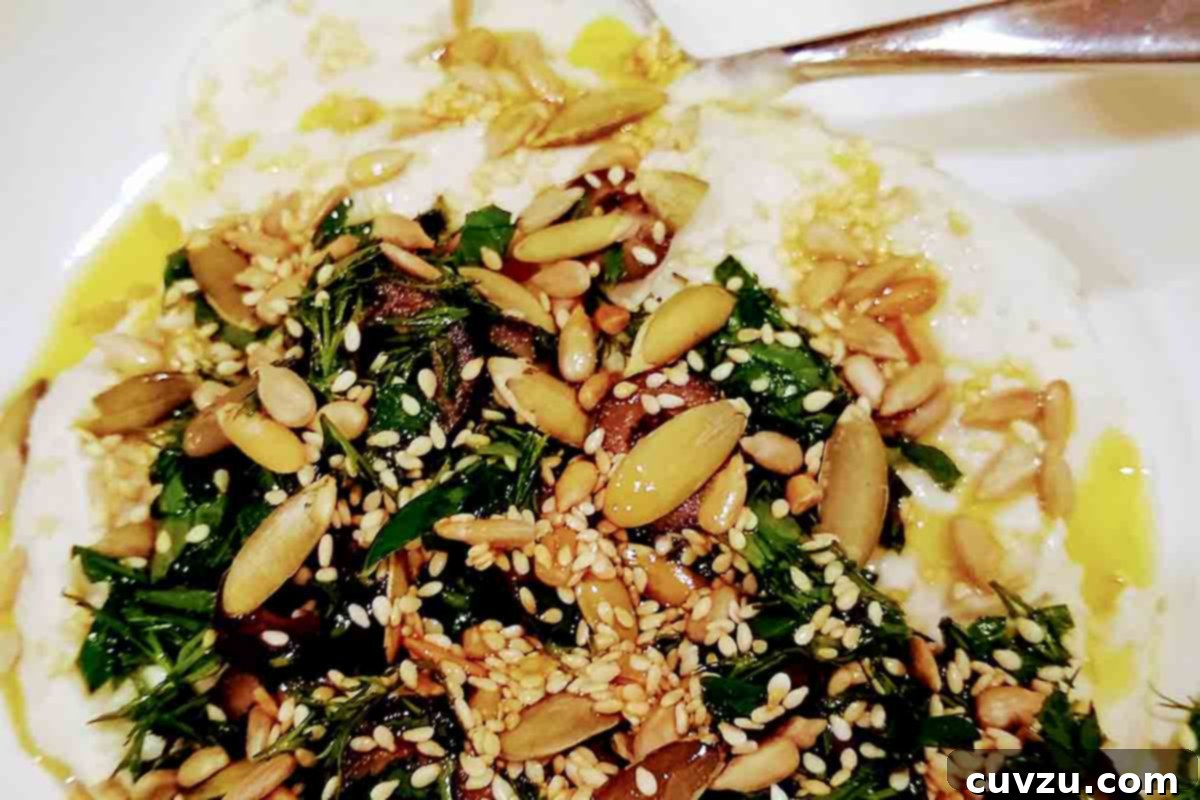
What I learned along the way: Definitely toast your own seeds. Let them become wonderfully fragrant, and then apply them with a generous hand for maximum impact. Keep a close eye on the beans as they cook; my cannellini beans, after soaking for 17 hours, were perfectly tender in just 1 hour. Be conservative with the salt in step 3; you can always add more to taste later. I opted for kosher salt in this step, which resulted in a less overwhelmingly salty end product. Since the garlic is strained out, feel free to increase the amount or allow it to steep for the full 30 minutes in the lemon juice mixture for a more intense garlicky flavor profile.
I served this delightful hummus with sourdough pita, a crisp green salad, and some leftover cold slices of roast beef, creating a perfectly balanced and complete meal. This recipe is destined to become a summer staple, especially during the warmer months when you’re looking for flavorful meals that require minimal cooking effort.
Roxy Hunter
This creamy white bean hummus recipe was an absolute delight! My frequent complaint with homemade hummus is often its grainy texture. However, using cannellini beans and soaking them in the recommended salt and baking soda solution proved to be a brilliant technique. After a slow simmer for precisely an hour and 18 minutes, they puréed into a wonderfully smooth, consistent texture. I found that 3/8 cup of lemon juice was perfect, and I didn’t need any additional salt. After allowing the hummus to set in the refrigerator for a couple of hours, the flavors harmonized beautifully, achieving a perfect balance. Neither extra water nor salt was required. The vibrant chopped fresh herbs and the toasted seeds truly added a “wow” factor, enhancing both the visual appeal and the overall taste of this exquisite hummus.
B. Shanly
This hummus is truly delicious! It boasts a wonderfully creamy texture alongside a rich depth of flavor and appealing textural elements. I used Great Northern White Beans, which were readily available at my local store. When I initially added the beans to the food processor, the mixture momentarily seized into a thick ball. However, upon immediately adding water and the strained lemon juice mixture, it quickly softened and transformed into the perfectly smooth and creamy consistency described. A fantastic recipe!
Barbara Hinde
White bean hummus is always a good idea, and this recipe truly shines. What sets it apart is the minimal use of olive oil within the mixture itself, yet it still achieves a wonderfully creamy texture. The combination of briny olives and fresh herbs on top, along with a delicate drizzle of olive oil and crunchy seeds, is absolutely delicious and allows for endless beautiful plating variations. I served large stalks of steamed broccolini, lightly dressed with olive oil, sea salt, and a sprinkle of sumac, alongside the hummus, which proved to be an ideal accompaniment for dragging through the dip.
Jen Wilfrid
Can I cast two votes for this creamy white bean hummus? It has undeniably soared to the very top of my go-to list for appetizers, whether I’m heading to a party, a book club meeting, a game night, or simply preparing a delightful treat for myself. I had an absolute blast making this recipe. First and foremost, the beans cooked to perfection – I encountered no issues whatsoever with tough or undercooked beans. Once the other ingredients were mixed in, the hummus emerged mild and exquisitely creamy, with a beautifully balanced flavor where no single ingredient overshadowed another. The fresh herb and seed salad topping is not only delicious but also visually stunning; I enjoyed plating it almost as much as I enjoyed savoring every bite. This recipe is genuinely amazing, and I predict a steady stream of white bean hummus will be gracing our table from now on.
Amy Kaufman
Hummus truly sings when it’s prepared with classical precision. So, I admit I tend to roll my eyes a bit when I encounter a new recipe promising another superlative “reinvention.” That said, this particular recipe IS truly sublime, achieving its excellence without excessive changes or tedious extra steps. Instead of chickpeas (and cleverly skipping the often-fiddly step of removing their skins), white beans are simmered with just a touch of baking soda and salt, then whipped into an ethereal and decadently smooth texture. The seed, olive, and herb salad topping is not only beautiful but also wonderfully adaptable to whatever fresh herbs are in season or whichever seed mixture you have on hand. I served this with store-bought pita bread that I split and quartered, then gently tossed with olive oil, a generous pinch of cayenne, and a sprinkling of coarse salt. These were then crisped into delicious “chips” under the broiler.
I simply couldn’t stop indulging, scoop after scoop, finding myself standing at the counter the entire time. I eventually thought to myself, “Well, I guess this is dinner!” Next time, I will definitely plate individual portions and set a proper place at my table to fully enjoy it. I used Rancho Gordo’s Alubia Blanca beans, which are small, tender Spanish white beans. The remaining ingredients were readily available from my pantry and local grocery store. This hummus is genuinely yummy, truly transcendent!
Elsa M. Jacobson
This no-chickpea hummus variation is certainly tasty enough on its own, but what truly elevates it and sets it apart is the magnificent herb salad and seed topping. This vibrant topping was both colorful and flavorful atop the hummus, which I served in a bowl for dipping with pita chips. It would also undoubtedly enhance a hummus wrap or sandwich, whether enjoyed solo or paired with baba ghanouj and/or falafel. I am already keen to discover more creative uses for this exceptional topping duo, which truly proved to be something special.
In terms of the preparation process, I allowed the beans a generous soaking time, nearly the full 24 hours. Despite this long soak, they still required over an hour of simmering to reach that desirable, very tender consistency. For the ingredients, I sourced fresh tahini and exquisite Greek olive oil from different vendors at my local farmer’s market; however, none of the other ingredients were available there.