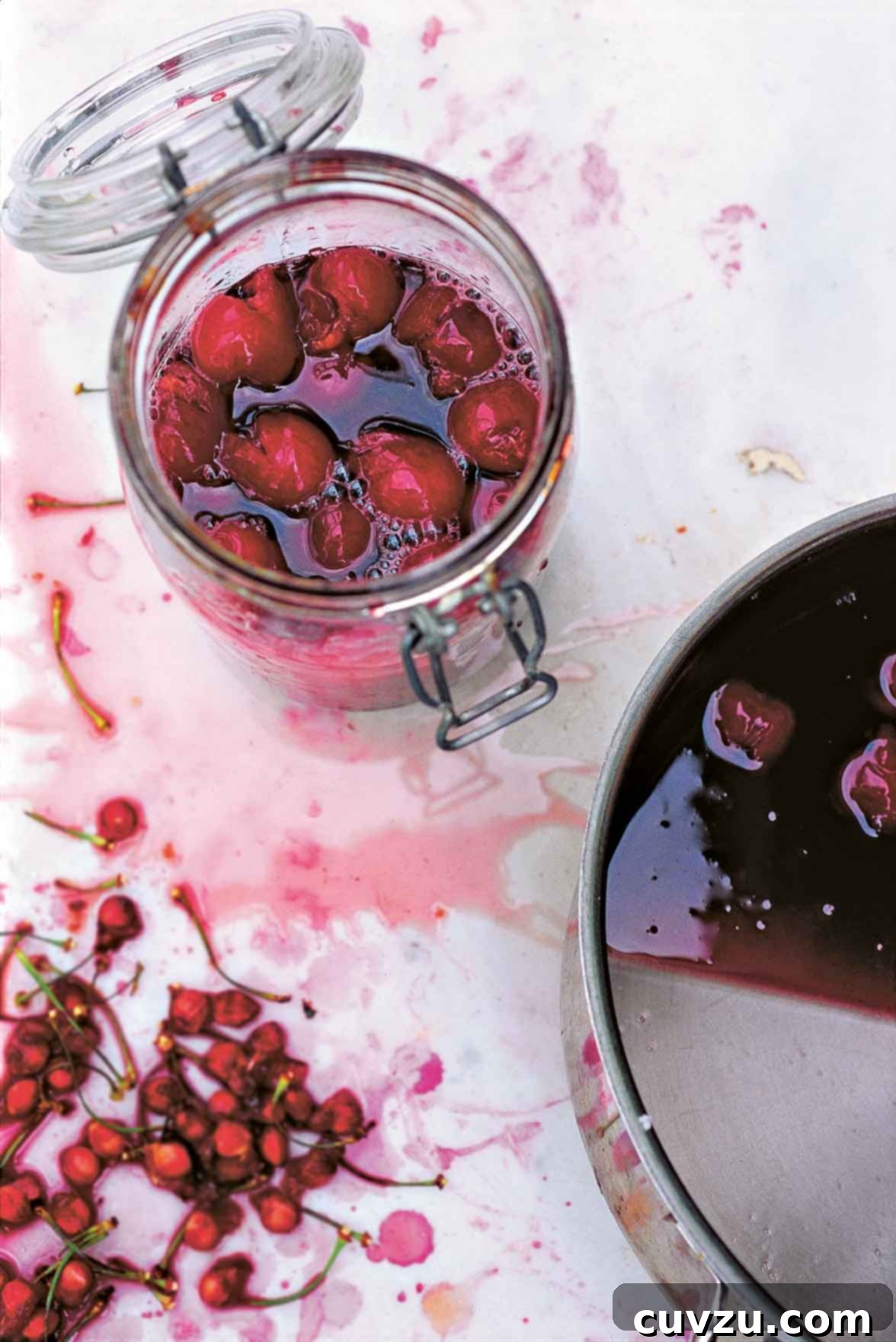
Homemade Cherry Liqueur (Guignolet): Capturing Summer’s Sweetness in a Bottle
There’s an undeniable magic in preserving the fleeting flavors of summer, allowing them to linger and delight long after the season has passed. This exquisite **homemade cherry liqueur**, often known by its elegant French name, Guignolet, offers precisely that. Crafted with ripe cherries, a touch of red wine, sugar, and a hint of kirsch, it’s a remarkably simple preserve that yields a profoundly rich and nuanced spirit. Forget the mass-produced options; this homemade version stands in a league of its own, boasting a depth of flavor and freshness that is simply incomparable.
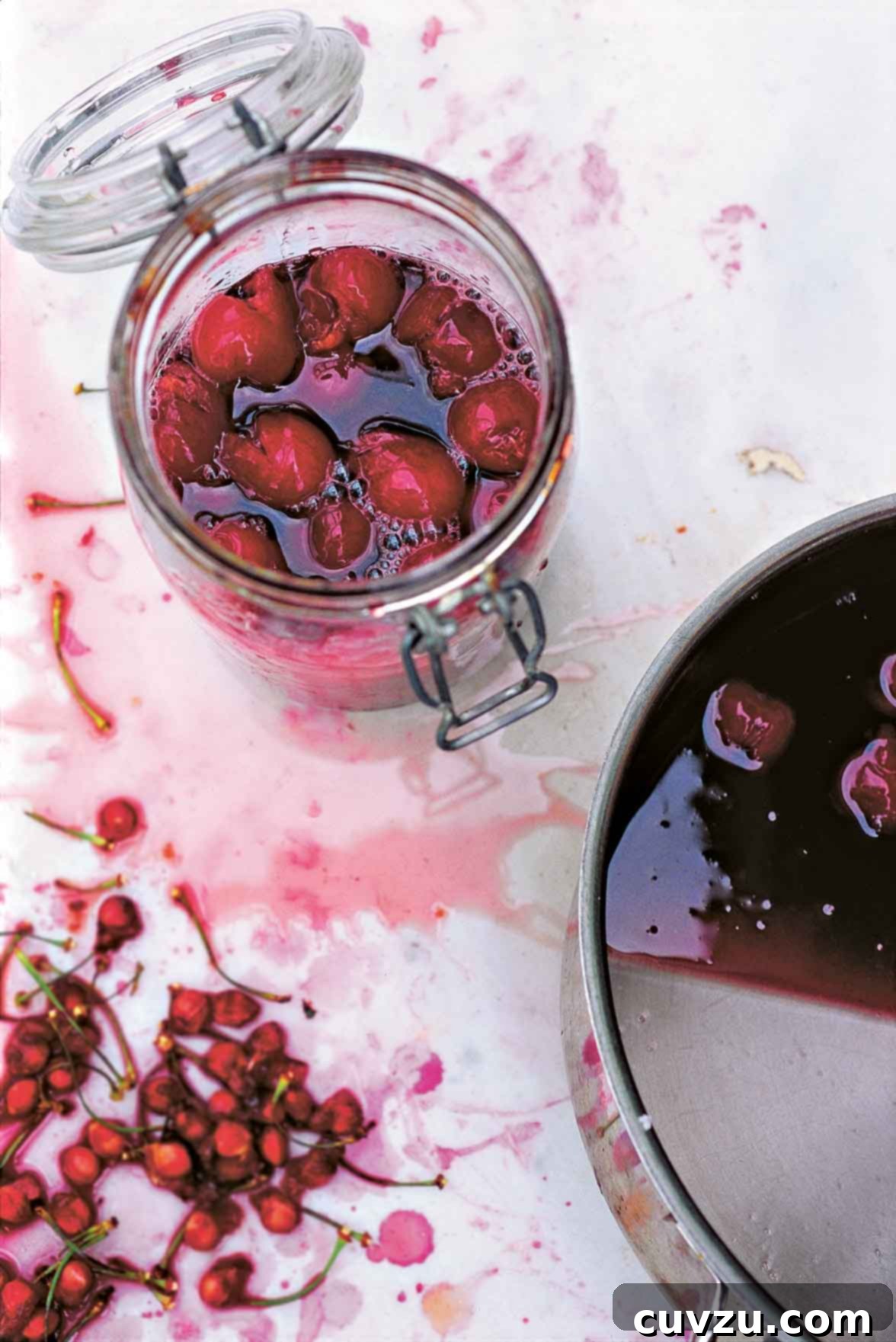
In France, where the art of the aperitif is revered, this delightful cherry liqueur is affectionately called Guignolet (pronounced Guig gno LAY). The name itself rolls off the tongue with a certain effortless charm, much like the liqueur itself pours smoothly from a bottle into a glass. Traditionally, Guignolet is served in small glasses as a pre-dinner tipple, a civilized custom that sets a leisurely tone for the evening’s repast. Whether you embrace its French moniker or simply call it homemade cherry liqueur, we’re confident that once you experience its exquisite taste, you’ll be calling for it regularly.
Homemade Cherry Liqueur | Guignolet Recipe
This delightful cherry liqueur, made with the harmonious blend of kirsch, light red wine, and sugar, offers an effortless way to capture the sweet essence of cherry season. It’s an unparalleled homemade preserve that far surpasses any store-bought equivalent in flavor and freshness.
Recipe by David Leite
Pin Recipe
Drinks, Aperitif
French
32 servings | 4 cups
71 kcal per serving
5 minutes
10 minutes
2 days (including steeping)
Equipment
- Sterilized bottles or jars with tight-fitting corks or lids
- Large saucepan
- Fine-mesh sieve or cheesecloth for straining (optional)
Ingredients
- 1 pound unblemished cherries, pitted
- One (26-ounce) bottle light red wine, such as a Pinot Noir or a Côtes du Rhône
- 1 1/2 cups granulated sugar
- 6 tablespoons kirsch (cherry brandy)
Instructions
-
In a heavy-bottomed saucepan, combine the pitted cherries, light red wine, and granulated sugar. Place the saucepan over medium heat and stir continuously until all the sugar has completely dissolved. This ensures a smooth base for your liqueur.
-
Increase the heat slightly to bring the mixture to a gentle boil. As soon as it begins to boil, immediately reduce the heat to a low simmer. Allow the mixture to simmer languidly for approximately 5 minutes, allowing the flavors to meld and the cherries to soften slightly. Be careful not to overcook the cherries, as you want them to retain some texture. Remove the saucepan from the heat and let the mixture cool completely to room temperature.
-
Once cooled, stir in the kirsch. This cherry brandy adds a potent aromatic kick and depth to the liqueur. Carefully transfer the boozy liquid and the cherries to a clean container with a tight-fitting lid. Cover the container securely and set it aside at room temperature, or preferably in the refrigerator, for a minimum of 2 days. This steeping period is crucial for the flavors to fully infuse and develop.
-
After the steeping period, pour the cherry liqueur, including the macerated cherries, into sterilized bottles or jars. Ensure your chosen containers have screw-top lids or can be sealed with new corks to maintain freshness. Seal them tightly. Refrigerate the homemade cherry liqueur until you are ready to consume it. For optimal flavor and enjoyment, it is best savored within the same week.
-
Just before serving, you may choose to strain the liqueur through a fine-mesh sieve or cheesecloth for a smoother consistency, though keeping the cherries in adds to the charm. Don’t discard the luscious, boozy cherries! These delightful morsels are fantastic spooned over vanilla ice cream, layered within a pound cake or trifle with whipped cream, or simply plopped atop creamy rice pudding. The possibilities are endless! Sip the chilled liqueur as-is to appreciate its pure cherry essence, or transform it into a refreshing spritzer (see the notes below for ideas) for a lighter, bubbly experience. Savor every drop.
Notes & Variations for Your Homemade Liqueur
Homemade Cherry Liqueur | Guignolet Serving Suggestions and Variations
While this cherry liqueur is absolutely delightful when sipped neat and chilled, its versatility extends far beyond. Here are a few ways to enjoy and adapt your homemade Guignolet:
How To Make A Cherry Spritzer or Kir
For a lighter, effervescent drink, simply add a generous splash of your homemade cherry liqueur to sparkling water or seltzer. This creates a wonderfully refreshing spritzer, perfect for warm afternoons. If you’re feeling particularly fancy and want to elevate your aperitif game, mix it with chilled dry white wine to craft a homemade Cherry Kir. For a truly celebratory touch, combine it with sparkling wine to create a magnificent Kir Royale. All of these variations make for admirable and impressive aperitifs that are sure to charm your guests.
Culinary Uses for Boozy Cherries
The macerated cherries left behind after pouring the liqueur are gems in their own right. Their rich, wine-infused flavor makes them ideal for a variety of dessert applications:
- Spoon them generously over vanilla bean ice cream or frozen yogurt.
- Layer them into trifles or parfaits with cake and freshly whipped cream.
- Garnish creamy rice pudding, panna cotta, or crème brûlée.
- Incorporate them into glazes for roast duck or pork.
- Fold them into muffin or pancake batter for a delightful breakfast treat.
- Use them as a topping for cheesecakes or tarts.
- They can even be pureed slightly and used in savory sauces to complement game meats.
Variation: Apricot Liqueur (Guignolet d’Abricot)
The same simple method can be adapted to create a luscious apricot liqueur. For this variation, you will need 1 pound of ripe apricots, halved and pitted. Place the apricots in a saucepan with 2 1/4 cups of granulated sugar and 3 cups of dry white wine. Proceed with the initial steps as described for the cherry liqueur: heat until the sugar dissolves, bring to a gentle boil, then simmer for 5 minutes and cool.
Once the apricot mixture has cooled, stir in 5 tablespoons of amaretto (almond-flavored liqueur) and 1 1/4 cups of good quality vodka. Transfer the apricots and the liquid into a bowl or pitcher. To ensure the apricots remain submerged and fully infuse, place a small plate directly on top of the apricots. Then, cover the entire container with a clean towel and let it sit at room temperature for 6 days. This extended steeping period allows the complex apricot and almond flavors to develop.
After 6 days, strain the liqueur. Because apricots tend to disintegrate a bit more than cherries, you might find it beneficial to filter the liqueur twice through cheesecloth for a perfectly clear result. Pour the finished apricot liqueur into clean, sterilized bottles or jars, seal them with corks or screw-tops, and refrigerate. This apricot liqueur benefits from aging for up to a month in the refrigerator before using, allowing its flavors to deepen and mature. Serve it chilled in small glasses, or mix it with white wine or sparkling white wine for an elegant apricot kir. The boozy apricots themselves are also a treat; use them as you would the cherries above, or fold them into lightly sweetened whipped cream to create a delectable apricot fool.
Adapted From
Plenty–Good, Uncomplicated Food
Buy On Amazon
Explore Further with Culinary Resources
Explore Ingredient Substitutions
Scale Recipes
Summarize Key Insights
Nutrition
Serving: 2 tablespoons
Calories: 71 kcal
Carbohydrates: 12 g
Protein: 0.2 g
Fat: 0.1 g
Saturated Fat: 0.01 g
Monounsaturated Fat: 0.01 g
Sodium: 0.1 mg
Fiber: 0.3 g
Sugar: 11 g
Nutrition information is automatically calculated, so should only be used as an approximation.
Tried this recipe?
Mention @leitesculinaria or tag #leitesculinaria!
Recipe Testers’ Insights
Kim Venglar, Recipe Tester
Kim Venglar, one of our trusted recipe testers, enthusiastically reported on her experience with the Homemade Cherry Liqueur. “This turned out to have a very sweet, pleasant flavor,” she remarked. Initially, Kim had some reservations about the wine choice, relying on her local expert for a suggestion. After tasting the wine on its own, she admitted to not caring for it, which left her concerned about the final outcome of the Guignolet.
However, much to her delightful surprise, the finished product was nothing short of fantastic. Kim confessed her eagerness to taste the liqueur right away, finding the mandatory two-day waiting period almost unbearable. “The two days I had to wait seemed to take forever,” she chuckled, a testament to the enticing aroma and promise of the brewing liqueur.
Due to its rich sweetness, Kim noted that she could only enjoy a small amount at a time. This characteristic, however, sparked her creativity, leading her to explore various ways to incorporate the liqueur. She shared a brilliant idea: “I took the cherries and stirred them into my pound cake batter with wonderful results.” This ingenious use for the boozy cherries showcases the versatility of homemade liqueurs beyond just sipping.
Looking ahead, Kim plans to bottle her next batch of Guignolet into smaller containers, envisioning them as thoughtful and impressive homemade gifts. Her adventurous spirit also led her to tackle the apricot version of this recipe. With a grin, she recalled, “It will be a little while before I can try this one since it has to sit in the refrigerator for a month before using…and I thought two days was bad!” Despite the longer wait, her enthusiasm was palpable, even admitting to a cheeky taste of the apricot concoction as she was jarring it. “I could have started in on it right then and there,” she confessed, highlighting the irresistible appeal of this delightful homemade preserve.
Read more reviews and insights from our community of passionate recipe testers to enhance your culinary journey!