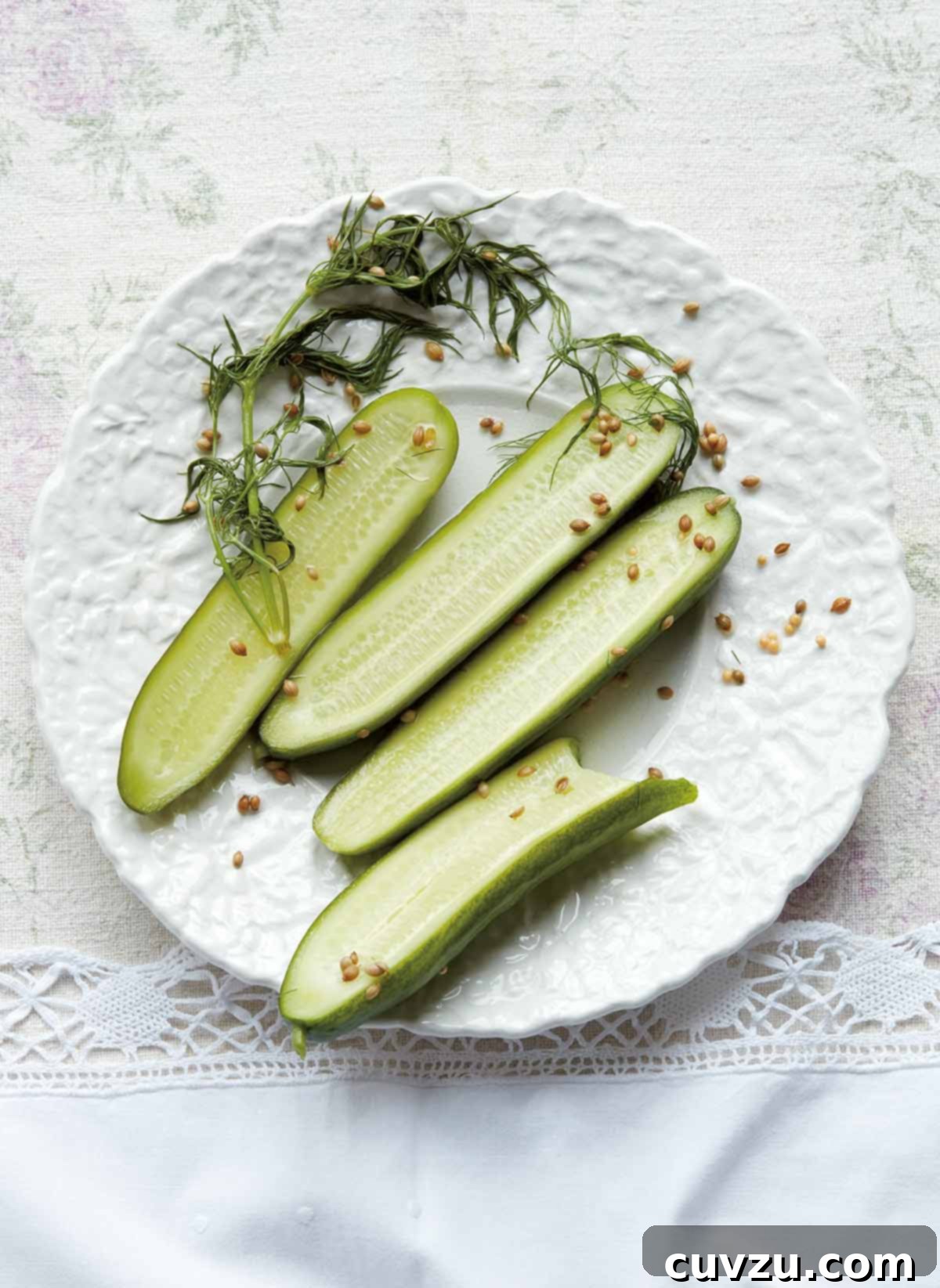
Welcome to the delightful world of **quick dill pickles**, affectionately known as “quickles”! Forget the lengthy, labor-intensive canning processes of yesteryear. Our incredibly easy recipe transforms humble small cucumbers into vibrant, tangy, and irresistibly crunchy dill pickles in no time. Bursting with the fresh flavors of dill, garlic, coriander, and mustard, these refrigerator pickles are designed for immediate enjoyment and unparalleled convenience. Prepare to elevate your culinary creations with a homemade condiment that will make you rethink store-bought varieties forever. Get ready to experience pickles that are not only swift to prepare but also vanish even faster!
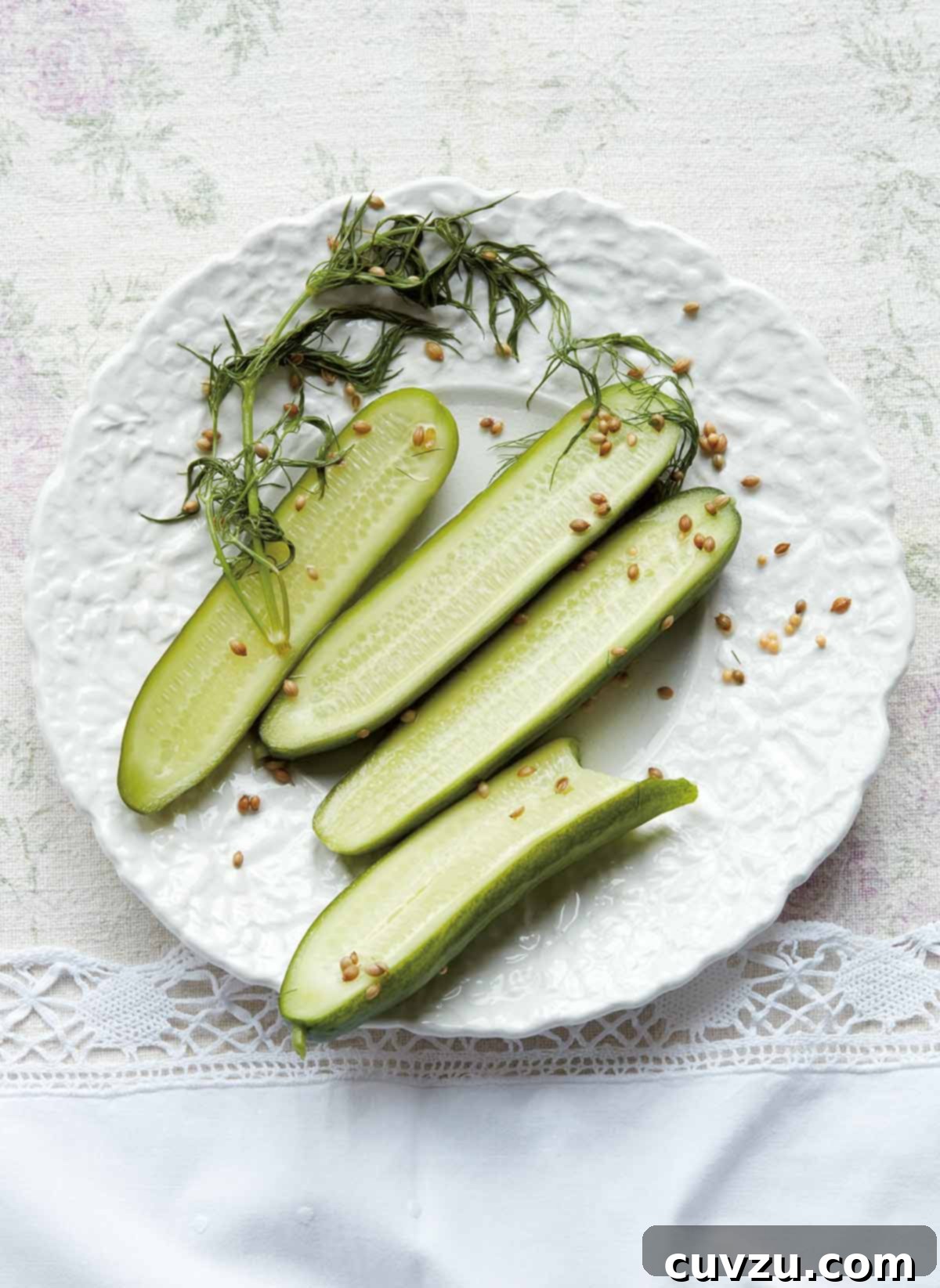
Once you savor the crisp bite and bright flavor of these homemade quick dill pickles, we wager you’ll never settle for their store-bought counterparts again. And rightly so! When we describe them as “quick,” we’re not just referring to the minimal effort and preparation time required to bring them to life. We’re also hinting at just how rapidly these delectable quickles will disappear from your refrigerator, a testament to their addictive taste. They’re perfect for adding a zesty crunch to sandwiches, burgers, or simply enjoying straight from the jar as a refreshing snack. This recipe is your gateway to a world of effortless pickling, bringing garden-fresh goodness right to your table without the fuss.
Why Choose Quick Dill Pickles? The Benefits of Homemade Crunch
There’s an undeniable charm to homemade food, and quick dill pickles are no exception. Beyond the sheer satisfaction of creating something delicious from scratch, these “quickles” offer a multitude of advantages over their commercially produced relatives. For starters, you have complete control over the ingredients. This means no artificial preservatives, unwanted coloring, or excessive sodium. You can tailor the sweetness, saltiness, and spice levels precisely to your palate, ensuring every bite is exactly how you like it. Furthermore, the fresh, vibrant flavor of homemade quick pickles is simply unmatched. Store-bought pickles often lose some of their zing during the pasteurization process, but quickles, being refrigerator pickles, retain all their fresh, herbaceous notes.
The health benefits are also noteworthy. Cucumbers themselves are hydrating and rich in vitamins K and C. The pickling process, especially with raw vinegar, introduces beneficial probiotics that support gut health. While our recipe doesn’t involve traditional fermentation, the fresh ingredients contribute to a more wholesome snack or condiment. Plus, the minimal heat exposure keeps the cucumbers wonderfully crisp, providing a satisfying texture that’s often missing from softer, shelf-stable pickles. Making your own quick dill pickles is an empowering culinary experience that rewards you with superior taste, customizable flavors, and a healthier alternative.
Selecting the Best Cucumbers for Perfect Pickles
The foundation of an exceptional dill pickle lies in choosing the right cucumber. While any cucumber can be pickled, for this quick dill pickles recipe, certain varieties truly shine. We highly recommend seeking out relatively diminutive Lebanese, Turkish, Persian, or Kirby cucumbers. These varieties are often referred to as “pickling cucumbers” for good reason, and they perform far better than standard full-size cucumbers you might find at the grocery store.
But why are these smaller cucumbers superior? It all comes down to their internal structure and water content. Smaller pickling cucumbers contain less water and have fewer, smaller seeds compared to larger, conventional varieties. This lower water content is crucial because it helps the cucumber maintain its firm, crisp texture when immersed in brine. A watery cucumber will quickly become soggy and lose its desirable crunch, which is often the hallmark of a great pickle. When you bite into a well-made quick dill pickle, you expect that satisfying snap, and these specialized cucumbers deliver precisely that.
If you’re fortunate enough to have a backyard garden, consider planting these specific pickling varieties. Otherwise, you’ll find them readily available at most farmers’ markets, well-stocked supermarkets, and certainly at Middle Eastern markets, where they are a staple. Don’t be shy to ask your local produce vendor for “pickling cucumbers” or specifically for Kirby, Lebanese, Turkish, or Persian varieties. Their firm flesh and compact size ensure that your homemade quick dill pickles will maintain their delightful crunch for weeks, making every serving a joy.
Crafting the Perfect Brine: Flavor and Function
The brine is the heart and soul of any pickle, and for quick dill pickles, it’s a simple yet powerful concoction that infuses the cucumbers with their signature tangy, savory, and subtly sweet profile. Our recipe utilizes a balanced blend of distilled white vinegar, sea salt, superfine sugar, and cold water, creating an ideal environment for flavor development and preservation. Distilled white vinegar provides the essential acidity, which is key for both flavor and safety. Its clean, sharp taste allows the other ingredients to shine without imparting unwanted colors or flavors, as some darker vinegars might.
Sea salt is preferred for pickling over iodized table salt because it lacks anti-caking agents that can sometimes cloud the brine or affect the texture of the pickles. The salt not only contributes to the flavor but also draws out excess moisture from the cucumbers, further enhancing their crispness. Superfine sugar, or granulated sugar finely blitzed in a food processor, dissolves quickly and evenly, adding a subtle sweetness that balances the sharp acidity of the vinegar and rounds out the overall flavor profile. It’s not meant to make the pickles sweet, but rather to temper the tartness and create a more complex taste.
Cold water is incorporated to dilute the concentrated vinegar, salt, and sugar mixture, bringing it to the correct potency for pickling. This careful balance ensures that your quick dill pickles are perfectly seasoned, wonderfully crisp, and deliciously refreshing. The combination of these core brine ingredients, along with the aromatic spices, creates a flavor experience that is both classic and deeply satisfying.
Expanding Your Quick Pickling Horizons: Beyond Cucumbers
The beauty of quick pickling isn’t limited to cucumbers. This incredibly easy and versatile method opens up a world of possibilities for preserving and enhancing other vegetables. With a simple brine and a few minutes of effort, you can transform a variety of produce into zesty, crunchy refrigerator staples. Think beyond the classic: you can easily pickle carrots, adding a sweet and earthy crunch to your salads or snack boards. Thinly sliced shallots become tender and piquant, perfect for garnishing rich dishes. Red onions turn a beautiful vibrant pink and offer a tangy bite, ideal for tacos, sandwiches, or even guacamole. And even zucchini, often abundant in summer gardens, can be given a new lease on life as a delightful pickled treat.
Quick pickling is an excellent way to use up a glut of seasonal vegetables, reducing waste and ensuring you always have a flavorful accompaniment on hand. The process remains largely the same: create your brine, slice your chosen vegetables, pack them into jars with your preferred spices (dill, garlic, mustard seeds, coriander are all great starting points), cover with brine, and refrigerate. The beauty of these quick pickles is their adaptability. Feel free to experiment with different spices, herbs, and even a touch of chili for a spicy kick. Having a selection of colorful, homemade quick-pickled vegetables stashed in your fridge means you’re always just a moment away from adding a burst of flavor and texture to any meal.
Preserving the Freshness: How Long Do Refrigerator Pickles Keep?
One of the most common questions about quick dill pickles, or any refrigerator pickles, is regarding their shelf life. The good news is that these quickles are quite robust and, when stored properly, will retain their delightful crunch and flavor for an impressive period. Once prepared and sealed in a covered jar, your homemade quick dill pickles will happily keep in the refrigerator for approximately 4 to 6 weeks. This makes them an ideal make-ahead condiment, allowing you to enjoy the fruits of your labor for over a month.
Proper storage is key to maximizing their longevity. Always ensure your pickles are stored in airtight jars. This prevents contamination and helps maintain the integrity of the brine and the crispness of the cucumbers. Keeping them consistently refrigerated is also crucial, as the cold temperature slows down any potential spoilage. While they are safe to eat from 24 hours after preparation, the flavors tend to mellow and deepen over the first few days, reaching their peak after about 3-5 days. Although they can last for weeks, experience tells us that these delicious quick pickles rarely stay in the fridge for their full potential shelf life – they’re just too tempting not to eat! Enjoy them frequently, and don’t hesitate to make another batch when your supply starts running low.
Quick Dill Pickles Recipe
By David Leite
Condiments
American
16
servings
37
kcal
30
minutes
1
day
1
day
30
minutes
Equipment
- A couple of 1-quart (946 ml) jars with lids and rings (ideally, the jars will be tall enough for the cucumbers to stand vertically inside the jars)
Ingredients
- 3/4 cup distilled white vinegar
- 3 tablespoons sea salt
- 3 tablespoons superfine sugar or simply blitz granulated sugar in a food processor until finely ground but not powdery
- 1 1/4 cups cold water
- 8 small Lebanese, Turkish, Persian, or Kirby cucumbers, halved lengthwise
- 4 large garlic cloves, peeled and halved
- 1 1/2 tablespoons coriander seeds
- 1 1/2 teaspoons mustard seeds, yellow or brown
- 10 sprigs of dill
Instructions
- Wash the jars, lids, and rings thoroughly with hot soapy water. To sterilize, fill your largest stockpot with the clean jars (excluding the lids) and add enough water to cover them by at least 1 inch. Bring the water to a rolling boil, then reduce heat and simmer for 10 minutes. Carefully drain the hot water from the jars and transfer them to a clean towel using a jar lifter or tongs, allowing them to cool.
- In a medium nonreactive saucepan, combine the vinegar, sea salt, and superfine sugar. Place over medium heat and warm the mixture, stirring constantly, until both the sugar and salt have completely dissolved, which typically takes about 10 minutes. Once dissolved, pour the hot brine mixture into a heatproof bowl. Whisk in the 1 1/4 cups of cold water to cool it down. Allow the brine to cool completely to room temperature, a process that usually takes 30 to 45 minutes. If you’re not planning to make the pickles immediately, cover the bowl and refrigerate the brine until it’s needed.
- Carefully divide the halved cucumbers among your prepared 1-quart preserving jars. Ensure the jars are tall enough to comfortably hold the cucumber spears vertically. To each jar, add an equal portion of the halved garlic cloves, coriander seeds, mustard seeds, and fresh dill sprigs. Evenly pour the cooled brine over the cucumbers in each jar. If the brine doesn’t completely cover the cucumber spears, top off each jar with a little additional cold water until they are fully submerged.
- Securely seal the jars with their lids and rings. If you added extra cold water to cover the cucumbers, gently shake each jar a few times to ensure the brine is well mixed. Place the sealed jars in the refrigerator for at least 24 hours before indulging in your homemade quick dill pickles. The flavors will continue to develop and mellow over time. These delicious quickles can be stored in the refrigerator for up to 4 to 6 weeks, though we have a strong suspicion they won’t last nearly that long!

Adapted From
Fress
Buy On Amazon
Nutrition
Serving:
1
pickle
Calories:
37
kcal
Carbohydrates:
8
g
Protein:
1
g
Fat:
0.4
g
Saturated Fat:
0.1
g
Monounsaturated Fat:
0.1
g
Sodium:
1313
mg
Fiber:
1
g
Sugar:
5
g
Nutrition information is automatically calculated and should only be used as an approximation.
Tried this recipe?
Mention @leitesculinaria or tag #leitesculinaria!
Recipe Testers’ Insights: What Our Experts Are Saying
Our dedicated team of recipe testers put these quick dill pickles to the test, offering invaluable feedback and tips to ensure your pickling success. Their collective experiences highlight the simplicity and deliciousness of this recipe.
Jenny Latreille
Jenny describes this as the “perfect” quick refrigerator pickle recipe, noting its simplicity and excellent results. She successfully adjusted the coriander seed amount, finding that half the suggested quantity suited her taste without overpowering the delicate dill flavor. Her experience with standard quart jars confirmed the recipe’s measurements, with the cucumbers fitting perfectly and the brine sufficient to cover them.
Initially, after 24 hours, Jenny found the pickles crisp, fresh-tasting, and satisfyingly briny. Over the next few days, the flavors of the vinegar, garlic, and coriander mellowed beautifully, resulting in an “excellent” pickle that retained its crispness. Her review underscores the recipe’s reliability and the improved flavor profile with a bit more time in the fridge.
Irene Seales
Irene enthusiastically declared these the “best refrigerator pickles” she had ever made or tasted, highlighting their perfect crunch and zing that sets them apart from typical bread and butter style pickles. She meticulously sampled them daily, observing only the slightest softening by day 4, while still enjoying plenty of crunch and distinct flavor. Her long history as a pickle consumer, from county fair winners to wooden barrel selections, lends significant weight to her praise.
She also noted that more than 8 Persian cucumbers might fit (she used 10) and praised the effectiveness of fresh dill for this express pickle, contrasting it with her mother’s traditional use of dried dill seed heads. Irene’s experience reinforced the crispness due to no heat exposure and the ongoing quality, with pickles remaining lovely and fresh-tasting even after nearly a month in the refrigerator.
Melissa Maedgen
Melissa found this recipe to be a “tasty, quick version” of a dill pickle without the need for lengthy fermentation. She appreciated the pronounced dill flavor and the subtle, pleasing note of coriander, balanced by just a hint of sweetness from the sugar after waiting three days to taste them. Using Kirby cucumbers, she fit them into two 1-quart jars. Melissa offered a valuable tip: she recommended doubling the brine (vinegar, salt, sugar, and water components only, not the spices) to ensure ample liquid to cover the cucumbers, as her initial batch needed more. This practical advice can prevent a last-minute scramble.
She also shared an important, reassuring note for aspiring picklers: garlic can sometimes turn blue in pickles, which is a completely natural reaction and doesn’t affect the safety or taste of the pickles. This helpful insight alleviates potential concerns for first-time picklers.
Chiyo Ueyama
Chiyo enjoyed the traditional, crisp texture and mild, fresh taste of these cucumbers, suggesting they would be a refreshing accompaniment to rich entrees like barbecued beef back ribs and hamburgers. She found them so palatable she could easily eat several in one sitting. Unable to find Lebanese or Turkish cucumbers, Chiyo successfully substituted small “mini seedless” cucumbers, about 5 inches long and 1 1/4 inches in diameter. She noted that twelve halves (from six cucumbers) fit perfectly into each jar, providing a useful guideline for those using similar substitute varieties.
Mario Pileggi
As an avid pickler, Mario was pleasantly surprised by the recommendation for Turkish or Lebanese cucumbers, finding them superior to the traditional English varieties he had used previously for their crisp texture. The recipe delivered on its promise of crisp and crunchy pickles, featuring mellow background notes of garlic, coriander, and mustard. While he plans to increase the garlic for a more robust “punch” in future batches, he has adopted this as a new staple recipe for his refrigerator, emphasizing its reliable results and delicious outcome.
Paula D.
Paula used Persian cucumbers from a farmers market and was impressed by their delicate flavor and crisp texture just eight hours after preparation. They were an instant hit at her dinner gathering, with everyone appreciating the light, fresh taste and the quality of the Persian cucumbers. Her first batch disappeared before the 24-hour mark, prompting her to add more cucumbers to the same brine. The subsequent batch tasted equally good, with an even more pronounced dill flavor. Her experience highlights the recipe’s crowd-pleasing appeal and its suitability for summer enjoyment.
From choosing the perfect cucumbers to understanding the nuances of the brine, these quick dill pickles are a testament to how simple and rewarding homemade food can be. With their irresistible crunch, vibrant flavor, and the ease of preparation, they are destined to become a beloved staple in your kitchen. Whether you’re serving them alongside a burger, on a charcuterie board, or simply enjoying them as a refreshing snack, these quickles promise to deliver a burst of fresh, tangy goodness with every bite. So gather your ingredients, follow our straightforward steps, and prepare to delight in the superior taste of your very own homemade dill pickles!