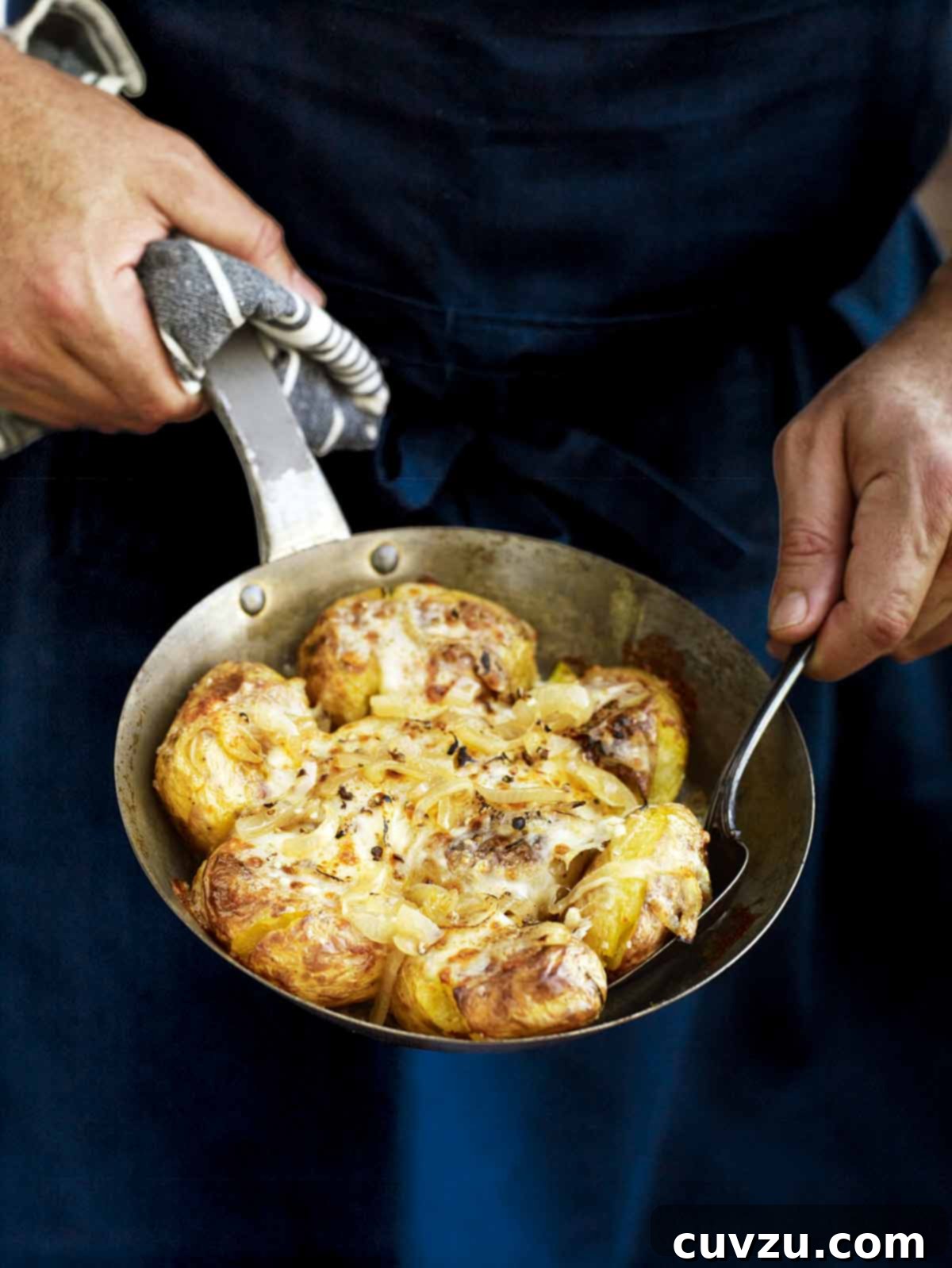
Portuguese Punched Potatoes with Caramelized Onions and Melted Cheese | Batatas a Murro
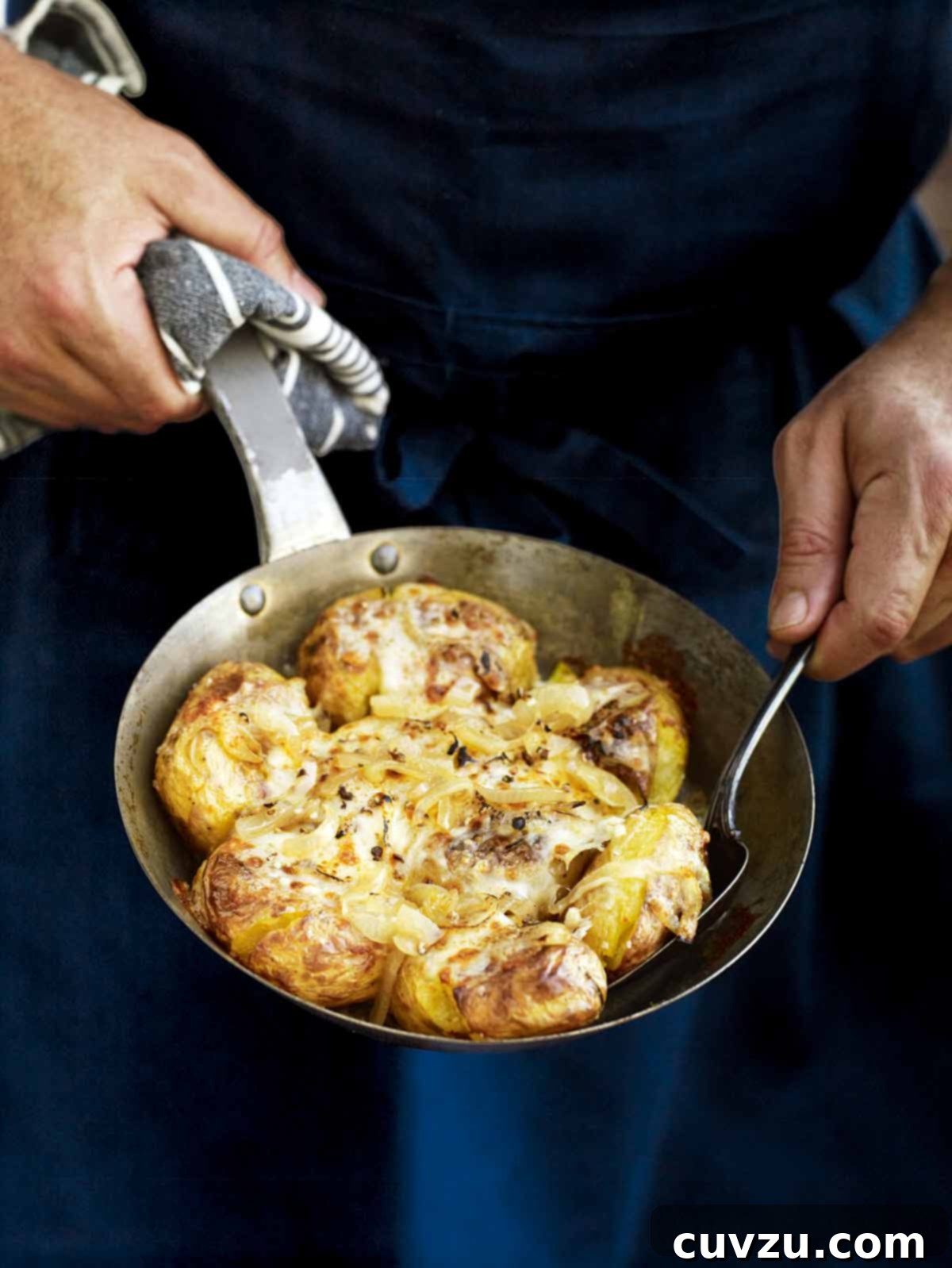
Discover the Irresistible Charm of Batatas a Murro
Step into the heart of Portuguese comfort food with Batatas a Murro, a dish that transcends the ordinary side and becomes a star in its own right. Often translated as “Punched Potatoes,” this traditional delight features exquisitely crisp-skinned, yet wonderfully creamy smashed potatoes. They are lovingly enveloped in a blanket of sweet, deeply caramelized onions and generously topped with a rich, melted cheese. While typically served as a robust accompaniment to main courses, we wholeheartedly endorse indulging in an entire plateful, perhaps alongside a perfectly paired glass of Portuguese wine.
As culinary expert Nuno Mendes once eloquently put it, “This traditional Portuguese smashed potato dish, Batatas a Murro, is simply roasted potatoes that are crisp-skinned and soul-achingly tender, smothered with caramelized onions and melted cheese. Although actually, there’s nothing simple about it. At least not the taste.” Indeed, the apparent simplicity belies a profound depth of flavor and texture that makes Batatas a Murro a truly unforgettable experience. It’s a dish that warms the soul, satisfies the palate, and celebrates the rustic elegance of Portuguese cuisine.
Authentic Batatas a Murro Recipe: Portuguese Punched Potatoes
Punched Potatoes | Batatas a Murro
These Portuguese punched potatoes, known as Batatas a Murro, offer crisp-skinned, creamy smashed potatoes generously topped with sweet caramelized onions and delectable melted cheese. A truly unforgettable culinary experience.
Author: David Leite
Ingredients
- 14 ounces potatoes, such as Yukon gold or similar, skin on
- 2 garlic cloves, smashed
- 1 bay leaf
- 3 tablespoons olive oil
- Sea salt, ground white pepper, and cracked black pepper, to taste
- 1 large onion, thinly sliced (about 11 oz)
- Sherry vinegar, a splash
- 2 ounces queijo da Serra (a marvelously rich, melty cheese), Teleggio, Gruyère, or another full-flavored melting cheese, broken into small pieces, or more to taste
Instructions
- Boil the Potatoes: Bring a large saucepan of salted water to a boil. Add the potatoes and cook until they are tender when pierced with a fork, approximately 20 to 30 minutes. Drain the potatoes and allow them to cool slightly.
- Preheat Oven: While the potatoes are cooling, preheat your oven to 430°F (220°C).
- Smash the Potatoes: After cooling for about 10 minutes, gently smash each potato. You can use your fist or the flat bottom of a heavy skillet to achieve a rustic, flattened shape, ensuring they remain mostly intact.
- Prepare for Roasting: Place the smashed potatoes in an ovenproof dish. Add the smashed garlic cloves and the bay leaf. Drizzle 2 tablespoons of olive oil over the potatoes, tossing gently to ensure they are thoroughly coated. Season generously with sea salt and ground white pepper. Bake in the preheated oven until the potatoes are golden brown and wonderfully crisp, which usually takes 25 to 30 minutes.
- Caramelize the Onions: While the potatoes are roasting, warm the remaining 1 tablespoon of olive oil in a skillet over low heat. Add the thinly sliced onion and season with a pinch of salt and white pepper. Cook the onions gently, stirring occasionally, until they become very soft, translucent, and sweet, about 20 minutes. You can test by squeezing a piece of onion; it should be incredibly soft and have a pronounced sweetness.
- Brown the Onions: Increase the heat slightly and continue to cook the onions, stirring frequently, until they caramelize and turn a beautiful golden brown. This should take about 5 more minutes. If using a cartouche, remove it now. Add a splash of sherry vinegar to the onions; this acidity will beautifully cut through the richness of the cheese later.
- Assemble and Finish: Remove the potatoes from the oven. Evenly scatter the caramelized onions over the potatoes. Then, spoon or scatter the pieces of cheese on top of the onions. Return the dish to the oven and cook for another 5 to 10 minutes, or until the cheese is melted, golden brown, and bubbling invitingly.
- Serve: Carefully remove the dish from the oven. Serve the Batatas a Murro immediately, garnished with a sprinkle of freshly cracked black pepper for a final aromatic touch.
Why Batatas a Murro is a Must-Try Culinary Delight
Batatas a Murro isn’t just a potato dish; it’s an experience that embodies the heart of Portuguese home cooking. Its magic lies in the beautiful contrast of textures and the harmonious blend of flavors. The potatoes, first boiled to tender perfection and then “punched” and roasted, develop an irresistibly crisp exterior while remaining wonderfully fluffy and creamy on the inside. This foundational texture provides the perfect canvas for the layers of flavor that follow.
The caramelized onions are a star in themselves. Cooked slowly and patiently, they transform from pungent to remarkably sweet, lending a deep, savory, and slightly jammy quality to the dish. This sweetness is delicately balanced by the rich, savory notes of the melted cheese, which creates a gooey, comforting topping. The hint of sherry vinegar added to the onions provides a bright, acidic counterpoint, preventing the dish from becoming overly heavy and adding a sophisticated lift to every bite.
This dish’s versatility is another reason for its enduring popularity. While traditionally served as a side, it’s hearty enough to stand alone as a light meal, especially when paired with a fresh green salad. It adapts well to various meals, from a rustic weeknight dinner to a festive gathering. Batatas a Murro is more than just food; it’s a testament to how simple, quality ingredients, treated with care and respect, can create something truly extraordinary and deeply satisfying.
Tips for Perfect Portuguese Punched Potatoes Every Time
Choosing the Right Potatoes
For Batatas a Murro, the choice of potato is crucial. Yukon Gold potatoes are highly recommended for their naturally buttery flavor and creamy texture when cooked, which beautifully contrasts with their crisp skin. Other waxy or all-purpose varieties that hold their shape well after boiling and smashing, such as small red potatoes or new potatoes, can also work wonderfully. Avoid overly starchy potatoes like Russets, as they tend to fall apart too easily.
The Art of Smashing
The “punching” or smashing step is more than just a quirky name; it’s essential for achieving that sought-after crispiness. After boiling, the potatoes should be tender enough to smash but firm enough not to disintegrate. A gentle yet firm punch with your fist or the bottom of a heavy pan is ideal. The goal is to flatten them slightly, creating more surface area for roasting, which encourages maximum crispiness, while keeping the interior intact and creamy.
Achieving Golden Perfection
Don’t rush the roasting process. The oven temperature of 430°F (220°C) is key to developing that beautiful golden-brown color and crispy texture. Ensure the potatoes are well-oiled and spread in a single layer in your ovenproof dish to promote even browning. If crowded, they will steam rather than crisp. Patience here will be rewarded with perfectly roasted potatoes.
Caramelizing Onions to Sweetness
Caramelizing onions is a process that requires low heat and patience. Rushing it will result in burnt or undercooked onions rather than the deeply sweet, translucent strands desired for this dish. Use a good quality olive oil and keep the heat gentle. The goal is to slowly coax out the sugars, transforming them into a rich, savory sweetness. The sherry vinegar added at the end is a crucial step; its acidity brightens the heavy flavors of the onions and cheese, adding a delightful tang that elevates the entire dish.
Selecting Your Cheese
While Queijo da Serra is the traditional choice (and truly exceptional), excellent substitutes include Taleggio or Gruyère. Look for a full-flavored melting cheese that offers a good balance of creaminess and tang. Breaking the cheese into small pieces ensures even melting and distribution over the onions and potatoes. Don’t be shy about adjusting the amount of cheese to your liking; some prefer a lighter touch, while others (as our testers noted!) crave a double dose of gooey goodness.
The Majestic Queijo da Serra: Portugal’s Crown Jewel Cheese
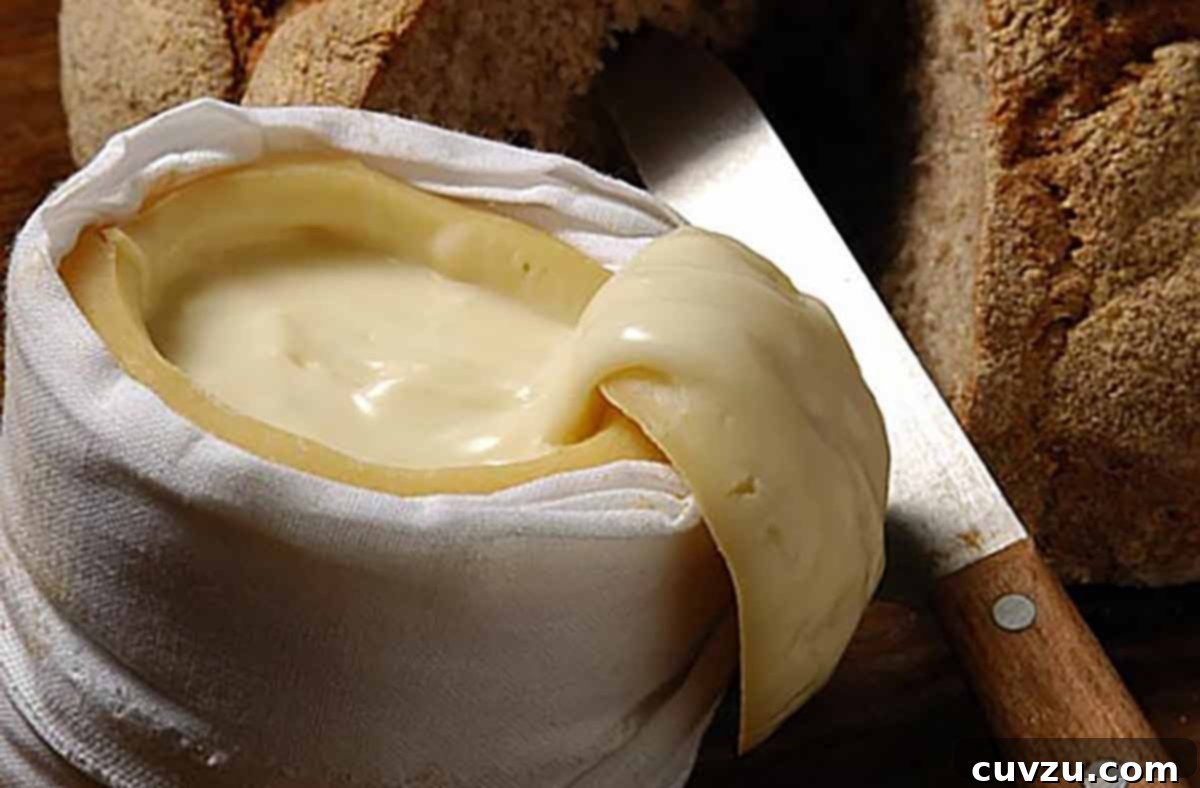
What Makes Queijo da Serra Unique?
Queijo da Serra stands as the undisputed monarch of Portuguese cheeses, its legacy stretching back over eight centuries. Hailing from the rugged, soaring Serra da Estrela mountain range in Portugal’s Beira Alta region, this exquisite cheese is crafted exclusively from the raw milk of Bordaleira sheep. Its artisanal production methods have remained virtually unchanged for centuries, a testament to the dedication of its makers and the deep cultural significance of the cheese.
Each wheel of Queijo da Serra is a labor of love, with individual cheesemakers typically producing at most three wheels a day due to the intensive handcrafting involved. While there has been some pressure from the EU to automate the process, the traditionalists fiercely guard the age-old techniques that give this cheese its distinctive character. Production occurs primarily in the colder months, from November to March, aligning with the sheep’s milking season and ideal maturation conditions.
The cheese undergoes a meticulous four- to six-week maturation process. In its youth, Queijo da Serra is sumptuously, almost unbelievably creamy and soft, often so much so that the linen-wrapped wheels are traditionally served with their tops sliced off, allowing spoons to be passed around for scooping out the luscious interior. As it continues to age, the cheese gradually firms up, developing a more pronounced flavor profile, but it famously never truly hardens, always retaining a delightful yielding texture.
Serving and Substituting Queijo da Serra
To ensure you experience Queijo da Serra at its absolute best, serving it at room temperature is crucial. If stored in the refrigerator, take it out up to three hours in advance to allow its complex aromas and creamy texture to fully develop. When selecting a wedge or wheel, a simple “poke test” is often employed by connoisseurs: the rind should yield under even the slightest pressure, indicating a perfectly ripened cheese.
The flavor of Queijo da Serra is marvelously rich and full-bodied, yet surprisingly balanced. It possesses a distinctive character without being overwhelmingly strong, making it appealing even to those who might typically shy away from more pungent cheeses. However, if Queijo da Serra is not readily available in your area, don’t despair! You can often find it online from specialty purveyors. Alternatively, excellent substitutes that capture a similar melty, full-flavored essence include Spain’s Queso de la Serena or the Italian Taleggio, an oozy and deliciously aromatic cow’s milk cheese that will bring a wonderful depth to your Batatas a Murro.
What Our Recipe Testers Loved: Real Experiences with Batatas a Murro
To truly understand the appeal of Batatas a Murro, we gathered feedback from our dedicated recipe testers. Their experiences highlight the dish’s versatility, comforting qualities, and offer valuable insights for home cooks.
The Irresistible Comfort Factor
A recurring theme among our testers was the profound sense of comfort this dish provides. Deborah Wallace noted, “Crisp potatoes, sweet onions, and melted cheese…what’s not to love? This dish hit all the right notes and could easily become part of my go-to comfort food repertoire.” She appreciated that it was “neither too starchy, too oniony, or too oozing with cheese,” finding it a “satisfying, soothing, warming side.” Camilla Maybee echoed this sentiment, calling it “comfort food at its best” and praising its elegant simplicity. Jenny Hunt further emphasized this, describing it as “comfort food at its finest, a definite addition to our side dish rotation. It’s the simple ingredients, layered for flavor that makes it so special!” This consensus affirms Batatas a Murro as a quintessential comfort dish.
The Cheese Debate: How Much is Enough?
The cheese component sparked an interesting discussion. Elsa M. Jacobson, unable to find Queijo da Serra, opted for Spring Chimay, a pungent Belgian washed-rind cheese. While she loved the overall dish, she felt “the cheese virtually disappeared,” recommending “double the cheese!” Joel Jenkins, who used Gruyère, initially thought the cheese wouldn’t be enough, but found it “was plenty” once shredded, though he noted Gruyère made the dish “a tad bit salty.” Pat Francis, who successfully located Queijo da Serra, found it “distinctive, strong taste, [but] not overpowering,” and that her husband, who dislikes strong cheeses, had “no objection at all.” These varied experiences suggest that cheese quantity and type can be personalized to taste, with some opting for a bolder, more generous hand.
Versatile Pairings and Serving Ideas
Our testers explored various ways to enjoy Batatas a Murro. Elsa M. Jacobson suggested it could be a “vegetarian lunch entrée” when served with a salad, and visually enhanced with “a green garnish… a variety of microgreens, which added a little sweetness, a little spiciness, and a little crunch.” Pat Francis served hers as part of a meal with “sausages and kale,” almost finishing all servings between two people. Jenny Hunt enjoyed hers with “salmon and a Sauvignon Blanc,” highlighting its adaptability to different main courses and wine pairings. Camilla Maybee even found that “leftovers are lovely heated up in the morning with some runny egg!” These suggestions demonstrate the dish’s incredible versatility, proving it’s suitable for almost any meal or occasion.
Making it Your Own: Tips from the Kitchen
Testers also shared practical tips. Deborah Wallace found her onions required about 20 minutes to soften and another 20 to caramelize, choosing to stir and watch them rather than use a cartouche. Joel Jenkins also skipped the cartouche, opting for a “low and slow” flame for sweet, tender onions, which he cooked while the potatoes cooled. Carol Hays particularly enjoyed “the texture differences between the crisp potatoes and the soft onions and gooey cheese,” suggesting minor tweaks can enhance the experience. Joel’s note about Gruyère potentially adding saltiness is a valuable reminder to adjust seasoning if using a naturally salty cheese. These insights underscore the importance of personal touch and careful observation during the cooking process to achieve the best results.
Nutrition at a Glance
Serving: 1 portion
Calories: 487 kcal
Carbohydrates: 50 g
Protein: 11 g
Fat: 28 g
Saturated Fat: 8 g
Monounsaturated Fat: 15 g
Cholesterol: 22 mg
Sodium: 373 mg
Fiber: 7 g
Sugar: 8 g
Nutrition information is an approximation based on standard calculations and should be used as a general guide.
Inspired by “My Lisbon”
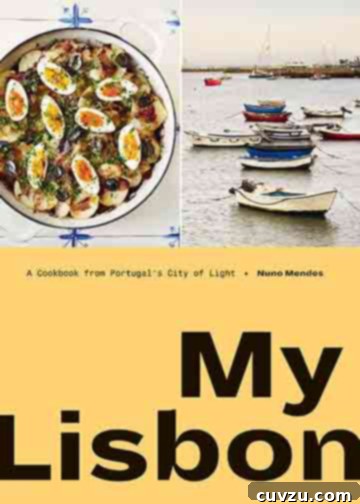
Adapted From
My Lisbon
Buy On Amazon
Savoring the Authentic Taste of Portugal
Batatas a Murro is more than just a recipe; it’s an invitation to explore the rich, comforting flavors of Portuguese cuisine. From the crispy edges of the punched potatoes to the sweet depth of caramelized onions and the indulgent embrace of melted cheese, every element contributes to a dish that is both simple in its ingredients and complex in its satisfaction. Whether you serve it as a hearty side or a standalone meal, this dish promises to transport your taste buds straight to the sun-drenched kitchens of Portugal.
We encourage you to try this soulful recipe and make it your own. Experiment with different melting cheeses, perfect your onion caramelization, and enjoy the delightful process of bringing this traditional Portuguese favorite to life in your own home.
Tried this recipe?
Mention @leitesculinaria or tag #leitesculinaria on Instagram to share your culinary creations!