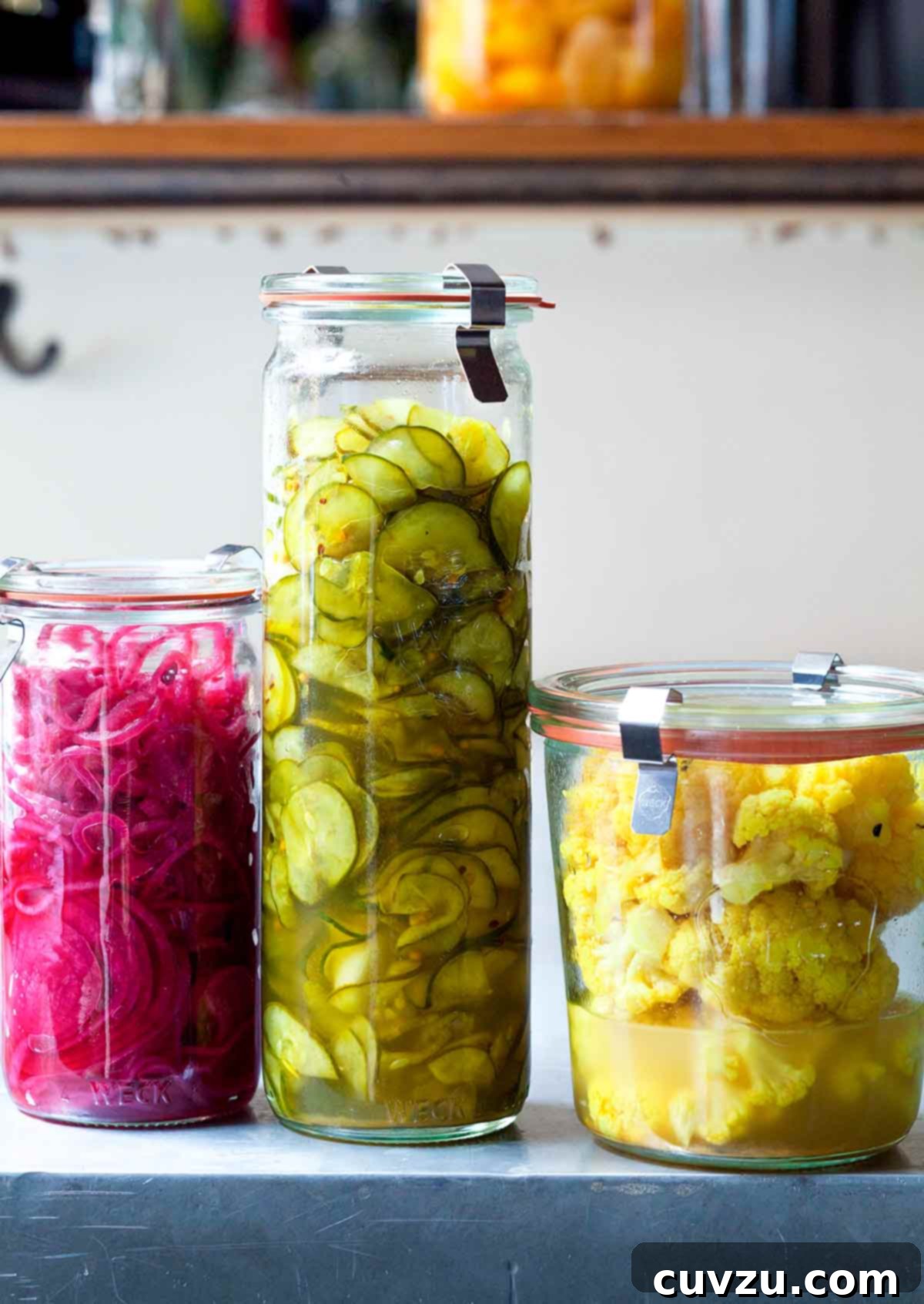
Welcome to the vibrant world of Israeli pickles, a culinary adventure that extends far beyond the common cucumber. In this guide, we’ll delve into the delightful process of creating exquisite pickled cauliflower, crisp cucumbers, and vibrant red onions, each infused with distinct Middle Eastern spices. Prepare to transform ordinary vegetables into extraordinary treats with an authentic flair that will captivate your palate.
Discover the Vibrant World of Authentic Israeli Pickles: A Guide to Homemade Hamutzim
In many parts of the world, the mention of “pickles” immediately conjures images of brine-soaked cucumbers. However, in Israel, the term hamutzim (חמוצים) encompasses a much broader and more exciting array of pickled vegetables. This rich tradition includes everything from crunchy cauliflower and tender eggplants to sweet carrots, crisp celery, bold red onions, and earthy beets. Israeli pickles are not just a condiment; they are a staple, an integral part of nearly every meal, adding a burst of tangy, sweet, and often subtly spicy flavor.
Making your own hamutzim is a rewarding experience that offers numerous benefits. It’s a fantastic way to preserve vegetables when they are in season, ensuring you can enjoy their freshness year-round. Beyond preservation, homemade pickles allow for complete control over ingredients, enabling you to adjust sweetness, tartness, and spice levels to your personal preference. Plus, it’s an eco-friendly approach to cooking, reducing food waste by giving vegetables a delicious second life before they spoil. As culinary expert Einat Admony beautifully puts it, “Until I learned this technique, I had no idea how delicious a pickled cherry tomato could be.” The best part? These quick refrigerator pickles come together in mere minutes, requiring no complex canning equipment.
What Makes Israeli Pickles Unique? The Art of Hamutzim
The distinctive character of Israeli pickles stems from a unique blend of spices and a balanced brine that sets them apart from their Western counterparts. While dill is a dominant flavor in many traditional pickles, Israeli versions often feature a complex profile built on warm, earthy, and sometimes fruity spices. Each vegetable is often treated with a slightly different brine, specifically tailored to enhance its natural flavor and texture, ensuring a harmonious and vibrant result.
The culinary philosophy behind hamutzim emphasizes freshness and an invigorating contrast to richer dishes. They are designed to awaken the palate, offering a delightful crunch and a tangy kick that complements a wide range of Middle Eastern and international cuisines. Whether served alongside a falafel pita, grilled meats, a fresh salad, or simply enjoyed as a standalone snack, these pickles bring an irresistible zest to the table.
Essential Spices for That Authentic Middle Eastern Taste
The magic in Israeli pickles often lies in the thoughtful selection and combination of spices. Beyond the basic salt and vinegar, specific spice blends elevate these vegetables from simple preserves to gourmet delights. Understanding these key spices is crucial to achieving that authentic Middle Eastern flavor profile.
Amba Spice: A Mango-Infused Marvel
Amba is a fragrant and tangy mango pickle condiment, particularly popular in Iraqi-Jewish and Middle Eastern cuisine. The spice mix often contains dried mango powder (amchoor), turmeric, chili powder, fenugreek, and other aromatics. It delivers a unique sweet, sour, and savory flavor with a subtle kick, making it a star ingredient in many Israeli pickle recipes, especially for cauliflower.
Finding amba spice mix can sometimes be a treasure hunt, but it’s typically available at Indian and Middle Eastern spice emporiums or larger international grocery stores. Don’t be discouraged if your local supermarket doesn’t carry it; the rich tapestry of global flavors means these specialty ingredients are often more accessible than you might think. A dedicated search in ethnic markets can often yield these hidden gems.
Chaat Masala: The Finger-Licking Alternative
For those who may struggle to find amba spice, chaat masala offers a fantastic and highly effective substitute. This Indian spice blend is celebrated for its distinctive “finger-licking” flavor (the word “chaat” literally means “to lick”), a complex mix of tangy, spicy, sweet, and savory notes that can be incredibly addictive. One of our recipe testers found it to be a terrific alternative, lending a similar depth and vibrancy to the pickled cauliflower.
If you’re feeling adventurous, you can easily make your own chaat masala at home. A common blend involves grinding 1 tablespoon dried mango powder (amchoor or amchur), 2 teaspoons toasted cumin seeds, 2 teaspoons black salt, 1 teaspoon coarse salt, 1 teaspoon dried pomegranate seeds (anardhana), and 1/2 teaspoon whole black peppercorns. This homemade approach ensures freshness and allows for customization of flavor intensity. While some of these ingredients might sound exotic, many are increasingly available in well-stocked grocery stores or online. As our testers often report, even in moderately sized cities, a little detective work can unearth these unique spices.
Other Key Spices
- Mustard Seeds: Impart a pungent, slightly spicy warmth, classic in many pickling brines.
- Turmeric: Provides a beautiful golden hue and an earthy, slightly bitter flavor, often found in cauliflower pickles.
- Dill Seeds: Offer a gentle, aromatic, and slightly sweet flavor, a natural companion to cucumbers.
- Nigella Seeds: Also known as black cumin, these tiny seeds add a slightly bitter, onion-like, and oregano-like flavor, enhancing the complexity of cauliflower.
- Bay Leaf: Contributes a subtle, almost herbal, woody aroma that complements red onions.
- Star Anise: A beautiful, star-shaped spice with a strong licorice-like flavor, adding an exotic note to the red onion brine.
- Cinnamon Stick: Infuses a warm, sweet, and woody fragrance, creating a delightful balance in the pickled red onions.
Refrigerator Pickles: Easy, Quick, and No Canning Required
One of the most appealing aspects of these Israeli pickles is that they are “refrigerator pickles.” This means they do not require the extensive sterilization and sealing process associated with traditional hot water bath canning. Instead, vegetables are immersed in a hot or cooled brine and then stored in the refrigerator, where the low temperature preserves them. This method is incredibly beginner-friendly and perfect for making small batches of fresh, crisp pickles anytime you desire.
Properly stored in a covered container in the refrigerator, these vibrant pickles will retain their quality and delicious flavor for an impressive 4 to 6 weeks. This makes them an ideal make-ahead component for weekly meal prep or for having a flavorful side dish readily available. While refrigerator pickles don’t undergo the same fermentation process as some traditional lacto-fermented pickles, they still develop deeper flavors over time and offer a fresh, tangy bite.
Crafting Your Israeli Pickles: A Trio of Delight
This recipe invites you to explore three distinct pickling experiences, each designed to highlight the unique qualities of cucumbers, cauliflower, and red onions with tailored spiced brines.
Zesty Pickled Cucumbers: The Classic Crisp
Our pickled cucumbers offer a delightful crunch and a refreshingly tangy flavor that’s both familiar and uniquely Israeli. The brine, subtly seasoned with yellow onion, garlic, mustard seeds, turmeric, and dill seeds, creates a vibrant taste profile that’s a step above your average store-bought dill pickle. For the best results, opt for Kirby cucumbers, also known as pickling cucumbers, which are known for their firm texture and ability to absorb the brine beautifully. Slice them into thin rounds for versatility, perfect for layering on sandwiches, burgers, or simply enjoying by the handful as a refreshing snack. Many of our recipe testers were surprised by how much they preferred these homemade slices to pre-packaged options.
Flavorful Pickled Cauliflower: A Tangy Twist
The pickled cauliflower is a true revelation, absorbing the rich flavors of its spiced brine to become tender yet crisp. The addition of chaat masala or amba spice mix, alongside a pinch of turmeric, lends a beautiful golden yellow color and an intricate sweet-sour-spicy character. Nigella seeds and garlic further enhance its depth. This pickled cauliflower makes an excellent side dish, a unique addition to mezze platters, or a delicious component in grain bowls and salads. Its firm texture holds up wonderfully in the brine, delivering a satisfying bite with every piece.
Sweet & Savory Pickled Red Onions: A Colorful Addition
These pickled red onions are as stunning visually as they are delicious. Thinly sliced red onions are infused with a fragrant brine featuring bay leaf, star anise, and a cinnamon stick, creating a complex sweet and savory profile with a hint of warmth. A small red beet is added not just for its subtle earthy notes but also to impart a gorgeous, deep ruby red color to the onions. These vibrant pickles are fantastic for adding a pop of color and tangy flavor to tacos, salads, sandwiches, and even cheese boards. They offer a sophisticated twist to any dish, balancing richness with their bright acidity.
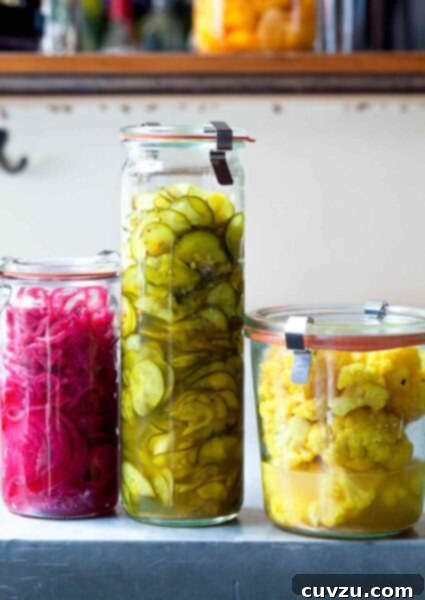
Israeli Pickles
By David Leite
Sides
Israeli
16
servings (about 1/4 cup)
46
kcal
10
minutes
10
minutes
20
minutes
Ingredients
For the pickled cucumbers
- 2 1/2 cups cold water
- 1 1/2 cups distilled white vinegar
- 1/2 cup granulated sugar
- 1/4 cup kosher salt
- 1 small yellow onion, thinly sliced
- 2 garlic cloves, thinly sliced
- 1 teaspoon mustard seeds
- 1/4 teaspoon ground turmeric
- 1/4 teaspoon dill seeds
- 6 to 8 Kirby cucumbers, sliced into thin rounds
For the pickled cauliflower
- 2 1/2 cups cold water
- 1 cup distilled white vinegar
- 3/4 cup granulated sugar
- 1 1/2 tablespoons chaat masala or amba spice mix
- 1 tablespoon kosher salt
- 1 pinch ground turmeric
- 1 large head cauliflower
- 1 1/2 teaspoons nigella seeds
- 1 garlic clove
For the pickled red onions
- 4 small red onions, thinly sliced
- 1 small red beet, sliced into paper-thin rounds
- 1 bay leaf
- 1 star anise
- 1 cinnamon stick
- 2 cups distilled white vinegar
- 1 cup granulated sugar
Instructions
Make the pickled cucumbers
-
In a small saucepan, combine the water, vinegar, sugar, and salt. Bring to a boil and stir until the sugar is completely dissolved. Remove from the heat and let cool to room temperature.
-
In a large bowl, mix the onion, garlic, mustard seeds, turmeric, dill seeds, and cucumbers together. When the vinegar mixture has cooled, pour it over the cucumbers and stir well to combine.
-
Transfer the pickles to a 1-quart glass jar. Cover and stash in the back of the fridge for at least 1 week. The pickles will keep, refrigerated, for up to several weeks.
Make the pickled cauliflower
-
In a small saucepan, stir together the water, vinegar, sugar, chaat masala or amba, salt, and turmeric. Bring to a boil and stir until the sugar is completely dissolved. Remove from the heat and let cool to room temperature.
-
Meanwhile, trim the cauliflower into small florets and place in a 4-pint glass jar. Pour the cooled vinegar mixture into the jar and then toss in the nigella seeds and garlic. Cover and stash in the back of the fridge for at least 1 week. The pickles will keep, refrigerated, for up to several weeks.
Make the pickled red onions
-
Cram the onions, beet slices, bay leaf, star anise, and cinnamon stick in a 1-quart glass jar.
-
In a small bowl, whisk together the vinegar and sugar. Pour it over the jumble of onions and other ingredients in the jar. Cover and stash in the back of the fridge for at least 1 week. The pickles will keep, refrigerated, for up to several weeks.
Adapted From
Balaboosta
Buy On Amazon
Nutrition
Calories: 46 kcal
Carbohydrates: 11 g
Protein: 2 g
Fat: 1 g
Saturated Fat: 1 g
Monounsaturated Fat: 1 g
Sodium: 460 mg
Fiber: 2 g
Sugar: 6 g
Nutrition information is automatically calculated, so should only be used as an approximation.
Beyond the Recipe: Tips for Perfect Pickling Every Time
While the Israeli pickles recipe is straightforward, a few key tips can elevate your homemade hamutzim from good to absolutely unforgettable:
- Quality Ingredients are Key: Always start with the freshest, highest-quality vegetables you can find. Bruised or old vegetables will not yield the same crisp texture. For cucumbers, Kirby or other firm pickling varieties are ideal.
- Sterilize Your Jars: Even for refrigerator pickles, clean and sterilized jars are essential to ensure food safety and prevent spoilage. Wash jars and lids in hot, soapy water, then rinse thoroughly. For extra precaution, you can boil them for 10 minutes or run them through a hot cycle in your dishwasher.
- Cool the Brine: While some pickling methods call for hot brine, for refrigerator pickles, allowing the brine to cool to room temperature before pouring it over the vegetables can help maintain their crispness.
- Adjust to Your Taste: The beauty of homemade pickles is customization. Feel free to adjust the amount of sugar, salt, or even the type and quantity of spices to suit your preference. If you like more heat, add a pinch of red pepper flakes to the brine.
- Experiment with Other Vegetables: Don’t limit yourself to cucumbers, cauliflower, and red onions. This pickling method can be adapted for a variety of other vegetables like carrots, bell peppers, green beans, or even cherry tomatoes. Each will absorb the brine differently, offering new textures and flavors.
- Patience is a Virtue: While these are quick pickles, allowing them to rest in the refrigerator for at least a week (or even longer, as some testers suggest) allows the flavors to fully meld and deepen, resulting in a more complex and satisfying pickle.
What Our Recipe Testers Say: Real Feedback on These Israeli Pickles
We believe in recipes that truly work, which is why our dedicated team of recipe testers puts every dish through its paces. Here’s what they had to say about these delightful Israeli pickles:
Recipe Testers’ Reviews
Gene C.
“All I can say about this particular style of Israeli pickles is move over dill, cause there’s a new guy in town. I grew up in an Italian neighborhood with garlic pickles in a barrel and have grown quite fond of pickles in general. I love pickles of all kinds. I’ve had homemade pickles in so many variations, but nothing like this one. I’m not sure what the difference is; it may be the sugar. One thing for sure, these are incredible, at least to me. Not too sweet and not too tart.”
“These are sliced, so use them on burgers and on sandwiches, or eat a bunch plain, or you can even work them into salads or whatever. Don’t see myself buying pickles ever again, especially not the chips for burgers. These also went over very well with my tasters and friends—so well that I have to make more. I’ll be doing some spears as well for some variety. Kirby cucumbers are also known as pickling cucumbers and can be found in most supermarkets. Try it. I promise you won’t be disappointed. I have no comments or notes to add because this recipe is just right. Well, one thing: If you want more heat then add some red pepper flakes at your own risk.”
Michelle Cragel
“This Israeli pickles recipe was great. My only complaint was that I prefer spears, not slices, for my pickles. So in the future, I’ll be trying this recipe by cutting the cucumbers in spears and then letting them sit in the fridge for longer (2 weeks, perhaps). The garlic definitely came through and the flavor was brine-like yet SO much better than your normal jarred pickle.”
Sita Krishnaswamy
“I made the cucumber and cauliflower Israeli pickles recipe about 10 days ago. Today I opened the cucumber pickle at lunch time and served it alongside roast chicken and a green salad. The cucumbers were fairly crisp and the flavors had permeated quite well. It’s certainly an easy way to make pickles during the off season. I couldn’t find kirby cucumbers so I used mini cucumbers. The cauliflower pickle I made with chaat masala (an Indian spice blend) and I must say I enjoyed it very much. The cauliflower was a nice yellow from the turmeric and the chaat spice had permeated it quite well. The cauliflower remained crisp. I think these will make great hostess gifts.”
Sofia Reino
“Pickles have always been a favorite of mine, and sure enough, the final result of this Israeli pickles recipe was just like the ones I recall from growing up. The cauliflower gained a slight yellowish tint and was nice and crunchy with a delicious tart and sour taste, just as a pickled vegetable should have.”
Brenda Carleton
“Pickles are a staple in our house, and I make tons of varieties. While these cucumber pickles didn’t cause my eyes to roll back in ecstasy, they were still good pickles. Notice “were,” denoting past tense, as they disappeared in a flash. The pickles recipe doesn’t contain particularly interesting or unique ingredients, nothing to wow, but it turned out a good pickle with an ever-so-slight crunch. The sliced garlic added a nice mellow flavor. When I make this recipe again, I’ll add juniper berries and red pepper flakes, which is my personal preference.”
Jackie Gorman
“I’m really happy to have found this Israeli pickles recipe. Since I don’t want to can a dozen or more jars of pickles, I don’t make them. Or, I should say, I didn’t make them. I will now. I made it with cucumbers and it’s quick, easy, and yields very crisp pickles with nice flavors. I want to experiment with different spices to make these even more flavorful.”
Megan M.
“Tonight, a week after I made the red onions Israeli pickles recipe, I put some on my salad. The color was lovely and the pickle added some interest to the salad. It would also be good on a piece of bread with cheese or meat. The flavor of the cinnamon, bay, and star anise isn’t noticeable enough for me. Perhaps a larger cinnamon stick, 2 star anise, and bay leaves would help.”
Frequently Asked Questions About Israeli Pickles
Amba spice mix is a Middle Eastern and Indian condiment, often associated with Iraqi-Jewish cuisine. It’s typically a tangy, savory, and slightly spicy blend that commonly includes dried mango powder (amchoor), fenugreek, turmeric, and chili powder. It imparts a unique fruity and umami flavor. If unavailable, chaat masala makes an excellent substitute.
When properly stored in a covered container in the refrigerator, these Israeli pickles will stay fresh and delicious for 4 to 6 weeks. They are not intended for long-term pantry storage like traditionally canned pickles, but their quick preparation and vibrant flavor make them perfect for regular enjoyment.
Absolutely! The beauty of hamutzim is its versatility. Feel free to experiment with a variety of vegetables such as carrots, bell peppers, green beans, or even small eggplants. Adjust the slicing method and pickling time as needed for different densities of vegetables. The spiced brines provided in this recipe can serve as a fantastic starting point for your own creative combinations.
Tried this recipe?
Mention @leitesculinaria or tag #leitesculinaria!
Embrace the delightful tradition of Israeli pickles and bring a burst of authentic Middle Eastern flavor to your kitchen. These simple yet sensational recipes for pickled cucumbers, cauliflower, and red onions are not just food; they are an experience—a testament to the joy of homemade preserves and the vibrant culinary landscape of Israel. Enjoy the crunch, savor the spice, and relish the ease of creating these incredible hamutzim in your own home!