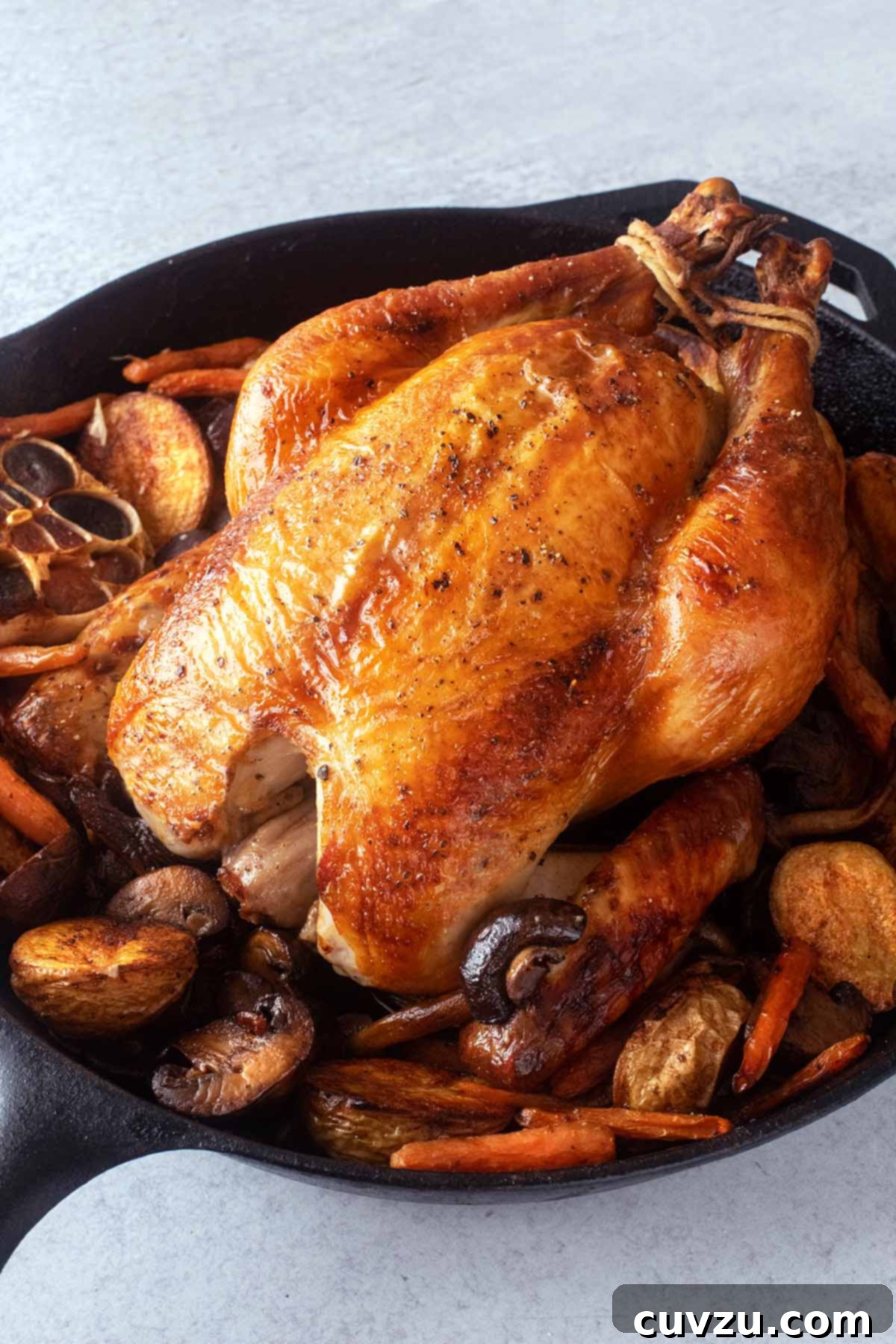
Prepare to experience what many consider the best brined roast chicken recipe ever created. This exceptional method, developed by culinary maestro David Leite and highlighted in The Washington Post, goes beyond conventional brining. It introduces a revolutionary technique where aromatic vegetables and fresh herbs are pureed and integrated into the brining solution, transforming a simple chicken into a masterpiece of flavor and succulence. We affectionately refer to it as a refined brine – an approach that promises to elevate your home cooking to new heights.
This roast chicken recipe is a testament to the fact that brining is not just an extra step but a culinary investment yielding extraordinary returns. Forget bland, dry chicken; this method consistently delivers one of the most flavorful and tender roasted chickens you’ll ever taste. It has become a cherished staple, ensuring every meal is a memorable one.
A crucial detail for success lies in the choice and measurement of kosher salt. Different brands, such as Diamond Crystal and Morton, have vastly different crystal sizes, meaning their volumes can vary significantly for the same weight. To ensure flawless results, adhere strictly to the specified quantities for these two widely available brands. Under no circumstances should you substitute with sea salt or table salt, as their finer grains will drastically alter the salinity and potentially ruin your bird.
☞ READ THE ORIGINAL ARTICLE: A BETTER BRINE FOR CHICKEN

Why Our Testers Raved About This Recipe
Our dedicated team of recipe testers devoured this brined chicken for a multitude of compelling reasons. Foremost among them was its exceeding juiciness – a remarkable feat, especially for chicken breast, which is often notoriously prone to drying out. Patty Fabian enthusiastically declared the bird to be “perfectly seasoned,” crowning it the “most flavorful roast chicken that’s ever come out of my oven!” This is high praise indeed from experienced home cooks.
Annie A. echoed these sentiments, articulating, “There are almost no words to describe its succulence, chicken-soup-like depth of flavor, and buttery, roasted presentation.” Such glowing reviews speak volumes about the transformative power of this unique brining method. It’s not just juicy; it’s a symphony of well-balanced flavors that permeate every fiber of the meat, from skin to bone.
Understanding Your Ingredients for the Perfect Brine
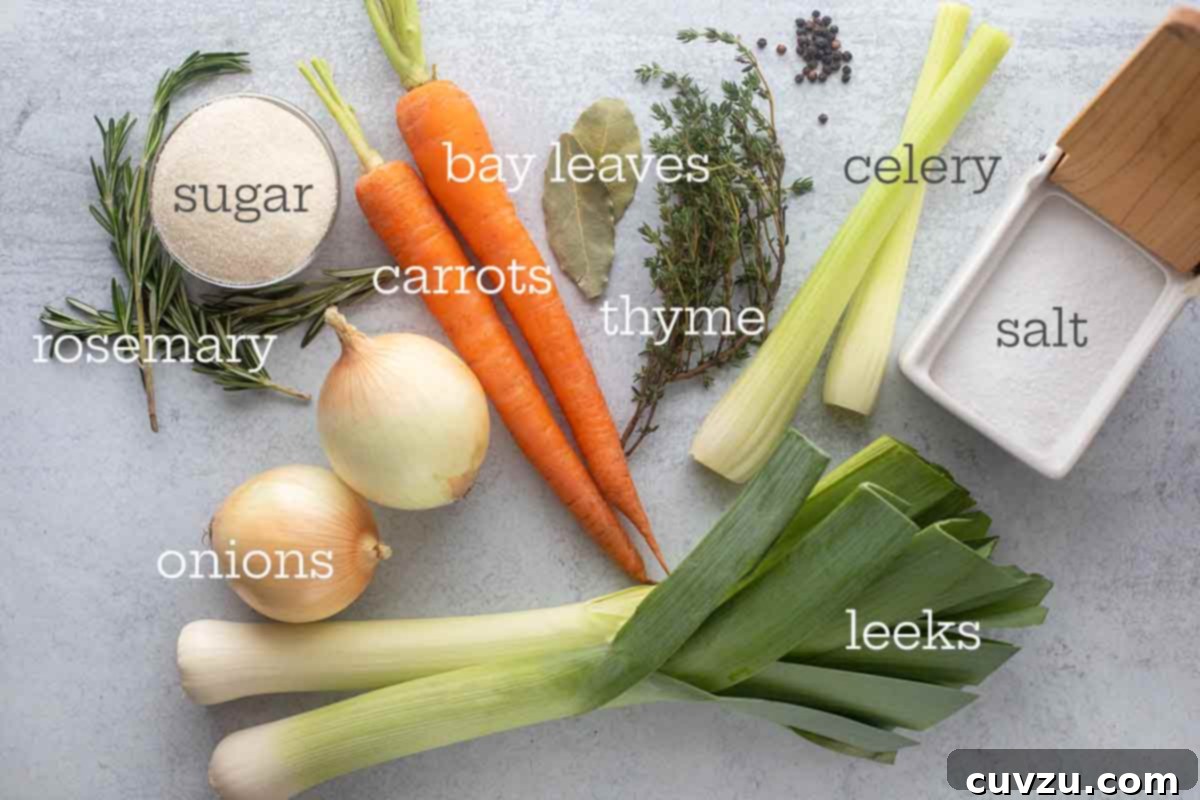
Each ingredient in this recipe plays a vital role in creating the signature flavor and texture of David Leite’s best brined roast chicken. Understanding their contributions will enhance your appreciation for this culinary technique.
- Whole chicken: Opt for a fresh, high-quality bird weighing between 4 to 5 pounds. This size is ideal for fitting into most standard brining vessels and roasting pans, ensuring even brining and cooking. Remember to remove the giblets and gizzards – don’t discard them! Freeze them for later use in homemade chicken stock or a rich chicken gravy.
- Kosher salt: This is the backbone of any effective brine. Due to significant differences in crystal size, the volume of kosher salt can vary greatly between brands. It’s crucial to measure accurately for optimal results. For instance, if you’re using Diamond Crystal kosher salt, you’ll need 1 1/2 cups. If you have Morton kosher salt, use a heaping 3/4 cup. The safest and most precise method is to weigh your salt: aim for 7.5 ounces or 215 grams. Using table salt or fine sea salt is not recommended as their much smaller crystal size would result in an overly salty brine and an inedible chicken.
- Granulated sugar: Beyond simply adding a hint of sweetness, sugar plays a dual role in this brine. It helps to balance the saltiness, contributing to a more nuanced flavor profile. More importantly, sugar aids in the Maillard reaction during roasting, promoting a beautifully golden-brown and deliciously crisp skin on your chicken. This creates an irresistible visual appeal and texture.
- Aromatic Vegetables (Onions, Leeks, Carrots, Celery) & Herbs (Bay Leaves, Thyme, Rosemary): These are the true stars of David Leite’s “refined brine.” Instead of just steeping them, pureeing these aromatics ensures that their essential oils and deep flavors are fully extracted and emulsified into the brine. This allows the chicken meat to absorb a complex, savory, “chicken-soup-like” flavor that goes beyond simple seasoning, infusing every bite with unparalleled richness. Fresh herbs are always preferred for their vibrant aroma.
- Ice Cubes: Essential for rapidly cooling down the boiled salt and sugar solution. Adding ice ensures that the brine reaches a safe, cold temperature before the chicken is submerged, preventing bacterial growth and maintaining food safety.
Mastering the Brine and Roast: Step-by-Step Guide
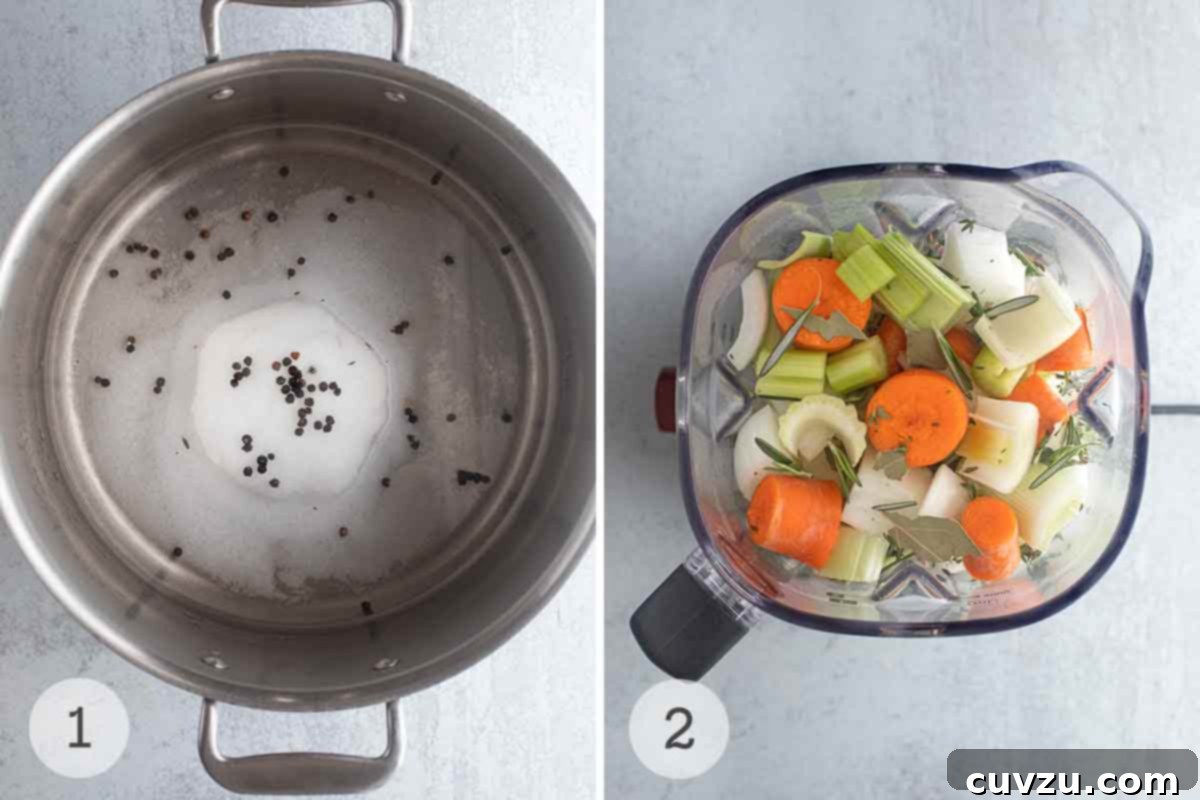
Follow these detailed steps carefully to ensure a perfectly brined and roasted chicken that will impress even the most discerning palates.
- Prepare the Salt and Sugar Solution: In a large Dutch oven or a substantial pasta pot, combine 3 cups of cold water with your precisely measured kosher salt, granulated sugar, and whole black peppercorns. Bring this mixture to a rolling boil over high heat, stirring continuously until both the salt and sugar have completely dissolved. Once dissolved, immediately remove the pot from the heat.
- Blend the Aromatic Base: While the salt solution cools slightly, add 2 cups of water to a high-powered blender or food processor. Introduce your coarsely chopped onions, leeks, carrots, celery, bay leaves, thyme leaves, and rosemary sprigs to the blender. If your blender is not large enough, process the vegetables in batches, ensuring they are roughly the same size for even blending.
- Create a Smooth Puree: Activate your blender and process the vegetable and herb mixture until it achieves a completely smooth, almost liquefied consistency. This crucial step ensures maximum flavor extraction and integration into the brine.
- Assemble the Brine and Submerge Chicken: Return to your pot containing the cooled salt solution. Add the remaining 6 cups of cold water along with the 9 cups of ice cubes. Stir vigorously until all the ice has melted and the liquid is thoroughly chilled. Now, incorporate the freshly pureed vegetable and herb mixture, stirring well to combine. Gently nestle your whole chicken into the pot, ensuring it is fully submerged in the aromatic brine. Cover the pot securely and refrigerate overnight for 8 to 12 hours. This extended soak is key to both juiciness and deep flavor.
- Preheat Oven and Prepare Roasting Pan: The following day, about an hour before you plan to roast, remove the chicken from the refrigerator to allow it to come closer to room temperature for more even cooking. Preheat your oven to a robust 425°F (218°C). Place a sturdy rack inside a large roasting pan; this elevates the chicken, allowing for better air circulation and crispier skin.
- Rinse and Thoroughly Dry the Chicken: Carefully remove the chicken from the brine, discarding the used brining solution. This step is essential to prevent the final product from being overly salty. Rinse the chicken thoroughly under cold running water, both inside and out, to remove any residual brine and pureed vegetable particles. Pat the chicken exceptionally dry with paper towels. Achieving a very dry surface is paramount for crispy skin.
- Season and Roast to Perfection: Place the rinsed and dried chicken on the rack in your prepared roasting pan. For a more compact and evenly cooked bird, you may tie the legs together with kitchen twine, if desired. Brush the entire surface of the chicken generously with melted unsalted butter, then season liberally with freshly ground black pepper. Avoid adding more salt, as the brining process has already taken care of seasoning. Roast the chicken on the middle rack of your preheated oven for approximately 1 hour and 10 minutes. The internal temperature, measured with an instant-read thermometer inserted into the thickest part of the thigh (avoiding the bone), should reach 165°F (74°C). The skin should develop a beautiful, deep golden-brown hue and a satisfying crispness. If the skin begins to brown too quickly, loosely tent the chicken with a large sheet of aluminum foil to prevent burning.
- Rest for Ultimate Juiciness: Once cooked, transfer the chicken from the oven to a clean cutting board. Tent it loosely with aluminum foil and allow it to rest for at least 15 minutes before carving. This crucial resting period allows the juices to redistribute throughout the meat, ensuring every slice is incredibly moist and flavorful. After resting, proceed to carve the chicken and serve immediately.
Common Questions About Brining and Roasting Chicken
Brining is a fantastic technique that offers two primary benefits. Firstly, the salt in the brine penetrates the chicken meat, causing muscle proteins to denature and unwind. This allows the muscle fibers to absorb and retain more moisture during cooking, resulting in an exceptionally juicy and tender roasted chicken, even the notoriously dry breast meat. Secondly, in this specific “refined brine” recipe, the pureed aromatic vegetables and herbs infuse the chicken with a complex, savory flavor that goes deep into the meat, far beyond just surface seasoning. It truly transforms the chicken into a more delicious and memorable dish, making the extra effort entirely worthwhile.
Absolutely! This flavorful brining method is highly adaptable and works wonderfully for a holiday turkey. However, given that turkeys are significantly larger than chickens, you will need to scale up the brine mixture accordingly. Depending on the size of your turkey (e.g., 12-20 pounds), you might need to double or even triple the brine ingredients to ensure the bird is fully submerged. A good rule of thumb is to have enough brine to completely cover the turkey without it touching the bottom of the container. You may also need a much larger brining vessel, such as a large cooler or a food-grade bucket, and a longer brining time, typically 12 to 24 hours, or even up to 36 hours for very large birds. Always ensure the turkey remains fully immersed and refrigerated throughout the brining process.
While the current combination of thyme, rosemary, and bay leaves creates a classic and deeply satisfying flavor profile, this brine is quite versatile. Feel free to experiment with other fresh herbs such as sage, parsley, marjoram, or even a touch of tarragon to customize the aroma. For a different spice note, you could replace the whole black peppercorns with whole allspice berries, coriander seeds, or even a few star anise pods for an exotic twist. Consider adding citrus zest (lemon, orange) to the puree for brightness, or a hint of smoked paprika for depth. Always remember that strong spices should be used sparingly to avoid overpowering the delicate chicken flavor.
Pro Tips & Troubleshooting for Perfect Roast Chicken
Achieving a restaurant-quality brined roast chicken is within reach with these expert tips and solutions to common challenges:
- Cleaning Leeks Thoroughly: Leeks are known for trapping dirt between their layers. To clean them effectively, first remove the root end and the tough dark green tops. Slice the leeks lengthwise, then crosswise into 1-inch pieces. Place these pieces in a bowl and cover them with cool water. Allow them to sit for about 15 minutes, which gives any trapped dirt and grit ample time to settle to the bottom. Use a slotted spoon or your hands to carefully lift the clean leek pieces from the water, leaving the sediment behind.
- Finding a Suitable Brining Vessel: Not everyone has a pot large enough to comfortably accommodate a whole chicken and 11 cups of brine. A practical alternative is to use a strong, good-quality resealable 2.5-gallon (or larger) bag. Place the chicken and the brine mixture inside the bag, squeezing out as much air as possible before sealing it tightly. For added security and to contain any potential leaks, always stash the filled and sealed bag inside a large pot, bowl, or even a clean cooler before refrigerating overnight.
- Preventing Over-Browning: Oven temperatures can sometimes be inconsistent, or certain areas of your oven might run hotter, causing parts of the chicken skin to brown faster than others. If you notice your chicken browning too quickly during roasting, especially on the breast, simply cover it loosely with a sheet of aluminum foil. This acts as a shield, slowing down the browning process while allowing the rest of the chicken to continue cooking evenly.
- Achieving Crispy Skin: Beyond patting the chicken extremely dry, you can enhance crispiness by applying a thin layer of melted butter or olive oil just before roasting. For an extra crisp finish, ensure your oven is fully preheated, and consider starting the roast at a slightly higher temperature (e.g., 450°F/232°C) for the first 15-20 minutes, then reducing it to 425°F (218°C) for the remainder of the cooking time.
- The Importance of Resting: Never skip the resting step! While it’s tempting to carve immediately, allowing the chicken to rest, loosely tented with foil, for 15-20 minutes after roasting is crucial. During cooking, muscle fibers contract and push juices towards the center. Resting allows these fibers to relax and the juices to redistribute throughout the meat, ensuring a truly moist and flavorful experience with every slice.
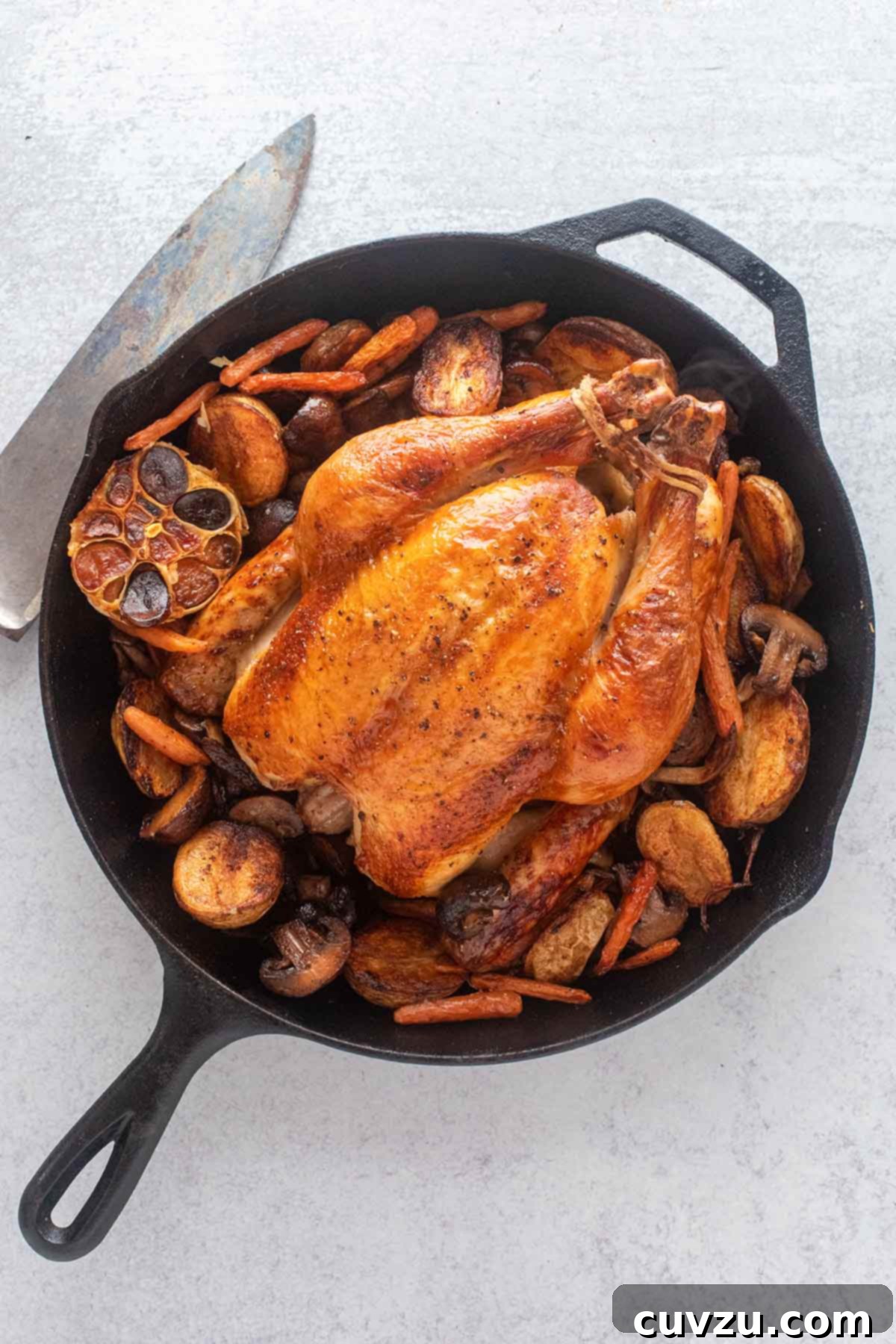
Explore More Delectable Roast Chicken Dishes
Once you’ve mastered the art of David Leite’s best brined roast chicken, you might find yourself eager to explore other incredible ways to prepare this versatile bird. Here are a couple more exquisite roast chicken recipes to inspire your culinary adventures:
Share Your Culinary Experience: Write a Review
If you’ve had the pleasure of making this incredible roast chicken recipe, or any other dish featured on Leite’s Culinaria, we encourage you to share your thoughts! Consider leaving a review, a star rating, and even your best photo in the comments section below. Your feedback and culinary creations inspire us all! –David
“This was so succulent and herbaceous! Easily the best roast chicken I’ve had in recent memory. And as far as my food memory goes, “recent” covers a long time. I followed the recipe exactly, and it came out perfectly. Thank you!”
Rich, a Delighted Home Cook
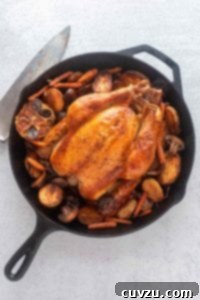
David Leite’s Best Brined Roast Chicken
David Leite
Ingredients
For the brine
- 11 cups cold water
- 1 1/2 cups Diamond Crystal kosher salt OR a heaping 3/4 cup Morton’s kosher salt
- 3/4 cup granulated sugar
- 1 tablespoon whole black peppercorns
- 2 medium yellow onions, coarsely chopped
- 2 medium leeks, cleaned and coarsely chopped
- 2 medium carrots, scrubbed well and coarsely chopped
- 2 ribs celery, coarsely chopped
- 2 bay leaves
- Leaves from 6 stems thyme
- Leaves from 6 sprigs rosemary
- 9 cups ice cubes
- One (4-to-5-pound) chicken, giblet/gizzard packet removed
For the roast brined chicken
- 3 tablespoons unsalted butter, melted
- Freshly ground black pepper
Instructions
Make the brine
-
Add 3 cups of the cold water to a large Dutch oven or pasta pot. Pour in the salt, sugar, and peppercorns. Bring to a boil over high heat, stirring until the salt and sugar dissolve, and then turn off the heat.
-
Meanwhile, add 2 cups of the water to a high-powered blender or food processor. Working in batches as needed, add the onions, leeks, carrots, celery, bay leaves, thyme, and rosemary.
-
Purée until liquefied.
-
Add the ice to the pot along with the remaining 6 cups of cold water. Stir until the ice cubes melt and the water is cold. Add the puréed ingredients. Submerge the chicken, cover the pot, and refrigerate overnight (8 to 12 hours).
Roast the brined chicken
-
Preheat the oven to 425°F (218°C). Place a rack in a roasting pan.
-
Rinse the chicken and pat dry with paper towel. Discard the brine.
-
Place the bird on the rack in the pan and tie the legs together with kitchen twine, if desired. Brush with the melted butter and season generously with pepper. Roast (middle rack) for about 1 hour and 10 minutes, or until an instant-read thermometer inserted into the thigh meat (away from the bone) registers 165°F (74°C). The skin should be brown and crisp. If it starts to overbrown, loosely cover with a large sheet of aluminum foil.
-
Let the chicken sit, loosely tented with aluminum foil, for 15 minutes before carving.
Notes
- Salt: If you’re uncertain about the brand of your kosher salt, the most accurate approach is to weigh it. Aim for precisely 7.5 ounces or 215 grams of kosher salt for your brine to ensure optimal flavor and juiciness without over-salting.
- Leeks: To ensure your leeks are free of grit, clean the cut pieces by submerging them in a bowl of ice water for approximately 15 minutes. This allows any trapped soil to settle. Then, gently lift the clean leeks out of the water, leaving the sediment behind.
- Pot Options: If your largest pot isn’t quite big enough to hold both the chicken and the substantial volume of brine, a strong, good-quality resealable 2.5-gallon (or larger) bag is an excellent solution. For peace of mind and to contain any accidental leaks, always place the filled and sealed bag inside another large pot or bowl before refrigerating.

An LC Original
View More Original Recipes
Nutrition
Calories: 274 kcal
Carbohydrates: 0.01 g
Protein: 19 g
Fat: 21 g
Saturated Fat: 8 g
Monounsaturated Fat: 8 g
Trans Fat: 0.3 g
Cholesterol: 93 mg
Sodium: 74 mg
Sugar: 0.01 g
Nutrition information is automatically calculated, so should only be used as an approximation.
Tried this recipe?Mention @leitesculinaria or tag #leitesculinaria!
Insights from Our Recipe Testers
Annie A.
Annie A. found this brined chicken to be truly “INCREDIBLE,” describing its succulence and buttery, roasted presentation as almost beyond words. She highlighted its “chicken-soup-like depth of flavor,” suggesting it would be a perfect winter dish, filling the house with a rich, rosemary-tinted aroma akin to Thanksgiving. Annie went as far as to suggest this recipe should be made for Thanksgiving itself, confident that once tried, it would become the only roast chicken recipe one would ever need. The prospect of enjoying delicious chicken sandwiches with the leftovers was an added bonus.
Patty Fabian
Patty Fabian, initially new to extended brining, was thoroughly impressed by this unique method. She confirmed that it indeed produced the “most juicy, tender, and flavorful roast chicken” she had ever made. She specifically noted how the pureed vegetables infused a “perfectly seasoned flavor” deep into the meat, right to the bone, without any single flavor element overpowering the others. The subtle hint of sweet and savory, attributed to the vegetables, provided a balanced taste. Patty also praised the sugar’s role in creating a uniformly beautiful brown and crisp skin.
She found the brine preparation surprisingly easy with a food processor, delighting in the wonderful aroma of the pureed aromatics. Her main challenge was finding a large enough pot for the brine and chicken. She ingeniously used a 2.5-gallon zip-lock bag within a tall pasta pot to ensure the chicken remained fully submerged, allowing it to brine effectively for 24 hours. The chicken achieved a beautifully browned and crispy skin in 50 minutes, requiring a foil tent for the remaining 20 minutes of roasting. The final internal temperature of 165°F (74°C) was reached exactly at 1 hour and 10 minutes, followed by a crucial 15-minute rest. Patty concluded that despite the planning and fridge space required, the effort is unequivocally worth it for such a great-tasting chicken dinner.
Erica V.
Erica V., who grew up with roast chicken as a Sunday staple, discovered the secret to moist, succulent chicken as an adult: brining. Despite her husband’s initial concerns about the salt quantity, he quickly became a convert after tasting the result, abandoning utensils for his hands. Living in Italy, where buttermilk is scarce, Erica was particularly intrigued by this new method of infusing both flavor and moisture. She appreciated the recipe’s flexibility, allowing the use of less-than-perfect vegetables, which helps minimize waste.
Her main hurdles included sourcing kosher salt, for which she successfully substituted Sale Grosso (a coarse salt), and adapting dried bay leaves to dried salvia leaves. She found the instructions straightforward (“boil water: ✔️. Dump veggies in a blender: ✔️”). After brining for 22 hours, Erica removed the chicken from the fridge for two hours before cooking to ensure more consistent roasting. The chicken, drained and patted dry, was brushed with melted butter and cracked pepper, resulting in a beautiful brown color and meat that effortlessly pulled away. Most importantly, it was “beyond juicy and moist with so much flavor!”