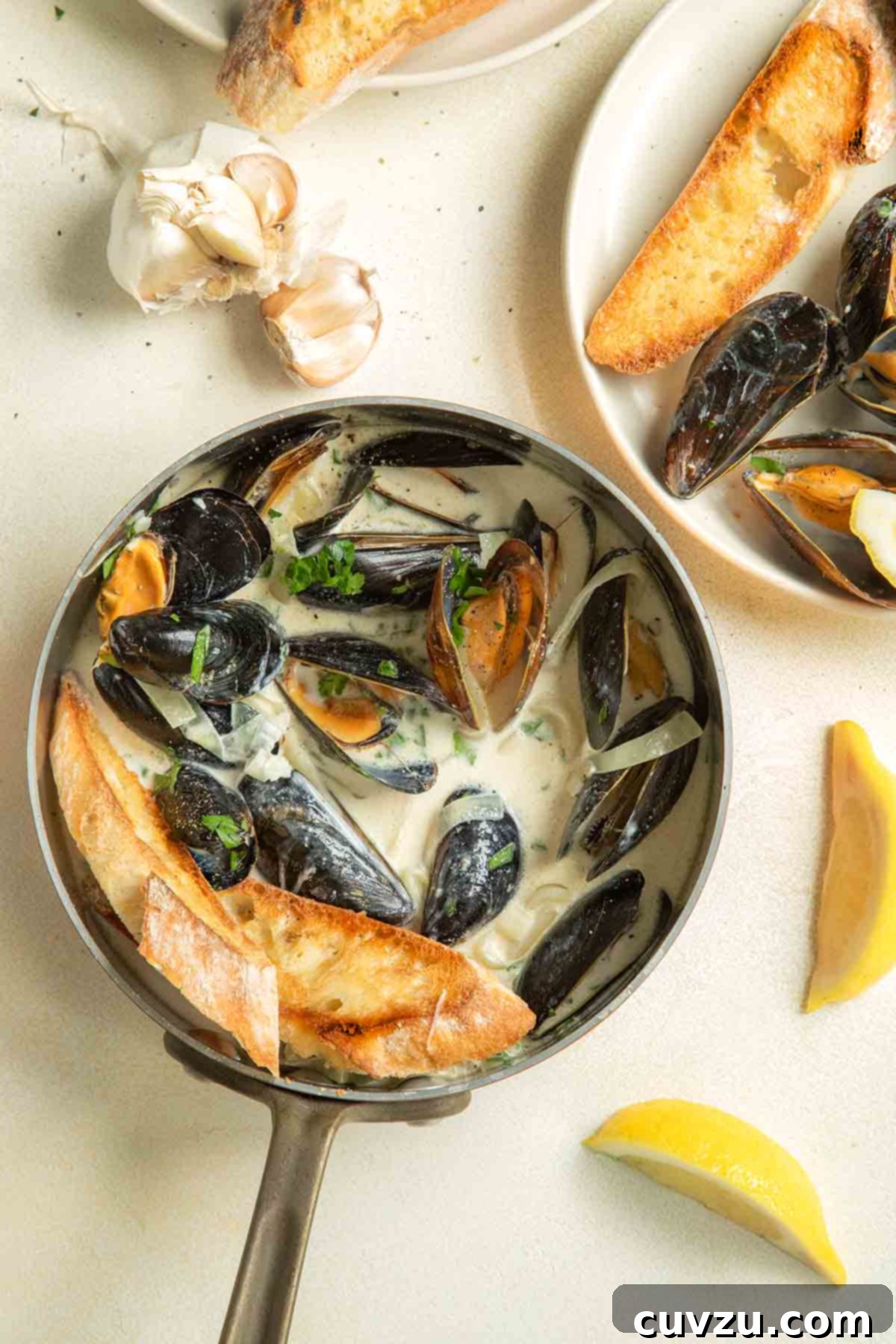
Mussels in Creamy White Wine Garlic Sauce: A 30-Minute Culinary Escape
Prepare to be amazed. Mussels in a creamy white wine garlic sauce isn’t just a meal; it’s a revelation. In a mere 30 minutes, you can transform fresh, succulent mussels into a dish so profoundly delicious, so effortlessly elegant, that you’ll forget takeout ever existed. This recipe proves that sophistication doesn’t require hours in the kitchen, offering a restaurant-quality experience faster than you can order delivery.
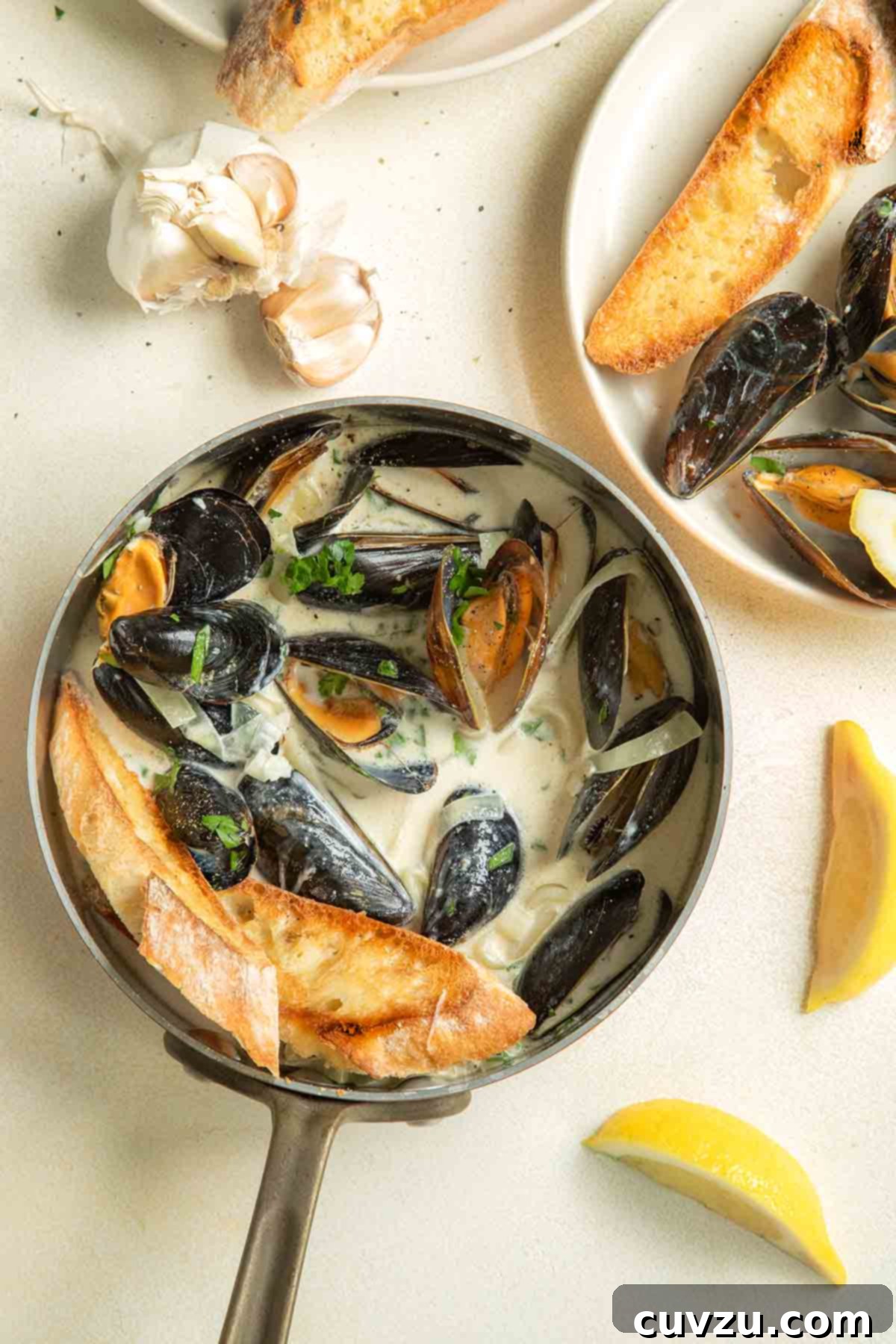
Quick Dish Overview (TL;DR)
- What it is: Succulent, fresh mussels steamed to perfection in a fragrant garlic and dry white wine sauce, finished with a generous splash of heavy cream. The result is a stunningly simple dish boasting a rich, irresistible broth that begs to be savored.
- Why you’ll adore it: This recipe delivers an incredibly impressive, restaurant-worthy meal that’s surprisingly quick, ready in just 30 minutes. It’s the ideal choice for elevating a routine weeknight or adding a touch of gourmet flair to a relaxed weekend gathering.
- How it comes together: Begin by gently sautéing aromatic onions and garlic in butter. Next, steam the cleaned mussels with white wine until their shells eagerly open. Finally, reduce the heat and carefully stir in the heavy cream to create that luscious, velvety sauce.
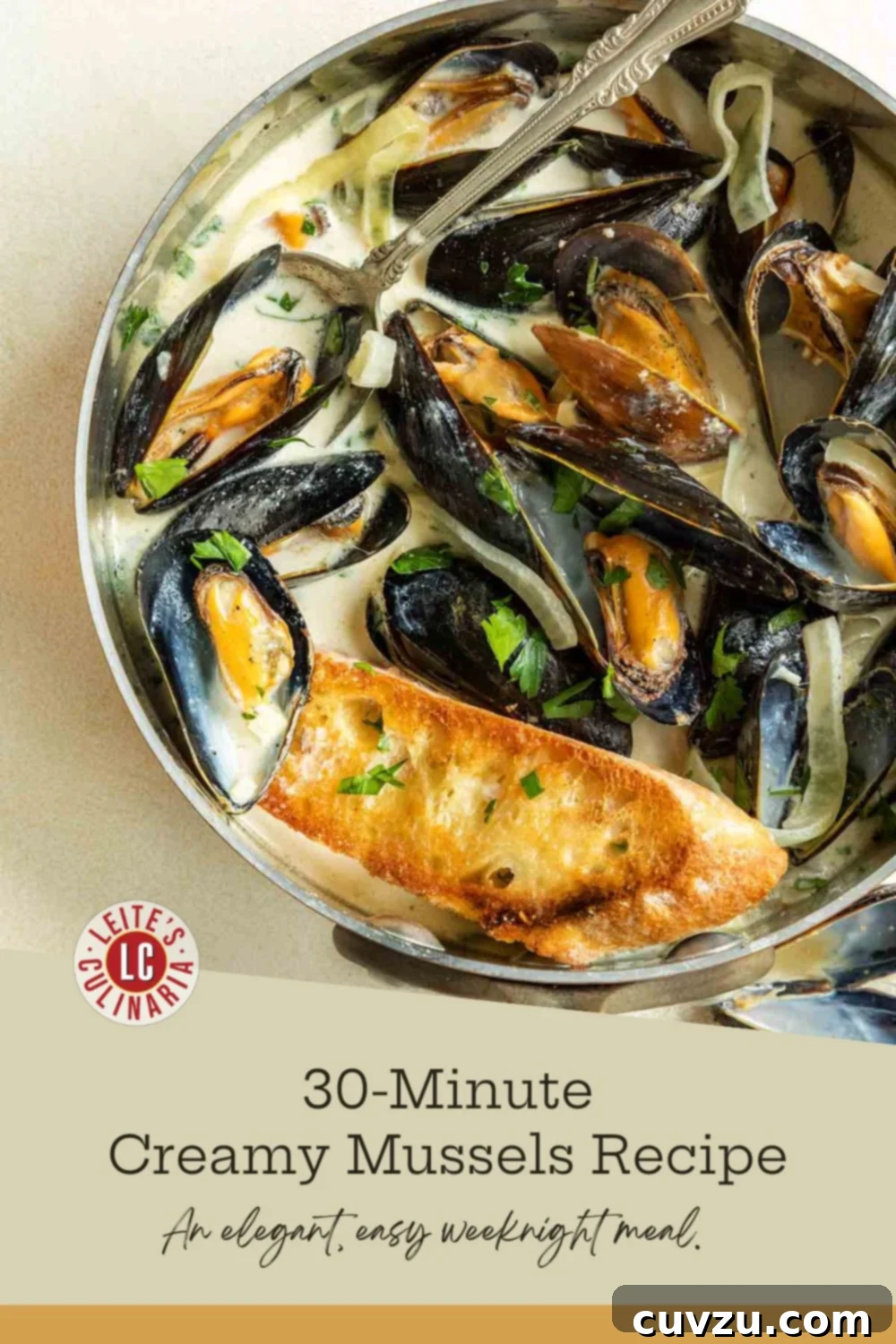
Few dishes offer such a delightful blend of simplicity and sophisticated flavor as perfectly cooked mussels. For years, this particular recipe, or variations of it, has been a cherished staple in my kitchen, evolving from a minimalist preparation to the creamy, indulgent version you find here. I recall a time when I experimented with just wine, onions, and bay leaves, a humble beginning to what would become a beloved dish. Then came the inspiration to incorporate cream, a decision that transformed the broth into something truly extraordinary, even gracing the esteemed food pages of the Los Angeles Times.
Over the years, the spirit of experimentation has led to other delicious detours. Sometimes, I’ve introduced spicy Portuguese chouriço into the pot, drawing inspiration from my hearty clams and sausage cataplana. This chorizo-infused rendition was a particular favorite during the summer of 2007, when “The One” (my husband) spent his days embracing his inner Jackson Pollock out in East Hampton. But despite these flavorful diversions, I always return to the elegant simplicity of this core recipe: a harmonious blend of wine, onion, garlic, and cream, occasionally brightened with fresh parsley, cilantro, or a whisper of thyme. Each time, the result is nothing short of fantastic.
Featured Review
This recipe is absolutely fabulous! I prepared it as an appetizer for a dinner party last night, and there wasn’t a single mussel left. Everyone was practically drinking the sauce from their bowls! I followed the recipe exactly, and it turned out absolutely perfect. Thank you!
Carol

Why Our Testers Adored This Dish
This creamy mussel dish proved to be a nostalgic journey for our senior tester, Linda Pacchiano, who exclaimed, “This instantly transported me back to a magical time in Brussels, where I savored the most incredible plate of moules frites.” Another tester, Angie Zoobkoff, highlighted its accessibility, noting that it was “easy to make and on the table within 30 minutes.” Such feedback underscores the recipe’s dual appeal: its remarkable flavor and its impressive speed.
Perhaps the most resounding endorsement, however, came from “The One” himself. Just last week, after finishing his portion, he humbly declared, “I beg your forgiveness in advance,” before tilting his bowl back and slurping every last, glorious drop of the creamy broth. Such high praise, indeed, speaks volumes about the sheer deliciousness of this recipe. It’s a dish that not only satisfies the palate but also creates memorable dining experiences.
Essential Ingredient Insights
The beauty of this creamy white wine garlic mussel recipe lies in the quality and careful selection of its core ingredients. Choosing wisely can elevate a good dish to an unforgettable culinary experience.
- Mussels: The Star of the Show – The foundation of this dish hinges on the freshness of your mussels. Seek out the plumpest, most vibrant mussels available from a reputable fishmonger. Their pristine quality makes all the difference, contributing to both texture and flavor. Don’t shy away from farm-raised mussels; they are often cleaner and incredibly flavorful.
- Heavy Cream: The Indulgent Touch – Heavy cream is paramount for achieving that luxurious, velvety consistency and rich taste in the broth. It provides a decadence that truly makes the sauce “ah-mazing.” While light cream can be an option, avoid half-and-half or milk; they simply lack the richness and body needed to create the opulent mouthfeel essential for this dish. The higher fat content of heavy cream prevents it from curdling under heat, ensuring a smooth, cohesive sauce.
- Dry White Wine: The Flavor Foundation – As the legendary Julia Child famously advised, “Cook with wine good enough to drink.” This wisdom applies perfectly here. Choose a dry white wine – such as Sauvignon Blanc, Pinot Grigio, or an unoaked Chardonnay – that you would genuinely enjoy sipping. The wine’s character will infuse directly into the broth, creating a complex, aromatic base that complements the seafood without overpowering it. Steer clear of cooking wines, which often contain salt and additives that can detract from the dish’s natural flavors.
- Garlic and Onion: The Aromatic Heart – Fresh garlic and onion are non-negotiable. Minced garlic and thinly sliced yellow onion create the aromatic foundation, gently sautéed until soft and fragrant. This slow, low-heat cooking allows their natural sweetness to develop without browning, setting the stage for the rich broth.
- Lemon: The Brightening Zest – A squeeze of fresh lemon juice at a critical moment, and even dropping the lemon half into the pot, adds a crucial zing. This acidity cuts through the richness of the cream and mussels, brightening the entire dish and enhancing all the other flavors.
- Fresh Herbs: The Finishing Flourish – Whether you opt for flat-leaf parsley, cilantro, or fresh thyme, a generous sprinkle of chopped herbs just before serving adds a burst of freshness, color, and an additional layer of aromatic complexity. Choose what speaks to your palate!
Mastering the Steps: A Guide to Perfect Mussels
Crafting this incredible creamy white wine garlic mussel dish is surprisingly straightforward. Follow these simple steps to ensure a flawless, flavorful result every time. The key is to pay attention to timing and heat, allowing each ingredient to contribute its best to the final masterpiece.
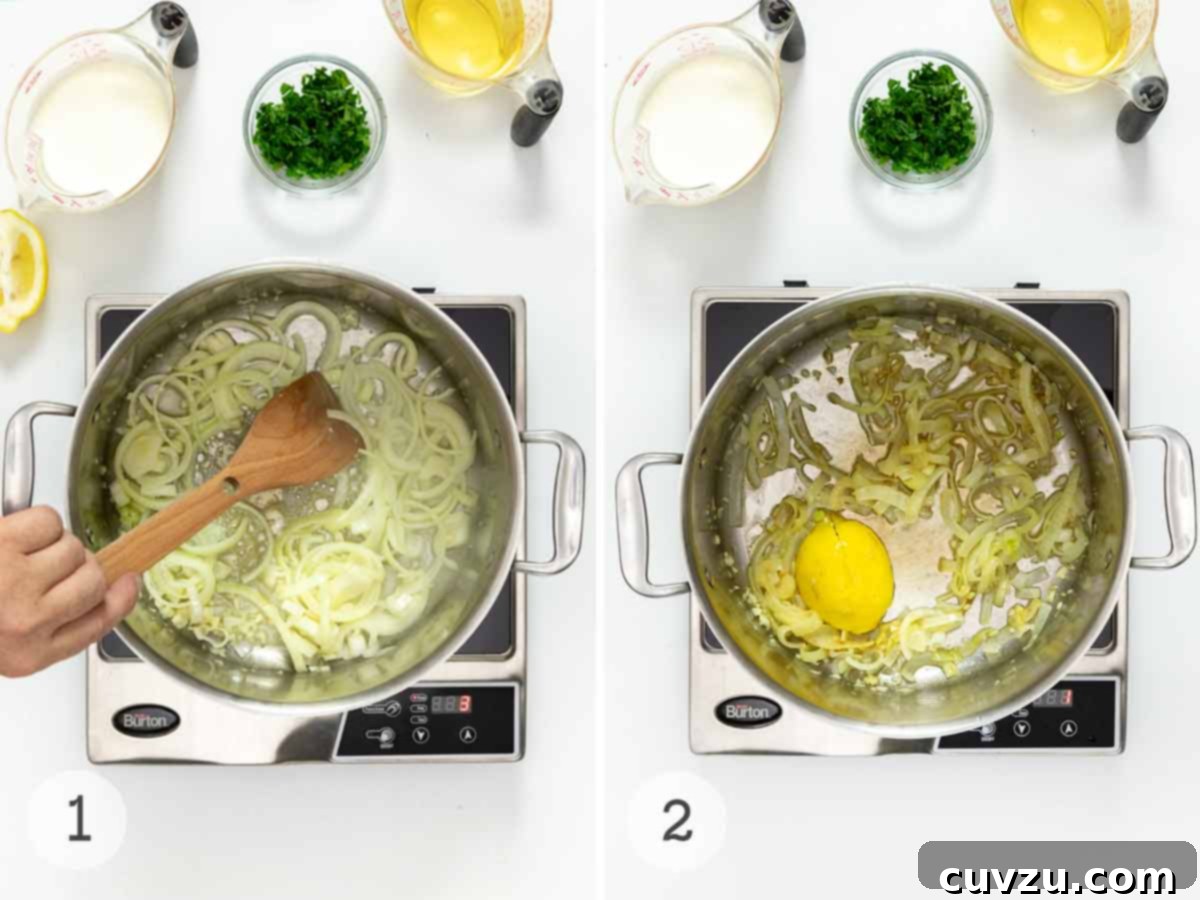
- Melt the butter and sauté aromatics: In a large, heavy-bottomed pot or Dutch oven, melt the butter over medium heat. Add the sliced yellow onion and minced garlic. Cook, stirring frequently, until the onions are translucent and soft but have not taken on any color, typically 8 to 10 minutes. This slow sautéing builds a sweet, aromatic base for the sauce.
- Introduce the lemon: Squeeze the juice from half a lemon directly into the pot. After squeezing, you can also toss the lemon half into the pot, allowing it to sear briefly and release even more of its fragrant oils. This step introduces a bright, acidic note early on, balancing the richness to come.
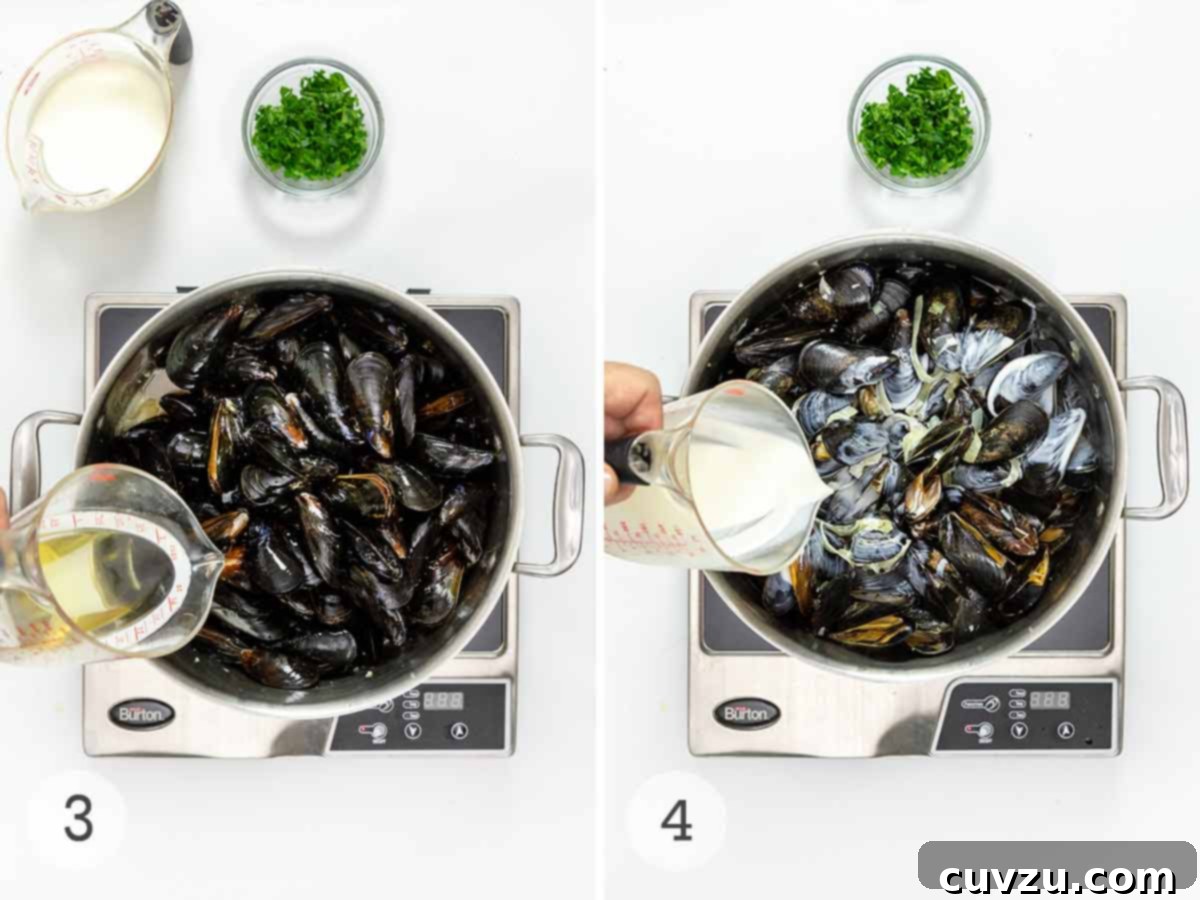
- Steam the mussels with wine: Increase the heat to high. Add the scrubbed and debearded mussels to the pot, then pour in the dry white wine. Cover the pot tightly with a lid. Steam the mussels for 4 to 5 minutes, or until the majority of the shells have opened. The wine will create a fragrant steam that gently cooks the mussels and infuses them with flavor.
- Incorporate the cream and simmer: Reduce the heat to low. Carefully pour in the heavy cream and season with a few generous grinds of fresh black pepper. Stir gently to combine. Cover the pot again and allow the sauce to gently simmer for another 2 to 3 minutes, or until any remaining unopened mussels have opened. It’s crucial to keep the heat low during this step to prevent the cream from separating. Discard any mussels that remain stubbornly closed after this time.
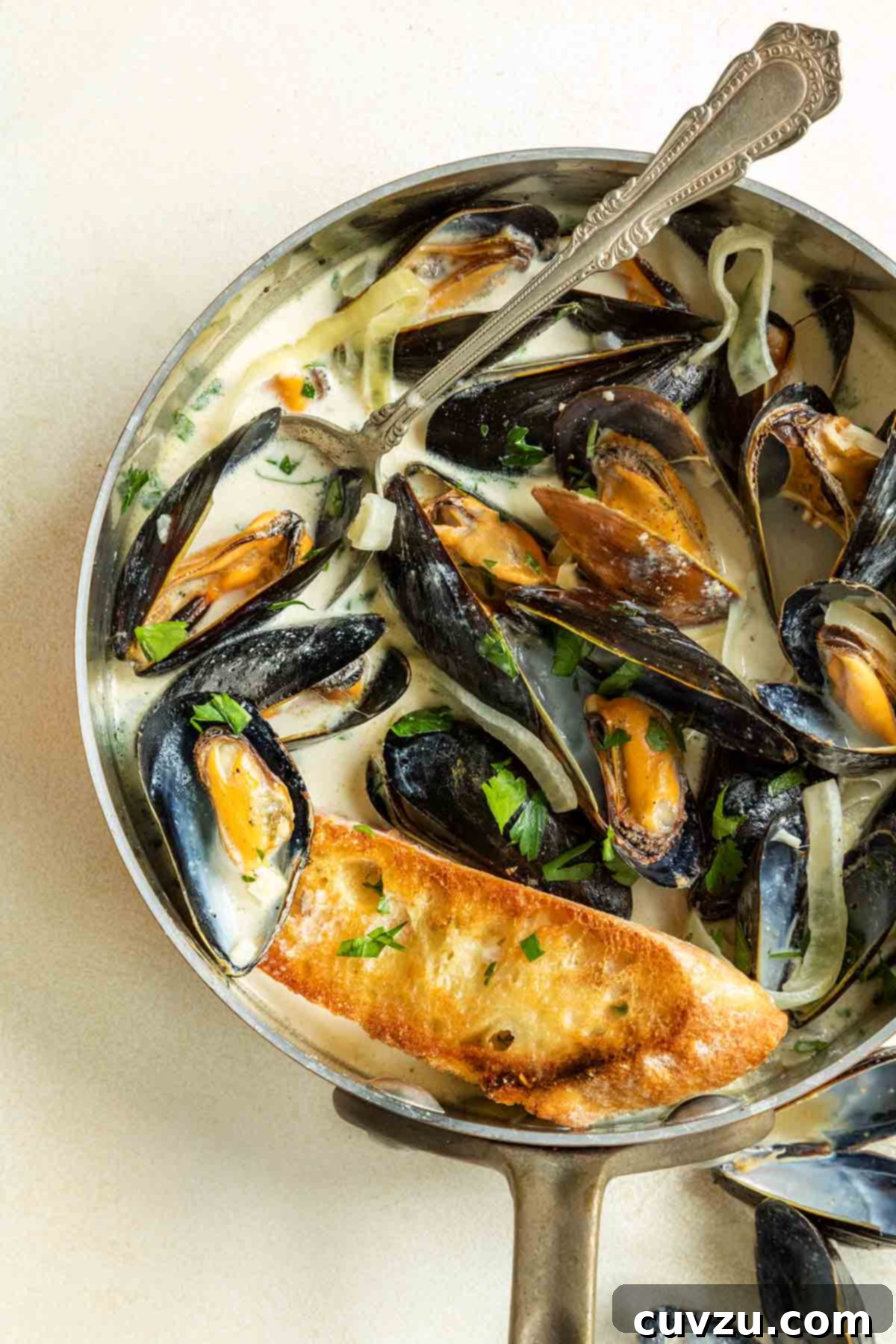
- Garnish and serve: Once all the mussels are open and bathed in the creamy sauce, remove the pot from the heat. Spritz with your chosen chopped fresh herbs – parsley, cilantro, or thyme add a beautiful touch. Serve immediately with thick slices of toasted, buttered crusty bread for soaking up every last drop of the incredible sauce, and provide fresh lemon wedges on the side for an extra burst of brightness.
Common Questions About Mussels
For a hearty main course, plan on buying 1 to 1 1/2 pounds of mussels per person. This generous serving ensures everyone gets enough of the delicious shellfish and ample sauce for dipping bread. If serving as an appetizer, about 1/2 to 3/4 pound per person should suffice.
Farm-raised mussels are cultivated in controlled environments, typically on ropes suspended in the ocean. This method results in significantly cleaner mussels compared to their wild counterparts, as they spend less time on the seabed ingesting sand and grit. They are just as flavorful as wild mussels, often even more tender due to their consistent feeding environment.
The most common type you’ll encounter is the black-shelled “blue mussel,” but larger, green-shelled New Zealand mussels are also widely popular for their plump meat. If possible, ask your fishmonger for “rope-grown mussels” – these are considered the cleanest and most grit-free option, as they never touch the ocean floor. The rope-growing technique involves dropping ropes into the water during spawning season (late spring), allowing mussel larvae to naturally attach and grow. It typically takes one to two years for them to reach market maturity.
Cleaning and debearding mussels is a straightforward but essential process for a grit-free dining experience:
- Discard damaged mussels: First, visually inspect all mussels. Any mussels with cracked or broken shells, or those that don’t firmly close when tapped on the counter, should be discarded immediately. These are likely dead and unsafe to eat.
- Rinse thoroughly: Place the healthy mussels in a colander and rinse them under very cold running water. Use a stiff-bristled brush (a clean vegetable brush, not your dish-washing brush!) to scrub any mud, barnacles, or debris from the shells. Rinse again after scrubbing.
- Debeard (if necessary): Mussels have a “beard” – stringy threads that they use to attach themselves to surfaces. To remove it, firmly grasp any threads protruding from the mussel. Pull downward towards the hinge of the shells and away from the mussel. This often requires a firm tug, so don’t be shy! Some farm-raised mussels may already be debearded.
- Final rinse: Give the mussels one last quick rinse under cold water. They are now ready for cooking. Do this step just before cooking, as mussels should not sit in fresh water for extended periods.
The accompaniments depend on whether your mussels are serving as a main course or a starter:
If serving as a main course: The rich, creamy sauce is perfect for sopping up with crusty bread. Consider these fresh side dishes to cut through the richness: a crisp tangy apple and cabbage slaw, a vibrant green salad with a light vinaigrette, or this refreshing green bean and pea salad with a creamy dressing. For a heartier meal, classic Belgian-style frites (fries) are a fantastic pairing, allowing you to dunk them directly into the luscious sauce.
If serving as a starter: Follow these mussels with a seafood-focused main course to keep with the oceanic theme. Excellent choices include delicate pan-seared lemon bass fillets, classic baked fish and chips, or spicy garlic-cumin Indian shrimp. A light pasta dish with a simple olive oil and garlic sauce would also complement the starter beautifully.
Expert Tips for Success & Troubleshooting
Ensuring your mussels turn out perfectly every time involves a few simple tricks. Here are some pro tips and advice for common challenges:
- Maintaining Freshness: Mussels are best cooked the day they are purchased. If you must store them overnight, place them in a large bowl. Layer the bottom with ice cubes in a zip-top bag, add the mussels, and then cover them with another bag of ice. This keeps them cold and prevents them from sitting in melted fresh water, which can kill them. Never store mussels in an airtight container or submerged in water.
- Preventing Cream Separation: After adding the heavy cream, it’s crucial to reduce the heat to a low simmer. Boiling the liquid vigorously after the cream has been added can cause the fat and liquid components of the cream to separate, resulting in a curdled or grainy sauce. A gentle burble is all you need to finish cooking the mussels and meld the flavors.
- The Art of Eating Mussels: Forget your forks! “The One” and I always set out soup spoons with this dish. We learned a delightful trick from a French friend: use an empty mussel shell as natural pincers to delicately pluck the plump meat from its still-closed counterpart. This makes for an interactive and enjoyable eating experience. Be sure to have a generous stack of napkins on hand – this dish is meant to be savored, drips and all!
- Enhance the Flavor Profile: For an extra layer of flavor, consider adding a pinch of red pepper flakes with the garlic and onion for a subtle kick, or a splash of Pernod or pastis for an anise-flavored twist.
- What if Mussels Don’t Open? It’s common for a few mussels to remain closed after steaming. While it’s generally advised to discard these, sometimes a stubborn mussel just needs a little extra coaxing. If only one or two remain closed, gently pry them open to check the meat. If the meat looks fresh and smells good, it’s likely safe. However, if there’s any doubt or if many remain closed, it’s best to err on the side of caution and discard them.
Explore More Delicious Mussel Recipes
If you’ve fallen in love with the ease and flavor of cooking mussels, there’s a whole ocean of possibilities to explore! From robust beer-infused broths to zesty marinara, these recipes offer exciting new ways to enjoy this versatile shellfish.
Steamed Mussels in Beer
15 mins
Baked Mussels with Crisped Bread Crumbs
40 mins
Mussels Marinara ~ Cozze alla Marinara
10 mins
Apple Cider Steamed Mussels
50 mins
Share Your Culinary Creations!
If you try this recipe, or any dish from Leite’s Culinaria, we’d love to hear from you! Please consider leaving a review, a star rating, and share your best photo in the comments below. Your feedback is invaluable and always brings joy to David and his team.
Featured Review
I tweaked it a little, but that lemon kick was just out of this world. My wife made some fresh ciabatta, which we toasted. Pulled some thyme from the garden, and voilá! A perfect meal!
Shane Lozowski
Mussels in a Creamy White Wine Garlic Sauce
David Leite
Mains, Appetizer
European, American
4
servings
638
kcal
20 minutes
10 minutes
30 minutes
Ingredients
- 4 tablespoons (2 oz) unsalted butter
- 1 (8 oz) yellow onion, halved and sliced into 1/2-inch half moons
- 3 garlic cloves, finely minced
- 1/2 lemon
- 4 pounds fresh mussels, cleaned and debearded
- 1 cup dry white wine (e.g., Sauvignon Blanc, Pinot Grigio)
- 1 1/4 cups heavy cream
- Freshly ground black pepper, to taste
- Fresh flat-leaf parsley (or cilantro or thyme leaves), chopped, for garnish
- Thick slices of toasted, buttered crusty bread, for serving
- Lemon wedges, for serving
Instructions
-
In a large pot or Dutch oven, melt the butter over medium heat. Add the sliced onion and minced garlic. Cook, stirring frequently, until the onions are tender and translucent but not browned, about 8 to 10 minutes. Squeeze the juice from the lemon half into the pot, then drop in the squeezed lemon half.
-
Increase the heat to high. Add the cleaned mussels to the pot, pour in the dry white wine, and cover tightly with a lid. Steam the mussels until most of the shells have opened, which usually takes 4 to 5 minutes.
-
Reduce the heat to low. Carefully pour in the heavy cream and add a few generous grinds of fresh black pepper. Stir gently to combine the cream with the broth.
-
Cover the pot again and let the sauce lazily burble for an additional 2 to 3 minutes, or until all the mussels have opened. Discard any mussels that refuse to open after this second steaming period.
-
Crown the mussels with a generous sprinkle of chopped fresh parsley (or your chosen herbs). Serve immediately with a basket of thick, toasted bread and fresh lemon wedges on the side. Enjoy every savory bite and spoonful of the incredible broth!

An LC Original
This cherished recipe is an original creation from the Leite’s Culinaria kitchen, developed with passion and perfected through countless trials. We hope it brings as much joy to your table as it does to ours.
View More Original Recipes
Nutrition Information
Serving: 1 serving
Calories: 638 kcal
Carbohydrates: 20 g
Protein: 31 g
Fat: 44 g
Saturated Fat: 26 g
Monounsaturated Fat: 11 g
Trans Fat: 0.5 g
Cholesterol: 181 mg
Sodium: 691 mg
Fiber: 1 g
Sugar: 6 g
Nutrition information is automatically calculated and should be used as an approximation.
Tried this recipe?
Mention @leitesculinaria or tag #leitesculinaria!
Insights from Our Recipe Testers
Linda Pacchiano
This recipe for mussels in a creamy white wine garlic sauce truly took me back to a memorable trip to Brussels, where I had the most amazing plate of moules frites. This recipe produced a remarkably similar dish (minus the frites, though they’d be a perfect addition!). The flavors were perfectly balanced, and the richness, which comes from just a few simple, high-quality ingredients, was sublime.
A crucial tip: always make sure to purchase the freshest mussels you can find from a reliable source. We were fortunate enough to source fresh mussels from Maine, which were exceptionally clean with almost no beards to remove. Plan on about a pound per person for a satisfying meal, and make sure you have plenty of crusty baguette slices on hand – the sauce is far too good to leave any behind!
Angie Zoobkoff
These mussels in a creamy white wine garlic sauce were an absolute treat! I was genuinely surprised by how easy they were to prepare, arriving on the table within just 30 minutes of starting. It’s definitely a recipe that delivers maximum flavor for minimal effort.
One important point to remember: be extremely careful to ensure the heat is very low before you add the heavy cream. Cream can split quite easily if exposed to high heat after being added to a hot liquid, and we want that beautiful, silky smooth sauce! As everyone else has noted, serve with plenty of crusty bread; you won’t want to waste a single drop of that delectable sauce.