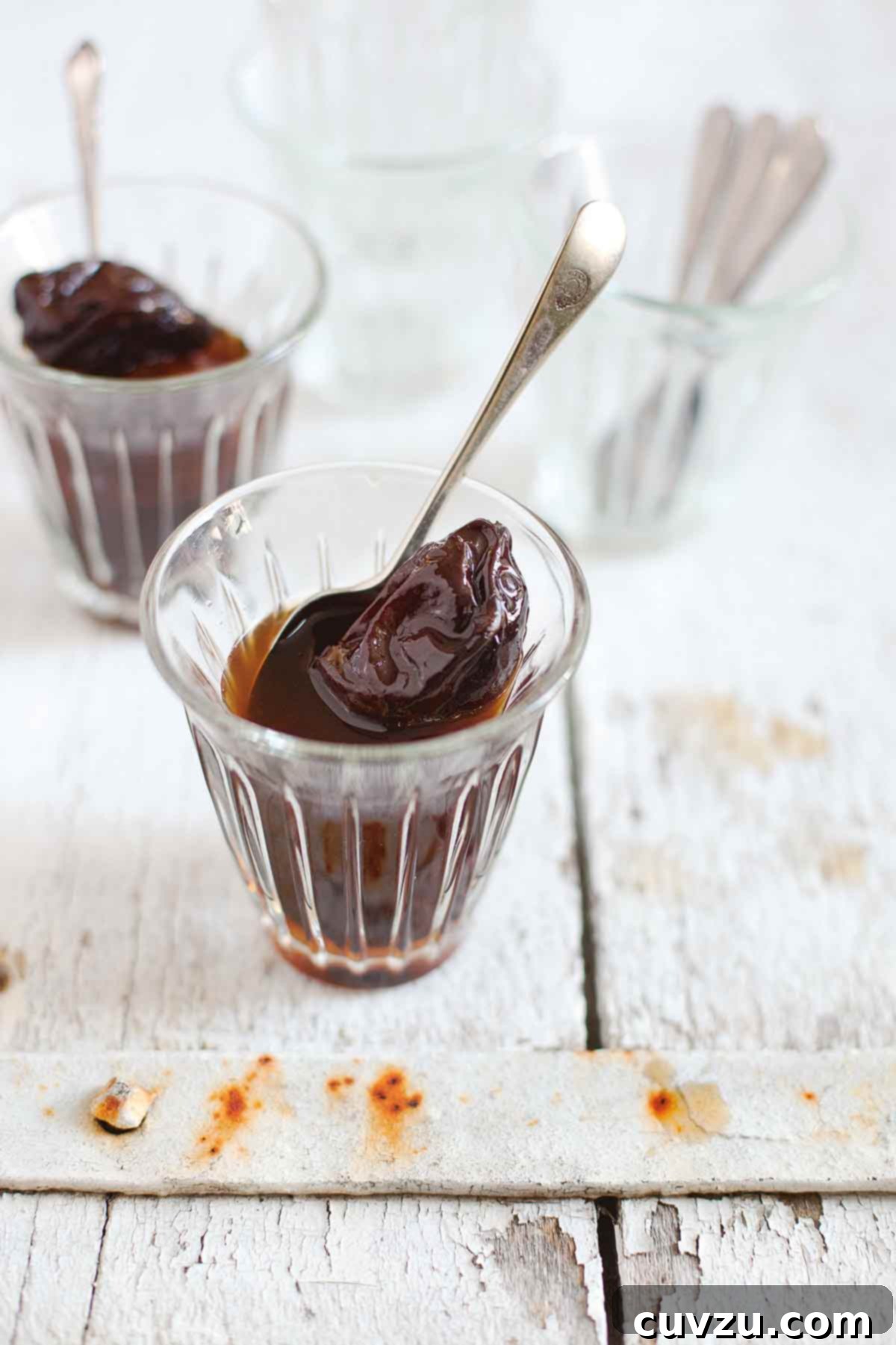
Prunes in rum is a sweet, elegantly simple dessert that offers a wonderfully boozy experience. This classic treat, where rum and tea infuse the fruit with a deeply satisfying flavor, only grows richer and more complex with time. It’s a delightful indulgence that captures the essence of French culinary tradition with an accessible twist.
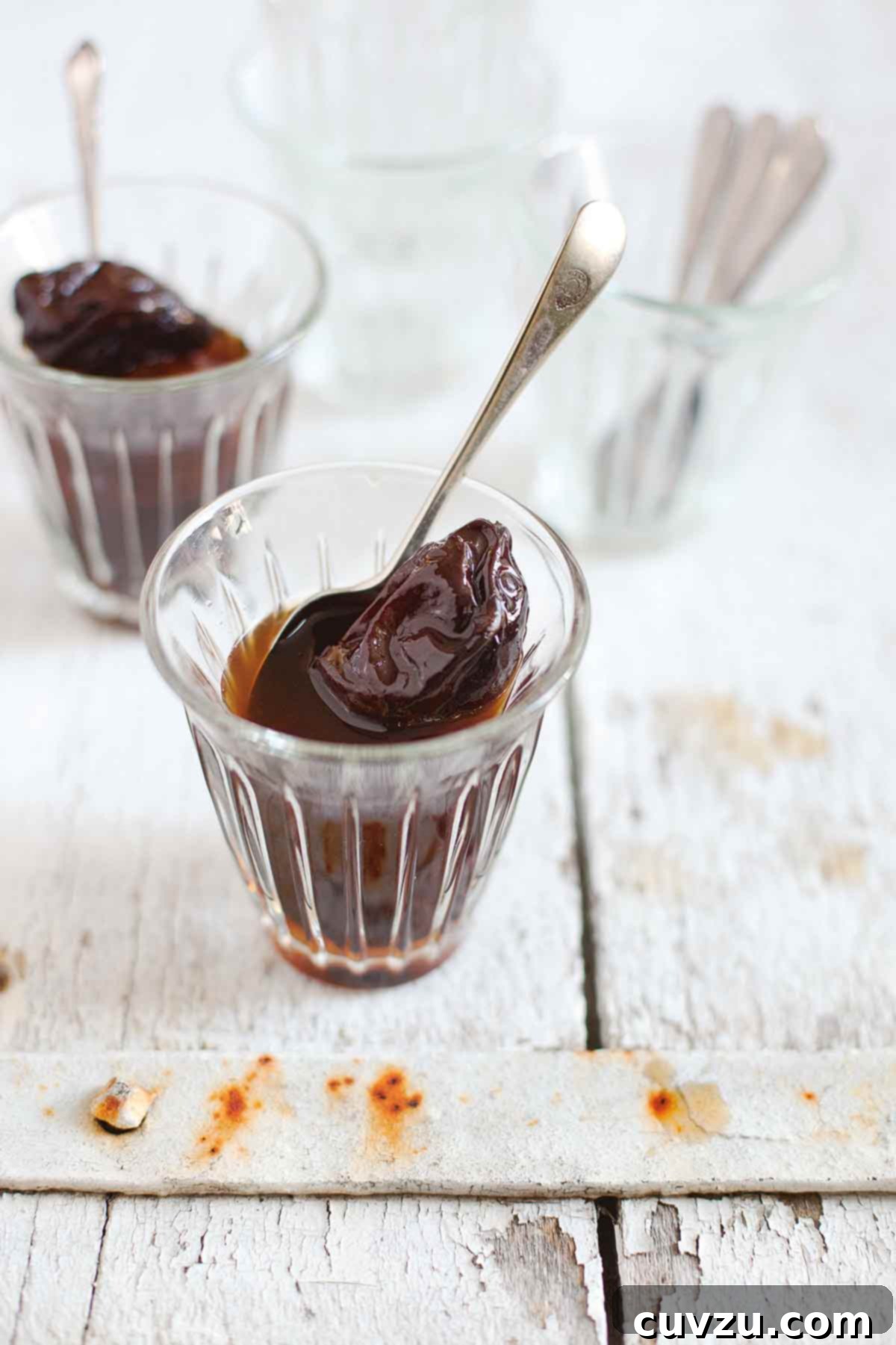
The esteemed Chef Pierre Koffmann fondly recalls the anticipation surrounding his friend Camille’s prunes in rum. “My friend Camille used eau-de-vie for making aperitifs and for bottling fruit. I remember how much we looked forward to her prunes in rum. The prunes were always the famous Agen prunes, which she bought at Fleurance, and which she preferred even to her own dried plums.” This cherished memory speaks volumes about the enduring appeal and gourmet status of this seemingly simple preparation.
What Kind of Alcohol Can I Use? Exploring the Boozy Tradition
Before diving into our specific recipe, it’s worth understanding the traditional context. Pierre Koffmann’s mention of eau-de-vie refers to a lovely fruit brandy, crafted through the fermentation and distillation of fruit. This clear spirit is a staple in French culinary arts, often used for both drinking and preserving.
Traditionally, the famed Pruneaux d’Agen (Agen prunes) are steeped in Armagnac, a distinct type of eau-de-vie made from grapes, originating from the Gascony region of France. These traditional Armagnac-soaked prunes are undeniably delicious, so much so that in Gascony, an invitation for coffee often doubles as an opportunity to enjoy these exquisite treats. The result is a deeply flavorful, sophisticated indulgence.
However, finding quality Armagnac at a reasonable price outside of France, especially stateside, can be a challenge. That’s where our rendition comes in. This recipe, employing a combination of tea and rum, offers a laudable and more accessible substitute, achieving a similar depth of flavor and satisfying boozy warmth without the hunt for specific French brandies. It’s a testament to how traditional flavors can be recreated and enjoyed with readily available ingredients, making this classic French dessert approachable for any home cook.
Prunes in Rum: An Elegantly Simple Recipe
This recipe for prunes in rum delivers an impressive depth of flavor with minimal effort. The combination of black tea and rum creates a nuanced profile that evolves beautifully over time, making it an ideal make-ahead dessert or gourmet condiment.
Prunes in Rum
Prunes in rum is a sweet, boozy dessert that’s elegantly simple. Rum and tea infuse the fruit with a deeply satisfying flavor that just gets better with time.
David Leite
Ingredients
- 2 1/4 cups water
- 2 1/4 pounds prunes, pitted if desired
- 4 tea bags (such as black tea or a spiced herbal tea)
- 9 ounces (1 1/4 cups) granulated sugar
- 7 ounces rum (dark or light rum will work, depending on your preference)
Instructions
- Bring the water to a boil in a saucepan that is sufficiently large to comfortably hold all the prunes.
- Once the water is boiling, add the prunes and the tea bags to the saucepan. Cover it with a lid. Immediately remove the saucepan from the heat and allow the prunes and tea to steep undisturbed overnight. This long steeping process rehydrates the prunes and allows the tea to infuse its subtle aromatics.
- The following morning, carefully remove and discard the spent tea bags from the prune mixture. Add the granulated sugar and rum to the prunes. Gently mix everything with a spoon until the sugar completely dissolves into the liquid. This may take a couple of minutes of persistent but gentle stirring, but rest assured, the sugar will fully incorporate.
- Portion the prunes and their infused liquid into clean, airtight jars. It’s crucial that the prunes are almost completely immersed in the sweet rum mixture to ensure proper preservation and flavor development. Cover the jars tightly and refrigerate. For the most developed and harmonious flavors, it is highly recommended to let the prunes macerate for at least a few days before serving. These delightful boozy prunes will maintain their quality when refrigerated for up to 3 months. For the best tasting experience, serve them at room temperature.

Adapted From
Memories of Gascony by Pierre Koffmann
Buy On Amazon
Nutrition Information
Serving: 1 portion | Calories: 108 kcal | Carbohydrates: 25 g | Protein: 1 g | Fat: 0.1 g | Saturated Fat: 0.03 g | Monounsaturated Fat: 0.02 g | Sodium: 1 mg | Fiber: 2 g | Sugar: 18 g
Nutrition information is automatically calculated and should be used as an approximation.
The Nuance of Ingredients: Elevating Your Prunes in Rum
The beauty of this recipe lies not just in its simplicity but in how thoughtfully chosen ingredients can transform it. Each component plays a vital role in creating the rich, complex flavor profile that makes this dessert so memorable.
Choosing Your Prunes: The Foundation of Flavor
While the original inspiration hails from the famous Pruneaux d’Agen, any good quality, plump, and moist dried prunes will yield excellent results. Look for prunes that are tender and have a natural sweetness. If you can find them unpitted, they often offer a slightly deeper, more authentic flavor as the pits contribute subtle almond-like notes during the steeping process. However, pitted prunes are perfectly acceptable and more convenient for serving.
Selecting Your Rum: Warmth and Character
The recipe calls for rum, and this is where you can truly personalize the flavor. A good quality dark rum will impart notes of caramel, molasses, and oak, adding a deep, luxurious warmth to the prunes. Light rum will provide a cleaner, crisper alcoholic kick. Some adventurous cooks might even experiment with a spiced rum to introduce hints of vanilla, cinnamon, or nutmeg, further enhancing the overall profile. The key is to use a rum you enjoy drinking, as its character will shine through in the final product.
The Role of Tea: An Unexpected Depth
The inclusion of tea bags is the unsung hero of this recipe, providing an aromatic backbone and a subtle layer of complexity. Black tea, such as Ceylon or English Breakfast, offers robust tannins and a classic flavor that complements the prunes and rum beautifully. However, as noted by one of our testers, experimenting with spiced or herbal teas can lead to exciting variations. Imagine the warm notes of an orange pekoe or a chai-spiced black tea infusing the prunes, adding a gentle perfume and an extra dimension of flavor. Rooibos, with its naturally sweet and slightly nutty profile, could also be a fantastic non-caffeinated option, lending a unique twist. The tea helps to mellow the prunes and adds an aromatic complexity that differentiates this recipe from simple alcohol infusions.
Sweetness and Balance: The Sugar Factor
Granulated sugar provides the necessary sweetness and helps in the maceration process, drawing out moisture from the prunes and contributing to the syrup’s rich texture. While the recipe specifies a certain amount, feel free to adjust slightly to your preference if you like your prunes sweeter or less sweet, keeping in mind that the sugar also acts as a preservative.
Beyond the Recipe: Tips for Perfection and Enjoyment
Making prunes in rum is straightforward, but a few considerations can elevate your experience.
The Magic of Maceration and Patience
The overnight steeping in tea-infused water is crucial for rehydrating the prunes and preparing them to absorb the rum and sugar. But the real magic happens during the several days (or even weeks) of refrigeration after the rum is added. This period allows the flavors to meld, deepen, and truly develop. The prunes become incredibly plump, tender, and infused with the boozy, sweet, and aromatic notes. Don’t rush this step – patience is key to unlocking the full potential of this dessert.
Storage and Longevity
Proper storage in airtight jars in the refrigerator ensures these boozy prunes remain fresh and flavorful for up to 3 months. This long shelf life makes them an ideal make-ahead component for entertaining or a delightful gourmet gift. Always ensure the prunes are fully submerged in the liquid to prevent them from drying out or spoiling.
Serving Suggestions: Versatility on a Plate
While often enjoyed simply on their own, prunes in rum are incredibly versatile:
- Classic Dessert Pairings: Serve them over vanilla bean ice cream, alongside a slice of pound cake, with creamy panna cotta, or a rich chocolate mousse. The warm, boozy prunes contrast beautifully with cold desserts.
- Savory Accompaniments: Don’t limit these to dessert! They are a fantastic accompaniment to savory dishes, particularly roasted meats like pork loin, duck breast, or game birds. Their sweet and tangy profile cuts through richness wonderfully.
- Breakfast & Brunch: A spoonful over Greek yogurt, oatmeal, or even spread on toast with a dollop of mascarpone can transform a simple breakfast into an elegant start to the day.
- Cheese Boards: They make a sophisticated addition to a cheese board, pairing exceptionally well with hard, aged cheeses like Parmesan or nutty Gruyère, or soft, creamy goat cheeses.
- Cocktails: The infused rum liquid can be used in cocktails, adding a unique fruity and boozy dimension.
Insights from Our Recipe Testers: Real Feedback

Alexandra M.
Alexandra found this prunes in rum recipe to be incredibly straightforward, precise, and rewarding, leading to a delightful jar of rummy plums. The preparation was mostly hands-off, with the overnight steeping doing the bulk of the work. Upon stirring in the rum and sugar the next morning, she noted the fragrant and succulent prunes, with the sugar dissolving surprisingly quickly. Her initial tasting revealed a lovely balance: mildly sweet, subtly spiced, and not overtly boozy. She was particularly impressed by the subtle rum flavor, suggesting they’d be dangerously good over Greek yogurt. She highlighted their heavenly pairing with vanilla ice cream and suggested using an herbal or spiced tea, such as orange and cinnamon spice or even rooibos, for added complexity.

Bette Fraser
Bette Fraser praised the recipe for its incredible ease and spectacular results, noting that patience was the only true requirement. She made her batch in September and, after forgetting about it, discovered them six weeks later to be perfectly soft, plump, beautifully seasoned, and perfectly balanced in alcohol content. She plans to serve them during the holidays, confident that her guests will be thrilled with this exquisite treat.

Robert McCune
Robert McCune expressed his love for this prunes in rum recipe, particularly appreciating that it delivers a boozy kick without the harshness sometimes found in recipes that use straight alcohol infusions. He opted for Lipton Yellow Label Tea bags and dark rum, finding the dilution of water with rum and sugar created a beautifully softened flavor. He enjoyed the results on their own and especially with ice cream or pound cake. Looking ahead, he plans to experiment by adding dried apricots in his next batch, eagerly anticipating how the flavors will evolve with more time.
Conclusion: Savor the Sweet Simplicity of Prunes in Rum
Whether you’re a seasoned chef or a home cooking enthusiast, this prunes in rum recipe offers a delightful journey into French-inspired culinary traditions. Its elegant simplicity, combined with the profound flavors developed through patient maceration, makes it a truly special treat. Perfect as a standalone dessert, a versatile condiment, or a gourmet gift, these boozy prunes are a testament to how humble ingredients can be transformed into something extraordinary.
Embrace the subtle art of infusion, experiment with your choice of tea and rum, and most importantly, allow time to work its magic. The result will be a jar full of plump, fragrant prunes, ready to delight your senses and impress your guests. Dive into the sweet simplicity and discover your new favorite make-ahead indulgence!