Kulich: A Beloved Eastern European Easter Bread Recipe
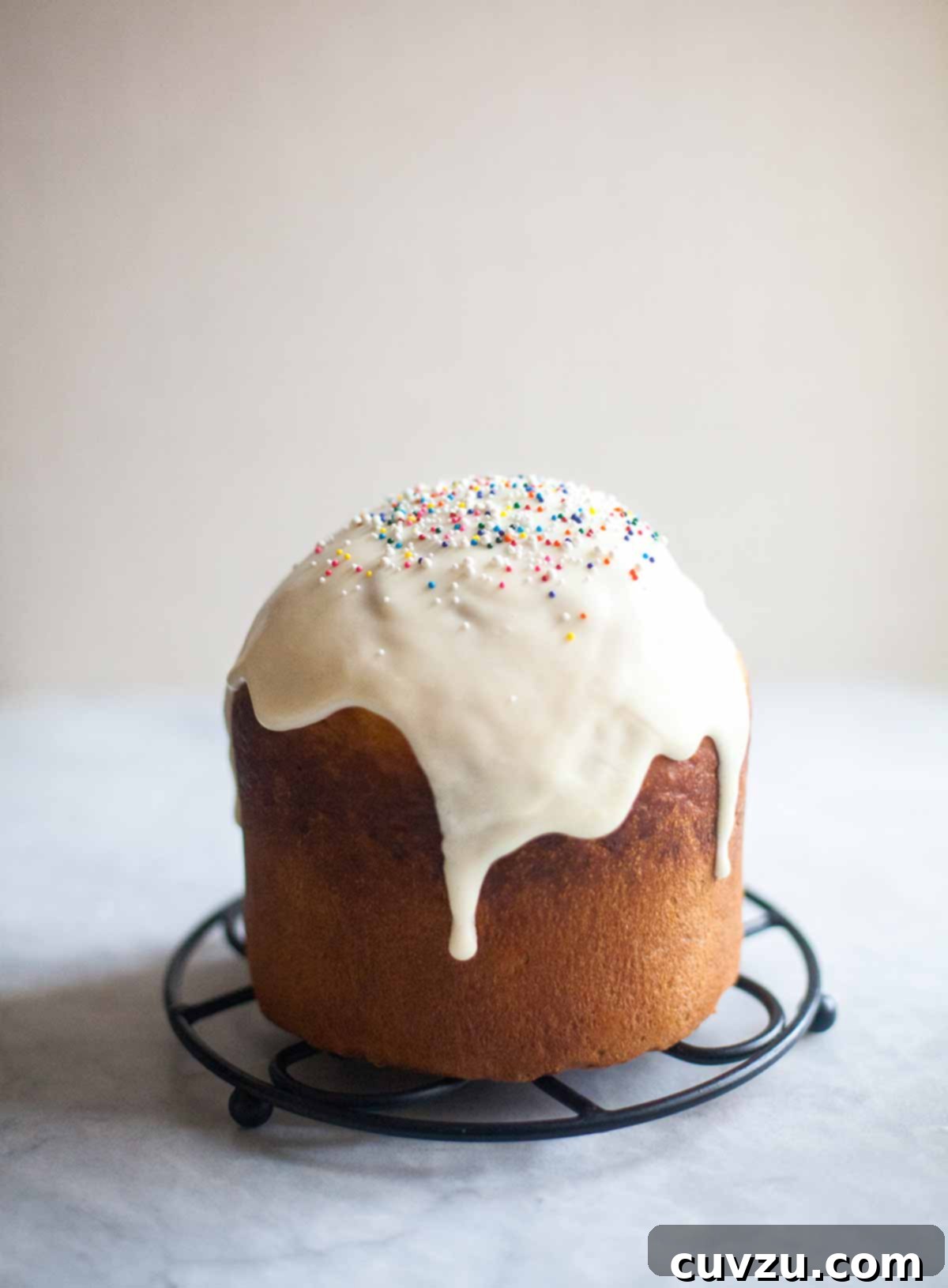
Kulich is much more than just a bread; it’s a centuries-old symbol of Easter joy and celebration across Eastern Europe, particularly in Russia and Ukraine. Often compared to Italy’s panettone due to its rich, towering stature and celebratory nature, Kulich distinguishes itself with a uniquely aromatic dough, generously infused with fragrant cardamom and exotic saffron. Its crowning glory is a creamy confectioners’ sugar glaze, often adorned with vibrant sprinkles, making it an undeniable centerpiece for any Easter feast or special occasion.
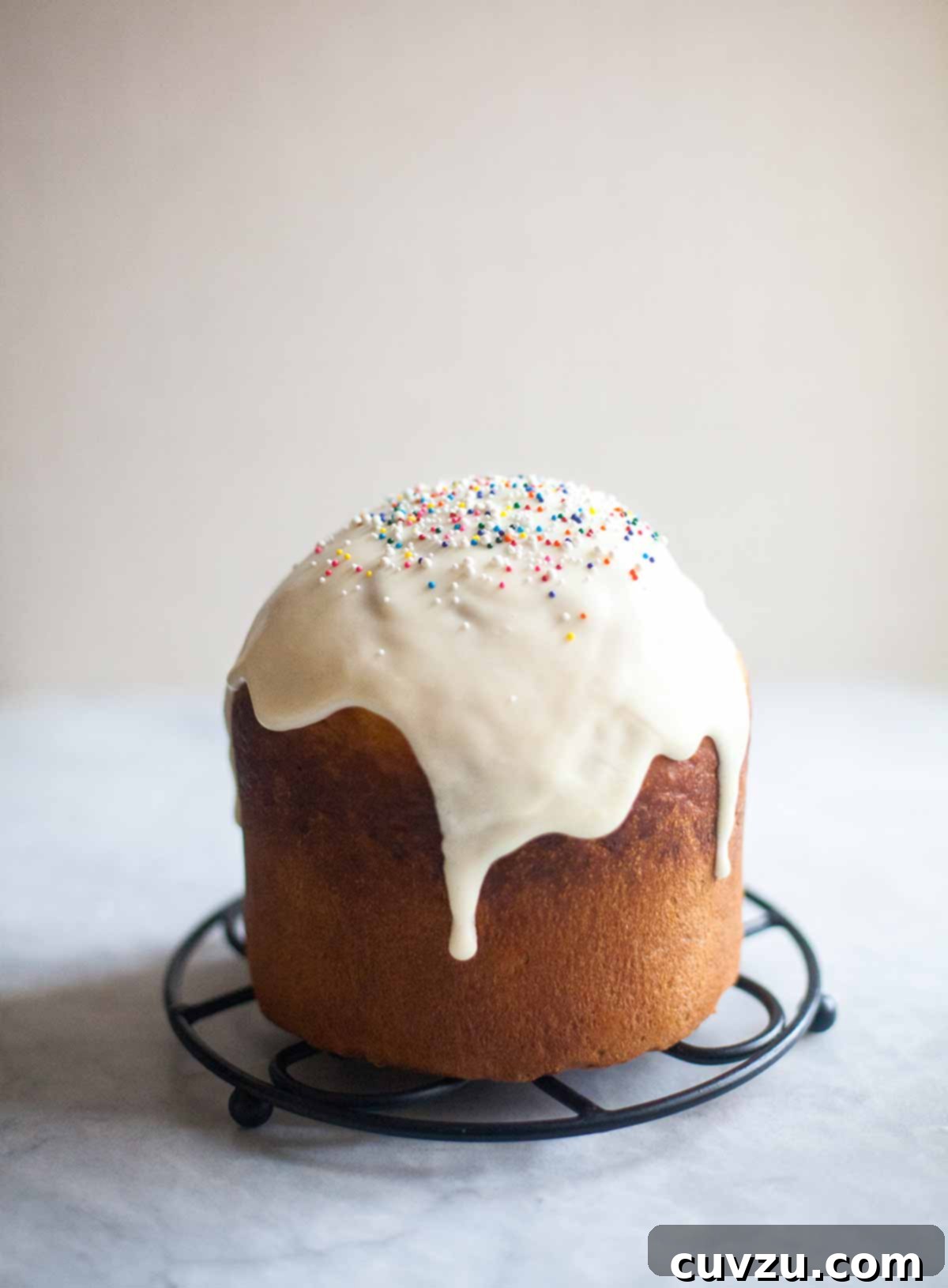
This magnificent bread is renowned for its deeply rich, buttery flavor and a dreamily delicate, almost pillowy texture that leaves a lasting impression. Its distinctive tall, cylindrical shape, crowned with a snowy white glaze, makes it instantly recognizable and a true showstopper on any holiday table. While its impressive appearance might suggest a complex baking process, the Kulich dough is surprisingly simple to prepare and can even be made ahead of time, offering convenience for busy Easter preparations. This recipe yields a generous amount of dough, enough for more than one Kulich loaf or a batch of delightful smaller buns, allowing you to spread the joy—or simply keep some for yourself! Leftover dough can be refrigerated for up to five days, ensuring fresh-baked goodness whenever the craving strikes.
The Enduring Legacy of Kulich: History and Cultural Significance
Kulich is more than just a sweet bread; it’s a vital part of the Orthodox Christian Easter tradition. Its origins are deeply rooted in the religious observances of Eastern Europe, where it symbolizes the presence of Christ after the Resurrection. The tall, rounded top of the Kulich is said to represent the dome of a church or even Christ’s tomb, which, when opened, revealed new life. This symbolism elevates Kulich from a mere pastry to a sacred component of Easter celebrations.
In many Russian Orthodox households, Kulich holds a place of honor. It is traditionally baked on Holy Thursday or Great Saturday and then taken to church on Easter Saturday night, surrounded by flowers, to be blessed at midnight mass before Easter Sunday. This special blessing imbues the bread with spiritual significance, making its consumption on Easter morning a cherished ritual. The use of saffron, an ancient and precious spice, is also significant. Historically, saffron was reserved for special occasions and sacred foods, further emphasizing Kulich’s role in a major religious holiday.
Kulich vs. Paska: Exploring Eastern European Easter Bread Traditions
While regional variations exist, Kulich is often compared to or even considered synonymous with Ukrainian Paska. Essentially, both are traditional Eastern European Easter breads, sharing a similar rich ingredient base, tall cylindrical form, and a festive glaze. The primary distinction often lies in their names and specific cultural contexts. “Kulich” is a Russian word meaning “a roll of bread,” while “Paska” is Ukrainian for “Easter.” Both breads serve the same purpose: to mark the joyous occasion of Easter with a sweet, symbolic, and delicious treat.
Recipes for both Kulich and Paska can vary, with some Paska recipes incorporating cheese or being more savory, but the sweet, saffron-infused, glazed loaf is a common thread that unites these beloved holiday traditions. Whether you call it Kulich or Paska, the experience of baking and sharing this bread is a heartwarming embodiment of Eastern European heritage.

Kulich Recipe
Indulge in the rich, aromatic flavors of Kulich, a traditional Eastern European Easter bread. This recipe guides you through creating a tender, saffron and cardamom-infused loaf, crowned with a sweet glaze and colorful sprinkles—a true holiday delight.
Recipe by David Leite
Breakfast, Dessert, Holiday
Eastern European, Russian, Ukrainian
8 to 10 servings
619 kcal
30 minutes
50 minutes
7 hours 55 minutes (includes rising time)
Equipment
- 1 large panettone mold (6- to 7-inch | 15- to 18-cm diameter) or 1 empty #10 coffee can (3-pound | 1.5-kg capacity and 6 1/4-inch wide by 7-inch tall | 16 cm by 18 cm), rinsed and dried
- Large mixing bowl or stand mixer with paddle attachment
- Wire rack for cooling
Ingredients
For the Saffron Dough
- 1/2 cup water
- 1/2 teaspoon saffron threads
- 1 1/2 cups whole milk
- 1/2 cup full-fat plain Greek yogurt or quark
- 3 large eggs
- 1 tablespoon instant yeast
- 1 tablespoon kosher salt
- 1/3 cup granulated sugar
- 1/2 teaspoon ground cardamom
- 6 1/4 cups bread flour
- 1/4 cup potato flour* (see NOTE below)
- 1 stick (1/2 cup) unsalted butter, melted
For the Kulich
- Butter for the panettone mold or coffee can
- 2 pounds (approx. 910g) saffron dough (half of the prepared dough)
- All-purpose flour, for dusting
- 1 large egg, beaten with 1 tablespoon cold water for egg wash/glaze
For the Icing
- 1/2 cup confectioners’ sugar
- 2 tablespoons heavy cream, plus more as needed
- Colorful sprinkles (optional)
Instructions
Make the Saffron Dough
- In a 5-quart (5-liter) bowl or other large container (or in the bowl of a heavy-duty stand mixer), combine the water, saffron threads, milk, quark or Greek yogurt, eggs, yeast, salt, sugar, and cardamom. Stir until well combined.
- In a separate medium bowl, whisk together the bread flour and potato flour. Gradually add the flour mixture and the melted butter to the saffron liquid mixture. Use a wooden spoon or the paddle attachment of your stand mixer to blend until a soft, cohesive dough forms. Kneading is not required for this dough.
- Loosely cover the bowl or container (do not seal it airtight) and allow the dough to rise at room temperature for approximately 2 hours, or until it has nearly doubled in size. Once risen, refrigerate the dough, still loosely covered, for at least 3 hours or for up to 5 days.
Bake the Kulich
- Generously butter your chosen panettone mold or coffee can. Lightly dust the surface of the refrigerated dough with flour. Cut off a 2-pound (910g) piece of the dough. (Return the remaining dough to the refrigerator for later use; it can be stored for up to 5 days for additional loaves or smaller buns.)
- Place the 2-pound piece of dough on a lightly floured surface. Gently shape it into a smooth ball by stretching the dough’s surface around to the bottom, rotating the ball a quarter-turn as you go to create tension. Place the shaped dough ball into the buttered mold or can, with the seam side down.
- Cover the dough loosely with plastic wrap and let it rest at room temperature until it has nearly doubled in size, which typically takes about 90 minutes.
- While the dough is rising, preheat your oven to 350°F (180°C). Adjust an oven rack to the center position.
- Once the dough has risen sufficiently, lightly brush the top with the prepared egg wash (1 large egg beaten with 1 tablespoon cold water).
- Bake the Kulich for 45 to 55 minutes, or until it is golden brown on top and a wooden skewer or cake tester inserted into the center comes out clean. Baking time may vary slightly depending on the size and material of your mold.
- Carefully remove the mold or can from the oven and set it on a wire rack to cool completely before attempting to remove the bread.
Prepare the Icing
- In a small bowl, whisk together the confectioners’ sugar and 2 tablespoons of heavy cream until the mixture is smooth and thick enough to cling to a spoon. If the icing is too thick, dribble in additional heavy cream, a very small amount at a time, until it reaches a pourable consistency that is still quite thick—you want it to coat the top of the bread without dripping too far down the sides.
Assemble the Kulich
- Once the Kulich loaf is completely cooled, carefully remove it from the mold or coffee can. Drizzle the prepared icing generously over the dome of the bread.
- If desired, immediately decorate with colorful sprinkles while the icing is still wet. Allow the icing to set before serving.
Notes
*What Is Potato Flour And Do I Really Need It?
This Kulich recipe incorporates a small amount of potato flour, which is key to achieving its characteristic tender, almost pillowy crumb. While it might sometimes be a bit challenging to find in conventional grocery stores, its contribution to the bread’s superior texture makes it well worth the search. If potato flour is absolutely unavailable, you may substitute an equal measurement of bread flour, or even an equal weight of instant potato flakes for a similar effect. It is crucial, however, not to confuse potato flour with potato starch; they are distinct ingredients and potato starch will not yield the desired results in this recipe.
Adapted From
Holiday and Celebration Bread in Five Minutes a Day
Buy On Amazon
Nutrition Information (Approximate per serving)
- Serving Size: 1 portion
- Calories: 619 kcal
- Carbohydrates: 94 g
- Protein: 18 g
- Fat: 18 g
- Saturated Fat: 10 g
- Monounsaturated Fat: 5 g
- Trans Fat: 1 g
- Cholesterol: 134 mg
- Sodium: 938 mg
- Fiber: 3 g
- Sugar: 19 g
Nutrition information is automatically calculated and should only be used as an approximation. Actual values may vary based on ingredients and preparation methods.
Baking Tips for a Perfect Kulich
Creating the perfect Kulich involves a few key considerations that can elevate your baking experience and ensure a delightful outcome. One of the most common insights from experienced bakers is the importance of the initial dough preparation. The recipe’s brilliance lies in its minimal kneading requirement, relying instead on a long, slow rise—first at room temperature, then in the refrigerator. This method develops deep flavors and a tender crumb without demanding extensive active time in the kitchen.
Dough Management and Storage
The generous yield of this Kulich dough is a significant advantage. Having extra dough on hand allows for spontaneous baking throughout the week. When storing the dough in the refrigerator, ensure it’s loosely covered to allow for minimal air circulation without drying out. Our recipe testers found that dough stored for up to five days maintained its excellent texture and flavor, making it versatile for additional Kulich loaves, smaller sweet buns (like St. Lucia buns mentioned by one tester), or other creative pastries.
Achieving the Ideal Texture and Flavor
The distinct flavor profile of Kulich comes from the harmonious blend of saffron and cardamom. To maximize the saffron’s vibrant color and delicate aroma, allow it ample time to infuse with the liquid ingredients. For cardamom, using freshly ground pods can offer a more intense and nuanced flavor compared to pre-ground spices. The unique addition of potato flour is another secret to Kulich’s signature soft, pillowy texture. As noted by our testers, this ingredient is worth seeking out for its profound impact on the bread’s delicate structure.
Baking and Doneness
Baking Kulich in a tall, cylindrical mold (like a panettone mold or a clean coffee can) is essential for its traditional towering shape. However, baking times can vary based on your oven and the specific mold you use. It’s crucial to monitor the bread as it bakes. While the recipe suggests 45-55 minutes, some testers found their Kulich required a longer bake, sometimes up to 75-90 minutes, to ensure the center was fully cooked and no longer “jiggly.” A reliable indicator of doneness is when a wooden skewer inserted into the deepest part of the loaf comes out clean. A beautiful golden-brown crust is also a good sign, but always prioritize the internal doneness to avoid a doughy center. Cooling the Kulich completely on a wire rack before icing is vital to prevent the glaze from melting.
Enjoying Your Homemade Kulich
Once cooled and beautifully glazed, your homemade Kulich is ready to be savored. This rich, aromatic bread is wonderfully versatile. It makes an exquisite breakfast pastry, perfect alongside a cup of coffee or tea, especially during Easter morning celebrations. Its inherent sweetness and delicate spices mean it’s delightful on its own, but it can also be served with a light spread of butter or your favorite fruit jam for an extra layer of indulgence. As one tester suggested, Kulich can even be transformed into an incredible French toast, adding a unique, spiced dimension to a classic dish.
To preserve its freshness, store Kulich wrapped tightly in plastic wrap or in an airtight container at room temperature for up to 3-4 days. For longer storage, slices can be frozen and gently reheated, retaining much of their original charm. Sharing Kulich with family and friends is a cherished tradition, and its striking appearance combined with its comforting flavors makes it an unforgettable treat.
Tried this recipe?
Share your creation! Mention @leitesculinaria or tag #leitesculinaria! We love seeing your baking triumphs.
Insights from Our Recipe Testers

P. Morena
This sweet bread, with its hint of saffron and pillowy texture, is perfect for a morning treat with coffee or an afternoon snack. Baked in a coffee can or panettone mold, the special shape makes a pretty presentation. The dough is easy to prepare, with most of the prep time being inactive while the dough rises, and no kneading is required. The frosting perfectly complements the bread, making it a sweet bread everyone will enjoy.
The saffron flavor made this bread unlike any sweet bread I’ve had; it had a delicate flavor and an extra soft, pleasing texture. A big plus is the minimal active time. The basic dough recipe made a large quantity, which was great as I could cook another loaf quickly without starting from scratch. I used half the dough for Kulich, which was a big hit, and a few days later, used the rest for St. Lucia buns. The leftover dough kept perfectly in the fridge for 5 days.
The texture of this bread is fantastic—light, airy, moist, and delicately flavored. I loved the base so much I might make it again with different flavorings like orange or lemon, or incorporate raisins. The potato flour really made this bread recipe special and was worth the effort of finding!
I checked the bread at 40 minutes, and it was light brown; at 45 minutes, it was fully brown on top and cooked perfectly in the center. I used a 7-inch panettone mold, but next time I’d opt for a 5.25-inch mold for a taller look.

Helena Pereira
The true prep time for this Russian specialty is the leavening time, as the dough preparation itself is simple and fast. The bread is sweet, with a very light texture, and a unique flavor from saffron and cardamom. It would certainly make excellent French toast!
My dough rested for 2 hours at room temperature and nearly doubled. I then placed it in the refrigerator overnight, where it continued to rise to more than double its initial volume.
I used the dough to prepare two loaves, using a panettone pan that was 6 inches (16 cm) in diameter. The final breads were a little more than 6 inches (17 cm) high.

Megan S.
This special bread made for a festive Christmas Eve breakfast. It was a moist, rich bread with lovely hints of saffron.
The Kulich rose beautifully to the top of the coffee can while baking. After 50 minutes, the top was light golden, but I noticed it still jiggled a bit when I took it out. I returned it to the oven for about 25 more minutes, checking every 10 minutes. Even after a total of 1 1/2 hours of baking, I wasn’t entirely convinced it was done, but a toothpick finally came out clean. I cooled it overnight and frosted it in the morning.
This recipe makes an enormous amount of dough. We’ll be enjoying Kulich and buns for days!