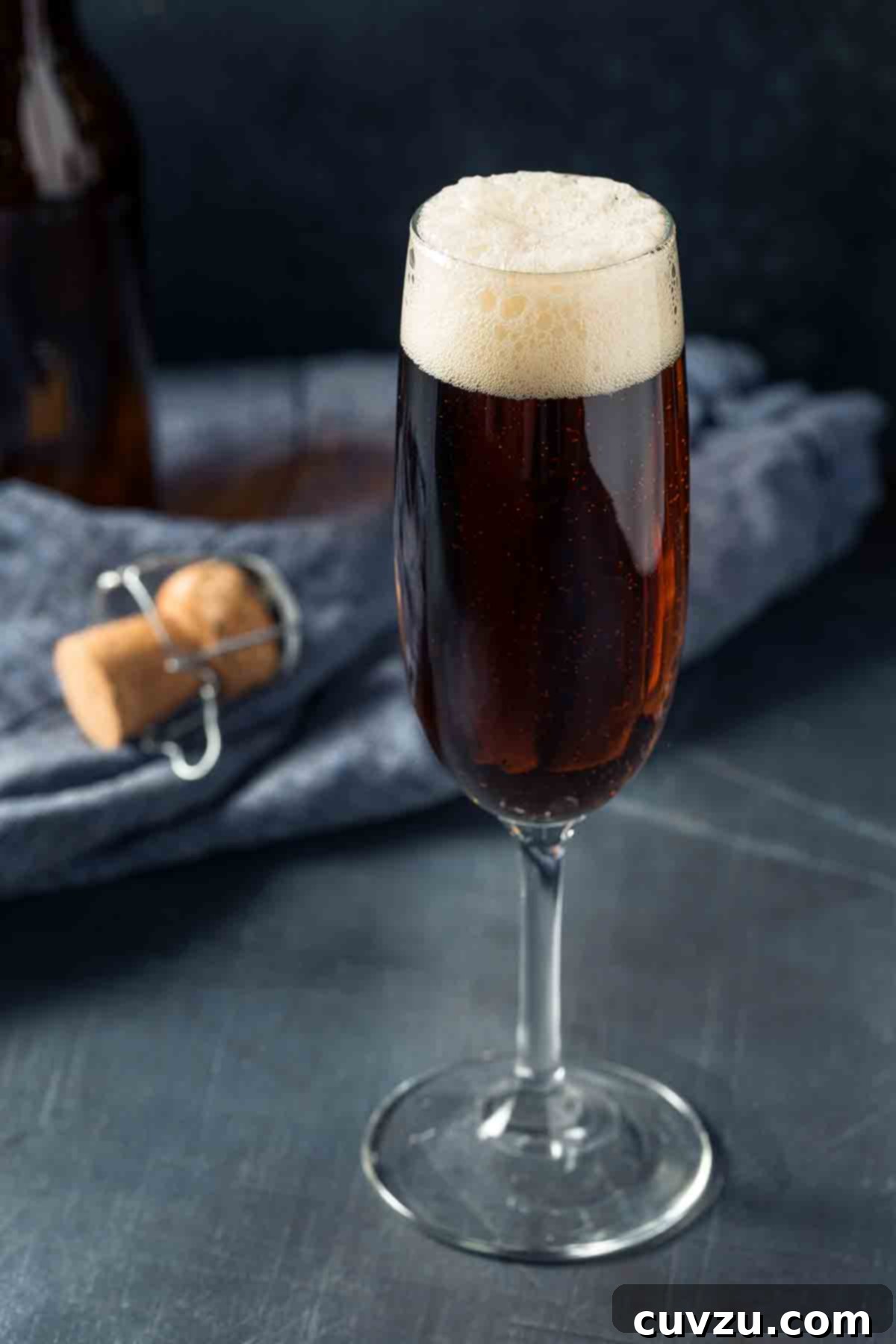
The Black Velvet Cocktail: A Timeless Blend of Stout and Champagne
The Black Velvet cocktail is more than just a drink; it’s an experience in understated elegance and surprising harmony. Its name, “velvet,” perfectly encapsulates the smooth, luxurious texture created by the unlikely, yet brilliant, marriage of robust stout and crisp, effervescent Champagne. This sophisticated libation offers a unique duality – the hearty depth of beer balanced by the celebratory sparkle of sparkling wine – resulting in a sensation that is both intriguing and utterly delightful. Take a moment to savor its rich appearance and delicate fizz, and you’ll quickly understand why this classic cocktail has captivated enthusiasts for over a century. It’s a testament to how contrasting elements can come together to create something truly exceptional and memorable.
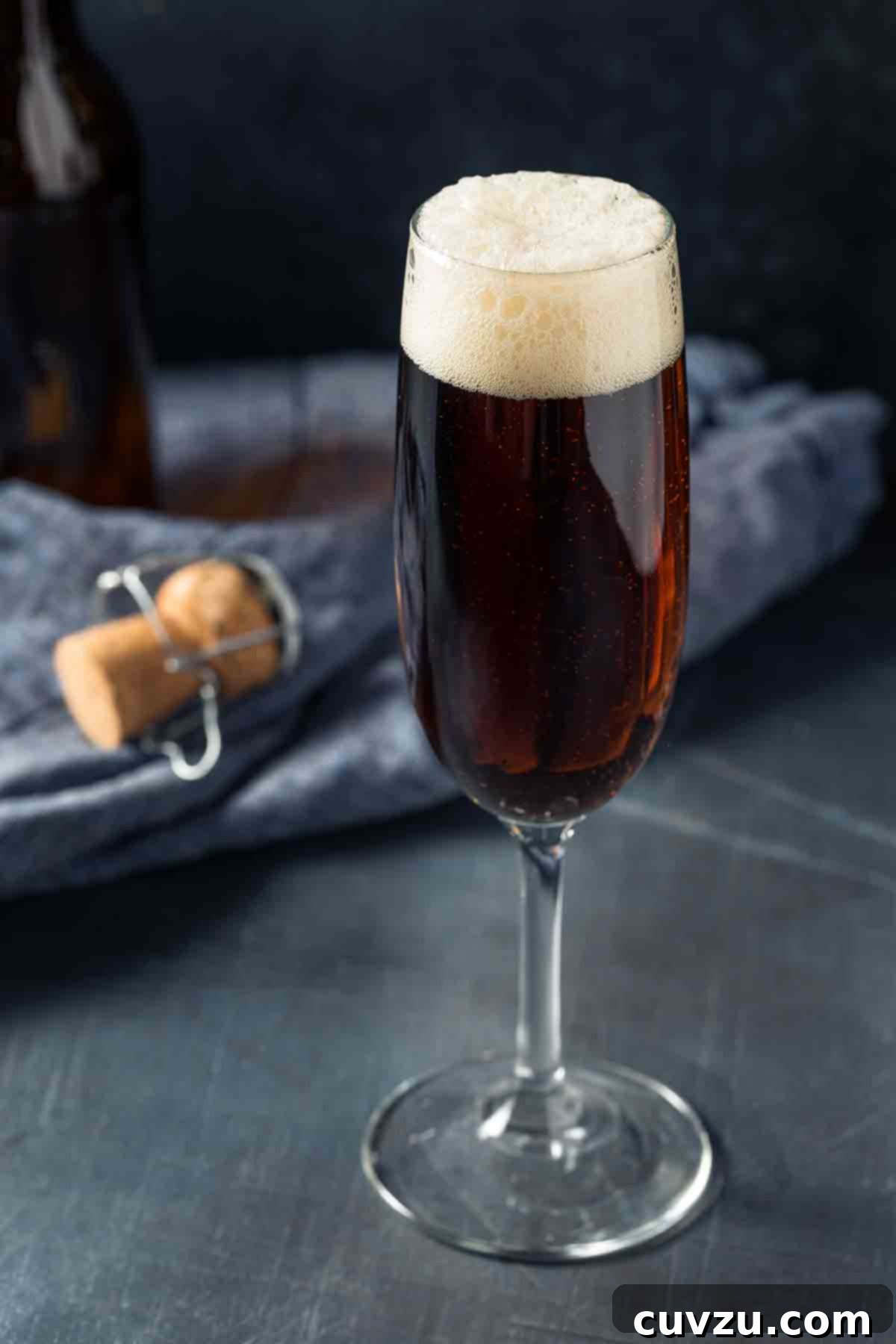
At first glance, the combination of a dark, malty stout and a bright, bubbly Champagne might seem unconventional, even contradictory. Yet, the Black Velvet defies expectations, offering a taste profile that is uncommonly smooth and subtly sophisticated. It’s an inspired melding of contrasting textures and flavors – the dense richness of stout providing a grounding base, while the Champagne contributes its characteristic effervescence and acidity. This interplay creates a drink that is both titillating and satiating, possessing a refined delicacy alongside a handsome ruggedness. Much like its garment-minded namesake, this libation lends an air of subdued sophistication to any occasion, effortlessly elevating a casual gathering or complementing your most elegant celebrations. Whether you’re in your fanciest attire or simply enjoying a quiet evening in faded jeans, the Black Velvet brings a touch of class and intrigue. We invite you to discover its unique charm for yourself.
The Fascinating Origins of the Black Velvet Cocktail
Every classic cocktail has a story, and the Black Velvet’s origin is steeped in a somber yet intriguing historical context. According to author Brian D. Murphy, this distinctive cocktail is widely believed to have been conceived by a bartender at the prestigious Brooks Club in London, England. The year was 1891, a time when the British nation was in profound mourning for Queen Victoria’s beloved late husband, Prince Albert, who had passed away three decades prior but whose absence still cast a long shadow. During such a period of national grief, the consumption of Champagne, typically associated with joyous celebrations and lighthearted festivities, was deemed inappropriately festive.
In a stroke of ingenious creativity, the observant bartender sought a way to tone down the celebratory nature of Champagne while still offering a refined beverage. His solution was to combine it with a dark, solemn stout. This brilliant improvisation gave birth to the Black Velvet, a drink that perfectly mirrored the mood of the nation – elegant and sophisticated, yet imbued with a deep, respectful solemnity. It offered a sophisticated sip without appearing overly jovial, making it a perfectly acceptable choice for those wishing to partake in a drink while observing the period of mourning.
Interestingly, a subtle distinction exists in the world of stout-and-sparkling-wine concoctions: a “Velvet,” as opposed to a “Black Velvet,” traditionally calls for porter instead of stout. While both are dark, malty beers, porter is generally lighter in body and often less intensely roasted than stout, offering a slightly different, though equally delightful, profile when paired with Champagne. While we extend our belated respects to the somber origins of this remarkably innovative cocktail, we can barely contain our enthusiasm and admiration for this beautiful, perfectly balanced creation. Its historical roots only add another layer of depth to its already captivating appeal, making each sip a taste of history.
The Art of the Black Velvet: Tasting Notes and Sensory Experience
The magic of the Black Velvet lies in its captivating interplay of contrasting elements, creating a surprisingly harmonious sensory experience. When you first lift a flute of Black Velvet, your eyes are immediately drawn to its stunning visual presentation. Depending on the pouring technique, you might observe a dramatic separation of layers – the deep, opaque black of the stout beneath a vibrant, golden effervescence of Champagne. This visual distinction is not just aesthetically pleasing but hints at the delightful complexity awaiting your palate.
On the nose, the Black Velvet offers an intriguing bouquet. You’ll catch the unmistakable roasted malt aromas of the stout, often with notes of coffee, chocolate, or caramel, mingling with the subtle, yeasty, and sometimes fruity or floral hints of the Champagne. This aromatic complexity sets the stage for the first sip.
The initial taste is where the “velvet” truly comes alive. The Champagne’s bright acidity and lively bubbles cut through the stout’s richness, preventing it from feeling heavy or cloying. The effervescence tickles the tongue, while the stout provides a creamy, smooth mouthfeel. You’ll experience a delightful balance of flavors: the dry, sometimes toasty or biscuity notes of the Champagne harmonizing with the bittersweet, roasted flavors of the stout. Depending on the specific brands chosen, hints of dark chocolate, coffee, dried fruit, or even a touch of nutty warmth might emerge from the stout, while the Champagne contributes its signature crispness and a touch of fruitiness, whether apple, pear, or citrus.
The finish is remarkably clean and refreshing, leaving a lingering impression of sophisticated balance. The Black Velvet is neither too sweet nor too bitter; it’s a perfectly calibrated dance between opposing forces, resulting in a drink that is surprisingly easy to enjoy, deceptively complex, and inherently celebratory without being overly flamboyant. It’s a cocktail that invites contemplation and enjoyment, making it a superb choice for any discerning palate.
Crafting the Perfect Black Velvet Cocktail: Recipe
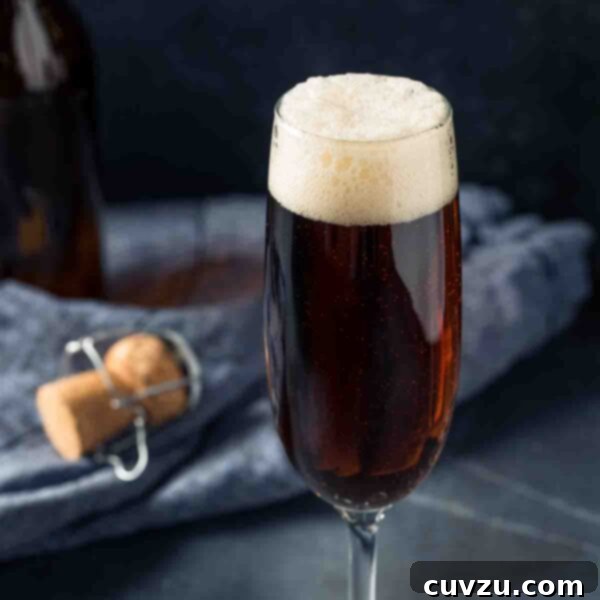
Black Velvet Cocktail
The Black Velvet cocktail is famously smooth and subtly sophisticated, a delightful fusion of stout and Champagne that earns its name with every effervescent sip.
By David Leite
Drinks
American (Adapted from English origins)
1 drink
72 kcal
5 minutes
5 minutes
Ingredients
- 3 ounces stout, (such as Guinness, or a similar dry Irish stout), thoroughly chilled
- 3 ounces Champagne, or a dry sparkling wine, thoroughly chilled
Instructions
-
Prepare Your Glass: Ensure your Champagne flute (or preferred glassware) is clean and ready. Chilling the glass beforehand can also help maintain the cold temperature of the cocktail.
-
Pour the Stout: Carefully fill the Champagne flute halfway with the chilled stout. Pour slowly to minimize head formation. Allow the stout’s foam to settle for a moment before proceeding to the next step.
-
Add the Champagne: This is where the magic happens. Slowly top off the glass with the chilled Champagne. For a visually stunning layered effect, tradition dictates pouring the Champagne over the back of a bar spoon held just above the stout’s surface. This technique gently introduces the sparkling wine, preventing it from immediately plunging into and mixing with the denser stout. The difference in densities allows the Champagne to linger atop the stout, creating an impressive, albeit ephemeral, two-tone layer. This dramatic presentation is a hallmark of a perfectly crafted Black Velvet.
-
Serve and Enjoy: Present your beautiful Black Velvet cocktail immediately. The layers will eventually mingle, but the initial visual impact and the gradual blending of flavors are part of the experience. Imbibe responsibly and savor the unique smoothness and sophistication.
Adapted From

See Mix Drink
Buy On Amazon
Nutrition Information (per serving)
Calories: 72 kcal
Carbohydrates: 3 g
Protein: 1 g
Sodium: 6 mg
Sugar: 1 g
Nutrition information is automatically calculated and should only be used as an approximation.
Choosing Your Ingredients for the Black Velvet
The beauty of the Black Velvet lies in its simplicity, but that also means the quality of your ingredients is paramount. With only two components, each plays a starring role. For the stout, the classic choice is a dry Irish stout like Guinness. Its iconic creamy texture, roasted coffee, and chocolate notes, and moderate bitterness provide the perfect foil for the Champagne. However, don’t limit yourself. Other dry, well-balanced stouts can also work beautifully. Avoid overly sweet or intensely flavored stouts that might overpower the delicate Champagne. The key is to find a stout that offers depth without being too heavy. Ensure your stout is well-chilled; temperature significantly impacts the drink’s texture and overall enjoyment.
When it comes to the Champagne, a dry (Brut) variety is highly recommended. The crisp acidity and fine bubbles of a Brut Champagne complement the stout’s richness without adding excessive sweetness. While true Champagne from the Champagne region of France offers unparalleled quality, a good quality Cava (from Spain) or Prosecco (from Italy) can also be excellent, more budget-friendly alternatives. Just make sure it’s a dry style of sparkling wine. As with the stout, chilling your sparkling wine to the optimal temperature is crucial for preserving its effervescence and ensuring a refreshing sip.
The balance between the stout and Champagne is what makes the Black Velvet so special. Experiment with different combinations to find your perfect pairing, but always prioritize quality for both components to truly appreciate this exquisite cocktail.
Serving Suggestions and Occasions
The Black Velvet cocktail is incredibly versatile, making it suitable for a wide range of occasions, from festive celebrations to casual brunches. Its elegant appearance and unique flavor profile make it a standout choice that is sure to impress your guests. Traditionally, it’s served in a Champagne flute, which showcases its beautiful layers and delicate effervescence. However, a tulip-shaped beer glass or even a wide-rimmed wine glass can also be used, especially if you prefer a more robust pour or want to observe the mingling of the two liquids more closely.
This cocktail shines brightest during celebrations. It’s a fantastic option for New Year’s Eve, offering a sophisticated alternative to plain Champagne. It also finds a natural home on St. Patrick’s Day, combining two Irish favorites (stout, often Guinness) in an elevated manner. Beyond these specific holidays, consider serving the Black Velvet at:
- Brunch Gatherings: A more adventurous alternative to mimosas or Bellinis, pairing wonderfully with savory dishes.
- Cocktail Parties: Its striking appearance and intriguing taste make it a great conversation starter.
- Dinner Parties: It can serve as a sophisticated aperitif or a unique digestif, especially if paired with chocolate desserts.
- Any Special Occasion: From anniversaries to graduations, its inherent elegance elevates the mood.
For food pairings, the Black Velvet’s balance of dark, roasted notes and crisp acidity allows it to complement a surprising array of dishes. It pairs exceptionally well with rich, savory flavors such as roasted meats, aged cheeses, and charcuterie. For something sweeter, consider pairing it with dark chocolate desserts, particularly those with a hint of bitterness or coffee notes. The stout’s profile often echoes these flavors, while the Champagne’s acidity cleanses the palate, preparing you for the next bite. Avoid overly delicate dishes that might be overwhelmed by the stout’s intensity.
Variations and Personalization
While the classic Black Velvet is perfection in a glass, there are several ways to personalize this delightful cocktail or explore its variations:
- The “Velvet” Classic: As mentioned, using a porter instead of a stout creates a “Velvet.” Porter generally offers a slightly lighter body and less intense roasted flavors, providing a different, often softer, contrast with the Champagne. This variation can be an excellent choice for those who prefer a less robust beer presence.
- Sparkling Wine Alternatives: If Champagne is beyond your budget or simply not your preference, experiment with other sparkling wines. A dry Prosecco will offer brighter, fruitier notes, while a Cava can bring a nutty, more savory complexity. Even a sparkling cider could create an interesting, lighter “Black Velvet” style drink, though it would diverge significantly from the traditional flavor profile.
- Flavored Stouts: For an adventurous twist, consider using a flavored stout. A coffee stout or a chocolate stout could add intriguing dimensions, though be mindful not to choose one that is excessively sweet or artificially flavored, as it could overwhelm the Champagne.
- Garnishes: While traditionally served without a garnish, a simple embellishment can elevate the presentation. A twisted lemon peel can add a subtle citrus aroma, or a few fresh berries (like blackberries or raspberries) could complement the dark fruit notes often found in stout. For a truly luxurious touch, a delicate edible gold leaf or a shimmering edible glitter could be added, perfect for celebratory occasions.
- Temperature Play: While chilling both components is standard, some enthusiasts enjoy playing with slightly warmer stout to bring out more of its complex flavors, though this might diminish the refreshing contrast. Always keep the sparkling wine very cold.
The beauty of the Black Velvet is its foundational balance. By understanding this, you can confidently explore variations that cater to your taste preferences while respecting the essence of this timeless cocktail.
What Our Testers Say About the Black Velvet
Recipe Testers’ Reviews

Jennifer V.
The Black Velvet is truly a classic and an ideal choice when hosting family or friends. It’s perfect for those moments when you want to offer cocktail options that are quick to prepare yet move beyond the usual liquor-and-soda combinations. The pairing of Guinness and Champagne is surprisingly harmonious, with the Champagne contributing a lively, bubbly kick that beautifully complements the stout’s richness.
For an even more attractive presentation, I recommend first pouring the stout and allowing its head to settle completely. Then, very carefully, pour the Champagne on top. If you have a bar spoon, letting the Champagne drizzle gently down its back can help achieve two distinct layers, creating a stunning visual effect. Imagining a garnish of edible gold leaf would be particularly elegant, or perhaps a single strawberry for a touch of simple sophistication without being overly elaborate.

Pat Francis
The Guinness and Champagne truly play off each other beautifully in this cocktail. I approached it with an open mind, having no prior expectations, and was genuinely impressed. The Champagne effectively cuts through the richness and slight syrupiness of the stout, providing a refreshing counterpoint, while the beer, in turn, adds a pleasant depth and heft to the crisp bubbles of the sparkling wine.
My only minor challenge was a touch of impatience during the preparation. I meticulously measured out the ounces but didn’t allow the Guinness head to fully subside before adding the Champagne. Consequently, I had to gently sip some of the Champagne off the top to make room before I could continue pouring. My Champagne flutes likely hold exactly 6 ounces, so I’d suggest using a little poetic license with the measurements – perhaps aiming for 2 1/2 to 2 3/4 ounces of each liquid. For most of us, simply eyeballing a half-and-half ratio seems to work perfectly, unless you possess the steady hands and keen eye of a seasoned barkeep!
Tried this recipe? Mention @leitesculinaria or tag #leitesculinaria!
The Black Velvet cocktail stands as a testament to the power of unexpected pairings. Its rich history, sophisticated flavor profile, and elegant presentation make it a timeless choice for anyone seeking a unique and memorable drink. Whether you’re celebrating a special moment or simply enjoying a quiet evening, this harmonious blend of stout and Champagne offers a captivating experience that truly lives up to its name. We encourage you to try it and discover its understated charm for yourself.