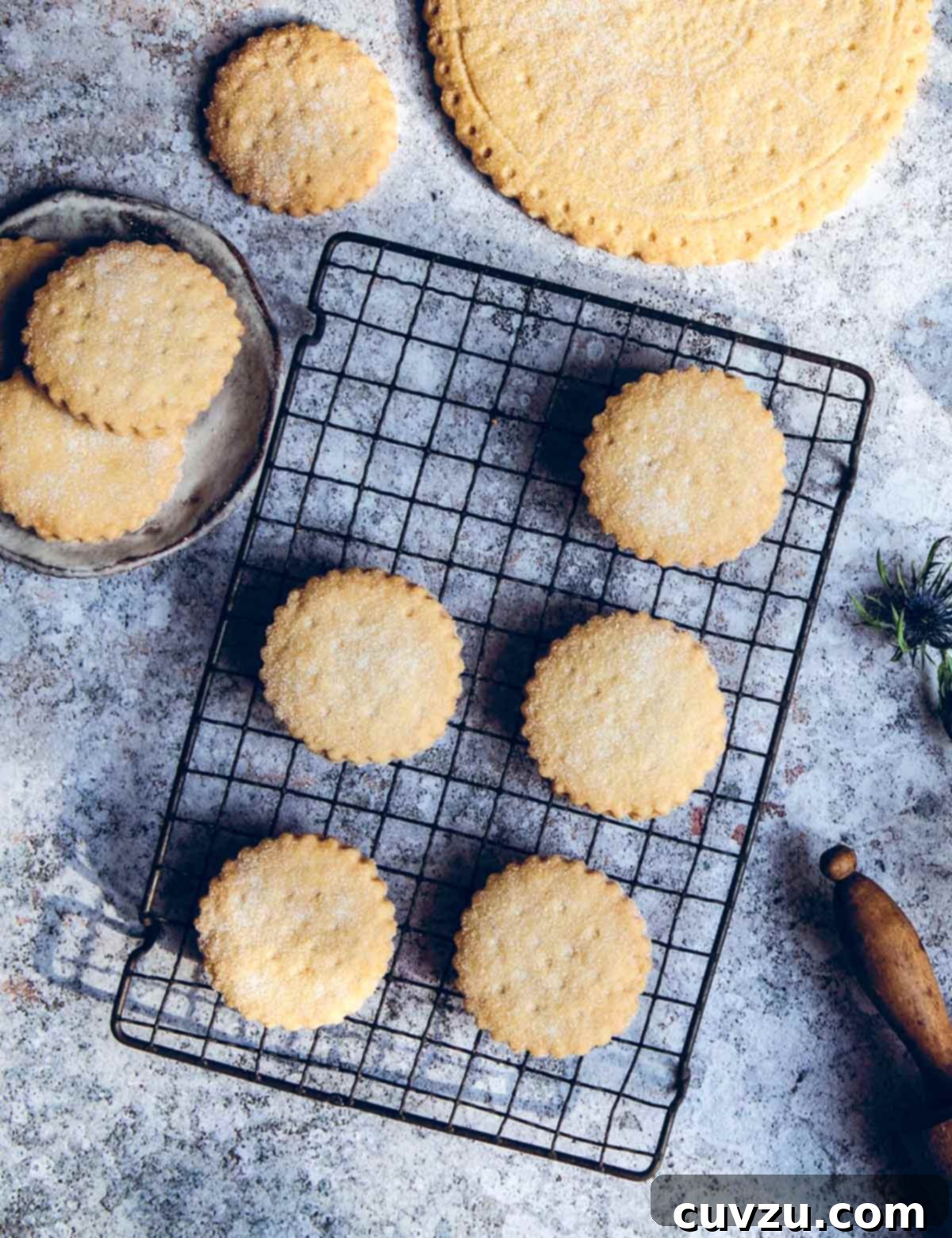
Easy Shortbread Cookies are a timeless delight, incredibly simple to prepare, and deliver an unparalleled melt-in-your-mouth experience. With just a handful of staple ingredients—butter, sugar, flour, a pinch of salt, and a special touch of cornstarch (or semolina or rice flour)—you can whip up these buttery biscuits that boast a supremely light, flaky, and crumbly texture. This recipe is designed for both novice bakers and seasoned pros, promising perfect results every time with minimal effort. Discover how effortlessly you can create these classic treats, ideal for any occasion, from a quiet afternoon tea to a festive gathering.
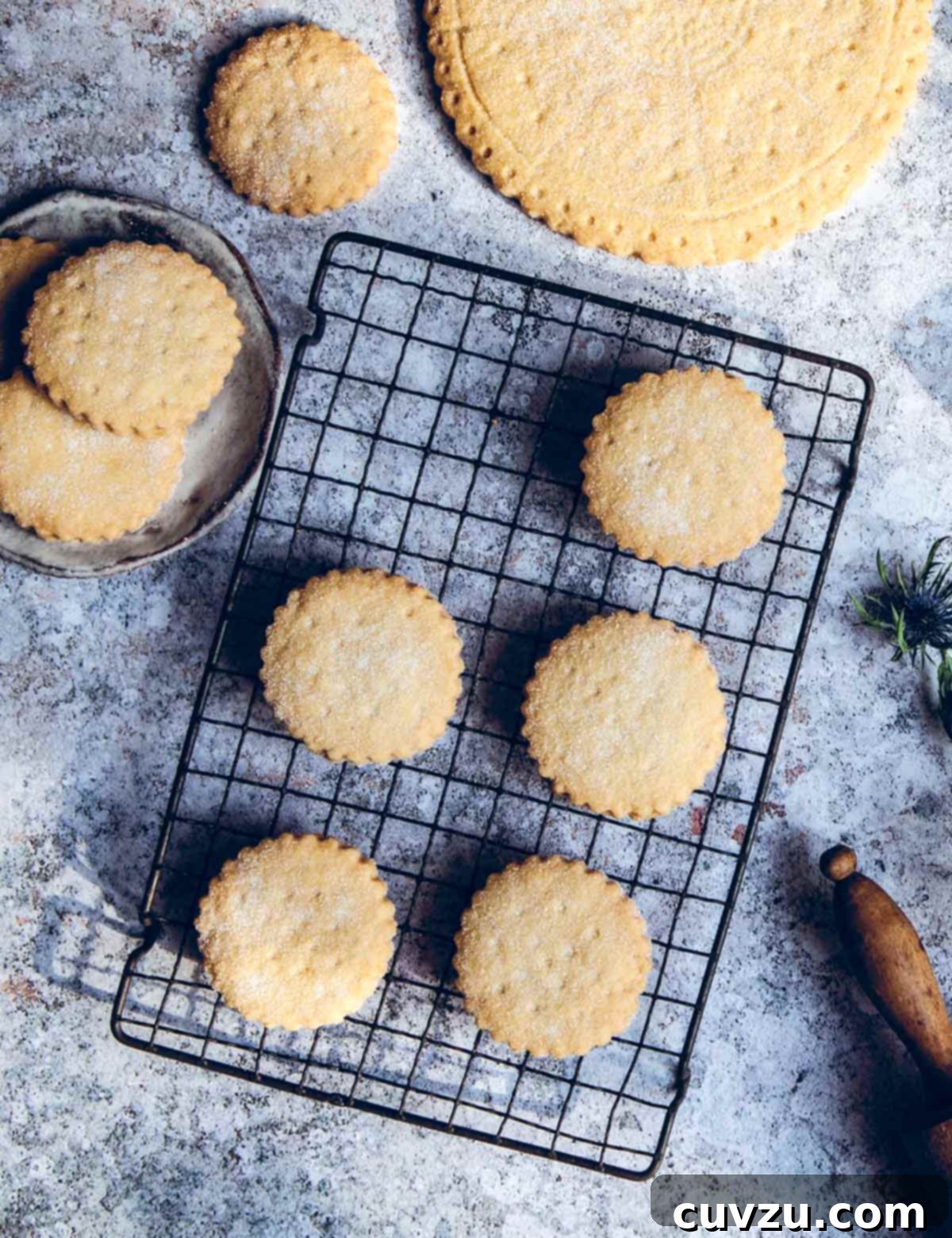
TL;DR (Quick-Answer Box)
- What it is: These classic British butter biscuits, often called shortbread, achieve a uniquely brittle and beautifully crumbly texture that dissolves delightfully on your tongue, thanks to a thoughtful blend of flour and cornstarch.
- Why you’ll love it: This incredibly simple, four-ingredient cookie comes together in under an hour of hands-on time, making it the perfect versatile treat for a cozy tea, a strong coffee pairing, or a gentle afternoon indulgence.
- How to make it: The process is wonderfully straightforward: gently rub the butter into the dry ingredients to form a cohesive dough, chill it briefly to firm up, then simply pat it flat (no complicated rolling required!), cut into your desired shapes, and bake until they reach a delicate, barely golden hue.
The Rich History of Shortbread: From Ancient Rituals to Beloved Biscuits
Shortbread, with its rich, buttery taste and crumbly texture, holds a special place in culinary history, particularly in Scotland where it originated. Far more than just a sweet treat, shortbread’s roots trace back to medieval biscuit bread, a leftover dough from bread making that was dried out in an oven until it hardened. Over time, yeast was replaced with butter, transforming it into the rich, crumbly delicacy we know today.
Initially, shortbread was an expensive luxury, enjoyed primarily during special occasions like Christmas, Hogmanay (Scottish New Year’s Eve), and weddings. Its name derives from its “short” texture, a culinary term meaning it crumbles easily due to a high fat content, inhibiting gluten development.
Interestingly, shortbread also played a role in ancient customs. According to Florence Marian McNeill in her 1929 book, “The Scot’s Kitchen,” a decorated shortbread, known as “infare-cake,” served as the wedding cake in rural Scotland. On the first day of the marriage, or “Infare day,” this special cake was broken over the bride’s head on the threshold of her new home. This very old custom finds its origin in paganism, symbolizing fertility and good fortune. From such profound cultural significance to its widespread modern-day appeal, shortbread remains a cherished classic.
—Regula Ysewijn

Why Our Testers Loved This Easy Shortbread Cookie Recipe
Our dedicated recipe testers unanimously praised these delightful shortbread cookies. They described them as “buttery and blissful,” highlighting the rich flavor, and marveled at their simplicity, calling them “the easiest cookies I’ve ever made.” Testers particularly appreciated how quickly these cookies come together and that they don’t require the fuss of rolling. The finished product was celebrated for being “light and tender with just the perfect amount of sweetness,” making them an instant favorite for anyone seeking a truly superb homemade treat.
Notes on Key Ingredients for Perfect Shortbread
Achieving the perfect easy shortbread cookie hinges on understanding the role of each ingredient. While simple, the quality and type of ingredients make a significant difference in the final texture and flavor of your buttery biscuits.
- Cornstarch, Semolina, or Rice Flour: This is the secret to shortbread’s signature crumbly and brittle texture. While traditional shortbread often uses only wheat flour, the addition of one of these alternative flours introduces starch without gluten. Gluten is what gives baked goods elasticity and chewiness. By reducing the overall gluten content, these flours ensure your shortbread breaks apart delicately in your mouth, rather than being tough or chewy. Using cornstarch is most common for its fine texture, while rice flour adds a subtle crispness, and semolina provides a slightly coarser, yet still tender, bite. Feel free to use one or a combination for your preferred texture.
- Superfine Sugar: Just like in traditional Scottish shortbread, using superfine sugar is crucial for a delicate, melt-in-your-mouth texture. Its finer granules dissolve more readily into the butter, resulting in a smoother dough and a more uniform, tender crumb without any grainy residue. If you don’t have superfine sugar on hand, a simple trick is to process your granulated sugar in a blender or food processor for a few seconds until it’s finely ground. Be careful not to over-process it into a powdery confectioners’ sugar, as this contains cornstarch and can alter the recipe’s balance.
- Butter: As a primary ingredient, the quality of your butter truly shines in shortbread. Opt for the best-quality unsalted butter you can find; its creamy, rich flavor will be the star of your finished cookies. Using unsalted butter also gives you complete control over the salt content in the recipe. While unsalted is recommended, if you only have salted butter, you can use it, but consider slightly reducing the added pinch of sea salt to balance the flavor. Ensure your butter is at room temperature, but still firm, not soft or greasy. This allows it to incorporate effectively with the dry ingredients, creating that distinctive crumbly dough without overworking it.
- All-Purpose Flour: The foundation of our shortbread. While the recipe uses all-purpose flour, some bakers prefer a lower protein pastry flour for an even more tender cookie. However, standard all-purpose flour works wonderfully, especially with the addition of cornstarch or rice flour to manage gluten development.
- Sea Salt: A crucial component that enhances and balances the sweetness of the sugar and the richness of the butter. A small pinch of fine sea salt brings all the flavors into harmony, preventing the cookies from tasting flat or overly sweet.
Step-by-Step Instructions for Easy Shortbread Cookies
Making these easy shortbread cookies is a straightforward and enjoyable process. Follow these detailed steps to ensure your cookies turn out perfectly crisp, tender, and utterly delicious.
- Prepare the Dough: In a large mixing bowl, combine the all-purpose flour, cornstarch (or semolina or rice flour), superfine sugar, and a pinch of sea salt. Whisk these dry ingredients together thoroughly to ensure even distribution. Next, add the room-temperature but still firm butter. Using your fingertips, rub the butter into the dry ingredients. Continue rubbing until the mixture resembles coarse breadcrumbs, and all the butter is fully incorporated. Then, gently knead the mixture within the bowl until it comes together into a smooth, cohesive ball of dough. This should take about 5 to 10 minutes. Be careful not to over-knead, as excessive handling can develop too much gluten, leading to tougher rather than brittle biscuits.
- Chill the Dough: Once your dough ball is formed, wrap it tightly in plastic wrap. Place the wrapped dough in the refrigerator and chill for a minimum of 1 hour. Chilling is a vital step as it allows the butter to firm up, which helps prevent the cookies from spreading too much during baking and contributes to their tender, flaky texture. While the dough is chilling, preheat your oven to 325°F (163°C) and line a rimmed baking sheet with parchment paper to prevent sticking and ensure even baking.
- Shape the Shortbread: Lightly flour your work surface. Unwrap the chilled dough and place it on the floured surface. Using your hands, gently pat the dough flat until it forms an even round about 1/4 inch (6.5 mm) thick. It’s crucial to pat the dough rather than roll it with a rolling pin. Rolling can activate more gluten, making the shortbread chewy instead of tender and crumbly. Once flattened, use a 3-inch (8-cm) cookie or biscuit cutter to cut out your desired shapes. Carefully transfer the cut rounds to your prepared baking sheet. Gather any leftover dough scraps, gently press them back together, and pat them flat again to cut out more cookies until all the dough is used. Before baking, use a fork to neatly prick the surface of each shortbread round. This helps steam escape, preventing bubbles and promoting an even bake.
- Bake and Finish: Place the baking sheet with the pricked shortbread rounds in the middle of your preheated oven. Bake for approximately 30 minutes, or until the edges are just barely golden brown. The center of the shortbread should still be pale. Do not wait for them to turn dark brown, as this indicates overbaking, which can result in dry, hard cookies. As soon as you remove the shortbreads from the oven, immediately and generously sprinkle their tops with extra superfine sugar. This adds a delightful sparkle and an extra touch of sweetness. Let the shortbread cool on the baking sheet for about 5 minutes to firm up slightly before carefully transferring them to a wire rack to cool completely. Cooling on a wire rack ensures air circulation, preventing the bottoms from becoming soggy.
Recipe FAQs: Your Shortbread Questions Answered
Here are some frequently asked questions to help you master your easy shortbread cookies and even get creative with them.
While the recipe advises patting the dough to avoid overworking it, you can achieve a wonderfully smooth top surface. After patting the dough flat with your hands on a lightly floured surface, place a sheet of parchment paper directly on top of the dough. Then, gently brush or smooth it with the palm of your hand or a flat object. This technique helps to even out the surface and create a professional finish without activating more gluten by traditional rolling.
Absolutely, making shortbread fingers is a popular and efficient way to enjoy this recipe, minimizing dough scraps and producing elegant results. Prepare the dough as described in step 1. Instead of patting it out for individual cutouts, line an 8-inch (20-cm) square baking pan with parchment paper, leaving an overhang on the sides for easy removal. Press the dough evenly into the base of the prepared pan, ensuring it covers the entire surface to form a flat, compact layer. For an extra smooth top, place a second sheet of parchment paper over the dough and use another flat pan or your hands to press down firmly and even out the surface. Chill the dough in the pan for 1 hour. Once chilled, remove the top parchment paper. Use a sharp knife to gently score lines across the dough, dividing it into 16 fingers (typically 4×4 or 2×8 sections). Prick each finger lightly with a fork. Bake the shortbread in the middle of the oven until barely golden, which usually takes about 35 minutes. After baking, allow it to cool slightly in the pan before carefully lifting the parchment paper to remove the slab. Cut along the scored lines completely to separate the fingers and cool them on a wire rack.
Yes, these easy shortbread cookies are a fantastic canvas for various flavor additions! In the 1990s, it was quite popular in tearooms to gently press glacé cherries into the shortbread dough before baking to create delightful cherry shortbread. Today, adding edible lavender is a trendy choice for a sophisticated floral note. You can also experiment with citrus zest (lemon, orange, or lime) for a bright flavor, a hint of vanilla bean paste for extra richness, or a sprinkle of finely chopped nuts (like almonds or pecans) for added texture. For those who love nuts in their shortbread, you can follow this method for making pistachio shortbread, which details how to incorporate them successfully. Another idea is to mix in miniature chocolate chips or a touch of ground cinnamon or cardamom for a warm, spiced variation. Add your chosen extras when you combine the dry ingredients, ensuring they are evenly distributed.
Rice flour, cornstarch, or semolina is added to these shortbread cookies to achieve their classic, highly desirable crumbly and tender texture. These starches help to “shorten” the dough by interfering with gluten development. Gluten is a protein network that forms when flour is mixed with water and kneaded, providing elasticity and chewiness. By adding these starches, which are gluten-free, the overall gluten content of the dough is reduced, preventing the cookies from becoming tough or chewy and instead allowing them to break apart effortlessly in your mouth.
Pro Tips & Troubleshooting for Perfect Shortbread
- Master the Bake, Avoid Overbaking: The golden rule for perfect shortbread is to avoid overbaking. Your shortbread is ready when the dough has turned a very pale golden color, typically around the edges. The center should remain quite light. Do not wait for them to turn a deep golden brown. Overbaked shortbread will be dry, tough, and lose its signature melt-in-your-mouth tenderness. Err on the side of underbaking rather than overbaking.
- Precision in Measurement: For consistent, excellent results, especially in baking, measuring ingredients by weight (grams) rather than volume (cups) is always recommended. This ensures accuracy and helps achieve the desired dough consistency and final texture.
- Perfect Butter Temperature: Ensure your butter is at “room temperature but not soft.” This means it should be pliable enough to leave an indentation when pressed, but not greasy or melted. Butter that is too soft will result in a greasy dough and can make your shortbread spread excessively during baking.
- Don’t Overwork the Dough: Shortbread gets its name from being “short,” meaning crumbly and tender. Overworking the dough develops gluten, which leads to a tough, chewy cookie. Mix and knead just until the ingredients come together.
- Storage Secrets:
- Unbaked Dough: The unbaked shortbread dough is incredibly versatile. It can be kept tightly wrapped in plastic in the refrigerator for up to 1 week, making it perfect for preparing ahead of time. For longer storage, the dough can be frozen for up to 1 month. When ready to bake from frozen, simply thaw it in the refrigerator overnight before shaping and baking as directed.
- Baked Cookies: Once baked and completely cooled, these easy shortbread cookies can be stored in an airtight container at room temperature for up to a week, maintaining their crispness. For extended freshness, they can be stored in the freezer for up to 3 months. To freeze, place the cooled cookies in a single layer on a baking sheet to flash freeze for about an hour, then transfer them to a freezer-safe bag or container, separating layers with parchment paper to prevent sticking. Thaw at room temperature when ready to enjoy.
More Great Shortbread Recipes to Explore
If you’ve fallen in love with these easy shortbread cookies, you’ll be delighted to explore more variations of this classic treat. From traditional renditions to exciting new flavor combinations, there’s a shortbread for every palate and occasion. Expand your shortbread repertoire with these fantastic recipes:
Write a Review
If you make this recipe, or any dish on LC, consider leaving a review, a star rating, and your best photo in the comments below. I love hearing from you.–David
Easy Shortbread Cookies
David Leite
Dessert
British
12
cookies
105
kcal
15
30
1
45
Equipment
-
Round cookie cutter
-
Large mixing bowl
-
Parchment paper
-
Rimmed baking sheet
-
Wire cooling rack
Ingredients
-
1 2/3
cups
all-purpose flour,
plus more for dusting -
7
tablespoons
cornstarch,
or 1/3 cup (50 g) semolina, or 1/3 cup (50 g) rice flour, or a combination for ideal texture -
6
tablespoons
superfine sugar
(or blitz granulated sugar in a food processor until finely ground), plus extra for sprinkling -
Pinch
of sea salt -
1 1/2
sticks (6 oz / 170g)
unsalted butter,
at room temperature but still firm
Instructions
-
In a large bowl, combine the flour, cornstarch (or semolina or rice flour), superfine sugar, and salt. Use your fingers to rub in the butter until the mixture achieves the consistency of coarse breadcrumbs. Gently knead the mixture until it comes together into a smooth dough, which should take between 5 to 10 minutes. It’s important not to over-knead the dough, as this can develop the gluten and make the biscuits tough rather than brittle and tender.
-
Wrap the dough tightly in plastic wrap and chill it in the refrigerator for at least 1 hour. This crucial step allows the butter to firm up, preventing the cookies from spreading too much during baking and ensuring a superior crumbly texture.
-
While the dough is chilling, preheat your oven to 325°F (163°C).
-
Line a rimmed baking sheet with parchment paper to prevent sticking and facilitate easy cleanup.
-
Lightly flour your work surface. Remove the chilled dough from the refrigerator and pat it flat with your hands until it is approximately 1/4 inch (6.5 mm) thick. Avoid using a rolling pin, as patting helps maintain the tender, crumbly texture of the shortbread. Rolling can make the shortbread chewy.
-
Use a 3-inch (8-cm) round cookie or biscuit cutter to cut out the cookies. Carefully place the cut shortbread rounds onto the prepared baking sheet, leaving a small space between each. Gather any leftover dough scraps, gently press them back together, and continue patting and cutting until all the dough is used.
-
Neatly prick the surface of each shortbread cookie all over with a fork. This helps to prevent air bubbles and ensures an even bake. Bake the shortbread in the middle of the preheated oven for about 30 minutes, or until the edges are just barely golden brown and the centers are still pale.
-
As soon as you remove the shortbreads from the oven, immediately and generously sprinkle their tops with extra superfine sugar. This adds a lovely sparkle and an extra touch of sweetness. Let the shortbread cool on the baking sheet for 5 minutes to firm up before carefully transferring them to a wire rack to cool completely.
-
Store the cooled shortbreads in an airtight container at room temperature for up to a week. For best flavor and texture, enjoy them as quickly as possible!
Notes
- Make-ahead – Dough: The unbaked cookie dough can be stored tightly wrapped in plastic in the fridge for up to 1 week, or frozen for up to 1 month. Thaw overnight in the fridge before shaping and baking.
- Freezing – Baked Cookies: Baked and completely cooled shortbread cookies can be stored in an airtight freezer-safe container for up to 3 months. Thaw at room temperature.

Adapted From
The British Baking Book
Buy On Amazon
Explore More with AI
Substitutions
Scale
Summarize
Nutrition
Serving:
1
cookie
Calories:
105
kcal
Carbohydrates:
24
g
Protein:
2
g
Fat:
1
g
Saturated Fat:
1
g
Monounsaturated Fat:
1
g
Trans Fat:
1
g
Cholesterol:
1
mg
Sodium:
1
mg
Fiber:
1
g
Sugar:
6
g
Nutrition information is automatically calculated, so should only be used as an approximation.
Tried this recipe?
Mention
@leitesculinaria or tag
#leitesculinaria!
Recipe Testers’ Reviews
Chiyo Ueyama
“Down-home” is how I would describe these easy shortbread cookies—they really are so pleasing without any bells and whistles. And this recipe offers you buttery tender morsels that are simply perfect to have with a cup of tea or coffee.
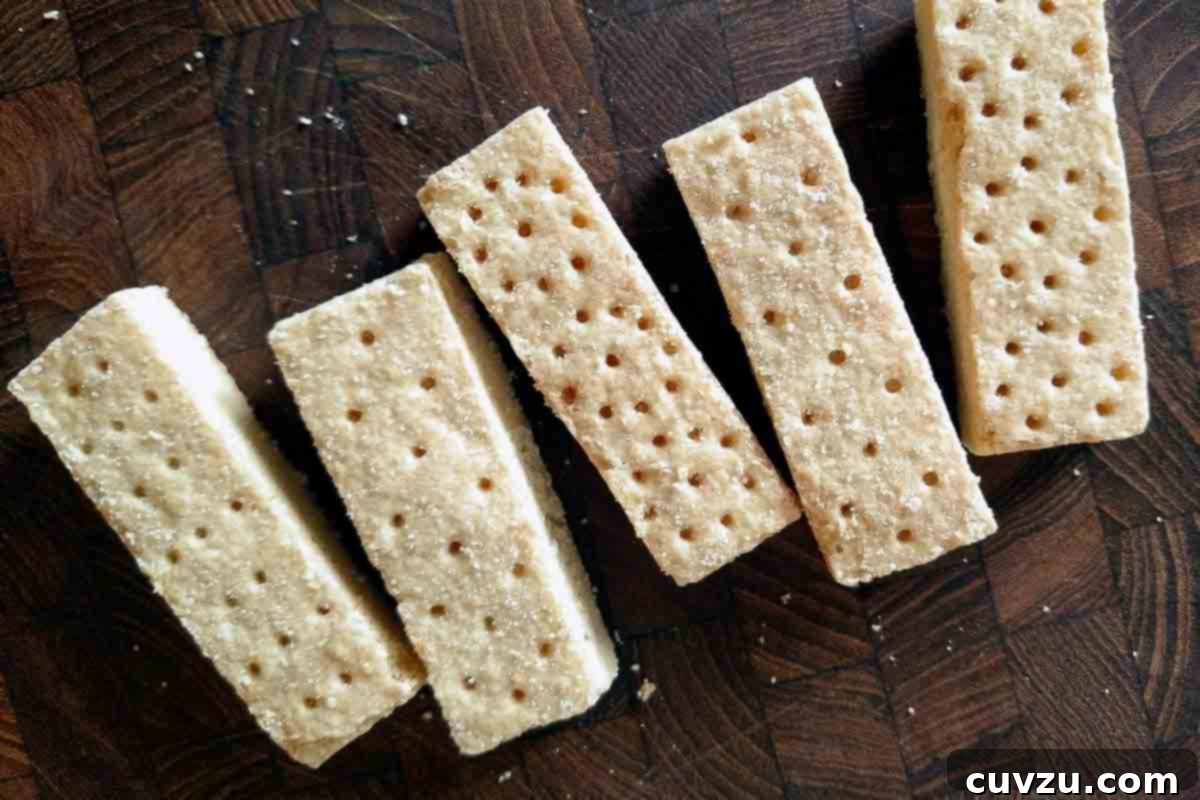
I love being able to mix the dough solely by hand, and the option for making shortbread fingers in a baking pan is welcome in my kitchen, as it eliminates any dough scraps. I made two batches of the shortbread fingers faithfully following the recipe for the first, and tweaking the method a bit the second.
Both batches offered equally delicious biscuits, but the adjustments I made to the second try worked very well.
Instead of chilling the dough first, I filled the baking pan immediately after mixing the dough so it would be easier to cover the bottom of the pan, then chilled the whole thing in the refrigerator for 90 minutes. While the oven preheated I scored the dough in 8 rows and 3 columns, which yielded 24 fingers that are 1” x 2.5” each. I pricked the surface in varied patterns just to make it more fun.
Daniela Trapani
These may be the easiest cookies I’ve ever made! Not to mention, they are truly delicious—buttery, delicate, and crisp. I used a combination of cornstarch and rice flour (50/50) and I think it really gave them a wonderful texture.
I cut my cookies into tiny fingers and got 36 cookies, which was smaller than what was recommended but I think they are the perfect size—two bites each so that you don’t feel guilty going back for seconds. I’ll definitely be making this easy shortbread cookie recipe again for the holiday season.
Victoria Filippi
Buttery and blissful—these easy shortbread cookies are delicious. They’re light and tender and just the perfect amount of sweetness. I especially enjoyed the sprinkle of sugar on top that is recommended when they come out of the oven.
They are a comfort indulgence at its best. Next time, I would consider adding cherries (as the author mentioned was popular) because I love their flavor.
Catarina H.
I’m a big fan of shortbread but haven’t found a recipe that the dough does not fall apart. This was a great recipe, very simple. I think using other flours like semolina or cornstarch was a great addition.
Show More Testers’ Reviews