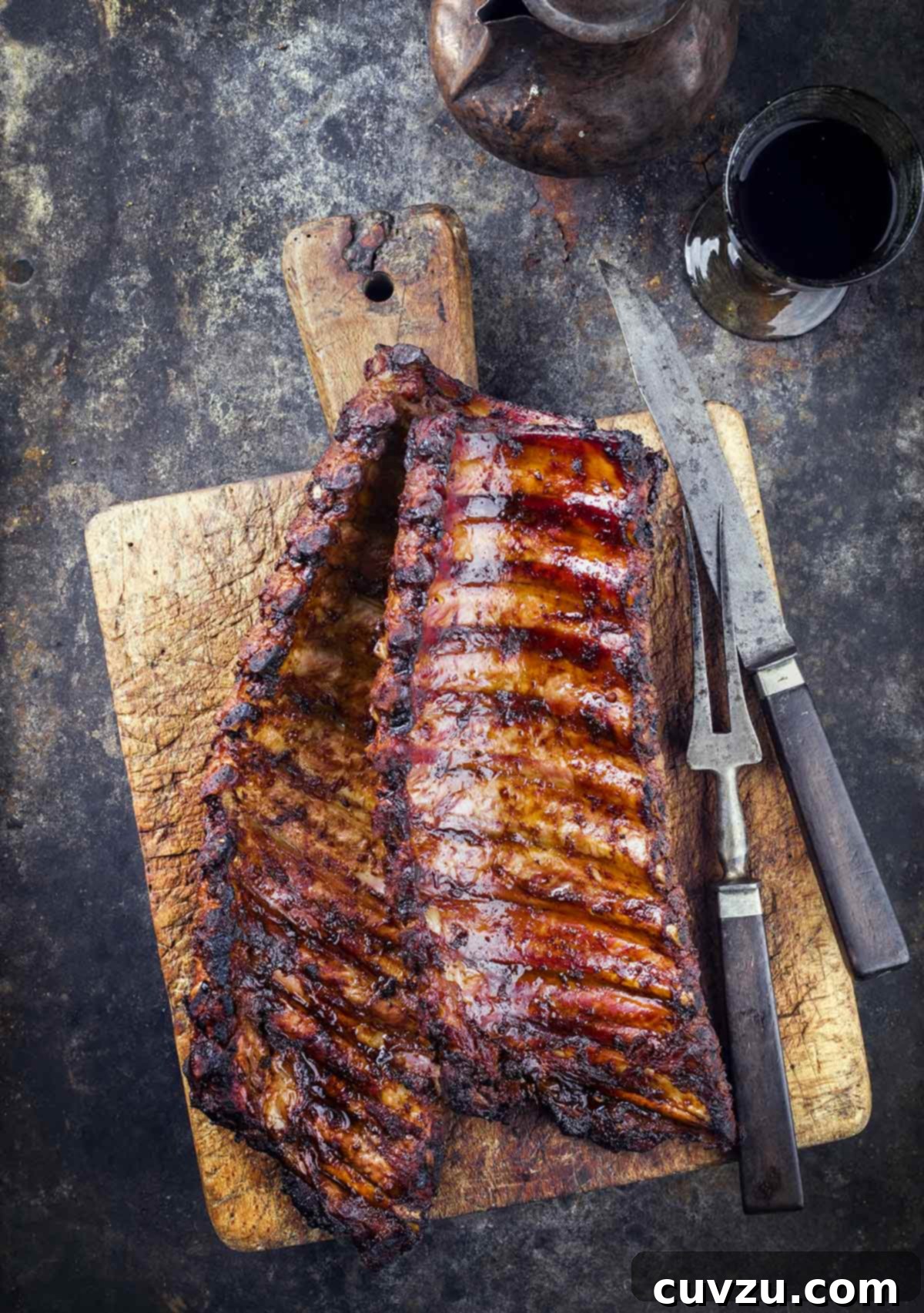
The Ultimate Smoked Pork Ribs Recipe: Low & Slow Perfection
Prepare to discover the ultimate recipe for Smoked Pork Ribs, a culinary masterpiece that promises fall-off-the-bone tenderness and an explosion of savory, smoky flavor. Coated in our signature spice rub and lovingly cooked low and slow on the smoker, these ribs are hailed as the absolute best we’ve ever tasted. Forget everything you thought you knew about barbecue; this method will redefine your expectations and elevate your backyard grilling game to legendary status. Get ready to impress with ribs so good, there’s truly no going back once you’ve tried them.
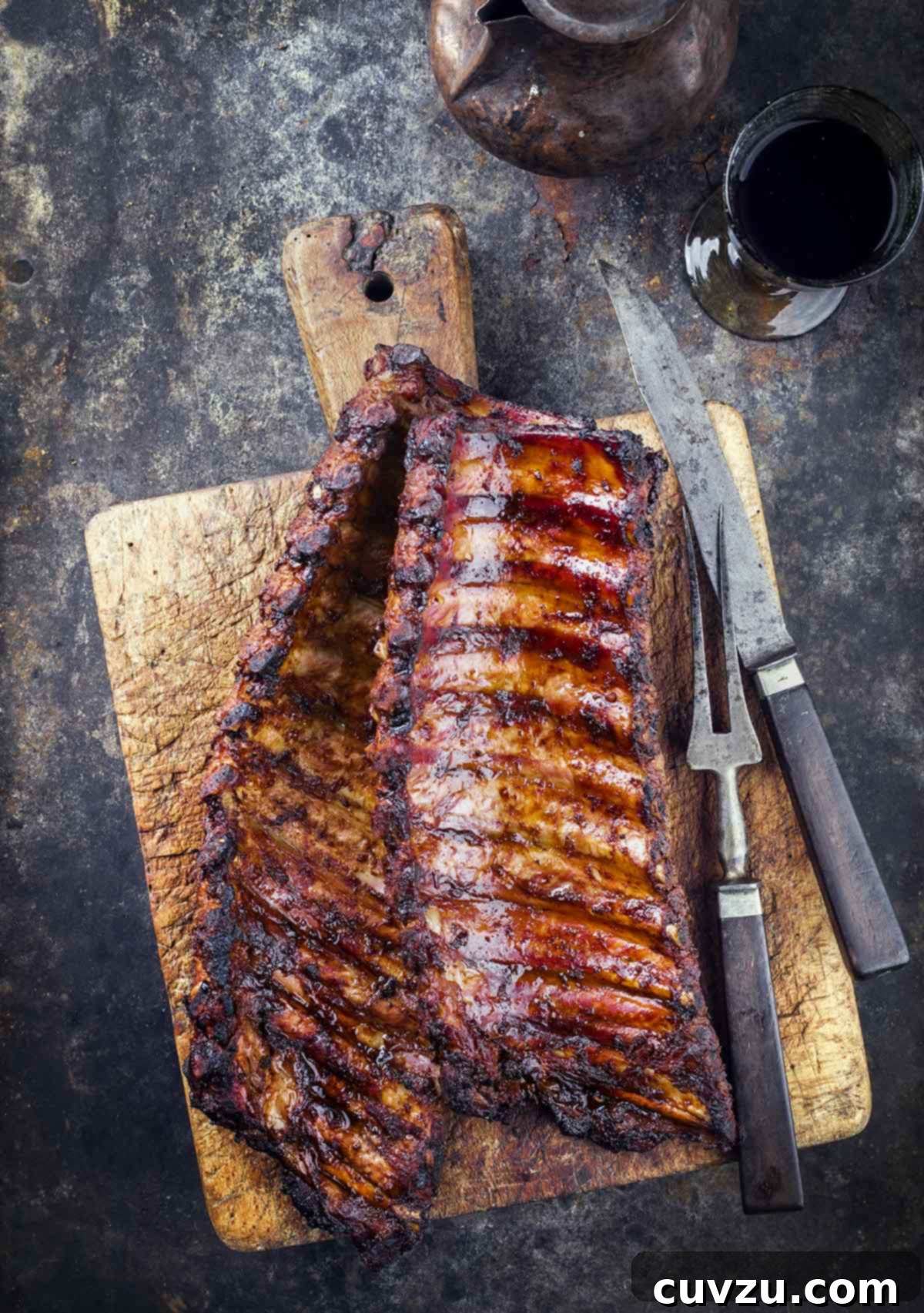
There’s a special magic that happens when pork ribs meet a well-balanced dry rub and the consistent, gentle heat of a smoker. It’s a dance between time, temperature, and tantalizing smoke, transforming an ordinary cut of meat into an extraordinary feast. Our journey to perfecting smoked ribs led us through countless experiments, but this recipe consistently delivers a juicy, tender, and deeply flavorful result that will have everyone asking for your secret. As Angie Zoobkoff, one of our culinary experts, perfectly encapsulated the experience, “We thought we knew how to make smoked pork ribs. In fact, we were confident that our go-to recipe couldn’t be improved upon. Then we tried these. And now there’s no going back.”
Smoked Pork Ribs: Frequently Asked Questions
Removing the membrane, also known as the silver skin, from the bone-side of your pork ribs is a crucial step for achieving tender, easily separable ribs. This thin, silverskin layer tends to toughen up and become chewy when cooked, creating an undesirable texture. To remove it, slide an inverted spoon (or the blunt end of a butter knife) underneath a corner of the membrane on the underside of the rack. Gently lift to loosen it. Once you have a good grip, use a paper towel to firmly grasp the slippery membrane and slowly pull it off the entire rack. The paper towel provides necessary friction, making the task much easier. While a small knife can be used, a spoon is generally safer and less likely to accidentally cut through the membrane or, more importantly, your fingers. This small effort makes a significant difference in the final texture of your smoked ribs. If you’re unsure or prefer not to do it yourself, your butcher will usually be happy to remove the membrane for you when you purchase the ribs.
Understanding the difference between spare ribs and baby back ribs can help you choose the right cut for your smoking adventure. Both are popular choices for barbecue, but they originate from different parts of the pig and offer slightly different characteristics:
- Baby Back Ribs: These are cut from the muscle along the back of the pig, specifically from the loin area, just below the backbone. They are shorter, meatier, and more curved than spare ribs, typically featuring lean meat between and on top of the bones. Often considered more tender due to their location, they tend to cook slightly faster. They are sometimes referred to as “loin back ribs.”
- Spare Ribs: These come from the belly area of the pig, extending from the spine down to the breastbone. They are larger, flatter, and have more bone, fat, and connective tissue, which contributes to their incredibly rich flavor and juicy texture when properly cooked. A popular variation is the St. Louis-style sparerib, where the brisket bone and cartilage are trimmed off, creating a more uniform rectangular shape that is easier to handle and smoke evenly.
Both cuts work exceptionally well for smoking, offering distinct but equally delicious results. The choice often comes down to personal preference for meatiness, fat content, and cooking time, but either will yield fantastic smoked ribs with this recipe.
Smoked pork ribs are the star of any barbecue spread, but pairing them with classic Southern sides elevates the entire meal into an unforgettable experience. As culinary expert Jake Levin suggests, don’t hold back and go all out! Complement the rich, smoky flavors of the ribs with a variety of textures and tastes. Consider hearty and comforting options like warm, slightly sweet cornbread, savory baked beans (often slow-cooked with bacon or molasses for extra depth), a vibrant and tangy crispy potato salad, or luxuriously creamy stovetop mac and cheese. Other fantastic choices include fresh coleslaw for a crunchy contrast and tangy bite, braised collard or turnip greens for a touch of earthy bitterness, and sweet corn on the cob, whether grilled, boiled, or roasted. The key is to create a balanced meal that celebrates the robust flavors of your perfectly smoked pork ribs, offering a delightful array of textures and tastes for everyone at the table.
Smoked Pork Ribs: The Ultimate Backyard BBQ Experience
Indulge in the irresistible flavor of slow-smoked pork ribs, coated in a deeply aromatic spice rub and finished with a touch of tangy barbecue sauce. This recipe delivers incredibly tender, juicy ribs with a perfect smoky bark that’s both flavorful and visually stunning. It’s the kind of barbecue that makes any gathering special, proving that patience truly is a virtue when it comes to pitmaster perfection. Serve these glorious ribs with classic comfort sides for a truly memorable meal that will have your guests coming back for more.
By David Leite
Pin It
Mains
American BBQ
2 generous servings (1 rack)
30 minutes
3 hours 30 minutes
4 hours 30 minutes
Essential Equipment for Perfect Ribs
Having the right tools is key to successful smoking. Here’s what you’ll need:
- Smoker: An essential tool for achieving that authentic smoky flavor. This recipe works wonderfully with various types, including offset, electric, pellet, or ceramic kamado-style smokers (such as a Big Green Egg). Choose the one you’re most comfortable operating.
- Wood Chips, Chunks, or Pellets: The type of wood you choose greatly influences the flavor profile of your ribs. Popular choices for pork include applewood (for a mild, sweet fruitiness), hickory (for a strong, classic smoke flavor), cherry (for a mild, fruity flavor and a beautiful reddish hue), or pecan (for a rich, nutty, and slightly sweet smoke). Ensure you have enough to maintain smoke throughout the cooking process.
- Spray Bottle: Filled with water, cider vinegar, or a combination (a 50/50 mix is popular), this is used for regularly spritzing the ribs. This keeps them moist, helps the smoke adhere to the surface, and contributes to developing that desirable “bark.”
- Meat Thermometer: Crucial for accurately checking the internal temperature of the ribs during the final stages to ensure they reach optimal tenderness and doneness. An instant-read thermometer is highly recommended.
- Heavy-Duty Aluminum Foil: For wrapping the ribs during the final cooking stage (often called the “Texas crutch”), which is key to tenderizing them by braising them in their own juices and steam.
- Airtight Container: Ideal for storing any leftover spice rub, keeping it fresh and ready for your next barbecue creation.
Ingredients You’ll Need for Unforgettable Ribs
For the Irresistible Barbecue Spice Rub (yields about 2 cups)
This dry rub is the backbone of our smoked ribs, offering a beautiful balance of savory, sweet, and spicy notes. Making a larger batch means you’ll have extra on hand for other grilled or smoked meats like chicken, pork shoulder, or even beef brisket. Store any unused rub in an airtight container in a cool, dark place for months.
- 1/2 cup fine sea salt or kosher salt: Provides essential seasoning, helps draw out moisture, and contributes to the formation of a flavorful, crusty bark.
- 1/2 cup freshly ground black pepper: Adds a pungent, peppery kick and forms a key component of the crust, creating a classic barbecue flavor.
- 1/4 cup muscovado, turbinado, or light brown sugar: Essential for balancing the salt and spice, promoting caramelization (which creates a beautiful mahogany color), and contributing to a tender texture.
- 3 tablespoons sweet paprika: Contributes a vibrant reddish hue to the ribs and a mild, sweet pepper flavor that is foundational to many rubs.
- 2 tablespoons ground coriander: A subtle but powerful addition that imparts a unique citrusy, earthy, and slightly floral note, elevating the rub beyond the ordinary.
- 2 tablespoons ground cumin: Infuses a warm, earthy depth and slightly smoky aroma that pairs exceptionally well with pork.
- 1 tablespoon garlic powder: Offers a foundational savory flavor that enhances all the other spices and adds a rich aromatic base.
- 1 teaspoon ground cayenne pepper: Provides a gentle, warming heat that awakens the palate without overpowering the smoky goodness. Feel free to adjust this amount to your preferred spice level.
For the Mouth-Watering Smoked Pork Ribs
- 2 tablespoons pork barbecue rub, from the batch you just made, or more, if needed to fully coat the ribs. Adjust quantity based on rib size.
- 1 rack pork ribs, choose either spare ribs or baby back ribs, ensuring the membrane (silver skin) is carefully removed as described in our FAQ section for optimal tenderness.
- Water, cider vinegar, or a combination (e.g., a 50/50 mix): This will be used in your spray bottle to spritz the ribs during smoking. The acidity of cider vinegar can help tenderize the meat and add a slight tang.
- 1/3 cup store-bought or homemade barbecue sauce: For basting the ribs during the final stage of smoking. Choose a sauce you love, as it will create a caramelized glaze and an extra layer of delicious flavor.
Step-by-Step Instructions for Smoking Pork Ribs
Follow these detailed steps to achieve perfectly smoked, tender, and flavorful pork ribs that will impress everyone.
Crafting Your Signature Barbecue Spice Rub
- In a medium-sized, airtight container, combine all the ingredients for the rub: fine sea salt or kosher salt, freshly ground black pepper, muscovado (or alternative) sugar, sweet paprika, ground coriander, ground cumin, garlic powder, and ground cayenne pepper.
- Mix thoroughly using a spoon or whisk until all the spices are evenly distributed. This ensures a consistent flavor profile on your ribs.
- Cover the container tightly and store it in a cool, dry place. Your homemade barbecue rub will remain potent and flavorful for up to several months, ready for your next smoking adventure.
The Art of Smoking Pork Ribs: Low and Slow Method
- Prepare the Ribs with Rub (About 1 hour before smoking): Approximately one hour before you plan to start smoking, generously sprinkle about 1 to 1 1/2 tablespoons of your freshly made barbecue rub on each side of the rib rack. Use your hands to gently massage and spread the rub evenly across the entire surface of the meat, ensuring a thin but thorough coating. The meat should still be visible beneath the rub, not completely obscured. This allows the flavors to penetrate and for the rub to adhere, contributing to the desirable bark. Reserve any remaining rub for future use.
- Preheat Your Smoker: Set up your smoker according to the manufacturer’s directions, aiming for a consistent temperature range between 225°F and 250°F (110°C and 120°C). This low and slow temperature is paramount for breaking down connective tissues and achieving incredibly tender ribs.
- Add Wood for Smoke: Once your smoker reaches the target temperature, add your preferred wood chips, chunks, or pellets to the smokebox or designated area, following your smoker’s instructions. Remember, the goal is a gentle, wispy blue smoke, not a heavy, white, acrid burn. Replenish as needed throughout the smoke.
- Hydrate the Environment: Place a pan filled with water (or a mix of water and cider vinegar) inside your smoker, either directly beneath or near the ribs. This creates a moist environment, preventing the ribs from drying out during the long cook and helping to form a better bark. Fill a clean spray bottle with water, cider vinegar, or a 50/50 mix – this will be your spritzing liquid.
- Initial Smoke Phase (2 1/2 to 3 hours): Carefully place your prepared ribs onto the smoker grates, bone-side down. Maintain the smoker temperature within the 225-250°F range, adding more wood as needed to ensure continuous smoke. During this phase, the ribs will develop a beautiful deep reddish-brown color, known as the “smoke ring” and “bark.” Spritz the ribs occasionally (every 30-45 minutes) with your spray bottle; this keeps them moist and helps the smoke adhere. This stage typically takes 2 1/2 to 3 hours, depending on your smoker’s efficiency and the thickness of your ribs. Look for a rich, dark color and a slightly firm texture on the surface.
- First Sauce Application (15 minutes): When the ribs have achieved that deep color and bark, lightly brush the top (meat side) of the ribs with your chosen barbecue sauce. Close the smoker and continue to cook for another 15 minutes. This allows the sauce to gently caramelize and meld with the smoky flavors, adding another layer of complexity.
- Second Sauce Application (15 minutes): Flip the ribs over, brush the bone side generously with barbecue sauce, and smoke for an additional 15 minutes. This ensures an even, sticky glaze on both sides of the rack.
- The “Foil Boat” or “Texas Crutch” (Approximately 1 hour): Carefully remove the ribs from the smoker. Wrap them tightly in a couple of layers of heavy-duty aluminum foil, crimping the edges to create a sealed “foil boat.” This step is crucial for tenderizing the ribs by braising them in their own juices and steam, making them incredibly moist. Return the foil-wrapped ribs to the smoker. Continue cooking until they are exceptionally tender, meaning the meat pulls away easily from the bone (the “bend test”), and the internal temperature (checked with a meat thermometer inserted between the bones, avoiding the bone itself) reaches approximately 190°F (88°C). This stage usually takes about 1 hour.
- Resting Period (30 minutes): Once the ribs have reached optimal tenderness, remove them from the smoker, but keep them wrapped in the foil. Let them rest for a minimum of 30 minutes on a cutting board or in a cooler (without ice). This crucial resting period allows the juices to redistribute evenly throughout the meat, resulting in incredibly moist and flavorful ribs. Resist the urge to unwrap them early!
- Serve and Enjoy: Unwrap the rested ribs, slice them between the bones, and serve immediately with your favorite barbecue sides. Prepare for rave reviews and empty plates!
Recipe Adapted From
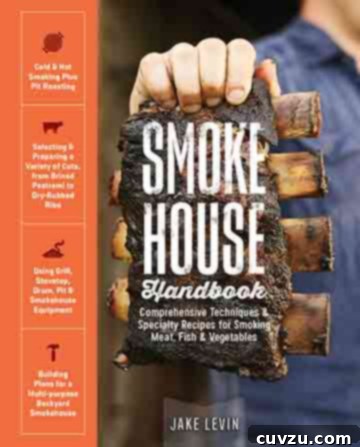
Smokehouse Handbook: The Essential Barbecue Guide for Beginners
Buy On Amazon
Explore More Culinary Possibilities with AI Tools
Enhance your cooking journey and customize this recipe with these helpful AI-powered tools:
Ingredient Substitutions
Scale Recipe Quantities
Summarize Key Insights
Nutrition Information (Approximate)
Nutrition information is automatically calculated, so should only be used as an approximation. Actual values may vary based on specific ingredients, portion sizes, and preparation methods.
- Serving Size: 1 serving, ~1/2 rack
- Calories: 1675 kcal
- Carbohydrates: 93 g
- Protein: 84 g
- Fat: 115 g
- Saturated Fat: 36 g
- Trans Fat: 1 g
- Cholesterol: 364 mg
- Sodium: 7405 mg
- Fiber: 25 g
- Sugar: 29 g
Tried this exceptional recipe?
We’d love to see your mouth-watering creations! Mention @leitesculinaria or tag #leitesculinaria on Instagram to share your results with our community!
What Our Recipe Testers Say About These Smoked Ribs
Curious about how these ribs hold up in real kitchens? Our team of dedicated recipe testers put this method through its paces, confirming its deliciousness and providing valuable insights for home cooks. Here’s what they discovered about this ultimate smoked pork ribs recipe:
Elie Nassar
Elie Nassar, a seasoned cooking enthusiast, enthusiastically confirms the recipe’s success, highlighting its accessibility and delicious outcome. “Making ribs like these is relatively simple and makes everyone happy,” Elie notes, praising the final product as a “porky delicious barbecue with a nice balance of sweetness, fat, and spice.” He found the instructions remarkably clear, asserting that “even a beginner barbecuer should be able to handle making a couple of nice rib slabs with no problem.” Elie utilized his offset Texas-style smoker, maintaining a watchful eye on the ribs every 30 minutes – a testament to the fact that while the active work is minimal, consistent tending is key for optimal results. He filled his spray bottle with a classic water and cider vinegar mixture, ensuring the ribs stayed moist and developed a beautiful bark. From start to finish, his St. Louis-style spare ribs smoked for approximately 3 1/2 hours, developing a “right deep mahogany color” before being wrapped after 2 1/2 hours. Elie lauded the recipe’s instructions for determining doneness, particularly the “bend test,” which he found “spot on.” This method, where the ribs easily bend without breaking but still cling to the bone, signifies peak tenderness. He prepared two slabs, noting that each generously serves two people. The classic rub flavor, enhanced with the unique addition of coriander, particularly impressed him, providing a delightful “twist” to the traditional barbecue taste.
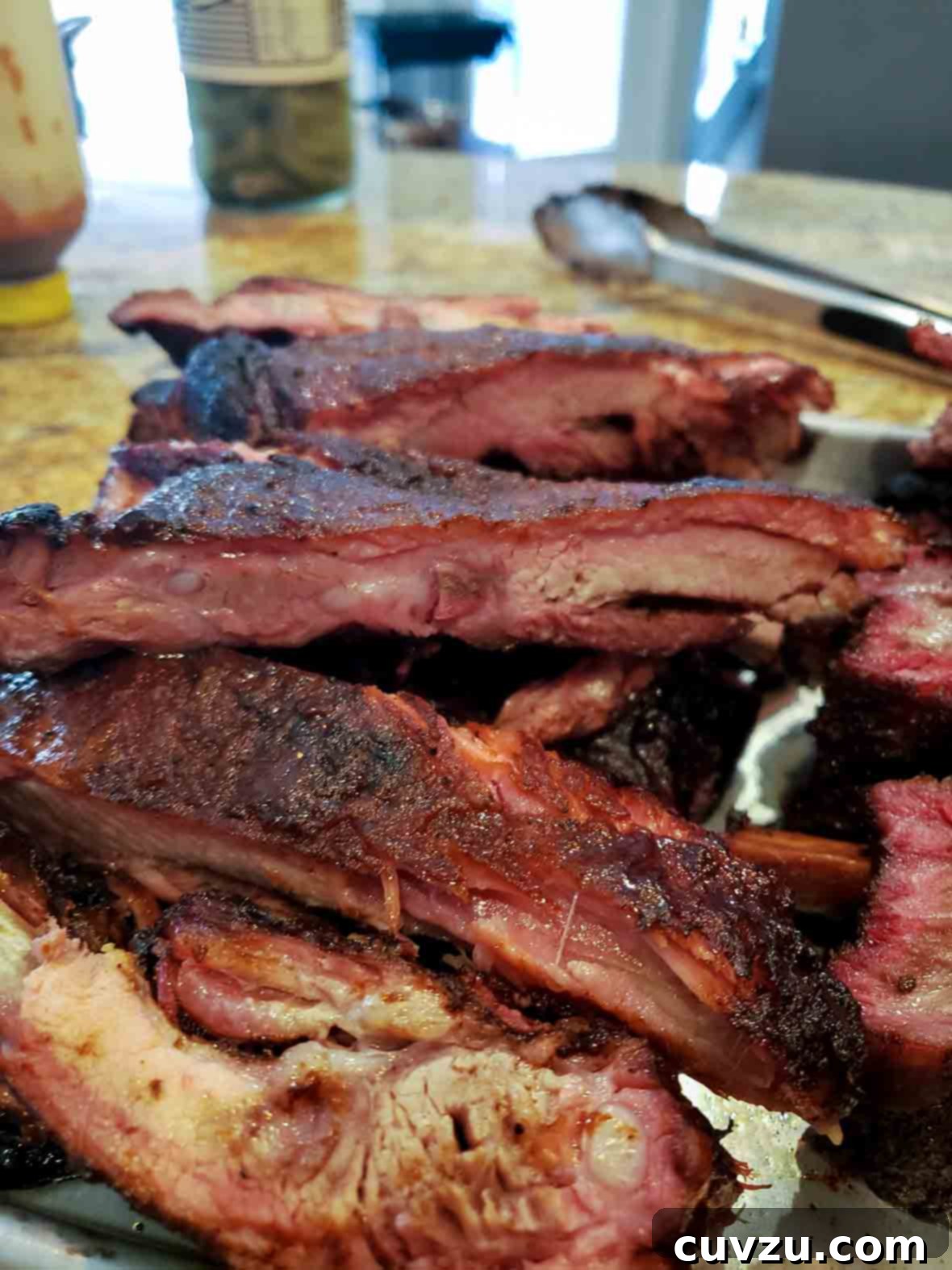
He particularly appreciated that while the actual work involved is minor, the need to tend to the smoker every 30 minutes keeps the cook engaged and allows for real-time adjustments to achieve perfect ribs. His final assessment? A resounding success, producing ribs that were both tender and packed with complex, smoky flavor, a true crowd-pleaser for any barbecue.
Jackie Gorman
Jackie Gorman, a seasoned barbecue enthusiast with years of experience smoking pork ribs on her Big Green Egg (BGE), candidly admits to believing she had a “foolproof recipe” that rendered ordering ribs out unnecessary. However, her perspective shifted after trying this method: “And then we tried these ribs,” she recalls, acknowledging that this particular approach “produces high-quality barbecue” that surpassed her long-held favorite. Jackie emphasizes that the true secret to exceptional ribs lies in the cooking method—the careful orchestration of good ribs, a suitable rub, the right wood, and precise time and temperature management. Her team maintained a consistent smoker temperature of around 250°F, opting for BGE charcoal complemented by chunks of plum wood strategically placed at the perimeter of the coals, which imparted a “great smoke flavor” to the meat. They found the initial smoke time of 3 hours effective but plan to experiment with slightly less in the future to fine-tune the tenderness further. Two innovative steps, for Jackie, were the two 15-minute saucing interludes, which she noted “really added another layer of flavor and a chewy texture to the finished product,” and the final foil-wrapping technique. She enthusiastically declared this wrapping method their new standard, confirming that it “maintained the moistness while the meat finished cooking” during the crucial last hour. Jackie concluded that for their next attempt, they would fine-tune the process by reducing the temperature by 10 to 15°F and slightly trimming the initial smoke time, demonstrating a commitment to perfecting an already stellar recipe and achieving absolute barbecue nirvana.
Joel Jenkins
Joel Jenkins, another one of our discerning recipe testers, focused on the impressive dry rub. While he observed “a LOT of pepper in this rub,” he quickly added that “the end result is delicious,” even suggesting its versatility for seasoning other meats like chicken thighs and split smoked sausage. Joel chose applewood for his gas smoker, ensuring a water tray was present to maintain moisture throughout the cook. After an initial 3 hours of smoking, his ribs displayed “good color,” indicative of a well-developed bark and smoke ring. Interestingly, Joel felt the ribs were almost ready to eat after the barbecue sauce was applied, but he followed the instructions to wrap them in foil, curious about the technique’s final impact. This “foil boat” method was a novelty for him, but he was thoroughly impressed: “I’ve never used this technique before but I like the final result.” The ribs achieved an ideal texture, being “falling off the bone but still had enough bite that you knew you were still eating a rib.” He estimated a total smoking time of about 5 hours, with active involvement requiring only about 30 minutes throughout the entire process, making it a relatively hands-off yet incredibly rewarding endeavor. Joel’s experience confirms that this recipe produces exceptionally tender and flavorful ribs, even for those new to the foil-wrapping technique.