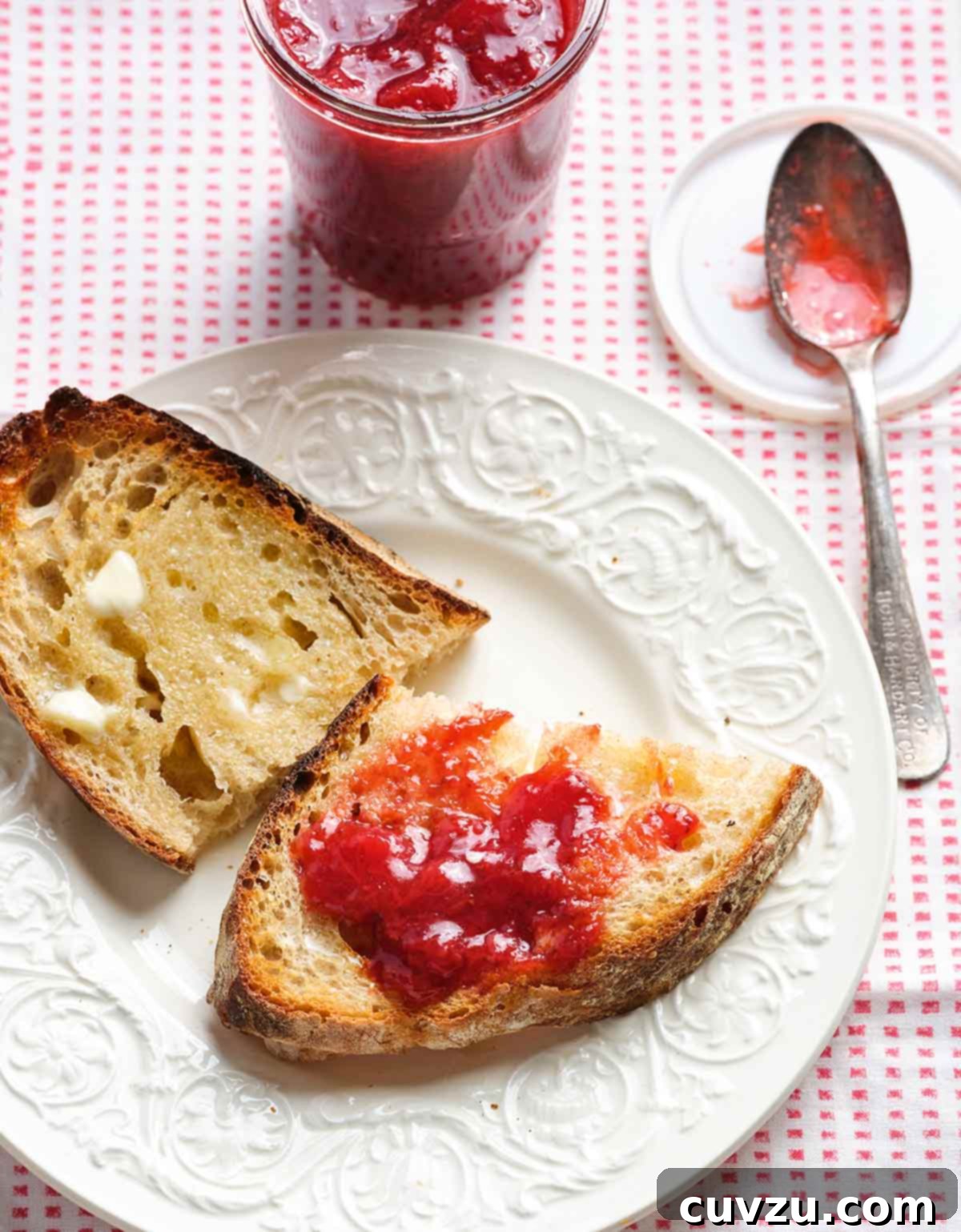
Welcome to the delightful world of homemade preserves! This easy-to-follow recipe for small batch strawberry jam allows you to capture the vibrant essence of summer’s finest berries without the complex process of traditional canning. Crafted with just three simple ingredients—fresh strawberries, granulated sugar, and lemon juice—this no-pectin refrigerator jam delivers a soft, luscious texture and an intensely fresh berry flavor that will elevate your breakfast toast, desserts, and everything in between.
There’s nothing quite like the taste of homemade strawberry jam, especially when it’s made from sun-ripened, seasonal berries. This recipe is designed for simplicity, making it accessible even for novice home cooks or those looking for a quick and rewarding kitchen project. Unlike conventional canning methods that require extensive equipment and sterilization procedures for shelf-stable storage, this recipe focuses on a “refrigerator jam” approach. This means you can enjoy the fruits of your labor within weeks, storing it conveniently in your fridge and savoring its fresh taste. The result is a brighter, more pronounced strawberry flavor that truly stands out.
Imagine spreading this vibrant, ruby-red jam on warm, buttered toast, swirling it into creamy yogurt, or spooning it over a scoop of vanilla ice cream. Its versatility makes it a kitchen staple, transforming ordinary meals and snacks into extraordinary treats. In fact, such simple yet exquisite pleasures have long been appreciated, even by royalty. It’s said that a jam sandwich, a comforting and timeless classic, was among Queen Elizabeth’s favorite foods, a testament to the enduring appeal of quality homemade preserves. This particular jam, prepared without the fuss often associated with preserving, should be stored in the refrigerator and enjoyed within 3 to 4 weeks, ensuring optimal freshness and flavor. Once you taste this homemade goodness, you’ll understand why it’s worth every minute of preparation. –Cynthia Graubart
Common Questions About Small Batch Strawberry Jam
Absolutely! Many traditional jam recipes rely on added pectin for a firm set, but this small batch strawberry jam demonstrates that a delicious, spreadable consistency is entirely achievable without it. With a no-pectin jam like this, you can expect a softer, more natural texture, often described as a spoonable jam rather than a rigid gel. The magic lies in the natural pectin present in the strawberries themselves, along with the help of lemon juice and the cooking process. Lemon juice not only brightens the flavor but also aids in gelling by increasing acidity, which helps the natural pectin in the fruit to activate. Additionally, cooking the fruit and sugar mixture down concentrates the sugars and reduces the water content, further contributing to the jam’s final set. One of the beautiful advantages of a pectin-free recipe is the flexibility it offers: you can often use less sugar without negatively impacting the setting process, allowing the natural fruit flavor to shine. Should you find your jam a little too loose after it has cooled and spent some time in the refrigerator, you can always return it to the heat and cook it down a little further to achieve your desired consistency.
Determining when your jam has reached its perfect set point is crucial for an ideal texture. There are two reliable methods you can use. The first is the thermometer method: If you have a probe thermometer, insert it into the simmering jam, ensuring it doesn’t touch the bottom of the pan. Monitor the temperature frequently, and once the jam reaches 220°F (104°C), it is generally considered ready. This temperature indicates that enough water has evaporated and the sugar concentration is optimal for setting.
Alternatively, you can employ the freezer plate method, which relies on visual and tactile cues. Before you begin cooking, place a couple of small, empty plates in your freezer. As your jam cooks, once you reach the point where the berries are very soft and you can drag a spoon through the jam in the pot, creating a clear line of separation that briefly remains visible on the bottom, remove the jam from the heat. Carefully retrieve one of the chilled plates from the freezer and place a small dollop of the hot jam onto it. Return the plate to the freezer for 2 minutes. After this brief chilling period, take the plate out and gently prod the jam with your finger or the back of a spoon. If it has formed a delicate skin on top and wrinkles when pushed, your jam is ready. If it still appears too liquidy or doesn’t wrinkle, return the jam to the heat, continue cooking for a few more minutes, and then repeat the freezer test until you achieve the desired consistency. This method provides a clear indicator of how the jam will set once fully cooled.
Share Your Experience: Write a Review
We love hearing from our community! If you’ve tried this delightful small batch strawberry jam recipe, or any other dish featured on Leite’s Culinaria, please consider sharing your feedback. Your insights are invaluable to fellow home cooks. Leave a review, a star rating, and feel free to include your best photo of the finished dish in the comments below. Your contributions help our community grow and inspire new culinary adventures. –David
Small Batch Strawberry Jam: A Taste of Summer
David Leite
- PIN
Print Recipe
Condiments
American
12 servings | Makes 1 1/2 cups
89 kcal
10 minutes
30 minutes
40 minutes
Equipment
-
Sterilized canning jars (See note below for important safety information)
Ingredients
- 2 pounds fresh strawberries, hulled and roughly chopped
- 1 cup granulated sugar
- 2 tablespoons fresh lemon juice
Instructions
-
In a medium saucepan over medium heat, combine the hulled and roughly chopped strawberries, granulated sugar, and fresh lemon juice. Stir the mixture gently to ensure the sugar begins to dissolve and coat the berries. Continue to cook, stirring occasionally, until the strawberries begin to release their juices and the mixture starts to bubble, typically taking 5 to 8 minutes. During this stage, the berries will soften slightly, and a beautiful aroma will fill your kitchen.
-
Once the mixture is actively bubbling, reduce the heat to low to maintain a gentle simmer. Continue cooking for approximately 25 to 30 minutes, stirring periodically to prevent sticking and ensure even cooking. The jam is ready when the berries are very soft and tender, and when you scrape a spoon across the bottom of the pan, it leaves a clear line of separation that remains visible for a moment. This indicates that the jam has thickened sufficiently to achieve a desirable set. Refer to the “How can I tell when my jam is done cooking?” section above for more detailed testing methods.
-
Carefully ladle or pour the hot jam into your pre-sterilized glass jars or freezer-safe containers. Leave about ½-inch headspace in each container if planning to freeze. Allow the jam to cool completely at room temperature before covering. Once cooled, store the jam in the refrigerator, where it will keep fresh for 3 to 4 weeks. For extended enjoyment, this jam freezes beautifully for up to 3 months. Always remember to label and date your jars for easy reference.
Notes
Refrigerator Jam Safety and Sterilization
Because this is a refrigerator jam and not processed for long-term shelf stability through traditional canning, proper sterilization and storage are still important for freshness and safety. Always use sterilized heatproof jars. To sterilize your jars, begin by thoroughly washing the jars and their lids in hot, soapy water, ensuring all residue is removed. Rinse them well under hot running water. You then have a couple of options: either run them through your dishwasher’s sanitize cycle, if available, or submerge them completely in a large pot of boiling water for a minimum of 10 minutes. After sterilization, carefully remove the jars and lids and let them air-dry completely on a clean rack or towel; avoid towel-drying, as this can reintroduce bacteria. Fill the warm, sterilized jars with the freshly cooked, hot jam, leaving approximately ½ inch of headspace. Cap them immediately and refrigerate promptly, ensuring the temperature remains at or below 40°F (4°C). Always use clean utensils when serving – avoid double-dipping to prevent contamination. Refrigerator jam typically keeps for 2 weeks. If you opt for a lower-sugar version, its shelf life might be slightly shorter, around 7–10 days. Critically, if any mold appears on the surface of the jam, no matter how small, discard the entire jar immediately; do not attempt to salvage it by scraping off the mold. For significantly longer storage, you can freeze the jam for up to 3 months, ensuring you leave at least ½-inch headspace in your containers to allow for expansion during freezing. Remember to label and date all jars clearly.
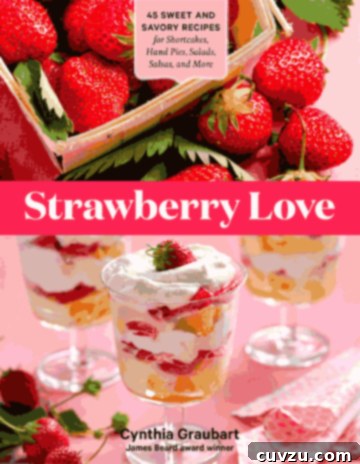
Adapted From
Strawberry Love
Buy On Amazon
Nutrition
Calories: 89 kcal
Carbohydrates: 23 g
Protein: 1 g
Fat: 1 g
Saturated Fat: 1 g
Monounsaturated Fat: 1 g
Sodium: 1 mg
Fiber: 2 g
Sugar: 20 g
Nutrition information is automatically calculated and should only be used as an approximation.
Tried this recipe?
Mention @leitesculinaria or tag #leitesculinaria!
Recipe Testers’ Reviews
Our dedicated team of recipe testers put this small batch strawberry jam to the test, offering their invaluable insights and experiences. Read on to discover why this easy refrigerator jam became a fast favorite.
Adrienne Lee
Adrienne, an experienced jam maker, was eager to try this small batch recipe, especially given her usual focus on peach season preserves. She notes, “I was interested in making a small batch jam because I generally make jam during peach season (August through September here depending on the peaches and the weather, but peaches are available starting in July). I usually make a small batch of raspberry jam and add it to one or more of my batches of peach jam. I’ve also been playing with lower sugar levels and quick-making jam.”
She found the process remarkably straightforward, stating, “The longest part of making this recipe is cleaning, hulling, and slicing the strawberries. Making this small batch strawberry jam was straightforward.” A useful observation from Adrienne: “One thing to note is the warm jam seemed sweeter in the pan than it actually ended up being when it cooled,” highlighting the importance of cooling for true flavor assessment.
Helena Pereira
Helena praises the recipe for its less sweet profile and emphasized fruit flavor, a welcome change from traditional jams. She explains, “The preparation of jams can be time-consuming and laborious, as the intention is to take advantage of seasonal fruits in their best state of maturity and keep a sufficient quantity in the pantry until the next season. For conservation to work, we must add enough sugar to preserve the quality of the fruit to the maximum, so the jams usually have a strong sweet taste.”
However, this recipe offers a refreshing alternative: “But this recipe for homemade strawberry jam has the advantage of using less sugar and therefore the strawberry flavor is more accentuated, with an adequate sweetness, which I really appreciated. It’s quick to prepare and has a good consistency, even after being in the refrigerator. Ideal for when we need a strawberry jam just for a dessert or a special meal.” Her review highlights the perfect balance of sweetness and fruitiness, making it suitable for various culinary uses.
Sandy M.
Sandy, hailing from the Pacific Northwest, where exceptional berries are a seasonal highlight, found this recipe an excellent way to celebrate the strawberry season. She shares, “Here in the Pacific Northwest, we’re very lucky to have access to some of the best berries. Strawberries are hitting the markets, and the Hoods are everyone’s favorites. They’re on the small side, and very sweet, and their season is only a few weeks long. My local market sells out of them as quickly as they get them. Hoods are also incredibly delicate, and it’s best to use them as soon as you get them home.”
She also noted the availability of other varieties: “(Albion strawberries are also showing up in the stores and farmers’ markets right now. These berries are sturdier, are available longer, and are also pretty tasty).” Sandy raved about the versatility of the jam: “Turning these delectable morsels into a sweet jam is a great way to celebrate Spring. I topped a cheesecake with a few spoonfuls of this small batch strawberry jam last night, had some on my morning toast today, and am thinking of swirling some into vanilla ice cream.” She observed a common characteristic of no-pectin jams: “My batch turned out a little thin initially, which was fine for the cheesecake, and an overnight stay in the refrigerator thickened it up a bit.”
Jennifer W.
Jennifer found this recipe a sweet and sensory delight, affirming its ease and appeal. “Small batch strawberry jam sure is a sweet way to extend the strawberry season. This recipe is simple and quick, and a joy to so many of the senses!” She appreciated the no-canning aspect: “I was drawn to the recipe knowing how delicious homemade jam can be with the added bonus of not having to go through the canning process. The sweet aroma filled the kitchen making my mouth water.”
She offered a practical tip for preparation: “I’m glad I chose to use a fairly large saucepan since the strawberries frothed up considerably as they boiled.” For serving, Jennifer showcased the jam’s adaptability: “Because the jam is fairly sweet, I first layered it with plain Greek yogurt and some pistachios for a tasty mid-week breakfast. Once the weekend arrived, the jam was layered onto French toast with ricotta and lemon zest,” demonstrating how this jam can elevate both simple and elaborate dishes.
Jennifer Mallock
Jennifer emphasizes the incredible ease and convenience of this small batch jam, perfect for entertaining. “This small batch strawberry jam is easy, easy, easy to pull together and I love that I can make this the night before guests come over and have fresh jam for breakfast and desserts.”
She provided detailed notes on her cooking process: “I used organic strawberries and measured 907g (before hulling). I don’t know why but I ended up with a lot of juice in the pan. It cooked fine, but at the recipe temp (low) Step 2 took 57 mins to get a line of separation. Slow and steady worked out okay though – the jam turned out a beautiful ruby red, was sweet but not too sweet, and thickened nicely. I chopped my berries roughly and everyone loved the result. Big pieces of berry in the jam. Yum!” Her experience shows that patience pays off, and she even plans to experiment with slightly higher heat next time: “I will make this again and cook the berries on medium low to see what happens. While this took longer than expected, the end result was great. Everyone loved it and commented “not too sweet” and “really tastes like strawberries!” We enjoyed it on toast, with yogurt, and with cheese,” highlighting its universal appeal and perfect balance of flavors.
Tricia M.
Tricia found this recipe perfectly suited for the peak of strawberry season, especially when dealing with an abundance of fresh fruit. “This is a nice recipe for small batch strawberry jam to have on hand during strawberry season, especially good to use if you have a lot of berries and you’re worried about using them all at their prime. The proportions are really practical because during strawberry picking season I often have about this amount of strawberries left after eating most of them fresh.”
She appreciated the balanced sweetness and speed of preparation: “It also called for the right amount of sugar for ripe berries—the jam wasn’t overly sweet and retained the rich, ripe berry flavor. It is very quick and super easy to make, and I felt a lot of satisfaction putting the last of the ripe berries to good use.” Tricia highlights the jam’s impressive versatility, from breakfast to dessert: “This easy small batch jam is very versatile. I use it on toast in the morning, and I’m also using it as an appetizer on a cracker with soft, ripe, goat cheese, this strawberry jam, and chopped basil.”
Her favorite application truly shines in desserts: “One of my favorite ways to use this is on vanilla ice cream—a dollop of the cooked jam and a few chopped fresh strawberries for contrast. Add a splash of amaretto (and sometimes I include a crumbled amaretti cookie) and you have a wonderful summer dessert that I serve often.” This innovative use showcases how a simple jam can become the star of a sophisticated treat.