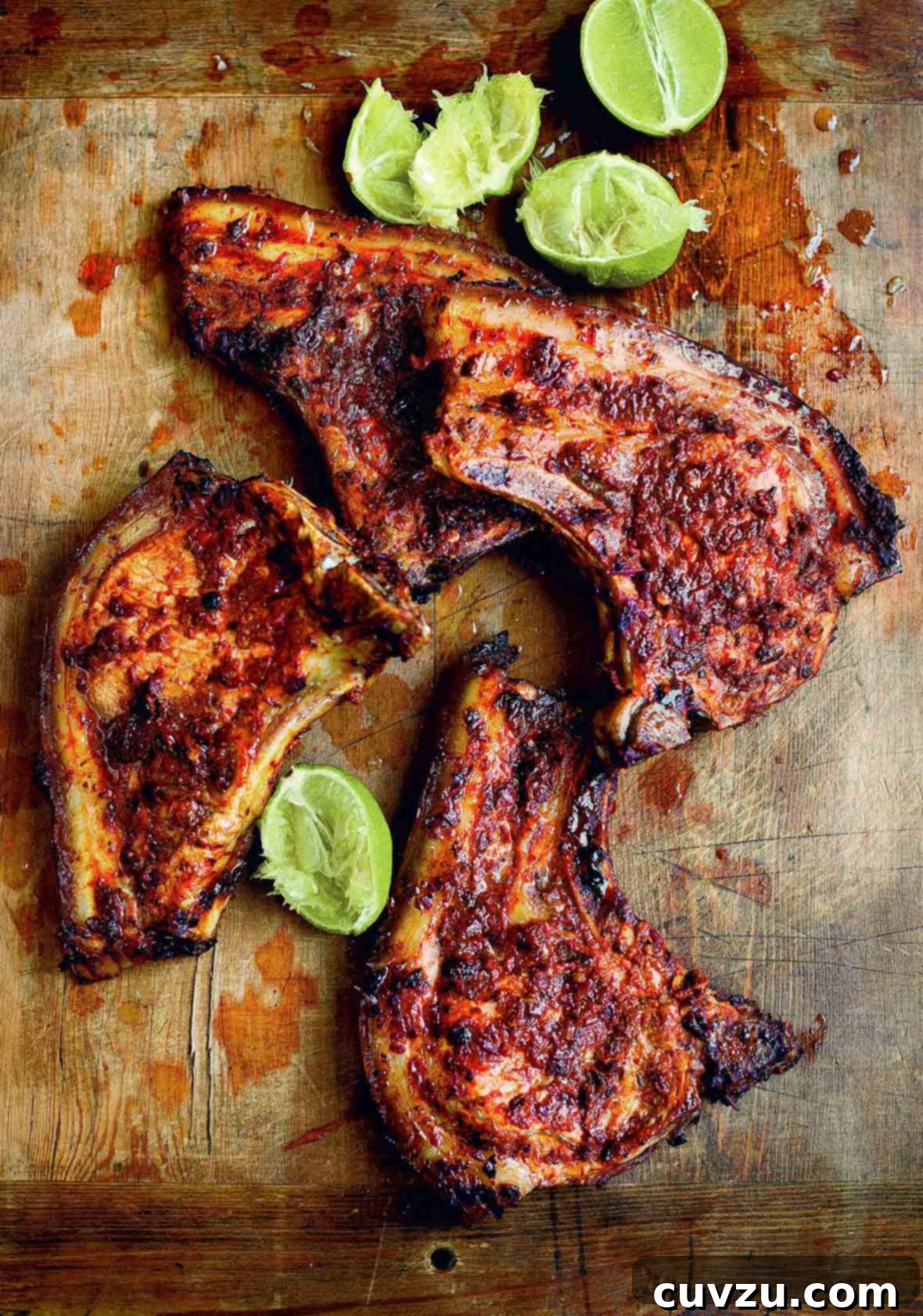
Unlock an extraordinary depth of flavor with these incredible adobo marinated pork chops. This recipe guides you through creating a quick and easy adobo paste, a secret weapon that transforms ordinary pork chops into a truly unforgettable meal. Made with two types of carefully selected dried chiles, aromatic spices, a touch of sugar, and vinegar, this homemade adobo is the key to a vibrant, weeknight-friendly dinner that tastes anything but quick.
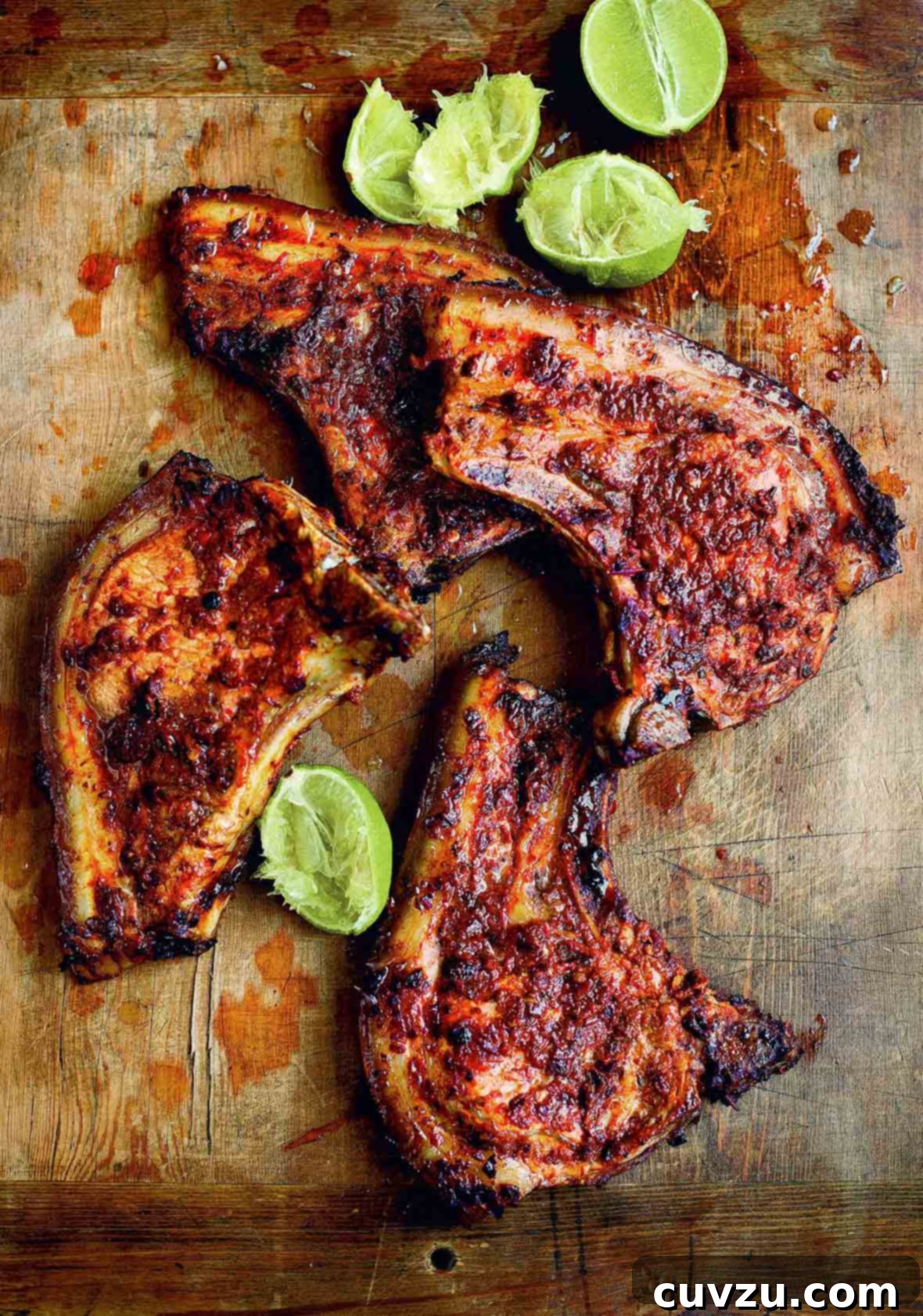
As culinary expert Diana Henry, the inspiration behind this recipe, eloquently puts it, “Wow. That’s the only response to this adobo, a Mexican paste made from dried chiles, herbs, and vinegar. Once you’ve tried adobo, it will become one of the most useful things in your refrigerator–and it will change your experience of pork chops forever).” We wholeheartedly agree. This adobo isn’t just a marinade; it’s a game-changer for your home cooking repertoire, offering a versatility you’ll quickly come to rely on.

Adobo Marinated Pork Chops: A Flavorful Weeknight Meal
Recipe by David Leite
- PIN
Print Recipe
Ingredients
For the Adobo Paste
- 5 dried chipotle chiles, for smoky heat
- 4 dried ancho chiles, for rich, fruity notes
- 1 teaspoon cumin seeds, freshly toasted and ground
- 1 teaspoon coriander seeds, freshly toasted and ground
- 1/2 teaspoon ground allspice, for warm, complex flavor
- One (1/4-inch) piece cinnamon stick, for subtle sweetness
- 1 teaspoon dried oregano, preferably Mexican oregano
- 5 garlic cloves, roughly chopped
- 2 shallots, roughly chopped
- 1 1/2 teaspoons salt, or to taste
- 2 teaspoons soft dark brown sugar, or to taste (optional, but recommended for depth)
- 1 to 2 tablespoons red wine vinegar
- 5 tablespoons sherry vinegar
For the Adobo-Marinated Pork
- 4 to 6 bone-in, thin pork chops, (or bone-in, skin-on chicken pieces like thighs, wings, breasts, and/or drumsticks)
- 1 lime, cut into wedges, for serving
Instructions
Step 1: Prepare the Adobo Paste
-
Begin by toasting the dried chiles in a dry skillet over medium heat. This step is crucial for enhancing their flavor and making them more pliable. Watch them carefully; you want to warm them until they become fragrant and slightly soft, not charred or burnt. This typically takes just a minute or two per side.
-
Once toasted, remove the stems and seeds from all the chipotle chiles. For the ancho chiles, simply cut them in half. Transfer the chiles to a small saucepan and add enough water to completely cover them. Bring the water to a boil, then immediately remove the pan from the heat and let the chiles soak for approximately 30 minutes. This rehydration process will soften them further, making them easier to blend into a smooth paste.
-
After soaking, strain the chiles, ensuring you reserve the soaking liquid. This liquid is packed with flavor and will be used later to adjust the consistency of your adobo paste.
-
Meanwhile, in the same dry skillet (no need to clean), lightly toast the whole spices: cumin seeds, coriander seeds, and the piece of cinnamon stick. Toast over medium heat for about 40 seconds, or until they become wonderfully fragrant. This releases their essential oils and intensifies their aroma.
-
Now, combine all the ingredients for the adobo in a food processor. This includes the drained chiles, the toasted whole spices (which you can briefly grind with a mortar and pestle or spice grinder first for a finer paste, or simply add directly to the food processor), ground allspice, dried oregano, chopped garlic, chopped shallots, salt, optional brown sugar, red wine vinegar, and sherry vinegar. Process everything until you achieve a smooth purée. Gradually add small amounts of the reserved chile soaking liquid, one tablespoon at a time, until the mixture reaches the desired consistency of a thick, spreadable paste. Taste and adjust seasoning with additional salt or brown sugar if needed.
-
Transfer the freshly made adobo paste into a clean, airtight jar. Seal it tightly and refrigerate. This recipe yields enough adobo to fill an 8-ounce jar, and it will keep beautifully in the refrigerator for up to 4 months. However, given its incredible flavor and versatility, we’re confident you’ll use it much sooner!
Step 2: Marinate and Cook Your Dinner
-
Place your chosen meat—pork chops or chicken pieces—in a large bowl. Add about half of the prepared adobo paste (you can save the rest for another meal or to add later during cooking for extra depth). Using your hands, ensure each piece of meat is thoroughly coated with the rich adobo. Cover the bowl and refrigerate for at least 30 minutes. For maximum flavor penetration, especially for thicker cuts, we recommend marinating for 2 to 8 hours.
-
Preheat your oven to 375°F (190°C) if you’re cooking pork chops. If you’re preparing chicken, preheat to 350°F (176°C). Line a rimmed baking sheet or roasting pan with parchment paper. This will prevent sticking and make cleanup a breeze.
-
Arrange the marinated pork or chicken in a single layer on the prepared baking sheet. Roast the pork chops for approximately 20 minutes. For chicken, roast for about 40 minutes, or until the internal temperature reaches safe levels (145°F for pork, 165°F for chicken). To prevent the adobo paste from burning and to keep the meat moist, cover the baking sheet loosely with aluminum foil after the first 15 minutes of cooking.
-
Once cooked, transfer the succulent pork or chicken to a serving platter or individual plates. Spoon any thick, flavorful pan juices that have accumulated over the top of the meat. Serve immediately with fresh lime wedges on the side for squeezing, as the bright citrus perfectly complements the rich, spicy adobo.
Notes & Expert Tips
*Understanding Adobo: Mexican vs. Filipino
The term “adobo” can be a bit confusing due to its dual culinary significance. In Mexican cuisine, as featured in this recipe, adobo refers to a rich, often spicy paste or sauce made primarily from dried chiles, spices, and vinegar. It’s a foundational element for marinades and braises, imparting deep, complex flavors. In contrast, Filipino adobo is a distinct dish where meat or seafood is stewed in a savory, garlicky, and vinegary liquid, often including soy sauce and sometimes chiles and sugar. Both are incredibly delicious in their own right, but this recipe focuses on the versatile and flavorful Mexican-style adobo paste.
Our adobo paste recipe is a carefully balanced blend, but adobo is inherently customizable. Some traditional variations might include cloves, or use bitter orange juice instead of vinegar, and the types of chiles can differ significantly. We’ve chosen chipotle for its smoky kick and ancho for its deep, fruity earthiness. The inclusion of sherry vinegar, while not strictly traditional, adds a beautiful, woody depth that we find irresistible. Similarly, a touch of dark brown sugar isn’t always standard, but it beautifully rounds out the flavors, balancing the acidity and heat. Feel free to experiment with these components to create an adobo that perfectly suits your palate.
Pro Tips from Our Recipe Testers:
- Chicken is a Fantastic Alternative: Our testers frequently used bone-in chicken thighs and legs instead of pork, with excellent results. It produced very moist and delicious chicken.
- Maximize Flavor Penetration: For chicken, consider marinating longer—up to a couple of hours or even overnight—and making small slits in the meat before rubbing in the adobo sauce to ensure the flavor penetrates deeply.
- Manage the Spice: This adobo can be quite spicy, depending on the chiles and your palate. If serving to those sensitive to heat, consider reducing the number of chipotle chiles or removing the chicken skin after cooking, which can absorb a lot of the spice.
- Watch Roasting Times: While this recipe is straightforward, oven temperatures and meat thickness can vary. Keep an eye on your pork chops, as they can dry out quickly. Consider reducing the roasting time slightly (e.g., to 15-16 minutes) for thinner cuts to ensure they remain juicy.
- Vinegar Balance: One tester suggested that the total amount of vinegar could be slightly reduced if you prefer a less tangy adobo. Adjust to your preference next time you make it.
- Beyond Pork Chops: This adobo is incredibly versatile! Try it with pork ribs, boneless chicken pieces (like for brochettes), or even tougher cuts of pork for slow-cooked, shreddable meat.

Adapted From
Salt Sugar Smoke
Buy On Amazon
Explore More with AI
Ingredient Substitutions for This Recipe
Scale This Recipe
Summarize and Analyze This Recipe
Nutrition
Nutrition information is automatically calculated, so should only be used as an approximation.

Tried this recipe?
Mention @leitesculinaria or tag #leitesculinaria!
Insights from Our Recipe Testers
Our dedicated team of recipe testers put these Adobo Marinated Pork Chops to the test, offering valuable feedback and insights to help you achieve the best possible results. Here’s what they discovered:
Sita Krishnaswamy
Sita raved about the ease and flavor of the adobo sauce. She successfully used bone-in chicken legs and thighs, marinating for 40 minutes and baking at 350°F for 50 minutes, resulting in a wonderfully moist and delicious chicken. Her key takeaway? Next time, she plans to marinate the chicken for a longer period—perhaps a couple of hours—and make small slits in the meat to truly rub the sauce in, ensuring deeper flavor penetration.
Sofia Reino
Sofia also opted for chicken, marinating 12 thighs for about 3 hours before roasting. She warned that the dish can be “real spicy,” which was a hit in her household. She noted that removing the skin allowed the kids to enjoy the chicken without an issue. Sofia expressed enthusiasm to try this versatile adobo with pork ribs and even sweet and spicy chicken wings, highlighting its broad appeal.
Melissa Maedgen
Melissa praised the marinade for adding abundant flavor to meat. She used it on boneless chicken chunks, which she grilled as brochettes, marinating for 8 hours. However, she felt a shorter marinating time might yield similar results. While she enjoyed the adobo, she found it had slightly more vinegar than she typically prefers in Mexican adobo. She specifically appreciated the sherry vinegar’s contribution but suggested a slight reduction in the total vinegar amount for her next attempt.
Ralph Knauth
Ralph found the dish very easy to prepare and incredibly flavorful. He made the adobo sauce in the morning, then marinated his pork chops for 8 hours before baking. He noted that his pork chops turned out a tiny bit dry, leading him to recommend reducing the roasting time to 15 or 16 minutes for future batches. Like other testers, he is eager to try this adobo with chicken thighs, emphasizing its versatility and appeal across different proteins.
From the smoky depth of chipotle to the fruity notes of ancho, this adobo-marinated pork chop recipe is more than just a meal—it’s an introduction to a world of rich, complex flavors. Whether you’re a seasoned cook or just beginning your culinary journey, mastering this versatile adobo paste will elevate your cooking and leave your family and friends craving more. Enjoy the process, experiment with the flavors, and savor every bite of this truly remarkable dish.