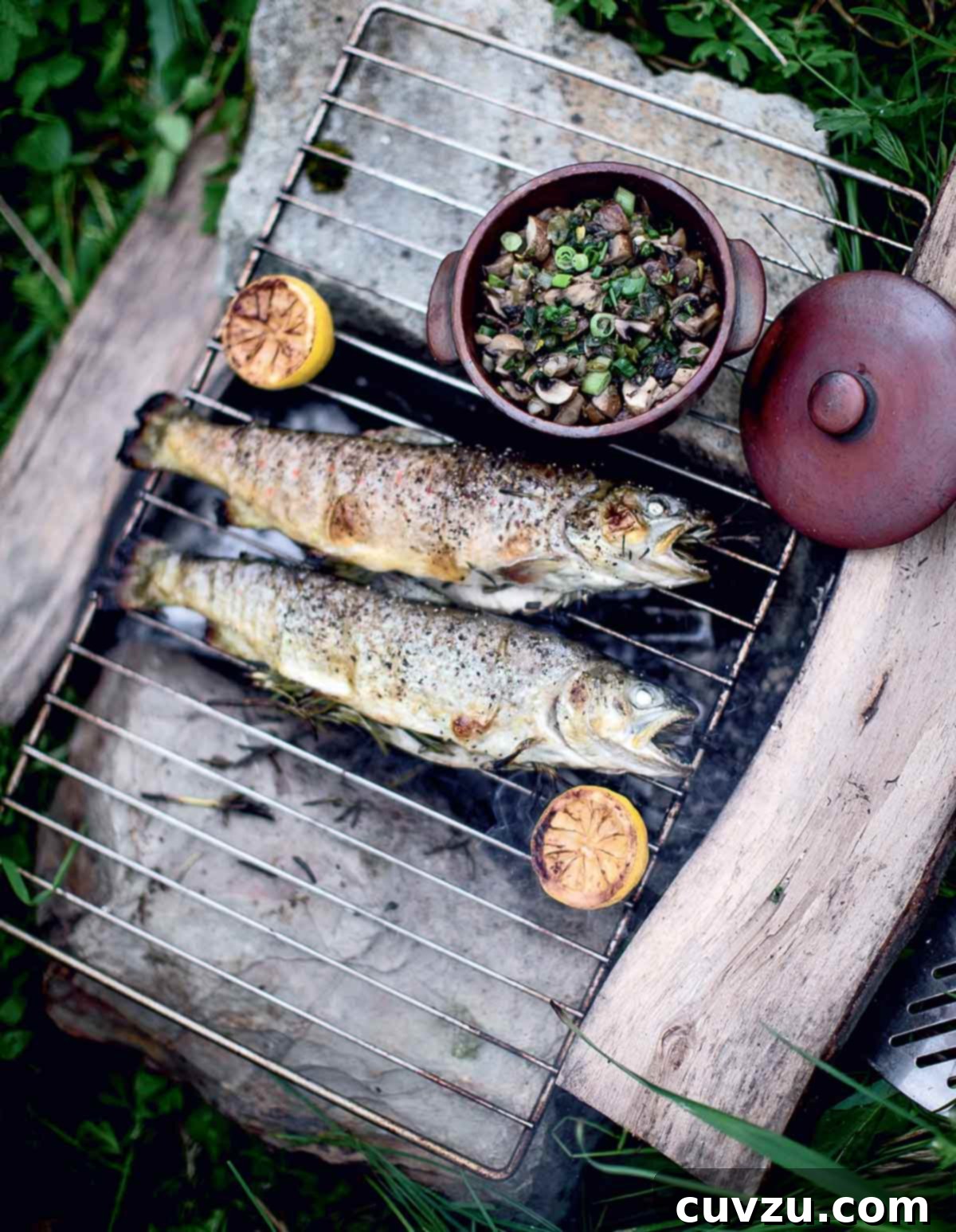
Whole grilled trout cooked over an open fire offers an unmatched culinary experience, combining the rustic charm of outdoor cooking with the delicate flavors of freshly prepared fish. If you’ve had the pleasure of catching your own trout, the reward extends far beyond the plate, fostering a profound connection to nature and a deep sense of accomplishment. With just a few simple ingredients and an uncomplicated method, you can transform a successful day of fishing into a memorable supper that nourishes both body and soul, creating an easy yet elegant outdoor feast.
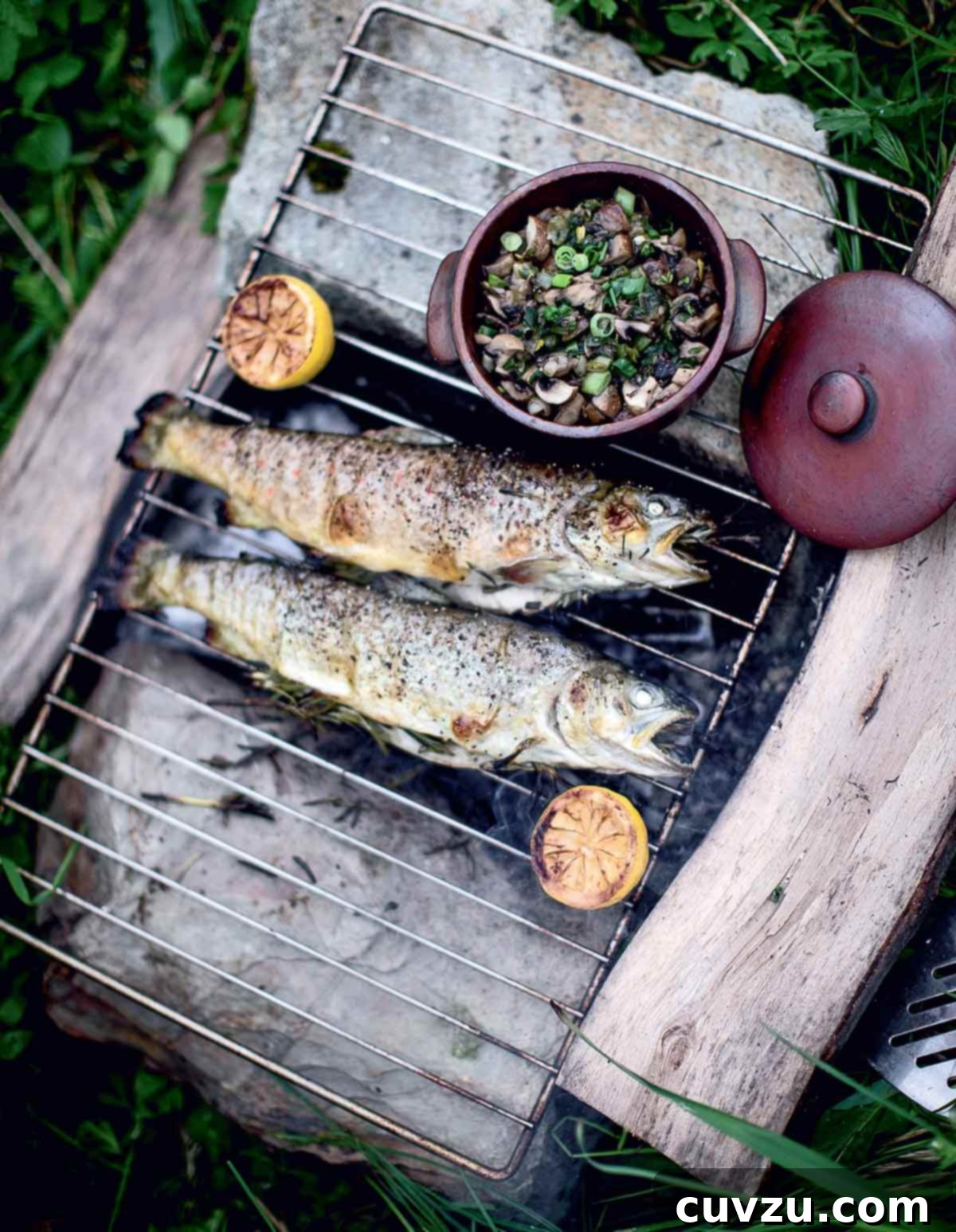
The Unforgettable Taste of Trout: Wild vs. Farmed Differences
There’s an undeniable romance in cooking fresh fish in the open air, immersed in the beauty of Mother Nature. As culinary expert Pascale Naessens eloquently points out, the quality and taste of trout can vary dramatically depending on its origin. Years ago, our waterways teemed with wild river trout, scientifically known as Salmo trutta, offering a culinary delight that is increasingly rare today. The vast majority of trout found in most supermarkets and fishmongers are farmed, raised in specialized hatcheries and fed a controlled diet of meal and other concentrates.
This difference in upbringing profoundly impacts the flavor and texture of the fish. Wild trout, constantly battling upstream currents, navigating diverse river ecosystems, and foraging on a natural diet of insects and small, shrimp-like creatures, develop firm, lean, and incredibly flavorful white meat. Their active lifestyle and varied diet contribute to a distinct, rich “trout taste” that is celebrated by gourmands and casual diners alike. In contrast, farmed trout, while providing a valuable and sustainable food source, often have a softer texture and a milder, sometimes less pronounced flavor. This can be attributed to their more sedentary existence and a less varied, processed diet. Finding true wild trout in our rivers is now a rare privilege, requiring patience, persistence, and often, a bit of luck, making every catch a treasured experience for any angler or outdoor cooking enthusiast.
Why Choose Grilled Whole Trout for Your Next Meal?
Grilling whole trout offers a multitude of benefits, making it an ideal choice for a healthy, flavorful, and satisfying meal. Firstly, it’s a remarkably healthy option, packed with lean protein, heart-healthy omega-3 fatty acids, and essential vitamins and minerals. Preparing the fish whole ensures that all the natural juices and flavors are sealed in, resulting in incredibly moist and tender flesh. Secondly, the grilling process imparts a unique smoky flavor and a beautiful char, enhancing the natural sweetness of the fish. Cooking outdoors also minimizes cleanup in the kitchen and provides a wonderful opportunity to enjoy the fresh air and natural surroundings. Whether you’re a seasoned angler with a fresh catch or simply appreciate fresh seafood, this simple grilled trout recipe is designed to be accessible, delicious, and incredibly rewarding for anyone seeking a wholesome and easy fish dinner.
Calling All Anglers and Outdoor Cooking Enthusiasts!
We’re genuinely curious to know, how many of you who are preparing this incredible grilled trout recipe are passionate fishermen and fisherwomen? We’d love to hear your stories of the catch, your preferred fishing spots, and understand your culinary needs when it comes to preparing freshly caught fish. Knowing this helps us tailor more recipes and cooking guides specifically for your outdoor adventures and the treasures you bring home. Please share your insights, tips, and suggestions in the comments below – your feedback helps us cast a wider net for future content and build a vibrant community of like-minded food lovers!
Grilled Trout
David Leite
2 to 4 servings
401 kcal
20 minutes
20 minutes
40 minutes
Ingredients
- Two (1-to 1 1/4-pound) whole trout*, cleaned and gutted
- 4 stalks fresh rosemary
- Sea salt and freshly ground black pepper, to taste
- Extra-virgin olive oil, for rubbing
- 2 small lemons, thinly sliced
Instructions for Perfectly Grilled Whole Trout
-
1. Prepare Your Grill for Success: Begin by setting up your grill for indirect cooking. This crucial step involves creating a cooler zone on one side of the grill, away from direct flame or coals, while maintaining a consistent overall temperature of approximately 375°F (191°C). For charcoal grills, stack your hot coals to one side. For gas grills, simply turn off one or more burners. Always ensure your grill grates are immaculately clean and lightly oiled to prevent any sticking once the fish is placed.
-
2. Flavor and Season the Trout: Carefully stuff the belly cavity of each cleaned and gutted trout with two stalks of fresh rosemary. This aromatic herb will infuse the fish with a wonderful flavor as it cooks. Generously season both the inside cavity and the exterior skin of the fish with sea salt and freshly ground black pepper. To help achieve a beautifully crispy skin and further prevent sticking, lightly rub the entire skin of the trout with extra-virgin olive oil.
-
3. Grill to Perfection Over Indirect Heat: Place the seasoned trout directly over the indirect heat zone of your preheated grill. Grill the fish, flipping it gently once halfway through, until it is thoroughly cooked. This process typically takes between 20 to 40 minutes, depending on the size of your trout and the specific temperature of your grill. The fish is perfectly done when it develops lovely grill marks on the outside and the flesh easily flakes when gently tested with a fork near the thickest part of the fish.
-
4. Add Zesty Grilled Lemon: During the final 5 to 7 minutes of grilling, arrange the thinly sliced lemons directly on the grill grates. Cook them until they are slightly charred and warmed through, turning them occasionally to prevent scorching. These grilled lemon slices are more than just a garnish; they add a delightful sweetness and a bright, tangy counterpoint that beautifully complements the rich flavor of the grilled trout.
-
5. Serve Immediately and Enjoy: As soon as the whole grilled trout is cooked to perfection and the lemons are caramelized, carefully remove them from the grill. Serve the fish hot, garnished with the warm, zesty lemon slices, and perhaps a fresh sprig of rosemary for an extra touch of elegance. This dish is truly best enjoyed fresh off the grill, allowing you to savor its full flavor and tender texture.
Notes & Flavorful Substitutions
*What can I substitute for wild-caught trout?
While Pascale Naessens rightly emphasizes the unique quality and profound experience of cooking wild-caught fish, the reality is that truly wild trout are not as readily available or sustainable as they once were for many. However, there are excellent and often more accessible sustainable alternatives and other fish varieties that will work beautifully with this grilling method, allowing you to still enjoy a delicious grilled fish dinner.
For those seeking a similar freshwater fish experience, consider responsibly sourced farmed rainbow trout. While different from its wild counterpart, many sustainable fish farms prioritize quality and environmental stewardship. It’s also interesting to note that rainbow trout and steelhead “salmon” are biologically the same species, with their differing names reflecting their migratory habits (freshwater vs. saltwater). Both make fantastic grilling fish, offering tender, flaky flesh.
If you’re open to other types of whitefish, look for those with firm, flaky, and tender flesh that can gracefully withstand the heat of the grill. Excellent choices that hold up well and absorb flavors beautifully include:
- Atlantic Cod: A versatile and widely available whitefish known for its mild flavor and firm, flaky texture.
- Alaska Pollock: Praised for its delicate texture and mild taste, it’s a sustainable choice often used in high-quality fish preparations.
- Brook Trout: Another prized species of freshwater trout, offering a flavor profile similar to rainbow trout with delicate flesh.
- Farm-Raised Catfish: Known for its distinct, sweet, and slightly earthy flavor, farm-raised catfish has a firm, moist flesh that grills exceptionally well.
- Flounder or Tilapia: These thinner fish can be grilled whole in a fish basket to prevent them from falling apart, offering a very mild flavor that takes well to seasonings.
- Grouper or Halibut: These are premium whitefish varieties, highly regarded for their firm, meaty texture and sweet, mild flavor, making them perfect for an impressive grilled meal.
- White Sea Bass: A robust fish with a medium-firm texture and a clean, fresh taste that stands up well to grilling.
When substituting, always consider the thickness of the fish, as cooking times will vary significantly. Thicker fillets or whole fish may require longer cooking times, while thinner varieties will cook much more quickly. Adjust your grilling time accordingly, always aiming for that beautiful, opaque, and flaky texture when tested with a fork, ensuring you don’t overcook.
Flavor Variations & Delightful Serving Suggestions:
While fresh rosemary and lemon create a classic, bright, and universally delightful flavor combination for grilled trout, feel free to experiment with other herbs and aromatics to personalize your dish. Fresh dill, thyme, or a vibrant mixture of finely chopped parsley and chives can be elegantly stuffed into the fish cavity. For an added layer of flavor, consider tucking in a few cloves of crushed garlic or thin slices of sweet onion. For a richer, more indulgent flavor profile, a few pats of high-quality butter placed inside the fish belly alongside the herbs will melt and baste the fish from within, enhancing its succulence.
To complete your grilled trout meal, serve it with a variety of complementary side dishes. Roasted or grilled seasonal vegetables like tender asparagus, colorful bell peppers, or savory zucchini are excellent choices that can often be cooked alongside the fish on the grill. A light and fluffy quinoa salad, a simple green salad dressed with a bright vinaigrette, or even a side of roasted new potatoes would also pair beautifully with the fresh flavors of the fish. For a final touch of acidity and freshness, a squeeze of fresh lime juice or a sprinkle of additional chopped fresh herbs over the cooked fish can elevate its taste even further, making every bite a memorable one. Don’t forget a crusty bread to soak up any delicious juices!
Adapted From
Natural Food That Makes You Happy
Buy On Amazon
Nutrition Facts
Calories: 401 kcal
Carbohydrates: 11 g
Protein: 48 g
Fat: 19 g
Saturated Fat: 3 g
Cholesterol: 134 mg
Sodium: 655 mg
Fiber: 4 g
Sugar: 3 g
Nutrition information is automatically calculated, so should only be used as an approximation.
Tried this recipe?
Mention @leitesculinaria or tag #leitesculinaria!
Insights from Our Recipe Testers
Our dedicated team of recipe testers tried this grilled trout recipe and shared their valuable feedback. Their experiences highlight the simplicity and deliciousness of this dish, along with helpful tips for adapting it to different cooking styles and preferences.
Linda Pacchiano
This dish is incredibly easy to prepare and boasts fantastic flavor, primarily from the lemon and fresh rosemary. I opted for a fish-shaped grill basket, which was excellent for keeping the fish intact and producing beautiful, even grill marks. My trout, weighing just over 1 pound, cooked perfectly in 8 minutes per side over direct heat, serving two generously. A testament to the recipe’s straightforward approach and delicious outcome.
Helen Doberstein
This is a straightforward and highly effective recipe for grilling trout. My trout were approximately 670 grams (1.17 pounds) and 629 grams (1.13 pounds), measuring about 13 to 15 inches in length. I used three small lemons, slicing two of them for grilling. The trout required a good 40 minutes over indirect heat to cook through. The resulting flavor was pleasantly mild and delicious, though our group felt it could benefit from a little something extra—perhaps some fresh parsley or another herb to brighten it further. We all particularly enjoyed the grilled lemon with the fish, noting that grilling seemed to make the lemon taste slightly sweeter. It’s a fantastic recipe for a simple grilled fish dinner, and next time, I plan to experiment by adding a few other herbs to the fish’s belly before grilling to explore new dimensions of flavor.
Angie Zoobkoff
While I didn’t have whole trout on hand, I did have a couple of beautiful whole fillets. I took two fillets, totaling 13 ounces, seasoned them with salt and pepper, and laid a sprig of rosemary between them. I then secured them with kitchen twine to expertly mimic the shape of a whole fish. I cooked this “mock” whole fish entirely over indirect heat, maintaining the grill at about 375°F. This method delivered lovely grill marks and took exactly 20 minutes to cook through. I added lemon slices to the grill for the last 4 minutes, serving them alongside the grilled trout. The fish itself had a delightful flavor, and the subtle aroma and taste of the rosemary truly complemented it beautifully, proving the versatility of the recipe.
Mastering the Art of Grilling Whole Fish: Essential Tips for Success
Grilling whole fish, particularly a delicate species like trout, can seem daunting to newcomers, but with a few key techniques and a little confidence, you can achieve restaurant-quality results every single time. The primary goals are to cook the fish evenly, ensure the skin develops a delightful crispness without sticking, and retain all its natural, succulent juices. Proper temperature control is paramount for this. For indirect grilling, maintaining a steady medium heat (around 350-400°F or 175-200°C) is ideal. This allows the fish to cook through gently and thoroughly from the outside in, without burning or overcooking the exterior. Using a reliable grill thermometer is an incredibly helpful tool here, ensuring consistent heat management.
One of the most common concerns when grilling fish is the possibility of it sticking to the grates. To combat this effectively, always start with immaculately clean grill grates. Once cleaned, generously oil them with a high-smoke-point oil (such as canola, grapeseed, or avocado oil) using an oil-soaked paper towel held with tongs, just before placing the fish. You should also lightly oil the fish itself, as instructed in our recipe. For particularly delicate fish, or if you’re feeling less confident about flipping, consider investing in a specialized fish grilling basket. This ingenious tool cradles the fish, making it incredibly easy to turn and ensuring it stays perfectly intact throughout the cooking process.
Knowing precisely when your grilled fish is done is crucial to avoid overcooking. The best indicators are visual and tactile. The flesh of the trout should turn opaque throughout and flake easily with a fork at its thickest point. If you have an instant-read thermometer, the internal temperature should ideally reach 145°F (63°C). Be vigilant and careful not to overcook, as this will quickly result in dry, tough, and less flavorful fish. A perfectly grilled trout will boast moist, tender flesh with a beautifully crisp, flavorful skin that’s a joy to eat.
Elevating Your Outdoor Dining Experience with Grilled Trout
Cooking and enjoying a whole grilled trout is more than just preparing a meal; it’s an immersive experience that deeply connects you to the outdoors and the simple, profound pleasure of fresh, wholesome food. Imagine the gentle crackle of the fire, the savory and herbaceous aroma wafting delightfully through the air, and the immensely satisfying moment you pull a perfectly cooked, golden-brown fish from the grill. This simple grilled trout recipe encourages a joyful return to fundamental cooking methods, celebrating natural, high-quality ingredients and the irreplaceable joy of shared moments around a delicious meal.
For an unforgettable dining experience, consider thoughtfully pairing your grilled trout with a crisp, refreshing white wine, such as a bright Sauvignon Blanc, an elegant Pinot Grigio, or a dry Rosé. Enhance the visual presentation by serving the whole fish on a rustic wooden platter, artfully surrounded by the beautifully grilled lemon halves and a generous sprinkle of vibrant fresh herbs. Complementary side dishes, such as seasonal vegetables (perhaps grilled alongside the fish for convenience and extra flavor), a light and zesty quinoa salad, or a simple green salad dressed with a tangy vinaigrette, will beautifully complete this wholesome, elegant, and utterly delicious outdoor feast. Embrace the simplicity, savor every tender bite, and let this naturally delicious dish become a cherished part of your culinary repertoire.