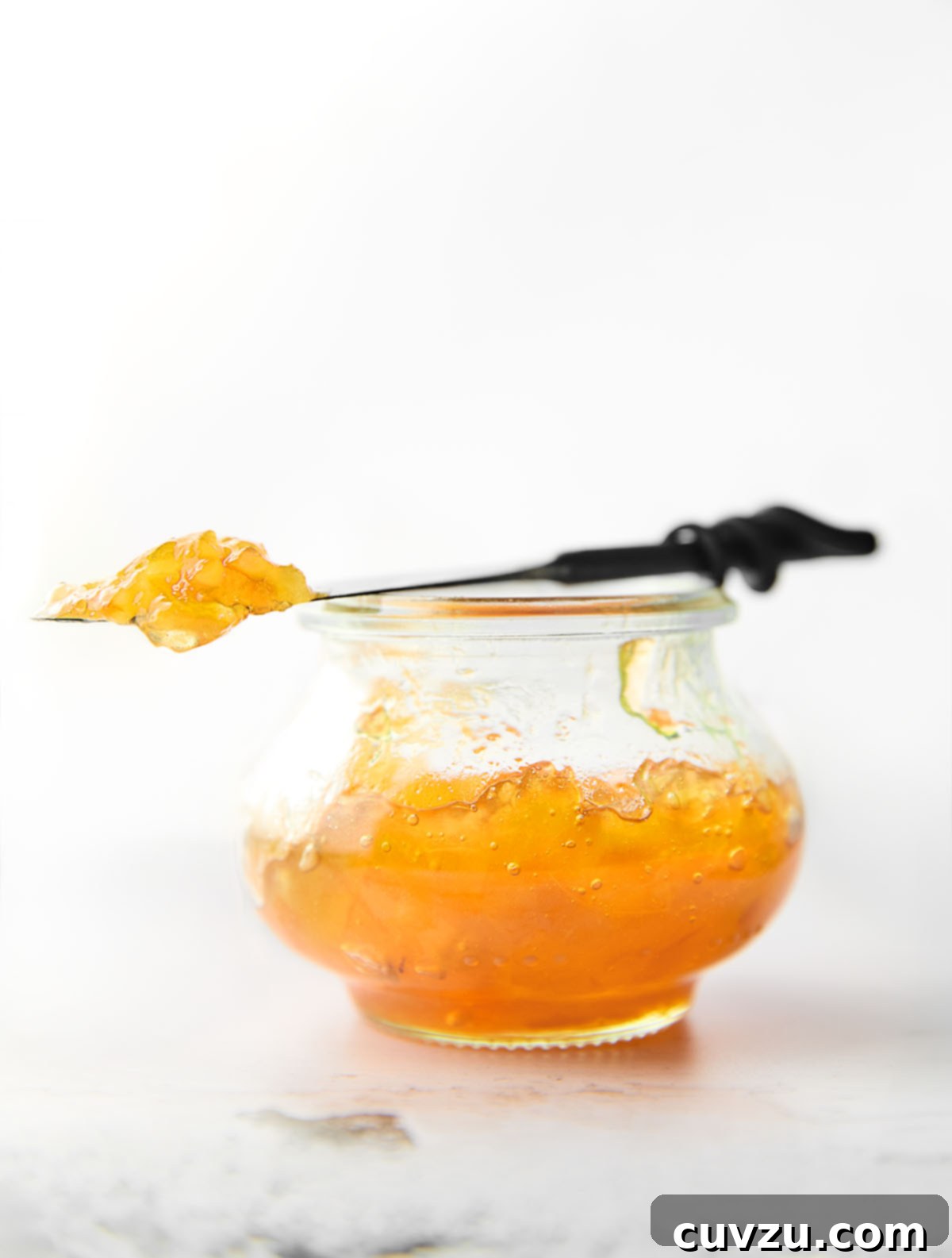
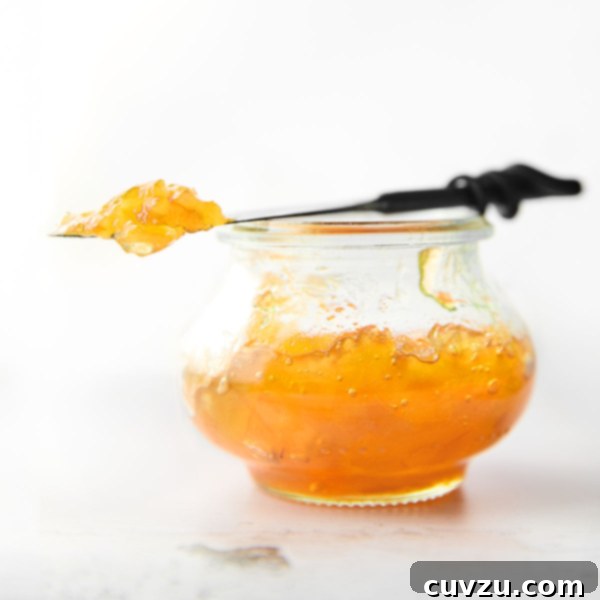
Delight your senses with this exquisite **Meyer lemon marmalade**, a truly sensational spread crafted with just three pure ingredients: ripe Meyer lemons, granulated sugar, and fresh water. Perfect for brightening your breakfast, adding elegance to brunch, or simply savoring as a quiet, satisfying snack.
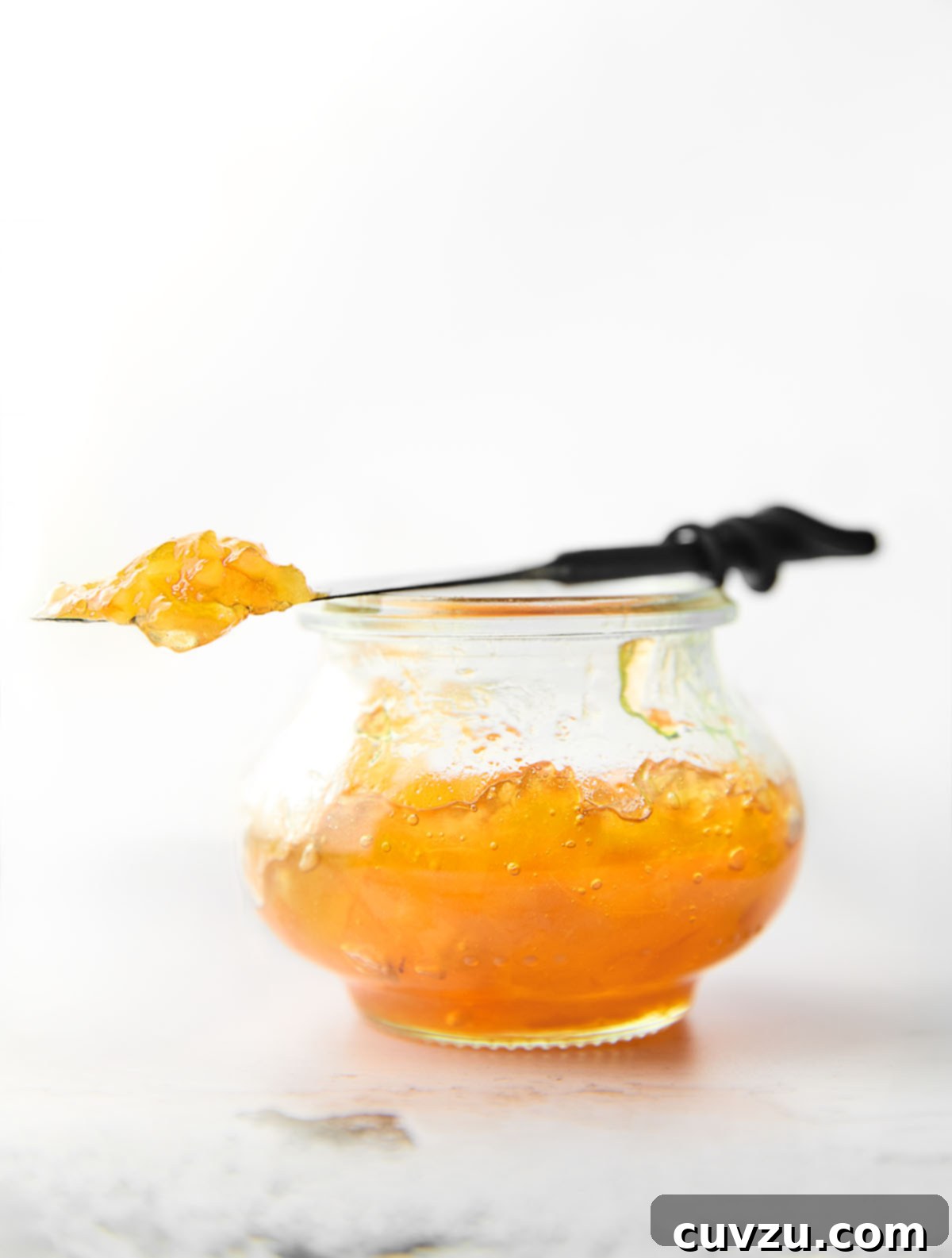
This timeless recipe was updated on January 22, 2025, to include fresh photos, enhanced step-by-step guidance, creative serving suggestions, essential tips, and answers to frequently asked questions, ensuring your marmalade-making experience is as perfect as the spread itself.

Why This Meyer Lemon Marmalade Recipe Is Unforgettable
This Meyer lemon marmalade stands out as a true winner in the world of preserves. Its secret lies in the masterful way it **balances the inherent sweetness of Meyer lemons with their delicate acidity**, creating a vibrant spread that is both bright and sweet, with just the right whisper of tartness to awaken your palate. A crucial step, **blanching the thinly sliced lemons, expertly removes any lingering bitterness** from the peel and pith, guaranteeing a smooth, mellow, and perfectly balanced flavor profile. Furthermore, incorporating both **the fresh juice and tender segments of the lemons amplifies their signature vibrant citrus essence**, ensuring every spoonful is bursting with authentic Meyer lemon goodness. This thoughtful combination of techniques ensures a marmalade that is complex, aromatic, and utterly irresistible.
Unveiling the Charm of Meyer Lemons
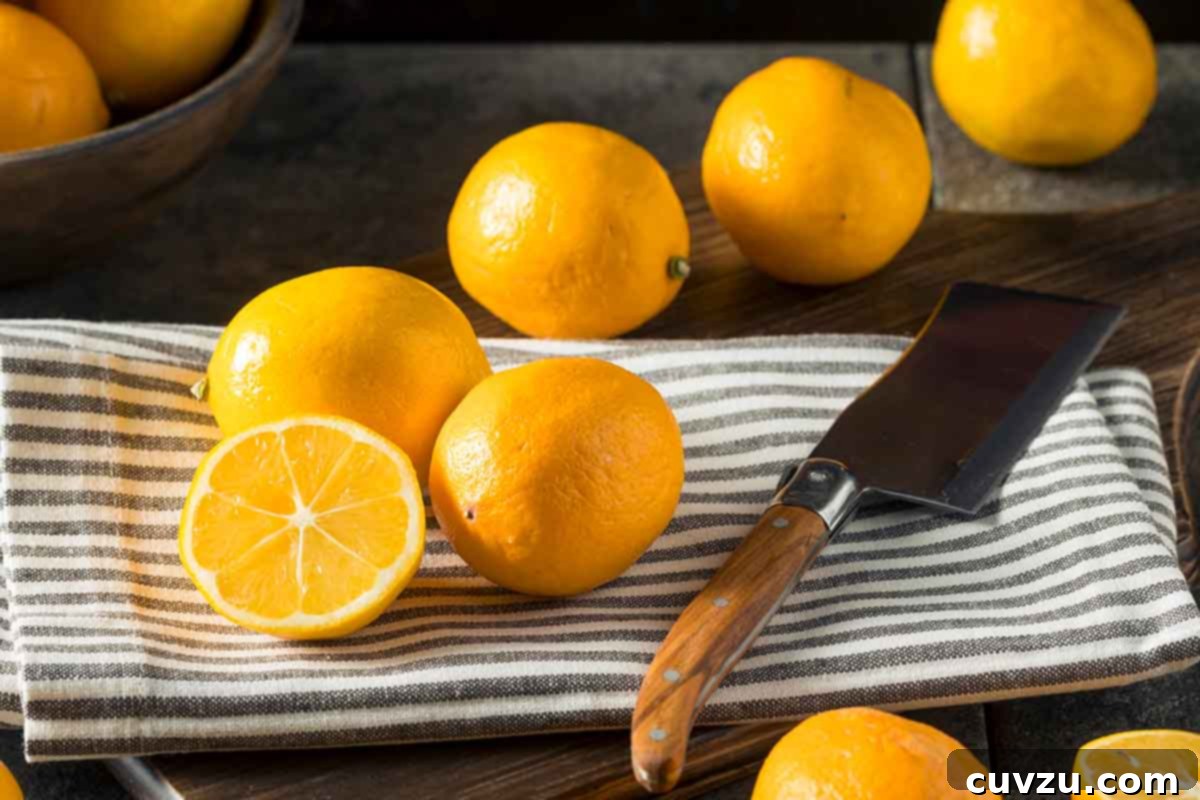
Meyer lemons are a distinct and highly cherished variety of citrus fruit, believed to be a natural hybrid born from the cross between a traditional lemon and a mandarin orange. Originating in China, these remarkable fruits were introduced to the United States in the early 20th century by agricultural explorer Frank N. Meyer. They have since become a beloved ingredient in kitchens worldwide, especially amongst discerning chefs and home cooks. They are particularly sought after for their significantly sweeter taste, intoxicating floral aroma, and noticeably milder acidity when compared to their common lemon counterparts. This unique combination makes them an exceptional choice for culinary applications where a softer, more nuanced citrus note is desired, such as in this delightful homemade marmalade.
Meyer Lemons vs. Regular Lemons: A Comparative Guide
While both Meyer lemons and regular lemons bring zest to our lives, they possess distinct characteristics that make them suitable for different culinary adventures. Understanding these differences is key to appreciating the unique qualities that Meyer lemons impart to this marmalade recipe.
- Flavor Profile: The most striking difference lies in their taste. Meyer lemons boast a sweeter, less tart flavor with subtle, intriguing floral and herbal undertones, making them wonderfully complex. Regular lemons, conversely, deliver a sharp, intensely tangy, and straightforwardly acidic punch, which is excellent for classic lemonades or dishes requiring a strong acidic kick.
- Appearance and Skin: Meyer lemons are easily identifiable by their thinner, smoother skin, which ripens to a deep yellow with a noticeable orange hue, hinting at their mandarin lineage. Regular lemons, such as the Eureka or Lisbon varieties, typically have thicker, brighter yellow, and often slightly bumpy skin. This thinner skin of Meyer lemons is a significant advantage for marmalade, as it means less pith and less bitterness to contend with.
- Juice Yield and Acidity: Meyer lemons are generally juicier than regular lemons, and their juice is considerably less acidic. This characteristic makes them ideal for recipes where a gentler citrus profile is desired, allowing their floral notes to shine without overwhelming other flavors. When substituting, remember that a recipe calling for regular lemon juice might require less Meyer lemon juice or a slight adjustment in other acidic ingredients.
- Seasonal Availability: Meyer lemons are a seasonal delicacy, typically available from late winter through early spring. This limited availability adds to their allure and makes homemade Meyer lemon marmalade a special treat. Regular lemons, on the other hand, are widely available year-round in most grocery stores, offering consistent access for everyday culinary needs.
Selecting the Perfect Meyer Lemon: A Guide to Ripeness
Choosing perfectly ripe Meyer lemons is paramount for achieving the best flavor and texture in your marmalade. Ripe Meyer lemons are distinguished by several key characteristics that signal their peak freshness and sweetness. They will typically display a deep yellow to a subtle, slightly orange hue, a visual cue of their mandarin heritage and ripeness. When gently squeezed, a ripe Meyer lemon should feel slightly soft and yielding, indicating its juiciness and tender flesh. The skin should be notably smooth and thin, without any hard or overly thick spots. Most importantly, a ripe Meyer lemon will emit a strong, wonderfully fragrant citrus aroma, a delightful precursor to the flavors awaiting you. If a lemon still appears pale yellow or feels excessively firm, it simply isn’t fully ripe yet and will lack the desired sweetness and aromatic complexity essential for this exceptional marmalade.
Essential Notes on Ingredients for Your Meyer Lemon Marmalade
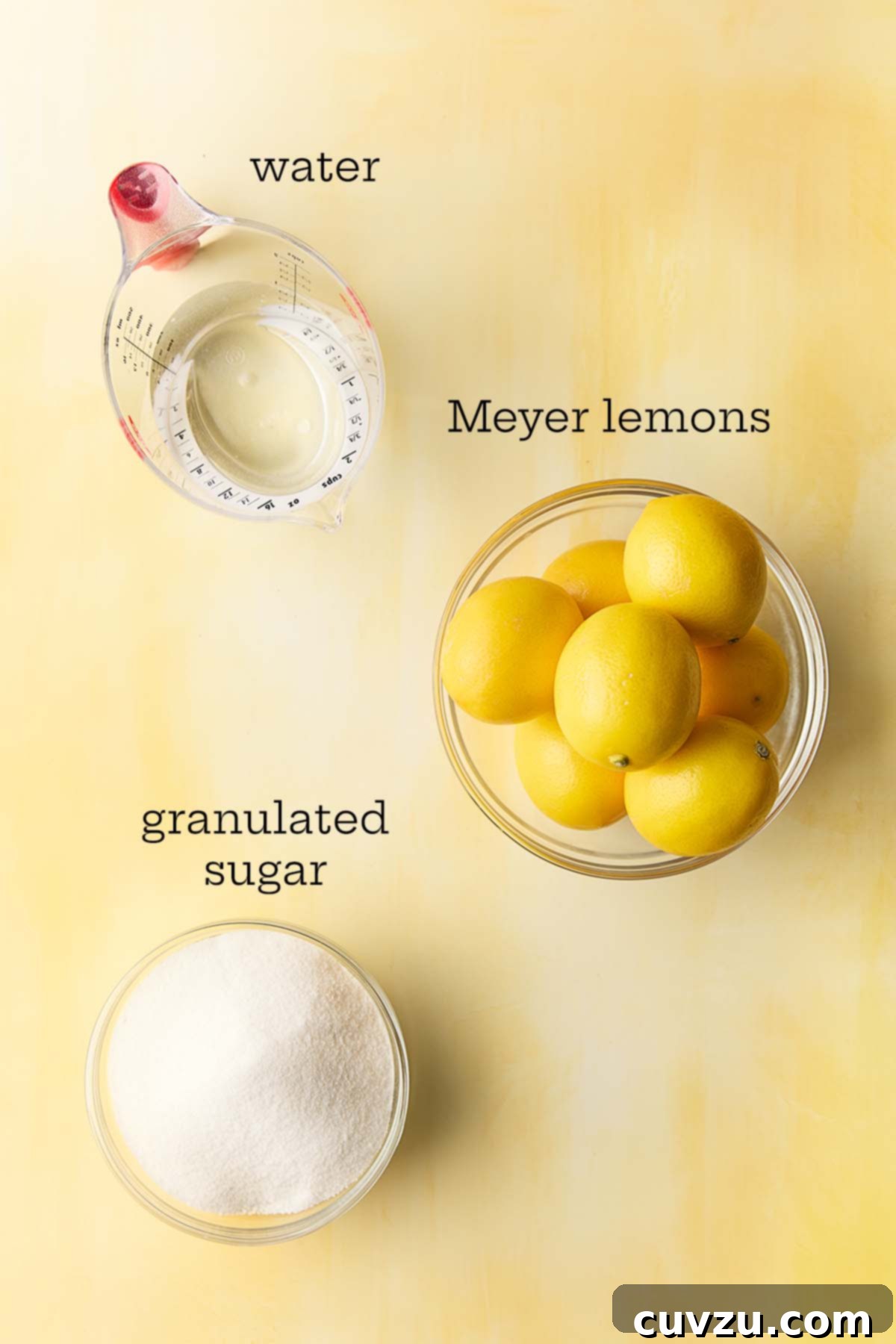
- Meyer Lemons: The star of our show! Their naturally thin skin and milder pith are key, contributing significantly less bitterness than regular lemons, making them exceptionally suited for marmalades. Since the entire peel is utilized in this recipe, it is highly recommended to opt for organic Meyer lemons to avoid unwanted pesticides and wax coatings, ensuring a pure, clean, and vibrant flavor.
- Granulated Sugar: More than just a sweetener, sugar plays a multifaceted role in marmalade. It acts as a natural preservative, extends shelf life, and, crucially, interacts with the pectin in the lemons to help the marmalade set. Using granulated sugar ensures a clear, sparkling marmalade. While you might be tempted to reduce sugar, remember it directly impacts the set and preservation; significant reduction may require a specialized low-sugar pectin recipe or lead to a runnier spread.
- Water: Simple yet essential. Water helps dissolve the sugar, creates the syrup base, and allows the lemon slices to soften and release their pectin during the cooking process. It’s the medium that transforms fresh lemons and sugar into a luscious, spreadable marmalade.
- **Pectin (Natural):** Meyer lemons are naturally rich in pectin, particularly in their seeds and white pith (albedo). This recipe harnesses this natural pectin, which is why we include the whole fruit (after blanching) and encourage careful preparation. Pectin is a gelling agent that, when combined with sugar and acid at the right temperature, forms the characteristic thick, spreadable consistency of marmalade.
Classic Meyer Lemon Marmalade
Recipe by David Leite
Condiments
Italian
12
servings | 1 1/2 cups
150
kcal
45
45
1
30
Equipment
-
Sterilized heatproof jars (Refer to the Notes section for sterilization instructions)
-
Heavy-bottomed saucepan or Dutch oven
-
Sharp chef’s knife and cutting board
-
Vegetable peeler (optional, for pith removal)
-
Fine-mesh sieve or slotted spoon
-
Instant-read thermometer (recommended for accurate setting)
-
Small, chilled plate for wrinkle test
Ingredients
- 7 Meyer lemons, preferably organic, medium-sized
- 1 cup cold water
- 2 cups granulated sugar
Crafting Your Meyer Lemon Marmalade: A Step-by-Step Guide
Follow these detailed steps carefully to create a vibrant and delicious Meyer lemon marmalade that will impress with its balanced flavor and perfect set.
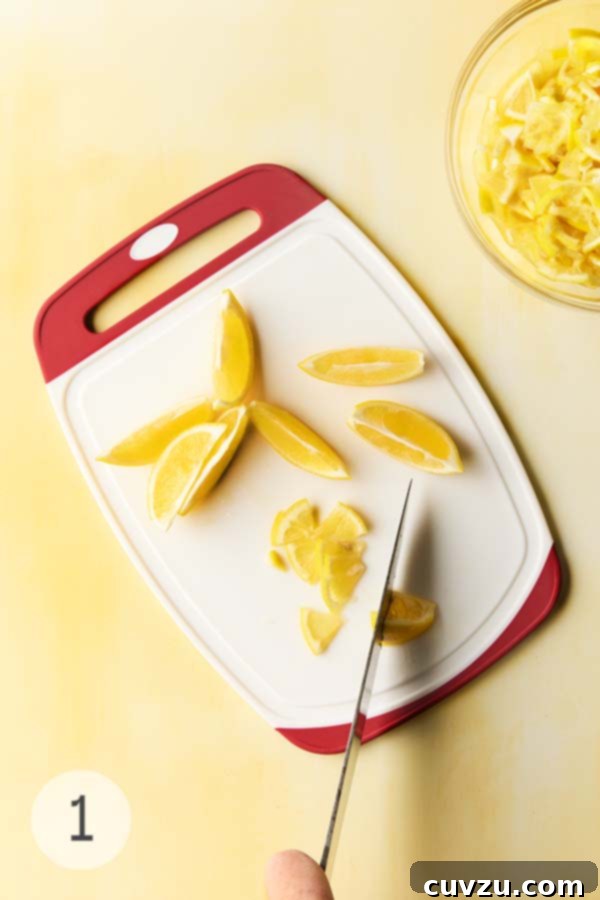
- Prepare the Lemons: Begin by thoroughly scrubbing all 7 Meyer lemons under running water and trimming their ends. Select 4 of the lemons. Cut each of these 4 lemons lengthwise into eighths, from tip to stem, ensuring you keep the peel and pith intact at this stage. Carefully flick out and discard any seeds. Then, take each wedge and slice it crosswise into very thin, approximately ⅛-inch thick, uniform slices. Set these aside in a bowl.
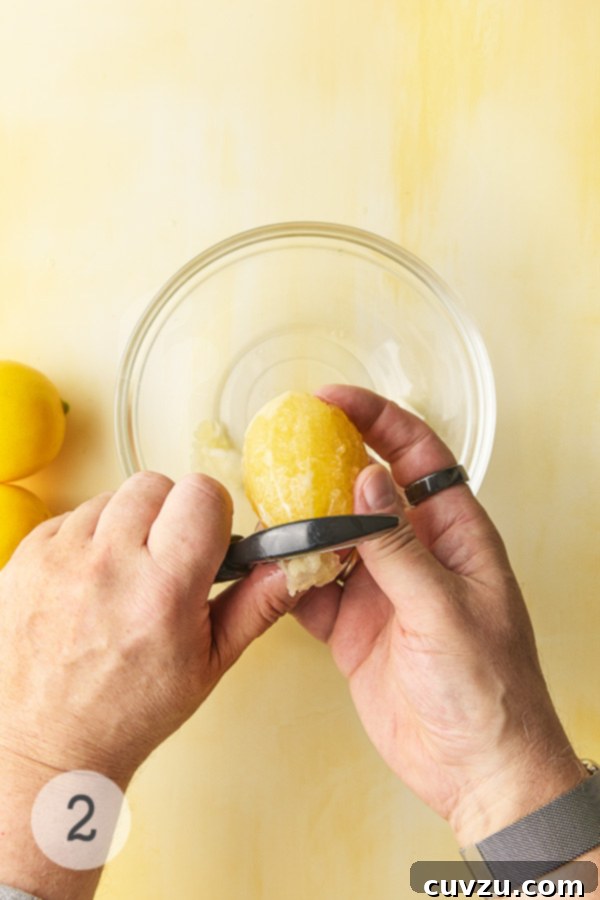
- Remove Zest and Pith from Two Lemons: Take 2 of the remaining lemons. Using a sharp knife or a vegetable peeler, carefully remove only the yellow zest and the bitter white pith from these lemons. Your goal is to get down to the juicy flesh. Discard the removed zest and pith.
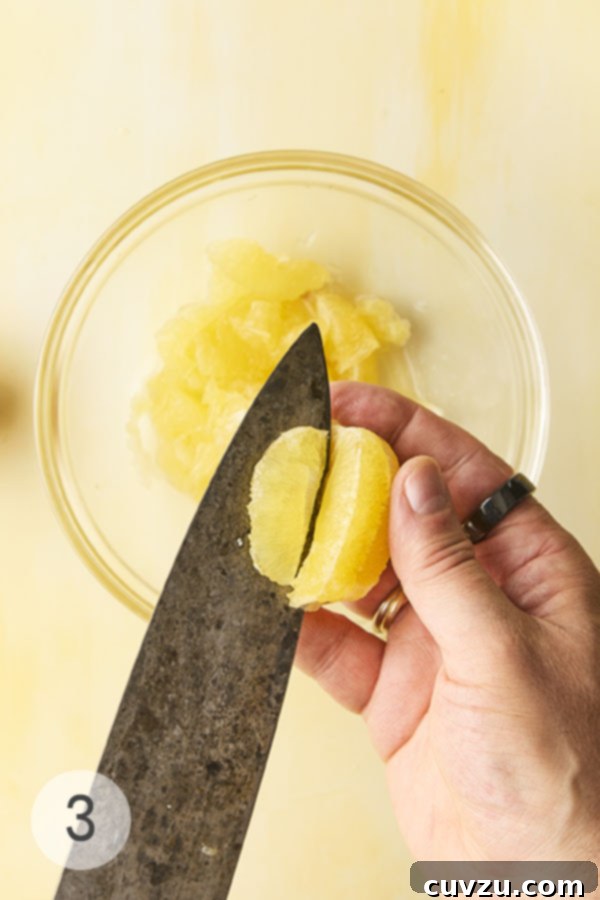
- Segment the Peeled Lemons: Hold one of the peeled lemons over a small bowl. Carefully slice the individual lemon segments free from their membranes, letting the segments and any released juice fall directly into the bowl. Discard all remaining membranes, peels, and pith. Repeat with the second peeled lemon.
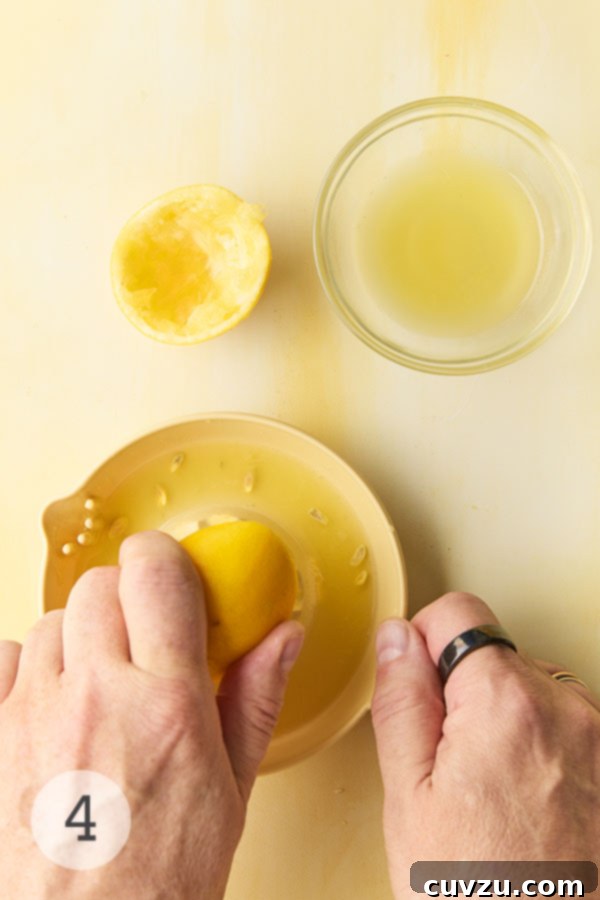
- Juice the Last Lemon: Take the final remaining lemon and juice it. You should aim to yield approximately ¼ cup of fresh lemon juice. Set this juice aside with the segments.
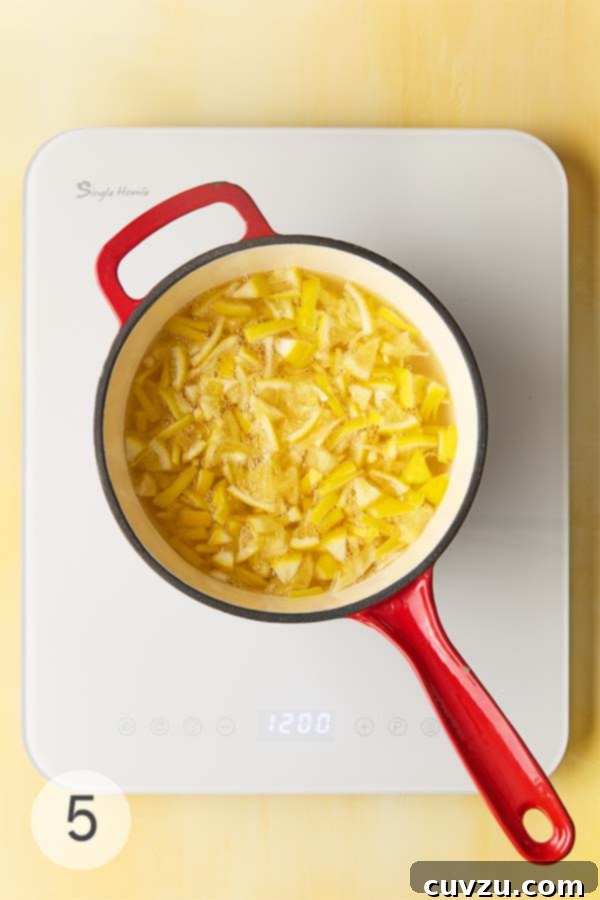
- Blanch the Lemon Slices: In a small saucepan, bring a moderate amount of water to a rolling boil over medium-high heat. Add the thinly sliced (peel and pith intact) lemons to the boiling water. Return to a boil and cook for 2 to 3 minutes. This crucial step helps to soften the peels and, more importantly, removes any lingering bitterness from the pith. Drain the blanched slices thoroughly, pat them dry with a clean towel, and set them aside.
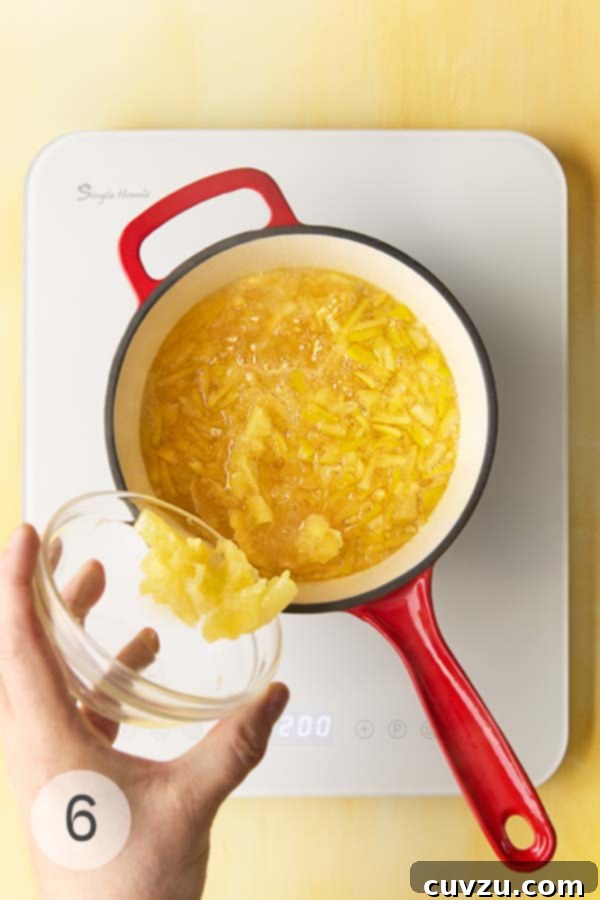
- Start the Syrup Base: In the same saucepan (or a clean, heavy-bottomed pot), combine the 1 cup of cold water, 2 cups of granulated sugar, and the ¼ cup of reserved lemon juice. Bring this mixture to a boil over medium-high heat, stirring constantly until all the sugar has completely dissolved, which should take about 2 to 3 minutes. Once boiling, add the blanched lemon slices and the delicate lemon segments to the pot. Return the entire mixture to a gentle boil.
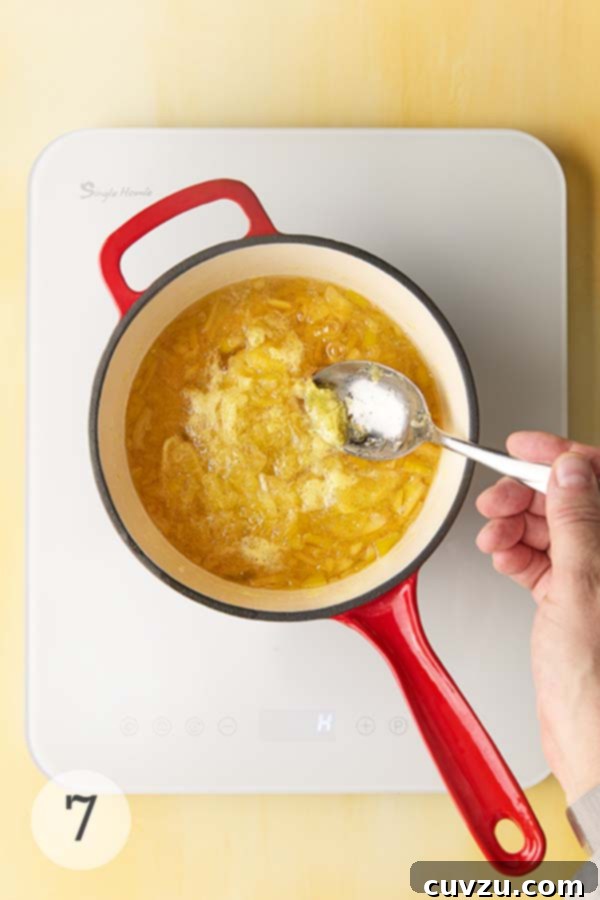
- Simmer to Perfection: Reduce the heat to low, maintaining a very gentle simmer. As the marmalade cooks, a small amount of foam may rise to the surface; use a spoon to gently skim off any foam. Continue to simmer the mixture, stirring occasionally, until it softens and thickens to a desired consistency. This process typically takes between 40 to 60 minutes. It’s crucial to check frequently during this period to prevent scorching or overcooking, as this can affect the flavor and set of your marmalade.
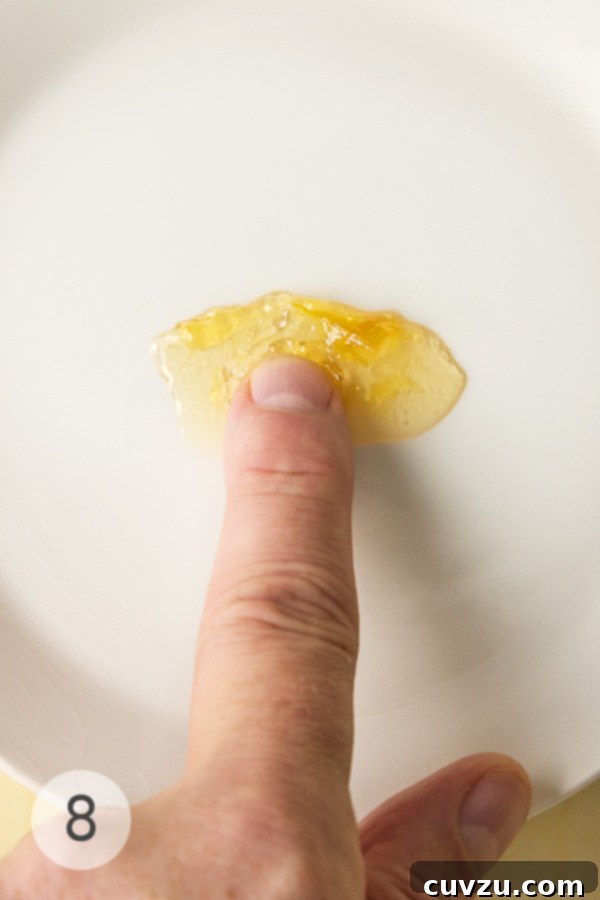
- Perform the Wrinkle Test (or Thermometer Test): To ascertain if your marmalade has reached its ideal set, place a small plate in the freezer for about 10 minutes to chill thoroughly. Drop a small spoonful of the hot marmalade onto the cold plate and let it cool briefly for a minute or two. Gently nudge the marmalade with your fingertip. If it wrinkles or forms a skin that retains its shape when pushed, it’s perfectly done! If it still appears runny, continue simmering for a few more minutes and repeat the test until the desired consistency is achieved.
☞ TESTER TIP: For a completely foolproof and precise method of checking for doneness, we highly recommend using an instant-read thermometer. Cook your marmalade until it registers a temperature between 217°F (103°C) and 220°F (105°C). A temperature at the lower end of this range will result in a softer set, while a higher temperature will yield a firmer marmalade. This method removes all guesswork!
- Jar and Store: Once the marmalade passes the wrinkle or thermometer test, carefully spoon the hot marmalade into your sterilized heatproof jars. Fill them almost to the brim, leaving about ½ inch of headspace. Allow the jars to cool completely at room temperature. Once cooled, cover them tightly with lids and refrigerate promptly. This homemade Meyer lemon marmalade will stay fresh and delicious in the fridge for up to 2 weeks. (Though, we doubt it will last that long!)
Important Notes & Tips
Refrigerator Marmalade Safety & Sterilization
To ensure your homemade marmalade is safe and lasts its full two weeks, it’s crucial to use sterilized heatproof jars. To sterilize your jars, wash them and their lids thoroughly in hot, soapy water, then rinse them very well. You can either run them through a dishwasher’s sanitize cycle or, for a more traditional method, submerge them in boiling water for 10 minutes. After sterilization, let them air-dry completely; do not towel-dry as this can reintroduce contaminants. Fill the jars with the hot marmalade, cap them tightly, and refrigerate promptly (at or below 40°F / 4°C). Always use clean utensils when serving to prevent spoilage—no double-dipping! This specific recipe is designed as a small-batch, refrigerator marmalade and is not intended for long-term canning. If you notice any mold growth, however small, discard the entire jar immediately; do not taste it. For extended storage, you can freeze the marmalade for up to 3 months, leaving ½-inch of headspace in the jar before freezing. Always label and date your jars.
- Optimal Zesting Technique: Always zest your Meyer lemons before you proceed with cutting or juicing them. Their delicate, thin skin is far easier to zest when the fruit is whole and firm, allowing you to extract maximum fragrant zest and infuse your recipe with more of that beautiful floral, citrusy goodness.
- Achieving Irresistible Texture: For a marmalade with an exquisite texture that boasts beautifully suspended translucent slices, ensure you slice your lemons thinly and consistently. Aim for about ⅛-inch thickness. This uniform slicing not only ensures even cooking but also allows the lemon pieces to soften and practically melt into the marmalade, creating a harmonious and appealing spread.
- Precision for Perfect Set: While the wrinkle test is a time-honored method, for those who prefer absolute certainty, an instant-read thermometer is your best friend. Cook your marmalade until it registers between 217°F (103°C) and 220°F (105°C). Remember that a temperature at the lower end of this range will deliver a softer, more delicate set, ideal for spreading. Conversely, cooking it to the higher end will result in a firmer, more robust marmalade, perfect for holding its shape.

An LC Original
This recipe is an original creation from Leite’s Culinaria, meticulously developed and tested to bring you the very best of Meyer lemon flavors.
View More Original Recipes
Explore More with AI
Substitutions
Scale
Summarize
Nutrition Information
Serving:
2
tablespoons
Calories:
150
kcal
Carbohydrates:
40
g
Protein:
1
g
Fat:
0.3
g
Saturated Fat:
0.03
g
Monounsaturated Fat:
0.01
g
Sodium:
3
mg
Fiber:
2
g
Sugar:
35
g
Nutrition information is automatically calculated, so should only be used as an approximation.
Tried this recipe?
Mention @leitesculinaria or tag #leitesculinaria!
Your Meyer Lemon Marmalade Questions Answered
Yes, you absolutely can, with a slight adjustment! If Meyer lemons are out of season or unavailable, you can achieve a similar sweet-tart and floral profile by using an equal amount of regular lemons combined with mandarin oranges. This blend effectively mimics the unique sweetness and aromatic notes of Meyer lemons while balancing the heightened tartness of regular lemons. Keep in mind that the resulting marmalade might be a touch more tart than one made with pure Meyer lemons, but it will still be wonderfully flavorful and delicious.
Using organic Meyer lemons is highly recommended for this marmalade recipe because you are utilizing the entire peel. Non-organic lemons are frequently treated with synthetic pesticides and coated in food-grade waxes, especially on their skins. When you incorporate the zest and peel into your marmalade, you want to ensure you’re getting pure, clean citrus flavor without any chemical residues. Organic lemons are cultivated without synthetic pesticides or fertilizers, guaranteeing you a bright, floral goodness that is untainted by unwanted chemicals. Pro tip: Whenever a recipe calls for zest or includes the peel, always choose organic for the best and safest results.
When properly stored in a tightly covered, sterilized jar, your homemade Meyer lemon marmalade will retain its freshness and delightful flavor for up to 2 weeks in the refrigerator. Ensure the jars are kept consistently cold to maximize shelf life.
Unfortunately, no. This particular Meyer lemon marmalade recipe is specifically designed as a quick, small-batch, refrigerator preserve. It is not formulated or tested for safe long-term canning processes, which require specific acid levels, sugar concentrations, and processing times to prevent spoilage. If you are determined to can your marmalade for pantry storage, it is crucial to seek out and follow a recipe that has been rigorously tested and approved for safe water bath canning.
Don’t despair! Marmalade setting can be tricky. Often, it just needs a little more cooking time. Ensure your heat is low and even. If using a thermometer, aim for 217-220°F (103-105°C). You can also add a small amount of commercial liquid pectin (following package directions) if your lemons weren’t particularly high in natural pectin. A few more minutes of gentle simmering often does the trick, so keep testing!
Expert Tips & Troubleshooting for Perfect Marmalade
Achieving a flawless homemade Meyer lemon marmalade is easier with a few professional insights. Here are our top tips and solutions for common challenges:
- Zest Before You Slice: Always remember to **zest your Meyer lemons before cutting and juicing them**. Their thin, delicate skin is much simpler to zest when the fruit is still whole and firm. This technique allows you to capture more of that precious, fragrant zest, ensuring maximum floral and citrusy goodness is incorporated into your marmalade.
- Mastering the Set with a Thermometer: While the traditional cold plate wrinkle test is effective, if you’re not fully confident in judging by eye, an instant-read thermometer offers a foolproof method for achieving the perfect set. **Cook your marmalade to an internal temperature of between 217°F (103°C) and 220°F (105°C).** A temperature at the lower end of this range will deliver a softer, more fluid set, ideal for drizzling. Conversely, reaching the higher temperature will give you a firmer, more robust marmalade, perfect for hearty toast.
- Consistent Slicing for Texture: For an irresistible texture that allows the lemon pieces to almost melt in your mouth, **slice your lemons thinly and consistently—about ⅛-inch is absolutely perfect**. Uniform slices help the fruit cook evenly, soften beautifully, and integrate seamlessly into the marmalade, creating a visually appealing and satisfying spread.
- **Preventing Scorching**: Marmalade requires gentle, attentive simmering. Always use a heavy-bottomed pot to distribute heat evenly and prevent hot spots. Stir frequently, especially as the mixture thickens, ensuring the bottom doesn’t stick and burn. If you notice any sticking, immediately reduce the heat and stir more constantly.
- **Troubleshooting Runny Marmalade**: If your marmalade remains too thin after cooling, it simply needs more time on the heat. Return it to a gentle simmer and continue cooking, monitoring the temperature with your thermometer, or performing the wrinkle test every few minutes. Patience is key!
- **Troubleshooting Overly Thick Marmalade**: Should your marmalade become too thick after cooling, don’t worry. Gently warm it in a saucepan with a tablespoon or two of hot water or fresh lemon juice, stirring until it reaches your desired spreadable consistency.
Beyond the Jar: What to Serve with This Citrusy Marmalade?
Oh, the delightful possibilities are endless with this vibrant Meyer lemon marmalade! Its sweet and tangy profile, coupled with a floral aroma, makes it incredibly versatile. Here’s where to begin your culinary journey:
- For Breakfast or Brunch Classics:
- Spread generously on warm, crusty toast or a toasted bagel for a morning treat.
- Elevate your English muffins with a dollop.
- Serve alongside fluffy scones, clotted cream, and a pot of tea for a luxurious afternoon tea experience.
- Stir into a bowl of creamy homemade Greek yogurt or fresh ricotta cheese for a light and refreshing start to your day.
- Drizzle over pancakes, waffles, or French toast instead of traditional syrup.
- Savory Pairings: The sweet and tangy flavor of Meyer lemon marmalade beautifully complements a variety of savory dishes:
- Serve as an elegant accompaniment to a gourmet cheese plate, especially with goat cheese, brie, or aged cheddar.
- Use as a glaze for roasted chicken, duck, or pork, adding a bright, zesty finish.
- Whisk into a vinaigrette for a lively salad dressing.
- Pair with smoked salmon and cream cheese on crackers for a sophisticated appetizer.
- A spoonful can brighten up pan sauces for white fish or chicken cutlets.
- “Deserves” (Desserts) and Drinks: As my grandmother lovingly called desserts, this marmalade truly shines in sweet applications and even cocktails:
- Use it as a luscious filling for tarts, crêpes, or sponge cakes.
- Swirl into a batch of French vanilla ice cream or mix into a cheesecake batter.
- Fold into whipped cream for a light citrus mousse.
- Muddle a spoonful into your favorite gin or vodka cocktail for a zippy, refreshing twist.
- Spread thinly between layers of shortbread cookies for a delightful sandwich cookie.
Whether you’re spreading it on a simple piece of toast or incorporating it into a complex recipe, this Meyer lemon marmalade promises to deliver a burst of sunshine with every bite.
Discover More Dreamy Meyer Lemon Recipes
If you’ve fallen in love with the enchanting flavor of Meyer lemons through this marmalade, explore these other exquisite recipes that celebrate this unique citrus:
Share Your Experience: Write a Review!
If you create this delightful Meyer lemon marmalade recipe, or any other dish from Leite’s Culinaria, we’d love to hear from you! Please consider leaving a review, a star rating, and even sharing your best photo in the comments section below. Your feedback and culinary creations truly inspire us.—David
Recipe Testers’ Enthusiastic Reviews
Our dedicated team of recipe testers put this Meyer lemon marmalade through its paces, and their feedback is overwhelmingly positive. Read on to discover their experiences, tips, and why they loved this simple yet sublime spread.
Larry Noak
I absolutely LOVE this Meyer lemon marmalade. The initial preparation, while somewhat meticulous and a bit messy, is entirely worth the effort for the truly stunning end result. It took me approximately 45 minutes to prepare the lemons as instructed, followed by another 45 to 50 minutes of simmering on the stovetop to reach the perfect consistency. The marmalade isn’t just visually beautiful with its translucent slices; it possesses an utterly amazing, bright lemon flavor that truly sets it apart. I will most certainly be making this recipe repeatedly, especially for the special people in my life who appreciate homemade goodness.
Sue Davis
It’s fascinating how sometimes the more subtle things in life can deeply impact our perceptions and experiences. This simple, yet incredibly decadent Meyer lemon marmalade instantly transported me back to exquisite dining experiences on the sun-drenched Amalfi Coast and, surprisingly, even to the charming countryside of Normandy, France. It is remarkably simple to prepare and wonderfully forgiving, truly delivering a marmalade to savor and devour! I envision this marmalade enhancing a wide variety of breads, and pairing beautifully with other ingredients too, such as delicate sprigs of fresh mint, a luxurious drizzle of honey, or a scattering of vibrant fresh berries. I used 7 large Meyer lemons, which collectively weighed about 2 ⅓ pounds, along with the specified 1 cup of water and 2 cups of sugar. To my delight, this yielded almost double the stated 1 ½ cups, providing an abundance of this liquid gold!
Ralph Knauth
Having two prolific Meyer lemon trees in my backyard, still laden with fruit, this recipe was the perfect opportunity to make good use of my bounty. The outcome absolutely exceeded my expectations. Imagine a sun-kissed, yellow-hued orange marmalade, with just a tiny whisper more bitterness – that’s the magic of this Meyer lemon version! I tried it on bread with a dollop of cottage cheese, and it truly blew my mind with its incredible flavor combination. The recipe itself is exceptionally well written; the hands-on and cooking times proved to be quite accurate, giving me a clear roadmap. My yield was generously 2 cups, slightly more than the stated 1 ½ cups. I did find myself adjusting the cooking time a little, extending it to about 70 minutes rather than the suggested 40 to 60 minutes, to achieve my desired set. A personal touch I added, which wasn’t explicitly noted in the recipe, was to remove some of the white pith running inside the lemons when I cut them into slices, aiming for a less bitter profile. All things considered, this is a truly lovely recipe, and very much worth the labor and time invested.
Linda Pacchiano
This marmalade isn’t just unique; it’s utterly delicious and truly memorable. While the preparation does require a bit of time and patience, the incredible flavor and texture of the finished product make it entirely worth the effort. I decided to halve the recipe since I had purchased only 1 pound of lemons—a decision I now deeply regret, wishing I had made a full batch! I carefully divided the lemon preparation in proportion to the full recipe. The stated yield for a halved recipe was perfectly correct, resulting in about ¾ cup of glorious marmalade. I also made slight adjustments to the cooking time to achieve my preferred set. A helpful trick I discovered to speed up the prep, if you possess a good chef’s knife, is to line up three lemon wedges side by side and cut them crosswise into thin slices all at once, which is far more efficient than tackling them one by one. It’s incredibly important to watch the simmering mixture with great care, as it can easily scorch or become overcooked, impacting the final taste and texture. If, after cooling, your marmalade thickens too much, a small addition of water or a little more lemon juice, followed by a few seconds in the microwave, will help it return to a beautifully spreadable consistency. This marmalade was absolutely divine on buttered toast, especially when paired with some sharp Cheddar cheese—a surprisingly fantastic combination!