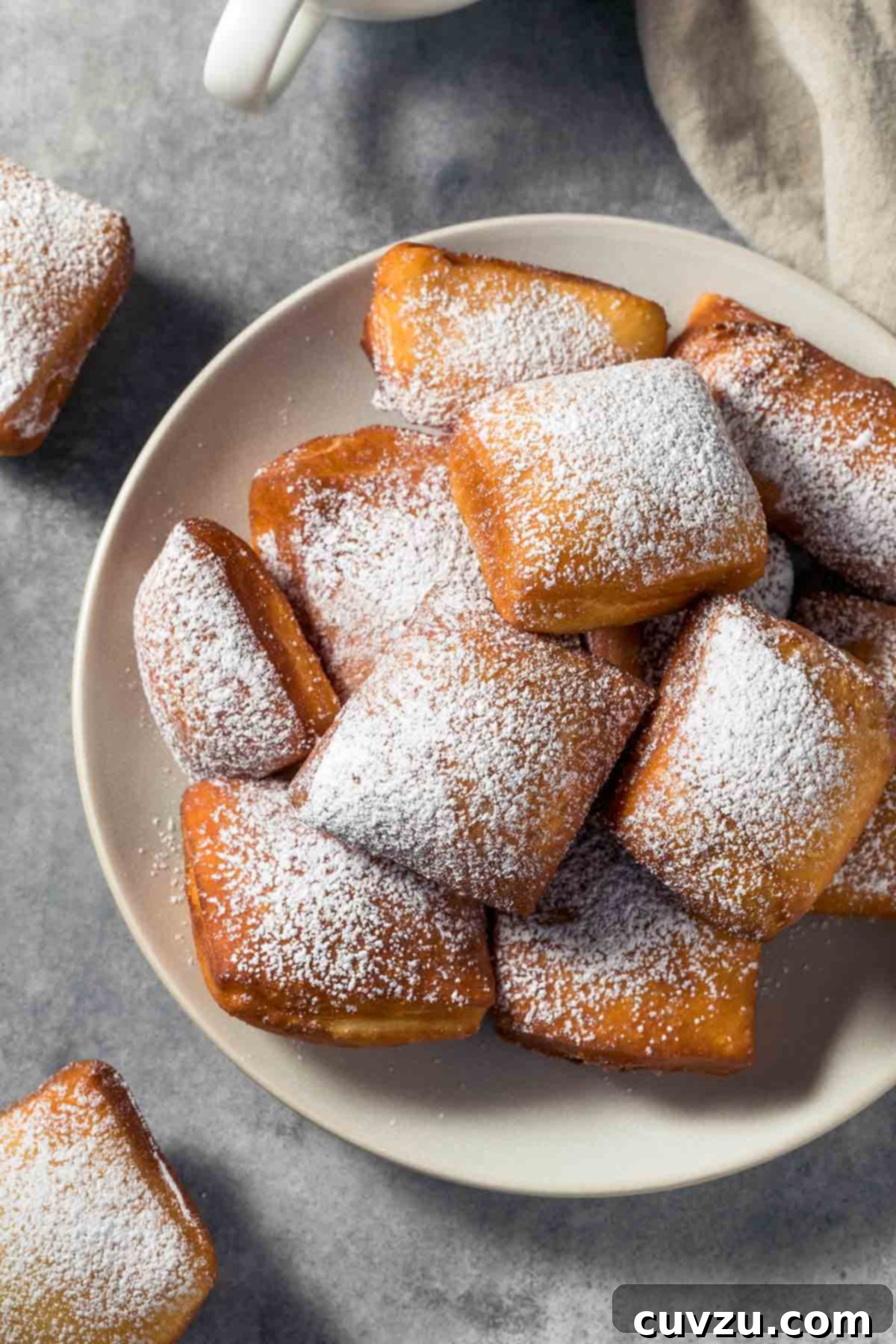
Homemade Beignets: Your Essential Guide to New Orleans’ Famous Fried Dough
Beignets are more than just a deep-fried, confectioners’ sugar-dusted indulgence; they are a quintessential New Orleans tradition, famously perfected by establishments like Cafe du Monde. While a trip to the vibrant streets of the Big Easy offers an unparalleled experience, you don’t have to pack your bags to savor these delightful treats. With this comprehensive guide, you’ll discover just how surprisingly easy it is to bring the authentic taste of New Orleans beignets right into your own kitchen.
The Irresistible Allure of New Orleans Beignets
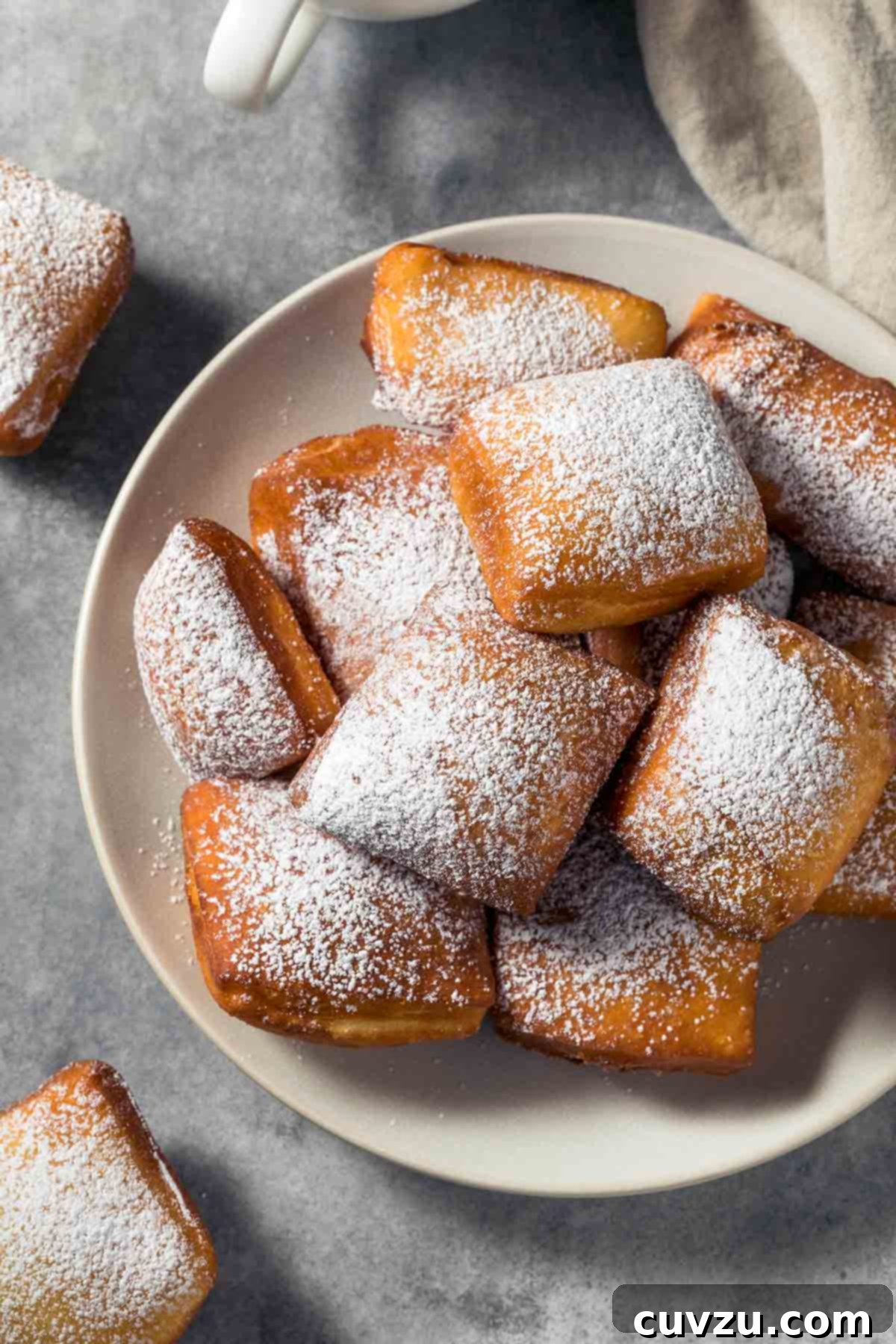
Imagine sinking your teeth into a warm, puffy cloud of fried dough, delicately crisp on the outside and wonderfully soft and airy within, all blanketed under a snowdrift of sweet confectioners’ sugar. These knee-wobblingly delicious pillows of sugary delight hold a rich history. According to author Constance Snow, beignets originally emerged as a hearty breakfast for dockworkers and merchants at the bustling old French Market in New Orleans. They share a comforting kinship with other fried dough pastries, such as the sopapilla, but possess a unique charm that’s distinctly Big Easy.
The magic of beignets lies in their freshness. They are an experience best savored while still hot, straight from the fryer. If you’ve ever had the pleasure of visiting Cafe du Monde, you’ll recall the playful (yet serious!) warning against wearing black – a testament to the generous, joyful mess that accompanies enjoying these treats. We wholeheartedly recommend embracing the same joyful abandon when indulging in your homemade beignets; a little powdered sugar on your shirt is a badge of honor!

Why Home Cooks Are Falling in Love with This Beignet Recipe
Our recipe testers raved about these crispy New Orleans-style beignets, particularly highlighting the exquisite taste when generously smothered in powdered sugar. They enthusiastically confirmed that the recipe worked flawlessly as written and was remarkably “very easy to make.” This isn’t just a recipe; it’s an invitation to effortlessly create a beloved classic in your own kitchen.
Decoding Beignet Ingredients: What You Need to Know
Crafting the perfect beignet begins with understanding the role of each ingredient. While the list might seem simple, a few key considerations can elevate your fried dough from good to truly exceptional.
- Yeast: Active dry yeast is crucial for giving your beignets their characteristic airy, puffed texture. Ensure your yeast is fresh and properly proofed in warm water to guarantee it’s active and ready to work its magic. The warm water (around 105-115°F or 40-46°C) activates the yeast without killing it.
- Flour: All-purpose flour is the standard choice, providing the right balance of gluten for structure and tenderness. Measuring by weight (ounces/grams) is always more accurate than by volume (cups) for baking, especially with flour, to ensure consistent results.
- Sugar: Granulated sugar adds sweetness to the dough itself, complementing the generous dusting of confectioners’ sugar later. If you have a sweet tooth and prefer a more pronounced sweetness within the beignet, feel free to add an extra tablespoon or two of granulated sugar to the dough mixture.
- Salt: A touch of fine sea salt is essential. It doesn’t just add flavor; it balances the sweetness and strengthens the gluten structure in the dough, contributing to a better texture.
- Milk & Butter: Whole milk contributes to a rich, tender crumb, while unsalted butter adds flavor and further enhances the dough’s softness. Heating them gently ensures the butter melts thoroughly and the liquids are warm enough to encourage yeast activity without overheating.
- Egg: A large egg adds richness, helps bind the dough, and contributes to the golden color and soft interior of the fried beignets.
- Oil for Frying: The choice of frying oil significantly impacts the final taste and texture of your beignets. Opt for an oil with a high smoke point and a neutral flavor. Refined peanut oil is a classic choice for deep-frying due to its high smoke point and minimal flavor transfer. Safflower or sunflower oils are also excellent alternatives, ensuring your beignets taste like beignets, not like the oil they were cooked in. Avoid olive oil or butter for deep frying, as they have low smoke points and will burn quickly, imparting an unpleasant taste.
- Confectioners’ Sugar: This is the iconic finishing touch! A generous amount is not just for sweetness; it provides the signature snowy appearance and textural contrast. Make sure to have plenty on hand.
Mastering Beignets: Detailed Step-by-Step Instructions
Follow these instructions carefully to achieve light, fluffy, and perfectly golden beignets. Attention to detail, especially with oil temperature, is key to success.
- Proof the Yeast: In a small bowl, sprinkle the active dry yeast over 1/4 cup of warm water (ideally around 105-115°F or 40-46°C). Do not stir. Let it stand undisturbed for about 5 minutes until the yeast mixture becomes creamy and foamy. This indicates your yeast is alive and active, ready to leaven your dough.
- Prepare Dry Ingredients: In the bowl of a food processor, combine 3 cups of the all-purpose flour (approximately 15 ounces), the granulated sugar, and the fine sea salt. Pulse briefly a few times to thoroughly combine these dry ingredients. This ensures even distribution before liquids are added.
- Heat Milk and Butter: In a small saucepan, gently combine 1 cup of whole milk and 4 tablespoons (2 ounces) of unsalted butter over medium heat. Heat just until the butter completely melts and the milk is warm to the touch but not steaming or boiling. Remove the saucepan from the heat immediately.
- Combine Wet and Dry: With the food processor running on low, carefully pour the warm milk and butter mixture through the feed tube. Process until the ingredients are just blended and no dry flour remains.
- Add Remaining Ingredients and Rest the Dough: Now, add the single large egg, the proofed yeast mixture, and the remaining 1 1/2 cups (7 1/2 ounces) of all-purpose flour to the food processor. Process just until a soft, slightly sticky dough forms. Be careful not to overmix. For a softer beignet with a delicate crumb, allow the dough to rest at room temperature for at least 10 minutes. If you prefer a beignet with slightly crispier edges and a chewier interior, cover the dough and refrigerate it until it’s thoroughly chilled, or even overnight (this method is favored by many for enhanced texture).
- Prepare for Frying: Preheat your oven to 200°F (95°C). Line an ovenproof platter or a baking sheet with several layers of paper towels; this will be used to drain and keep your fried beignets warm. In a deep, heavy saucepan or a dedicated deep fryer, pour your chosen frying oil (peanut, safflower, or sunflower) to a depth of 3 inches. Heat the oil to precisely 360°F (182°C) using a deep-frying thermometer. Maintaining this temperature is crucial for non-greasy, perfectly puffed beignets.
- Roll and Cut the Dough: While the oil is heating, divide your rested beignet dough into two equal pieces. On a generously floured work surface, take one piece of dough and briefly knead it until it’s soft and pliable but no longer excessively sticky. Using a rolling pin, roll the dough into a uniform rectangle, approximately 1/4 inch thick. Using a knife or a pastry wheel, cut this rectangle into 6 equal pieces (or, for smaller, more manageable beignets, cut into 8 or 12 rectangles). Repeat this process with the second piece of dough.
- Fry in Batches: Once the oil reaches 360°F (182°C), carefully drop 2 or 3 beignet rectangles into the hot oil. Do not overcrowd the pan, as this will lower the oil temperature and result in greasy beignets. Fry for about 2 minutes on each side, turning once, until they puff up beautifully and turn a rich, golden brown.
- Drain and Keep Warm: Using a slotted spoon or spider, carefully transfer the fried beignets to the paper towel-lined platter to drain excess oil. Immediately place them in the preheated oven to keep them warm while you fry the remaining dough. Ensure the oil temperature returns to 360°F (182°C) between batches for optimal results.
- Serve Immediately with a Sugar Shower: As soon as all your beignets are fried, arrange them attractively on a warmed serving plate. For the classic finish, use a fine-mesh sieve to dust them heavily and generously with confectioners’ sugar. Alternatively, for a truly immersive sugar coating (and a bit of fun!), place a few beignets at a time into a brown paper bag with a generous amount of confectioners’ sugar. Fold the top of the bag several times to seal it, then gently shake to coat the beignets thoroughly. Serve these delightful beignets at once – they are truly at their best when piping hot! (As if you could even wait!)
Common Questions About Making Beignets
How should I serve homemade beignets?
The quintessential way to serve these crispy fritters is hot, fresh from the fryer, with an unbelievably generous coating of confectioners’ sugar. Pair them with a strong, hot cup of coffee (especially chicory coffee for a true New Orleans experience!) or hot chocolate. Beignets are incredibly versatile and can be enjoyed as a decadent breakfast pastry, a delightful dessert, or a satisfying anytime snack.
Can I make beignet dough in advance?
Absolutely! While fried beignets are undoubtedly best served immediately after cooking, the dough can be a fantastic make-ahead option. Prepare the dough as instructed, then cover it tightly and store it in the refrigerator for up to 1 day. In fact, dough that is stored overnight often produces a slightly crispier and more flavorful beignet due to a slower, colder fermentation process.
Can cooked beignets be frozen?
Indeed they can! After frying your beignets and allowing them to cool completely to room temperature, arrange them in a single layer on a baking sheet and place them in the freezer until fully solid. Once frozen, transfer them to a freezer-safe airtight container or heavy-duty freezer bag. They can be stored in the freezer for up to 2 months. When a craving strikes, simply reheat them in a preheated oven at 350°F (175°C) for 5 to 10 minutes, or until they are warmed through and slightly re-crisped.
What if my beignets aren’t puffing up?
The most common reasons for flat beignets are inactive yeast (ensure it proofs properly), oil that isn’t hot enough (always use a thermometer!), or old flour. Make sure your yeast foams up nicely in warm water before adding it to the dough. Also, avoid overworking the dough, which can develop too much gluten and make the beignets tough.
Why are my beignets greasy or soggy?
Greasy or soggy beignets are typically the result of frying in oil that is too cool. When the oil isn’t hot enough, the dough absorbs the oil instead of cooking quickly and forming a crisp exterior. Always maintain the oil temperature at a consistent 360°F (182°C) and don’t overcrowd the pan. Proper draining on paper towels immediately after frying is also crucial.
Pro Tips & Troubleshooting for Perfect Beignets
- Serve Immediately: For the absolute best texture and flavor, plan to serve your beignets as soon as they are fried and generously dusted with sugar. Their delicate puffiness is short-lived.
- Overnight Dough for Crispier Results: As mentioned, refrigerating the dough for up to a day before frying can yield a noticeably crispier beignet. This is a highly recommended technique for those who appreciate a delightful crunch.
- Maintain Oil Temperature: This is perhaps the most critical tip! Fluctuations in oil temperature lead to either greasy, undercooked beignets (if too low) or burnt exteriors with raw centers (if too high). Use a reliable deep-frying thermometer and allow the oil to return to the ideal 360°F (182°C) between each batch.
- Don’t Overcrowd the Fryer: Fry only a few beignets at a time to prevent the oil temperature from dropping drastically. This ensures even cooking and perfect puffiness.
- Proper Draining: Transfer fried beignets directly to a paper towel-lined platter or baking sheet to absorb excess oil.
- Messy is Best: Don’t be shy with the confectioners’ sugar! The more, the merrier. For the ultimate dusting, try the paper bag method described in the instructions.
Explore More Great Fried Dough Recipes
If you’ve fallen in love with the art of frying dough, we have more delightful recipes for you to explore:
We’d Love to Hear From You! Write a Review
If you make this Beignets recipe, or any dish from Leite’s Culinaria, we’d be thrilled if you considered leaving a review, a star rating, and your best photo in the comments below. Your feedback helps our community of home cooks, and I always love hearing from you! – David
New Orleans-Style Beignets
Recipe by David Leite
- PIN
Breakfast, Dessert, Snack
Southern, New Orleans
12
servings
355
kcal
25
minutes
20
minutes
45
minutes
Ingredients
- 1 package (2 1/2 teaspoons) active dry yeast
- 1/4 cup warm 110°F (43°C) water
- 4 1/2 cups all-purpose flour
- 3 tablespoons granulated sugar, or more to taste
- 3/4 teaspoon fine sea salt
- 1 cup whole milk
- 4 tablespoons (2 oz) unsalted butter
- 1 large egg
- Peanut oil or mild vegetable oil, for deep-frying
- Confectioners’ sugar, for dusting
Instructions
-
In a small bowl, sprinkle the yeast over the warm water and let stand until creamy and foamy, about 5 minutes. This confirms the yeast is active.
-
In a food processor, combine 3 cups (15 ounces) of the flour, the granulated sugar, and salt. Process briefly to mix.
-
In a small saucepan over medium heat, combine the milk and butter and heat gently until the butter melts and the milk is warm (not steaming). Remove from the heat. With the processor running, pour the milk mixture through the feed tube and process until just blended.
-
Add the egg, yeast mixture, and the remaining 1 1/2 cups (7 1/2 ounces) flour and process just until a soft dough forms. For a softer beignet, let the dough rest at room temperature for 10 minutes. For a crispier beignet, cover and refrigerate the dough until chilled through, or up to overnight.
-
Preheat the oven to 200°F (95°C). Line an ovenproof platter or baking sheet with paper towels. Pour oil to a depth of 3 inches in a deep, heavy saucepan or a deep fryer and heat to 360°F (182°C) on a deep-frying thermometer.
-
While the oil is heating, divide the dough into 2 equal pieces. On a well-floured work surface, knead 1 piece of the dough briefly until soft but not sticky. Roll into a rectangle about 1/4 inch thick. Cut into 6 equal rectangles (or, if you prefer more modestly sized beignets, 8 or 12 rectangles).
-
When the oil is ready, carefully drop 2 or 3 rectangles into the oil and fry, turning once, until puffed and golden brown, about 2 minutes on each side. Transfer to the paper towels and keep warm in the oven. Repeat with the remaining rectangles, ensuring the oil returns to 360°F between batches, and then fry the remaining dough.
-
Arrange the beignets on a warmed plate. Using a fine-mesh sieve, dust them heavily with confectioners’ sugar. Alternatively, place the confectioners’ sugar in a brown paper bag, add a few beignets at a time, fold the top of the bag several times to seal, and then gently shake to coat. Serve the beignets at once.
Notes
- Serving: For optimal enjoyment, plan to serve your beignets immediately after frying. They are truly at their best when hot.
- Make Ahead Option: The beignet dough can be prepared up to 1 day in advance and stored in the refrigerator, covered tightly. Dough that is stored overnight tends to produce a crispier beignet.
- Oil Temperature Control: To ensure your beignets are light, fluffy, and not greasy or soggy, it is crucial to let your oil return to the precise temperature of 360°F (182°C) between frying each batch. Use a reliable deep-frying thermometer.

Adapted From
Williams-Sonoma Foods of the World: New Orleans
Buy On Amazon
Nutrition Facts
Serving:
1
fritter
Calories:
355
kcal
Carbohydrates:
40
g
Protein:
6
g
Fat:
19
g
Saturated Fat:
5
g
Monounsaturated Fat:
8
g
Trans Fat:
0.2
g
Cholesterol:
28
mg
Sodium:
161
mg
Fiber:
1
g
Sugar:
4
g
Nutrition information is automatically calculated, so should only be used as an approximation. Actual values may vary.
Tried this recipe?
Mention @leitesculinaria or tag #leitesculinaria!
Recipe Testers’ Reviews
Sue Epstein
This New Orleans-style beignets recipe worked exactly as written and proved to be very easy to make. My personal preference would lean towards a little more sugar in the dough itself; typically, recipes I’ve used call for two eggs and a half-cup of granulated sugar, whereas this one uses one egg and three tablespoons. However, sweetness is definitely a matter of individual taste.
I’d also offer a small practical suggestion: dropping the freshly fried beignets directly into a bag of powdered sugar for coating is far easier and much less messy than sifting sugar over them on a plate. All in all, I would confidently recommend this recipe to friends, and that’s the ultimate measure of a good recipe!
Raye Tiedmann
On the first night, I fried the beignets right away, following the recipe’s initial guidance. They puffed up nicely and were quite good, but I personally found them not quite as crispy as I usually prefer. Based on the “make-ahead” note, I decided to refrigerate the remaining dough overnight.
The next evening, I fried the chilled dough. The result was a significantly crispier beignet, and they tasted less doughy – precisely to my liking! We indulged in coffee and beignets, truly New Orleans style, complete with powdered sugar scattered everywhere. And the best part? There’s still more dough waiting in the fridge for another fresh batch!