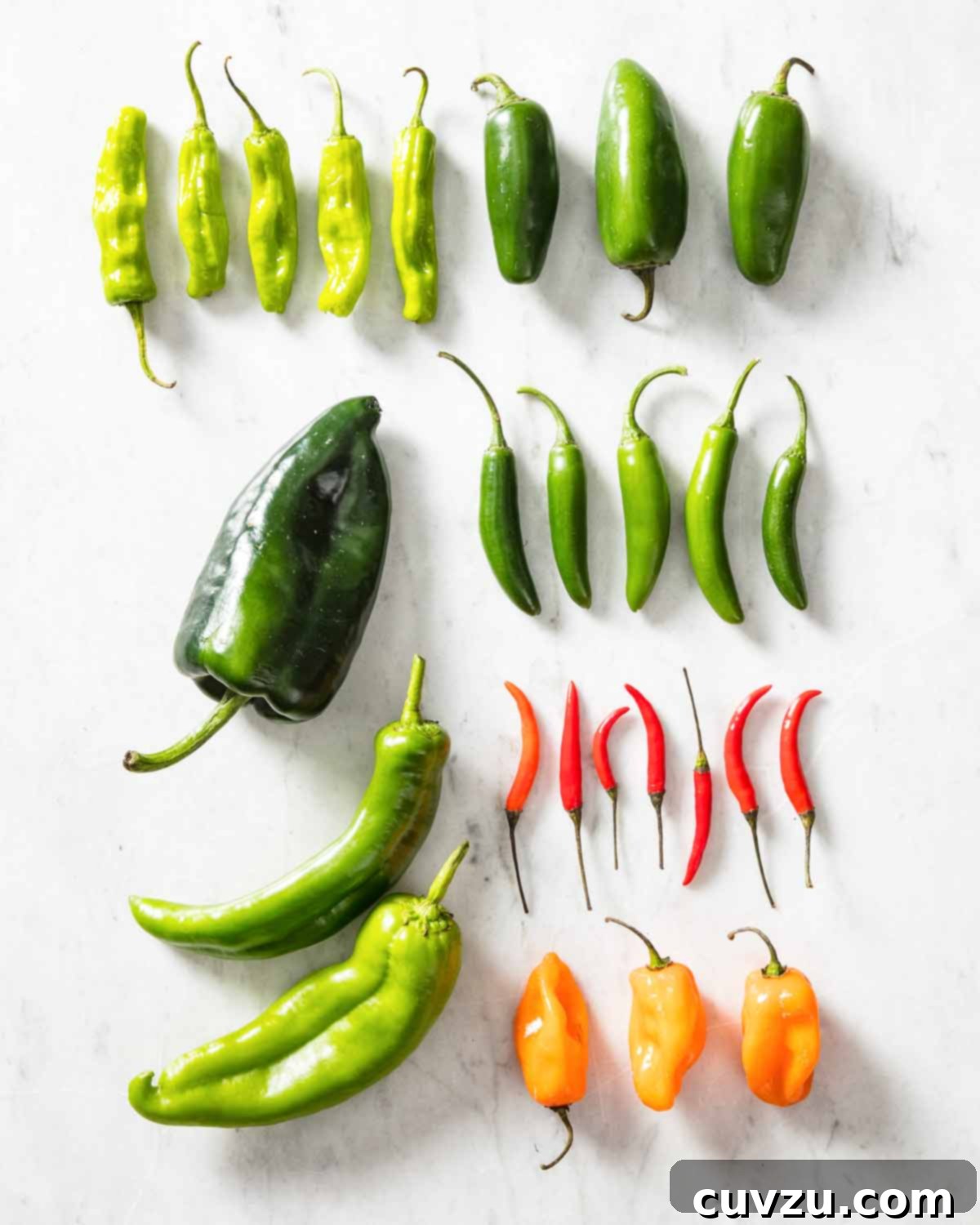
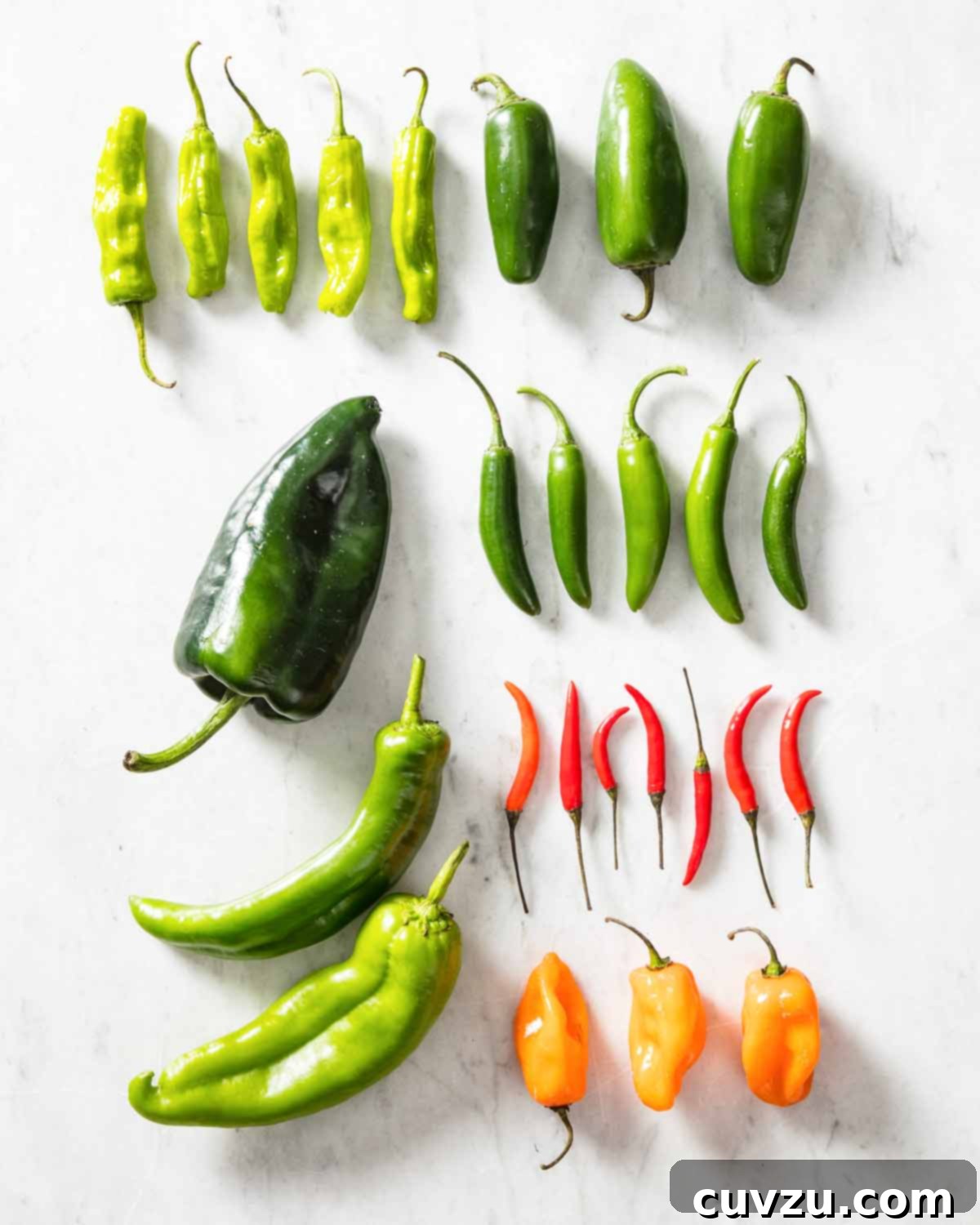
Mastering the Heat: A Comprehensive Guide to Fresh Chile Peppers and Their Flavors
“Chile peppers don’t just make foods hot; they also add nuanced layers of flavor to a dish.” This insightful observation, found in America’s Test Kitchen’s latest tome, The Complete Plant-Based Cookbook, beautifully encapsulates the true essence of these remarkable ingredients. Anyone who has ventured beyond a simple bell pepper knows this to be profoundly true. The culinary landscape is rich with an astonishing array of chile peppers, each bringing its own distinct character, from subtle sweetness to exhilarating fire, and a spectrum of aromatic notes in between.
For home cooks and culinary enthusiasts alike, understanding the differences among common fresh chiles can unlock a world of flavor possibilities. This comprehensive guide serves as your essential primer, delving into the most frequently encountered fresh peppers available in most grocery stores. We’ll explore their unique characteristics, ideal applications, and even offer some expert advice on how to best showcase their inherent qualities, whether you’re seeking a gentle warmth or a bold, fiery kick. Get ready to elevate your cooking with the incredible versatility of fresh chiles.
The Vibrant World of Fresh Chiles: More Than Just Heat
While the initial thought associated with chile peppers often revolves around their heat, their true magic lies in the diverse flavor profiles they offer. From bright and citrusy to earthy and smoky, each chile variety boasts a unique personality. Just as wine connoisseurs distinguish between grape varietals, passionate cooks learn to appreciate the subtle differences that various chiles bring to a dish. Your personal preference should always be your guide; what one person considers pleasantly warm, another might find intensely hot. This guide aims to help you navigate this flavorful journey, ensuring you choose the right pepper for your palate and your recipe.
Understanding Chile Heat: The Scoville Scale Explained
The heat of a chile pepper is measured using the Scoville Heat Unit (SHU) scale, a system developed by American pharmacist Wilbur Scoville in 1912. This scale quantifies the concentration of capsaicin, the chemical compound responsible for the burning sensation. While our guide uses a simple asterisk system for relative heat levels (* = Mild, ** = Medium, *** = Hot, **** = Very Hot), understanding the Scoville scale provides a more precise context:
- Mild (500 – 2,500 SHU): Offers a gentle warmth, often with more emphasis on flavor.
- Medium (2,500 – 20,000 SHU): Noticeable heat that complements other ingredients without overpowering them.
- Hot (20,000 – 70,000 SHU): Provides a significant kick, beloved by those who enjoy spicy food.
- Very Hot (70,000+ SHU): Reserved for adventurous palates, delivering intense, mouth-numbing heat.
Keep in mind that factors like growing conditions, ripeness, and even individual peppers within the same variety can influence their actual heat level. Always taste a small piece if you’re unsure!
Tips for Handling and Preparing Fresh Chiles
- Protect Your Hands: Capsaicin can irritate skin and eyes. Wearing gloves when handling hotter chiles (Jalapeños and above) is highly recommended.
- Avoid Cross-Contamination: After handling chiles, wash your hands thoroughly with soap and water, and avoid touching your eyes or face.
- Taming the Heat: The majority of a chile’s heat resides in its seeds and the white pith (placenta) inside. Removing these components can significantly reduce the pepper’s spiciness, allowing its flavor to shine through.
- Roasting for Flavor: Roasting chiles (especially Poblanos, Anaheims, and sometimes Jalapeños) can deepen their flavor, add a smoky note, and make their skin easier to remove, which is often desirable for certain recipes.
- Choosing Quality: Look for chiles that are firm, shiny, and free of blemishes or soft spots. The stem should look fresh and green.
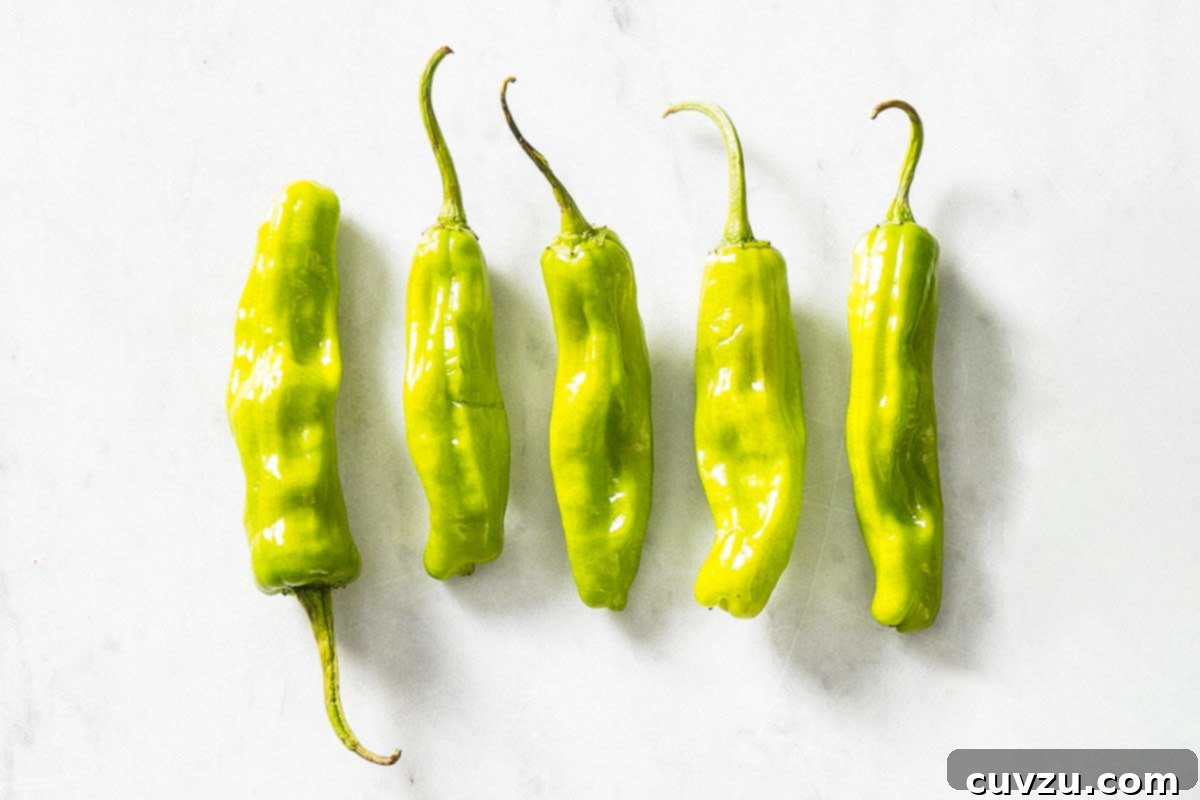
Shishito Peppers
Shishito peppers are renowned for their exceptional mildness and distinctive grassy, slightly citrusy flavor. These medium-sized Japanese chiles are easily recognizable by their long, slender, often wrinkled form and shiny, bright green hue. Their mildness makes them incredibly versatile, often enjoyed as a standalone dish rather than just an ingredient. They typically register a very low 50-200 Scoville Heat Units (SHU).
Heat Level: * (Mild)
Culinary Uses: Shishitos are perhaps most famously prepared by simply blistering them in a hot pan with a little oil until they soften and the skin chars in spots. A sprinkle of sea salt is often all they need. They make an excellent appetizer or side dish and can also be grilled or added to stir-fries for a gentle, fresh flavor. If Shishitos are unavailable, Padrón chile peppers make an excellent substitute, offering a similar mildness and delightful “culinary roulette” experience.
Chef’s Insight: The true charm of Shishitos lies in their playful unpredictability – approximately one in every ten to twenty peppers will surprise you with a burst of fiery heat! This unique characteristic adds an exciting, albeit low-stakes, element of surprise to your meal, much like a mild game of Russian roulette. Embrace the occasional spicy bite as part of the fun!
Poblano Peppers
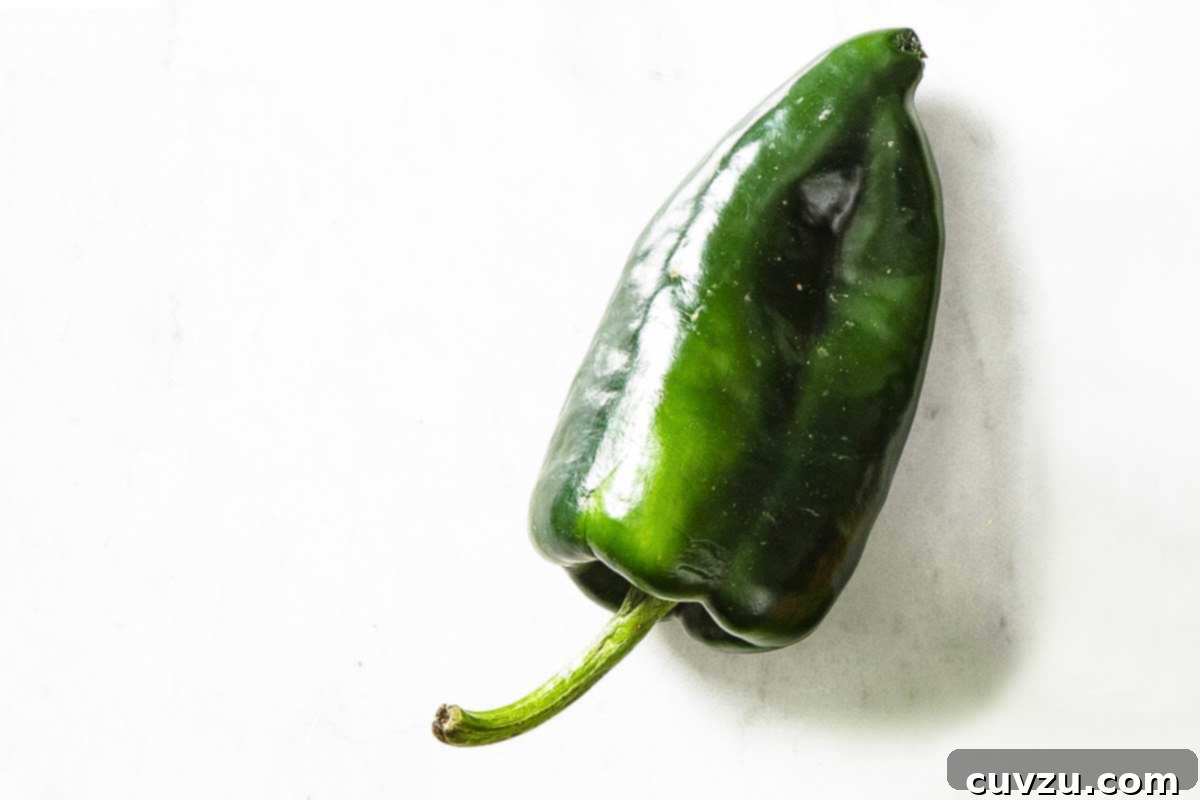
Poblano peppers are a staple in Mexican cuisine, prized for their mild heat and rich, earthy, vegetal flavor. These large, often triangular chiles transition in color from a deep green when fresh to a dark red-brown as they ripen. Their thick flesh and generous size make them ideal for various cooking methods, especially those involving stuffing or slow simmering. Poblanos typically fall into the 1,000-1,500 SHU range.
Heat Level: * (Mild)
Culinary Uses: Poblanos are exceptionally versatile. They are frequently roasted and peeled, which enhances their flavor and makes them perfect for sauces, salsas, and dips. Their substantial size and sturdy walls make them the quintessential pepper for stuffing with savory fillings like cheese, meats, or grains, then baking until tender – think classic Chiles Rellenos. They also contribute a wonderful depth to soups, stews, and braises. For a similar mildness and shape, Anaheim chiles can serve as a suitable substitute.
Chef’s Insight: We particularly appreciate how Poblanos impart a slow, steady undercurrent of heat and a robust earthy flavor to long-simmered dishes. Consider them for recipes like braised chicken with tomatillos, where their crisp vegetal notes blend beautifully with acidic and savory components. Roasting them beforehand not only deepens their flavor but also makes them more tender and easier to integrate into dishes.
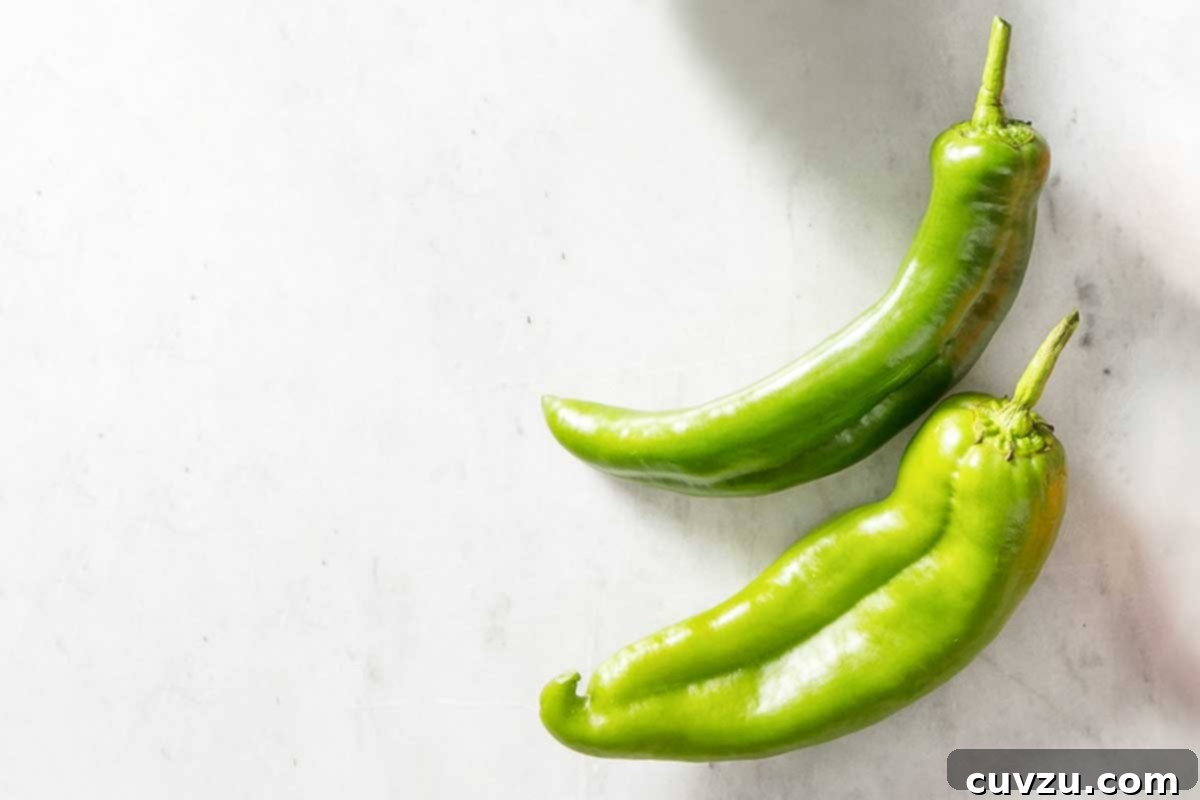
Anaheim Peppers
Anaheim peppers, also known as California or New Mexico chiles, offer a pleasant mild to medium heat and a distinctly tangy, slightly sweet, and vegetal flavor profile. These large, long, and skinny peppers transition in color from yellow-green to a vibrant red as they ripen. They are a beloved ingredient in Southwestern American cuisine, known for their approachable heat and versatile texture. Anaheims typically range from 500 to 2,500 SHU, placing them squarely in the mild to medium category.
Heat Level: ** (Mild to Medium)
Culinary Uses: Anaheim chiles are excellent for roasting, peeling, and incorporating into sauces, stews, and casseroles. Their mild heat makes them a great addition to dishes where you want chile flavor without overwhelming spiciness. They can be diced into salsas, added to scrambled eggs, or even used for mild chiles rellenos when a less intense flavor than Poblanos is desired. Poblanos make a good substitute if Anaheims are not available, though their flavor is generally earthier.
Chef’s Insight: The Anaheim pepper is a master at providing a slow, comforting warmth that perfectly complements rich and creamy dishes. They are particularly fantastic when paired with dairy and starches. Consider their unique ability to infuse a gentle heat into our green chile macaroni and cheese, where the creamy sauce and pasta help to mitigate and distribute their steady warmth, creating a harmonious and incredibly satisfying meal.
Jalapeño Peppers
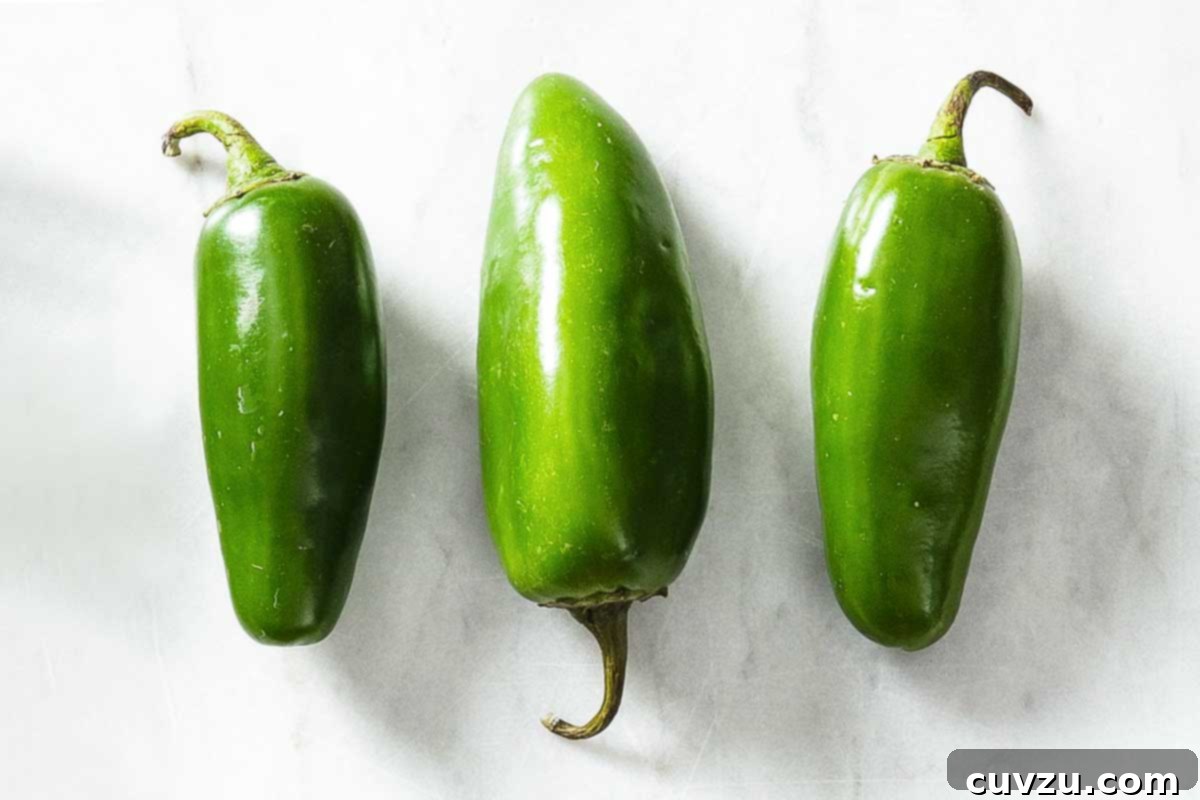
Jalapeños are arguably the most recognizable and widely used medium-hot chiles, celebrated for their straightforward, bright, and grassy flavor profile. These small to medium-sized peppers are typically smooth, shiny, and dark green, though they turn red as they fully ripen, often developing subtle lines or “corking” on their skin, which many consider a sign of extra heat. Jalapeños generally register between 2,500 and 8,000 SHU.
Heat Level: ** (Medium Hot)
Culinary Uses: Jalapeños are incredibly versatile, used in countless cuisines worldwide. They can be sliced into salsas, diced into guacamole, added to stir-fries, or pickled for a tangy, spicy condiment. They are also popular for stuffing, such as in jalapeño poppers, and can be grilled or roasted to mellow their heat and deepen their flavor. For a comparable heat and texture, serrano peppers are an excellent substitute, though they are often hotter.
Chef’s Insight: The beauty of jalapeños lies in their reliable and consistent flavor, providing a predictable level of heat and a fresh, vibrant crunch that enhances almost any dish. We particularly love the bright kick they bring to classics like guacamole, where their grassy notes complement the creamy avocado. They also add a delightful zing and warmth to comfort food, as seen in our cheese-crusted grilled cheese, where they cut through the richness with a welcome spark.
Serrano Peppers
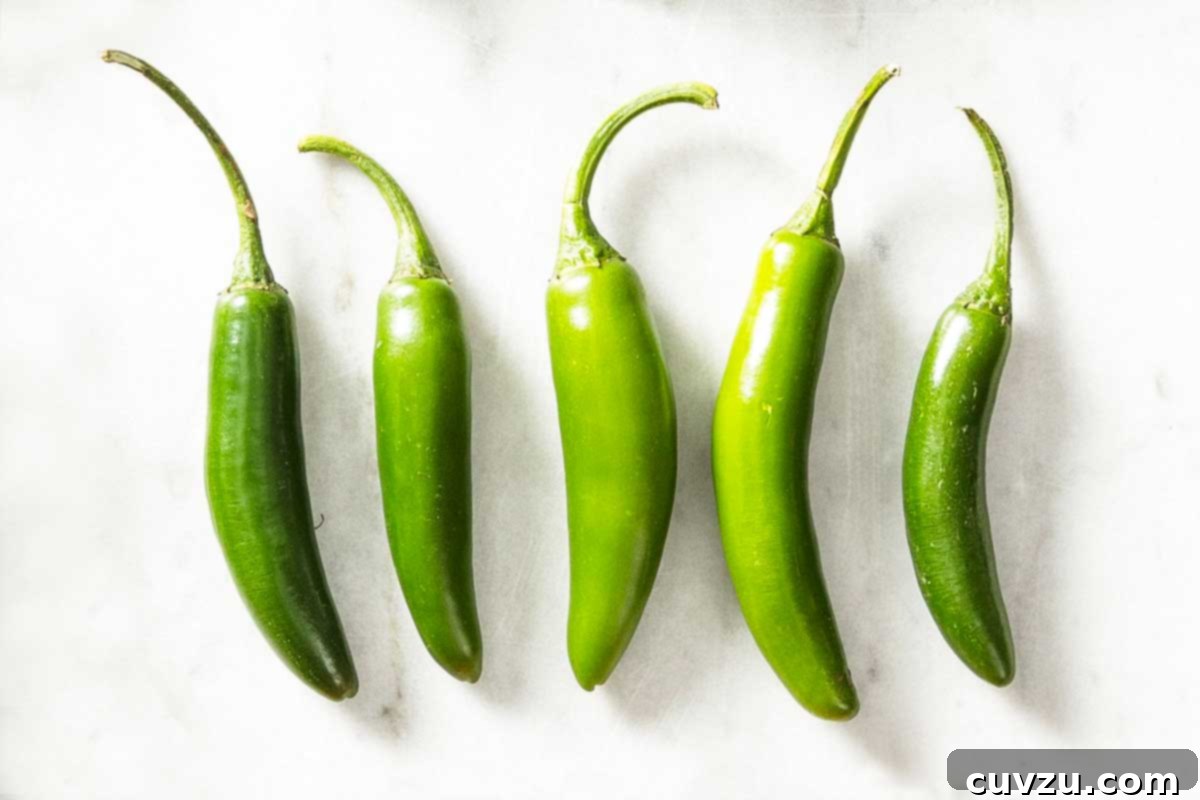
Serrano peppers are small, slender chiles packing a more significant punch than their jalapeño cousins. Typically dark green, though they can ripen to red, yellow, or orange, serranos are distinguished by their bright, clean, and distinctively citrusy flavor. Their firm flesh and compact size make them excellent for finely dicing. Serranos boast a heat range of 10,000 to 23,000 SHU, placing them firmly in the medium-hot to hot category.
Heat Level: *** (Hot)
Culinary Uses: Due to their intense heat and robust flavor, serranos are often used sparingly but effectively. They are fantastic when finely minced into fresh salsas, guacamole, and ceviche, where their raw vibrancy truly shines. They can also be added to stir-fries, curries, and sauces for a sharp, clean heat. Their small size means a little goes a long way. If you need a substitute, jalapeños are an option, but you may need to use more to achieve a similar level of heat, and the flavor profile will be slightly different (less citrusy).
Chef’s Insight: These lively peppers are incredibly versatile and can be used in almost any dish where you desire a sharp, clear heat, whether raw or cooked. We are particularly fond of their ability to cut through rich flavors, making them an ideal component in a vibrant slaw. For example, in our pulled pork tacos, a serrano-spiked slaw provides a crucial counterpoint to the rich, tender pork, adding a refreshing crunch and a thrilling pop of heat.
Thai Chiles
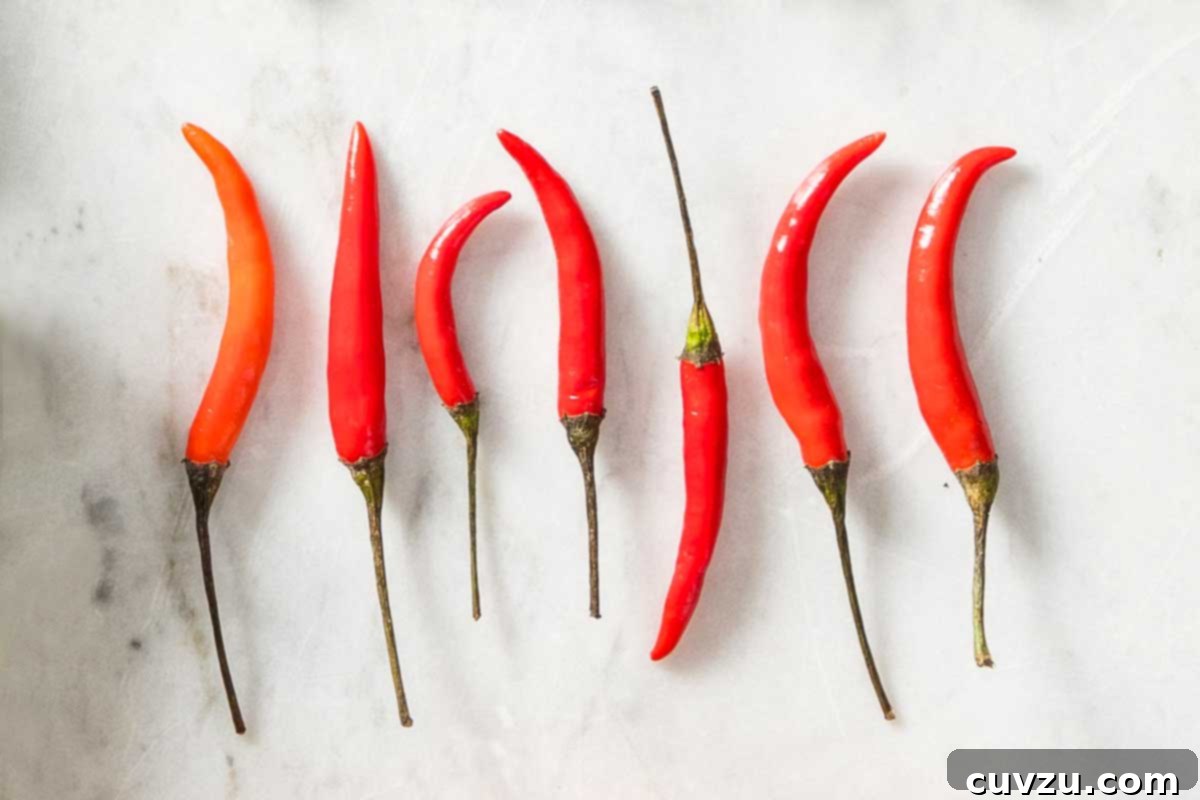
Thai chiles, often found in both bright red and vivid green varieties, are small yet mighty, embodying the phrase “good things come in small packages.” These narrow, petite peppers are known for their intense, upfront heat and a clean, almost peppery flavor that some liken to that of black peppercorns. They are a cornerstone of Southeast Asian cuisine, providing the characteristic fiery kick to many traditional dishes. Thai chiles typically range from 50,000 to 100,000 SHU, placing them firmly in the hot to very hot category.
Heat Level: *** (Hot)
Culinary Uses: Given their potent heat, Thai chiles are usually used sparingly, either whole in curries and soups (removed before serving for less heat) or finely minced into sauces, pastes, and stir-fries. They add an unmistakable heat and aromatic depth to dishes like green curry, tom yum soup, and various noodle dishes. When substituting, use habaneros with extreme caution and in half the quantity, as their heat is even more intense and their flavor profile more fruity.
Chef’s Insight: Despite their formidable heat, Thai chiles can surprisingly appeal to a wide audience when balanced with other flavors. Their clean heat integrates beautifully into complex dishes. A prime example is the slightly sweet, spicy, and salty Thai classicPad Gkaprow Mu, made with ground pork. Here, the sharp heat of the Thai chiles is mellowed and complemented by the aromatic basil, savory soy, and touch of sweetness, creating a harmonious dish that even those new to spicy food can often appreciate.
Habanero Peppers
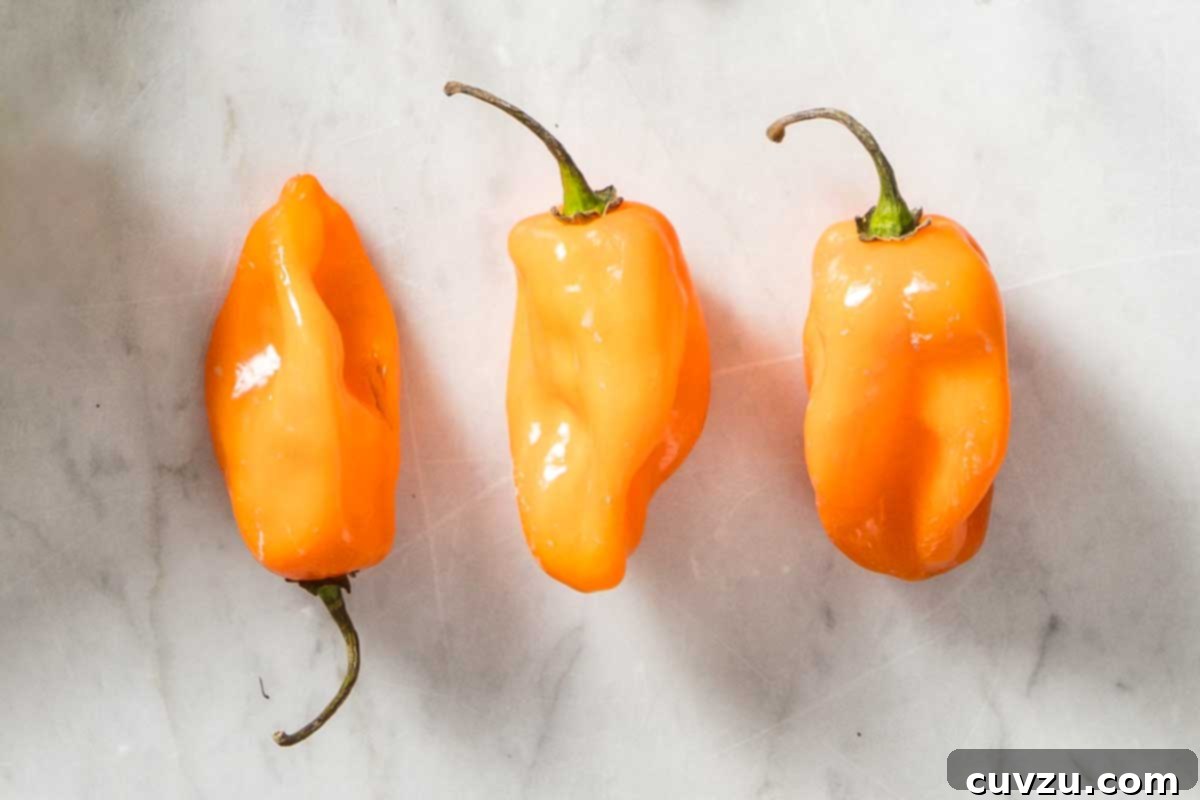
Habanero peppers are the champions of extreme heat among commonly available chiles, but they are equally celebrated for their distinctively floral and fruity aroma. These bulbous, often lantern-shaped peppers are typically bright orange, though red and even chocolate varieties exist. Their intense heat and complex tropical fruit notes make them a favorite for hot sauces and dishes where a truly fiery flavor is desired. Habaneros fall within a scorching range of 100,000 to 350,000 SHU.
Heat Level: **** (Very Hot)
Culinary Uses: Due to their extreme potency, habaneros must be used with caution and respect. They are excellent when minced very finely into salsas, marinades, and fruit-based sauces, where their fruity notes can complement sweet ingredients. They are also a key ingredient in many Caribbean and Central American dishes, lending their characteristic flavor and heat to stews and braises. If a substitute is absolutely necessary, use a double dose of Thai chiles, but be aware that the flavor profile will be less fruity and more direct heat.
Chef’s Insight: When working with these bold babies, always know what you’re getting yourself into! The habanero’s intense heat and unique flavor demand careful consideration and often a rich, fatty medium to mellow and distribute their fire. The lusciousness of braised pork in chile sauce, for instance, provides the perfect canvas to soak up and complement some of that incredible heat, allowing the habanero’s floral undertones to shine without completely overwhelming the palate. Always remember to use gloves and thoroughly clean your workspace after handling habaneros!
Embark on Your Chile Pepper Journey
From the subtle warmth of a Shishito to the fiery embrace of a Habanero, the world of fresh chile peppers is incredibly diverse and deeply rewarding for any adventurous cook. Each pepper offers a unique combination of heat, aroma, and flavor that can transform ordinary dishes into extraordinary culinary experiences. Don’t be afraid to experiment, taste, and discover your own favorite ways to incorporate these vibrant ingredients into your cooking.
By understanding the characteristics of each chile, you gain the power to fine-tune the heat and flavor of your meals, adding layers of complexity that will delight your palate. So, grab your gloves, pick your peppers, and start exploring the exciting, flavorful journey that fresh chiles have to offer!