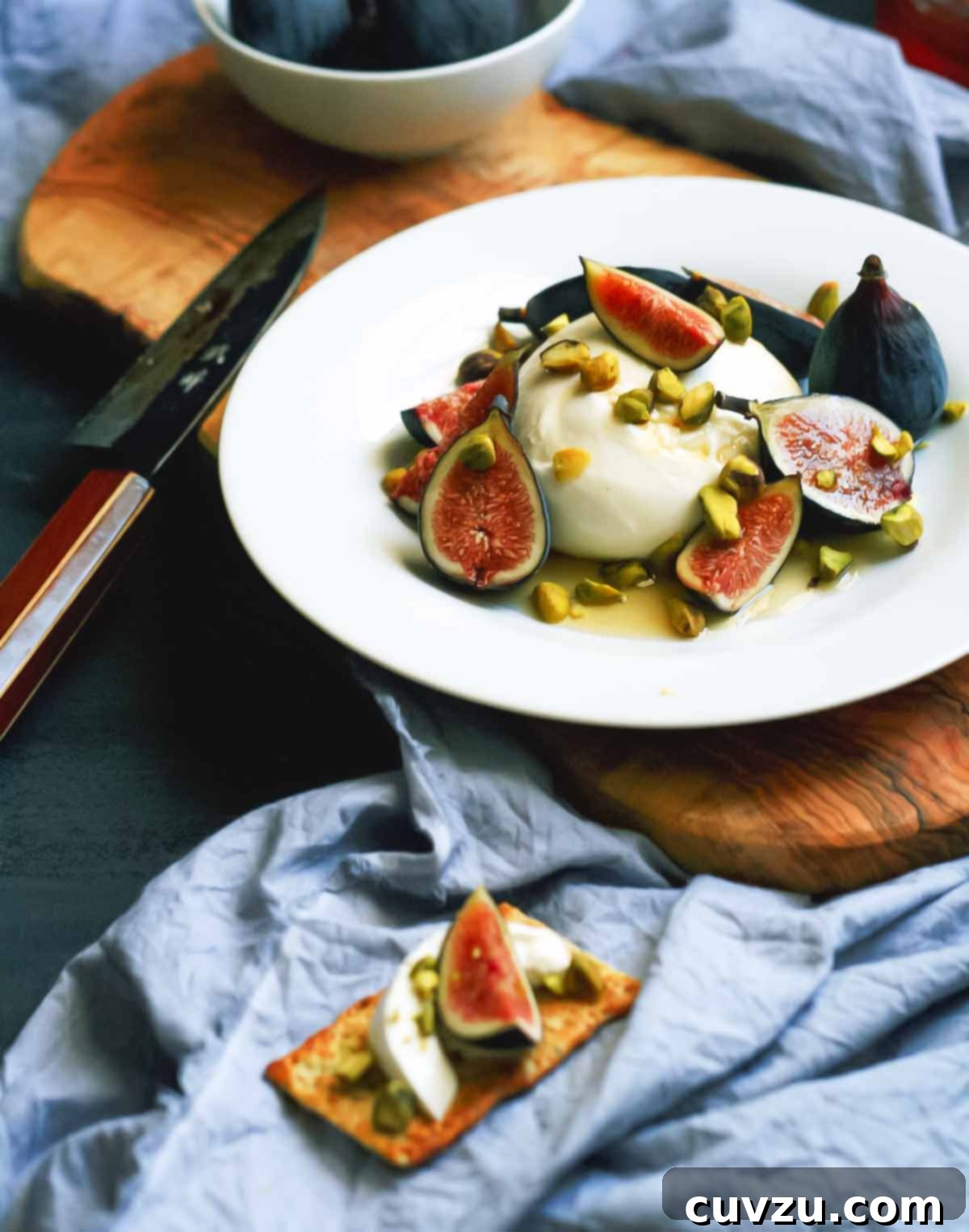
Torn Figs and Creamy Burrata: An Effortless Gourmet Appetizer
Elevate your entertaining with this incredibly simple yet sophisticated appetizer featuring luscious figs and rich burrata cheese. This recipe isn’t about complex techniques; it’s about celebrating the exquisite quality of fresh, seasonal ingredients. When your components are this good, minimal effort yields maximum flavor. We encourage you to seek out the finest figs and burrata available to truly make this dish shine.
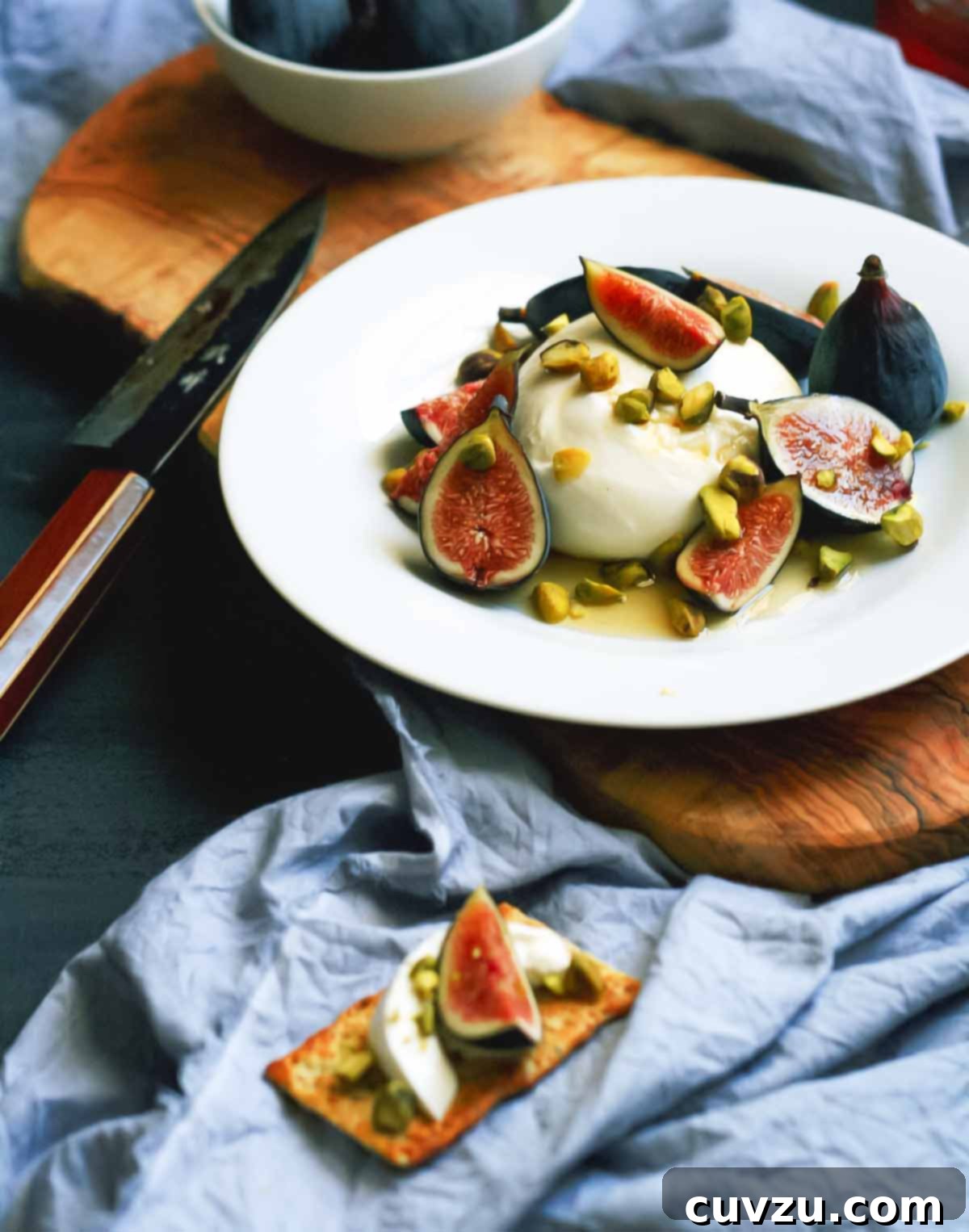
As culinary expert Michael Chiarello famously stated, “This figs and burrata cheese recipe is a perfect example of how having burrata cheese on hand means you don’t need a recipe. You just need to figure out what else you want on the plate.” This sentiment perfectly captures the essence of burrata – it’s a star ingredient that effortlessly transforms any accompaniment into a culinary experience.
The Irresistible Allure of Figs and Burrata
There’s a reason this pairing has become a modern classic. It’s a symphony of textures and flavors that tantalizes the palate. Understanding each component individually helps appreciate their harmonious dance on the plate.
Spotlight on Figs: Nature’s Sweet Jewels
Figs are truly a gift from nature, arriving in their prime during late summer and early fall. Their delicate, thin skin encases a vibrant, honeyed pulp studded with tiny, crunchy seeds. The texture is uniquely soft and juicy, offering a subtle sweetness that is both refreshing and deeply satisfying. Varieties like Mission figs, often preferred for this recipe, boast a deep purple hue and an intensely sweet flavor. Brown Turkey figs are also excellent, typically larger and with a slightly less sweet profile, while Kadota figs are green and mildly sweet.
Beyond their delicious taste, figs are packed with nutritional benefits. They are an excellent source of dietary fiber, promoting digestive health. They also provide essential minerals like potassium, calcium, magnesium, and iron, along with vitamins K and B6. Their natural sugars make them a wholesome alternative to processed sweets, and their antioxidants contribute to overall well-being. The beauty of figs, however, is their fleeting season. They ripen quickly and are highly perishable, demanding to be enjoyed fresh within a few days of purchase. This urgency only adds to their seasonal charm and makes enjoying them a special occasion.
Discovering Burrata: The Creamy Heart of Italian Cheese
Burrata, meaning “buttered” in Italian, is a fresh Italian cow milk cheese, distinguished by its irresistible creamy interior. Originating from Puglia, Italy, it starts with an outer shell of solid mozzarella, often in the form of a pouch, which is then filled with a rich mixture of stracciatella (shreds of mozzarella) and cream. This luscious filling gives burrata its signature soft, buttery texture and rich, milky flavor that sets it apart from traditional mozzarella. When gently torn open, the velvety cream oozes out, creating a visually stunning and utterly decadent experience.
The richness of burrata provides a perfect counterpoint to the sweetness of the figs. Its mild, fresh dairy notes cleanse the palate and enhance the fruit’s natural sugars, creating a balanced and addictive flavor profile. The contrast between the firm exterior and the liquid interior of burrata adds another layer of intrigue to this simple dish.
Torn Figs and Burrata Cheese with Crisped Rosemary and Pistachios
Figs are incredibly juicy, soft, and possess a subtle sweetness that pairs exquisitely with rich, creamy cheese. Given their delicate nature, fresh figs should be enjoyed within a few days of purchase for optimal flavor and texture. This recipe ensures they are highlighted beautifully.
By David Leite
Appetizers
Italian
6 servings
362 kcal
20 minutes
5 minutes
35 minutes
Ingredients
- 1/4 cup extra-virgin olive oil, plus more for drizzling
- 3 rosemary sprigs
- About 18 perfectly ripe figs*, preferably Mission
- 12 ounces (3 balls) burrata
- Sea salt, to taste
- Freshly ground black pepper, to taste
- 1/4 cup unsalted pistachios, chopped, for garnish
Instructions
- Heat a small saucepan over medium heat. Add the 1/4 cup of olive oil and the rosemary sprigs. Allow the rosemary to frizzle gently until the leaves become fragrant and slightly crisp, typically just a few minutes. Be careful not to burn them.
- Carefully remove the rosemary sprigs from the oil and place them on a paper towel-lined plate to drain and cool for at least 10 minutes. Once cooled, strip the crisped leaves from their woody stems, discarding the stems. The infused oil can be reserved for other uses or used for drizzling.
- Prepare the figs: Gently tear or slice each fig into 4 irregular pieces. This rustic tearing method enhances the natural beauty of the figs and makes for a more appealing presentation than precise cuts. Divide the fig pieces evenly among 6 individual plates or arrange them artfully on a large serving platter.
- Prepare the burrata: Tear each ball of burrata in half, revealing its creamy interior. Place a portion of the torn burrata alongside the figs on each plate. The contrast between the vibrant figs and the pristine white burrata is visually striking.
- Assemble and season: Sprinkle the crisped rosemary leaves and the chopped pistachios generously over the burrata cheese and figs. Season the dish with a pinch of sea salt and a generous grind of fresh black pepper. Finish by drizzling a little extra-virgin olive oil over each plate, enhancing the flavors and adding a beautiful sheen. Serve immediately.
Notes
*How do I choose figs?
Selecting fresh figs requires a keen eye and a gentle touch. For this recipe, where figs are the star, perfect specimens are crucial. Look for plump, soft figs that have a satiny skin and yield slightly when gently pressed. They should feel tender but not mushy. Avoid figs that are hard, shriveled, or show signs of bruising or mold. If you’re fortunate enough to have a fig tree, pick them when they’re still warm from the sun – that’s often the peak of ripeness! When buying from a store, open the plastic container and examine them closely. If they are firm or appear less than perfect, save them for cooking applications like crumbles or jams. Remember, the entire fig, except for the stem, is edible, including the skin. However, you can peel them if you prefer a smoother texture, though it’s not necessary for this dish.
Adapted From
Bottega
Buy On Amazon
Nutrition
Calories: 362 kcal
Carbohydrates: 30 g
Protein: 12 g
Fat: 26 g
Saturated Fat: 10 g
Monounsaturated Fat: 8 g
Cholesterol: 40 mg
Sodium: 99 mg
Fiber: 5 g
Sugar: 25 g
Nutrition information is automatically calculated and should only be used as an approximation. Individual results may vary based on specific ingredient brands and preparation methods.
Tried this recipe?
We’d love to see your creations! Mention @leitesculinaria or tag #leitesculinaria on Instagram!
Recipe Testers’ Reviews
Kim Venglar
I was looking for something delightful to do with the abundance of figs from my tree when I stumbled upon this gem of a recipe. Having never tried burrata before, I was pleased to find it readily available at my local Central Market. With all the exquisite ingredients in hand, assembling this simple plate of fantastic flavors was a breeze. I initially worried the rosemary might be too overpowering, but it turned out to be just the right, subtle herbaceous note. I served this elegant dish with crisp bread rounds from the bakery, and the combination of flavors was simply unparalleled. Every guest eagerly requested this surprisingly simple yet utterly impressive recipe.
Elsa M. Jacobson
I was pleasantly surprised to discover fresh figs on the counter at my favorite Middle Eastern bakery, a stop I often make on my way to the farmers market. I couldn’t resist buying them. At the farmers market, my next mission was to secure some burrata from the cheese stand, knowing it always sells out quickly. This recipe is truly a quick and impressive treat, so delicious and satisfying that it would be incredibly easy to enjoy a double portion without hesitation.
A notable discovery from this recipe is the crisped rosemary technique itself. It has wonderful potential for various other culinary uses, as it transforms fresh rosemary into a user-friendly, textural herb. This crisped rosemary could be beautifully sprinkled atop or mixed into other creamy cheeses, such as fresh chèvre (imagine rolling a chèvre log in it for full coverage!) or even cream cheese or cottage cheese. Beyond cheeses, it would also make an excellent garnish sprinkled atop a fresh garden salad, or even over simple tomato slices served as a side dish, adding an unexpected layer of flavor and crunch.