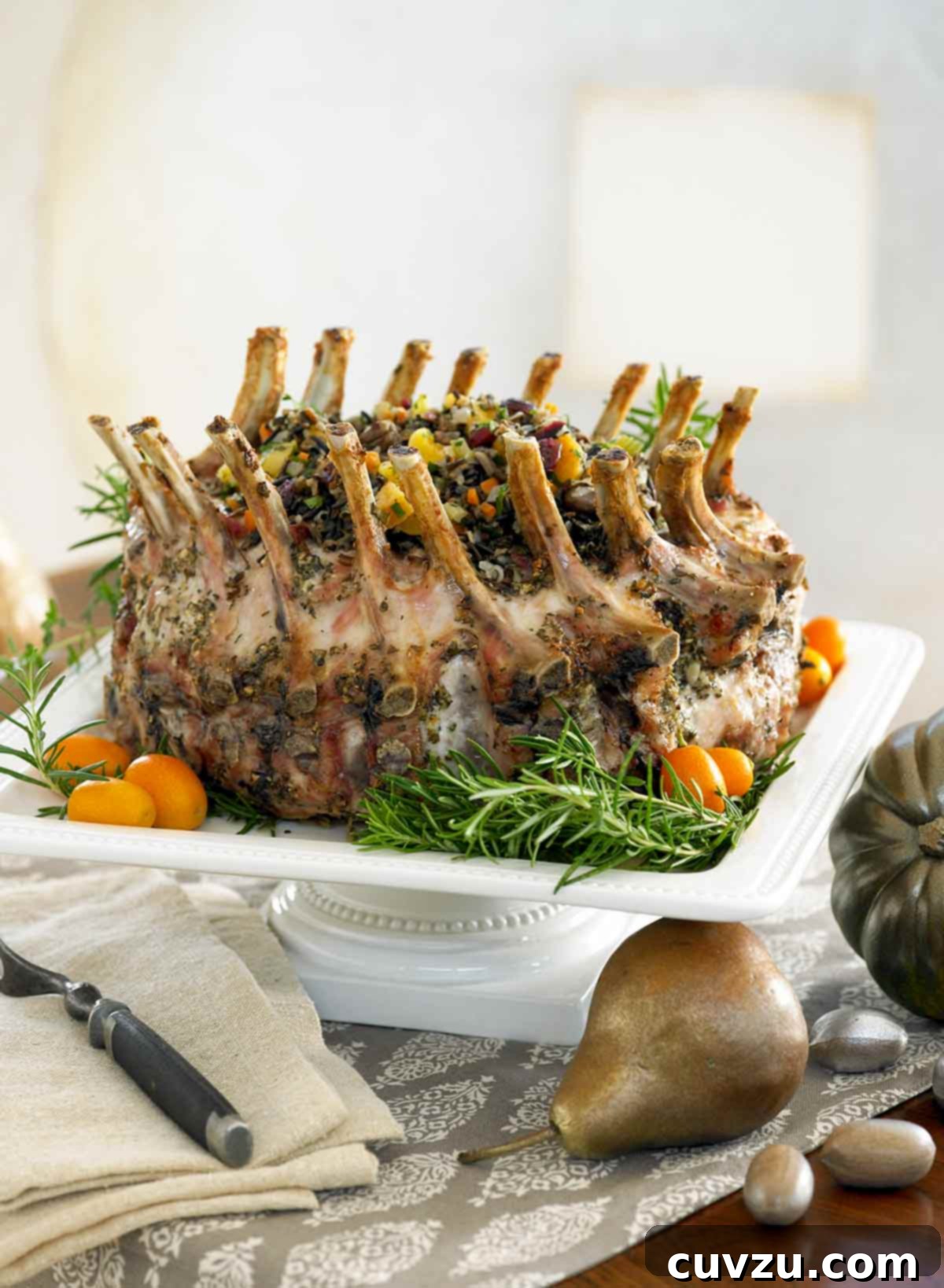
The Ultimate Garlic and Herb-Rubbed Pork Crown Roast: A Festive Centerpiece
Elevate your holiday table or any special gathering with this truly magnificent garlic-herb pork crown roast. This recipe promises not just a visually stunning centerpiece, but also an incredibly flavorful and succulent dish that will leave a lasting impression on your guests. The secret to its unparalleled tenderness and rich taste lies in a carefully crafted brine, followed by an aromatic rub of garlic and fresh herbs, and finally, a perfect oven roast. While the accompanying wild rice with roasted chestnuts and cranberries fills the center, the star of the show remains the beautifully prepared pork, guaranteed to be juicy and packed with flavor.
Why a Pork Crown Roast is the Perfect Choice for Special Occasions
A pork crown roast is more than just a meal; it’s a statement. Its regal appearance, with the ribs gracefully arching upwards to form a “crown,” makes it a spectacular presentation on any holiday buffet or dining table. This showstopping cut, often reserved for festive celebrations like Christmas, New Year’s, or significant anniversaries, transforms an ordinary dinner into an extraordinary event. Beyond its impressive visual appeal, pork offers a delicious and often more economical alternative to traditional beef roasts, without compromising on flavor or elegance.
The Importance of Brining: Unlocking Unmatched Juiciness and Flavor
One of the most crucial steps in this recipe, and often overlooked in others, is brining the pork crown roast. When I first developed this recipe, I initially skipped the brining step and was frankly quite disappointed by how bland and dry the meat turned out. Brining is a simple yet revolutionary technique that guarantees a tender, juicy, and remarkably flavorful result every time. Here’s why it’s indispensable:
- Moisture Retention: Brining works by allowing the meat to absorb moisture, along with salt and sugar, through osmosis. This process helps to break down muscle fibers and prevents the meat from drying out during cooking, even if slightly overcooked. The result is consistently moist and tender pork.
- Enhanced Flavor: The brine is infused with a medley of aromatic herbs and spices like juniper berries, sage, thyme, bay leaf, cloves, and peppercorns. These flavors penetrate deeply into the pork, seasoning it from within and ensuring every bite is rich and complex, a stark contrast to an unbrined roast that often tastes one-dimensional.
- Improved Texture: Beyond just moisture, the salt in the brine helps to denature the proteins in the pork, leading to a more tender and less chewy texture. This is especially beneficial for leaner cuts of pork, ensuring a succulent mouthfeel.
Planning ahead for the 24-hour brining period is essential, but the minimal effort yields immense rewards in the final dish. You’ll find yourself wondering why you ever cooked pork without it!
The Garlic and Herb Rub: Aromatic Perfection
After brining, the pork receives a generous coating of a vibrant garlic and herb paste. This rub acts as a second layer of flavor, creating a beautiful crust during roasting and infusing the surface of the meat with pungent garlic, earthy sage, and fragrant thyme. The olive oil in the paste helps to bind these aromatics and ensures even distribution, while also contributing to the crisping of the skin. Don’t be shy when applying the rub; make sure to get it into every crevice, inside the cavity, and between the bones for maximum flavor impact.
Filling the Crown: A Culinary Choice
Traditionally, the center of a pork crown roast is filled with either a bread or rice stuffing. However, much like preparing a turkey, I prefer to roast the pork without any stuffing directly in the cavity. The reason is simple: by the time the stuffing cooked through to a safe temperature, the pork meat would likely be overcooked and dry. To maintain the optimal doneness of the pork while still enjoying a delicious accompaniment, I recommend preparing your stuffing or side dish separately. For this recipe, my absolute favorite accompaniment, and the one that perfectly complements the rich flavors of the pork, is Wild Rice with Roasted Chestnuts and Cranberries. It’s a festive and flavorful side that can be elegantly arranged in the roast’s cavity just before serving, making for an even more stunning presentation.
Sourcing Your Crown Roast: A Butcher’s Delight
A pork crown roast is not an everyday item you’ll find readily available in most supermarket meat cases. You will need to special-order it from a reputable butcher. This is where your relationship with a good butcher truly shines. Let them know how many guests you will be serving to determine the appropriate size of the crown roast. A good rule of thumb is to plan on serving 1 or 2 chops per person. Butchers—real butchers—appreciate customers who ask for classic cuts like a crown roast. It signals to them that you value quality and tradition, and you might just earn yourself a spot as “Pork Royalty” in their eyes!
Expert Tips for Roasting a Perfect Pork Crown Roast
Achieving a perfectly cooked pork crown roast involves a few key steps and attention to detail. Follow these guidelines to ensure a succulent and memorable meal:
- Two-Stage Roasting: The recipe employs a two-stage roasting method. Starting at a high temperature (450°F / 230°C) for the initial 15 minutes helps to create a beautiful, caramelized crust on the exterior of the pork. After this initial blast, the temperature is lowered (to 325°F / 160°C) for the remainder of the cooking time, ensuring the interior cooks evenly and gently without drying out.
- Monitor Internal Temperature: An instant-read thermometer is your best friend when roasting. Insert it into the thickest part of the meat, making sure it doesn’t touch any bone. The pork crown roast is done when it registers between 145° to 150°F (63° to 66°C). Remember that pork is safe to eat at a lower internal temperature than many people assume, and cooking to 145°F will yield a juicy, slightly pink result that is incredibly tender.
- The All-Important Rest: Once the roast reaches its target internal temperature, remove it from the oven and tent it loosely with foil. Allow the meat to rest for at least 20 minutes before carving. This resting period is crucial; it allows the juices within the meat to redistribute throughout the roast, resulting in a more tender and juicy final product. If you cut into the roast too soon, the juices will simply run out, leaving you with drier meat.
- Protect the Rib Bones: To prevent the delicate rib bones from charring or burning during the long roasting process, you can wrap each exposed bone end with a small piece of aluminum foil. This minor step helps to keep the “crown” looking pristine and beautiful for presentation.
Equipment Essentials
While a crown roast might seem daunting, the equipment required is quite straightforward:
- Plastic Oven Bags: For brining, turkey-sized plastic oven bags (like those made by Reynolds) are ideal. They are food-safe, strong, tear-resistant, and come with twist ties. It’s recommended to use two bags, one inside the other, for a double thickness to ensure no leaks. Avoid using plastic garbage bags, as they are not intended for food storage and may contain harmful chemicals.
- Mortar and Pestle or Spice Grinder: Essential for freshly crushing juniper berries, allspice berries, and peppercorns, which releases their potent aromatics and enhances their flavor in the brine. If you don’t have these tools, a heavy lock-top plastic bag and the bottom of a small, heavy saucepan can work wonders for crushing spices.
- Large Roasting Pan: A sturdy roasting pan large enough to comfortably hold the crown roast is necessary.
- Instant-Read Thermometer: As mentioned, this is vital for ensuring perfect doneness.
- Carving Fork and Knife: For effortless carving and serving.
Carving and Serving Your Magnificent Crown Roast
Once rested, transfer the pork crown roast to a warmed platter, ensuring the rib bones face gracefully upward. This is your moment to showcase its beauty. Now is the time to fill the cavity:
- With Wild Rice: Generously fill the center cavity with the prepared Wild Rice with Roasted Chestnuts and Cranberries. Scatter any remaining rice around the base of the roast for a truly abundant display.
- Alternative Fillings: If you prefer, serve your wild rice or bread stuffing on the side, or for a simpler yet elegant touch, fill the cavity with a vibrant bouquet of fresh herbs such as rosemary, sage, and thyme. This adds a wonderful aromatic element and a pop of color.
To carve the roast, use a sturdy carving fork to steady it on the platter. Then, with a sharp carving knife, cut cleanly between the individual rib bones to separate the chops. Each chop will offer a delightful portion, and you can serve 1 or 2 chops per person, depending on appetite and other dishes served.
Garlic and Herb-Rubbed Pork Crown Roast
David Leite
Equipment
-
2 turkey-sized plastic oven bags
Ingredients
- One (8- to 10-pound) crown roast of pork, (about 14 to 22 ribs)
For the juniper brine
- 1/2 cup kosher salt
- 1/2 cup sugar
- 3 sage leaves
- 3 sprigs thyme
- 1
bay leaf - 4 whole cloves
- 1 teaspoon juniper berries, crushed
- 1 teaspoon allspice berries, crushed
- 1/2 teaspoon peppercorns, crushed
- 4 cups cool water
- 4 cups ice water
For the herb and garlic paste
- 4 large cloves garlic, minced
- 1 tablespoon finely chopped sage leaves
- 1 tablespoon finely chopped thyme leaves
- 1/4 cup extra-virgin olive oil
- 2 teaspoons kosher or sea salt
- 1/2 teaspoon freshly ground pepper
- Wild Rice with Roasted Chestnuts and Cranberries
Instructions
Planning ahead
-
You need to prepare the juniper brine and start brining the crown roast of pork 24 hours before you plan to start roasting it. Have ready a bowl large enough to hold the roast. Place one plastic oven bag inside the second bag to create a double thickness; then place these bags, open wide, in the bowl. Fold back the top one-third of the bags, making a collar (this helps to keep the top of the bag open). Remove the crown roast of pork from its wrapping. Place the pork inside the double-thick bags, with the rib bones pointing upward, and unfold the collar.
Make the brine
-
Combine the salt, sugar, sage, thyme, bay leaf, cloves, juniper and allspice berries, peppercorns, and cool water in a 3-quart saucepan. Bring to a boil over high heat, stirring to dissolve the salt and sugar. Boil for 3 minutes. Remove from the heat. Add the ice water, stir, and set aside to cool completely.
-
Pour the cooled brine over the crown roast of pork. Draw up the top of the inner bag, squeezing out as much air as possible, and secure it closed with a twist tie. Do the same for the outer bag. The pork should be completely submerged in the brine. Place the pork in the refrigerator to brine for 24 hours.
Make the roast
-
Remove the crown roast from the refrigerator 1 1/2 hours before you plan to roast it. Set the bowl aside, and place the brined pork, still in its bags, in the sink. Open and discard the bags, brine, and any herbs or spices remaining on the pork. Rinse the crown roast under cold water and pat thoroughly dry with paper towels. Transfer to a shallow roasting pan.
-
Make the herb and garlic paste by combining the garlic, sage, thyme, olive oil, salt, and pepper in a small bowl. Rub the herb paste generously over all the crown roast, including inside the cavity and between the bones. Set the crown roast, rib bones down (upside down), in the roasting pan. Set aside to marinate at room temperature for up to 1 hour.
-
Thirty minutes before you plan to roast the pork, position a rack in the lower third of the oven. Preheat the oven to 450°F (230°C).
Cook the crown roast
-
Roast the crown roast for 15 minutes. Lower the oven temperature to 325°F (160°C) and continue roasting the meat for 1 hour. Check the temperature of the crown roast. The crown roast is done when an instant-read thermometer inserted into the thickest part not touching bone registers 145° to 150°F (63° to 66°C). (A 9-pound crown roast should take about 1 3/4 hours to reach 145°F [63°C]). Keep in mind that the temperature of the meat will increase another 5° to 10°F as the meat rests before carving. Let the meat rest, tented with foil, for 20 minutes to allow the juices to set.
Serve the roast
-
Place the pork crown roast on a warmed platter so the rib bones face upward. Fill the cavity with the wild rice and scatter the remaining wild rice around the base of the roast. Alternatively, serve the wild rice or the bread stuffing on the side, or place the crown roast on a bed of herbs and fill the cavity with a bouquet of the same herbs. To carve the roast, use a carving fork to steady the roast and cut between the rib bones to separate the chops. Serve 1 or 2 chops per person.
Notes
Pork Crown Roast Royalty Note
Butchers–real butchers–love it when their customers are gutsy and ask for classic cuts: Entrecôte, prime rib, pork crown roast. Too often these days the orders they fill are for skinless, boneless chicken breast or thighs, lean ground chuck, turkey burgers. Ask for a kingly sized pork crown roast, and you’ll be looked upon as Pork Royalty forever more.
Using A Cooking Bag To Prepare The Pork Crown Roast
Plastic oven bags made by Reynolds are found with other food storage bags at supermarkets. Buy the turkey-size bags. They are food-safe, plus they are big, strong, tear-resistant, and come with twist ties. I do not recommend using plastic garbage bags because they are not intended for food storage. The easiest way to crush whole spices is to use a mortar and pestle or a spice grinder. If you have neither of these kitchen tools, place the whole spices in a heavy lock-top plastic bag; seal the bag, pressing out all the air; and pound the spices with the bottom of a small, heavy saucepan.

Adapted From
The Christmas Table
Buy On Amazon
Explore More with AI
Nutrition
Nutrition information is automatically calculated, so should only be used as an approximation.