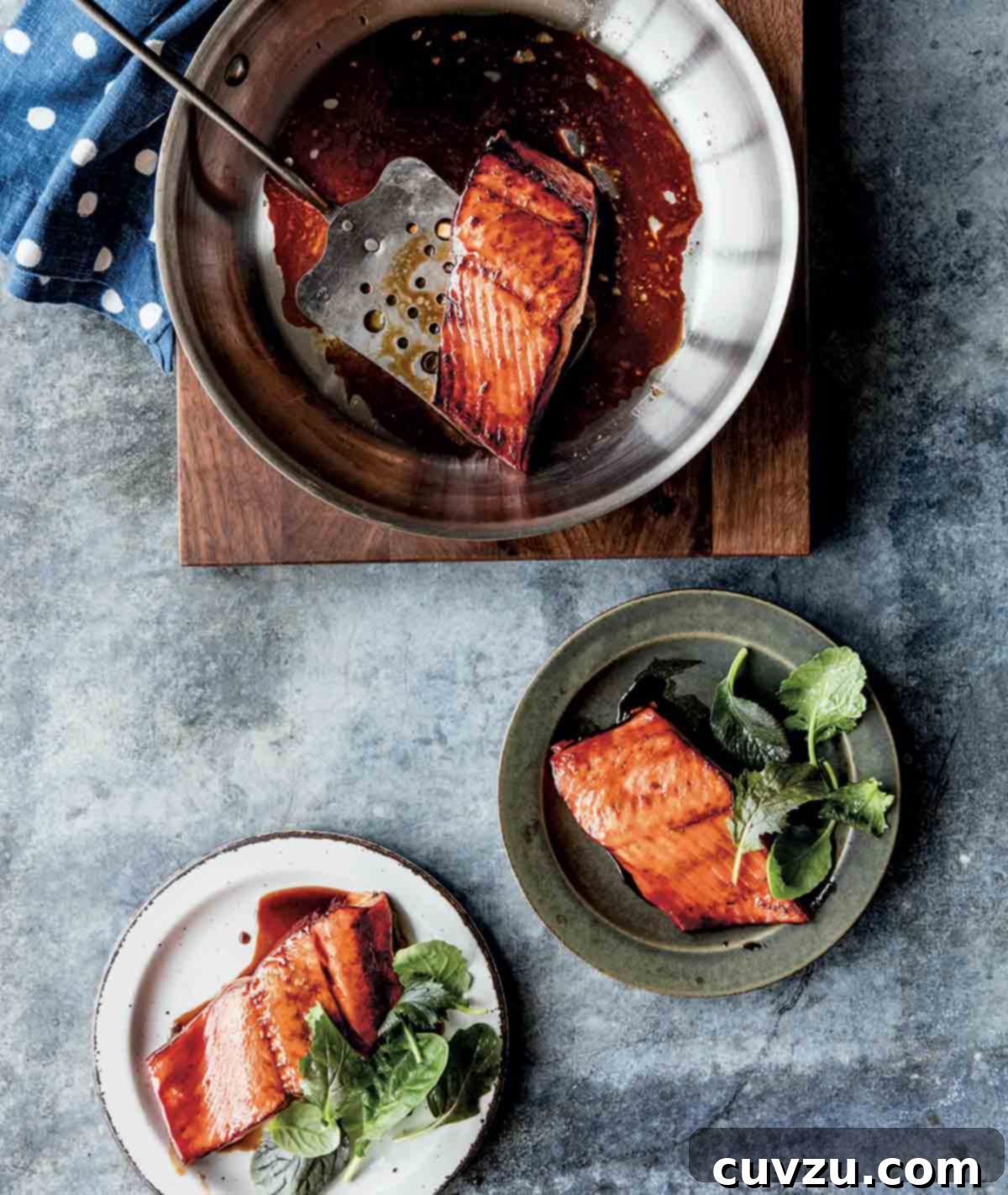
Experience Authentic Japanese Flavors with Our Easy Salmon Teriyaki Recipe
Unlock the secret to perfectly glazed fish with our exceptional Salmon Teriyaki recipe. Moving far beyond the overly sweet, store-bought sauces, this dish embraces a traditional Japanese marinade that creates a beautifully balanced, succulent salmon fillet with a delightful, savory-sweet glaze. It’s a simple yet profoundly satisfying meal that brings authentic Asian flavors right to your dinner table, proving that true culinary excellence doesn’t have to be complicated.
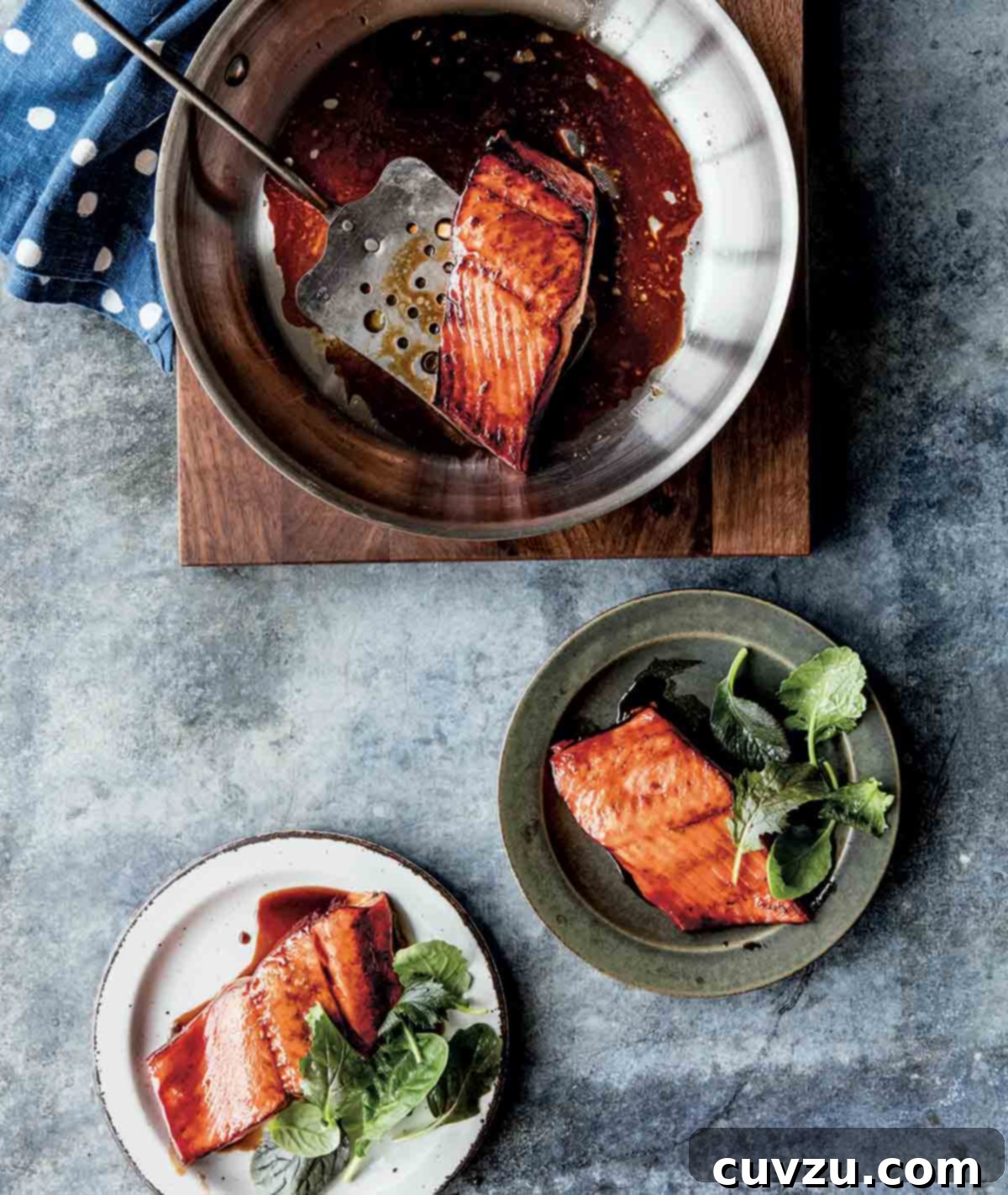
The Art of Teriyaki: A Journey Beyond Sweetness
Teriyaki, at its heart, is a traditional Japanese cooking method. The word itself is derived from “teri” (照り), referring to the glossy sheen imparted by the sauce, and “yaki” (焼き), meaning to grill or broil. In its authentic form, it involves marinating meat or seafood in a delicately balanced soy sauce-based mixture, then grilling or broiling it to achieve that signature glazed finish. Unfortunately, outside of Japan, the term “teriyaki” has often become synonymous with a thick, cloyingly sweet, and sometimes overpowering sauce, a departure from its elegant origins.
Our recipe aims to reclaim the true essence of teriyaki, offering a sauce that is perfectly balanced in its sweet, savory, and umami notes. It enhances, rather than masks, the natural flavors of the salmon, creating a harmony that is characteristic of fine Japanese cuisine. You’ll find no unnecessary additives or excessive sugar here – just a pure, refined glaze that adheres beautifully to the fish, forming a delicate crust and tender, flaky interior.
More Than Just Salmon: The Versatility of Homemade Teriyaki Sauce
While our focus here is on exquisite salmon, the beauty of this traditional teriyaki sauce lies in its incredible versatility. Don’t feel like salmon tonight? No problem! This authentic glaze serves as a fantastic foundation for a myriad of other proteins and vegetables. Imagine succulent chicken thighs, tender slices of beef, firm tofu, or even hearty portobello mushrooms, all transformed by this simple yet profound marinade. It’s an indispensable staple for any home cook looking to infuse their meals with a touch of Japanese elegance, offering endless possibilities for delicious, healthy weeknight dinners or impressive entertaining.
Whether you’re glazing grilled skewers, stir-frying vegetables, or simply seeking to add a burst of umami to your favorite protein, this teriyaki sauce is your go-to. Its straightforward preparation makes it accessible for cooks of all skill levels, ensuring that a perfectly flavored meal is always within reach.
Mastering Perfectly Cooked Salmon: Tips for Success
Many home cooks approach cooking fish, especially salmon, with a touch of apprehension. The common fear is overcooking, which can quickly turn a beautiful fillet dry and unappetizing. However, achieving perfectly cooked, moist, and flaky salmon is far easier than you might think. It primarily requires attention and understanding the delicate nature of fish. Here are some indispensable tips we’ve gathered over the years to help you confidently prepare salmon that is cooked to perfection every single time:
- Stay Present in the Kitchen: The most crucial rule for cooking fish is to avoid multitasking. Fish cooks quickly, and even a minute too long can make a difference. Resist the urge to check your phone or wander off; devote your full attention to the pan. Your social media feed can wait until after you’ve enjoyed your perfectly cooked meal.
- Understand the “10-Minute Rule”: A reliable guideline is to cook fish for approximately 10 minutes per inch of thickness. This applies to the thickest part of the fillet. So, for a 3/4-inch thick salmon fillet, you’re looking at about 7-8 minutes of total cooking time. This rule helps you gauge doneness and plan your cooking process effectively.
- Ensure Uniform Fillet Thickness: When cooking multiple pieces of salmon simultaneously, consistency is key. Always try to purchase fillets of similar thickness and length. This ensures even cooking, so all pieces are done at roughly the same time. If possible, ask your fishmonger for center-cut fillets, which tend to be more uniform.
- Pat Dry for Crispy Skin: For that coveted crispy salmon skin, thorough drying is essential. Before marinating or cooking, gently pat your salmon fillets completely dry with paper towels. Excess moisture creates steam, which prevents the skin from crisping up nicely.
- Start Skin-Side Down: When pan-searing salmon, always begin with the skin-side down in a hot, oiled skillet. This allows the skin to render its fat and become wonderfully crisp, while also protecting the delicate flesh from overcooking too quickly. The skin acts as a natural barrier, ensuring a more even cook.
- Recognize Visual Cues for Doneness: As salmon cooks, its color changes from translucent to opaque. You’ll notice the edges of the fillet becoming opaque and flaking easily. The center should still be slightly translucent or “rosy” for medium-rare, or fully opaque but still moist for well-done. A meat thermometer inserted into the thickest part should read 125-130°F (52-54°C) for medium-rare, or 135-140°F (57-60°C) for medium.
- Let It Rest: Just like with meat, letting your cooked salmon rest for a few minutes after taking it off the heat allows the juices to redistribute. This results in a more tender and flavorful fillet. Cover it lightly with foil to keep it warm.
Enhance Your Meal: What to Serve with Teriyaki Salmon
The beauty of this authentic Japanese teriyaki sauce is not just in its flavor, but also in its versatility as a complementary element for side dishes. The rich, savory-sweet glaze pairs wonderfully with a variety of accompaniments, transforming a simple meal into a delightful culinary experience. We highly recommend serving your freshly prepared teriyaki salmon with a generous portion of perfectly steamed rice and a vibrant, simply prepared vegetable. The extra sauce from the pan can be drizzled generously over both the fish and the sides, ensuring every bite is infused with that exquisite teriyaki flavor.
- Steamed Rice: A classic pairing, steamed white rice (like Jasmine or Japanese short-grain) provides a neutral base to soak up the delicious teriyaki sauce. For a healthier option, consider brown rice or even quinoa.
- Roasted or Broiled Vegetables: Simple preparations work best. Think broiled broccoli rabe, asparagus spears, green beans, or snap peas. A light toss with sesame oil, a pinch of salt, and a sprinkle of toasted sesame seeds can elevate these humble vegetables.
- Stir-fried Greens: Quick-stir-fried bok choy or spinach with a touch of garlic and a splash of soy sauce makes a flavorful and healthy addition.
- Cucumber Salad: A refreshing Japanese cucumber salad (sunomono) with a tangy rice vinegar dressing offers a crisp, cool contrast to the warm, glazed salmon.
- Miso Soup: A small bowl of miso soup can start your meal beautifully, providing a light, savory, and comforting element.
☞ Craving more salmon recipes? Explore these delicious options:
- Pan Seared Salmon with Sweet Tahini Sauce
- Smoked Salmon Pasta
- Salmon Banh Mi
Salmon Teriyaki
5 from 1 vote
This easy salmon teriyaki recipe revives its Japanese heritage, featuring tender, medium-rare salmon with crispy skin, all bathed in a perfectly balanced sweet and salty glaze. This sauce enhances, rather than overpowers, the delicate flavor of the fish, ensuring the sweetness remains delightfully in check.
By David Leite
Ingredients
- 1/4 cup soy sauce
- 1 tablespoon granulated sugar
- 1 tablespoon mirin
- 1 1/2 teaspoons sake
- Four (6-ounce) skin-on salmon fillets (about 3/4-inch or 18-mm thick)
- 1 tablespoon mild vegetable oil
Instructions
- In a small bowl, combine the soy sauce, sugar, mirin, and sake. Stir until the sugar is completely dissolved, creating your flavorful teriyaki marinade.
- Carefully run your fingers over the flesh side of each salmon fillet to check for any small pin bones. Remove them using kitchen tweezers or needle-nose pliers (ensure they are thoroughly cleaned if repurposing from a toolbox!). Alternatively, ask your fishmonger to remove them for you at the time of purchase.
- Pat the salmon fillets completely dry with paper towels. Arrange them in a single layer in a shallow baking dish. Pour the prepared marinade over the salmon, turning the fillets to ensure they are evenly coated. Cover the dish and refrigerate for 30 minutes to allow the flavors to penetrate.
- Place a large, wide skillet or saucepan over medium heat on your stove and add the vegetable oil. Once the oil is shimmering but not smoking, carefully remove the salmon fillets from the marinade, allowing any excess to drip off. Place the fillets into the pan, skin side down. Make sure to reserve the remaining marinade for later use.
- Cook the salmon for about 3 minutes, or until the skin turns a beautiful golden brown and becomes wonderfully crisp. Using a long, thin, flexible spatula, carefully flip the fillets. Continue to cook for approximately 2 more minutes, until the top side of the salmon is lightly browned and the center is slightly translucent for a perfect medium-rare doneness. If you notice the glaze beginning to burn, reduce the heat to medium-low.
- Pour the reserved marinade directly over the salmon fillets in the pan. Gently shake the pan to ensure the sauce is evenly distributed around the fish. Cook for an additional 1 to 2 minutes, allowing the sauce to reduce and thicken into a syrupy glaze. Continue cooking until the salmon reaches your desired degree of doneness – a little rarer in the center of the thickest portion is ideal for maximum juiciness.
- Carefully transfer the cooked salmon fillets to individual serving plates. Spoon the rich, syrupy pan sauce generously over the top of each fillet. Serve hot, ideally with a side of steamed rice to perfectly absorb the exquisite sauce.

Adapted From
Let’s Cook Japanese Food!
Buy On Amazon
Nutrition
Calories: 301 kcal
Carbohydrates: 6 g
Protein: 35 g
Fat: 14 g
Saturated Fat: 2 g
Monounsaturated Fat: 4 g
Trans Fat: 0.02 g
Cholesterol: 94 mg
Sodium: 681 mg
Fiber: 0.1 g
Sugar: 4 g
Nutrition information is automatically calculated and should be used only as an approximation.
Mention @leitesculinaria or tag #leitesculinaria!
Recipe Testers’ Reviews
Helen Doberstein
My oh my, if I had known how easy it was to make homemade teriyaki sauce, I would never have that store-bought bottle in my fridge again. Preparing the salmon teriyaki marinade and sauce took me less than 5 minutes, which was truly impressive.
I followed the instructions precisely, marinating the salmon for 30 minutes and cooking it for 3 minutes on each side, followed by an additional 2 minutes. After removing the salmon from the pan, it took another 4 minutes to achieve a slightly thickened sauce. The result was delicate, perfectly cooked salmon bursting with flavor.
Next time, I plan to allow for a longer marinade time to further deepen the exquisite flavor. I loved the sauce so much that I even made a second batch to marinate some sirloin strips for a stir-fry later in the week. We served the salmon with asparagus roasted with sesame oil, rice vinegar, and black sesame seeds – a truly beautiful and harmonious meal.
Angie Zoobkoff
This salmon teriyaki recipe provided an exceptionally simple way to create an exquisite dish. Often, I find that “teriyaki anything” results in an overly sweet, gloppy sauce that completely overwhelms the flavor of the protein. Happily, this was not the case here at all. The sauce is beautifully balanced and thickens just enough to lightly glaze the salmon, truly complementing the fish’s natural taste rather than drowning it out.
This recipe will undoubtedly become my new go-to teriyaki sauce from now on! Following the timing listed in the recipe, the salmon cooked exactly how I prefer it: a little rare in the center of the thickest piece. For those who prefer their salmon cooked all the way through, an extra minute or so might be beneficial. I paired this delightful teriyaki salmon with a quick-pickled cucumber salad, which offered a refreshing contrast.
Mario Pileggi
This teriyaki salmon recipe truly exemplifies what lies at the heart of traditional Japanese food and culture: simplicity and balance. While teriyaki is ubiquitous in America, it’s frequently overcomplicated with unnecessary additions like garlic, ginger, and cornstarch. The elegant simplicity of just four core ingredients in this marinade represents true teriyaki, leaving the salmon with a perfect, glistening glaze without drowning it in excessive sauce. If you can get your hands on some genuine shoyu (Japanese soy sauce), the flavor will be even more authentic.
For those seeking to try true teriyaki style, this recipe also works exceptionally well when cooked over an open flame, such as a grill. I chose to serve this exquisite salmon with miso-glazed bok choy and a refreshing Japanese cucumber salad, creating a wonderfully harmonious meal.
L. Mitchell
This Japanese salmon teriyaki recipe is a testament to simple, elegant cooking. It’s quick enough to prepare for a bustling weeknight dinner, yet sophisticated enough to impress guests at a special gathering. The glaze is delicately sweet and salty, subtle enough to allow the natural flavor of the salmon to truly shine as the star of the dish.
I opted for low-sodium soy sauce and successfully substituted dry vermouth for the sake, both yielding excellent results. After a precise 30 minutes of marinating, the fillets were perfectly primed for the hot pan. Just 10 minutes later, they were ready for the dinner plate! I allowed the pan juices to reduce for an additional minute or two after removing the salmon, then spooned the thickened sauce over the fish.
The salmon turned out exactly to my liking—moist and beautifully rosy in the center. If you prefer your fish a little more well done and flaky throughout, you might want to extend the cooking time in the pan by another minute or two. I garnished my salmon with some toasted sesame seeds and finely slivered scallions, which added a lovely visual appeal and a delightful crunch. The timing was absolutely perfect: 3 minutes on the first side crisped the skin beautifully, and 2 minutes on the second side lightly browned the top of the fillets. After adding the marinade, I slightly reduced the heat and let the fish cook for an additional 2 minutes. The fish was done to my preference at that point, so I removed it and continued to reduce the sauce for another 2 minutes until it reached a syrupy consistency.
Linda Pacchiano
This salmon teriyaki recipe truly earns its “Tester’s Choice” designation in every respect. It’s incredibly easy to prepare, packed with nutrition, and delivers a fantastic flavor profile. The recipe performs perfectly as written, resulting in salmon that was beautifully browned on both sides and cooked to absolute perfection, thanks to the precise timing provided. The quantity of sauce was just right, helping to keep the salmon incredibly moist and flavorful.
It’s crucial to closely monitor the heat throughout the cooking process to prevent the sauce from burning. You don’t necessarily need high or even medium heat for the salmon or the sauce; a consistent medium-low heat will generally yield the best results for both the fish and the glaze, ensuring a gentle caramelization without scorching.