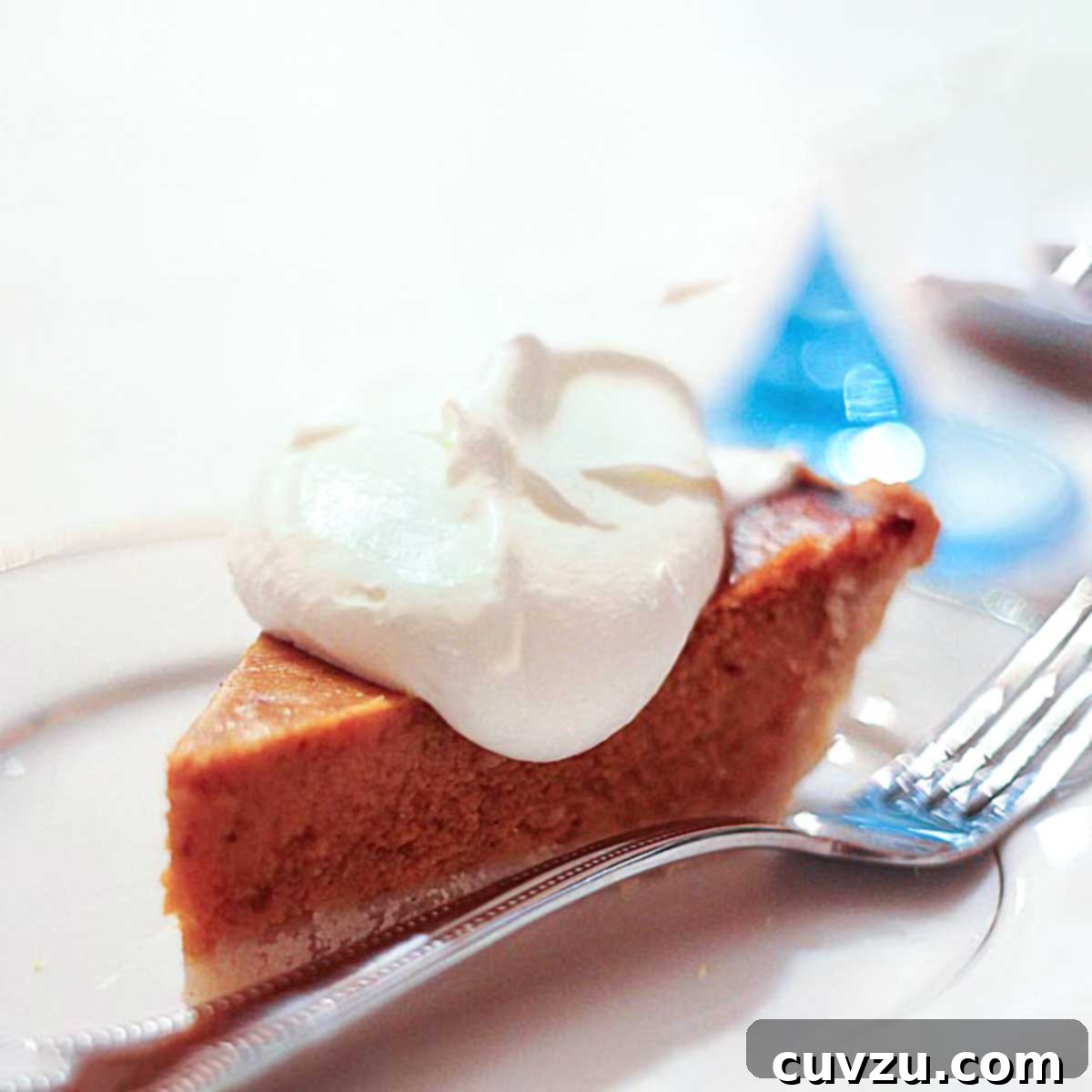
The Ultimate Caramelized Butternut Squash Pie: A Sophisticated Fall Dessert
Step aside, traditional pumpkin pie! While a classic for good reason, our **Caramelized Butternut Squash Pie** offers a refined twist on this beloved autumnal dessert. Imagine a pie with a luxuriously lighter texture, an intensely deeper, naturally sweet flavor, and a comforting warmth from a generous dose of ginger. This isn’t just a pie; it’s a culinary revelation that promises to elevate your holiday table and impress even the most discerning palates. Prepare to fall in love with its rich, complex profile that outshines the usual canned pumpkin varieties you’ve known for ages.
For many years, like countless families across the country, our holiday pies relied heavily on the convenience of canned pumpkin. It seemed logical at the time; when you’re generously layering on classic autumn spices like potent ginger powder, aromatic cinnamon, and fragrant clove, along with a touch of fresh grated ginger for extra zing, it’s easy to assume the base puree’s origin matters little. It felt like any mush, whether from a can or freshly prepared, was merely a convenient vehicle for delivering an explosion of sugar and spices to our eager taste buds. The ease was undeniable, but a subtle part of us always yearned for something with more depth, a dessert that truly showcased the natural beauty of autumn produce.
Then came a moment of culinary serendipity. While idly leafing through my well-worn, dog-eared copy of the classic Fannie Farmer Cookbook, a recipe for “winter squash pie” caught my eye. It proposed a departure from the norm: using fresh winter squash purée instead of the ubiquitous canned pumpkin. Even more intriguing were the suggested substitutions: rich heavy cream replaced the often-used evaporated milk, and a generous shot of brandy was introduced alongside the customary spices. A closer look at the ingredient proportions revealed that the ratio of cream to squash was notably higher than that of evaporated milk to pumpkin in traditional recipes. This detail sparked hope—I envisioned a lighter, more ethereal pie, and my intuition proved correct. The brandy, a truly inspired addition, imparted a warm, complex, and undeniably sophisticated note that transformed the entire dessert, adding an elegant depth that was missing before.
Years after that delightful discovery, my journey with squash pies evolved further, thanks to the insights of talented chefs like Melissa Clark. I realized the surprising ease of peeling butternut squash—its thin skin practically slips off with a standard vegetable peeler, making preparation much less daunting than anticipated. This revelation opened up a world of possibilities. I began to imagine cubing the beautiful orange flesh, tossing it with unsalted butter and a whisper of granulated sugar, and gently roasting it until it was almost candied, its edges kissed with golden caramelization. This innovative technique, I discovered, dramatically enhanced the squash’s natural sweetness and deepened its flavor profile, creating an unparalleled foundation for my now-signature pie. This crucial caramelization process adds an unparalleled layer of richness and complexity, setting this pie distinctly apart from any other and making it truly unforgettable.
Why Butternut Squash is Superior to Pumpkin for Pie
Choosing butternut squash over the more common pumpkin for your pie is a game-changer, and here’s why. Butternut squash naturally boasts a sweeter, nuttier flavor profile, which deepens beautifully when caramelized. This process transforms its inherent sugars into rich, complex notes that a simple steamed or boiled pumpkin puree often lacks. The caramelization creates an intense, almost toffee-like undertone that perfectly complements the warming spices of autumn. Furthermore, when butternut squash is roasted and then pureed, its flesh yields an incredibly silky and smooth texture. This results in a pie filling that is luxuriously creamy and velvety on the palate, without being heavy or pasty. It creates a truly refined mouthfeel that elevates the entire dessert experience, making it a sophisticated choice for any holiday table or special occasion.
Mastering Your Butternut Squash Pie: Essential Baking Tips
Creating the perfect Caramelized Butternut Squash Pie involves a few key techniques that ensure a silky smooth filling and a crisp, golden crust. Don’t be intimidated; with these expert tips, you’ll achieve bakery-quality results right in your home kitchen, impressing family and friends with your culinary prowess. From understanding doneness to preventing common pie pitfalls, we’ve got you covered.
Frequently Asked Questions About Butternut Squash Pie
Knowing precisely when your pie is done is crucial to prevent overcooking and achieve that perfect, silky, custard-like texture. You’ll want to pull the pie out just before it looks completely firm. The edges of the filling should appear puffy and set, but the very center will still exhibit a slight, gentle jiggle – not a watery sloshing, but more like a firm Jell-O or a perfectly set crème brûlée. This delicate jiggle indicates that the custard is still slightly undercooked, which is ideal. Remember that the pie will continue to cook slightly from residual heat after it’s removed from the oven, a phenomenon known as “carryover cooking.” For absolute precision, an instant-read thermometer inserted into the center (but not touching the bottom crust) should read between 170°F (77°C) and 175°F (79°C) for an ideally cooked pie. Anything higher risks overbaking.
Cracks in a squash or pumpkin pie are a common lament among bakers and typically occur when the custard-like filling is overbaked. When exposed to excessive heat or baked for too long, the delicate egg proteins in the filling contract and tighten too rapidly, leading to unsightly surface cracks. To meticulously avoid this common issue, it’s paramount to bake your pie at the correct temperature and to learn the tell-tale signs of doneness, as described above. Additionally, baking the pie on the lower third rack of your oven helps to cook the bottom crust more thoroughly while preventing the top of the custard from overcooking too quickly. Some experienced bakers also find that placing the pie pan in a water bath (bain-marie) during baking can help regulate the temperature and create a gentler, more even bake for the custard, further reducing the risk of cracking and ensuring a perfectly smooth, unblemished surface.
A soggy bottom crust is arguably one of the most disheartening pie failures, usually stemming from insufficient heat reaching the bottom of the pie or too much moisture accumulating. If the crust doesn’t get hot enough, the butter and moisture within it don’t adequately melt and steam off, resulting in a damp, underbaked, and unappealing base. To combat this, always pre-bake or “blind bake” your pie crust before adding the filling – this creates a barrier and gives the crust a head start. Ensure your oven is fully preheated to the specified temperature, and always bake the pie on the lowest rack or lower third rack to provide direct heat to the bottom. Using a glass pie plate can also be incredibly helpful, as it allows you to visually monitor the browning and crisping of the bottom crust without having to lift the pie. If you discover a soggy bottom after baking, you might attempt a rescue mission: cover the top of the pie loosely with foil to prevent further browning, then return it to a very hot 425°F (220°C) oven on the lowest rack for an additional 10-15 minutes, checking frequently until the crust crisps up and appears golden brown.
The Caramelized Butternut Squash Pie Recipe
Ready to create this spectacular dessert? Here’s the detailed recipe for our Caramelized Butternut Squash Pie, perfect for any occasion that calls for a truly memorable treat. This recipe is designed to guide you through each step with clarity, ensuring a delicious and beautifully presented result that will impress your guests and satisfy your cravings for an elevated fall dessert.
Caramelized Butternut Squash Pie
Recipe by David Leite, with inspiration from Melissa Clark.
-
PIN
Print Recipe
Ingredients
- 1 Perfect Pie Crust
- 2 1/2 pounds butternut squash, peeled, seeded, and cut into 2-inch (5-cm) chunks
- 2 tablespoons (1 oz) unsalted butter, cut into pieces
- 2 teaspoons granulated sugar
- 1 cup heavy cream
- 1 large egg
- 2 large egg yolks
- 1/4 cup light brown sugar
- 3 tablespoons brandy
- 1 teaspoon vanilla extract
- 1 1/2 teaspoons ground ginger
- 1 to 2 teaspoons finely grated fresh ginger, or more to taste
- 1/4 to scant 1/2 teaspoon freshly grated nutmeg
- 1/2 teaspoon ground cinnamon
- Pinch kosher salt
Instructions
-
1. Prepare the Pie Crust: Place your perfect pie crust dough between two sheets of plastic wrap and roll it into a 3/8-inch-thick round. Carefully line a 9-inch pie pan with the rolled dough, gently pressing it into the pan. Use your thumb and forefinger to elegantly flute the edges, creating a beautiful border. Refrigerate the prepared crust for at least 30 minutes, or up to 1 day. If you’re chilling the dough for more than 2 hours, lightly cover it with plastic wrap to prevent it from drying out. This chilling step is vital for a flaky, tender crust that holds its shape.
-
2. Preheat Oven: Preheat your oven to 375°F (190°C). Ensure it’s fully heated before proceeding to the next step.
-
3. Blind Bake the Crust: Line the chilled crust with foil or parchment paper, then fill it generously with pie weights, dried beans, or rice. This helps prevent the crust from puffing up. Place the pie pan on a sturdy baking sheet to catch any potential spills and ensure even heat distribution. Bake in the preheated oven until the crust is set and lightly golden around the edges, which typically takes about 15 minutes. Carefully remove the foil and pie weights, then return the crust to the oven and bake for an additional 5 to 10 minutes, or until the bottom achieves a pale golden hue and feels dry to the touch. This crucial step prevents a soggy bottom. Allow the crust to cool completely on a wire rack before adding the filling.
-
4. Caramelize the Butternut Squash: While your pie crust is blind baking and cooling, begin preparing the exquisite filling. Arrange the peeled, seeded, and chunked butternut squash evenly on a baking sheet. Dot the squash with pieces of unsalted butter and sprinkle it generously with granulated sugar. Roast the butternut squash in the 375°F (190°C) oven, stirring it gently every 10 minutes, until it becomes wonderfully fork-tender, usually within 30 to 35 minutes. For that truly desirable, slightly more complex and deeply caramelized flavor that defines this pie, continue roasting the squash for another 5 to 10 minutes, or until the edges start to darken to a rich golden brown and the squash appears almost candied. This caramelization step is paramount to the pie’s deep, unique flavor profile.
-
5. Prepare the Filling: Transfer the roasted butternut squash to a food processor and purée it until it is incredibly smooth and velvety, resembling a fine custard base. You should yield approximately 1 3/4 cups of purée. If you have any excess, it can be reserved for other delicious uses, such as ravioli filling, a savory soup, or even baby food. To the squash purée, add the heavy cream, the large egg, the two egg yolks, light brown sugar, brandy (or rum, if preferred, for a slightly different aromatic note), vanilla extract, ground ginger, finely grated fresh ginger, freshly grated nutmeg, ground cinnamon, and a pinch of kosher salt. Continue to purée until all ingredients are thoroughly combined and the mixture is perfectly smooth and homogenous. Scrape this delectable filling into your cooled, blind-baked pie crust and gently smooth the top with a spatula for an even surface.
-
6. Bake the Pie: Reduce your oven temperature to 325°F (163°C). Carefully transfer the pie to the preheated oven and bake until the filling is just set around the edges but still retains a slight, gentle jiggle in the very middle – approximately 35 to 40 minutes. This delicate jiggle is the hallmark of a perfectly cooked custard and indicates optimal creaminess. Overbaking will lead to a firm, potentially cracked, or dry filling, so watch it closely. Once baked, remove the pie from the oven and allow it to cool completely on a wire rack before slicing and serving. This cooling time is absolutely essential for the filling to fully set, firm up, and achieve its intended luxurious texture. Serve at room temperature or chilled, perhaps with a dollop of fresh whipped cream.

Adapted From
In the Kitchen with a Good Appetite by Melissa Clark
Buy On Amazon
Nutrition
Calories: 478 kcal
Carbohydrates: 48 g
Protein: 7 g
Fat: 28 g
Saturated Fat: 15 g
Monounsaturated Fat: 10 g
Trans Fat: 1 g
Cholesterol: 157 mg
Sodium: 157 mg
Fiber: 5 g
Sugar: 15 g
Disclaimer: Nutrition information is automatically calculated and should be used as an approximation. Individual results may vary based on specific ingredients and preparation.
Tried this recipe? Share your creation!
Mention @leitesculinaria or tag #leitesculinaria on Instagram to show us your delicious results and join our community of passionate bakers!
Insights from Our Recipe Testers
Dan Kraan
Dan Kraan, one of our trusted recipe testers, shares his detailed experience: “This caramelized butternut squash pie truly finished beautifully, closely resembling the traditional pumpkin version in appearance, yet offering a distinct flavor profile that is wonderfully unique. It boasts a beautifully velvety smooth texture, though I found it to be a little on the softer side, requiring careful handling when removing slices from the dish to serve. This delicate softness suggests you might need to be gentle if adding a large dollop of whipped cream directly on a slice for presentation, perhaps chilling the pie thoroughly first.”
Dan also offers practical advice for home cooks, especially during busy seasons: “While starting with a whole butternut squash offers the freshest, most vibrant flavor and the satisfaction of a truly homemade pie, many markets now conveniently sell it pre-peeled and cubed. This can significantly reduce your preparation time – a real bonus during busy holiday baking. Alternatively, for those seeking an even quicker route, it’s quite simple to purchase a container of quality pre-made squash purée and then integrate the remaining ingredients from this recipe. While the intensely caramelized flavor might be slightly less pronounced compared to roasting it yourself, it still yields a remarkably decent and flavorful pie that’s far from ordinary and certainly a step above generic pumpkin.”