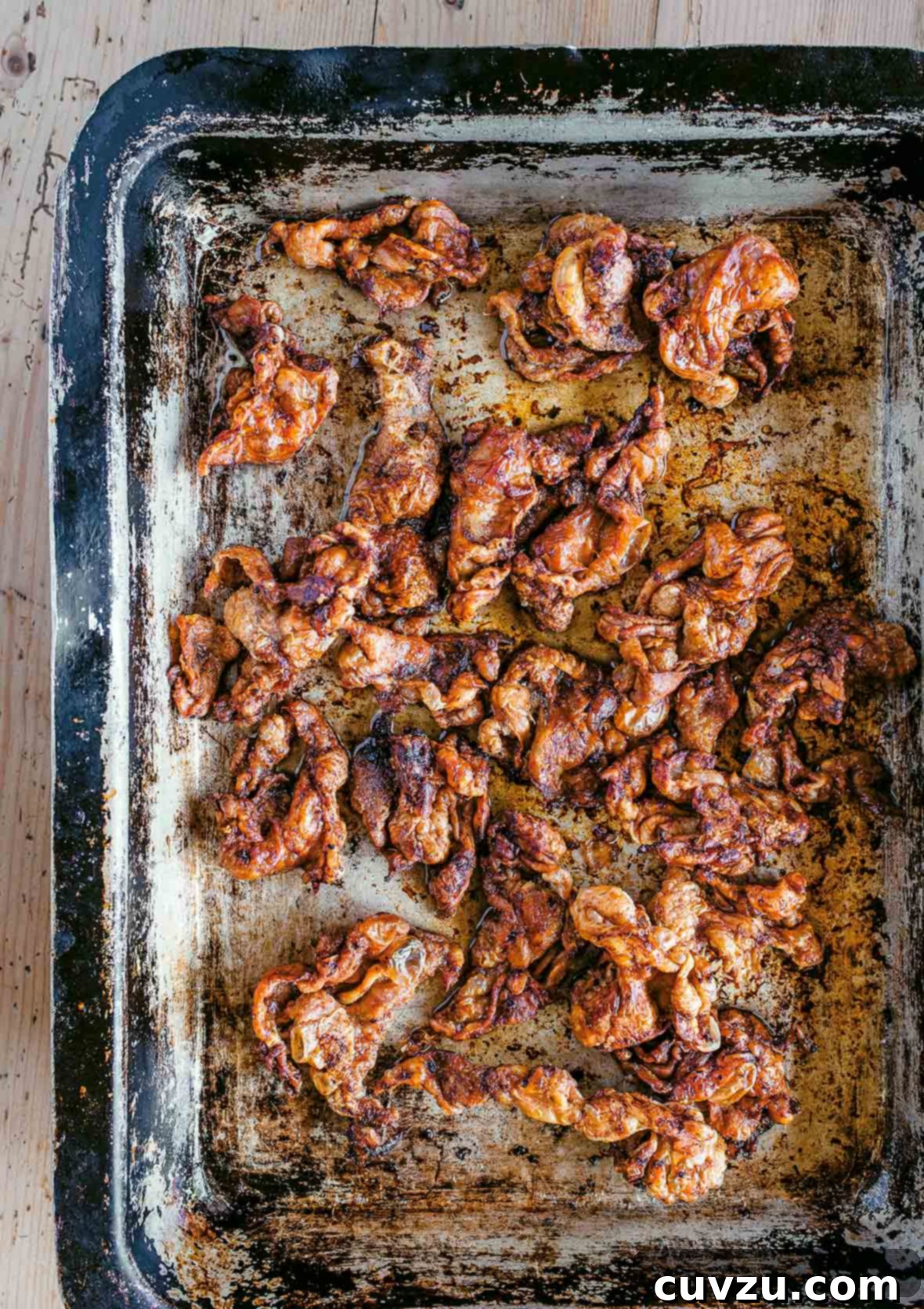
The Irresistible Crunch: A Deep Dive into Gribenes, Crispy Roast Chicken Skin
Few culinary delights can evoke such immediate joy and universal craving as perfectly crisp, salty chicken skin. It’s the coveted prize, the secret indulgence, and for many, the very best part of a roast chicken dinner. But what if you could have an abundance of this golden, crackling goodness, not just as a fleeting garnish, but as a dish in its own right? Enter Gribenes, the traditional Jewish delicacy that celebrates roast chicken skin in all its savory glory. These delectable morsels are more than just a byproduct; they are a culinary treasure, offering an unparalleled texture and depth of flavor that can transform everyday meals into extraordinary experiences.
For too long, the crisp skin from a beautifully roasted hen has been a scarce commodity, often stealthily pilfered from the roasting pan before the meal even begins. We understand this universal urge, this primal desire for that shatteringly crisp, lightly salted, and deeply burnished chicken skin. And thankfully, this recipe, originally shared by the discerning David Leite, not only understands but wholeheartedly embraces this craving, offering a method to create an ample supply of these crunchy delights.
What Exactly Are Gribenes? Understanding This Jewish Delicacy
To truly appreciate gribenes, imagine the satisfying crunch of deep-fried pork skins, known as chicharrones in Spanish cuisine. Now, envision that same irresistible crispness, but with the distinct, savory flavor of chicken. That’s essentially what gribenes are: intensely flavorful, crisp pieces of chicken skin, often rendered down during the process of making schmaltz (rendered chicken fat). While gribenes are a beloved staple in Ashkenazi Jewish cuisine, their appeal transcends cultural boundaries, captivating anyone who appreciates a simple yet profound indulgence.
Historically, gribenes emerged from a culinary philosophy of “waste not, want not.” In Jewish households, particularly during times when every part of an animal was valued, chicken skin was never discarded. Instead, it was slowly rendered to produce two invaluable ingredients: the rich, liquid gold known as schmaltz, and the crispy, flavorful bits left behind – the gribenes. While some traditional methods involve frying, this recipe offers an oven-baked approach, making the process cleaner, easier, and just as rewarding. It allows the skin to slowly crisp to perfection, yielding a less oily, yet equally satisfying, crunch.
Far from merely being a humble byproduct, gribenes possess a versatility that makes them a culinary secret weapon. They can be sprinkled over fresh salads for an unexpected burst of flavor and texture, incorporated into creative appetizers like Sriracha deviled eggs for an elevated twist, or simply enjoyed on their own as a profoundly satisfying snack. Their salty, savory profile and addictive crunch make them an excellent addition to a wide array of dishes, offering a delightful contrast to softer textures.
The Culinary Gold: The Importance of Schmaltz
Making gribenes is a delightful two-for-one deal, as it yields not only the crispy chicken skin but also the highly prized schmaltz. Schmaltz, or rendered chicken fat, holds a revered place in Jewish cooking, often referred to as “Jewish butter” or “liquid gold.” Before the widespread availability of vegetable oils, schmaltz was the primary cooking fat in many Jewish homes, particularly for dairy-free meals or in regions where butter was less accessible.
Its rich, savory flavor adds incredible depth to everything it touches. Imagine vegetables sautéed in schmaltz, potatoes roasted to a golden crispness, or even traditional dishes like matzo ball soup or chopped liver enhanced by its distinct character. Saving the schmaltz is an essential part of the gribenes-making process, ensuring that no flavor goes to waste and providing you with a versatile cooking fat that adds a unique savory dimension to your repertoire. It stores well in the refrigerator for weeks, making it a convenient and flavorful addition to your pantry.
Why Make Homemade Gribenes?
While you might occasionally find pre-made gribenes or similar crispy chicken skin products, there’s an undeniable magic to making them fresh at home. Firstly, you control the quality of the chicken skin, ensuring it comes from happy, healthy chickens. Secondly, you dictate the seasoning, allowing you to adjust the saltiness to your preference. But perhaps most importantly, the aroma that fills your kitchen as the chicken skin slowly crisps in the oven is a reward in itself – a savory perfume promising deliciousness to come.
Homemade gribenes allow for customization. You can experiment with different herbs (like the thyme suggested in this recipe) or spices, creating unique flavor profiles. The satisfaction of transforming a humble ingredient into something so extraordinary is incredibly gratifying. Plus, you get the added bonus of fresh, flavorful schmaltz, which is superior to any store-bought alternative. This process embodies simple, resourceful cooking at its finest, turning what might otherwise be discarded into two distinct and valuable ingredients.
Gribenes | Crispy Roast Chicken Skin
By David Leite
Appetizers, Snack
Jewish, American
4 servings
609 kcal
5 minutes
1 hour 10 minutes
1 hour 15 minutes
Ingredients
- 3 sprigs fresh thyme
- 9 ounces chicken skin, (available from most local butchers), cut into 1-inch pieces
- 3 tablespoons homemade chicken stock or canned chicken broth
- Sea salt, to taste
Instructions
-
Preheat your oven to 350°F (177°C). Ensure your oven is fully heated before placing the pan inside for even cooking.
-
Place the fresh thyme sprigs in a sturdy roasting pan. Arrange the cut chicken skins in a single layer on top of the thyme. Pour in the chicken stock. Roast, uncovered, for 30 to 40 minutes, or until the skins are nearly crisp. Be sure to stir or flip the chicken skins every 10 minutes to ensure even cooking and browning. This initial step helps to slowly render the fat and begin the crisping process.
-
Carefully remove the pan from the oven and drain the rendered fat, which is the precious schmaltz. Transfer the schmaltz to a heatproof container and save it for future cooking. This golden fat is excellent for sautéing, roasting vegetables, or adding rich flavor to many dishes.
-
Return the pan with the chicken skins to the oven. Continue roasting for an additional 12 to 20 minutes, or until the chicken skins are perfectly crisp and golden brown. Keep a close eye on them during this final stage, as they can burn quickly. The resulting gribenes will have a crispness similar to the skin on a well-roasted chicken, rather than the puffed texture of pork rinds. Once done, remove from the oven, blot any excess oil, and lavish generously with sea salt to taste. Serve immediately and enjoy!

Adapted From
Pitt Cue Co.: The Cookbook
Buy On Amazon
Nutrition Information
Serving: 1 portion
Calories: 609 kcal
Carbohydrates: 1 g
Protein: 67 g
Fat: 35 g
Saturated Fat: 9 g
Monounsaturated Fat: 14 g
Trans Fat: 0.2 g
Cholesterol: 350 mg
Sodium: 411 mg
Fiber: 0.1 g
Sugar: 0.2 g
Nutrition information is automatically calculated and should be used as an approximation.
Tried this recipe? Mention @leitesculinaria or tag #leitesculinaria!
Tips for Perfect Gribenes: Insights from Recipe Testers
Our team of dedicated recipe testers has put this gribenes recipe through its paces, and their insights offer invaluable advice for achieving crispy perfection every time. Their experiences highlight the simplicity and deliciousness of this often-overlooked treat:
Sourcing and Preparation:
- Find Your Butcher: As Larry Noak suggests, don’t hesitate to ask your local butcher for chicken skin. Many butchers will happily provide it, sometimes even for free or at a very low cost, as it’s often trimmed from other cuts. If not, consider buying bone-in, skin-on chicken pieces and removing the skin yourself.
- Consistent Cutting: Kristen Kennedy emphasizes cutting the skin into even, 1-inch pieces. This ensures that all gribenes crisp up uniformly, preventing some pieces from burning while others remain chewy.
- Single Layer Roasting: Always arrange the chicken skin in a single layer in your roasting pan. Overcrowding will steam the skin instead of crisping it, leading to a less desirable texture. If you have a large batch, use two rimmed baking sheets.
The Roasting Process:
- The Thyme Advantage: Michelle Stein and Henry Tsai both noted the delightful herbal undertone that fresh thyme adds. While optional, it imparts a subtle sophistication that elevates the flavor beyond simple saltiness.
- Cast Iron Excellence: Larry Noak had great success using a preheated cast-iron skillet. The even heat distribution and ability to get very hot can contribute to superior crisping and prevent sticking.
- Don’t Skip the Stirring/Flipping: This is crucial! As Kristen Kennedy points out, regular stirring and flipping (every 10 minutes) ensures even browning and crisping on all sides. It prevents some areas from becoming tough or burnt while others remain soft.
- Monitor Closely: Especially in the final stages of roasting, gribenes can go from perfectly crisp to burnt in a matter of minutes. Stay vigilant and adjust cooking times based on your oven’s performance and the thickness of the skin.
- Drain the Schmaltz: Remember to drain the rendered fat (schmaltz) mid-way through. This prevents the gribenes from swimming in too much fat, allowing them to crisp up properly and separating the valuable schmaltz for other uses.
Serving and Storage:
- Season Generously: Once out of the oven, don’t be shy with sea salt! The salt enhances the savory flavors and brings out the ultimate crispness.
- Serve Fresh: While gribenes can be stored, they are undeniably best when enjoyed fresh and warm from the oven. Their crispness is at its peak immediately after cooking.
- Versatile Uses: Our testers offer fantastic ideas:
- Deviled Eggs: Larry Noak and Michelle Stein both laud gribenes as an amazing topping for deviled eggs.
- Salad Booster: A sprinkle of gribenes adds a textural and savory crunch to any salad.
- Chicken Salad Amplified: Kristen Kennedy’s idea of adding crumbled gribenes to chicken salad and serving it on schmaltz-toasted bread sounds “simply magical” and reminiscent of childhood indulgence.
- Flavor for Starches: Henry Tsai suggests using schmaltz to cook almost anything, from vegetables to flavoring starches, highlighting its versatility.
- Simple Snack: Sometimes, the best way to enjoy them is just a decadent bite on their own.
Beyond the Snack: Culinary Applications of Gribenes and Schmaltz
While irresistible as a standalone snack, gribenes and their companion, schmaltz, are incredibly versatile ingredients that can elevate a wide range of dishes. Understanding their full potential is key to truly appreciating this traditional treat.
Creative Uses for Gribenes:
- Soup Garnish: Crumble gribenes over hearty soups like split pea, lentil, or even a classic chicken noodle soup for an unexpected textural contrast and depth of flavor.
- Salad Topping: Move over croutons! Gribenes add a savory, salty crunch that can transform a simple green salad or a warm potato salad.
- Sandwich & Wrap Enhancer: Add a layer of gribenes to your favorite chicken or turkey sandwich, or wrap, for an explosion of flavor and texture. Kristen Kennedy’s “amplified chicken sandwich” idea is a perfect example.
- Egg Dishes: Beyond deviled eggs, sprinkle chopped gribenes over scrambled eggs, omelets, or a frittata for a rich, savory kick.
- Roasted Vegetable Companion: Toss roasted Brussels sprouts, green beans, or asparagus with crumbled gribenes just before serving.
- Bread Topping: Like bacon bits, gribenes can be sprinkled over cheesy bread, focaccia, or even a savory scone for an extra layer of indulgence.
The Many Virtues of Schmaltz:
Do not discard the rendered chicken fat! Schmaltz is a culinary powerhouse. Its high smoke point and rich flavor make it ideal for:
- Sautéing and Frying: Use it to sauté vegetables, onions for soups, or even pan-fry chicken for an extra layer of flavor.
- Roasting: Roast potatoes, root vegetables, or even other cuts of chicken using schmaltz for an incredibly golden and flavorful result.
- Baking Savory Goods: Replace butter or other fats in savory pastries, pie crusts, or biscuits for a distinct, umami-rich flavor.
- Building Sauces: Use a tablespoon of schmaltz as the base for a roux in gravies or savory sauces.
- Flavoring Grains: Stir a dollop into rice, farro, or couscous for added richness.
- Making Spreads: Michelle Stein reminds us of its historical use as “Jewish mayo” on rye or pumpernickel bread. It can also be incorporated into chopped liver or other savory spreads.
Making gribenes and schmaltz is more than just cooking; it’s a step into a tradition that values flavor, resourcefulness, and the joy of simple, delicious food. It’s a testament to how humble ingredients, treated with care, can yield extraordinary results that delight the senses and nourish the soul. So, embrace the crunch, savor the richness, and enjoy the transformative power of these golden nuggets.