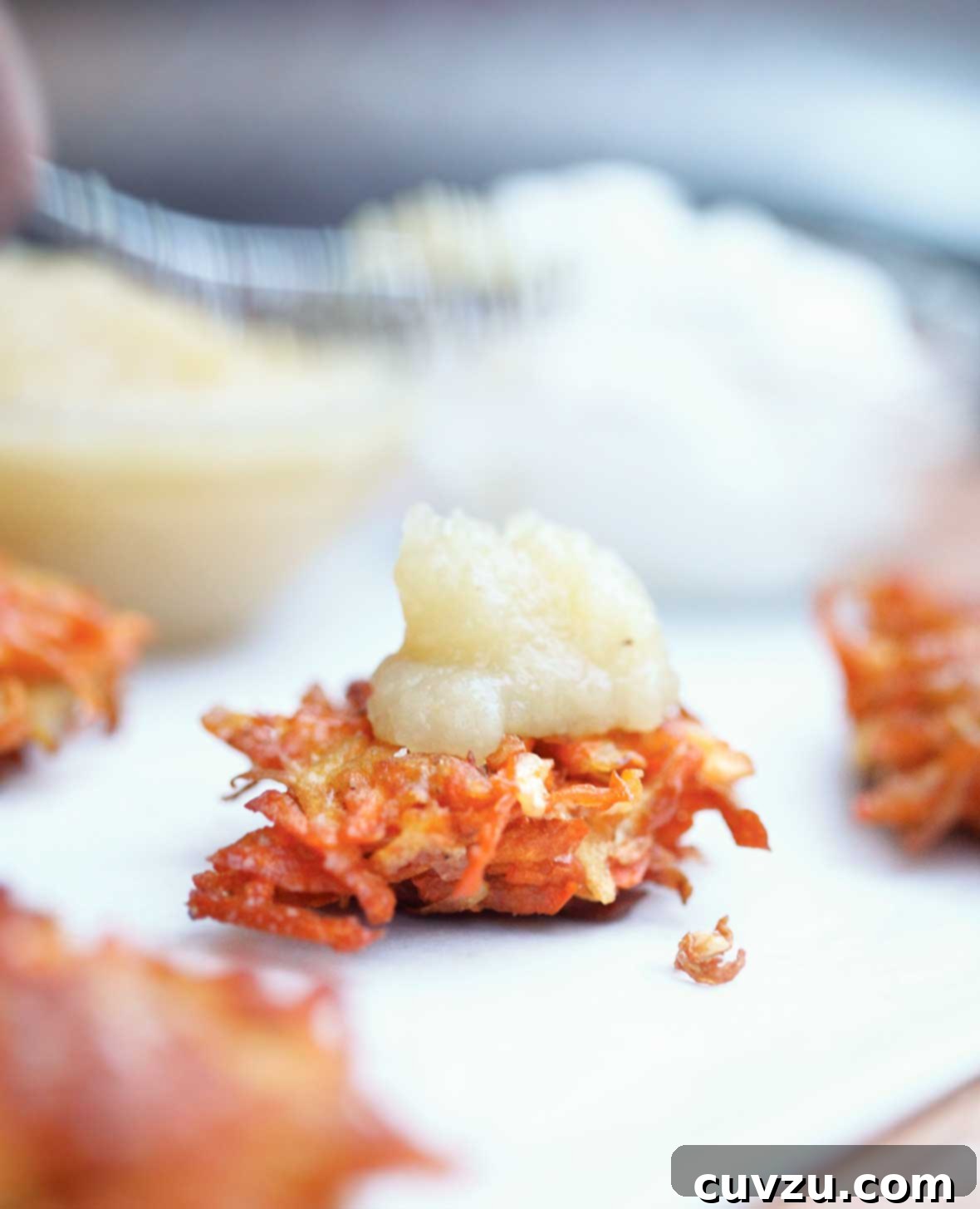
Step aside, traditional potato pancakes! These exceptional root vegetable latkes redefine a beloved classic, transforming a vibrant medley of sweet potatoes, parsnips, carrots, turnips, and celery root into an unforgettable holiday side dish. Not only are they brilliantly imaginative, but they’re also a surprisingly healthy and naturally gluten-free alternative that promises to dazzle your taste buds. This innovative twist makes them a truly wonderful and wholesome addition to any Hanukkah meal, offering a fresh perspective on a cherished tradition.
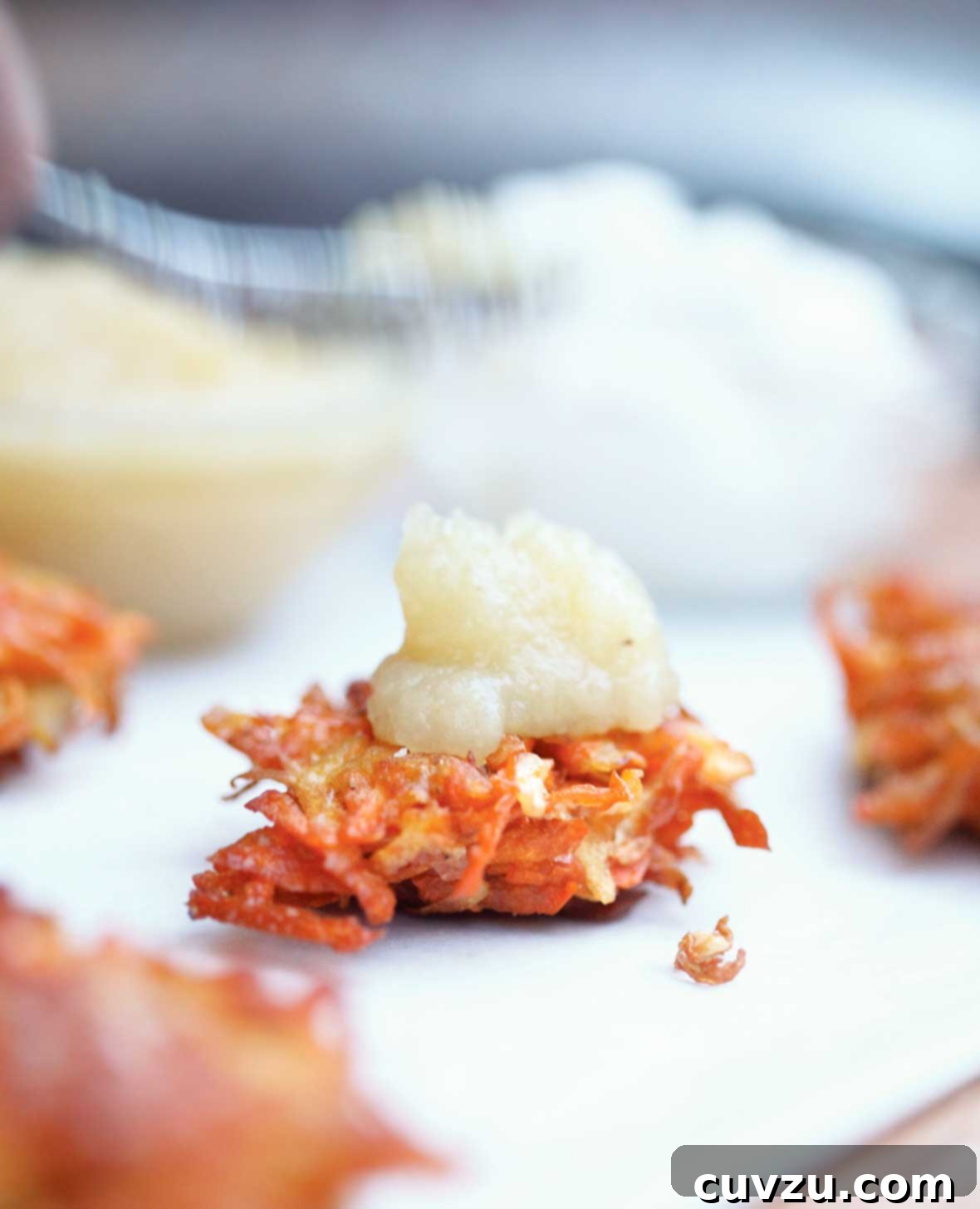
What makes these root vegetable latkes truly special is their incredible versatility. They’re an ingenious way to utilize any root or tuber scraps you might have on hand – those flavorful odds and ends left over after preparing vegetables for a hearty soup or stew. Of course, you can also use whole root vegetables, specifically chosen for their unique flavors and textures. The process is remarkably simple: just toss your chosen vegetables into a food processor equipped with a grating attachment, and let it do the work of shredding them into perfect latke-ready strands. This recipe, thoughtfully conceived by Tara Duggan, encourages mindful cooking and celebrates the full potential of these earthy treasures.
The Versatile Charm of Root Vegetable Latkes
Traditional potato latkes hold a special place in culinary traditions, particularly during Hanukkah. However, this root vegetable rendition invites you to explore a broader spectrum of flavors and nutritional benefits. By incorporating a variety of root vegetables like sweet potatoes, parsnips, carrots, turnips, and celery root, these latkes become a powerhouse of vitamins, minerals, and dietary fiber. Each vegetable brings its own distinctive character:
- Sweet Potatoes: Offer a natural sweetness and vibrant orange hue, rich in beta-carotene. They lend a softer texture and a delightful counterpoint to savory toppings.
- Parsnips: Impart an earthy, slightly nutty flavor with a subtle sweetness, reminiscent of carrots but with a unique depth.
- Carrots: Add a familiar sweetness, beautiful color, and a delicate crunch, packed with Vitamin A.
- Turnips: Provide a peppery, slightly bitter note that balances the sweetness of other roots, adding complexity to the flavor profile.
- Celery Root (Celeriac): Contributes a savory, earthy, and mildly celery-like flavor with a crisp texture, making it an excellent base for latkes.
- Beets: While not listed in the main recipe, testers successfully incorporated beets, adding a striking color and earthy-sweet flavor.
- Russet Potatoes: Still a fantastic choice for their starchiness, contributing to the classic crispy exterior and tender interior.
The beauty of this recipe lies in its adaptability. You’re not confined to a single type of root vegetable; instead, you’re encouraged to mix and match based on your preferences, what’s in season, or what you happen to have lingering in your crisper drawer. This makes it an incredibly practical and sustainable recipe for any home cook looking to minimize food waste while maximizing flavor.
Crafting the Perfect Crispy Latkes: Tips and Techniques
Achieving that coveted golden-brown, crispy exterior and tender interior is key to a perfect latke. While the recipe is straightforward, a few expert tips can elevate your root vegetable latkes from good to extraordinary:
1. Moisture Management is Paramount
Root vegetables naturally contain a lot of water, which can lead to soggy latkes if not properly addressed. After grating your vegetables and onion, it is absolutely crucial to squeeze out as much excess moisture as possible. Use several layers of paper towels, a clean kitchen towel, or even a potato ricer to firmly press down on the grated mixture. This step is non-negotiable for achieving maximum crispiness. As some recipe testers noted, the mixture can become watery, so be diligent here.
2. The Right Grind
While a food processor with a grating attachment is convenient, some testers found that a slightly finer chop after grating helped create a more cohesive patty, less like hash browns and more like traditional latkes. Experiment with your preferred texture, but generally, a finer grate aids in binding and crisping.
3. Optimal Oil Temperature
Frying latkes requires careful attention to oil temperature. Medium-low to medium heat is recommended. If the oil is too hot, the latkes will burn on the outside before cooking through on the inside. If it’s too cool, they’ll absorb too much oil and become greasy. A good indicator is when a small piece of the mixture sizzles immediately but gently when dropped into the oil. Maintain a consistent temperature throughout the frying process.
4. Don’t Crowd the Pan
Frying in batches is essential. Overcrowding the skillet will lower the oil temperature, leading to less crispy latkes. Give each patty enough space to brown evenly and prevent them from sticking together. Patience is a virtue here.
5. Seasoning Strategy
Salt enhances flavor and helps draw out moisture. Season the latke mixture well, and importantly, don’t forget a final sprinkling of kosher salt immediately after frying. This “finishing salt” adheres beautifully to the hot, crispy surface, amplifying the taste and texture.
6. Keeping Warm
If you’re making a large batch, preheat your oven to a low temperature (around 200°F or 93°C) and place the cooked latkes on a baking sheet lined with paper towels or a wire rack to keep them warm and crisp while you finish frying the rest. While some crispiness might be lost, they will still be delicious.
Root Vegetable Latkes
David Leite
Sides
Jewish
4
to 6 servings
122
kcal
45 minutes
10 minutes
55 minutes
Ingredients
- 3 cups peeled and grated raw root vegetables or tubers, such as potatoes, sweet potatoes, beets, carrots, parsnips, turnips, or celery root
- 1/4 onion, very thinly sliced or grated in a food processor
- 2 large eggs
- 1 tablespoon cornstarch
- 1/2 teaspoon baking powder
- 1/2 teaspoon kosher salt, plus more as needed
- 1/4 teaspoon freshly ground pepper
- Olive oil or vegetable oil, for frying
- Sour cream, for serving (optional)
- Applesauce, for serving (optional)
Instructions
-
Preheat the oven to 200°F (93°C). This low heat will be used to keep finished latkes warm while you continue frying.
-
In a large bowl, combine the grated root vegetables and the thinly sliced or grated onion. Using clean paper towels or a kitchen towel, firmly press the mixture to extract as much excess moisture as possible. This is a critical step for crispy latkes. Add the eggs, cornstarch, baking powder, salt, and pepper, then stir thoroughly until all ingredients are well combined.
-
Place a large, heavy-bottomed skillet (cast iron works wonderfully) over medium-low to medium heat. Pour in enough olive oil or vegetable oil to reach a depth of 1/4 to 1/2 inch. Allow the oil to heat sufficiently, which usually takes a few minutes.
-
Once the oil is hot and shimmering (a small test piece of batter should sizzle gently), use two soup spoons. Scoop about 2 tablespoonfuls of the latke mixture with one spoon, then use the second spoon to press down on the mixture, forming an oval or round patty. Carefully slide the patty into the hot oil. Continue making and frying latkes in batches, ensuring not to overcrowd the skillet. Cook until they are deeply browned, wonderfully crisp, and cooked through, typically about 5 minutes per side. Adjust heat as necessary to prevent burning, keeping a close eye on the color.
-
Transfer the fried latkes to a plate lined with paper towels or a brown paper bag to drain any excess oil. If you wish to serve them all at once, place the drained latkes on a baking sheet and keep them warm in the preheated oven. Season generously with additional salt immediately after they come out of the oil. Serve hot with your preferred accompaniments, such as sour cream and applesauce. This recipe yields approximately 20 small, delectable latkes.
Adapted From
Root to Stalk Cooking
Buy On Amazon
Explore More Culinary Insights
Substitutions
Scale Recipe
Summarize Insights
Nutrition
Serving:
1 latke
Calories:
122 kcal
Carbohydrates:
21 g
Protein:
4 g
Fat:
3 g
Saturated Fat:
1 g
Monounsaturated Fat:
1 g
Trans Fat:
1 g
Cholesterol:
93 mg
Sodium:
337 mg
Fiber:
5 g
Sugar:
5 g
Nutrition information is automatically calculated, so should only be used as an approximation.
Tried this recipe?
Mention @leitesculinaria or tag #leitesculinaria!
Recipe Testers’ Reviews: Real Kitchen Insights
The true test of any recipe lies in the home kitchen, and our dedicated recipe testers have provided invaluable feedback, highlighting the versatility and deliciousness of these root vegetable latkes. Their experiences offer practical tips and inspire further culinary exploration.
Shannon Parrish
Shannon raved about the deliciousness and adaptability of these latkes, using a successful combination of russet potatoes, sweet potatoes, and carrots. She emphasized the importance of moisture removal, suggesting further chopping grated vegetables for a more cohesive, less hash brown-like patty. Her advice to soak russet potatoes in cold water to prevent discoloration and to season generously with kosher salt after frying are excellent tips for achieving superior results.
Linda Pacchiano
Linda appreciated the ease and accessibility of the recipe, making it with carrots and russet potatoes for a delightful sweet and savory combination. She noted the mixture becoming “watery” but easily managed this by pressing excess liquid from each patty with spoons before frying. Her batch yielded 24 latkes, demonstrating the generous output of the recipe.
Sofia Reino
Sofia found these latkes “amazing” on their own and delightful with applesauce and sour cream, making them suitable for dinner parties or even as next-day school lunches. She ventured beyond traditional root vegetables, using baby carrots, zucchini, yellow squash, and eggplant from a farmers market. Despite the mixture being watery, her use of a cast-iron skillet ensured no sticking and beautiful frying results. She made 10 small latkes, perfect as an appetizer for 3-4 people, showcasing portion control and ingredient flexibility.
Mackenzie Campbell
Mackenzie praised the recipe as a “fantastic way to use whatever random root vegetables you have just lying around.” Her combination of beets and sweet potatoes resulted in sweet, earthy, and delicious latkes. She successfully prepared the mixture ahead of time, indicating good stability, although she noted the crispiness waned slightly in the oven and suggested a warmer oven temperature. Mackenzie also offered creative leftover ideas, using latkes as a sandwich layer and a base for barbecue pork and coleslaw, inspiring endless possibilities.
Ayanna Fews
Ayanna found the recipe simple, good, and an excellent quick side dish. Using russet and sweet potatoes, she followed the recipe precisely and achieved perfect results. She initially worried about insufficient binder but was pleasantly surprised by how the cornstarch, eggs, and natural potato starch combined to create surprisingly light and well-bound latkes. Her immediate enjoyment of a few latkes during frying speaks volumes about their irresistible nature.
Linda B.
Linda praised the “lovely, crisp, and delicious” outcome, using potatoes and carrots she had on hand. Despite a significant amount of liquid in the bowl, she followed the instruction to press each latke before frying, resulting in latkes that were creamy in the middle and perfectly crisp on the outside. Her experience reiterates the importance of the moisture removal technique.
Lila Ferrari
Lila adored the concept of “scraps latkes” and the inclusion of root vegetables beyond just potato, having successfully used carrot and beet. Her testers gave rave reviews, confirming the deliciousness. She highlighted cornstarch’s role in making them gluten-free and appreciated the slightly sweeter taste from carrots. Although concerned by the wet batter, her latkes turned out crisp and creamy. She plans to squeeze more liquid next time, reinforcing a common theme among testers.