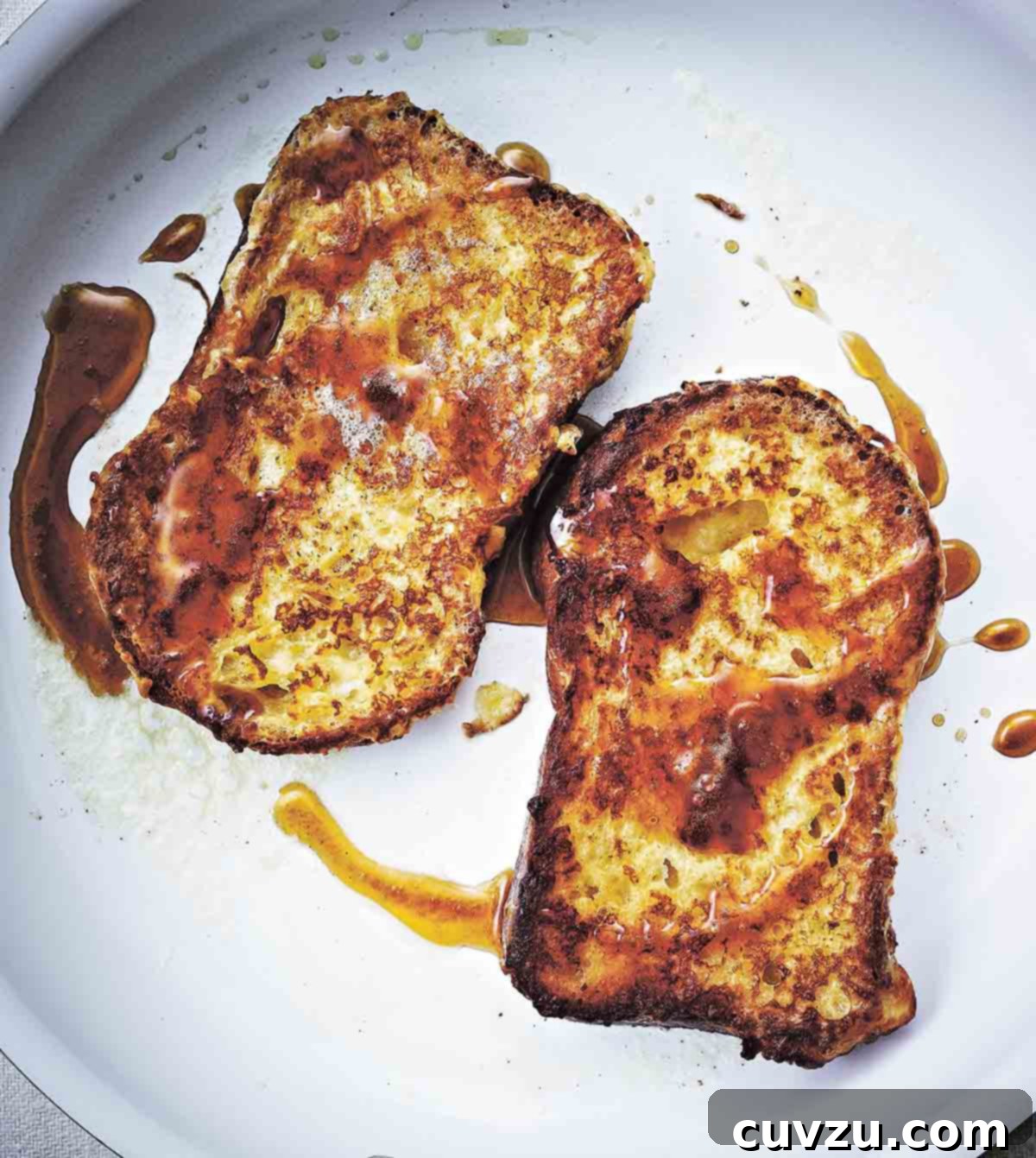
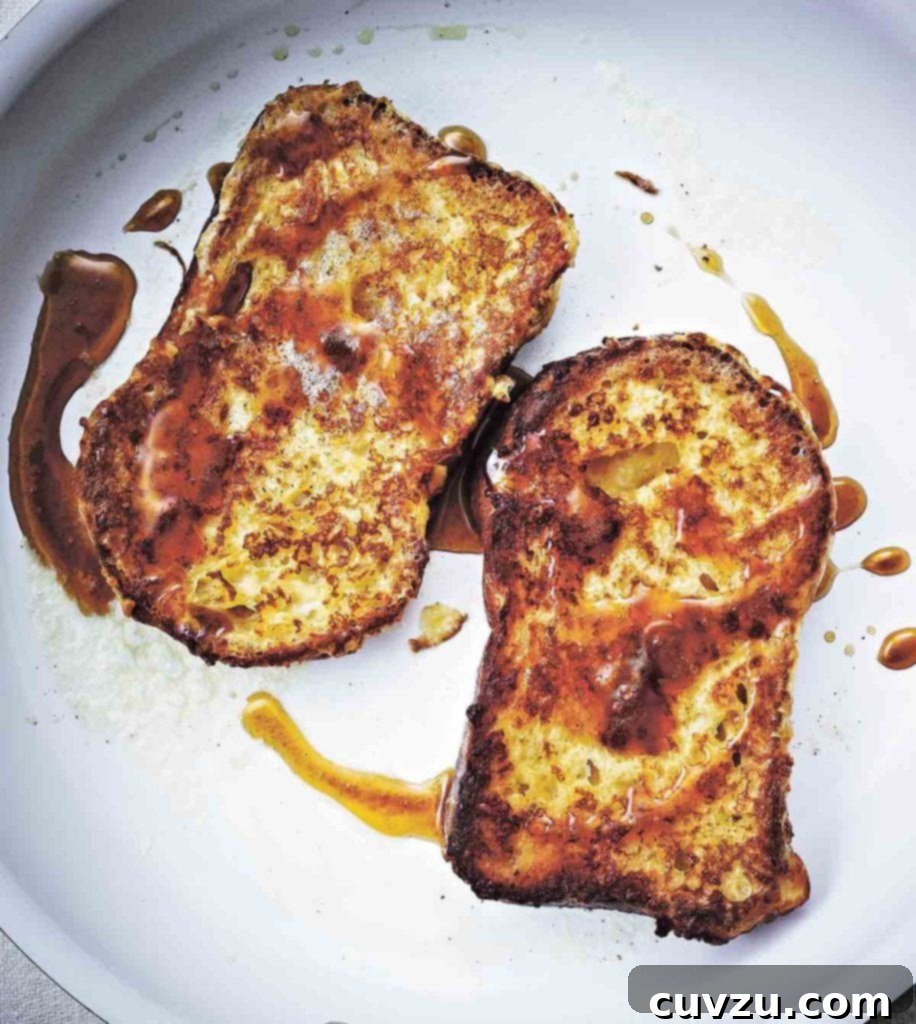
There’s something truly magical about transforming simple, day-old bread into a luxurious breakfast masterpiece. This isn’t just any French toast; this is the authentic French “Pain Perdu,” translating elegantly to “lost bread.” It’s a culinary philosophy that champions resourcefulness, taking bread that might otherwise be discarded and elevating it into a dish so delightful, you’ll crave it every weekend. Forget complicated techniques or obscure ingredients; this recipe is about embracing simplicity and letting quality shine through. It involves leisurely soaking slices of sturdy bread in a rich, sweet vanilla custard – with a strict absence of cinnamon, honoring its French origins – before pan-frying it in butter until it achieves a perfect golden crispness on the outside and a melt-in-your-mouth creaminess within. The result is a breakfast that is both sumptuously rich and wonderfully straightforward to prepare, embodying the very essence of a comforting, classic meal.
Authentic French Toast | Pain Perdu: A Timeless Classic for Your Weekend Brunch
Discover the true delight of Pain Perdu, the classic French toast that transcends ordinary breakfast fare. Our carefully crafted recipe emphasizes purity of flavor, focusing on a sweet vanilla custard and the perfect texture. This guide will walk you through everything from selecting the ideal bread to achieving that coveted golden-brown crust and creamy interior, ensuring your homemade French toast is nothing short of perfection. Prepare to transform your breakfast routine with this exquisite, easy-to-make dish that brings a touch of Parisian charm to your kitchen.
The Art of Pain Perdu: More Than Just French Toast
The term “Pain Perdu” literally means “lost bread,” a poetic name that perfectly encapsulates the ingenious origin of this dish. Historically, it was a brilliant method to revive stale bread, preventing waste by transforming it into something delectable. In times when food was scarce, every crumb counted, and this recipe turned a potential discard into a cherished treat. Unlike many Americanized versions that heavily feature cinnamon, traditional French Pain Perdu prioritizes the delicate flavors of vanilla and the richness of eggs and milk. This focus allows the inherent sweetness of the bread and the creamy custard to truly shine, offering a refined taste experience. It’s a testament to French culinary philosophy, where simple ingredients are elevated through thoughtful preparation.
The magic lies in the contrast: a perfectly golden, slightly crisp exterior giving way to a warm, soft, and custardy interior. This texture play is what sets true Pain Perdu apart and makes it an unforgettable breakfast or brunch option. It’s not just about cooking bread; it’s about giving it a second life, imbued with new flavor and texture. The absence of overwhelming spices like cinnamon ensures that the pure, comforting notes of vanilla and rich dairy come through, making each bite a delightful experience. Whether served with a drizzle of maple syrup, a dollop of fresh fruit, or simply plain, Pain Perdu offers a comforting and sophisticated start to any day, proving that sometimes, the simplest recipes yield the most profound culinary satisfaction.
Crafting the Perfect Custard: The Heart of French Toast
The soul of exceptional Pain Perdu lies in its custard base. A well-balanced custard delivers both flavor and the crucial moist, tender texture that defines the dish. Our recipe calls for large eggs, granulated sugar, pure vanilla extract, and whole milk – a simple yet powerful combination. The eggs provide richness and structure, ensuring the bread remains cohesive and creamy when cooked. The granulated sugar sweetens the mixture subtly, allowing any additional toppings to complement rather than overpower the inherent deliciousness of the French toast itself. Pure vanilla extract, a cornerstone of classic French baking, infuses the custard with a warm, aromatic note that is far more delicate and authentic than the bold spice of cinnamon often found in other recipes. This vanilla essence is what truly distinguishes genuine Pain Perdu.
When preparing the custard, ensure you beat the eggs and sugar together thoroughly until well combined and slightly frothy. This helps to fully dissolve the sugar, preventing a gritty texture, and creates a smooth base for the custard. Then, gently whisk in the vanilla extract and, importantly, whole milk. The use of whole milk is essential for a creamy, luxurious finish; lower-fat milk can result in a less rich, thinner, and less satisfying texture. Aim for a homogeneous mixture with no visible streaks of egg yolk or white, indicating a perfectly emulsified custard. This meticulously prepared custard is the foundational key to transforming your “lost bread” into a culinary delight, ensuring each slice absorbs maximum flavor and moisture without becoming soggy or bland. It’s a step that, while simple, should not be overlooked for achieving Pain Perdu perfection.
Bread Choices for Exquisite Pain Perdu
The type of bread you choose is paramount to the success of your Pain Perdu. While fresh bread tends to fall apart when soaked due to its soft structure, day-old or slightly stale bread holds its shape remarkably well. This allows it to absorb the custard without disintegrating, making it ideal for the “lost bread” principle. The ideal bread should possess a dense crumb and a relatively sturdy crust. This combination is crucial: the dense crumb prevents the bread from becoming overly soggy, while the crust helps maintain its structural integrity during the soaking and cooking process, ensuring a satisfying contrast between the crisp exterior and the creamy interior.
- Brioche: An excellent choice for its rich, buttery flavor and tender crumb. Its high fat content and delicate texture contribute to an incredibly decadent, almost pastry-like French toast. However, as one of our recipe testers, Patty Fabian, insightfully noted, its inherent butteriness and delicacy mean you need to exercise caution not to over-soak it. Brioche can become overly fragile very quickly, threatening to fall apart before it even reaches the skillet. For best results with brioche, aim for slightly thicker slices and a shorter soaking time.
- Challah: Similar to brioche in its richness and slightly sweet profile, challah also makes for an incredibly luxurious Pain Perdu. Its beautiful braided structure often translates into a lovely texture when cooked. Elsa M. Jacobson found that challah browned beautifully and consistently, making for an attractive and delicious outcome. Like brioche, its tender nature suggests careful handling during the soaking process.
- Baguette: An “incredible” option, according to our initial notes, due to its robust structure and less sweet profile. Patty Fabian specifically suggested it for its sturdiness, which would prevent it from falling apart during soaking and cooking. The firm crust and more open crumb of a baguette allow for excellent absorption of the custard while maintaining crucial integrity, resulting in a French toast that is both substantial and satisfying. Slice it on the diagonal for larger pieces.
- Artisanal White Bread: A good quality, dense white bread, perhaps sourced from a local bakery, can work wonderfully. Look for loaves that aren’t too soft or airy, as these tend to absorb too much liquid too quickly and become mushy. Ideally, choose bread that can be sliced about 3/4 inch to 1 inch thick. This specific thickness is critical as it provides enough structural integrity to hold the custard and cook through beautifully, creating that desired perfect balance of a crispy exterior and a creamy interior.
- Texas Toast: While not traditionally French, the thick-cut nature of Texas toast provides a large surface area for soaking and results in a substantial, hearty slice of French toast. Its inherent density also helps it stand up well to the custard, making it a surprisingly good candidate for this recipe, particularly if you prefer a thicker, more filling breakfast.
- Sourdough: For those who appreciate a slight tang to their breakfast, a rustic sourdough bread can introduce a wonderfully complex flavor dimension. Its characteristic sour notes provide a delightful balance to the sweetness of the custard and any added syrups. When choosing sourdough, ensure it’s not overly airy; a bread with a tighter crumb will yield better results. As with other breads, using day-old slices is paramount for optimal absorption and texture.
Regardless of your final bread choice, the most crucial factor is that the bread is at least a day old. This slight dryness allows it to act like a perfect sponge, soaking up the vanilla custard evenly without becoming waterlogged or mushy. Slicing the bread about 3/4 inch (18mm) thick is also a critical step, providing enough structural integrity to hold the custard and cook through beautifully, creating that desired crispy exterior and luxuriously creamy interior.
Can You Make French Toast Ahead? Best Practices for Serving
While the allure of preparing dishes in advance is strong for busy mornings, our recipe testers consistently found that this authentic French toast is unequivocally at its best when served fresh, straight from the pan. The delicate balance of a crisp, buttery crust and a warm, creamy interior is fleeting, and diminishes significantly with time, especially if kept warm in an oven for too long. The steam produced in an enclosed space can quickly soften the perfectly browned exterior, leading to a less satisfying texture that compromises the true Pain Perdu experience.
However, if you’re hosting a crowd or need to manage your time efficiently, here are some practical tips to maximize freshness while accommodating multiple servings:
- Simultaneous Cooking with Multiple Pans: The most effective strategy for serving more people without sacrificing quality is to utilize multiple skillets or a large electric griddle. This allows you to cook several slices at once, serving more people in a shorter timeframe. As Elsa M. Jacobson wisely suggested, “cook using two skillets simultaneously if making more than a single batch, so more than one person can eat at a time.” This approach ensures each person receives a freshly prepared, perfectly textured slice.
- Brief Warming (with caveats): If immediate serving for all guests isn’t entirely possible, you can keep freshly cooked French toast warm for a very short period (ideally no more than 5-10 minutes). Arrange the slices in a single layer on a wire rack set over a baking sheet, and place them in a very low oven (around 200°F / 95°C). It is crucial to avoid piling the slices, as this will trap steam and inevitably lead to sogginess. This method is a compromise and should only be used if immediate serving isn’t feasible, always aiming for the shortest warming time possible.
- Reheating for Meal Prep (with texture adjustments): For true meal preparation where cooking ahead is a necessity, French toast can be reheated, though it’s important to set realistic expectations for the texture. While it won’t perfectly replicate the fresh-from-the-pan experience, it can still be delicious.
- Oven Reheating: Place slices in a single layer on a baking sheet and reheat in a preheated oven at 350°F (175°C) for approximately 8-10 minutes, or until they are thoroughly warmed through and the edges regain some crispness.
- Toaster Oven or Air Fryer: These appliances can be excellent for reheating individual slices, often providing a better balance of warmth and crispness than a conventional oven due to their smaller size and more direct heat.
- Skillet Reheating: Reheating in a lightly buttered skillet over medium heat can also help to revive some of the crispness, especially on the exterior. This method requires a bit more attention but can yield good results.
Be aware that reheated French toast will likely lose some of its original custardy interior and crispy exterior, becoming slightly softer throughout. Prioritize cooking and serving in small batches for the optimal experience, ensuring that fresh-from-the-pan perfection is enjoyed whenever possible.
French Toast | Pain Perdu
Authored by David Leite
Print Recipe
- Course:
- Breakfast
- Cuisine:
- French
- Servings:
- 4 servings
- Calories:
- 387 kcal
- Prep Time:
- 20 minutes
- Cook Time:
- 10 minutes
- Total Time:
- 30 minutes
Ingredients
- 3 large eggs
- 1/4 cup granulated sugar
- 1 teaspoon vanilla extract
- 2 cups whole milk
- 8 slices sturdy white bread, sliced 3/4 inch (18 mm) thick (day-old recommended)
- 3 tablespoons unsalted butter, cut into 4 chunks
- Honey or maple syrup, for serving (optional)
Instructions
- In a medium bowl, beat the eggs, sugar, and vanilla together until well combined. Stir in the milk until the custard mixture is smooth and uniform.
- Place the slices of bread into the custard mixture one at a time. Allow each side to soak evenly for approximately 2 minutes. This ensures the bread is thoroughly saturated and will yield a wonderfully creamy interior, but avoid over-soaking, especially with more delicate breads. Gently shake off any excess liquid before proceeding.
- In a large skillet or on a griddle, melt one chunk of unsalted butter over medium heat. Ensure the butter coats the pan evenly and is shimmering but not browning too quickly.
- Add 2 soaked slices of bread to the hot skillet, ensuring any residual custard has dripped off. Cook until both sides are golden brown and beautifully crisp at the edges, typically 2 to 3 minutes per side. It’s crucial to monitor the heat carefully; you may need to reduce it slightly to prevent over-browning, especially as the pan retains heat and butter can darken quickly.
- Transfer the cooked French toast to a plate. Repeat the process with the remaining butter chunks and bread slices, melting a fresh chunk of butter for each subsequent batch. This ensures consistent browning and infuses each slice with rich flavor.
- Serve the French toast immediately while it’s warm and at its textural peak. Drizzle generously with honey or pure maple syrup, and add any desired toppings like fresh fruit or whipped cream. Enjoy every warm, crispy, and creamy bite without delay.
Adapted From
Super Easy Sweets
Buy On Amazon
Nutrition
- Serving:
- 1 portion
- Calories:
- 387 kcal
- Carbohydrates:
- 43 g
- Protein:
- 13 g
- Fat:
- 18 g
- Saturated Fat:
- 9 g
- Monounsaturated Fat:
- 5 g
- Trans Fat:
- 1 g
- Cholesterol:
- 174 mg
- Sodium:
- 353 mg
- Fiber:
- 1 g
- Sugar:
- 21 g
Nutrition information is automatically calculated, so should only be used as an approximation.
Tried this recipe?
Mention @leitesculinaria or tag #leitesculinaria!
What Our Recipe Testers Discovered
Patty Fabian
Patty Fabian describes this French toast as “super rich and decadent,” highlighting a significant difference between the true French version and typical Americanized French toast. She found the soaking in sweet vanilla custard, without cinnamon, created a uniquely rich and authentic flavor profile. The exterior achieved a “nice crisp golden crust,” while the interior remained “pillowy soft with a very rich custardy flavor.” Her experience reinforced the idea that cinnamon, though common in many recipes, is truly not missed here, allowing the delicate vanilla notes to offer a more nuanced depth and true French character.
She opted for a loaf of brioche, slicing it into generous 1-inch thick pieces, and noted that the bread’s inherent butteriness and delicacy contributed significantly to a “pastry-like richness.” This choice, however, came with a crucial insight: she couldn’t soak the brioche for more than 10 seconds without it threatening to fall apart, a valuable lesson for those using equally delicate breads like challah. Patty also discovered the importance of careful heat management and butter usage. She found the need to adjust heat for subsequent batches to prevent butter from burning, suggesting that butter should perhaps be added “one tablespoon at a time for each batch” rather than all at once, as much of it gets absorbed by the first batch, leaving less for consistent browning later on. Looking ahead, she plans to try a French baguette next time for its sturdier structure and less buttery taste, anticipating a different, yet equally delicious, textural experience.
Barb P.
Barb P. meticulously followed the recipe, stressing the importance of exact measurements and timings to ensure an authentic experience. Her ultimate conclusion was that this recipe delivered “the French toast of my youth,” reminiscent of her mother’s homemade version – a profound testament to its authentic and comforting nature. She emphatically states that “Every child should have this experience of French toast,” drawing a stark comparison between this homemade delicacy and inferior frozen, microwaveable products, much like the difference between freshly brewed gourmet coffee and instant decaf. This emphasizes the transformative power of this recipe.
She found the recipe “easy to follow and virtually foolproof,” consistently producing bread that was “slightly crusty on the outside with a custard-like texture on the inside.” Even her usually discerning cats showed interest, attempting to steal a piece, which she playfully noted as a high compliment! Barb used a loaf of sesame seed bread, which she sliced herself, finding the sesame seeds imparted “a slight nuttiness to the dish,” demonstrating how subtle variations in bread can influence flavor. Despite usually using day-old bread for Pain Perdu, she used fresh bread this time, along with whole milk, unsalted butter, and real maple syrup. Her specific timings were 2 minutes of soaking per side and 3 minutes of frying per side, achieving excellent results that confirm the recipe’s instructions. Her only minor challenge was that the last two slices of bread were “a little deprived of the egg mixture,” suggesting that for future attempts, she might “cut the bread in slightly smaller slices, soak a portion of a minute less, or add a smidgen more milk to the equation.” This highlights the importance of ensuring even custard distribution, especially with thicker slices or when making multiple batches. She also explored versatility, topping a second serving with whipped cream and fresh peach slices, demonstrating the endless potential for delicious variations from this basic, yet profoundly satisfying, recipe.
Elsa M. Jacobson
Elsa M. Jacobson discovered this recipe as “the perfect brunch” on a pandemic-year Christmas morning, finding solace and joy in the “lost bread” concept. She chose challah bread for her French toast and, guided by the recipe photos, cooked it to a “dark golden brown.” She observed that her challah browned more consistently and less spotty than the example in the photo, suggesting that bread type and possibly subtle pan dynamics play a role in the final aesthetic. Elsa was confident in her cooking, maintaining the heat and cooking for a “full three minutes on both sides” without needing to lower the heat, which yielded excellent, evenly cooked results.
For serving, Elsa believes pure maple syrup is “not optional!” and complemented it with a vibrant selection of fresh fruit, including sliced bananas, blackberries, and red raspberries. She highlighted that the berries particularly “added festive color to the plate,” making the dish visually appealing as well as delicious. She also mused that honey might have been a nice touch with all the fruit, but given the presence of real maple syrup, it was the clear and preferred choice. Her thoughts on other fruit pairings, such as strawberries or a pear compote, offer fantastic ideas for customization and seasonal enjoyment. Her strongest advice aligns with other testers: “Devour immediately is accurate.” She emphasized that the slices are “never better than just out of the pan,” reinforcing the recommendation to either serve one person at a time or use multiple skillets simultaneously for a group, to ensure everyone enjoys that peak texture. Elsa also pondered whether “the entire amount of sugar is necessary if you’re serving with either the optional maple syrup or honey,” suggesting a potential area for personal adjustment based on sweetness preference. Additionally, she considered adding “a bit more butter to the skillet prior to making the flip at the 3-minute mark, just a little bit more, slice by slice, and flip by flip,” offering a useful tip for maintaining a rich, buttery crust throughout the entire cooking process, especially if your pan absorbs a lot of butter.
Beyond the Basics: Tips for French Toast Perfection
Achieving truly perfect Pain Perdu goes beyond just following the recipe; it involves a few nuanced techniques that can elevate your results from good to extraordinary. Here are some professional tips to ensure your French toast is consistently flawless:
- Optimal Soaking Time: Don’t rush the soaking process. Giving the bread ample time (around 2 minutes per side for sturdy bread) allows it to fully absorb the custard, ensuring a moist and creamy interior that is the hallmark of Pain Perdu. However, be mindful of delicate breads like brioche or challah, which may require slightly less soaking (as Patty Fabian discovered) to prevent them from disintegrating and becoming overly saturated. The goal is thoroughly moist, not mushy.
- Skillet Temperature Control is Key: Medium heat is crucial for successful French toast. If the heat is too high, the outside will burn quickly before the inside has a chance to cook through and become custardy. If the heat is too low, the bread will absorb too much oil or butter, resulting in a greasy product that lacks a crisp exterior. Adjust the heat as needed between batches, especially if using butter, which can brown quickly and leave residue. A consistent, moderate sizzle is what you’re looking for.
- Strategic Butter Management: As Patty Fabian wisely noted, adding butter incrementally for each batch is a smart move. Melt about half a tablespoon to a full tablespoon of unsalted butter for every two slices of bread you cook. This ensures fresh butter for optimal browning and prevents burnt butter residue from affecting subsequent slices, which can impart an undesirable flavor. Fresh butter means golden perfection.
- Avoid Overcrowding the Pan: Cook in small batches, ideally two slices at a time, to maintain a consistent skillet temperature and allow for even browning. Overcrowding cools the pan significantly and can lead to steaming instead of frying, which inevitably results in soggy French toast that lacks the desired crispness. Give each slice its space to shine.
- Ensure Even Browning: For a beautifully uniform golden crust, use a spatula to gently press down on the slices as they cook. This ensures maximum contact with the hot, buttered surface, leading to an even distribution of heat and a consistently browned exterior. Flipping too frequently can disrupt the crust formation; let it develop a good color before turning.
- Shake Off Excess Custard: Before placing each soaked slice of bread into the hot skillet, gently lift it and allow any excess custard to drip back into the bowl. This seemingly small step prevents the pan from becoming too wet, which is crucial for achieving that desirable crisp exterior and avoiding a steamed texture.
- Subtle Custard Enhancements: While this recipe strictly skips cinnamon for authenticity, if you dare to venture slightly beyond pure tradition, a tiny pinch of freshly grated nutmeg or a whisper of orange zest added to the custard can introduce a subtle, aromatic layer of flavor without overpowering the vanilla. Just a hint is enough to add complexity.
Serving Suggestions to Elevate Your French Toast Experience
Pain Perdu is a versatile canvas for delicious toppings, and while it’s fantastic on its own, a few thoughtful additions can transform it into an even more memorable and gourmet meal. Here are some ideas to inspire you and cater to various tastes:
- Classic Syrups & Sauces:
- Pure Maple Syrup: As Elsa M. Jacobson emphatically declares, it’s practically “not optional!” The rich, complex natural sweetness of pure maple syrup is the quintessential pairing, complementing the vanilla custard beautifully and adding a comforting warmth.
- Warm Honey: A luxurious and aromatic alternative, especially a high-quality floral honey (like acacia or orange blossom), can add a different dimension of sweetness and a distinct fragrant note. Lightly warm it for a pourable consistency.
- Fruit Coulis or Sauce: A homemade berry coulis or a warm apple or pear sauce can offer a fresh, slightly tart contrast to the rich French toast, adding a burst of fruitiness and a touch of elegance.
- Fresh Fruit Medley:
- Seasonal Berries: Strawberries, blueberries, blackberries, and raspberries add a vibrant burst of freshness, color, and a delightful tart counterpoint to the rich French toast. Elsa loved blackberries and red raspberries for their “festive color,” making the plate visually appealing.
- Sliced Bananas: A classic and simple choice, offering natural sweetness and a creamy texture that pairs wonderfully.
- Soft Stone Fruits: Sliced fresh peaches (as Barb P. suggested), plums, or apricots, particularly when in season, add a delightful juiciness and tender texture.
- Grilled or Caramelized Fruit: For an extra special touch, lightly grill or caramelize fruit like peaches, pineapples, or apples with a sprinkle of brown sugar and a touch of butter.
- Creamy Indulgences:
- Freshly Whipped Cream: A generous dollop of freshly whipped cream adds a cloud-like texture and extra richness, making the dish feel even more luxurious.
- Crème Fraîche: For a truly authentic French touch, a spoonful of rich crème fraîche offers a delightful tangy counterpoint that expertly cuts through the sweetness and richness of the French toast.
- Greek Yogurt: A dollop of plain Greek yogurt or a fruit-flavored yogurt can provide a lighter, tangier contrast while adding a creamy element and a hint of protein.
- Sweet Finishes & Textural Accents:
- Powdered Sugar: A delicate dusting of confectioners’ sugar is a simple, elegant finish that adds a touch of sweetness and a beautiful presentation.
- Chocolate Shavings: For the ultimate indulgence, fine dark or milk chocolate shavings can transform your Pain Perdu into a dessert-like experience.
- Toasted Nuts: A sprinkle of toasted pecans, walnuts, or slivered almonds can add a delightful crunch and nutty flavor, providing an appealing textural contrast to the soft interior.
- Coconut Flakes: Toasted coconut flakes can add an exotic flavor and a pleasant chewiness.
Experiment with different combinations to discover your personal favorite. The beauty of Pain Perdu is its inherent versatility; whether you choose to keep it exquisitely simple or adorn it with an array of delectable toppings, it promises a truly satisfying and memorable meal experience every time.
Embrace the timeless appeal of authentic French toast. This Pain Perdu recipe is more than just a meal; it’s an experience, a celebration of simple ingredients transformed into something extraordinary. Whether it’s a quiet morning at home or a lively brunch with friends, this recipe promises to deliver perfection every time. Don’t be afraid to experiment with your favorite sturdy bread and an array of delightful toppings, but always remember the pure, vanilla-infused heart of this classic French dish. Enjoy the warmth, the crispness, and the creamy indulgence!
Tried this recipe?
Mention @leitesculinaria or tag #leitesculinaria!