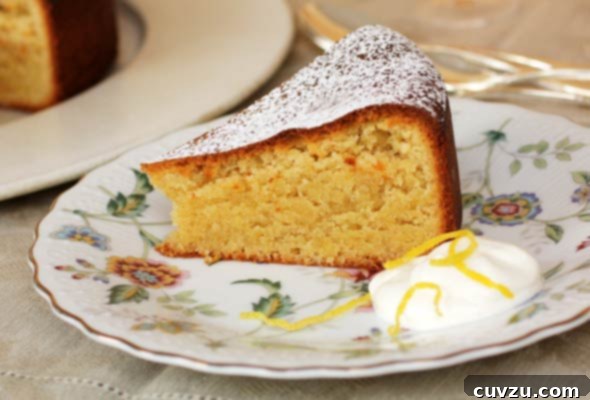
Portuguese Almond Torte (Bolo de Amêndoa): A Rich, Flourless, Gluten-Free Delight
Discover the irresistible charm of Bolo de Amêndoa, a traditional Portuguese almond torte that captivates with its rich flavor, dense texture, and wonderfully moist crumb. This beloved dessert is a celebration of simple, high-quality ingredients – primarily almonds, infused with the bright zest of lemon and a hint of warm cinnamon. Naturally flourless and gluten-free, it has earned its place as a cherished favorite across Portugal and among anyone fortunate enough to taste its exquisite profile.
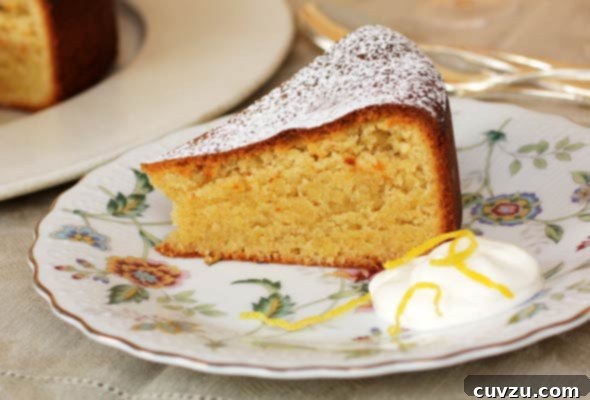
The absence of flour in this Portuguese almond torte is precisely what gives it its characteristic moist and dense texture—a quality deeply appreciated by the Portuguese palate. It’s a cake that doesn’t rely on lightness, but rather on the luxurious heft of finely ground almonds. While delicious on its own, a dusting of confectioners’ sugar enhances its beauty. For a truly indulgent experience, I often serve it with a generous spoonful of homemade preserves and a cloud of freshly whipped cream. –David Leite
Mastering the Perfect Portuguese Almond Torte: Tips for Success
Achieving the ideal texture for your Bolo de Amêndoa is simpler than you might think, though it does require a touch of patience and precision. This torte is naturally dense; it’s not designed to be a towering, airy cake. The almond flour lends incredible moisture but also contributes to its inherent richness and weight compared to traditional wheat-flour cakes. However, with the right technique, you’ll produce a torte that boasts a beautiful loft and a tender crumb, far from being truly “flat.”
The Secret to Lightness: Incorporating Air
The key to preventing a overly flat almond torte lies in how you incorporate air, particularly into the sugar and egg yolk mixture. When the recipe calls for beating the mixture for seven minutes, this isn’t an arbitrary suggestion—it’s absolutely essential. You’ll want to beat until the mixture transforms into a pale yellow, voluminous, and airy concoction, visibly filled with tiny bubbles. This step creates the foundational structure for the torte.
Equally important is the gentle folding of the whipped egg whites. These fragile peaks are repositories of air, and you want to preserve every bubble you’ve painstakingly created. Take your time, folding carefully and slowly, until the whites are just incorporated, leaving no streaks. Rushing this step will deflate the batter and result in a denser torte than intended. Finally, pour the delicate batter into your prepared pan and bake with care. The reward is a torte that, while dense by nature, possesses a delightful tenderness and a slight rise.
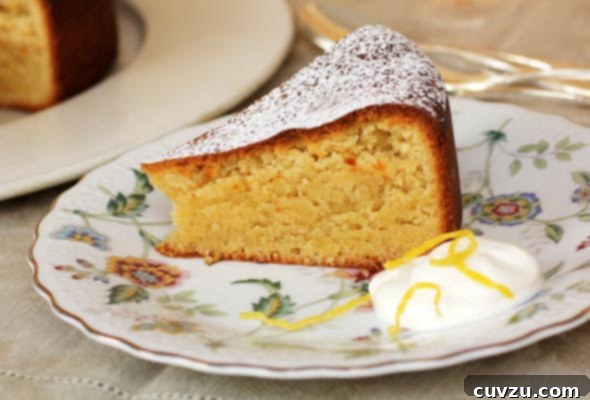
Portuguese Almond Torte ~ Bolo de Amêndoa
David Leite
Ingredients
- 12 tablespoons (6 oz) unsalted butter, plus more for the pan, at room temperature
- Gluten-free flour, for dusting the pan (optional, ensures no sticking)
- 3 cups blanched slivered almonds
- 1 1/4 cups granulated sugar
- 4 large egg yolks
- 4 teaspoons grated lemon zest (freshly grated for best flavor)
- 1/2 teaspoon kosher salt
- 1/2 teaspoon ground cinnamon
- 1 teaspoon vanilla extract
- 4 large egg whites
Instructions
-
Prep the oven and pan
Position the oven rack in the middle and preheat your oven to 350°F (175°C). Generously grease a 10-inch springform pan with butter. Line the bottom with parchment paper, then butter the paper as well. Lightly dust the entire pan with gluten-free flour, tapping out any excess. This meticulous preparation ensures an easy release for your delicate torte.
-
Prepare the almonds
In a food processor, combine the blanched slivered almonds and 1/4 cup of the granulated sugar. Pulse until the mixture reaches the consistency of fine cornmeal. Don’t be shy; process thoroughly to ensure the almonds are as finely chopped as possible, but avoid over-processing to prevent making almond butter. Add the room-temperature butter to the almond mixture and pulse just until combined. Set this mixture aside.
-
Mix the wet ingredients
Using a stand mixer fitted with the paddle attachment, or a handheld mixer in a large bowl, beat 3/4 cup plus 2 tablespoons of sugar with the egg yolks on medium-high speed. Continue beating for approximately 7 minutes, or until the mixture becomes very light, fluffy, and significantly pale yellow, indicating ample air incorporation. Stir in the lemon zest, kosher salt, and ground cinnamon until they are fully incorporated, releasing their fragrant aromas. Finally, gently whirl in the prepared almond mixture and vanilla extract until just combined.
-
Whip the egg whites and make the batter
In a separate, impeccably clean bowl, whisk the egg whites until they become foamy. Gradually add the remaining 2 tablespoons of granulated sugar, continuing to whisk until the egg whites form soft, luscious peaks. These peaks should hold their shape but still be pliable. Gently take about a spatulaful of the whipped egg whites and stir it into the almond mixture to lighten the batter. Then, with great care, fold in the remaining whipped egg whites until no white streaks are visible. This delicate folding technique is crucial for maintaining the airy texture of the torte. Spoon the lightened batter evenly into your prepared springform pan and gently smooth the top.
-
Bake and cool the cake
Bake the torte in the preheated oven for about 45 minutes, or until it turns a beautiful golden brown and begins to pull away from the sides of the pan. A wooden skewer inserted into the center should come out clean. Once baked, remove the torte from the oven and place it on a wire rack to cool for 5 minutes before carefully releasing it from the springform pan. (If you opted not to dust the pan with gluten-free flour, exercise extra caution during removal to keep the torte intact.) Allow the cake to cool completely on the rack. It is perfectly normal for the center of the torte to collapse slightly as it cools; this is a characteristic feature of this delightful dessert and part of its charm. Serve at room temperature for the best flavor and texture.

An LC Original
This recipe comes from the heart of Leite’s Culinaria, representing years of culinary exploration and passion for authentic flavors. It’s a testament to our dedication to sharing the very best in home cooking.
View More Original Recipes
Nutrition Information
Calories: 438 kcal
Carbohydrates: 33 g
Protein: 10 g
Fat: 32 g
Saturated Fat: 10 g
Monounsaturated Fat: 4 g
Trans Fat: 1 g
Cholesterol: 110 mg
Sodium: 144 mg
Fiber: 4 g
Sugar: 26 g
Nutrition information is automatically calculated and should be used as an approximation only. Individual results may vary based on specific ingredients and preparation methods.
Tried this delicious recipe?
Share your culinary creation! Mention @leitesculinaria or tag #leitesculinaria on Instagram. We love seeing your takes on our favorite dishes!
Insights from Our Recipe Testers
Ilda Costa-Sarnicki
The Portuguese almond torte I grew up with was a staple at family gatherings, but I often found it a bit too sweet and dense, preferring lighter, mousse-like desserts. I admit I was initially hesitant about this recipe, especially given the characteristic sunken middle. However, needing to expand my repertoire of gluten-free desserts, I decided to give this Bolo de Amêndoa a try – and I was absolutely delighted.
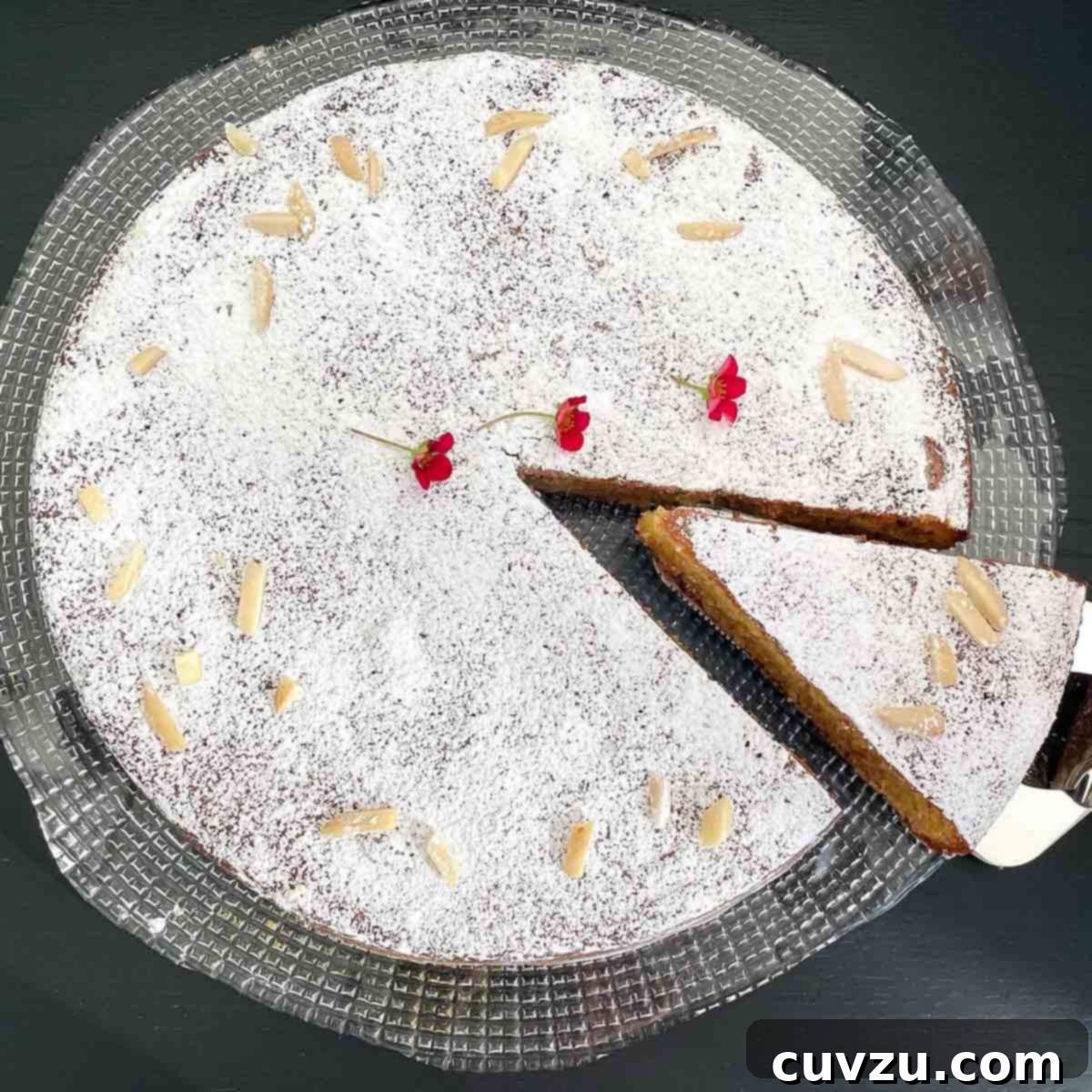
I particularly appreciated the technique of grinding the sugar with the almonds. This brilliant step helped achieve a very fine almond texture without the risk of over-processing them into almond butter. After just 45 seconds and 8 pulses in my food processor, the almonds were perfectly fine, resembling cornmeal. The crucial final step was carefully folding in the whipped egg whites. This technique truly imbued the naturally dense torte with a surprising and welcome fluffiness.
It was incredibly satisfying to bite into what appeared to be a dense dessert and discover such a fluffy consistency. It was wonderfully moist, yet not overly rich like the versions from my childhood. I’m completely converted! I can’t wait to share this exceptional torte with my Portuguese family and friends, and indeed, with all my friends, especially those who appreciate a fantastic gluten-free option.
Ellen Fuss
I chose this almond torte as a dessert for Passover, opting to line the pan with a sprinkling of matzoh cake meal instead of traditional gluten-free flour. The outcome was a wonderfully moist and delicious almond torte, a delightful departure from our usual Passover desserts. Its richness means that even a small portion is incredibly satisfying. The torte was surprisingly easy to put together; I even made two, freezing one after it had completely cooled. I was pleased to find that freezing and thawing did not significantly alter the torte’s taste or texture, making it an excellent make-ahead option.
The recipe itself is straightforward and easy to follow, with timing that proved perfect as written. When the torte is ready, the sides beautifully pull away from the pan, and the entire house fills with a marvelous aroma. While the cake does tend to sink a little in the middle during cooling, this is a charming characteristic and certainly doesn’t detract from its appeal. This recipe is a fantastic addition to any menu, whether you need a reliable flourless dessert or simply desire to bake something truly delicious and comforting.
Terri Lyons
I’m incredibly pleased that I had the opportunity to test this torte, and so were all the friends and family I served it to. It’s wonderfully moist and rich, yet surprisingly not overly heavy, and it maintains its excellent quality even on the second day. For those who prefer to measure ingredients by weight, my 3 cups of slivered almonds weighed just under 400g, and the granulated sugar came in at 250g, offering useful precision for bakers.
I presented the torte in two ways: one plain slice to truly appreciate its almond essence, and another served alongside a vibrant lemon curd and fresh strawberries. This torte provides a fantastic gluten-free dessert option that I can confidently prepare for my friends and family, and it’s a welcome alternative to meringue-based desserts. I appreciate that I don’t need to keep special gluten-free flour on hand; all the ingredients for this recipe are common pantry staples, making it incredibly convenient to whip up anytime.
Marcia L.
During our travels in Portugal, if Bolo de Amêndoa was on the menu, we absolutely ordered it! The most memorable version we tasted was in the Algarve region. And I can confidently say, this recipe is a true winner. It’s an elegant and delightfully moist torte that keeps exceptionally well – not that it lasts long enough to become an issue! I even found it to be more delicious on the following day, allowing the flavors to meld beautifully. For an extra touch, I lightly toasted the almonds before grinding them and sprinkled some sliced almonds on top of the cake before baking, adding a lovely textural contrast and enhanced almond aroma. A small dollop of whipped cream and a few fresh raspberries on the side made for a perfect accompaniment. I highly recommend enjoying a slice for breakfast, paired with Greek yogurt and perhaps some fresh berries, to start your day with a touch of luxury.
Next time I prepare this, I’m keen to try the torte with less lemon zest, or perhaps even omit it entirely, to see if it allows the pure almond flavor to shine through even more. While most people would likely prefer the brightness of lemon, I personally felt it slightly detracted from the almond profile. I also believe that orange zest would be a delicious variation, though it might present the same subtle competition with the almond. I baked mine in a 10-inch fluted pan with a removable bottom, which worked perfectly. This truly is a lovely and elegant dessert – rich and satisfying without being overly sweet, a characteristic we particularly enjoyed.
Curious about more culinary adventures? Our dedicated team of recipe testers brings you honest feedback and valuable insights on every dish.
Explore More Tester Reviews