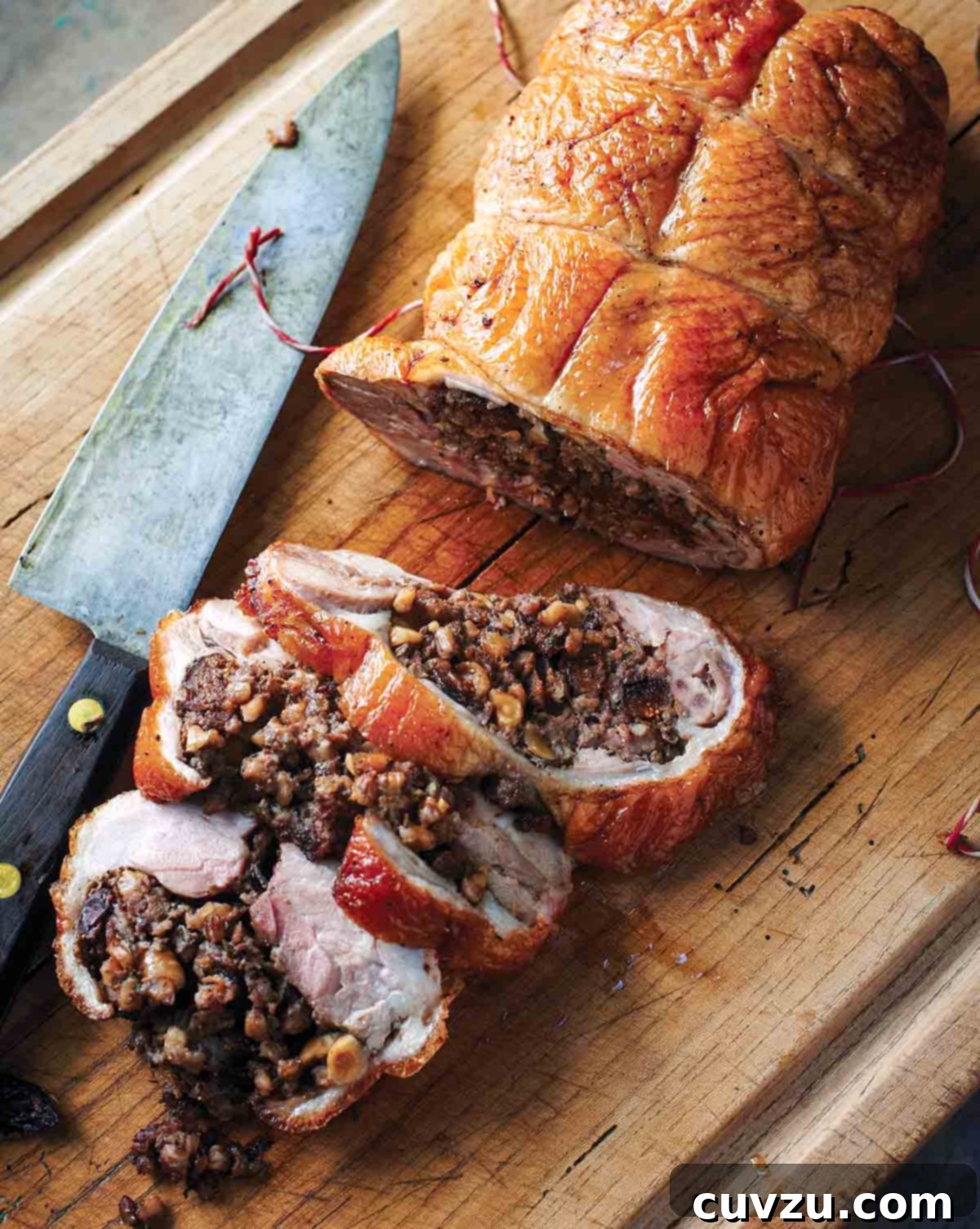
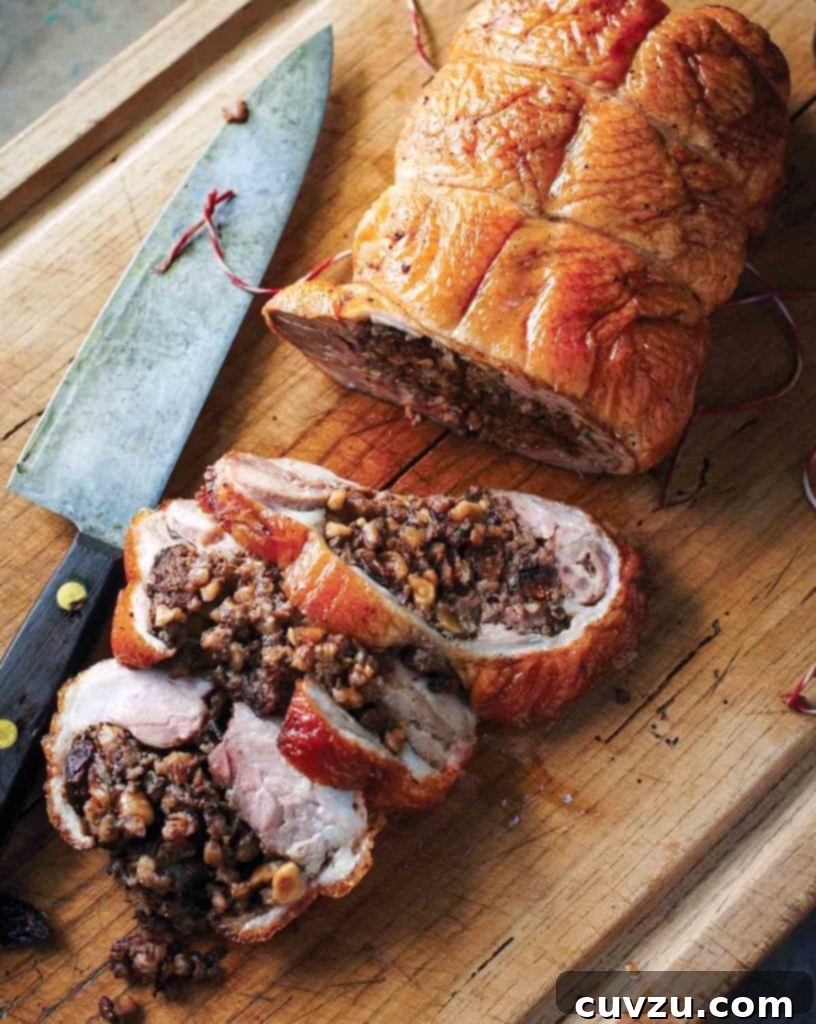
Elevate your holiday table with an exquisite **Roast Duck Stuffed with Farro, Figs, and Hazelnuts**. This show-stopping centerpiece promises not just a meal, but an unforgettable culinary experience, blending the rich, succulent flavors of perfectly roasted duck with a uniquely savory, sweet, and nutty stuffing. Imagine a whole deboned duck, meticulously filled with a vibrant mixture of earthy farro, plump red wine-soaked figs, crunchy hazelnuts, fragrant herbs like parsley and thyme, warm allspice, and savory sausage. Each component is carefully chosen to create a symphony of textures and tastes. Once stuffed, the duck is artfully rolled into a compact package, scored to ensure crispy skin, and roasted until it achieves a glorious golden-brown hue and melt-in-your-mouth tenderness. This isn’t just a dish; it’s a testament to refined holiday entertaining, guaranteed to impress even the most discerning palates.
Featured Review
We had this for Christmas dinner after my wife saw it in the book and said that’s what we’ll have. It was fantastic!!
Paul
Quick Dish Overview
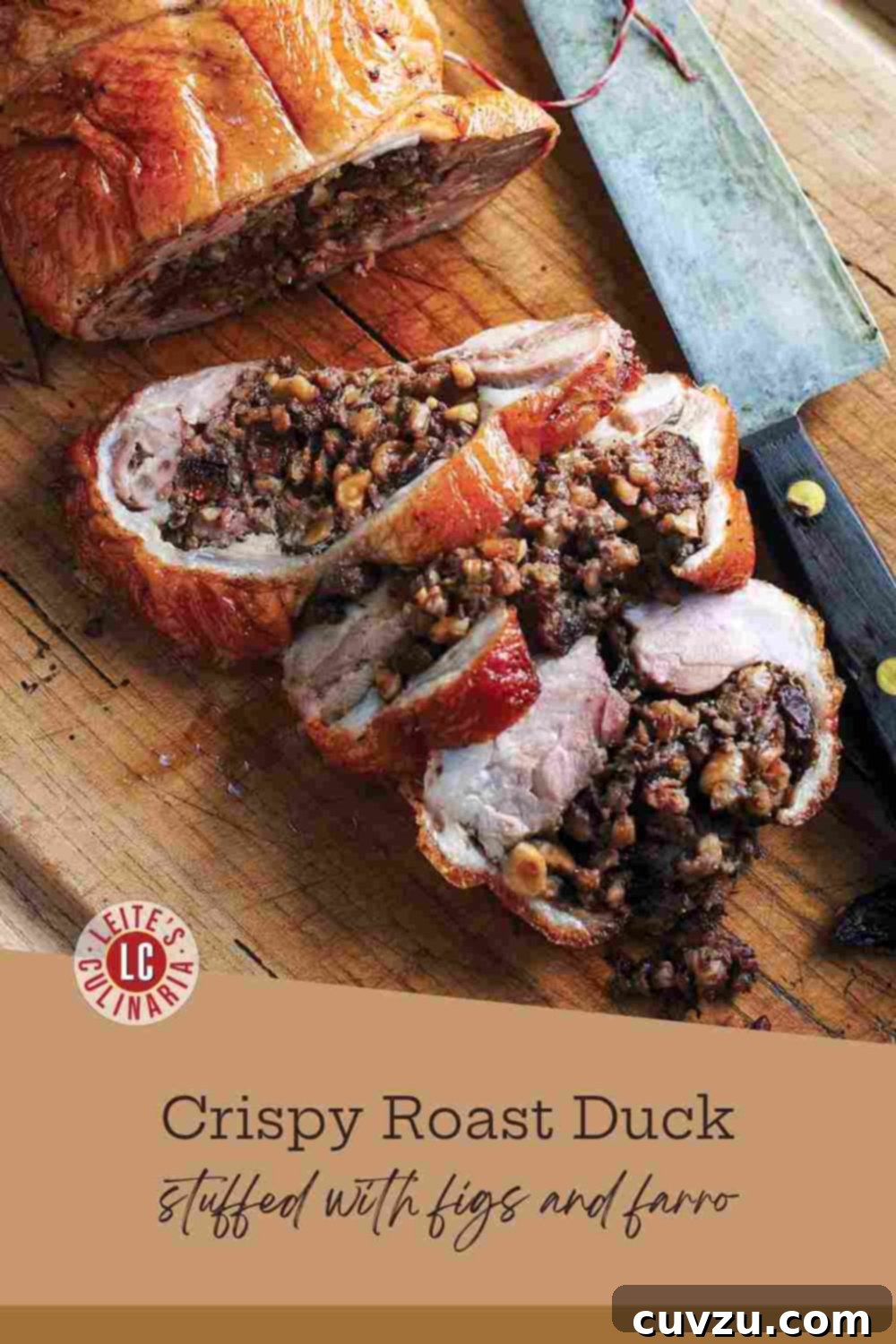
- What it is: A magnificent whole roasted duck, expertly deboned and stuffed with a rich, multi-textured filling of whole-grain farro, lusciously sweet red wine-soaked figs, and perfectly crunchy hazelnuts. This culinary masterpiece is then roasted to golden perfection.
- Why you’ll love it: This dish is an undeniable show-stopper, making it the ideal centerpiece for any holiday feast or special celebration. It masterfully balances the crisp, beautifully rendered skin of the duck with a profoundly complex, nutty, subtly sweet, and savory stuffing. Every bite offers a delightful interplay of flavors and textures.
- How to make it: Begin by deboning the duck yourself for a satisfying culinary challenge, or conveniently ask your butcher to handle it. Next, prepare the vibrant fig, farro, and sausage stuffing. Roll the deboned duck meat tightly around this flavorful mixture, secure it with kitchen string, gently score the skin, and roast it until it’s wonderfully golden and impeccably crisp. The result is utterly stupendous!
Why This Roast Duck is a Must-Try
Beyond its striking visual appeal, this roast duck offers a culinary experience that is truly unmatched. It’s an opportunity to create something extraordinary with relatively straightforward steps, yielding results that taste as impressive as they look.
A Feast for the Senses
The moment this roast duck emerges from the oven, its golden-brown, crackling skin and aromatic scent instantly command attention. Slicing into it reveals a vibrant cross-section of tender duck meat encircling a rich, colorful stuffing. The combination of sweet, savory, and nutty aromas fills your kitchen, setting the stage for a memorable meal.
Unforgettable Flavors and Textures
Each ingredient in this recipe plays a crucial role in building its complex flavor profile. The duck meat, naturally rich and flavorful, becomes incredibly tender through the roasting process. The farro, an ancient varietal of wheat, introduces a firm yet wonderfully chewy texture that distinguishes it from traditional bread-based stuffings. This is perfectly complemented by the concentrated sweetness and delicate chew of red wine-soaked figs, which offer a delightful burst of fruity richness. Toasted hazelnuts add a welcome crunch and an earthy, toasty depth that harmonizes beautifully with the duck. The savory notes from the sausage and the subtle warmth of allspice, thyme, and bay leaf round out the stuffing, creating a truly dynamic and satisfying filling.
The Perfect Holiday Centerpiece
Whether it’s for Thanksgiving, Christmas, or any significant celebration, this stuffed roast duck transforms an ordinary dinner into an event. Its elegance and sophisticated flavor profile make it a standout dish that guests will talk about long after the meal is over. It serves as a testament to thoughtful cooking and generous hospitality.
Understanding the Key Ingredients
At the heart of this spectacular dish are ingredients that each contribute unique characteristics, creating a harmonious blend that elevates the entire experience. Farro, an ancient varietal of wheat popular in central Italy, is a favorite in many kitchens for its ability to add substance and character. When cooked, it boasts a firm but delightfully chewy texture, making it an ideal choice for hearty soups, rustic salads, and, of course, a robust stuffing like this one.
The Duck: Selecting and Deboning
A whole duck, typically weighing between 5 to 7 pounds, is the star of this recipe. For a truly impressive presentation, a deboned duck is recommended as it allows the duck to be rolled beautifully around the stuffing. While deboning a duck might sound daunting, it’s a skill that can be mastered with a good knife and some patience. Many home cooks, like our recipe tester Elie Nassar, find it a satisfying experience, taking about 20 to 30 minutes. Online how-to videos can be an excellent resource if you choose this route. Alternatively, don’t hesitate to ask your butcher to debone the duck for you. It’s a common request, though it’s always best to ask well in advance and be aware that there might be a service charge.
Farro: The Ancient Grain with Modern Appeal
Farro is a highly nutritious whole grain known for its distinctive nutty flavor and chewy texture. Rich in fiber and protein, it provides a hearty base for the stuffing, absorbing the flavors of the other ingredients while offering a satisfying bite. If farro is unavailable, excellent substitutes include wild rice, brown rice, or a mix of whole grains, each offering its own unique texture and flavor nuances.
Sweet Figs & Crunchy Hazelnuts: A Symphony of Contrast
Dried figs, soaked overnight in red wine infused with sugar, bay leaf, thyme, peppercorns, and allspice, become wonderfully plump and intensely flavorful. Their natural sweetness and delicate texture provide a beautiful contrast to the savory duck and nutty farro. Hazelnuts, toasted and coarsely chopped, contribute a delightful crunch and a deep, earthy, toasted flavor that complements the richness of the duck and the sweetness of the figs perfectly.
Savory Sausage and Aromatic Herbs: Building Depth
Breakfast sausage adds a savory, spiced dimension to the stuffing, binding the ingredients together and imparting a robust flavor. Fresh herbs like chopped thyme and flat-leaf parsley introduce bright, earthy notes that cut through the richness. The subtle inclusion of allspice berries and whole black peppercorns in the fig-soaking liquid ensures a complex aromatic foundation.
The Magic of Red Wine: Infusion and Flavor
Dry red wine, such as a Pinot Noir, is not just for pairing; it’s an integral part of the stuffing’s flavor development. Soaking the figs in spiced red wine overnight infuses them with a sophisticated depth, creating a subtle tang and a lingering warmth that elevates the entire dish.
Mastering the Preparation
While the final presentation of this dish is impressive, the preparation is designed to be manageable, with key steps that can even be done in advance.
Preparation in Advance
One of the beauties of this recipe is that you can prepare the wine-soaked figs a day ahead, allowing their flavors to deepen and the figs to plump perfectly. This frees up valuable time on the day of your dinner. Deboning the duck, whether by yourself or your butcher, is another step that can be handled beforehand.
Assembling the Stuffed Duck
Once the duck is deboned, patting it thoroughly dry is crucial for achieving crispy skin. Seasoning both the meat and skin generously with salt and pepper lays the foundation for flavor. The stuffing, a simple mix of the prepared figs, cooked sausage, farro, hazelnuts, chopped thyme, and parsley, is shaped into a cylinder and placed in the center of the duck. Rolling the duck tightly around the stuffing and securing it with kitchen string ensures it holds its shape during roasting. A light scoring of the duck skin in a crosshatch pattern helps render the fat more effectively, leading to that coveted crispy skin.
Achieving the Perfect Roast
Roasting the duck on a rack allows for even cooking and proper fat rendering. Regular basting with the accumulating drippings not only keeps the duck moist but also builds incredible flavor and contributes to the golden crust. Monitoring the internal temperature of the stuffing is key to ensuring both the duck and the filling are cooked perfectly. If the skin begins to brown too quickly, a slight reduction in oven temperature allows for slower, more controlled cooking, guaranteeing tenderness without burning.
Your Roast Duck Questions, Answered
Deboning a duck can seem challenging, but it’s a rewarding culinary skill. If you’re keen for a hands-on experience, much like our recipe tester Elie Nassar, you can certainly undertake the task yourself. Many find it less daunting than it appears, especially with a sharp knife and about 20 to 30 minutes of dedicated effort. Resources like online how-to videos can provide excellent visual guidance, helping you confidently prepare your duck. If you prefer to skip this step, simply ask your butcher. It’s advisable to make this request well in advance, particularly during busy holiday seasons, as butchers are often happy to assist, though a service charge may apply.
Absolutely! If deboning isn’t an option or you prefer a more traditional approach, you can certainly roast the duck whole, bones and all, much like you would a turkey or chicken. In this scenario, you would simply prepare the delicious farro, fig, and hazelnut mixture as a separate dressing. Bake the dressing in a side dish alongside the duck, allowing it to become wonderfully moist and flavorful. This variation still delivers all the incredible tastes of the recipe while simplifying the preparation of the duck itself.
Yes, this versatile stuffing is not exclusive to duck! The unique combination of nutty farro, sweet figs, and crunchy hazelnuts creates a flavor profile that beautifully complements a variety of poultry. While it’s exceptionally good with roast duck, the recipe’s creators confirm that this stuffing works equally well with other birds such as roast quail, game hens, or even a larger turkey. It’s a fantastic way to introduce new textures and flavors to your traditional holiday roasts.
Serving Suggestions & Pairings
This magnificent roast duck is substantial enough to be a meal in itself, but complementing it with thoughtful side dishes and beverages can elevate the dining experience further. Consider serving it with roasted root vegetables, such as carrots, parsnips, and potatoes, which can roast alongside the duck, absorbing its rich flavors. A vibrant green salad with a light vinaigrette or steamed broccolini dressed in a mustard vinaigrette provides a fresh counterpoint to the richness of the duck and stuffing. For a touch of fruitiness, a simple cranberry or cherry sauce can add a delightful tartness. When it comes to wine, a good Pinot Noir, similar to the one used for soaking the figs, makes an excellent pairing, harmonizing with the complex flavors of the dish.
Pro Tips for Success
- Deboning Confidence: If deboning the duck yourself, watch a few videos beforehand. Don’t be afraid; it’s more about precision than speed.
- Seasoning is Key: Don’t underestimate the power of salt and freshly ground black pepper on the duck’s interior and exterior. This enhances all the flavors.
- Stuffing Adjustment: You might find you don’t need all the stuffing mixture. If you have leftovers, bake it separately as a dressing.
- Crispy Skin Trick: While scoring the skin helps, some testers also recommend pricking the skin all over with a fork to ensure maximum fat rendering and crispiness.
- Nut Preparation: To avoid mess and danger when chopping hazelnuts, place them in a resealable plastic bag in a single layer and gently pound them with a meat mallet (smooth side) to your desired texture.
- Leftover Magic: Don’t discard the spiced wine from soaking the figs! Reduce it and swirl in a knob of butter to create an exquisite sauce for any leftovers. Pan-fry leftover fig slices in duck fat until crisp for an extra treat.
- Freezing Ahead: Once stuffed and tied, the duck can be wrapped well and frozen. Remember to thaw it thoroughly in the refrigerator for a couple of days before roasting.
More Superb Duck Recipes
Duck Soba
1 hr 45 mins
Duck Jambalaya
1 hr 45 mins
Duck Prosciutto
15 mins
Cassoulet of White Beans, Sausage, and Duck
3 hrs 30 mins
Write a Review
If you make this recipe, or any dish on LC, consider leaving a review, a star rating, and your best photo in the comments below. I love hearing from you.–David
Featured Review
Excellent recipe!
Anshuman
Roast Duck Stuffed with Farro, Figs, and Hazelnuts
David Leite
Equipment
-
Kitchen string
Ingredients
- 1 1/2 cups dry red wine, such as pinot noir
- 2 tablespoons granulated sugar
- 1 dried bay leaf
- 1 sprig thyme, plus 2 tablespoons chopped thyme leaves
- 1/2 teaspoon whole black peppercorns
- 1 allspice berry
- Fine sea salt, to taste
- 12 dried figs, (any variety)
- One (5- to 7-pound) whole duck, deboned (see LC Note above)
- Freshly ground black pepper, to taste
- 1 pound breakfast sausage, uncooked
- 2 cups cooked farro, (or substitute wild rice, brown rice, or mixed whole grains)
- 3/4 cup hazelnuts, toasted, skinned, and coarsely chopped
- 1/2 cup chopped flat-leaf parsley leaves
Instructions
-
A day before dinner, in a small saucepan over medium-high heat, stir together the wine, sugar, bay leaf, thyme sprig, peppercorns, allspice, and a pinch of salt. Bring to a simmer and stir until the sugar dissolves. Remove from the heat, add the figs, and cover. Let cool to room temperature and then refrigerate overnight.
-
A couple of hours before dinner, preheat the oven to 375°F (190°C). Fit a roasting pan with a rack.
-
Trim any glands or blood vessels from the duck. Pat the duck completely dry with paper towels and place it on a cutting board, opening it like a book. Season it inside and out (that is to say, on both the meat and the skin) with salt and pepper. Turn the duck skin side down.
-
Drain the figs, trim the stems, and then quarter each fig lengthwise. In a bowl, combine the figs, sausage, farro, hazelnuts, chopped thyme, and parsley. Pat the stuffing into a cylinder about 3 inches in diameter and 3 inches shorter than the length of the duck. Place the stuffing directly in the center of the duck and roll the meat tightly around the stuffing, tucking the ends underneath. Tie the duck every 2 inches or so with a separate piece of kitchen string.
-
Using the tip of a sharp knife, lightly score the duck skin in a crosshatch pattern to facilitate the release of fat during cooking, being careful not to cut the string.
-
Place the duck on the rack and roast it, basting the duck with the drippings that accumulate in the pan 3 or 4 times, for about 60 to 90 minutes, until a thermometer inserted into the middle of the farro stuffing registers 160°F (71°C). If the skin starts to get a little too brown, you can lower the oven temperature to 325°F (165°C) so the duck finishes more slowly.
-
Remove the duck from the oven and let it rest for 10 minutes. Carve into slices about 1 inch thick, removing and discarding the string. Serve immediately.
Notes
Whole Stuffed Duck Variation
If you can’t get your duck deboned, or simply prefer to roast it whole, this recipe is still wonderfully adaptable. Simply pat the whole duck dry, season it generously with salt and pepper, and roast it. For a delicious outcome, our recipe tester Elie Nassar suggests roasting it on a rack in a roasting pan at 325°F (165°C) for 1 1/2 to 2 hours, which yielded excellent results.
You have two main options for the stuffing in this variation. You can either loosely fill the cavity of the whole bird with the prepared farro, hazelnut, and fig mixture, or you can bake the stuffing separately as a dressing. To prepare the stuffing for either option, first sauté the breakfast sausage until no pink remains. Then, mix in the remaining ingredients. If stuffing the bird, loosely fill the cavity. If baking as a dressing, spoon the mixture into an 8-inch square dish or a small casserole dish, cover with a lid or foil, and bake alongside the duck until warmed through, typically 30 to 60 minutes. This method offers flexibility without compromising on flavor!
Adapted From
In the Charcuterie
Buy On Amazon
Explore More with AI
Nutrition
Nutrition information is automatically calculated, so should only be used as an approximation.
Recipe Testers’ Reviews
Dan Kraan
If you’re looking for something perfect for that special celebration, you’ve found it! Also called a ballotine, this is an incredible presentation of a roast duck recipe and makes for a grand entrance to your dinner table. I love the way that these rich flavors, colors, and textures all come together to exemplify what constitutes a great fall dinner or Christmas dinner, even. I served the duck with roasted root vegetables. The recipe for roasted root vegetables with Marcona almonds is a fine example of a side dish that further showcases fall bounty. It also seemed the obvious choice, since I was using my oven anyway.
If you’re handy with a knife, the duck can be deboned and ready in less than an hour. Be sure to season the duck well with salt and pepper, allowing the farro stuffing flavors to pop. Once stuffed and tied, the duck can be wrapped well and frozen in advance. Just be sure to take it out of the freezer at least a couple of days ahead of your meal so it can thaw properly.
As for roasting, my 5-pound duck took about 1 1/2 hours to reach the proper internal temperature. Once sliced, it easily served 6 people. You may not need all the stuffing mix. Once placed on the deboned bird, I started the roll with the breast-end, as the other end is thinner and fattier. That needs to be outside of the bird and helps with the closure and sealing at the end. I cross-hatched the skin, but thought later that pricking it well with a fork may be a better way to go.
All the breakfast sausage here in Canada is in casings, so I removed the casings and mixed them into the stuffing by hand. Chopping the hazelnuts can be time-consuming, messy, and somewhat dangerous. My solution was to place them in a resealable plastic bag, large enough to hold them in a single layer, and then use my meat mallet (the smooth side) to lightly pound them to the desired texture.
Elie Nassar
I absolutely loved this recipe. It really is very straightforward to prepare (more or less) if you’ve access to a deboned duck. I didn’t, so I did the deboning myself. The duck reaches about 140°F (60°C) in about 60 minutes. However, at that point, the skin was still a bit too light-colored for my liking. Also, since the filling has sausage, cooking it closer to 160°F (70°C) isn’t a bad idea. Sure enough, another 25 minutes gave me a beautiful, golden brown, crisp-looking skin and the filling had reached 160°F (70°C). That was perfect for my taste and the duck meat was flavorful and juicy.
The end result is an impressive roast with crisp skin, flavorful meat, and deliciously unique farro and sausage filling that’s sweet, salty, and robust with spices and herbs. The hazelnuts turn a bit soft, almost like chestnuts. With the duck and the hearty filling, you really have a full meal, but I did want something tart and green with it, so I served it with broccolini dressed in a mustard vinaigrette. We opened a bottle of pinot noir to go along with the meal—a great combo!
One last thing—the recipe leaves you with a good bit of unused spiced wine from soaking the figs. When I served the duck leftovers the next day, I sliced the figs into rounds and panfried them in a little duck fat until crisp. Then I reduced the spiced wine and swirled in some butter to make an excellent sauce.
Sofia Reino
After running around town from store to store like a maniac to find a 5- to 7-pound duck, I finally settled for 2 frozen 3 1/2-pound ducks. While going through the process of deboning the first duck, my patience grew shorter and I decided to leave the other intact to see how it’d come out. The deboned version was perfection after cooking and the stuffing was juicy and amazingly tasty, with a nice blend of sweetness, herbs, and spices.
I used quinoa instead of farro for the grain, as that’s what I had at home. The second version (the full, untouched duck) was just as juicy and tender but the stuffing came out a tad drier. I simply cannot explain why, unless it was because it took 30 more minutes in the oven to attain the correct temperature. This is certainly a recipe to redo; I’d love to try it with a goose.
Kate H. Knapp
Duck. Figs. Farro. Hazelnuts. Swoon. Watching the turning leaves outside my kitchen window while the scent of a roasting duck fills the air. Double swoon. As for the flavor, the wine-soaked figs work in complete harmony with the duck, while the hazelnuts provide a delightfully toasty crunch. I made my stuffing with wild rice and loved the texture against the sausage.
Who knew it was so easy to wow your loved ones with a truly impressive dish without a lot of effort? The final results are really quite spectacular for not a lot of work (especially if the duck comes deboned). And it really is the perfect fall dish. Serve it with some sort of fruit sauce to take this dish to a new level of heaven. Your turn to swoon.
Anna Scott
I loved everything about this wonderful mix of fall flavors—this roast duck stuffed with farro, figs, and hazelnuts has Thanksgiving written all over it. A flavorful whole roast duck with a unique stuffing of tender farro, red wine-poached figs, crunchy hazelnuts, and crumbled sausage. (The stuffing alone is a recipe to hold on to for other meats—turkey would be nice, or maybe even Cornish hens.)
I didn’t debone the duck; I found a butcher that would’ve done it for me, but it was going to be pricey. So I roasted the whole duck by itself with some thyme and a sprinkling of salt and pepper. Roasting the whole duck did change the cooking time a bit. I scored its skin and cooked it on a low temperature of 325°F (163°C) for about 1 1/2 hours, or until the breast reached 140°F (60°C).
I made the stuffing as more of a dressing and cooked it on the side. I first cooked the sausage in a sauté pan by itself until browned, and then added it to the bowl of cooked farro, figs, hazelnuts, etc. Then I baked the dressing in an 8-inch square baking dish in a 350°F (177°C) oven for about 30 minutes before serving it with the roast duck. I used a nice pinot noir to poach dried Mission figs and actually added some finely chopped fresh sage into the stuffing mixture along with the thyme. (I did this because, in the recipe’s intro, it mentioned sage-scented sausage, but the sausage I used didn’t have sage in it as it was.)
The flavors were absolutely delicious! Lovely combination of ingredients. A perfect fall meal.
Conclusion
This Roast Duck Stuffed with Farro, Figs, and Hazelnuts is more than just a recipe; it’s an invitation to create a truly memorable culinary moment. Its combination of rich duck, hearty farro, sweet figs, and crunchy hazelnuts delivers an unparalleled feast for the senses, perfect for any special occasion. Whether you’re an experienced chef or an adventurous home cook, this dish offers a rewarding experience from preparation to presentation. Don’t be shy – dive in and impress your guests with this magnificent centerpiece. We encourage you to try this recipe, experiment with the variations, and share your experiences and creations in the comments below. Happy cooking, and bon appétit!