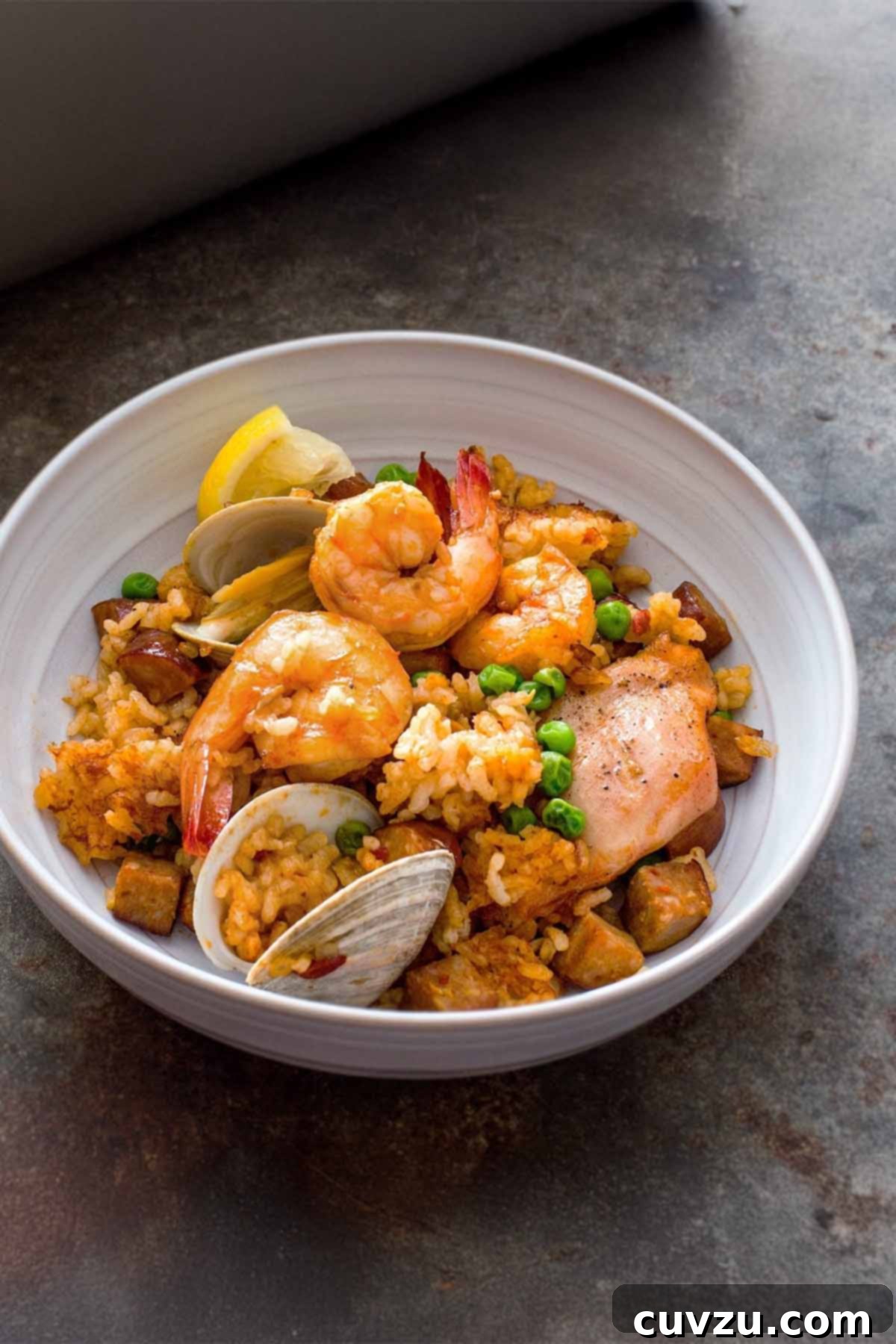
The Ultimate Dutch Oven Paella: A Taste of Spain at Home
Transport your taste buds to the sun-drenched shores of Valencia, Spain, with this exquisite Paella recipe. A truly iconic Spanish dish, paella is renowned for its vibrant colors, aromatic saffron-infused rice, and a harmonious blend of seafood and savory meats. While traditionally cooked in a wide, shallow paella pan, this version masterfully adapts the classic technique for your trusty Dutch oven, making this culinary journey accessible to every home cook.
Unveiling the Magic of Paella: History, Ingredients, and That Coveted Socarrat
Originating in the picturesque region of Valencia, paella is more than just a rice dish; it’s a celebration of Spanish culinary heritage. Historically, paella was a farmers’ and laborers’ meal, cooked outdoors over an open fire, featuring ingredients readily available from the countryside like rabbit, snails, and vegetables. Over time, it evolved to include a dazzling array of seafood, particularly along the coast, transforming into the globally recognized dish we cherish today.
The essence of a truly great paella lies in its carefully selected ingredients and meticulous preparation. Our recipe combines the best of land and sea: plump shrimp, delicate mussels, robust Spanish chorizo, and tender chicken thighs, all mingling with a fragrant base of tomatoes, garlic, and the unmistakable golden hue and subtle aroma of saffron. The selection of rice is paramount; Valencia or Arborio rice are ideal choices due to their ability to absorb copious amounts of flavorful liquid without becoming mushy, while still developing that signature texture.
The Quest for Socarrat: The Crispy Soul of Paella
One of the most revered elements of authentic paella is the socarrat—a crispy, caramelized crust of rice that forms at the bottom of the pan. This crunchy layer, born from the direct heat and interaction with the pan, adds an incredible depth of flavor and texture that many paella enthusiasts consider essential. In traditional paella, achieving a perfect socarrat is a delicate balancing act, requiring precise heat control and patience.
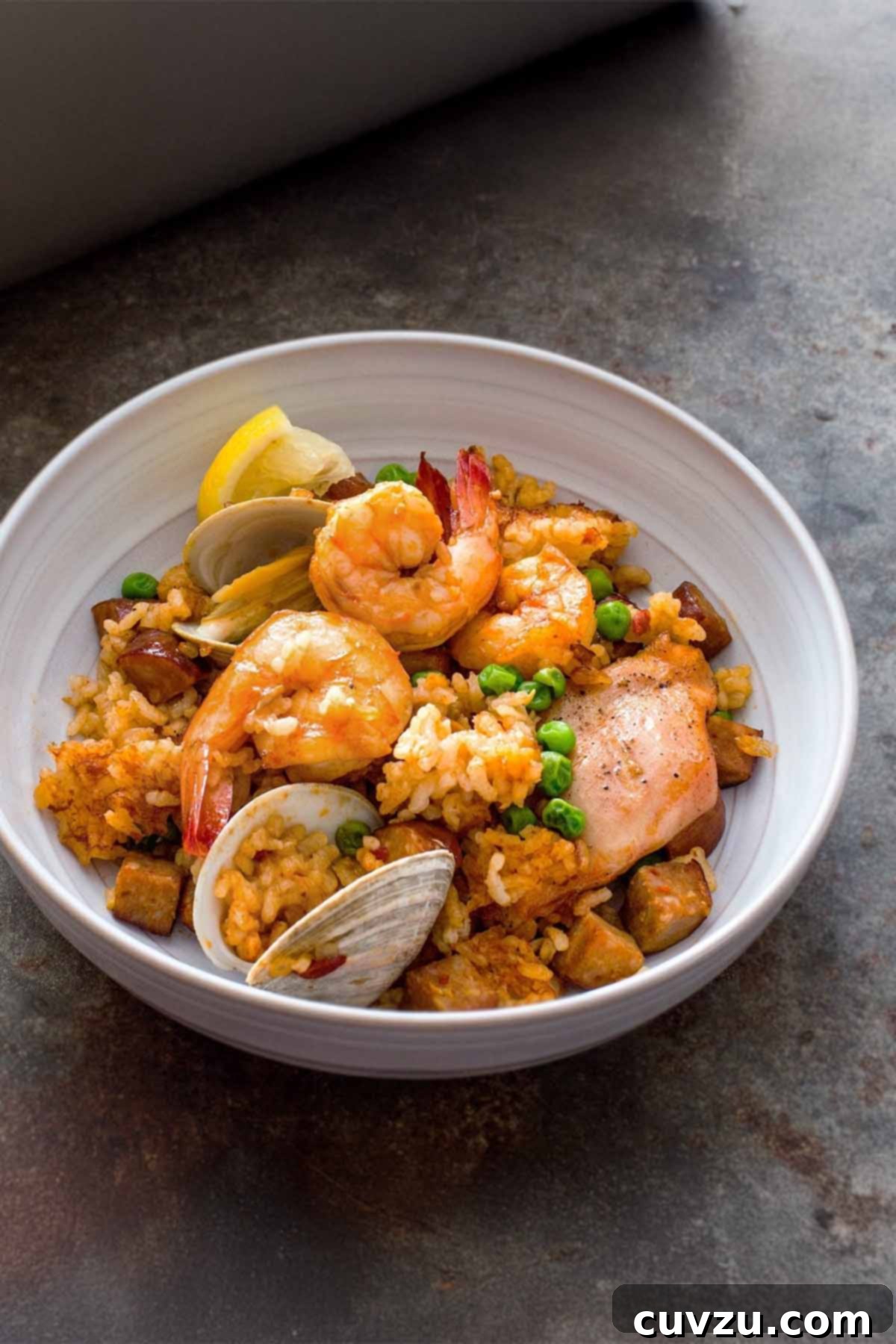
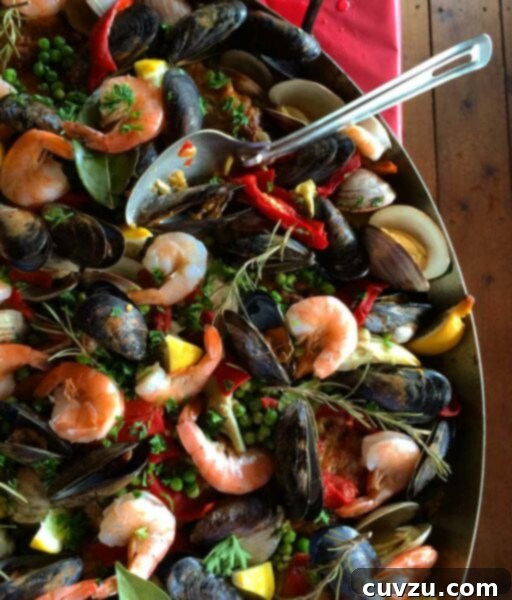
While our Dutch oven method primarily relies on oven cooking for even heat distribution, which typically doesn’t produce a distinct socarrat on its own, we haven’t forgotten this vital component. For those who crave this delightful crispiness, we’ve included an optional step (Step 6 in the instructions) to develop a beautiful socarrat on your stovetop after the main oven cooking. If you prefer a softer, fluffier rice texture throughout, you can simply skip this step and proceed directly from Step 5 to Step 7. Regardless of your socarrat preference, a garnish of fresh parsley or fragrant rosemary, as beautifully shown in the accompanying photograph, adds a final touch of freshness and elegance to this remarkable dish.
–The Editors of Cook’s Illustrated
Share Your Paella Experience!
If you create this delicious paella or any other dish from Leite’s Culinaria, we’d love to hear from you. Please consider leaving a review, a star rating, and your best photo in the comments below. Your feedback inspires us! –David
Featured Review
Thank you David for the recipe! We loved it!…I used a Dutch oven 12” wide. I made a couple of changes—added my shrimp shells to the chicken stock to add flavor, then strained and added the saffron to the stock to bloom. I also added the peas at the very end while it was resting for five with lid on. Delicious!!!
Tara Skelton
Classic Spanish Paella in a Dutch Oven
Recipe by David Leite
Ingredients
- 1 pound extra-large shrimp, (21 to 25 per pound), peeled and deveined
- Salt and freshly ground black pepper, to taste
- Olive oil, as needed
- 8 or 9 medium garlic cloves, minced or pressed (about 2 generous tablespoons)
- 1 pound boneless, skinless chicken thighs, each thigh trimmed of excess fat and halved crosswise
- 1 red bell pepper, stemmed, seeded, and cut pole to pole into 1/2-inch-wide strips
- 8 ounces Spanish chorizo, sliced 1/2 inch thick on the bias
- 1 medium onion, chopped fine (about 1 cup)
- One (14.5-ounce) can diced tomatoes, drained, minced, and drained again
- 2 cups Valencia or Arborio* rice
- 3 cups homemade chicken stock or low-sodium canned chicken broth
- 1/3 cup dry white wine
- 1/2 teaspoon saffron threads, crumbled
- 1 dried bay leaf
- 1 dozen mussels, scrubbed and debearded
- 1/2 cup frozen peas, thawed
- 2 tablespoons chopped flat-leaf parsley, for garnish
- 1 lemon, cut into wedges, for serving
Instructions
-
Prepare Your Proteins and Oven: Position an oven rack in the lower-middle section of your oven and preheat to 350°F (180°C). In a medium bowl, combine the peeled and deveined shrimp with 1/4 teaspoon salt, 1/4 teaspoon pepper, 1 tablespoon of olive oil, and 1 teaspoon of the minced garlic. Toss gently to coat, then cover the bowl with plastic wrap and refrigerate until it’s time to add them to the paella. Separately, season the chicken thighs generously with salt and pepper, and set them aside. This preliminary seasoning ensures deep flavor from the start.
-
Sauté the Bell Peppers: Heat 2 teaspoons of olive oil in your large Dutch oven over medium-high heat. Wait until the oil is shimmering but not smoking. Add the red bell pepper strips and cook, stirring occasionally, for 3 to 4 minutes, or until their skin begins to soften, blister, and develop appealing spotty black char marks. This step brings out their sweetness and a smoky flavor. Transfer the cooked bell peppers to a small plate and set them aside.
-
Brown the Chicken and Chorizo: Add another 1 teaspoon of olive oil to the same Dutch oven, heating it over medium-high heat until it shimmers. Carefully place the seasoned chicken pieces in a single layer at the bottom of the pot. Cook without disturbing them for about 3 minutes, allowing them to develop a deep golden-brown crust. Flip the chicken pieces and brown for another 3 minutes on the second side. Once browned, transfer the chicken to a medium bowl. Reduce the heat to medium, then add the sliced Spanish chorizo to the pot. Cook, stirring frequently, for 4 to 5 minutes until the chorizo is deeply browned and has rendered its aromatic, flavorful fat. Add the cooked chorizo to the bowl with the chicken, setting both aside.
-
Build the Flavor Base: If necessary, add enough olive oil to the rendered fat in the Dutch oven to make a total of 2 tablespoons. Heat over medium heat until shimmering. Add the chopped onion and cook, stirring frequently, for about 3 minutes until it has softened and become translucent. Stir in the remaining minced garlic and cook for an additional 1 minute until fragrant, being careful not to burn it. Incorporate the drained and minced diced tomatoes, cooking for about 3 minutes until the mixture slightly darkens and thickens, forming a rich sofrito. Stir in the Valencia or Arborio rice, ensuring each grain is thoroughly coated with the flavorful tomato mixture, cooking for 1 to 2 minutes. Pour in the chicken broth, dry white wine, crumbled saffron threads, and the bay leaf, along with 1/2 teaspoon of salt. Return the browned chicken and chorizo to the pot. Increase the heat to medium-high and bring the mixture to a gentle boil, stirring occasionally. Once boiling, cover the Dutch oven tightly and transfer it to the preheated oven. Cook for approximately 15 minutes, or until the rice has absorbed almost all of the liquid.
-
Add Seafood and Final Touches: Carefully remove the paella from the oven (remember to close the oven door to maintain heat). Uncover the Dutch oven. Artfully scatter the reserved shrimp over the surface of the rice. Arrange the scrubbed and debearded mussels, hinged-side down, inserting them gently into the rice so they stand upright. Arrange the cooked bell pepper strips in an attractive pinwheel pattern, and scatter the thawed frozen peas evenly over the top. Re-cover the pot and return it to the oven. Continue to cook for another 10 to 12 minutes, or until the shrimp are opaque and pink, and all the mussels have opened wide. Discard any mussels that remain closed.
-
Optional Socarrat Step: If you desire a crusty socarrat (the browned rice layer mentioned in the headnote), remove the Dutch oven from the oven and place it, uncovered, over medium-high heat on your stovetop. Cook for about 5 minutes, rotating the pot 180 degrees halfway through (after approximately 2 minutes) to ensure even browning. Listen for the crackling sound of the rice developing its crust; avoid stirring. This step is crucial for achieving that authentic crispy bottom.
-
Rest and Serve: Once removed from the heat (either from the oven or after the optional socarrat step), let the paella stand, covered, for about 5 minutes. This resting period allows the flavors to meld and the rice to fully absorb any remaining moisture. Carefully discard any mussels that did not open during cooking, as well as the bay leaf if it can be easily located and removed. Finish your magnificent paella by sprinkling a generous amount of fresh chopped flat-leaf parsley over the top. Serve immediately, passing lemon wedges separately for guests to squeeze over their individual portions, adding a bright, zesty contrast to the rich flavors.
Notes
*Choosing the Right Rice for Paella: Valencia vs. Arborio
The type of rice used is foundational to an authentic paella, and this recipe specifically calls for Valencia or Arborio rice for very good reasons. Paella, as a dish, hails from Valencia, Spain, so it naturally evolved around the short-grain rice cultivated in that region. These specific varieties, often referred to as “paella rice,” possess unique characteristics that are critical for the dish’s success.
Short-grain rices like Valencia (e.g., Bomba or Calasparra) and Arborio (more commonly known for risotto) are exceptional at absorbing a substantial amount of liquid and flavor from the broth without breaking down or becoming overly starchy and mushy. This high absorption capacity allows them to soak up all the delicious essence of the saffron, stock, and other ingredients, becoming incredibly flavorful. Furthermore, their starch content allows them to plump up nicely while still retaining a slight bite, creating a desirable texture that is neither too firm nor too soft.
Another advantage of these short-grain varieties, particularly in the context of achieving the prized socarrat, is their tendency to clump together slightly when cooked. This characteristic aids in forming that highly sought-after crispy, caramelized crust at the bottom of the pan when exposed to direct heat. If you find yourself unable to source Valencia or Arborio, a medium-grain rice can serve as a decent, though not ideal, substitute. However, steer clear of long-grain rice (like Basmati or Jasmine). Long-grain varieties behave very differently; they tend to remain separate and fluffy, absorbing less liquid and failing to develop the creamy, flavorful core or the crucial socarrat that defines a true paella experience. Using long-grain rice will fundamentally alter the texture and character of your dish, resulting in something entirely different from authentic paella.
Adapted From
Cooking at Home with America’s Test Kitchen
Buy On Amazon
Nutrition Information
Calories: 573 kcal
Carbohydrates: 66 g
Protein: 40 g
Fat: 14 g
Saturated Fat: 4 g
Monounsaturated Fat: 1 g
Trans Fat: 1 g
Cholesterol: 195 mg
Sodium: 1437 mg
Fiber: 4 g
Sugar: 4 g
Nutrition information is automatically calculated and should be used as an approximation.
Tried this recipe?
Mention @leitesculinaria or tag #leitesculinaria on Instagram!
Insights from Our Recipe Testers
Elie Nassar
I must admit, I had a moment of concern when I saw the broth level barely reaching the rice, but my worries were completely unfounded! The final result was absolutely perfect, boasting a delightful layer of chewy, crunchy socarrat at the bottom and edges, beautifully contrasted by fluffy, tender rice, savory chorizo, and succulent seafood. The cooking time for the shellfish was spot-on, ensuring no rubbery shrimp or undercooked mussels in sight. This is definitely a recipe I’ll be making again, perhaps even experimenting with different seafood combinations!
Amy B.
For any true paella aficionado, this dish is an absolute must-try. As with most authentic paellas, the preparation was a bit time-consuming, but the effort and wait were undeniably worth every second. Each ingredient plays a crucial role, building layers of depth and complexity in every bite. The vibrant red bell pepper, rich Spanish chorizo, and sweet peas not only added a welcoming splash of color and warmth to the plate but also contributed significantly to the dish’s overall taste profile. The exquisite combination of plump extra-large shrimp, tender boneless, skinless chicken thighs, succulent mussels, and creamy Arborio rice culminates in a truly gastronomical treat that is both satisfying and memorable!