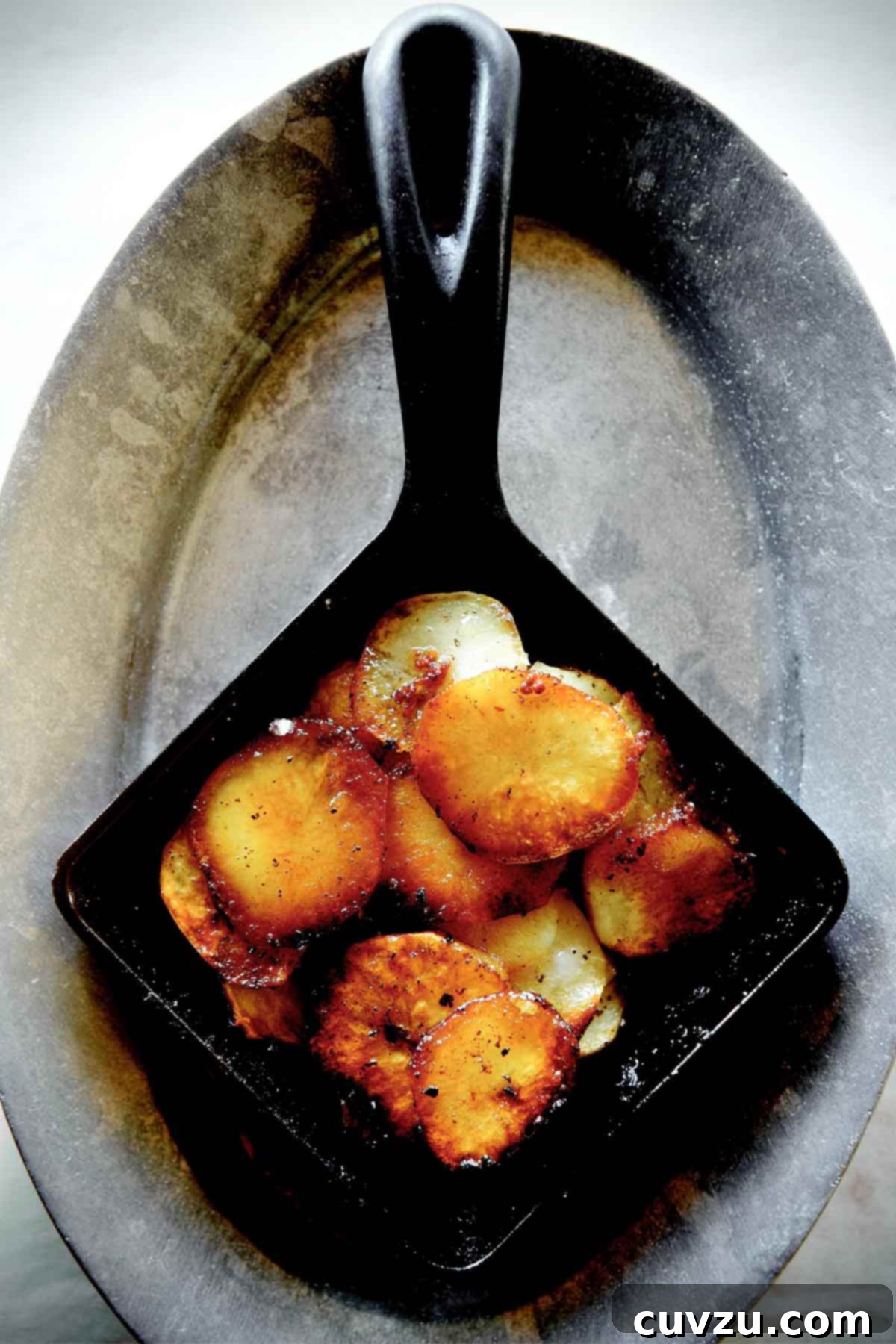
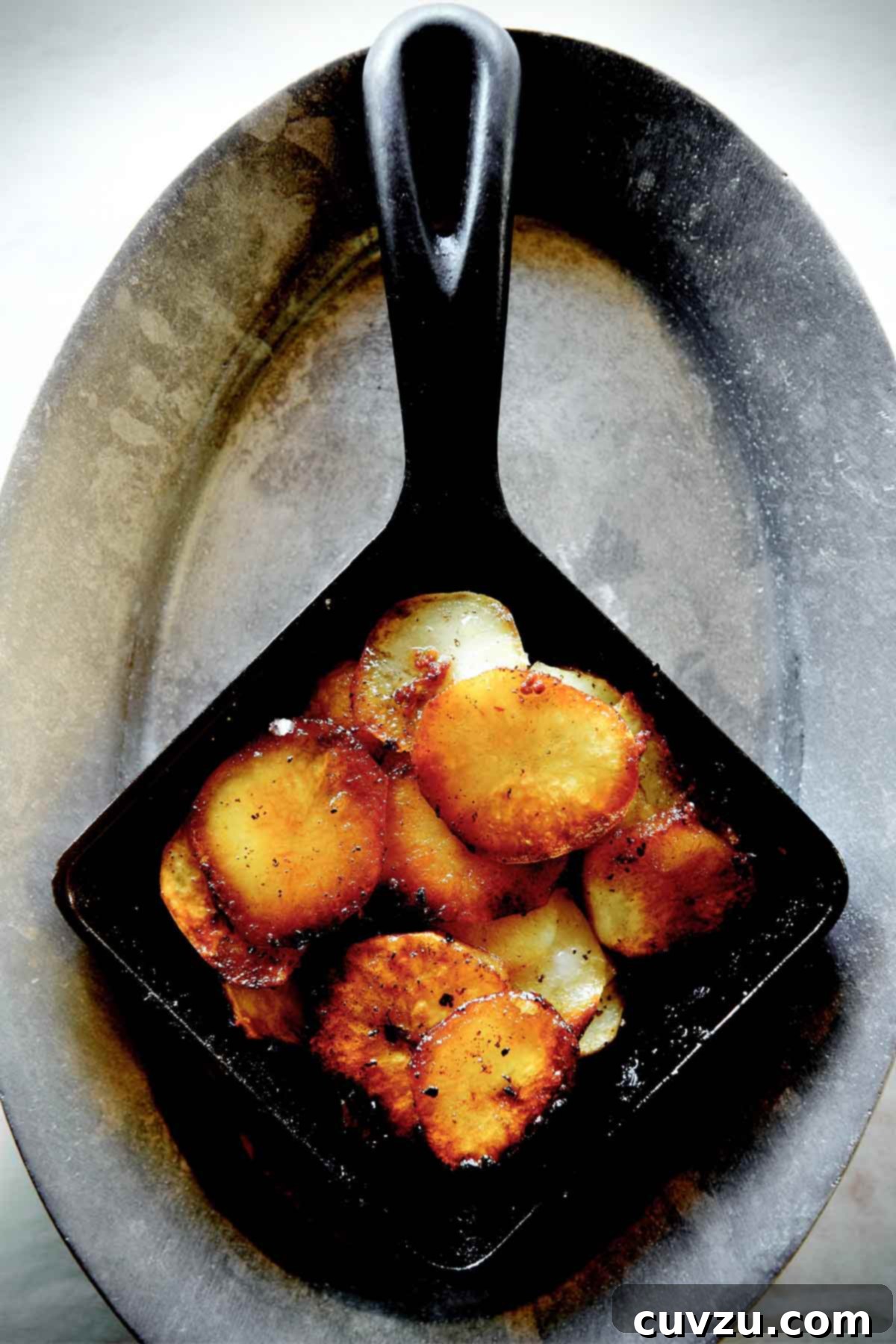
Imagine a culinary secret, passed between giants. Skillet potatoes, crafted by the brilliant Judith Jones for the one and only Julia Child. This isn’t just a recipe; it’s a testament to the power of simplicity, a harmonious blend of humble potatoes, rich butter, a hint of salt, and fragrant garlic. Cooked lovingly in a skillet until each slice achieves a perfect golden-brown crispness, it embodies sheer, unadulterated perfection.
Judith Jones’s Skillet Potatoes: A Julia Child-Approved Culinary Classic
The culinary world often celebrates grand, elaborate dishes, yet true masterpieces frequently lie in the understated and flawlessly executed. Such is the story of Judith Jones’s Skillet Potatoes, a dish so sublime it earned the coveted approval of the legendary Julia Child. This isn’t merely a side dish; it’s an heirloom recipe, born from a late-night collaboration between two of gastronomy’s most influential figures, a dish that proves elegance doesn’t require complexity, just precision and passion.
A Culinary Encounter: The Evening Judith Jones Cooked for Julia Child
The genesis of these now-famous skillet potatoes traces back to a memorable evening in Cambridge, an anecdote lovingly shared by Judith Jones herself. As Julia Child’s esteemed editor at Knopf, Jones frequently spent long, intense days working alongside the iconic chef. One particular night, after hours of relentless manuscript review, the clock neared 11 p.m. When Julia finally declared the day’s work complete, her next pronouncement was typical of her infectious spirit: “We’d make dinner!”
It was then that Julia turned to Jones with a specific request: “Judith, you make a nice little potato dish while I fix the meat.” For anyone familiar with Julia Child’s exacting standards, this was both an honor and a daunting challenge. Slightly unnerved but determined to rise to the occasion, Jones instinctively began preparing what she describes as a “fast stovetop version of the classic potatoes Anna.”
As she meticulously mashed garlic and salt, then spread this aromatic paste between layers of thinly sliced potatoes, Julia observed with a touch of skepticism. Jones admitted to using “lots of butter, of which she always approved,” but noted it wasn’t clarified butter—a detail that might typically raise an eyebrow from the French cooking maestro. However, the moment of truth arrived when they sat down to eat. Julia took her first bite, a hush fell, and then came the pronouncement: “Delicious.” Her husband, Paul Child, further solidified the triumph by raising a toast to Judith. For Jones, it was an unparalleled moment, a true “cook’s heaven.”
This humble dish, initially prepared in a standard round 5- or 6-inch skillet for three, has since become a cherished staple. Judith Jones, in recent years, often made it for herself in a particular 4½-inch square cast-iron frying pan that once belonged to her father. This pan, imbued with sentimental memories of her father proudly cooking his perfect fried egg in retirement, underscores the personal connection and history behind the recipe. While such a treasured heirloom pan might be unique, any small, well-seasoned skillet promises the same delightful results.
The Simplicity of Perfection: Unpacking the Skillet Potatoes
What makes Judith Jones’s Skillet Potatoes so captivating? It’s their deceptive simplicity. At its core, the dish uses just four main ingredients: potatoes, butter, salt, and garlic. Yet, when combined with careful technique, these basic components transform into something extraordinary. The dish is often referred to as a “fast stovetop version of classic Potatoes Anna,” a nod to its French heritage and elegant presentation without the laborious baking time.
Potatoes Anna, or Pommes Anna, is a classic French dish made by thinly slicing potatoes, layering them with clarified butter, and baking them in a round pan until golden and crisp on the outside and tender within. Jones’s adaptation captures the essence of this elegance but delivers it with the speed and convenience of stovetop cooking. The key lies in the careful layering, the even distribution of flavor, and controlled heat, allowing the potatoes to develop a remarkable texture and depth of flavor.
More Than Just a Side Dish: The Legacy of Julia Child and Judith Jones
This recipe stands as a beautiful metaphor for the culinary philosophy championed by both Julia Child and Judith Jones. Julia, through her groundbreaking cookbooks and television shows, demystified French cuisine and empowered home cooks to embrace quality ingredients and sound techniques. Judith Jones, as her editor, played an instrumental role in shaping Julia’s message, ensuring clarity and accessibility. Their shared belief in the joy of cooking, the importance of good food, and the profound pleasure derived from simple, well-prepared meals is distilled into these skillet potatoes.
The fact that Julia Child, known for her rigorous palate and appreciation for butter, was so thoroughly impressed by a dish that didn’t even use clarified butter speaks volumes. It highlights that authenticity in cooking often comes from the heart and keen intuition, not just strict adherence to tradition. This dish isn’t just a recipe; it’s a piece of culinary history, a delicious reminder of a beautiful friendship and a shared passion for exceptional food.
Mastering the Skillet: A Detailed Guide to Julia Child’s Favorite Potato Dish
Achieving the “utter perfection” of Judith Jones’s Skillet Potatoes requires attention to detail, but it remains accessible to any home cook. The resulting dish boasts a beautifully crisp, golden exterior, and a wonderfully tender, flavorful interior. It’s an ideal accompaniment to almost any meal, especially roasted meats, just as Julia and Paul Child enjoyed it.
Essential Ingredients for Authentic Skillet Potatoes
The quality of your ingredients is paramount for this minimalist recipe. Choose fresh, firm potatoes and good quality butter.
- Potatoes: 2 medium new potatoes or 1 large russet potato. New potatoes (like Yukon Golds or red bliss) tend to hold their shape better and offer a creamy interior. A russet potato, while starchier, will yield a slightly crispier edge, especially if sliced very thin.
- Garlic: 1 small garlic clove. Fresh garlic is crucial for the best flavor.
- Salt: Salt to taste. Fine sea salt or kosher salt works best. The salt is also essential for creating the garlic paste.
- Butter: 4 teaspoons butter. Unsalted butter allows you to control the seasoning. While Judith Jones used regular butter, if you want to be extra French, you could clarify half of it, but it’s not strictly necessary as per Julia’s approval!
- Pepper: Freshly ground pepper. A touch of black pepper adds a subtle warmth and spice.
Step-by-Step Perfection: Cooking Judith Jones’s Skillet Potatoes
This detailed guide will help you recreate the exquisite skillet potatoes that won over Julia Child. Pay close attention to slicing and heat control for the best results.
- Prepare the Potatoes: Begin by peeling your chosen potato(es). The next crucial step is slicing them very thinly. Uniformity is key here, as it ensures even cooking. Aim for slices that are almost translucent, but still hold together. A mandoline slicer is the ideal tool for achieving consistently thin slices, but a sharp chef’s knife and a steady hand can also work wonders.
- Create the Garlic-Butter Paste: Peel and mince the small garlic clove as finely as possible. On your cutting board, smash the minced garlic along with a pinch of salt using the flat side of your chef’s knife. Continue working it until a smooth paste forms. This technique helps to release the garlic’s essential oils and mellow its raw pungency. Next, incorporate about 2 teaspoons of the softened butter into this garlic-salt paste, mashing it thoroughly until well combined. This infuses the butter with garlic flavor, which will then permeate the potatoes.
- Layer and Season: Heat the remaining 2 teaspoons of butter in a small skillet, preferably a well-seasoned cast-iron pan, over medium-low heat. The cast iron provides excellent heat retention and helps create a beautiful crust. Once the butter is melted and sizzling gently, arrange half of your thinly sliced potatoes in the skillet. Overlap them slightly to form a solid layer, ensuring the bottom of the pan is completely covered. Lightly season this layer with a touch more salt and freshly ground pepper. Then, carefully spread the prepared garlic-butter paste evenly over these potatoes. Add the remaining potato slices on top in the same overlapping fashion.
- Gentle Cooking and the Art of the Flip: Cook the potatoes gently over medium-low heat. This slow cooking is vital for allowing the potatoes to cook through and develop that coveted golden-brown crust without burning. Place a small lid slightly askew on top of the pan, allowing some steam to escape while retaining enough moisture to soften the potatoes. After approximately 8 minutes, the bottom layer of potatoes should be beautifully browned. Now comes the trickiest part: the flip! Remove the lid and place a small, sturdy plate (ideally one that fits snugly over the skillet) on top of the pan. With a confident, swift motion, carefully invert the skillet, flipping the potatoes onto the plate. Don’t worry if they don’t maintain a perfect shape; the rustic charm is part of it.
- Finish Browning: Heat any remaining butter (if you held some back or need a tiny bit more) in the empty skillet. Gently slide the potatoes back into the pan from the plate, arranging them as neatly as you can. Continue cooking, semi-covered, for about 5 more minutes. For the final touch, remove the cover entirely and cook for an additional couple of minutes. At this stage, the potatoes should be tender throughout, with a rich, golden-brown crust on both sides. The exact cooking time may vary slightly depending on the size and material of your skillet, the precise heat of your burner, and how uniformly thin you managed to slice your potatoes. Always adjust as needed.
- Serve Immediately: Once perfectly cooked, carefully turn the potatoes onto a warm dinner plate. Allow them to mingle with the juices of whatever meat you’re serving them with, or simply enjoy them as a standout side dish.
Tips for Achieving Culinary Gold
- Uniform Slicing is Paramount: As Judith Jones notes, a mandoline slicer is truly the best way to get uniformly thin slices. If using a knife, take your time and aim for consistency; this ensures all potato pieces cook at the same rate, leading to perfectly tender interiors and evenly crisp exteriors.
- Skillet Choice Matters: A well-seasoned cast-iron skillet is highly recommended. It provides even heat distribution and helps create that desirable non-stick surface and beautiful crust. A heavy-bottomed stainless steel or non-stick skillet will also work, but cast iron brings a unique depth to the browning.
- Don’t Rush the Heat: Medium-low heat is your friend. Rushing the cooking process with high heat will lead to burnt exteriors and raw interiors. Patience allows the potatoes to caramelize slowly and cook through.
- Trust the Flip: The flipping technique can be intimidating, but it’s essential for achieving two beautifully browned sides. Practice makes perfect, and even if it breaks apart, it will still taste delicious!
- Butter, Butter, Butter: Don’t skimp on the butter! It’s the key to both flavor and the gorgeous golden crust. While Judith didn’t use clarified butter this specific night, using good quality unsalted butter is always a solid choice.
These skillet potatoes are incredibly versatile. While they are a stellar accompaniment to simple roasted chicken, pan-seared steak, or grilled fish, they can also shine as a vegetarian main course with a fresh green salad. Consider adding a sprinkle of fresh herbs like parsley or chives at the end for an extra layer of freshness. For a slightly different flavor profile, you could experiment with a hint of thyme or rosemary in the garlic paste, though the original recipe’s purity is part of its charm.
Nutritional Insights for Your Skillet Potatoes
Enjoying delicious food can also be mindful. Here’s an approximate nutritional breakdown for Judith Jones’s Skillet Potatoes, based on a single serving:
- Serving Size: 1 serving
- Calories: 220 kcal
- Carbohydrates: 34 g
- Protein: 4 g
- Fat: 8 g
- Saturated Fat: 5 g
- Trans Fat: 1 g
- Cholesterol: 22 mg
- Sodium: 81 mg
- Fiber: 2 g
- Sugar: 1 g
Nutrition information is automatically calculated, so should only be used as an approximation.
What Our Testers Say: Reviews of the Skillet Potatoes
The true measure of a recipe’s success lies in the feedback of those who prepare and taste it. Here’s what our dedicated recipe testers had to say about Judith Jones’s Skillet Potatoes:

Larry Noak
This has become my favorite side dish. So simple yet, so perfect. What, No cheese? No bacon? EVERYTHING you need is here. If it was good enough for Julia, it must be good enough for us.

Tamiko Lagerwaard
This is a delightfully simple, quick, and tasty potato dish. Since the recipe didn’t state one way or the other, I used salted butter, along with a little more salt to season the potatoes. I also used one large potato (as I could only find small, large, or gargantuan), and this worked out quite well. I cooked these a little longer than suggested, as they didn’t brown to the extent that I wanted them to be, but I didn’t alter the recipe otherwise. The recipe is perfect as it is. No wonder Julia was pleased.
Tried this recipe? Share your culinary success! Mention @leitesculinaria or tag #leitesculinaria on Instagram. We love seeing your creations!