
Indulge in the sublime pleasure of homemade frozen delights with David Lebovitz's iconic Toasted Coconut Ice Cream. This recipe transcends ordinary vanilla ice cream, elevating it with a rich, custardy base and the captivating depth of perfectly toasted coconut. It’s a harmonious blend of creamy sweetness and nuanced flavor, reminiscent of a luxurious coconut cream pie transformed into an ethereal frozen treat. Not overwhelmingly sweet, yet utterly satisfying, this ice cream delivers a sophisticated taste experience that is nothing short of perfect.

The Nostalgic Allure of Toasted Coconut Ice Cream
For many, the mention of toasted coconut ice cream conjures fond memories of simpler times. David Lebovitz, a celebrated pastry chef and ice cream aficionado, shares a particularly poignant memory that resonates with anyone who has cherished a childhood treat. He recalls his favorite selection from the "shiny white Good Humor jalopy" that would cruise through his neighborhood: a simple vanilla ice cream on a stick, generously coated with sugary-sweet coconut. This seemingly simple delight became a symbol of summer, its abrupt disappearance one fateful day marking it as "the worst summer of my life." The whimsical story of a neighborhood bully spraying the Good Humor man, causing him to beat a hasty retreat and never return, adds a layer of bittersweet nostalgia. Now, as an adult, David finds solace and satisfaction in recreating that beloved flavor, ensuring he can have his Toasted Coconut ice cream whenever he desires. And he does.
This personal quest for the perfect toasted coconut flavor is exactly what makes Lebovitz's recipe so special. It's not just a dessert; it's a journey back to a cherished memory, meticulously crafted to capture the essence of a bygone era with sophisticated culinary artistry.
Mastering the Art of Homemade Ice Cream
Keeping Your Ice Cream Delightfully Soft
Achieving the perfect consistency in homemade ice cream is an art form. If you're someone who prefers a luxuriously soft and pliable ice cream, the secret is simple: enjoy it straight from the ice cream maker. At this stage, it boasts an incredible creaminess that melts delicately on the tongue. However, if you're planning to savor your creation over several days, proper storage is key to maintaining its delightful texture.
When tucking leftovers into the freezer, always take an extra moment to press a piece of plastic wrap directly against the surface of the ice cream before securing the lid on the container. This crucial step prevents the formation of ice crystals and shields the ice cream from freezer burn, preserving its smoothness and rich flavor. While the ice cream will naturally firm up overnight in the freezer, a simple trick can bring back that coveted soft scoopability: allow it to soften at room temperature for approximately 10 to 15 minutes before serving. This brief respite ensures a more effortless scoop and a more enjoyable, yielding texture.
David Lebovitz's Toasted Coconut Ice Cream: The Ultimate Recipe

This exquisite recipe for Toasted Coconut Ice Cream, crafted by the renowned David Lebovitz, is more than just a dessert; it's an experience. It begins with a meticulously prepared vanilla custard, which forms the rich, creamy foundation, and is then deeply infused with the complex, nutty notes of perfectly toasted coconut. The result is an ice cream that is balanced in sweetness and bursting with a sophisticated, tropical flavor profile, earning its reputation as a truly perfect treat.
- Author
- David Leite
- Course
- Dessert
- Cuisine
- American
- Servings
- 8 servings | 1 quart
- Calories
- 406 kcal
- Prep Time
- 35 minutes
- Total Time
- 1 hour 45 minutes
Equipment
- Ice cream maker
Ingredients
- 1 cup dried shredded coconut, sweetened or unsweetened
- 1 cup whole milk
- 2 cups heavy cream
- 3/4 cup granulated sugar
- Big pinch of kosher or sea salt
- 1 vanilla bean, split in half lengthwise
- 5 large egg yolks
- 1/2 teaspoon vanilla extract, or 1 teaspoon rum
Instructions
- Preheat your oven to 350°F (175°C).
- Spread the shredded coconut evenly on a rimmed baking sheet. Bake for 5 to 8 minutes, stirring frequently to ensure it toasts uniformly and doesn't burn. Remove from the oven as soon as it becomes fragrant and achieves a beautiful golden brown color. Immediately transfer the toasted coconut onto a large plate to cool completely.
- In a medium saucepan, combine the whole milk, 1 cup of the heavy cream, granulated sugar, and salt over medium heat. Warm the mixture, stirring occasionally, until the sugar is fully dissolved and the liquid is hot but not boiling. Stir in the freshly toasted coconut. Using a paring knife, scrape all the tiny vanilla seeds from the split vanilla bean directly into the warm milk mixture, then add the vanilla bean pod itself. Cover the saucepan, remove it from the heat, and allow the mixture to steep at room temperature for 1 hour to fully infuse the coconut and vanilla flavors.
- Gently rewarm the coconut-infused mixture over low heat until it's warm to the touch. Place a fine-mesh strainer over a clean, second medium saucepan. Carefully pour the coconut-infused liquid through the strainer into the saucepan, separating the liquid from the solids. Use a flexible rubber spatula to firmly press down on the coconut solids in the strainer, extracting every last drop of flavorful liquid. Discard the vanilla bean halves and the strained coconut, or reserve them for another culinary use (see tester tip below).
☞ TESTER TIP: Don't discard that flavorful leftover coconut! Spread it on a parchment-lined rimmed baking sheet and toast it in the 350°F (175°C) oven until it turns golden brown, which typically takes about 10 minutes. This re-crisped coconut makes an exceptional topping to sprinkle generously atop your finished ice cream before serving. Store any extra toasted coconut in an airtight container in the refrigerator.
- Pour the remaining 1 cup of heavy cream into a large bowl and position the mesh strainer on top. In a separate medium bowl, whisk the 5 large egg yolks until they are smooth and slightly lightened in color. Slowly and gradually pour about half of the warm coconut-infused liquid into the whisked egg yolks, whisking constantly to temper the yolks and prevent them from scrambling. Once combined, scrape this warmed egg yolk mixture back into the saucepan containing the remaining coconut-infused liquid.
- Stir the mixture constantly over medium heat with a heatproof spatula, making sure to scrape the bottom of the saucepan as you stir. Continue cooking until the mixture visibly thickens and coats the back of the spatula, a process that typically takes 6 to 10 minutes. This custard should reach a temperature of about 175-180°F (79-82°C) without boiling. Immediately pour the cooked custard through the strainer into the large bowl with the reserved cold heavy cream. Stir well to combine. Mix in the 1/2 teaspoon of vanilla extract or 1 teaspoon of rum, if using. To cool the mixture quickly, prepare a large bowl filled halfway with ice water, then place the saucepan (or the bowl with the custard) directly into the ice water. Stir the custard until it is thoroughly chilled.
- Cover the cooled mixture tightly and refrigerate it thoroughly for at least 4 hours, or preferably overnight, to allow the flavors to fully meld and the mixture to become very cold. Once well-chilled, freeze the mixture in your ice cream maker according to the manufacturer’s instructions until it reaches the consistency of soft-serve ice cream.
- Serve the freshly churned ice cream immediately for a delightful soft consistency. For a firmer, more traditional ice cream texture that holds its shape, transfer the ice cream to an airtight container, cover, and freeze for at least overnight.
Adapted From
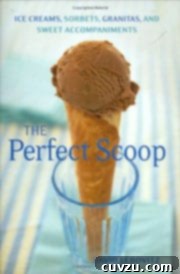
This recipe is a testament to the expertise found in David Lebovitz’s acclaimed cookbook. A must-have for any ice cream enthusiast, "The Perfect Scoop" offers a treasure trove of recipes and techniques to master homemade frozen desserts.
Buy On Amazon
Nutrition Information (Approximate Per Serving)
- Serving: 0.5 cup
- Calories: 406 kcal
- Carbohydrates: 25 g
- Protein: 5 g
- Fat: 33 g
- Saturated Fat: 22 g
- Monounsaturated Fat: 7 g
- Cholesterol: 186 mg
- Sodium: 42 mg
- Fiber: 2 g
- Sugar: 23 g
Nutrition information is automatically calculated and should only be used as an approximation. Actual values may vary based on specific ingredients and preparation methods.
Tried this recipe?
We'd love to see your delicious creations! Share your experience on social media:
Mention @leitesculinaria or tag #leitesculinaria!
Your feedback inspires us and helps other home cooks discover the joy of homemade desserts.
Recipe Testers’ Reviews: Real Feedback for Real Results
Our dedicated team of recipe testers puts every recipe through its paces, offering genuine insights and valuable tips. Their experiences with David Lebovitz’s Toasted Coconut Ice Cream provide a comprehensive guide, ensuring you achieve perfect results in your own kitchen.

Nadine Bonda's Take: A Search Fulfilled
Nadine Bonda embarked on a quest for the ultimate coconut ice cream after a memorable trip to Belize. Her search, she admits, was fruitless until she encountered David Lebovitz's toasted coconut version. While distinct from the Belizean treat, this recipe captured her heart with its exquisite flavor. She highlights the transformative power of toasting the coconut, which imparts a profound, multi-layered taste to the ice cream. Nadine even adapted the recipe by using sweetened shredded coconut due to availability, finding no regrets and no reason to switch to unsweetened in the future. Her choice of vanilla as the final flavoring, rather than rum, further customized her experience.
Nadine’s glowing review emphasizes the ice cream's smooth, rich, and creamy texture, coupled with an explosion of flavor. She enthusiastically recommends trying it, assuring readers that it is "really good!" She also notes that for a softer consistency, enjoying it straight from the ice cream maker is ideal, while allowing more time for a final freeze yields a firmer scoop.

Jenny Latreille's Take: Ultra-Creamy and Unforgettable
Jenny Latreille describes this recipe as an "absolute delight," an "all-out winner" in both taste and its "ultra-creamy consistency." She points out that custard-based ice creams are inherently rich, and this recipe is no exception. What truly impresses her is how the distinct toasted coconut flavor shines through, refusing to be overshadowed by the creamy base. This delicate balance is a testament to the recipe's masterful construction.
Jenny offers a unique tip for toasting coconut: using a paella pan on the stovetop. While acknowledging it might seem unconventional, she found it easier to control the toasting process, preventing burning – a common pitfall. Her experience reaffirms the recipe's user-friendliness, noting that it comes together quickly and easily, yet produces a dessert that tastes like "hard work" and makes an "impressive" statement. She also muses on delightful serving variations, suggesting chocolate sauce, additional toasted coconut, salted caramel sauce, or even a mango swirl, echoing Lebovitz's own creative recommendations.

Christi B.'s Take: Subtle Yet Superb Coconut Flavor
As a self-proclaimed coconut enthusiast, Christi B. eagerly took on the challenge of testing this toasted coconut ice cream recipe. She found it to be among the very best coconut ice creams she had ever made, praising its "subtle yet tasty" flavor profile. It vividly reminded her of the beloved coconut ice cream served with sticky rice and mango at her favorite Thai restaurant, a high compliment indeed.
Christi experimented with organic unsweetened coconut, observing that it didn't toast as evenly as sweetened versions. She thoughtfully suggested a potential solution: lightly spraying the baking sheet with coconut oil before baking to aid in even browning. She meticulously followed the steeping process for the vanilla beans and their seeds, allowing the mixture to warm just under a boil before covering and steeping for an hour. After rinsing the vanilla beans, she ingeniously tucked them into sugar for future use in coffee. Opting for a dark artisan rum instead of vanilla extract, she added it after the mixture had slightly cooled to preserve its delicate flavor, then continued chilling it in an ice bath. Churned the next day in her Cuisinart, the ice cream was a resounding success.
Her most innovative contribution was her reluctance to discard the leftover coconut mixture after straining. After tasting its deliciousness, reminiscent of coconut macaroons, she devised a brilliant "tester tip": toasting the strained coconut with a little coconut oil spray until golden, then breaking it up and using it as a crunchy topping. This addition provided a "perfect crunchy contrast to the smooth coconut ice cream," elevating the dessert further. Christi also envisioned topping it with brûléed pineapple or banana, or a dark chocolate "shell" for a truly indulgent experience.

Patricia Scalione's Take: Coconut Heaven Personified
Patricia Scalione declares this creamy creation her "idea of coconut heaven," asserting its power to even convert "self-professed coconut haters." Such high praise is not surprising, she notes, given that the recipe originates from the "ice cream guru," David Lebovitz himself. She acknowledges that its custard base entails a few extra steps, but assures prospective makers that the "end result is so worth it," yielding a wonderfully rich, creamy, and intensely flavorful dessert.
Patricia offers crucial advice for toasting coconut: vigilance is paramount, as it can quickly transition from perfectly golden to burned. She aimed for a "deep golden brown for best flavor," achieving this in just under 7 minutes in her oven. For maximum flavor infusion, she consistently warmed the cream mixture to approximately 170°F (77°C) in both steeping stages, ensuring it was hot to the touch but well below boiling. She advocates for kosher or sea salt to avoid the harshness of table salt and found the vanilla flavor profound and fragrant. She also notes that for those without a vanilla bean, a bit more vanilla extract could suffice. The sweetness level, she observed, was "just right" with unsweetened dried coconut, suggesting that sweetened varieties might lead to an overly sweet result.
Like Christi, Patricia embraced the suggestion to repurpose the strained coconut as a topping. She accidentally toasted it "much darker than intended" during the re-crisping process but discovered this fortunate mishap intensified the flavor, providing a "wealth of flavor" that her tasters thoroughly enjoyed, especially when paired with bittersweet chocolate shavings. She describes the ice cream as "soft and easily scoopable" on day one, firming up slightly but remaining "creamy and delicious" on day two. Day three? It didn't stand a chance, a testament to its irresistible appeal.