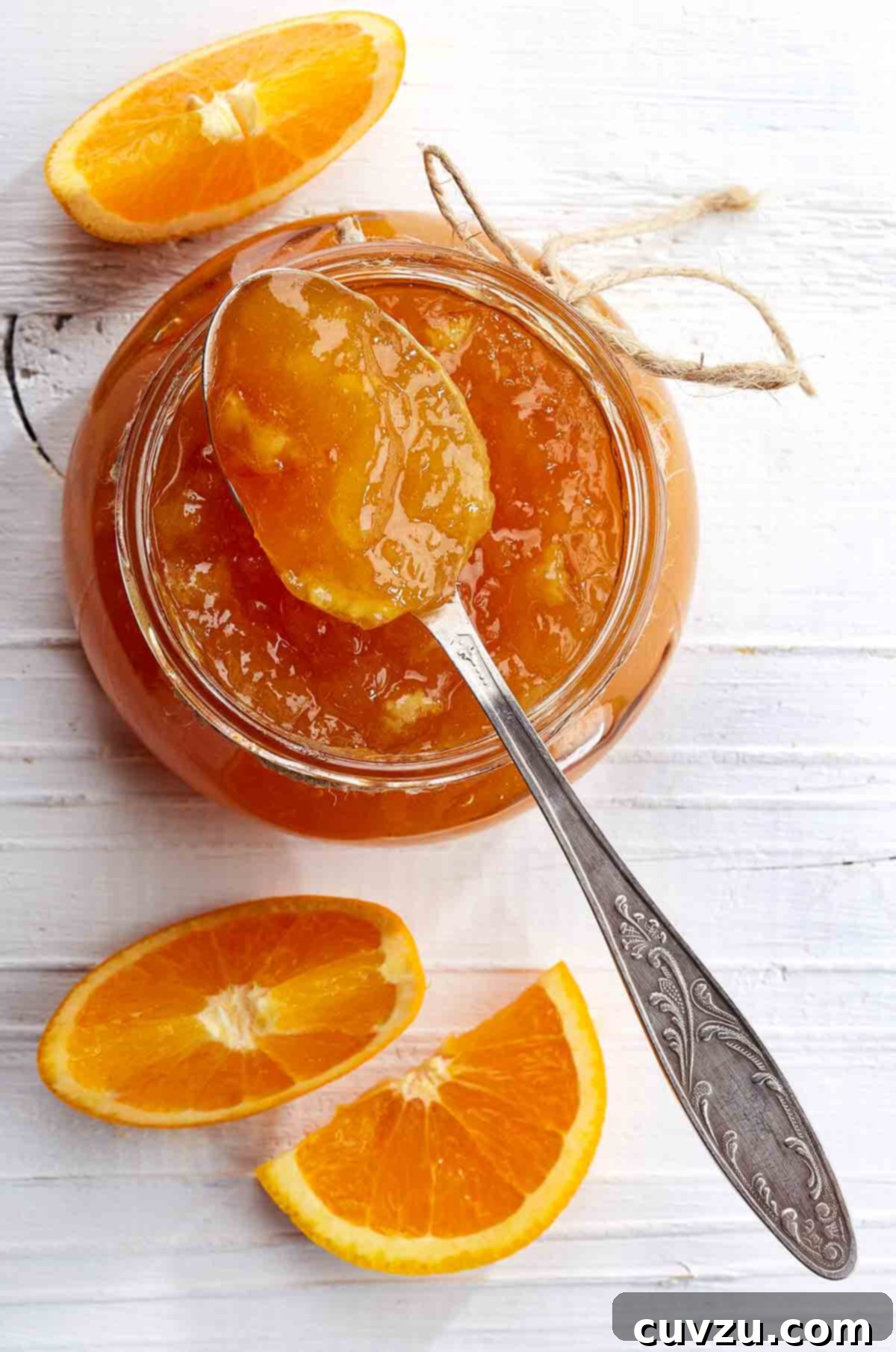
Easy Homemade Orange Marmalade: A Zesty Delight in Three Simple Steps
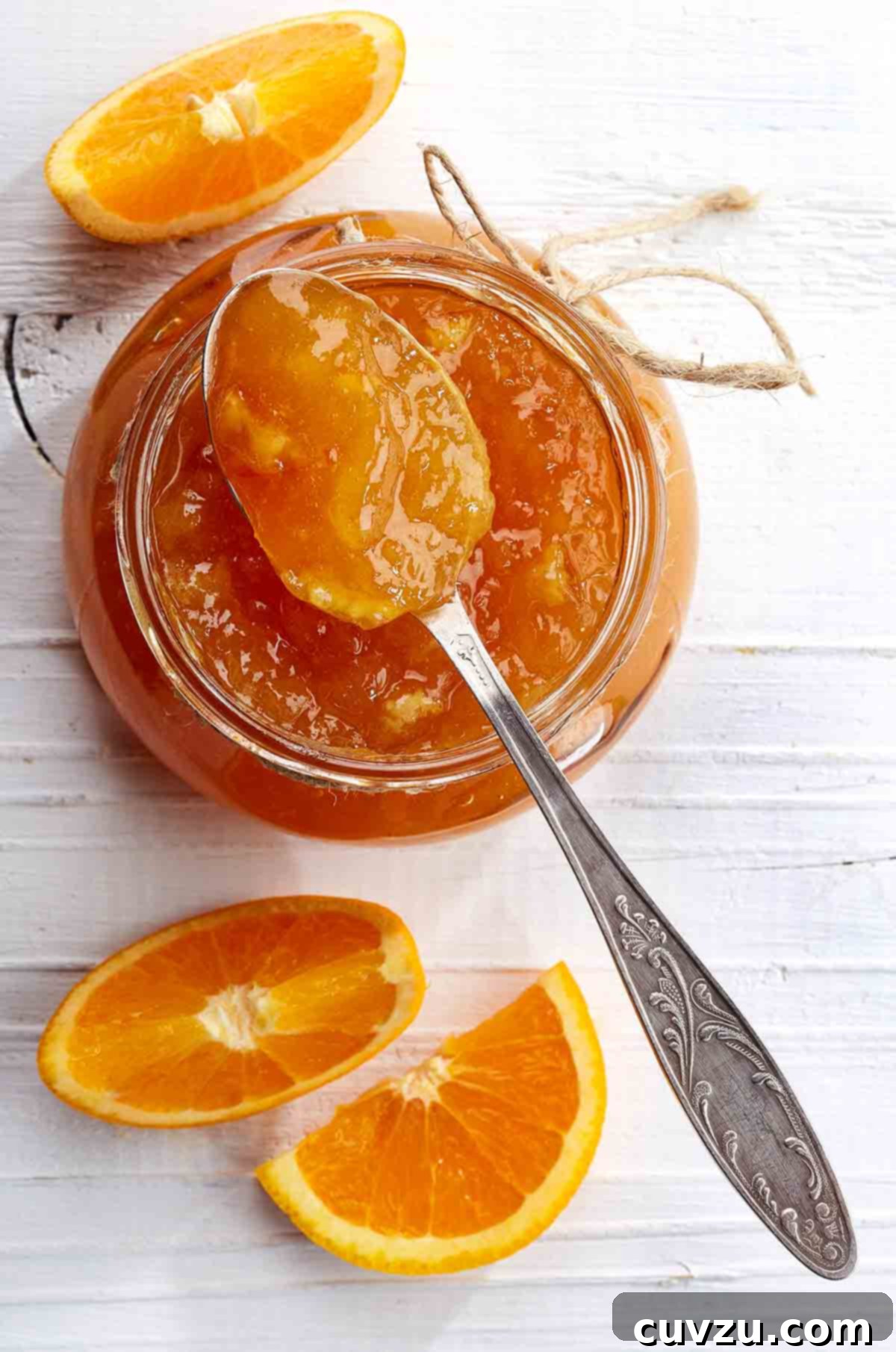
There’s a unique satisfaction that comes with crafting something truly exceptional in your own kitchen. This homemade orange marmalade recipe is precisely that kind of culinary triumph. Requiring just three essential ingredients—fresh oranges, vibrant lemons, and granulated sugar—you can achieve a perfectly balanced, sweet-yet-tart, English-style marmalade that tastes infinitely better than anything you’d find on a grocery store shelf. Its elegant simplicity belies a depth of flavor that will transform your breakfast routine and elevate your baking. Get ready to discover how surprisingly easy it is to create this golden, citrusy preserve, and you’ll likely find yourself saying goodbye to store-bought varieties for good.
Few things truly surpass the vibrant taste and gratifying texture of homemade orange marmalade. If you’ve never experienced the joy of spreading a spoonful of your own handcrafted marmalade onto a warm piece of toast, you’re missing out on a simple pleasure that needs to be remedied. And the best part? It demands far less effort and culinary expertise than many might imagine. The process, while requiring a touch of patience, is incredibly rewarding, culminating in jars of sunshine-hued goodness that capture the very essence of fresh citrus. –Renee Schettler Rossi
Why Make Your Own Orange Marmalade?
Beyond the sheer satisfaction, making your own orange marmalade offers several distinct advantages. Firstly, you have complete control over the quality of your ingredients, ensuring the freshest fruit and the right amount of sweetness. This recipe celebrates the natural flavor of the oranges and lemons, enhanced rather than overwhelmed by sugar. Secondly, the texture is entirely customizable; whether you prefer fine shreds or delightfully chunky pieces of citrus peel, homemade allows for personal preference. Finally, there’s the unparalleled aroma that fills your kitchen as the marmalade simmers—a truly comforting and inviting experience that transports you to a cozy, old-world kitchen. This isn’t just about making food; it’s about creating an experience and a memory.
Choosing the Right Citrus for Your Marmalade
The success of any marmalade hinges significantly on the quality of its citrus. For this recipe, the key is selecting fresh, unwaxed oranges and lemons. Valencia, navel, or Cara Cara oranges are excellent choices, each offering a slightly different nuance in flavor and sweetness. Valencia oranges are known for their juiciness, while navel oranges are typically seedless and have a balanced sweetness. Cara Cara oranges bring a beautiful pink hue and a sweeter, less acidic profile. The lemons contribute essential pectin for setting the marmalade and a crucial tartness that beautifully balances the sweetness of the oranges. Always wash your fruits thoroughly, especially since you’ll be using the peel, which contains the bitter compounds characteristic of a classic English marmalade.
The Magic of Three Ingredients
It might seem almost too simple: fruit, sugar, and water (which isn’t really an ingredient in the flavor sense). Yet, these three components, when treated with care and a bit of patience, transform into a complex, glistening preserve. The natural pectin in the citrus peels, particularly in the white pith, is activated by heat and acid, allowing the marmalade to set. The sugar not only sweetens but also acts as a preservative, extending the shelf life of your homemade delight. This minimalist approach allows the vibrant, tangy, and subtly bitter notes of the citrus to truly shine, making for a sophisticated spread that can be enjoyed in countless ways.
Orange Marmalade
★★★★★
Recipe by David Leite
- PIN
Print Recipe
Condiments, Breakfast
American, English
48 servings | 4 pints
70 kcal
25 minutes
1 hour 15 minutes
1 hour 40 minutes
Equipment
-
Sterilized canning jars (See note below for sterilization method)
-
Large non-reactive saucepan with lid (e.g., stainless steel or enameled cast iron)
-
Heatproof ladle
-
Small plates (chilled in the freezer for testing set)
Ingredients
- 1 1/4 pounds oranges, preferably seedless, such as Valencia, navel, or Cara Cara
- 1 large or 2 small lemons
- 4 cups granulated sugar
- 4 cups water (for soaking)
Instructions
-
Thoroughly wash the oranges and lemons. Then, roughly but completely chop the fruits. Don’t worry about perfectly uniform pieces; aim for a pleasingly chunky marmalade texture, around 1/8 to 1/4 inch thick. Be sure to remove and discard any seeds you find.
-
In a medium nonreactive saucepan with a lid, combine the chopped fruit with 4 cups of water. Bring the mixture to a gentle simmer over low heat. Once simmering, remove the pan from the heat and cover it. Allow the mixture to sit at room temperature for a full 24 hours. This crucial soaking period helps soften the peels and extract pectin.
-
After the 24-hour soak, return the pot to the stove. Increase the heat to medium and simmer, uncovered, stirring occasionally. Continue cooking until the liquid volume has reduced by half and the citrus rinds are exceptionally tender. This usually takes between 60 to 75 minutes. Keep an eye on the pot, stirring periodically to prevent scorching, and reduce the heat slightly if needed.
-
Once the fruit is tender, gradually add the granulated sugar, a little at a time, stirring continuously until all 4 cups are incorporated and fully dissolved. Increase the heat to medium-high and bring the mixture to a rolling boil. Continue boiling, stirring frequently, until the marmalade thickens. This stage typically takes 15 to 25 minutes. To test for doneness, perform the “sheet test”: when done, the marmalade will slide off a spoon in sheets rather than individual droplets. Alternatively, place a spoonful onto a cold plate (chilled in the freezer); if it gels and appears firm after a minute, it’s ready.
-
Carefully transfer the hot marmalade into sterilized jars, filling them almost to the top. Cover tightly with lids and refrigerate immediately. This marmalade will keep well in the refrigerator for up to a couple of weeks. For longer storage, see the notes below.
Notes on Storage and Safety
Refrigerator Jam Safety & Sterilization
Proper sterilization of jars is paramount for safe preservation. To sterilize your jars and lids, first wash them thoroughly in hot, soapy water, then rinse them well. You can then either run them through your dishwasher’s sanitize cycle or submerge them completely in boiling water for 10 minutes. After sterilization, let them air-dry on a clean rack; avoid towel-drying, as this can reintroduce bacteria. Fill the hot jars promptly with hot marmalade, cap them tightly, and refrigerate immediately at or below 40°F (4°C). Always use clean utensils when serving to prevent contamination—no double-dipping! This refrigerator marmalade will keep for about 2 weeks. If you opt for a lower-sugar version (which this recipe isn’t), the shelf life reduces to 7-10 days. If any mold appears on the surface, no matter how small, discard the entire jar immediately; do not taste or attempt to salvage it. For extended storage up to 3 months, you can freeze the marmalade in freezer-safe jars, ensuring you leave about ½-inch headspace to account for expansion. Label and date your jars for easy tracking.

Adapted From
Brunch
Buy On Amazon
Explore More with AI
Substitutions
Scale Recipe
Summarize Key Insights
Nutrition Information
Calories: 70 kcal
Carbohydrates: 18 g
Protein: 0.1 g
Fat: 0.1 g
Saturated Fat: 0.002 g
Monounsaturated Fat: 0.003 g
Sodium: 0.2 mg
Fiber: 0.3 g
Sugar: 18 g
Nutrition information is automatically calculated and should only be used as an approximation.
Tried this recipe?
Mention @leitesculinaria or tag #leitesculinaria!
Insights from Our Recipe Testers: Real-World Experiences
Our dedicated team of recipe testers put this easy orange marmalade recipe to the test, and their feedback provides valuable insights for home cooks. Across the board, they celebrated the marmalade’s superior flavor and ease of preparation, often noting its distinct advantage over commercially produced varieties. Here’s a summary of their key findings and practical tips:
Lou Ann Traster
Lou Ann was initially skeptical, wondering if she could truly master marmalade. Using readily available navel and a blood orange, she found the recipe surprisingly forgiving and the results exceptional. She noted that while the recipe directs rough chopping, her rinds were no wider than 1/4 inch, contributing to a pleasant texture. Her cooking time for reducing the liquid was closer to 1 1/2 hours, highlighting that pan shape and size can influence the time needed to reduce by half. The resulting marmalade, she enthusiastically reported, was “more balanced, less sweet, better textured than store-bought, and much more aromatic. All around a winner!” This demonstrates that even without premium Valencia oranges, a fantastic marmalade is achievable.
Chiyo Ueyama
Chiyo, a self-proclaimed marmalade enthusiast, confirmed the recipe’s deliciousness, emphasizing its “full of citrus flavor with lovely bitterness, and appropriately suppressed sweetness.” She used navel oranges during winter when Valencias were out of season and found the results excellent. Chiyo specifically advised on fruit thickness, noting that while chunkier pieces offered a pronounced bitterness, she preferred thinner slices (1/4-inch) for a more pleasant mouthfeel. Her experience with the “gel-on-a-cold-plate” test was more reliable than the “sliding-off-a-spoon-in-sheets” method, achieving a perfect set after 18 minutes of boiling with sugar. A practical tip from Chiyo: marmalade freezes beautifully, making it perfect for preparing in advance and enjoying later.
Anna Scott
Anna’s review radiates passion for this marmalade, declaring it a confection you “just might want to eat straight out of the jar!” She highlights its perfect balance of sweetness and the inherent bitter notes from the citrus peel, describing the tender pieces of peel as “almost like a candied confection.” Unable to find Valencia oranges, she successfully used sweet Cara Cara oranges and a large Meyer lemon for the lemon component. Anna strongly reiterates the importance of cutting fruits as small as possible (about 1/8 of an inch) for ideal texture. She also appreciated the “gel-on-a-cold-plate” test, confirming the marmalade set perfectly after 25 minutes of boiling. Beyond breakfast, Anna offers a plethora of creative serving ideas, including serving it over homemade ricotta, in Crêpes Suzette, folded into butter cake batter, or as a savory glaze for pork tenderloin mixed with soy sauce and ginger. Her enthusiasm underscores the versatility of this homemade delight.
Shauna Hinchen-Joyal
For those intimidated by making homemade preserves, Shauna confirms this recipe is incredibly easy to follow and yields enough marmalade to share with friends. Her main suggestion for future batches would be to use slightly less sugar, as she found it “a touch too sweet” for her personal preference. However, she noted that even her kids, who typically dislike marmalade, enjoyed this recipe, suggesting the sweetness level might be an individual choice. Shauna cooked her mixture for 45 minutes on medium-low heat after the overnight rest, reporting no issues with scorching. She found the “fall in sheets” description for doneness to be accurate and cooked her jam for 40 minutes to achieve the desired thickness. Her experience highlights the recipe’s adaptability and reinforces that minor adjustments to taste are easily made.
Beyond Toast: Creative Ways to Enjoy Your Homemade Orange Marmalade
While a classic slice of buttered toast or a fresh scone provides the perfect canvas for your homemade orange marmalade, its versatility extends far beyond the breakfast table. Embrace the vibrant citrus notes and delightful texture by incorporating it into both sweet and savory dishes:
- Desserts:
- Swirl into plain yogurt or crème fraîche for a simple, elegant dessert.
- Use as a filling for tarts, crêpes (especially Crêpes Suzette), or thumbprint cookies.
- Fold into a butter cake batter or muffin mix for a zesty twist.
- Warm slightly and drizzle over vanilla ice cream or panna cotta.
- Layer with ricotta cheese and toasted sliced almonds for a sophisticated treat, as suggested by one of our testers.
- Savory Pairings:
- Create a tangy glaze for roasted chicken, duck, or pork tenderloin. Mix with a touch of soy sauce and ginger for an Asian-inspired flavor.
- Serve alongside a cheese board, particularly with aged cheddar, goat cheese, or creamy brie.
- Whisk into vinaigrettes for salads, adding a bright citrus note.
- Brush onto grilled salmon or shrimp during the last few minutes of cooking for a beautiful caramelization and flavor.
- Use as a spread in gourmet sandwiches, particularly those featuring ham or turkey.
- Beverages:
- Stir a spoonful into hot tea for a soothing, aromatic drink.
- Mix into cocktails for a unique citrus sweetness and complexity.
Experimentation is key! The unique sweet-bitter profile of this easy orange marmalade makes it an incredibly adaptable ingredient that can brighten up almost any dish.