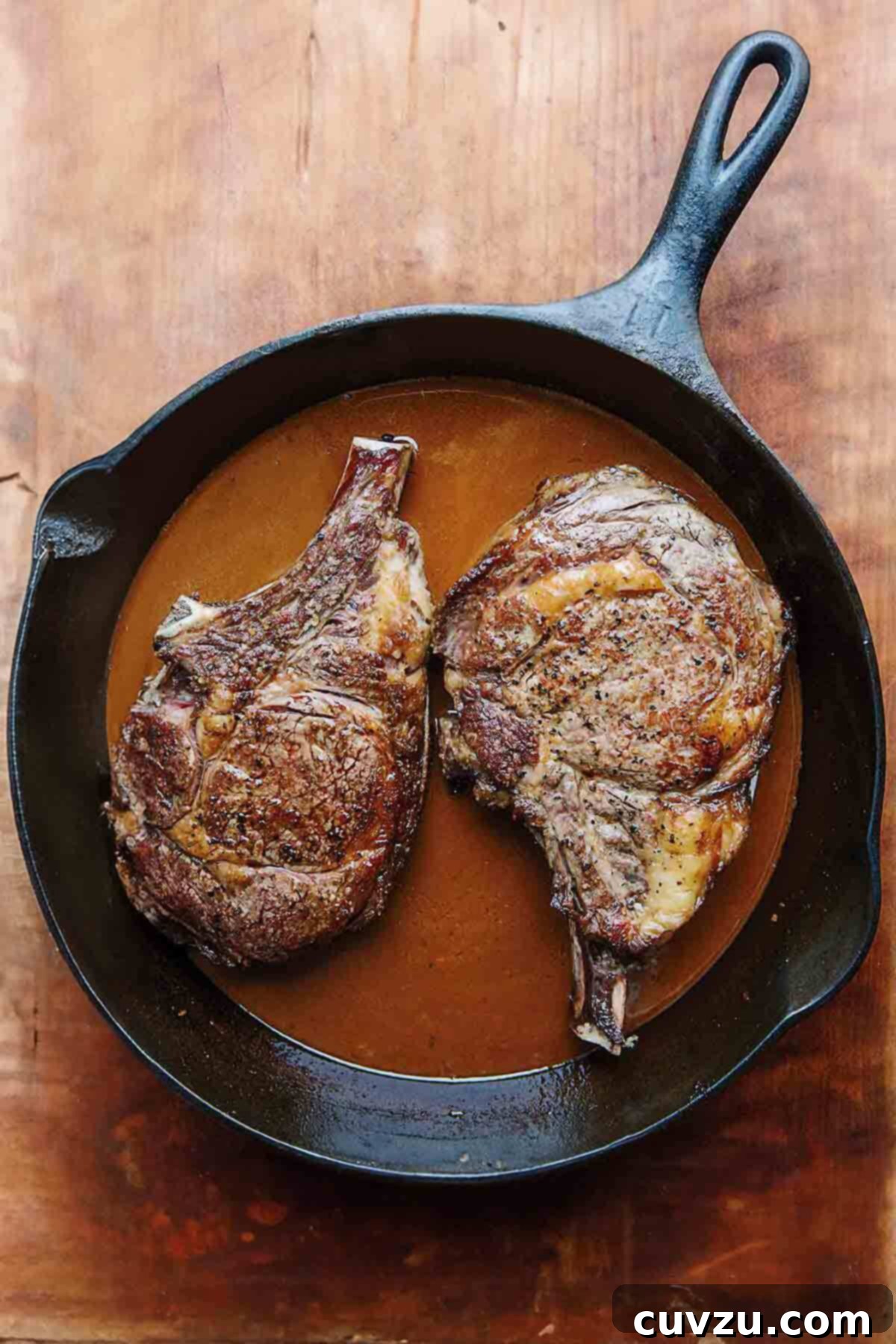
Cowboy steaks with Guinness sauce offer an unparalleled culinary experience, transforming a simple bone-in ribeye into a lavish feast. Known to old-time butchers as “cowboy steaks” due to their impressive size and robust flavor, these magnificent cuts are pan-seared to perfection and then enveloped in a rich, complex, yet surprisingly easy-to-make sauce infused with the distinctive notes of Guinness stout. This dish is not just a meal; it’s an indulgence. Whether you’re aiming to impress dinner guests or treat yourself to a truly memorable dining experience, these tender, juicy steaks are guaranteed to satisfy. Imagine savoring a perfectly cooked, succulent ribeye, each bite enhanced by a deeply flavorful, buttery stout sauce. And if by some miracle you have any leftovers, the extravagance continues the next morning with a decadent breakfast of leftover ribeye and eggs—a true testament to the steak’s enduring appeal.
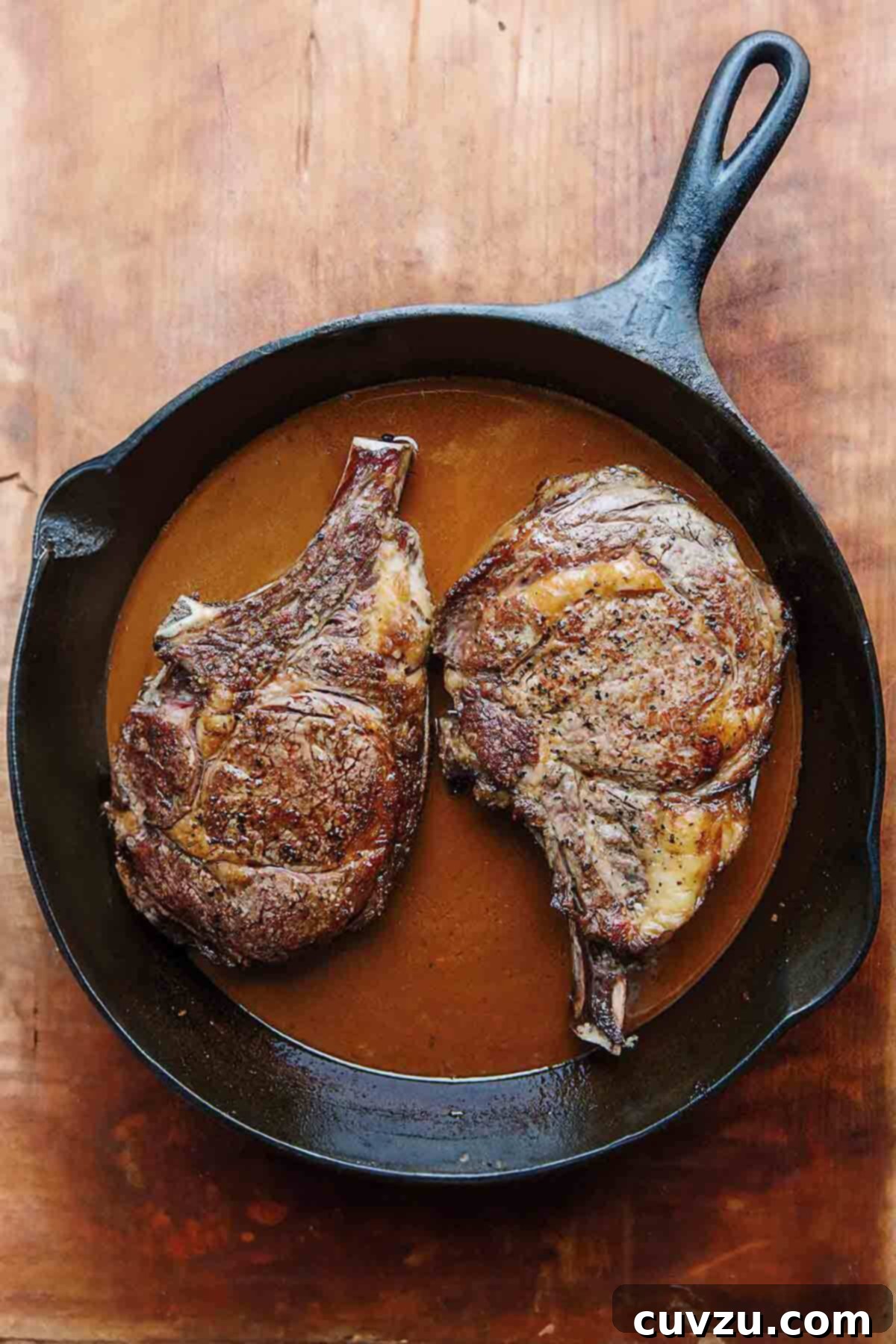
While classic cuts like T-bone, filet mignon, and sirloin certainly have their place in the pantheon of great beef, limiting yourself to these familiar choices means missing out on the extraordinary flavors and textures that other parts of the animal offer. Picture a massive, generously marbled slab of brisket, or the primal, Flintstonian allure of a bone-in ribeye—known affectionately as the cowboy steak. Such substantial cuts might appear daunting at first glance, but they promise an unparalleled depth of flavor and tenderness. So, instead of sticking to the usual strip steak, gather your fellow carnivores and prepare to serve one of these magnificent beefy beauties. The secret to a truly exceptional steak begins with the quality of the beef. For the best-quality meat, embark on a quest to find a reputable, old-fashioned butcher. A skilled butcher can guide you to the perfect cut, offering insights into sourcing and preparation that larger grocery stores simply cannot match. If a traditional butcher shop proves elusive, don’t despair! Tap into your local culinary network; ask around at farmers’ markets or farm-to-table restaurants for recommendations. These establishments often have strong relationships with local meat purveyors and can point you towards a trusted “meat maven” who can provide the prime cuts that elevate your cooking from good to gourmet. Investing in quality beef is the first crucial step to creating a truly unforgettable cowboy steak experience. –Ian Knauer
Mastering the Art of Cooking Ribeye: Achieving Steakhouse Quality at Home
The bone-in ribeye, often revered as the “cowboy steak,” is arguably the finest cut to ever grace your skillet or grill. Its generous size, combined with the exquisite marbling—those intramuscular streaks of fat that melt during cooking—is precisely what sets it apart, contributing to its exceptional tenderness, juiciness, and rich flavor. This inherent marbling ensures that when given a proper sear, the ribeye develops an incredible crust while remaining incredibly succulent on the inside. It’s no wonder that ribeye steak consistently ranks as a top choice among steak enthusiasts; it truly delivers on both tenderness and robust beefy flavor. The optimal methods for cooking a ribeye steak involve high-heat techniques that capitalize on its marbling: pan-searing in a cast-iron skillet or grilling over intense flames. However, for those seeking a hands-off approach or a different texture, broiling in the oven also yields delicious results. Each method, when executed correctly, promises a steak that’s perfectly cooked to your desired doneness, boasting a beautiful crust and a juicy interior.
Why Bone-In Ribeye (Cowboy Steak) Reigns Supreme
What makes the cowboy steak such a prized cut? It’s all about the bone and the marbling. The bone contributes to the steak’s flavor, acting as a natural conductor of heat and preventing the meat closest to it from drying out, resulting in a more evenly cooked and flavorful steak. Furthermore, the ribeye muscle itself is not heavily used, making it inherently tender. The abundant marbling, visible as delicate veins of fat throughout the muscle, is the secret weapon. As the steak cooks, this fat renders down, basting the meat from within, infusing it with incredible juiciness and a deep, buttery flavor that is simply unmatched. This combination of bone-in structure and generous marbling makes the cowboy steak ideal for high-heat cooking methods, allowing it to develop a magnificent crust without sacrificing its tender core.
The Perfect Pan-Sear: A Step-by-Step Guide for Flawless Ribeye
Achieving a restaurant-quality sear on your cowboy steak at home is simpler than you might think, especially with a trusty cast-iron skillet. The goal is to create a dark, flavorful crust through the Maillard reaction—a chemical process that transforms the sugars and amino acids on the steak’s surface into hundreds of new flavor compounds. Here’s how to master it:
- Preparation is Key: Begin by patting your steaks thoroughly dry with paper towels. Any surface moisture will hinder the searing process, steaming the meat instead of browning it. Season generously with kosher salt and freshly cracked black pepper just before cooking.
- Heat Management: Place a heavy-bottomed, oven-safe skillet (cast iron is ideal for its heat retention) over medium-high heat. Allow it to preheat for several minutes until it’s smoking hot. This intense initial heat is crucial for a quick, even sear.
- Add Oil: A high smoke point oil like olive oil, grapeseed oil, or avocado oil is recommended. Add just enough to thinly coat the bottom of the pan as it shimmers, indicating it’s ready.
- The Sear: Carefully place the seasoned steaks into the hot skillet. Avoid overcrowding the pan; if cooking more than one large steak, sear them one at a time to maintain high heat. Sear for 2 to 3 minutes per side, turning only once to allow a deep brown crust to form. Use tongs to sear the fatty edge of the steak as well, rendering some of that delicious fat.
- Oven Finish: For thick bone-in ribeyes, a pan-sear alone won’t cook the interior to your desired doneness without overcooking the exterior. Transfer the skillet with the seared steaks to a preheated oven (400°F or 204°C). This allows the steak to cook through gently and evenly.
- Monitor Doneness: The best way to ensure perfect doneness is with an instant-read thermometer. For medium-rare, aim for an internal temperature of 110°F (43°C) while in the oven (it will rise during resting). For medium, aim for 115°F (46°C). Cooking times will vary based on steak thickness, usually 20-30 minutes for 2 to 2.5-inch thick steaks.
- Rest, Rest, Rest: Once the steaks reach your desired temperature, immediately transfer them to a cutting board. Crucially, let them rest for at least 10 minutes, or even up to 15 minutes for very thick cuts. This allows the juices, which have been driven to the center by the heat, to redistribute throughout the meat, ensuring every bite is incredibly juicy and tender. Do not skip this step!
By following these steps, you’ll unlock the full potential of your cowboy steak, creating a memorable dining experience right in your own kitchen.
Beyond the Steak: Exploring More Great Recipes That Harness the Richness of Guinness
Guinness stout isn’t just for drinking; its deep, malty, and slightly bitter notes make it a phenomenal ingredient in cooking, adding unparalleled depth and complexity to a variety of dishes. Beyond our magnificent cowboy steaks, Guinness lends itself beautifully to both savory and sweet creations, enhancing flavors and creating truly unique culinary experiences. Its robust character can transform simple ingredients into something extraordinary. Here are a couple of other remarkable recipes that celebrate the versatility of Guinness:
Share Your Culinary Journey: Write a Review!
We love hearing about your cooking adventures! If you recreate this spectacular Cowboy Steaks with Guinness Sauce recipe, or any other delightful dish from Leite’s Culinaria, please consider sharing your experience. Leave a detailed review, a star rating, and even your best photo in the comments section below. Your feedback and beautiful food photography inspire us and our community of home cooks. We cherish every story and appreciate you being a part of our culinary family. –David
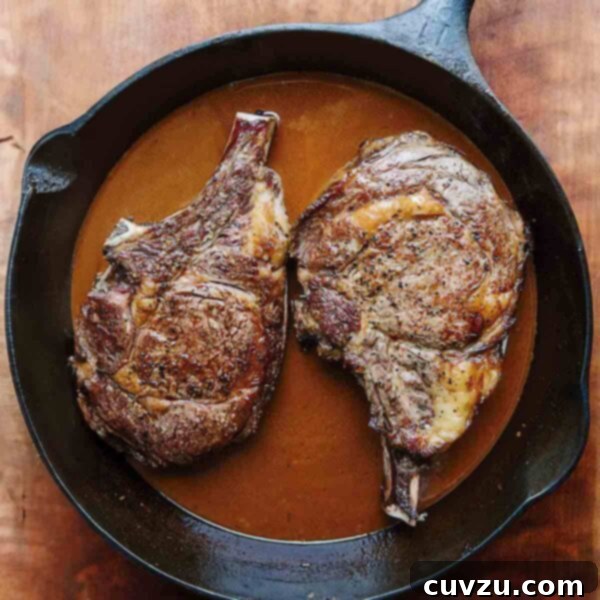
The Ultimate Cowboy Steaks with Guinness Sauce
David Leite
Essential Equipment for the Perfect Cowboy Steak
-
Large Cast-Iron Skillet or Heavy Ovenproof Pan: Crucial for achieving an exceptional sear and for transferring directly to the oven.
-
Instant-Read Thermometer (highly recommended): Your best tool for accurately gauging the steak’s internal temperature and ensuring perfect doneness without guesswork.
-
Tongs: Essential for safely handling and turning the hot steaks in the skillet.
-
Cutting Board with a Juice Groove: To rest your steaks and catch any delicious juices.
-
Whisk: For smoothly emulsifying the Guinness sauce to a glossy, irresistible finish.
Ingredients
For the Succulent Cowboy Steaks
- Two (2- to 2 1/2-pound) bone-in ribeye steaks*, preferably 2 to 2 1/2 inches (5 to 6 cm) thick, often known as cowboy steaks
- 2 teaspoons kosher salt, or to taste
- 1 teaspoon freshly ground black pepper, or to taste
- 1 tablespoon high smoke point olive oil (or grapeseed/avocado oil)
For the Rich and Velvety Guinness Sauce
- 1 large shallot, thinly sliced
- 2 garlic cloves, finely chopped
- 1 tablespoon store-bought or homemade tomato paste
- 1/2 cup Guinness or another high-quality Irish stout
- 1/2 cup rich store-bought or homemade beef stock
- 1 tablespoon Worcestershire sauce
- 4 tablespoons (2 oz) cold unsalted butter, cut into cubes
Step-by-Step Instructions for Your Perfect Cowboy Steaks with Guinness Sauce
Part 1: Sear and Finish the Magnificent Cowboy Steaks
-
Prepare for Perfection: Begin by preheating your oven to a robust 400°F (204°C). While the oven heats, thoroughly pat your bone-in ribeye steaks dry with paper towels; this crucial step ensures a superior sear. Season the steaks generously on all sides with kosher salt and freshly ground black pepper.
-
Achieve the Golden Sear: Heat the olive oil (or your chosen high smoke point oil) in a large cast-iron or other heavy, ovenproof skillet over medium-high heat until it begins to shimmer and barely smoke. Carefully add the seasoned steaks to the hot skillet. If your skillet feels crowded with both steaks, sear them one at a time to maintain optimal pan temperature, carefully spooning off any excess fat between batches.
-
Searing Technique: Sear the steaks without moving them until a deep, golden-brown crust forms on the bottom, typically 2 to 3 minutes. Flip the steaks once and sear the other side for another 2 to 3 minutes. For a professional touch, use tongs to hold the steaks on their fatty edge (the side opposite the bone) and sear until beautifully browned and some of the fat has rendered.
-
Oven Roasting for Even Doneness: Immediately slide the skillet containing the seared steaks into your preheated 400°F (204°C) oven. Continue to cook until the steaks reach your desired internal temperature. An instant-read thermometer is your best friend here. For a luscious medium-rare, cook until the center registers 110°F (43°C). This usually takes about 20 minutes for steaks that are 2 to 2 1/2 inches thick. Thicker steaks may require 30 minutes or more. For a perfect medium, aim for an internal temperature of 115°F (46°C), which will typically be around 25 minutes for a 2 to 2 1/2-inch steak, or 35 minutes+ for thicker cuts. Remember that the temperature will rise slightly during resting.
-
The All-Important Rest: Once the steaks reach their target temperature, carefully remove the skillet from the oven. Transfer the cooked steaks to a clean cutting board (preferably one with a juice groove) and let them rest undisturbed for at least 10 to 15 minutes. This allows the internal juices to redistribute, ensuring an incredibly tender and moist steak. Keep the skillet on the stovetop; it’s still needed for the sauce.
Part 2: Crafting the Exquisite Guinness Sauce
-
Building the Flavor Base: While your magnificent steaks are resting, return to the skillet. Carefully pour off all but about 2 tablespoons of the rich pan juices (rendered fat). Place the skillet over medium heat. Add the thinly sliced shallot and finely chopped garlic, and cook, stirring frequently, until the shallot softens and the garlic turns fragrant and golden brown, which should take approximately 2 minutes.
-
Deepening the Umami: Add the tomato paste to the skillet. Continue to cook, stirring constantly, for about 1 minute, until the paste begins to brown lightly and caramelize. This step is vital for deepening the umami notes in your sauce.
-
Deglazing with Guinness: Pour in the Guinness stout. Bring the liquid to a rolling boil and continue to cook, stirring and scraping up any browned bits from the bottom of the pan with a wooden spoon, until the liquid is almost completely reduced to a rich, syrupy consistency, about 2 minutes. This intensifies the stout’s flavor. Next, add the beef stock and Worcestershire sauce. Return to a boil and reduce the liquid by about half, which will take another 2 to 3 minutes, creating a concentrated and savory base.
-
Finishing with Butter: Remove the skillet from the heat. Add the cold, cubed unsalted butter, whisking vigorously until the butter is completely incorporated into the sauce. The whisking action will emulsify the butter, creating a beautifully smooth, glossy, and velvety sauce that clings perfectly to the steak. Taste and adjust seasoning if necessary.
Part 3: Serving Your Grand Cowboy Steaks and Guinness Sauce
-
Presenting Your Masterpiece: Carve the rested steaks into thick slices against the grain, or for a truly rustic and dramatic presentation, serve them whole, still on the bone, straight from the skillet. Drizzle generously with the warm, rich Guinness sauce. This dish pairs exquisitely with creamy mashed potatoes, roasted root vegetables, or a crisp green salad to balance the richness. Prepare for an unforgettable culinary experience! This timeless recipe was originally published on September 12, 2012, and has been a favorite ever since.
Inspired By: The Farm Cookbook
This exquisite recipe is adapted from “The Farm,” a collection of heartwarming and robust dishes. The cookbook emphasizes fresh ingredients and timeless cooking techniques, much like the philosophy behind these magnificent cowboy steaks. Explore more culinary delights and expand your repertoire by bringing this cherished cookbook into your kitchen.
Discover “The Farm” on Amazon
Explore More with AI
Nutritional Information
Please note: Nutritional information provided is an estimation automatically calculated and should be used as an approximation. Actual values may vary based on specific ingredients and preparation methods.
Recipe Testers’ Enthusiastic Reviews
Our dedicated team of recipe testers put these Cowboy Steaks with Guinness Sauce through their paces, and the feedback was overwhelmingly positive! They raved about the perfect sear, the tender interior, and the irresistible depth of the Guinness sauce. Read on to discover their experiences and insights, which further affirm this recipe’s status as a culinary triumph.
Natalie Reebel
It’s a rare occasion when the inherent flavor of a magnificent ribeye steak can be genuinely improved upon, but this recipe manages just that. These cowboy steaks were truly out of this world. The expert searing technique applied to the meat produces a gorgeously dark, savory crust on the outside, providing a delightful textural contrast. Meanwhile, the finishing roast in the oven consistently delivers a perfectly cooked medium-rare interior, ensuring every bite is succulent and tender. However, the true magic unfolds once the Guinness sauce is introduced. At this point, culinary lift-off is achieved! The incredible, rich flavor of the ribeye is not merely complemented but profoundly enhanced and showcased by a sauce so exquisite, I confess I could have easily enjoyed it on its own with a spoon. The sauce itself is a deep, inviting brown, with a silky smooth consistency that coats the palate beautifully. Its flavor possesses a remarkable depth, featuring the subtle maltiness of Guinness alongside savory umami notes, yet it never overpowers the star of the dish—the steak. This recipe, in Natalie’s words, is undeniably a special treat, deserving of its place in any serious home cook’s repertoire.
Natalie also offered a practical tip from her testing experience: “My steak only took 20 minutes in the oven to arrive at medium rare. I would consider using slightly thinner steaks next time or carefully reducing the oven time to ensure perfect doneness, especially if aiming for individual portions for everyone at the table.” This insight highlights the importance of monitoring internal temperature for personalized results.
Helen Doberstein
“Beer and steak—what a truly magnificent combination!” exclaimed Helen Doberstein, echoing the sentiments of many. She praised the straightforward preparation of the cowboy steaks, noting how the Guinness sauce comes together quickly and effortlessly, proving that gourmet flavors don’t always require hours in the kitchen. The family’s reaction was nothing short of raving; not only did they enjoy a perfectly cooked, tender steak, but the accompanying sauce was hailed as exceptionally flavorful and a fantastic enhancement to the meat. Her daughter, in particular, was so enamored with the sauce that she playfully poured some over her salad, ensuring not a single drop went to waste. This anecdote perfectly illustrates the sauce’s irresistible appeal.
Helen also shared some valuable observations from her testing: “That said, these are truly generous portions, and we found ourselves with some wonderful steak left over—enough for two delicious lunches the very next day. My butcher cut the steaks with less fat than some ribeyes might have, so there wasn’t a significant amount of fat to pour off the pan before starting the sauce, which worked out perfectly.” She also pondered alternative cooking methods, suggesting, “I believe this recipe would work equally well by cooking the steaks on an outdoor grill, then preparing the sauce on a side burner or inside the kitchen. This is one versatile sauce I would absolutely make again for other meats, such as succulent lamb, juicy burgers, or even tender pork, perhaps with a slight adjustment to the type of broth used to match the protein.” Her review highlights the adaptability of the Guinness sauce and the ample portions this recipe yields.
Joan Osborne
“My son-in-law and I absolutely loved this cowboy steaks recipe,” Joan Osborne reported, underscoring the dish’s broad appeal. She encountered a common challenge: “I had a bit of trouble finding bone-in ribeyes cut precisely to the recipe’s suggested thickness. I even tried a local slaughterhouse, but they mentioned that most customers prefer boneless cuts these days. Despite the meat cutter’s best efforts to find a suitable bone-in ribeye, I ultimately decided to proceed with a boneless cut.” This shows the flexibility of the recipe, even if the bone-in adds extra flavor.
Reflecting on the cooking process, Joan noted, “I had never used this particular pan-sear and oven-finish technique to cook a steak before, and I was thoroughly impressed. Given the thickness of our chosen steak, it took just over 45 minutes in the oven to reach our preferred medium-rare stage, demonstrating the importance of internal temperature over strict timing. The resulting meat was utterly perfect—incredibly tender and succulent.” Her confidence in the recipe was high from the start: “I knew I had to try this one since I’ve had great success with several other recipes using Guinness stout, and this one certainly didn’t disappoint.” Joan’s experience confirms that while bone-in is ideal, even a boneless ribeye can yield outstanding results with this cooking method and the fantastic Guinness sauce.