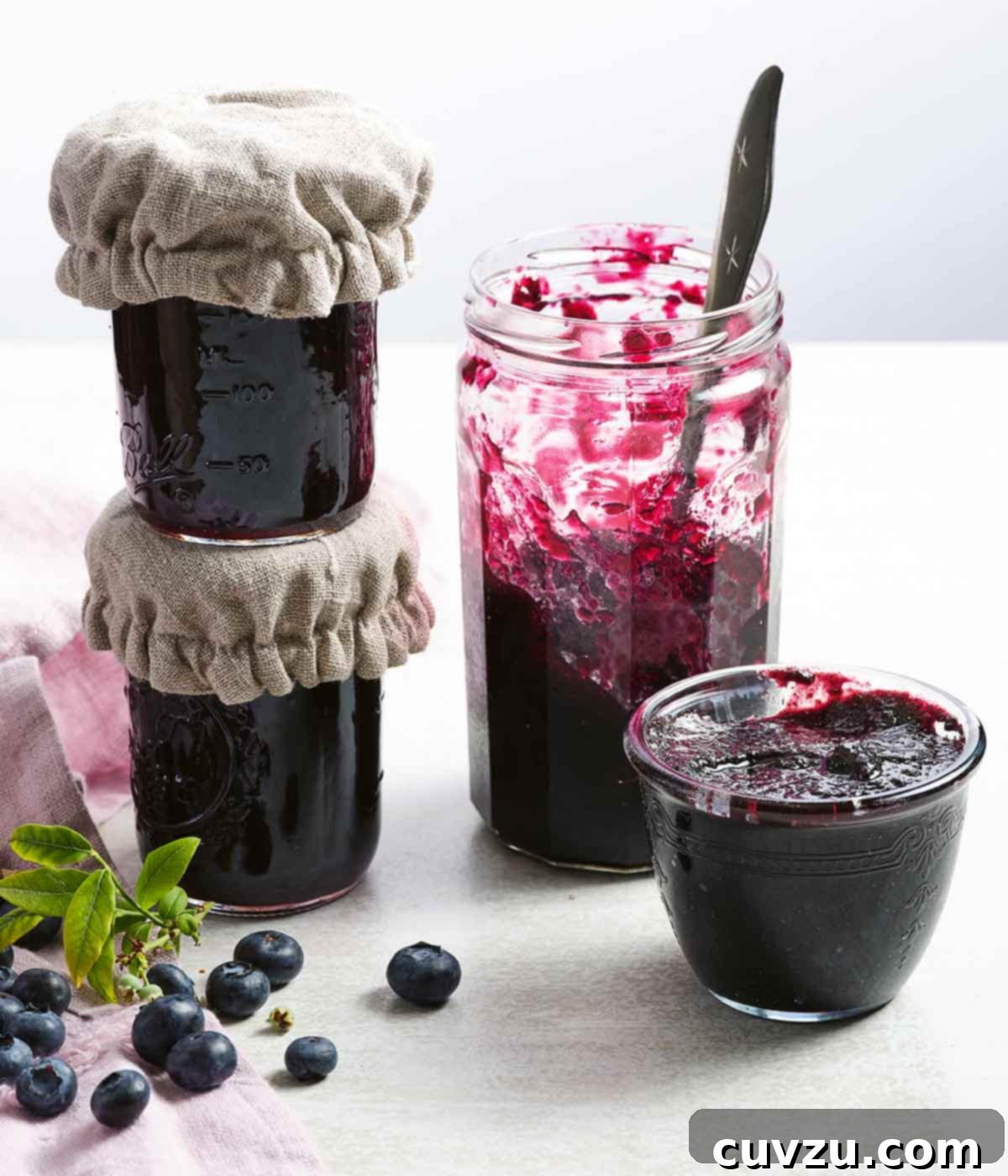
Effortless Small Batch Blueberry Jam: Preserve Summer’s Sweetness in Under an Hour
Longing for the vibrant taste of summer all year round? Our small batch blueberry jam recipe is the perfect solution to your seasonal fruit cravings. Forget the daunting, full-day canning process; in a mere 45 minutes, you can create luscious, homemade blueberry jam that captures the essence of sunshine in a jar. Whether you’re making the most of a bumper crop of fresh summer blueberries or yearning for a taste of warmth mid-winter using frozen berries, this quick and easy recipe yields precious, jewel-like jars of pure delight. It’s truly easy-peasy, bringing the joy of homemade preserves right to your table without any unnecessary fuss.
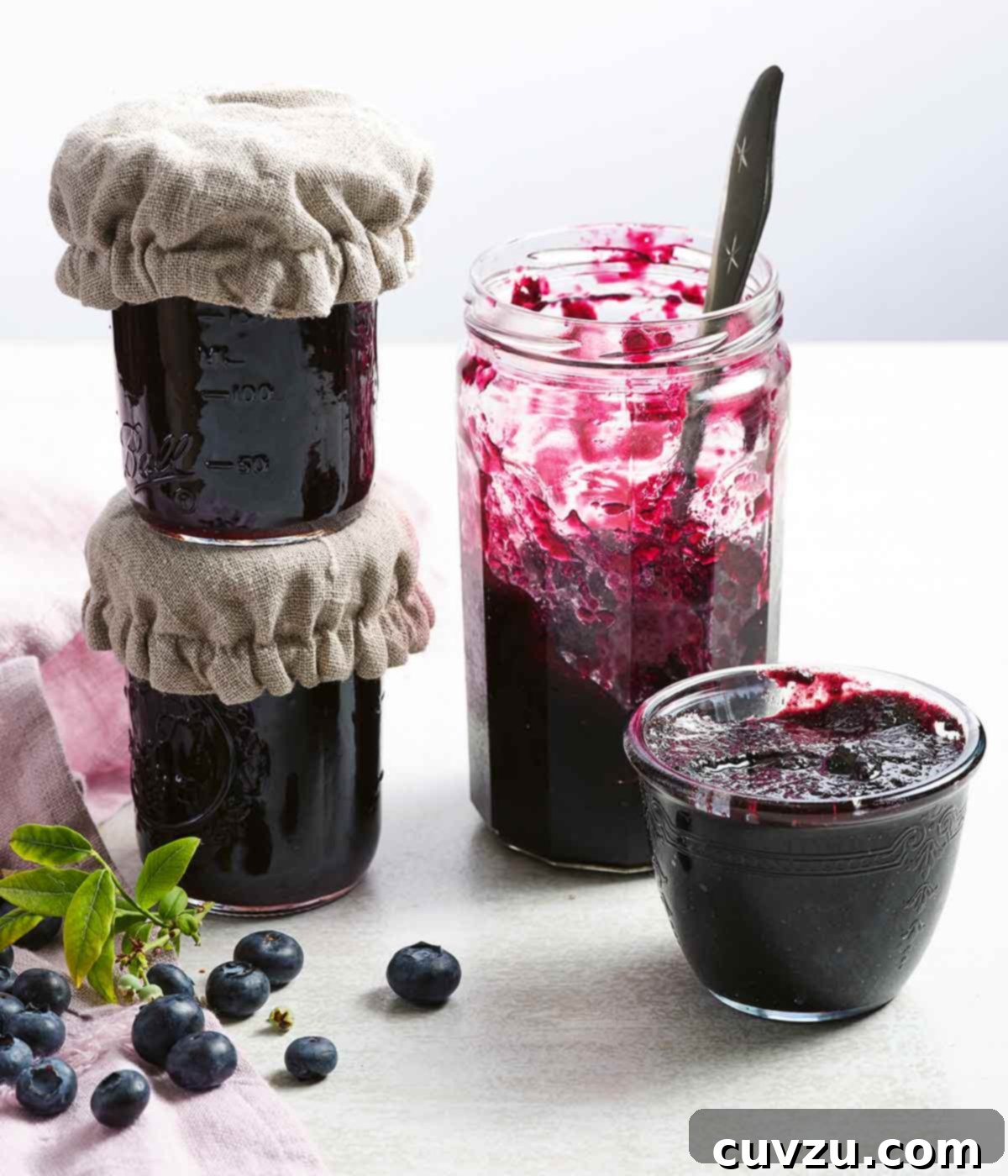
The Allure of Small Batch Jam: Quick, Convenient, and Utterly Delicious
Small batch jam-making has revolutionized how home cooks approach preserving. It allows you to harness the joys of nature’s seasonal bounty without the traditional canning hassle, which often involves sterilizing numerous jars, precise processing times in a water bath canner, and a significant time commitment. This particular blueberry jam recipe is designed for ease and convenience, focusing on what’s known as “refrigerator jam.” This means you can whip up a batch, let it cool, and store it directly in your refrigerator, ready to be enjoyed.
This approach is perfect for those who want to experience the satisfaction of homemade preserves but don’t require shelf-stable storage for an entire year. The smaller yield ensures that you can enjoy the jam at its peak freshness, typically within about 3 to 4 weeks when refrigerated. For times when a craving hits later in the year, or if you simply wish to extend its life, this versatile jam can also be frozen in freezer-safe containers for up to 6 months. This flexibility makes it an ideal choice for quick enjoyment and for preserving the vibrant flavors of blueberries well beyond their season.
As culinary expert Cynthia Graubart notes, this method is about celebrating the simplicity and pure flavor of the fruit. It’s about enjoying a delicious, handcrafted product with minimal effort, bringing a touch of gourmet goodness to your everyday meals and snacks.
Your Questions Answered: Small Batch Blueberry Jam FAQs
This blueberry jam recipe was specifically developed for quick preparation and refrigerator storage, not for traditional water bath canning. Canning recipes require precise measurements of sugar, acid, and fruit, along with specific processing times and techniques, to ensure proper sealing and to prevent the growth of harmful bacteria for shelf stability. Since our recipe hasn’t been tested under these stringent canning guidelines, we strongly advise against using a water bath for this particular jam. Its small batch size makes it perfectly suited for refrigeration and consumption within a few weeks. If you make more than you can eat within that timeframe, simply transfer any extra jam to freezer-safe containers and store it in the freezer for up to 6 months.
The world of blueberries is surprisingly diverse, encompassing four main types: Highbush, Lowbush, Hybrid Half-High, and Rabbit Eye. Each type offers distinct characteristics, making certain varieties more suitable for specific culinary applications. Within these four broad categories, there are hundreds of unique cultivars!
- Highbush Blueberries: These are the most commonly planted and found blueberries in supermarkets across North America. They produce large, plump berries with a generally sweet and mild flavor. Highbush varieties hold their shape well during cooking, making them an excellent choice for a consistently textured jam that has a classic blueberry taste.
- Lowbush Blueberries (Wild Blueberries): Often found growing wild in cooler, northern regions, these blueberries are much smaller but pack an incredibly intense, concentrated blueberry flavor. They are known for their natural resistance to disease, a longer growing season, and a higher sweetness profile compared to their cultivated counterparts. If you can get your hands on wild lowbush blueberries, they will yield a jam with a deeper, more vibrant, and truly “quintessential blueberry” taste.
- Hybrid Half-High Blueberries: As the name suggests, these are crosses between highbush and lowbush varieties, designed to combine the best traits of both. They are usually medium-sized, offering good flavor and hardiness, making them adaptable to various climates.
- Rabbit Eye Blueberries: Predominantly grown in warmer climates, these blueberries are typically larger and have a slightly thicker skin, which can contribute to a chewier texture. Their flavor can be a bit tarter than highbush varieties. While perfectly good for jam, some may prefer the sweeter, less tart profiles of highbush or lowbush.
Ultimately, for jam-making, both highbush and lowbush blueberries are fantastic choices. Highbush offers a widely appealing sweetness, while wild lowbush provides a more intense and complex berry experience. Feel free to use whichever variety you have access to or prefer!
Lemon juice serves two critical functions in almost any jam recipe, and particularly in blueberry jam. Firstly, it provides essential acidity. Blueberries are naturally low in pectin, the carbohydrate that acts as a gelling agent to make jam set. The acidity from lemon juice helps to activate the pectin present in the fruit and sugar, allowing the jam to thicken and achieve that desirable spreadable consistency. Without enough acid, your jam might remain too runny. Secondly, lemon juice brightens and enhances the overall flavor profile of the jam. Its tartness provides a crucial counterpoint to the sweetness of the sugar and berries, preventing the jam from tasting flat or overly sweet, and instead bringing out the fresh, vibrant notes of the blueberries.
Yes, you can experiment with reducing the sugar in this small batch refrigerator jam, but it’s important to understand how sugar functions in jam. Sugar is not just for sweetness; it also acts as a natural preservative and contributes significantly to the jam’s texture and ability to set. If you significantly reduce the sugar, your jam may have a softer set (it might be more like a sauce) and will have a shorter shelf life in the refrigerator, possibly only 7-10 days instead of 3-4 weeks. If you prefer a less sweet jam, you might need to cook it a bit longer to achieve a thicker consistency, or consider adding a small amount of low-sugar or no-sugar needed pectin (following package directions). For reduced-sugar versions, freezing is an excellent option for long-term storage, as it mitigates the preservative role of sugar.
Proper sterilization of jars is crucial for any homemade jam, even refrigerator jam, to minimize the risk of spoilage and extend its freshness. While not as rigorous as for pantry-stable canned goods, cleanliness is paramount. Here are commonly used methods:
- Dishwasher Method: A simple way to sterilize is to wash your glass jars and lids thoroughly in hot, soapy water, then place them in your dishwasher and run a full sanitize or hot wash cycle. Keep the jars hot until you are ready to fill them.
- Boiling Water Method: Wash jars and lids well in hot, soapy water and rinse completely. Submerge only the glass jars (not the metal lids, which can be sterilized separately) in a large pot of boiling water for at least 10 minutes. Use clean tongs to carefully remove them just before filling, ensuring they are still hot. For the lids, you can place them in a separate saucepan with simmering (not aggressively boiling) water for a few minutes. Allow the jars to air-dry on a clean rack or paper towels; avoid wiping them with a towel, which could introduce new bacteria. Fill the hot jars promptly with hot jam.
Always fill hot jars with hot jam to prevent thermal shock, which can cause jars to crack, and to ensure a better environment for preservation. After filling, cap the jars tightly and refrigerate them promptly (ensuring your refrigerator is at 40°F or below). Always use clean utensils when scooping jam, and avoid “double-dipping.” If you observe any mold or unusual odors, for safety, discard the entire jar immediately without tasting.
Small Batch Blueberry Jam
By David Leite
Print Recipe
Condiments, Breakfast, Dessert
American
12 servings | Makes 1 1/2 cups
71 kcal
15 minutes
30 minutes
45 minutes
Equipment
-
Sterilized canning jars or freezer-safe containers (See Refrigerator Jam Safety notes below)
-
Medium-sized heavy-bottomed saucepan
-
Heatproof spatula or wooden spoon
Ingredients
- 2 cups (12 oz) fresh or frozen blueberries, rinsed
- 3/4 cup granulated sugar
- 2 teaspoons fresh lemon juice
- Pinch of ground cinnamon
Instructions
-
In a medium saucepan set over medium heat, combine 1 cup of the blueberries (reserving the other cup), all of the granulated sugar, the fresh lemon juice, and the pinch of ground cinnamon. Cook this mixture, stirring occasionally, until the berries begin to bubble actively and soften. This process typically takes about 6 to 8 minutes. If you’re using frozen blueberries, allow a few extra minutes for them to release their moisture and warm through. Once the mixture is bubbling and the initial berries are soft, stir in the remaining 1 cup of fresh or frozen blueberries.
-
Reduce the heat to low and continue cooking the jam. Stir frequently to prevent any sticking to the bottom of the pan and to ensure uniform cooking and thickening. The jam is ready when all the blueberries are thoroughly soft and cooked down, and when you scrape the bottom of the pan with a spoon, it leaves a clear line of separation that fills in slowly. This indicates the jam has reached its setting point, and this stage usually takes between 25 to 40 minutes, depending on the heat level and the water content of your berries.
-
Once the jam has reached your desired consistency, remove the saucepan from the heat. Allow the jam to cool slightly before carefully spooning it into clean, sterilized glass jars or freezer-safe containers. If you plan to freeze the jam, ensure you leave approximately ½-inch headspace in each container to allow for expansion. Store the filled jars promptly in the refrigerator for up to 4 weeks for optimal freshness. For extended enjoyment, transfer the freezer-safe containers to the freezer, where the jam will keep beautifully for up to 6 months. Remember to label and date your jars for easy tracking!
Notes
Refrigerator Jam Safety & Storage Guidelines
For safe and delicious homemade refrigerator jam, it is crucial to use sterilized, heatproof jars. To effectively sterilize, first wash jars and lids thoroughly in hot, soapy water, then rinse them completely. You can either run them through a dishwasher’s sanitize cycle or submerge the clean jars in boiling water for 10 minutes (lids can be scalded separately in hot water for a few minutes). Let the jars air-dry completely on a clean rack; avoid towel-drying, which can reintroduce bacteria. Fill the hot jars promptly with the freshly cooked, hot jam, leaving approximately ½-inch headspace if you intend to freeze them. Cap the jars tightly and refrigerate immediately (ensuring your refrigerator temperature is maintained at 40°F or below).
To prevent contamination and extend the jam’s freshness, always use clean utensils for serving—never double-dip! This jam is best consumed within 3 to 4 weeks when stored in the refrigerator. For lower-sugar versions, the refrigerated shelf life might be shorter, around 7–10 days. If you ever observe any signs of mold or an unusual odor, for your safety, discard the entire jar of jam immediately; do not attempt to salvage or taste it. For longer-term storage, freeze the jam in freezer-safe containers for up to 6 months. Always remember to label and date your jars so you know when they were made and by when to enjoy them.
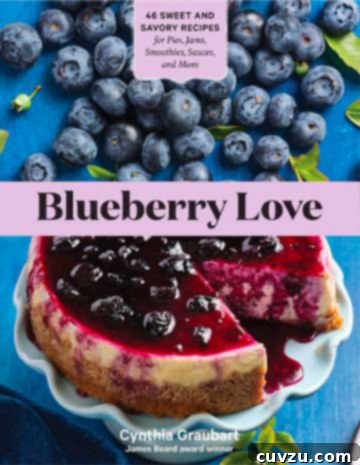
Adapted From
Blueberry Love
Buy On Amazon
Nutrition
Calories: 71 kcal
Carbohydrates: 18 g
Protein: 1 g
Fat: 1 g
Saturated Fat: 1 g
Monounsaturated Fat: 1 g
Sodium: 1 mg
Fiber: 1 g
Sugar: 16 g
Nutrition information is automatically calculated and should be used as an approximation only.
Tried this recipe? Share your delicious creations!
Mention @leitesculinaria or tag #leitesculinaria!
Recipe Testers’ Honest Reviews: Real Feedback from Our Kitchen
Our dedicated team of recipe testers put this Small Batch Blueberry Jam through its paces, offering valuable insights into its preparation and final taste. Their feedback highlights the recipe’s strengths and provides helpful tips for home cooks looking to recreate this delightful preserve. Overall, the consensus was overwhelmingly positive, praising its simplicity, delightful flavor, and the sheer convenience of the small batch approach.
TL Wallace
TL Wallace found this blueberry refrigerator jam to be both delicious and remarkably simple to prepare. She particularly appreciated the cooking method—bringing half of the berries and all of the sugar to a rapid boil initially, then adding the remaining berries for simmering. This technique, she noted, beautifully developed the flavors, helped the jam achieve a good set, and imparted a wonderfully fresh berry taste. While the small amount of cinnamon wasn’t distinctly discernible on its own, TL hypothesized that it contributed subtle depth to the overall flavor profile. This versatile jam was thoroughly enjoyed for breakfast on a fresh sourdough baguette with salted butter, and later, it even elevated a classic peanut butter and jelly sandwich.
For those who prefer a less sweet jam, TL offered insightful modifications for future batches: doubling the amount of lemon juice (from the recipe’s 2 teaspoons) and significantly reducing the sugar content (aiming for closer to 100g instead of the original 150g), perhaps even considering a small amount of invert sugar or honey. She also suggested adding a pinch of salt to further enhance the flavors. TL cautioned that reducing sugar might affect the jam’s setting ability, in which case a slightly longer simmer might be necessary. In a practical test, using 315g of fresh blueberries, the initial rapid boil took 6 minutes, and the subsequent simmering to achieve the “line of separation” test on the spoon took 25 minutes. The total hands-on time was approximately 15 minutes, with a total recipe time of 35 minutes, yielding 300ml of jam. A helpful practical note from TL was to maintain medium heat after adding the second half of blueberries until the jam returned to a simmer, before reducing the heat to low.
Jack V.
Jack V. praised the straightforward nature of this small batch blueberry jam, highlighting its pure blueberry flavor that truly takes center stage without any other competing tastes. He particularly appreciated the “small batch” concept, finding it incredibly useful for utilizing those lingering 2-ish cups of blueberries often leftover after preparing larger recipes like muffins, coffee cakes, pancakes, or pies. As he aptly put it, “Not that there is anything wrong with plain blueberries…but why eat them when you could make jam instead?”
The preparation process, which involves simply combining ingredients in a saucepan and requiring only occasional supervision, was a significant advantage for Jack, allowing him to attend to other tasks. He noted that his jam took the full 40 minutes to reach the desired “line of separation” on the bottom of the pan, which occurred at a temperature of 223°F. This observation led him to suspect that his stovetop’s “low” setting might differ from the recipe author’s. For future attempts, Jack plans to cook the jam at a medium-low heat and remove it from the heat around 220°F, accounting for some carry-over cooking once it’s off the burner. His batch yielded 1-3/4 cups of jam, slightly more than the recipe’s indicated 1 1/2 cups. He relished the jam in granola parfaits and spread it generously on toast, underscoring its versatility for various breakfast and snack applications.
Elsa M. Jacobson
Elsa M. Jacobson expressed delightful synchronicity, as the arrival of this small batch blueberry jam recipe coincided perfectly with the first fresh blueberries of the season at her local farmers market. This auspicious start, combined with her pre-existing happiness to avoid the time-intensive traditional canning process, set the stage for a wonderful jam-making experience. While she opted for terrific fresh berries, Elsa was confident that the recipe would be equally tasty and successful with either grocery store or frozen blueberries.
With a playful nod, she noted that there was “not the slightest chance” this jam would last the full 3 to 4 weeks suggested for refrigerator consumption, a clear testament to its deliciousness! However, the idea of freezing the jam for up to 6 months held significant appeal, as it offered a convenient way to extend the season’s bounty and enabled thoughtful post-blueberry season gifting, all without the need for complex canning. Elsa observed that her berries softened nicely within the specified 5 to 8 minutes, but the complete cooking process on low heat took less than 25 minutes, suggesting that cooking times can vary based on individual stovetops and the inherent moisture content of the fruit. Her initial taste test involved a truly terrific deep-fried peanut butter and jelly sandwich. For a second tasting, she stirred the jam into a non-dairy ice cream, finding it equally excellent. Elsa’s culinary imagination then ran wild, envisioning the jam as a perfect accompaniment to pancakes, waffles, oatmeal, a sophisticated cheese board, French toast, a delightful stir-in for yogurt or a yogurt parfait, mixed into cream cheese, spread on toast, baked into a clafouti, or stuffed into a delicate crepe. Her ultimate dream involved enjoying it on warm biscuits with an generous helping of butter!
Adrienne Lee
Adrienne Lee, an experienced jam maker who typically focuses on peach and raspberry varieties, was keen to try this small batch blueberry jam recipe, especially given her interest in experimenting with lower sugar levels and quicker jam-making methods. She found the process straightforward and easy to execute. An interesting observation she made during cooking was an initial “odd” smell, which then transformed into a “really good” aroma towards the end of the cooking process.
However, Adrienne’s final assessment revealed a slight disappointment with the cooled jam’s flavor profile; she felt it wasn’t as strongly reminiscent of blueberry as she had anticipated, particularly after the appealing scent it emitted while warm. This insight from Adrienne underscores that individual preferences for fruit intensity can vary. For those seeking a bolder blueberry flavor, using wild blueberries or perhaps allowing for a slightly longer reduction to concentrate the fruit might yield a more intense taste, catering to different palates.
Beyond the Jar: Creative Ways to Enjoy Your Homemade Blueberry Jam
Once you’ve successfully created your delightful small batch blueberry jam, the possibilities for enjoying its vibrant flavor are truly endless! While the classic spread on a slice of toast or a warm scone is undeniably a timeless pleasure, don’t limit yourself. This incredibly versatile jam can elevate a wide array of dishes, transforming simple meals into something special, from everyday breakfasts to sophisticated desserts and even savory culinary adventures.
- Breakfast & Brunch Bliss: Begin your day with a burst of fruity sweetness by stirring a generous spoonful into your morning oatmeal, creamy Greek yogurt, or a crunchy granola parfait. Drizzle it lavishly over a stack of fluffy pancakes, golden waffles, or a comforting plate of French toast. For a delightful bagel topping, mix it into softened cream cheese, or layer it within a decadent breakfast trifle. Don’t forget the ultimate comfort food, as suggested by one of our testers: warm biscuits served with plenty of butter and your homemade blueberry jam.
- Elevated Sandwiches & Snacks: Move beyond the traditional peanut butter and jelly! Experiment by pairing your luscious blueberry jam with almond butter or another gourmet nut spread. For a sophisticated snack, spread it onto crisp crackers and top with a soft, creamy cheese like brie or tangy goat cheese, creating a perfect balance of sweet and savory notes.
- Dessert Delights: Incorporate the vibrant flavor of blueberry jam into your baking and dessert repertoire. Use it as a delectable filling for delicate tarts, charming hand pies, or classic thumbprint cookies. Swirl it directly into a cheesecake batter before baking, or simply dollop it over vanilla ice cream for an instant, gourmet upgrade. Imagine the elegance of this jam generously stuffed into delicate crepes or baked into a rustic French clafouti.
- Savory Pairings & Glazes: Don’t shy away from integrating this sweet-tart preserve into savory dishes. Its unique flavor profile makes it an excellent glaze for roasted chicken, duck, or pork, adding a beautiful sheen and a complex fruity note. It can also be a surprising and delicious addition to a curated cheese board, providing a delightful contrast to aged cheddar, sharp blue cheeses, or creamy goat cheese.
- Refreshing Beverages: For a refreshing twist, stir a spoonful of your homemade blueberry jam into iced tea, homemade lemonade, or even sparkling water to create your own fruity soda. It can also serve as a fantastic mixer for cocktails, adding a layer of complex berry flavor and a beautiful hue.
This small batch blueberry jam is more than just a preserve; it’s a versatile ingredient that promises to bring joy and an exciting dimension to your culinary creations. We encourage you to experiment and discover your own favorite ways to savor its bright, summery essence throughout the year!