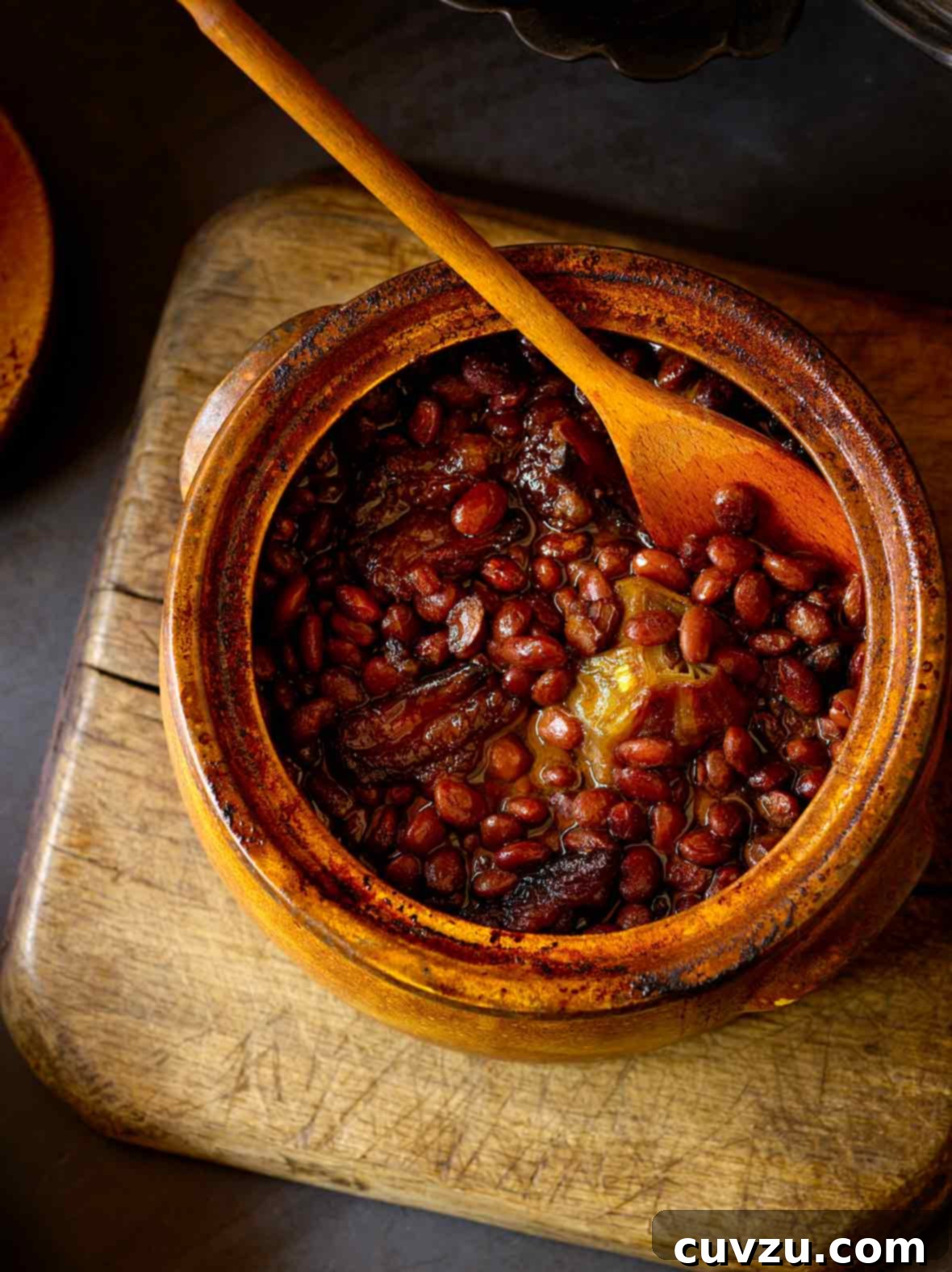
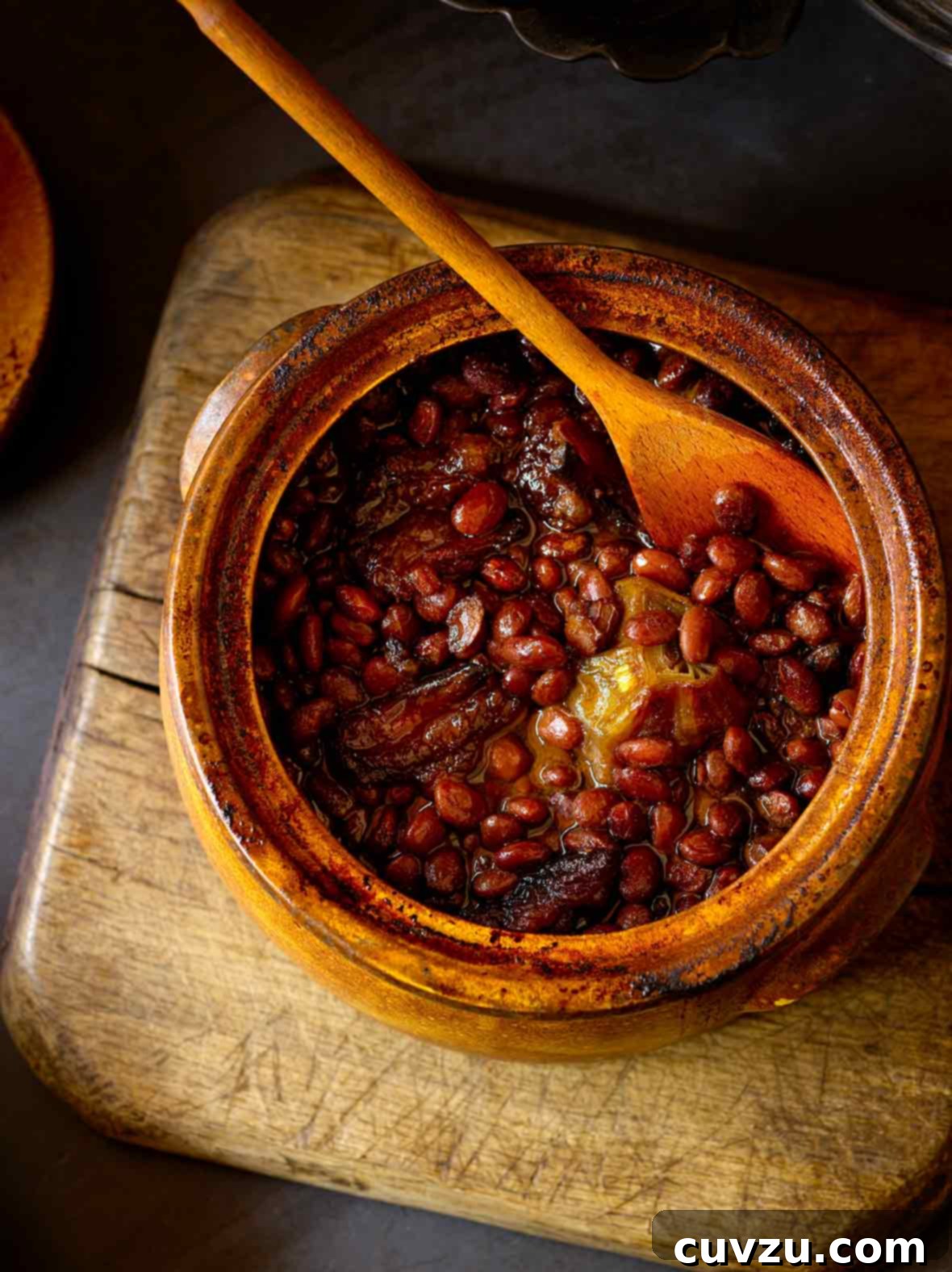
Appalachian cider-baked beans transform humble pinto beans into a dish of profound flavor and comforting tradition. By integrating the savory richness of salt pork, the deep sweetness of molasses, the subtle tang of mustard, and the crisp brightness of apple cider, this recipe elevates simple ingredients into something truly extraordinary. Hearty, deeply satisfying, and steeped in heritage, these cider-baked beans are precisely what you crave for a wholesome and memorable meal.
My first encounter with these remarkable cider beans was in a most unexpected setting: a bustling local gas station nestled deep within the Appalachian mountains. Here, these seemingly ordinary stops are far more than just fuel stations. They serve as vibrant community hubs where neighbors gather, share hearty meals, and exchange the latest news. This isn’t your typical “fast food” joint; these charming establishments specialize in authentic “home cookin’,” and the flavors are nothing short of delicious. This beloved mountain recipe, brimming with soul-warming goodness, finds its perfect companion in a slice of warm cornbread or a freshly baked muffin. It’s a taste of tradition that truly satisfies. –Joan E. Aller
The Heartwarming Story Behind Appalachian Cider-Baked Beans
Baked beans are a staple across American cuisine, but in the Appalachian region, they take on a distinct character, largely influenced by the availability of local ingredients and the resourceful nature of mountain cooking. Apple cider, a readily available product from abundant apple orchards, naturally found its way into many traditional dishes, including baked beans, lending a unique tang and sweetness that sets them apart. Molasses, often sorghum molasses, provided a rich, earthy sweetness, while salt pork offered essential fat and robust flavor, crucial for sustenance in a historically challenging environment.
This dish is more than just food; it’s a culinary narrative, a testament to the region’s culinary ingenuity and its ability to transform simple provisions into deeply comforting meals. These beans were a common sight at community gatherings, church potlucks, and family dinners, symbolizing warmth, hospitality, and nourishment. The tradition of serving “home cookin'” at local gas stations or general stores further speaks to the communal spirit, where good food brings people together, fostering connection and shared experience.
The combination of these ingredients creates a harmonious balance of flavors: the earthiness of the beans, the salty depth of the pork, the sweet treacle of molasses, the pungent kick of mustard, and the fruity brightness of apple cider. Each component plays a vital role in crafting a dish that is both complex and utterly comforting. It’s a taste that transports you to a simpler time, evoking images of cozy kitchens and hearty mountain hospitality.
Slow Cooker Magic: Making Appalachian Cider Beans Effortlessly
For those seeking a more hands-off approach to this delightful dish, the slow cooker offers an excellent alternative, delivering the same rich flavors with minimal fuss. The long, gentle cooking process in a slow cooker tenderizes the beans beautifully, allowing all the ingredients to meld together, deepening the flavors into an irresistibly fragrant and savory masterpiece.
To begin your slow cooker journey, first soak and thoroughly drain your pinto beans, following the initial step of the traditional recipe. This crucial step helps to soften the beans and reduce cooking time. Next, arrange half of your thinly sliced salt pork at the bottom of your slow cooker. This layer will render its savory fat and imbue the beans with its characteristic flavor from the very start. Add the soaked beans and the whole, peeled onions on top of the salt pork.
Now, pour in the fresh apple cider. The key here is to use just enough cider to barely cover the beans—aim for no more than half an inch above them. Use your judgment; if the specified three cups of cider don’t quite reach this level, feel free to supplement with cold water until the beans are adequately covered. The goal is to submerge the beans sufficiently for even cooking without drowning them.
In a separate bowl, whisk together the molasses, dry mustard, and salt. A helpful tip to make the molasses easier to work with is to warm it slightly. You can achieve this by gently heating it in the microwave for a few seconds or by placing the bowl over a pot of simmering water on the stovetop. Once warmed, the molasses will become more fluid, allowing the mustard and salt to dissolve and blend seamlessly. Pour this aromatic molasses mixture evenly over the beans in the slow cooker.
Finally, crown the dish with the remaining slices of salt pork. This top layer will crisp up slightly and render more flavor into the beans as they cook. Set your slow cooker to high and cook for an initial period of 3 to 6 hours. After this initial cook time, reduce the heat to low and continue cooking for another 1 to 4 hours, or until the beans are wonderfully tender and permeate your kitchen with an enticing aroma. The beauty of beans in a slow cooker is their forgiving nature; they can generally handle a flexible cooking schedule, making them perfect for busy days.
A Note on Slow Cooker Performance: It’s important to remember that no two slow cookers are exactly alike, and cooking times can vary based on your specific appliance and even the freshness of your beans. This slow-cooker method has proven highly effective for us, yielding consistently delicious results. However, if you have a preferred slow-cooker technique or a different approach you’d like to try, please feel empowered to experiment! We always encourage culinary creativity and would love for you to share your insights and experiences in the comments below. For more inspiration on mastering your slow cooker, feel free to browse our extensive collection of slow cooker recipes.
The Appalachian Cider-Baked Beans Recipe

Appalachian Cider-Baked Beans
David Leite
Saved
Sides
Southern
8 servings
399 kcal
15 minutes
6 hours
6 hours 15 minutes
Equipment
-
Heavy-bottomed pot or Dutch oven (for oven method)
-
Slow cooker (if following the slow cooker method)
Ingredients
-
3 cups dried pinto beans -
3 cups fresh apple cider -
8 ounces salt pork, thinly sliced -
2 small yellow onions, peeled and left whole -
6 tablespoons molasses, preferably sorghum molasses -
1 tablespoon dry mustard -
2 teaspoons salt
Instructions
-
For the Slow Cooker Method: Please refer to the detailed “Slow Cooker Magic” section above for specific instructions on preparing these Appalachian Cider Beans in your slow cooker.For the Traditional Oven Method: Begin by carefully picking over your dried pinto beans, discarding any small stones or shriveled beans. Rinse them thoroughly under cold running water. Place the rinsed beans in a large bowl and add enough cold water to cover them by at least 3 inches. Cover the bowl and allow the beans to soak for a minimum of 12 hours, or preferably overnight. This crucial soaking step helps to rehydrate the beans, reducing their cooking time and making them more digestible.
-
Once soaked, drain the beans completely and transfer them to a heavy-bottomed saucepan or a Dutch oven. Pour in the fresh apple cider and slowly bring the mixture to a boil over medium heat. Allow the beans to gently boil, uncovered, for approximately 30 minutes. This initial boiling helps to further soften the beans and prepare them for their long, slow bake. After 30 minutes, remove the saucepan from the heat and carefully drain the beans, making sure to reserve the flavorful cooking liquid – you’ll need this later!
-
Preheat your oven to 300°F (149°C). This low and slow temperature is ideal for baked beans, allowing them to gently simmer and absorb all the wonderful flavors without drying out.
-
Arrange half of your thinly sliced salt pork evenly across the bottom of a 2-quart ceramic bean pot or another deep, oven-safe baking dish, such as a sturdy Dutch oven. This layer of salt pork will render its fat during baking, infusing the beans with its savory essence. Spoon the partially cooked beans into the pot, spreading them out evenly. Then, gently bury the whole, peeled yellow onions deep within the beans. As they cook, these onions will become incredibly tender and sweet, adding another layer of flavor.
-
In a small saucepan, combine the molasses, dry mustard, and salt. Place this mixture over medium heat and stir continuously until the mustard and salt are fully dissolved into the warm molasses. This step ensures an even distribution of these potent flavors throughout the beans. Pour the molasses mixture evenly over the beans in the pot, making sure to coat them well. Top the beans with the remaining salt pork slices. Now, pour the reserved cooking liquid (from step 2) into the pot. If the liquid doesn’t completely cover the beans, add enough hot water until they are just submerged. Cover the pot tightly with a lid or aluminum foil.
-
Bake the covered pot in the preheated oven for 4 hours. After this time, carefully uncover the pot and check the beans. If they appear dry or the liquid level has significantly reduced, add a little more hot water to ensure they remain submerged. Recover the pot and continue to bake for an additional 1 to 2 hours, or until the beans are wonderfully tender and easily mashed with a fork. The longer, slower bake allows the flavors to deepen and the beans to achieve a perfect, creamy texture. Serve these hot, directly from the pot, allowing everyone to savor the delicious, rustic charm of Appalachian Cider-Baked Beans.
Notes
Serving Suggestions: These hearty Appalachian Cider-Baked Beans are incredibly versatile. They make an ideal side dish for barbecued ribs, grilled chicken, roasted pork, or a classic Sunday pot roast. Beyond the suggested cornbread or muffins, consider pairing them with creamy coleslaw, steamed green beans, or a simple garden salad to complete your meal.
Storage and Reheating: Leftover baked beans can be stored in an airtight container in the refrigerator for up to 3-4 days. To reheat, gently warm them on the stovetop over low heat, adding a splash of water or cider if they seem too thick, until heated through. They also freeze well for up to 3 months; thaw in the refrigerator overnight before reheating.

Adapted From
Cider Beans, Wild Greens, and Dandelion Jelly
Buy On Amazon
Nutrition
Serving:
1 portion
Calories:
399 kcal
Carbohydrates:
40 g
Protein:
8 g
Fat:
24 g
Saturated Fat:
8 g
Monounsaturated Fat:
11 g
Cholesterol:
24 mg
Sodium:
1353 mg
Fiber:
6 g
Sugar:
21 g
Nutrition information is automatically calculated, so should only be used as an approximation.
Tried this recipe?
Mention @leitesculinaria or tag #leitesculinaria!
Recipe Testers’ Reviews & Insights
Natalie Reebel
Translating this delightful recipe to the Crock-Pot was a truly enjoyable experience. To maintain simplicity, I opted not to pre-simmer the beans with cider. Instead, I used 2 cups of cider directly with my soaked, uncooked beans. The result was a harmonious balance of salty and sweet, with profound, warming undertones of molasses and mustard that truly hit the spot.
While my initial batch could have benefited from a bit more time in the slow cooker to reach ultimate tenderness, the flavor profile was absolutely divine. I am confident I’ll be making these again, but next time, I’ll allocate a generous 10 hours in the slow cooker to ensure the beans yield to a perfectly creamy, melt-in-your-mouth consistency.
My method involved layering half of the salt pork at the bottom of the Crock-Pot, then spreading the pre-soaked beans over it. I poured the apple cider over the beans and tucked the whole onions deep within them. To ensure a smooth blend, I warmed the molasses in the microwave at 50% power for 30 seconds; this created the ideal consistency for the dry mustard to seamlessly incorporate. I then poured this rich molasses mixture over the beans and topped everything with the remaining salt pork. I set my slow cooker to high for 3 hours, then reduced it to low for an additional 4 hours.
These beans would be an exquisite accompaniment to the sweet potato cornbread, creating a truly memorable Southern comfort meal.
We hope this comprehensive guide to Appalachian Cider-Baked Beans inspires you to bring this heartwarming traditional dish into your kitchen. Whether you choose the slow-cooked simplicity or the classic oven-baked approach, you’re in for a treat that promises rich flavors and deep satisfaction. Enjoy the process of creating this timeless comfort food!