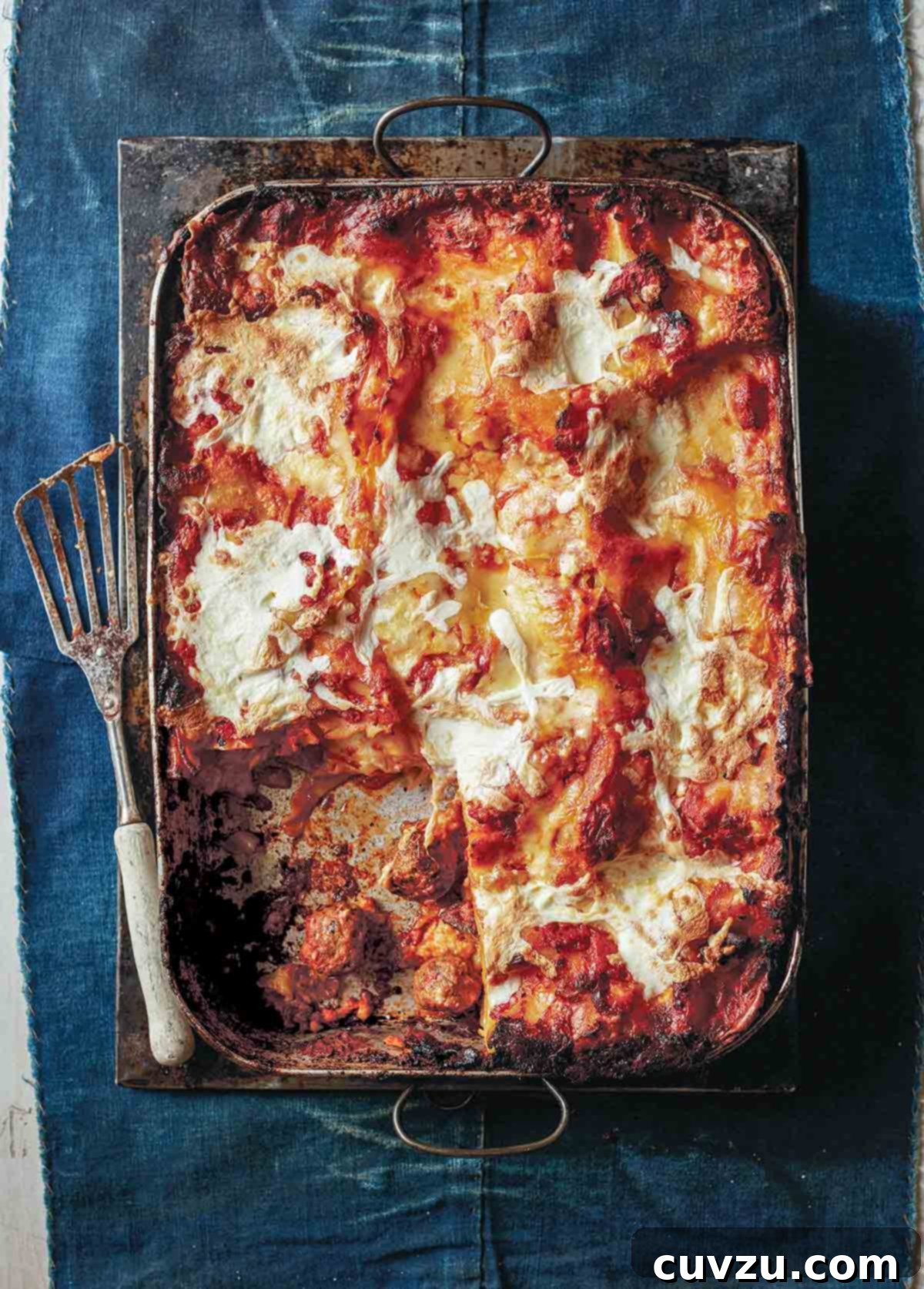
Prepare for a culinary revelation with this exquisite meatball lasagna, a brilliant and playful reimagining of the beloved Italian classic. Crafted with the culinary expertise of celebrity chef Alex Guarnaschelli, this recipe elevates traditional lasagna by substituting the conventional meat sauce with an abundance of tender, perfectly seasoned mini beef and veal meatballs. Each layer is infused with incredible depth of flavor and an exciting new texture that promises to delight even the most discerning palates. This dish isn’t just a meal; it’s an experience, transforming a familiar comfort food into something truly extraordinary.
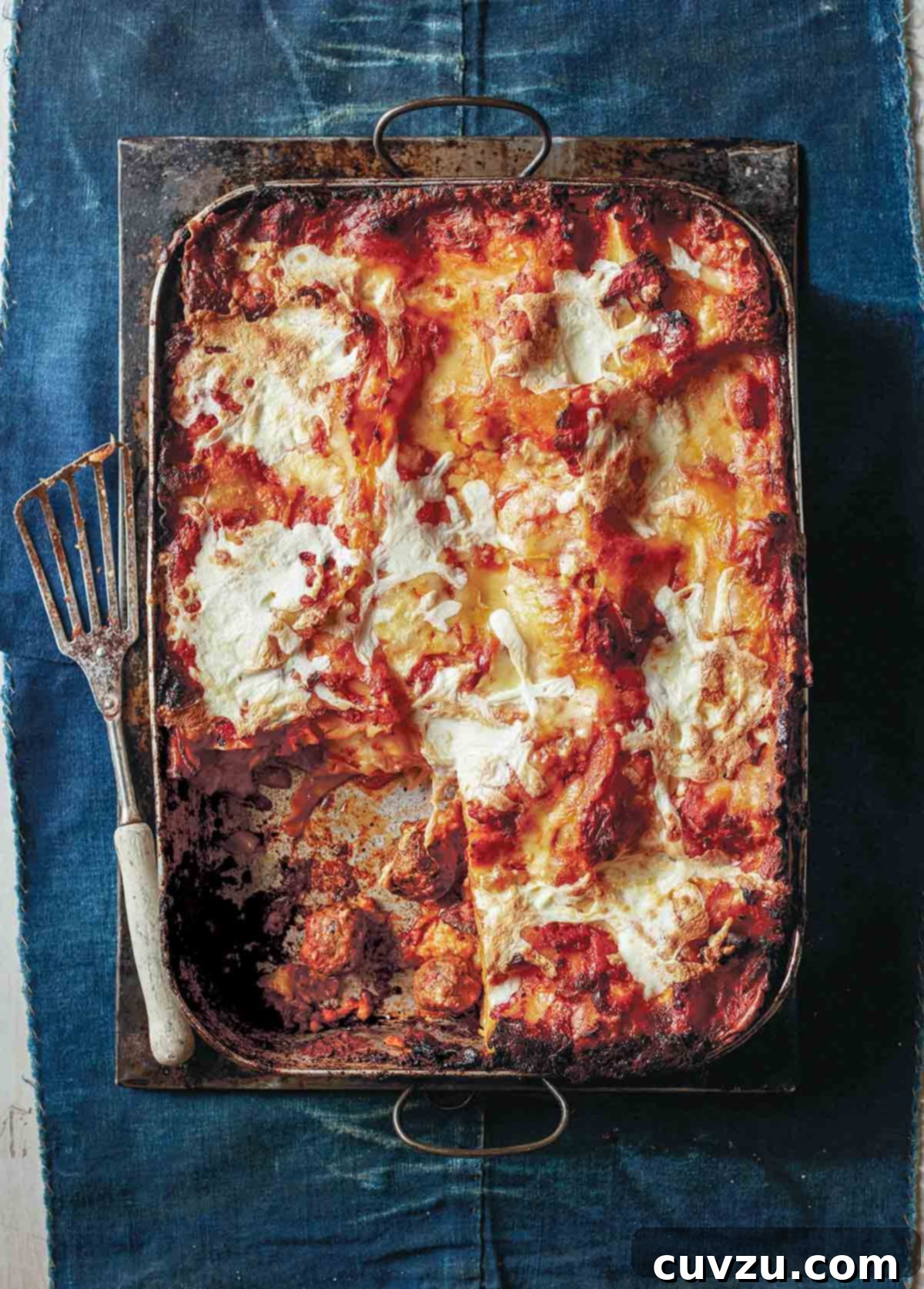
Meatball lasagna isn’t just a clever idea; it’s a gastronomic triumph that merges the hearty satisfaction of meatballs with the layered indulgence of lasagna. This isn’t merely a minor adjustment to an Italian staple; it’s a thoughtfully conceived culinary innovation that maintains all the cheesy, saucy goodness we adore in classic lasagna while introducing a dynamic, bite-sized meaty component. The result is a richer, more textural, and undeniably more exciting dish. Inspired by the renowned chef Alex Guarnaschelli, whose Italian heritage clearly shines through, this recipe guarantees authenticity and flavor that truly speaks for itself. It yields a generous portion, making it ideal for family gatherings, potlucks, or simply ensuring plenty of delicious leftovers. In fact, many find this lasagna tastes even better the next day as the flavors meld and deepen, a testament to its miraculous ability to improve with time. Be warned: the irresistible allure of these leftovers might just spark a friendly skirmish or two at the dinner table!
Meatball Lasagna FAQs: Your Questions Answered
Absolutely! This meatball lasagna is one of those rare and wonderful dishes that truly benefits from being made ahead of time. In fact, many of our recipe testers enthusiastically reported that the lasagna develops a more profound and harmonious flavor profile after a day in the refrigerator. We highly recommend assembling the lasagna up to 24 hours before you plan to bake and serve it. This allows the various components—the rich tomato sauce, the savory meatballs, the tender pasta, and the creamy cheeses—ample time to meld and deepen their individual characteristics, resulting in a more cohesive and incredibly flavorful final dish. While it can be made further in advance, we suggest sticking to a 24-hour window to prevent the lasagna from drying out and to ensure optimal texture and moisture when reheated.
San Marzano tomatoes are a highly prized variety of plum tomato, specifically grown in the Agro Sarnese-Nocerino region of Italy, near Mount Vesuvius. They are celebrated by chefs and home cooks alike for several distinct qualities: their inherently sweet flavor, lower acidity, and dense, meaty texture with fewer seeds, which makes them exceptionally easy to peel. These attributes contribute to a superior tomato sauce with a balanced flavor that is unmatched by generic canned tomatoes. While they can sometimes be a bit more challenging to locate in standard grocery stores, the effort to find them is undeniably worth it for the remarkable difference they make in your sauce. If authentic D.O.P. (Denominazione d’Origine Protetta) San Marzano tomatoes are unavailable, look for “San Marzano-style” canned tomatoes. These are typically grown from San Marzano seeds in a nearby region or under similar conditions and will still offer a significantly better flavor and texture than average canned tomatoes, providing a closer approximation to the desired quality for your lasagna sauce.
Making your own dried breadcrumbs is a simple process that yields a superior product to store-bought varieties, adding a fresh and appealing texture to your meatballs. To begin, take 2 slices of your preferred bread (stale bread works wonderfully here) and tear them into small pieces. Spread these pieces evenly on a baking sheet and bake them in a low oven (around 250°F or 120°C) until they are completely dry and slightly golden, about 15-20 minutes, turning occasionally. Once dried, allow them to cool completely. For fine breadcrumbs, transfer the cooled bread pieces to a blender or food processor and pulse in short bursts until you achieve the desired consistency—from coarse crumbs to a finer texture. Alternatively, if you don’t have a blender, you can place the dried bread pieces in a sturdy plastic bag and use a rolling pin to bash and roll over them until they break down into crumbs. This method also conveniently prevents crumbs from scattering across your kitchen, making cleanup a breeze. Adjust the amount of bread to match the quantity of breadcrumbs specified in the recipe, adding more if needed.
Meatball Lasagna
By David Leite
Mains
Italian
8 to 10 servings
938 kcal
1 hour 30 minutes
1 hour 30 minutes
3 hours
Ingredients
For the tomato sauce
- 1/2 cup extra-virgin olive oil
- 1 medium yellow onion, finely chopped
- 5 garlic cloves, minced
- Kosher salt
- 1 teaspoon crushed red pepper flakes
- 2 teaspoons granulated sugar
- One (28-ounce) can whole peeled San Marzano tomatoes, undrained and preferably crushed by hand
- 2 teaspoons dried oregano
- 1 cup tightly packed fresh basil leaves, torn
For the meatballs
- 12 ounces lean ground beef (85 or 90%), preferably chopped sirloin for best texture
- 4 ounces ground veal (or substitute with additional ground beef for a richer flavor)
- 1 teaspoon kosher salt, or to taste
- 1/2 cup panko bread crumbs or dried bread crumbs, toasted, plus more if needed
- 3/4 cup freshly grated Parmigiano-Reggiano cheese
- 1/2 cup finely chopped fresh flat-leaf parsley leaves
- 1 large egg
- 3 medium garlic cloves, grated
- 1/3 cup mild vegetable oil
For the pasta
- Kosher salt, for the pasta water
- 1 pound dried lasagna sheets
To assemble
- 1 pound whole-milk mozzarella cheese, thinly sliced or shredded
- 1 pound whole-milk ricotta cheese
- 3 cups freshly grated Parmigiano-Reggiano cheese, plus more for serving
Instructions
Make the sauce
-
In a medium skillet or Dutch oven, warm the olive oil over medium heat until shimmering. Add the finely chopped yellow onion and minced garlic, then season with 1 to 1 1/2 teaspoons of kosher salt. Stir well to combine. Incorporate the crushed red pepper flakes and granulated sugar, cooking for an additional 2 minutes until the onions are softened and translucent, and the garlic is fragrant, taking care not to burn it.
-
Carefully add the whole peeled San Marzano tomatoes, along with their juices, and the dried oregano to the skillet. Increase the heat to high and bring the sauce to a vigorous simmer. Continue to cook, stirring occasionally and using a wooden spoon or potato masher to break up the whole tomatoes into smaller, chunky pieces. Let the sauce simmer for 5 to 10 minutes, allowing the flavors to meld and the sauce to thicken slightly. Taste the sauce and adjust the seasoning with additional salt or sugar if necessary to achieve a perfect balance. Finally, stir in the torn fresh basil leaves and remove the skillet from the heat, preserving the vibrant fresh basil flavor.
Make the meatballs
-
In a large mixing bowl, combine the ground beef and ground veal. To ensure even seasoning, gently spread the meat over the bottom and slightly up the sides of the bowl. Evenly sprinkle 1 teaspoon of kosher salt over the meat. Next, add the toasted bread crumbs (panko or dried), freshly grated Parmigiano-Reggiano cheese, and finely chopped fresh flat-leaf parsley leaves. Use your hands to gently but thoroughly mix all the ingredients together until just combined, being careful not to overmix, which can lead to tough meatballs.
-
In a separate small bowl, whisk together the large egg and grated garlic cloves until well combined. Drizzle this egg mixture evenly over the meat mixture in the large bowl. Once again, use your hands to gently incorporate the egg mixture into the meat until everything is just uniformly moist.
-
To test the meatball mixture for seasoning and consistency, form one small meatball (about 1 inch in diameter or even smaller). In a small skillet, warm a splash of the mild vegetable oil over high heat until it almost begins to smoke. Carefully add the test meatball to the hot oil, then reduce the heat to medium. Cook the meatball, turning as needed, for 2 to 3 minutes until it is browned on all sides and cooked through. Taste the test meatball. If it seems too wet or loose, add a tablespoon or two more breadcrumbs to the mixture in the bowl. If it tastes too dry, add a tiny splash of water or milk to the mixture. Adjust the seasoning of the remaining meatball mixture in the bowl as needed based on your taste test. Once adjusted, roll the remaining meat into uniform 1-inch balls. You should yield approximately 40 to 50 very small, tender meatballs.
-
Line a baking sheet with several layers of paper towel or a clean kitchen towel for draining. In a large skillet, warm half of the mild vegetable oil over medium heat. When the oil is hot but not yet smoking, carefully remove the skillet from the heat momentarily and arrange half of the meatballs in a single layer, ensuring they are not crowded. Crowding the pan will steam the meatballs rather than browning them. Return the skillet to medium-high heat and brown the meatballs, turning them frequently to ensure even browning on all sides, until they are medium-rare, typically 2 to 3 minutes. Using a slotted spoon or spatula, transfer the browned meatballs to the prepared baking sheet to drain any excess oil. Wipe out the skillet with a paper towel and repeat the browning process with the remaining vegetable oil and meatballs.
Cook the pasta
-
In a very large pot, bring 6 quarts (approximately 5.7 liters) of water to a vigorous rolling boil over high heat. Generously season the water with about 1/2 cup of kosher salt – the pasta water should taste noticeably salty, similar to seawater. Add the dried lasagna sheets to the boiling water, stirring immediately with a slotted spoon to prevent them from clumping together or sticking to the bottom of the pot. Cook the pasta for precisely 4 minutes. At this stage, the pasta should be pliable but still very firm to the touch, significantly undercooked compared to al dente. This ensures it will finish cooking perfectly in the oven without becoming mushy. Drain the pasta thoroughly in a colander, then rinse it under cold running water to stop the cooking process and prevent sticking. Gently separate the lasagna sheets if they show any tendency to adhere to each other.
-
While the pasta cools, preheat your oven to 350°F (180°C). Adjust an oven rack to the center position to ensure even baking of the lasagna.
Assemble the lasagna
-
Begin the assembly by spooning a thin, even layer of the prepared tomato sauce over the bottom of a 9-by-13-inch (23-by-33-cm) baking pan. Arrange a layer of the partially cooked lasagna sheets over the sauce, trimming them if necessary to fit neatly. Evenly sprinkle about 1/4 of the mozzarella, dollop 1/4 of the ricotta, and sprinkle 1/4 of the Parmigiano-Reggiano cheese over the pasta layer. Next, add another thin layer of tomato sauce (approximately 3/4 cup). Dot the surface with about 1/3 of the browned mini meatballs, spacing them evenly across the pan. Repeat this layering process two more times: pasta, cheeses, sauce, and meatballs. For the final layer, place the remaining pasta sheets on top and cover generously with the remaining sauce and the last of the cheeses, ensuring a beautiful, cheesy crust.
-
Cover the baking dish tightly with aluminum foil, crimping the edges to seal. Bake the lasagna in the preheated oven for 45 minutes. After 45 minutes, increase the oven temperature to 450°F (230°C) and carefully remove the foil. Continue to bake for an additional 10 to 15 minutes, or until the top of the lasagna is golden brown, bubbly, and slightly caramelized. Remove the lasagna from the oven and let it rest for at least 15 minutes before slicing and serving. This crucial resting period allows the layers to set, preventing the lasagna from falling apart when cut. For an even more spectacular experience, consider letting the lasagna cool completely and then refrigerating it overnight. As many of our recipe testers confirm, the flavors and textures meld beautifully and deepen significantly, making it even more delicious the next day!
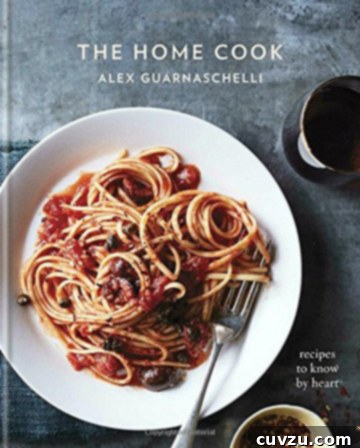
Adapted From
The Home Cook: Recipes to Build Your Confidence, Knowledge, and Love of Cooking by Alex Guarnaschelli
Buy On Amazon
Nutrition
Serving: 1 portion
Calories: 938 kcal
Carbohydrates: 57 g
Protein: 61 g
Fat: 51 g
Saturated Fat: 19 g
Monounsaturated Fat: 21 g
Trans Fat: 0.5 g
Cholesterol: 135 mg
Sodium: 1620 mg
Fiber: 4 g
Sugar: 5 g
Nutrition information is automatically calculated and should be used as an approximation only.
Tried this delicious recipe?
Share your culinary creation on Instagram! Mention @leitesculinaria or tag #leitesculinaria!
Insights from Our Recipe Testers
Our dedicated team of recipe testers rigorously evaluated this meatball lasagna, providing invaluable feedback on its preparation, taste, and overall appeal. Their experiences offer practical tips and confirm the exceptional qualities of this unique dish.
Lou Ann Traster
Even the most ardent traditionalists will undoubtedly fall head over heels for this inventive spin on classic lasagna. The miniature meatballs are an absolute game-changer, delivering all the rich, savory flavors one expects from a robust meat sauce, but in delightful, tender, bite-sized morsels. This unique texture and flavor dispersion truly sets this lasagna apart.
I found the recipe to be remarkably adaptable, both in terms of preparation time and scaling. On a particular weekday, when I didn’t have an entire afternoon to dedicate to cooking, I opted to prepare the full quantity of meatballs after work. This proved to be a wise decision, as half of them mysteriously vanished that very night—a clear testament to their undeniable tastiness! Two days later, I easily completed the lasagna assembly by making a half recipe of the tomato sauce, boiling a half box of noodles, and layering everything in a shallow 8-by-10-inch baking dish. Conveniently, this dish perfectly matched the length of the lasagna noodles. I did find myself a bit short on sauce when scaling down, so I ended up using the entire 28-ounce can of San Marzano tomatoes, which yielded an even richer sauce.
Due to limited grocery access, I was unable to source ground veal or panko breadcrumbs. I successfully substituted with all ground beef and used Italian-seasoned dried breadcrumbs, and the results were still fantastic.
The recommended short simmer time for the sauce initially yields a slightly watery and very chunky consistency, even after I made sure to break up the tomatoes with a spoon. However, the lasagna noodles beautifully absorbed the excess liquid during baking, and the dish improved dramatically as leftovers. Indeed, the lasagna was even better on the second day—the flavors deepened, and the texture became more harmonious. I used the full amount of Parmigiano-Reggiano in the meatballs, and for layering, I simply eyeballed a generous sprinkle between each layer and over the top. A melon baller proved to be an excellent tool for portioning the meat, resulting in exactly 50 perfectly uniform meatballs.
This lasagna stores exceptionally well. On the second day, it was significantly less “weepy” and the slices cut beautifully, holding their shape without any sogginess in the noodles. It truly outperformed any other reheated pasta casserole I’ve ever made. We thoroughly enjoyed it the first night, and it was an absolute delight the second night.
Elie Nassar
This meatball lasagna recipe is nothing short of excellent, quickly becoming a new family favorite in our home. The charming little meatballs provide a wonderful departure from typical ground beef fillings or sliced meatballs, offering a delightful textural surprise in every bite. The tomato sauce is vibrant, with sharp and garlicky undertones that create a perfect counterpoint to the creamy ricotta and luxurious melted mozzarella. The proportions of sauce and filling are spot-on, ensuring a well-balanced lasagna. A particularly satisfying aspect is how well the slices maintained their shape on the plate – I genuinely dislike it when a piece of lasagna collapses into a messy heap as soon as it’s lifted from the baking dish, and this recipe avoids that entirely.
While we thoroughly enjoyed the lasagna on the day it was made, its flavors truly deepened and improved with age! My wife unequivocally declared it much better the next day after heating a slice in the microwave. The most time-consuming part of this recipe is forming the numerous small meatballs, but with some extra kitchen help (my son enthusiastically volunteered), this task can be completed surprisingly quickly and even become a fun family activity.
I highly recommend weighing the Parmigiano-Reggiano cheese for the meatballs rather than relying solely on cup measurements, especially if grating it fresh. You might find that 3/4 cup by volume is closer to 1 1/2 cups when freshly grated. Skimping on the cheese can result in an “okay” meatball, but using the full, precise amount is what truly elevates these meatballs to an exceptional level of flavor and richness.
A crucial tip for the pasta: leave the noodles very firm, almost undercooked, after boiling. I’m not talking about merely “al dente” here; they should still have a significant bite. This seemingly undercooked state is intentional, as the noodles will finish cooking perfectly in the oven, absorbing the rich sauces and flavors without ever turning mushy.
Finally, for easier assembly, remove the ricotta cheese from its container and transfer it to a bowl. Use a spoon or whisk to whip it vigorously until it becomes a bit looser and smoother. This lighter consistency makes it much easier to dollop onto each layer. When you place a lasagna sheet on top, press gently to encourage the ricotta to spread slightly, ensuring an even distribution of creaminess throughout the dish.
Jenny Latreille
I genuinely enjoyed this meatball lasagna, finding it to be a wonderful and distinctive dish. The small, flavorful meatballs truly make it stand out from more conventional lasagnas, adding an element of surprise and exceptional texture that pairs beautifully with the creamy cheese filling. This is certainly a recipe I will likely make again, especially as it makes for a delightful and impressive dish to serve to guests at dinner parties or special occasions.
One personal note: I typically avoid adding sugar to tomato-based dishes, and in this instance, I found that the inclusion of sugar, particularly when combined with the generous amount of ricotta cheese, resulted in a sweetness that was a bit too pronounced for my personal preference. However, it’s worth noting that the feedback from my guests was overwhelmingly positive; no one else seemed to dislike the subtle sweetness as much as I did, indicating it might just be a matter of individual taste. Overall, the dish was a hit, and I would recommend it for anyone looking for a fresh take on a classic.