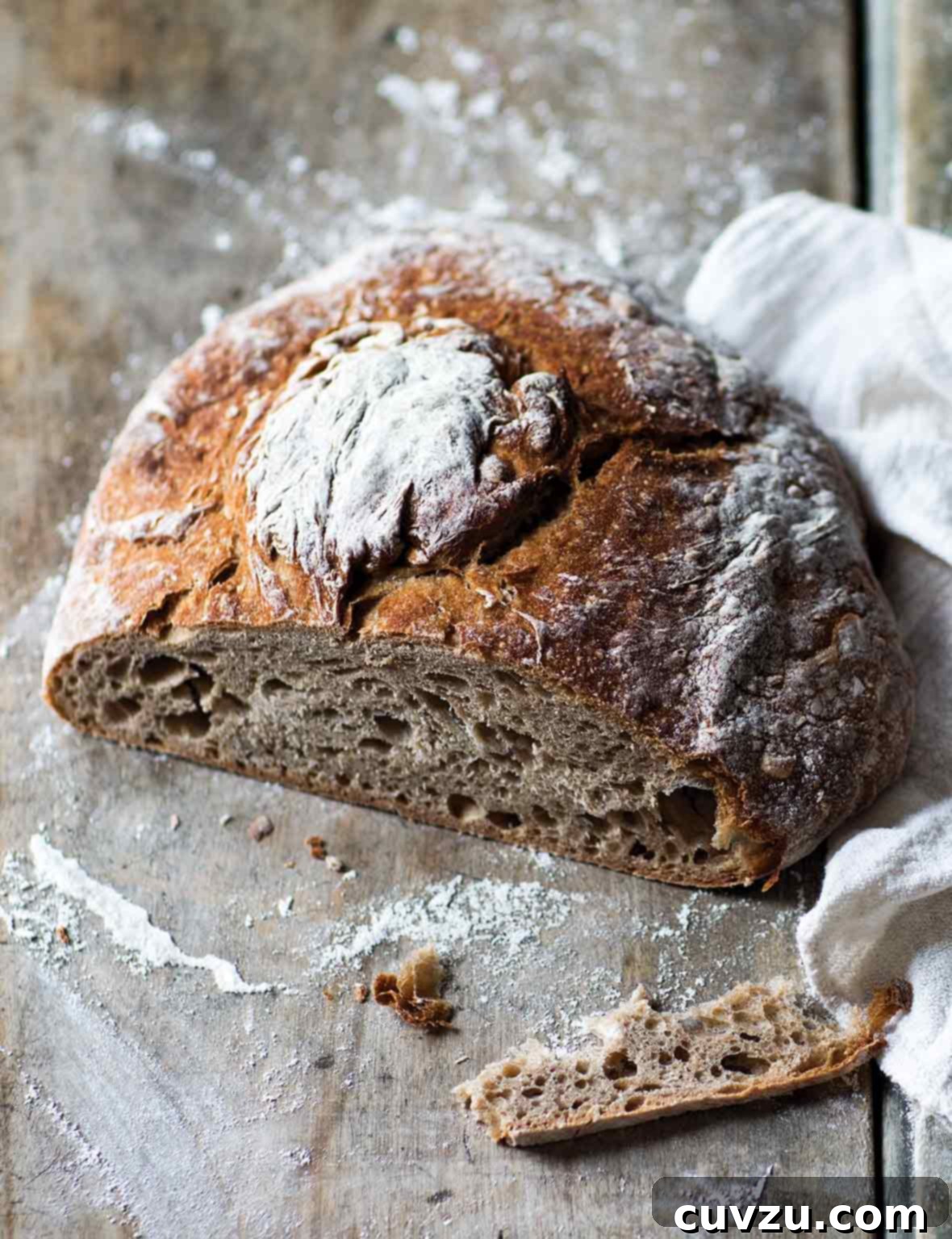
Master the Art of Sourdough Rye: A Rustic Galician Bread Recipe
Few breads evoke the comforting warmth and artisan skill quite like a perfectly baked sourdough rye. This particular recipe delves into the rustic charm of Galician sourdough rye, known affectionately as “pan Gallego de centeno,” offering a flavor profile that’s uniquely subtle yet deeply satisfying. Unlike the often dense and overpowering deli rye breads found commercially, this homemade version boasts a nuanced sourness, a surprisingly open crumb, and a delightful crust that is approachable for both novice and experienced bakers.
The Essence of Galician Rye Bread: A Taste of Spain
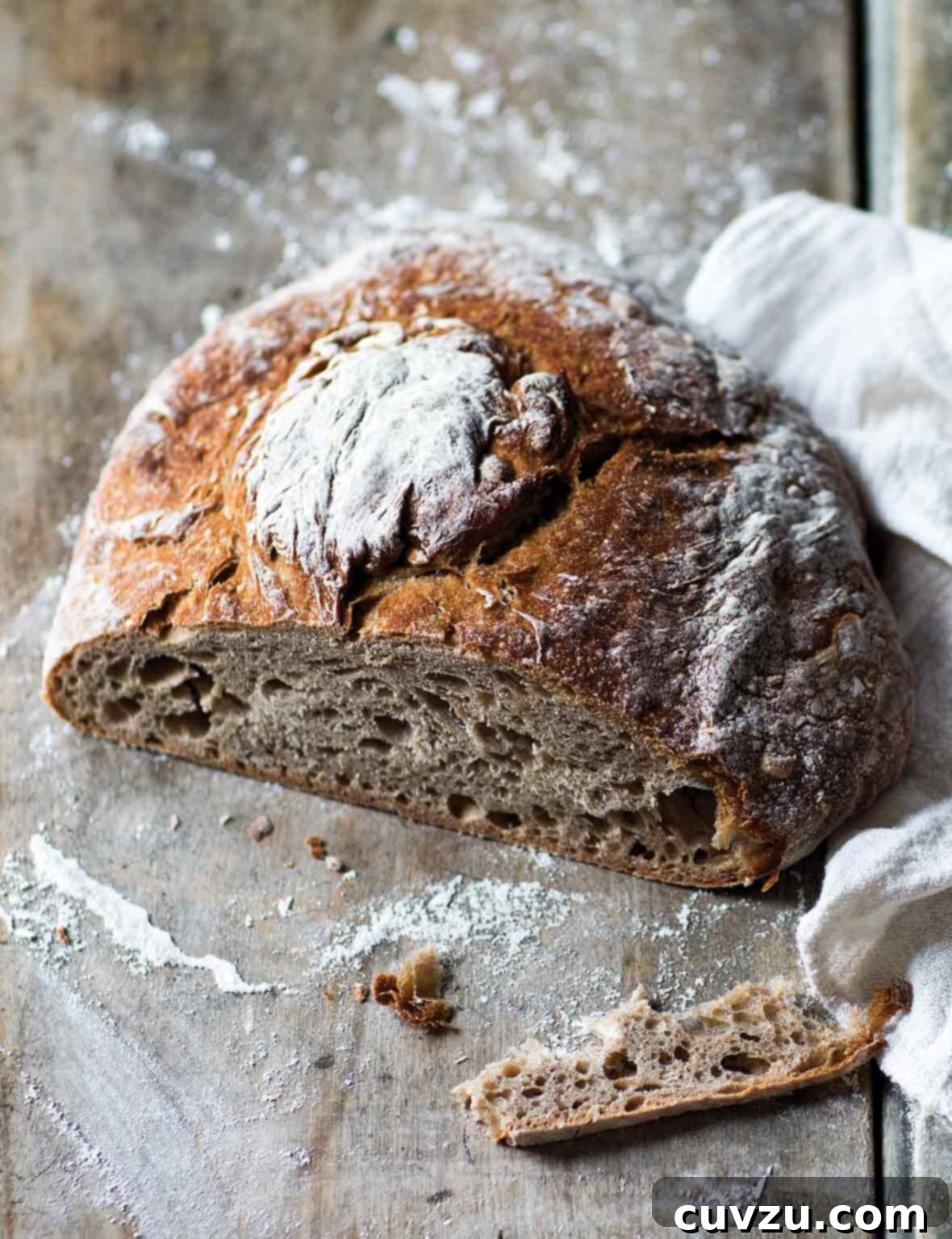
Galician rye bread takes many forms, each with a somewhat unique shape and composition, deeply rooted in the culinary traditions of Spain’s northwestern region. This specific version originates in Ourense, a vibrant province in south-central Galicia, not far from the Portuguese border. It’s a region known for its rich gastronomic heritage, and this bread stands as a proud example.
As cookbook author and renowned rye bread authority Stanley Ginsberg explains, this loaf is “a crusty, rustic loaf with a surprisingly open crumb.” He further elaborates on its complex flavor profile, noting that “Bright sour dominates supported by the spicy sweetness of wheat and rye.” This harmony of flavors creates a bread that is both robust and refined, offering a taste experience far superior to many store-bought options. Given how difficult it can be to find a truly exceptional loaf of bakery rye bread, mastering this homemade sourdough rye recipe is an absolute must for anyone who appreciates authentic, artisan bread.
Why Embark on Your Sourdough Rye Baking Journey?
Baking sourdough rye at home is more than just creating a delicious loaf; it’s a deeply rewarding experience that connects you to ancient culinary traditions. The process, while requiring patience and a touch of dedication, offers numerous benefits that extend beyond the plate. Firstly, you gain complete control over the ingredients, ensuring your bread is free from unwanted additives and preservatives. Secondly, the flavor of homemade sourdough rye is unparalleled. The slow fermentation process develops complex, nuanced flavors that simply cannot be replicated in commercially produced breads.
Furthermore, sourdough bread is often easier to digest due to the fermentation breaking down complex carbohydrates and gluten. Rye flour itself is a powerhouse of nutrients, rich in fiber, vitamins, and minerals, making this bread a healthy choice. The aroma of freshly baked bread filling your home is an experience in itself, creating a cozy and inviting atmosphere. If you appreciate the complex tang of sourdough and the hearty character of rye, mastering this recipe will not only transform your baking repertoire but also bring immense satisfaction to your kitchen.
Understanding Your Sourdough Starter: The Heart of the Loaf
The foundation of any exceptional sourdough bread is a healthy, active starter—a living culture of wild yeast and beneficial bacteria. This starter is responsible for the bread’s characteristic tang, its airy texture, and its unique crust. Nurturing a sourdough starter is a journey of its own, requiring regular feeding and attention, but the rewards are truly magnificent.
An active starter will be bubbly, smell pleasantly yeasty and sour, and will double in volume after feeding. If you’re new to sourdough or looking to maintain your starter, understanding its care is crucial. For those looking to expand their sourdough skills and ensure they always have a backup, learning how to dry sourdough starter is a valuable technique for preservation and sharing with fellow bakers.
Sourdough Rye Bread
Rating: 4.82 / 11 votes
Sourdough rye bread is essentially a rustic rye sourdough bread made from a starter that’s subtler and lovelier and more approachable in flavor than most deli rye breads.
By David Leite
Sides
Spanish
16 servings
121 kcal
45 minutes
12 hours 15 minutes
13 hours
Ingredients
For the rye bread sponge
- 6 ounces medium rye flour
- 6 ounces water
- 0.6 ounces rye sourdough starter
For the rye bread dough
- 10 ounces water, at room temperature
- 10.6 ounces bread flour
- 1 recipe rye bread sponge (see above)
- 2.3 ounces medium rye flour
- 1 1/2 teaspoons salt
- 1/3 teaspoon instant yeast
- Flour, for the work surface
Instructions
Make the rye bread sponge
-
In the bowl of a stand mixer, mix the sponge ingredients by hand until thoroughly incorporated. Ensure no dry pockets of flour remain. Cover the bowl and let the mixture ferment at room temperature (68 to 72°F or 20 to 22°C) overnight, or for 10 to 12 hours. By the end of this period, the sponge will be very bubbly, possess a clean, pleasantly sour smell, and will have noticeably doubled in volume, indicating it’s active and ready.
Make the rye bread dough
-
To the fermented sponge, add the 10 ounces of water and 1.8 ounces (50 grams) of bread flour. Mix by hand for 1 to 1 1/2 minutes until these ingredients form a smooth, uniform slurry. Subsequently, add the remaining 8.8 ounces (250 grams) of bread flour and the medium rye flour. Using the paddle attachment of your stand mixer, mix at low speed until the dough is evenly hydrated, which should take approximately 2 to 4 minutes. The dough will be quite wet and sticky at this stage, which is characteristic of high-hydration rye doughs. Cover the dough and let it rest at room temperature for 15 to 20 minutes; this autolyse period allows the flour to fully absorb the water and begin gluten development.
-
Add the salt and instant yeast to the bowl with the dough. Switch to the dough hook attachment of your stand mixer and mix on low speed for 30 to 35 minutes until the gluten is very well developed. The dough should become sticky and very stretchy. Resist the urge to add more flour, as a high hydration is crucial for the desired open crumb. Once kneaded, cover the dough and let it ferment at room temperature until it has doubled in volume, which typically takes 2 to 2 1/2 hours.
-
Preheat your oven to 430°F (220°C). Adjust an oven rack to the middle position and place a second rack in the lower position with a steam pan on it. A steam pan is simply a pan filled with some water; it’s best to use one with relatively high sides and only fill it partway to prevent sloshing when removed. If you are using a baking stone, place it on the middle rack during preheating.
-
Turn the proofed dough onto a generously floured work surface. Gently form it into a round ball by repeatedly folding the edges of the dough towards the center, rotating 90 degrees after each fold, until the bottom surface appears smooth and taut. Flip the dough over. If you desire the traditional Galician rye bread shape, pinch a golf ball-sized piece of dough from the center of the main loaf and carefully stretch it upwards without separating it completely from the loaf. Then, create a slight depression in the center of the main dough and nestle the smaller ball of dough inside this depression. Place the shaped dough onto a parchment-lined baking sheet or, if using a baking stone, onto a well-floured peel. Cover the dough and let it proof at room temperature for a short 10 minutes, allowing it to relax before baking.
Bake the rye bread
-
Place the shaped bread into the preheated oven and bake for 15 minutes with the steam pan still in place. The steam helps create a beautiful, crispy crust.
-
After 15 minutes, carefully remove the steam pan from the oven. Quickly shut the oven door to retain heat, and then lower the oven temperature to 390°F (200°C). Continue to bake the bread for an additional 15 to 25 minutes, or until the crust achieves a deep golden brown color, the loaf sounds hollow when tapped gently with a finger, and its internal temperature reaches at least 198°F (92°C) when measured with an instant-read thermometer.
-
Transfer the baked loaf immediately to a wire rack. Allow it to cool completely before attempting to slice it. Cooling completely is crucial for the internal crumb structure to set properly and for the flavors to fully develop.
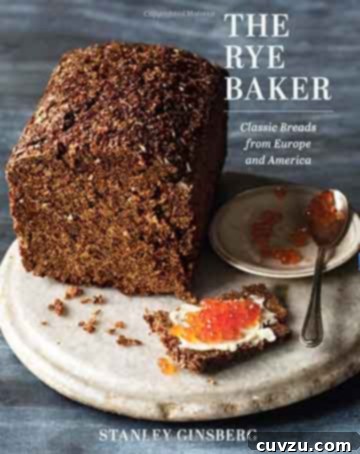
Adapted From
The Rye Baker
Buy On Amazon
Nutrition
Calories: 121 kcal
Carbohydrates: 25 g
Protein: 4 g
Fat: 1 g
Saturated Fat: 1 g
Monounsaturated Fat: 1 g
Sodium: 221 mg
Fiber: 2 g
Sugar: 1 g
Nutrition information is automatically calculated, so should only be used as an approximation.
Tips for Sourdough Rye Success: Insights from Our Bakers
Baking with sourdough, especially rye, can be a nuanced process. Our dedicated recipe testers have provided invaluable feedback to help you achieve the best possible results:
- Embrace the Wetness: One common surprise for new rye sourdough bakers is the high hydration of the dough. As Monica M., one of our testers, wisely noted, “If you’ve never made a rye sourdough like this before, it might be a little bit tricky since the dough is so wet, but you’re doing it right. It should be just a little thicker than pancake batter.” Resist the urge to add excessive flour during kneading or shaping; this high hydration is key to the bread’s surprisingly open crumb.
- Gentle Handling After Kneading: To preserve the delicate air pockets created during fermentation, Monica M. also emphasized, “Be very careful to not punch it down at any point once you’ve kneaded it with the dough hook for 30 minutes as this will help create an airy bread with an open crumb.” Handle the dough gently during shaping to maintain its structure.
- Observe Your Sponge: The success of your bread begins with an active sponge. Monica’s observation that her “sponge started to really grow at around 6 hours and doubled at about 10 hours” aligns perfectly with expectations. The description of it being “bubbly with a clean sour smell” is your cue that your starter is ready to work its magic.
- The Crumb and Crust: This recipe aims for a rustic loaf with a specific texture. Monica found her crust “a little softer and didn’t break your teeth” compared to other rye breads she’d made, highlighting a positive characteristic of this Galician style.
- Experiment with Fermentation: While the recipe provides clear instructions, baking is also an art. Hillary Hawkins, another tester, expressed curiosity to “try this recipe with less mixer time and some folds incorporated into the bulk fermentation” to potentially achieve a more open crumb. This suggests that experienced bakers might explore variations in technique to fine-tune the final texture to their preference. It’s a fun challenge that yields deeper understanding of your dough.
Serving Your Homemade Galician Sourdough Rye
Once your magnificent Galician sourdough rye has cooled completely, the true enjoyment begins. Its robust yet subtly sour flavor profile makes it incredibly versatile. Serve thick slices alongside hearty soups and stews, allowing the bread to soak up the rich broths. It pairs beautifully with a selection of Spanish cheeses and cured meats, creating a delightful charcuterie board. For a simple pleasure, toast it lightly and spread with good quality butter, a drizzle of olive oil, or a spoonful of your favorite jam. This bread also makes an excellent base for open-faced sandwiches, topped with anything from avocado and eggs to smoked salmon and cream cheese. Its satisfying chew and complex taste elevate any meal.
Nutritional Profile of Sourdough Rye Bread
Beyond its incredible taste and satisfying texture, this sourdough rye bread offers significant nutritional benefits. Rye flour is renowned for being a rich source of dietary fiber, which aids in digestion and can contribute to a feeling of fullness. The sourdough fermentation process further enhances the bread’s nutritional value, making vitamins and minerals more bioavailable and potentially reducing the glycemic index compared to yeast-leavened breads. Each slice (approximately 16 servings per loaf) provides a healthy balance of macronutrients:
- Calories: 121 kcal
- Carbohydrates: 25 g
- Protein: 4 g
- Fat: 1 g (Saturated Fat: 1 g, Monounsaturated Fat: 1 g)
- Sodium: 221 mg
- Fiber: 2 g
- Sugar: 1 g
Please note that nutrition information is automatically calculated and should only be used as an approximation. Actual values may vary based on specific ingredients and preparation methods.
Tried this recipe?
Mention @leitesculinaria or tag #leitesculinaria!
Recipe Testers’ Reviews: Real Baker Experiences

Monica M.
Loved, loved, loved this sourdough rye bread recipe! It was perfect! This is an excellent recipe for those who love their classic sourdough rye bread. It turned out absolutely beautiful with a nice golden brown crust and a complex sourdough flavor. I am very, very pleased with this loaf and will definitely be making it again!
My crust wasn’t like some of the other rye bread recipes that I’ve made—it was a little softer and didn’t break your teeth.
My sponge started to really grow at around 6 hours and doubled at about 10 hours. The description was very good—it was indeed bubbly with a clean sour smell. If you’ve never made a rye sourdough like this before, it might be a little bit tricky since the dough is so wet, but you’re doing it right. It should be just a little thicker than pancake batter. And be very careful to not punch it down at any point once you’ve kneaded it with the dough hook for 30 minutes as this will help create an airy bread with an open crumb.
My loaf was beautiful!

Hillary Hawkins
This sourdough rye bread is a higher hydration dough, which was supposed to give it a nice open crumb. I didn’t achieve that, but it still had a nice flavor. It was a very mild sourdough rye bread and could go with many different foods.
I would be curious to try this recipe with less mixer time and some folds incorporated into the bulk fermentation. It was a difficult dough to work with. It will take practice for anyone to get the hang of but it was a fun challenge.
Conclusion: The Reward of Real Bread
From the first bubbling of your starter to the golden-brown crust emerging from the oven, baking Galician sourdough rye is a deeply satisfying culinary journey. This recipe offers a unique opportunity to create an artisan loaf with a flavor profile that stands out – subtler than traditional deli rye, yet rich with character from its long fermentation and the spicy sweetness of rye. It’s a testament to the fact that the most memorable breads are often the ones made with care and patience at home.
Embrace the process, savor the comforting aromas that will fill your kitchen, and finally, enjoy the unparalleled taste and texture of truly homemade artisan bread. This Galician sourdough rye isn’t just a bread; it’s an experience, an invitation to slow down and appreciate the simple, profound joy of baking.