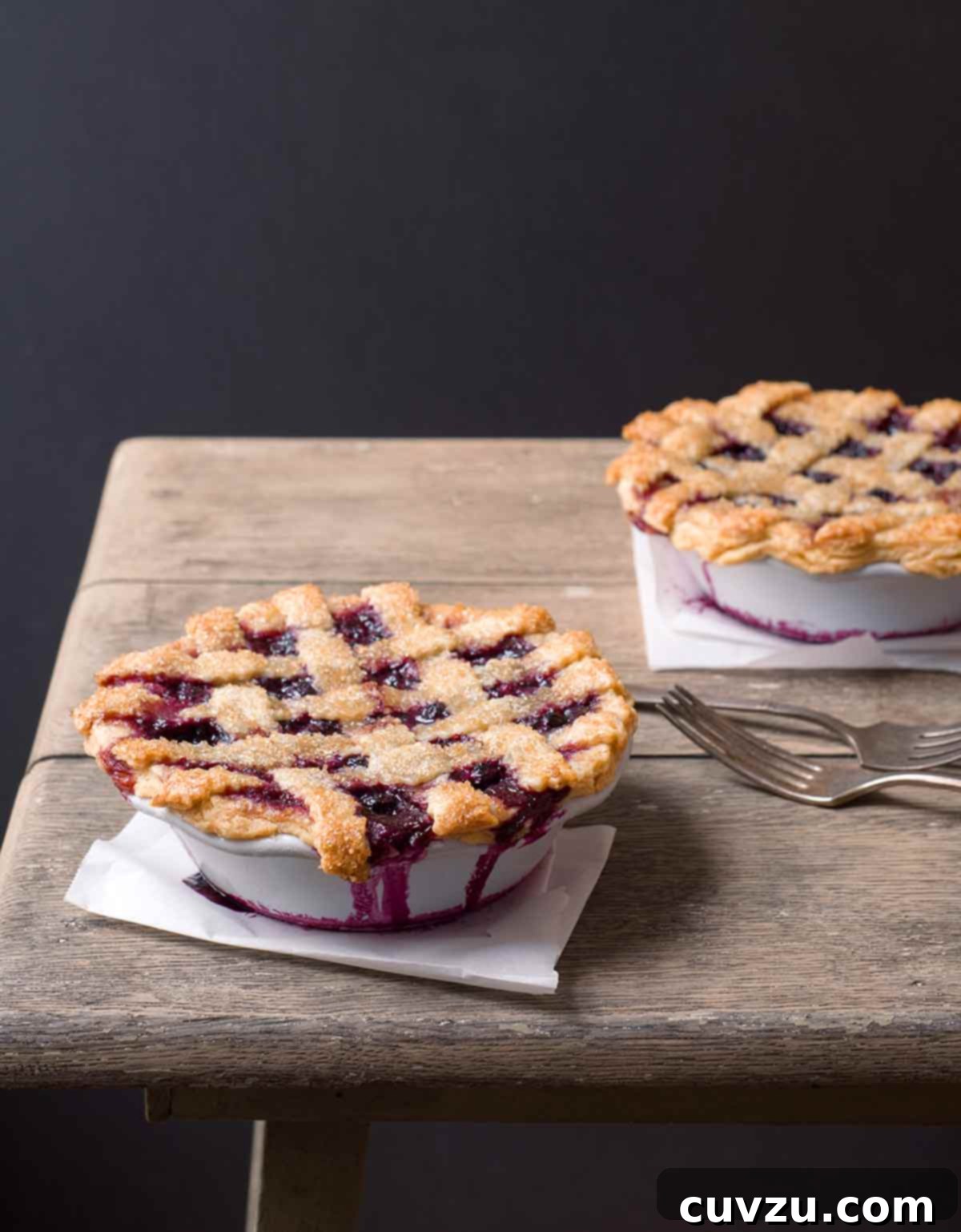
The Best Homemade Blueberry Pie Recipe: A Taste of Summer
Imagine a slice of blueberry pie, its golden crust hinting at the sweet, tangy fruit within. The mere thought is enough to make you drop everything and rush to your kitchen, isn’t it? This isn’t just any pie; it’s a culinary masterpiece that promises to transform your day, capturing the essence of summer in every single, glorious bite. Our testers have hailed it as “delicious,” “lush,” and even “the best pie I’ve ever had.” One taste, and you’ll undoubtedly understand why.
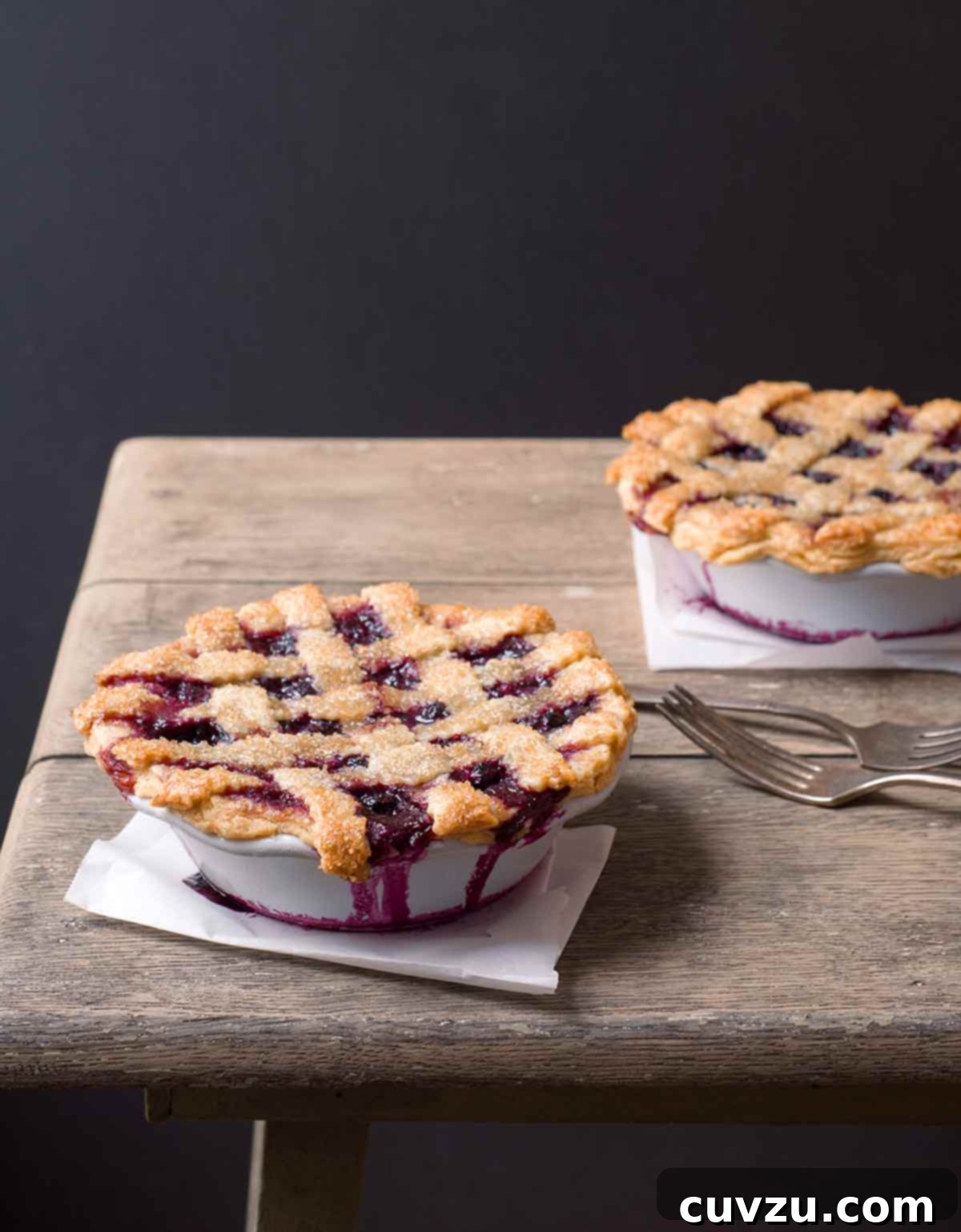
This award-winning blueberry pie is more than just a dessert; it’s an experience. It brings together a uniquely flaky crust with a vibrantly flavored, perfectly balanced blueberry filling that’s neither too sweet nor too tart. What truly sets this recipe apart is its ability to deliver a firm yet juicy filling without being overly thickened, alongside a bottom crust that remains crisp even on the second day. It’s a testament to simple ingredients coming together in extraordinary ways.
Expert Note: The Secret to a Perfect Crust
This oil-based pie crust is surprisingly adaptable and delivers exceptional results, especially for juicy fruit fillings. Its flakiness and crisp bottom crust, even when stored, consistently impress. The filling’s subtle spice, enhanced by a touch of fresh ginger, truly makes the flavors sing, creating a harmonious symphony of taste and texture.
Suzanne Fortier, Recipe Tester
Choosing Your Blueberries: Wild vs. Cultivated
The type of blueberry you use can significantly impact your pie’s flavor profile. Depending on your location, you might be fortunate enough to source genuine wild blueberries. These tiny, intensely flavored berries offer a distinctly different experience compared to the larger, plump cultivated varieties commonly found in grocery stores. Wild blueberries are often smaller, more concentrated in flavor, and tend to be tarter.
If you’re using wild blueberries, you’ll want to make a few minor adjustments to the recipe to achieve the perfect balance. Their inherent tartness means you’ll need to increase both the granulated and brown sugars to 1/2 cup each, while slightly decreasing the lemon juice to 2 tablespoons. This ensures your pie maintains that desired sweet-tart equilibrium without becoming overly sour. For cultivated blueberries, stick to the original sugar and lemon juice measurements to allow their natural sweetness to shine.
Whether you choose fresh or frozen blueberries, the key is to ensure they are high quality. If using frozen, there’s no need to thaw them beforehand. Simply toss them directly into the filling mixture with the other ingredients. This helps prevent the pie from becoming too watery during baking, as the berries release their juices more slowly as they heat up in the oven.
Beyond the Pie: More Sweet-Tart Blueberry Recipes to Explore
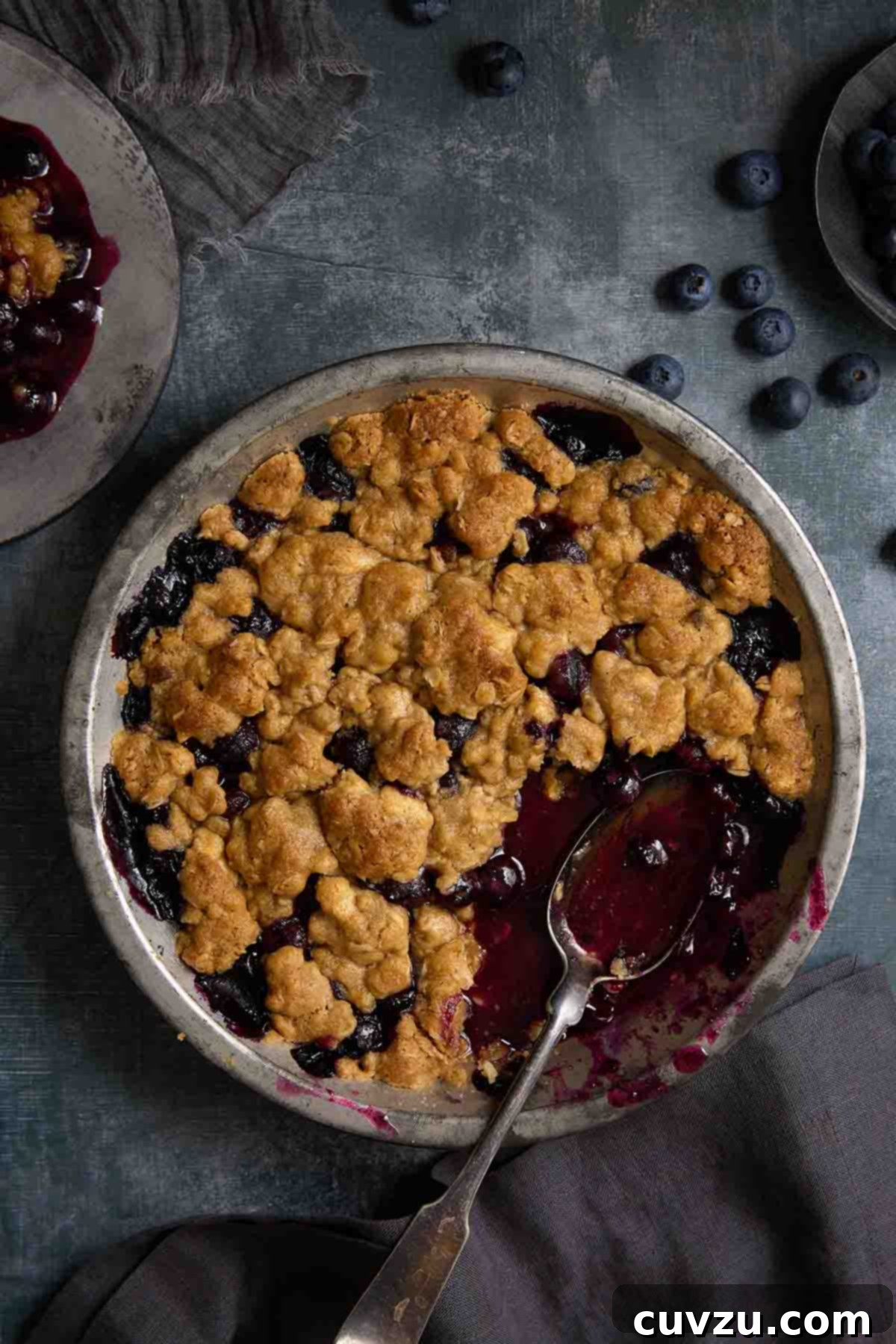
The Best & Easiest Blueberry Crumble
50 mins
Blueberry Custard Pie
4 hrs 10 mins
Blueberry Cupcakes
55 mins
Blueberry Buckle
1 hr 35 mins
⭐
Share Your Blueberry Pie Experience
If you try this recipe, or any dish on our site, we’d love to hear from you! Consider leaving a review, a star rating, and your best photo in the comments below. Your feedback helps our community of bakers and home cooks.–David
Mastering the Oil-Based Pie Crust: A Game Changer
This recipe introduces an intriguing oil-based pie crust that has garnered rave reviews for its exceptional flakiness and crisp texture, even a day after baking. Unlike traditional butter or shortening crusts, this method offers a surprisingly easy and quick preparation, making it a fantastic alternative for busy bakers or those seeking a simpler approach without compromising on quality.
The secret lies in the careful combination of flour, salt, mild vegetable oil, and milk. By “cutting” the oil into the dry ingredients with butter knives, you create large, craggly crumbles that are essential for developing that signature flaky texture. The milk then brings everything together into a consistent, pliable dough. Don’t be alarmed if the dough feels a little oily; this is perfectly normal and contributes to its unique texture. A crucial step is allowing the dough to rest in the refrigerator for at least 30 minutes, or up to a full day. This resting period allows the flour to fully hydrate and the gluten to relax, making the dough much easier to roll out and preventing shrinkage during baking.
For those accustomed to butter-based crusts, this oil-based version might be a pleasant surprise. It’s forgiving, easy to handle once chilled, and provides a neutral canvas that truly lets the vibrant blueberry filling shine. Its crispness also helps prevent the dreaded “soggy bottom” that can plague many fruit pies, ensuring a delightful bite from top to bottom.
Blueberry Pie Recipe
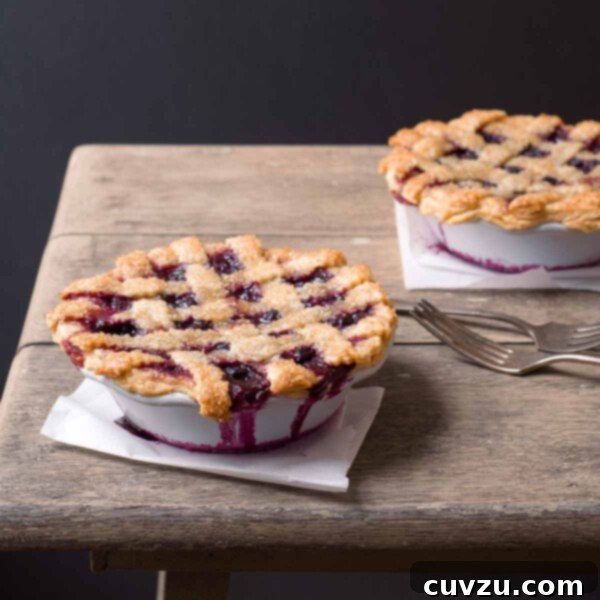
This traditional blueberry pie recipe perfectly balances the sweet and refreshing taste of blueberries, ensuring the fruit’s natural flavor isn’t overshadowed by excessive thickeners or spices. It’s designed for a clean, fruit-forward taste that evokes nostalgia and pure delight. Serve it warm with a generous scoop of premium vanilla ice cream or a tall, cold glass of milk for the ultimate indulgence.
Yields: 8 servings
Author: David Leite
Course: Dessert
Cuisine: American
Prep Time: 30 minutes
Cook Time: 1 hour 30 minutes
Total Time: 2 hours
Calories: Approximately 415 kcal per serving
Ingredients
For the pie crust
- 3 cups all-purpose flour
- 1/2 teaspoon fine sea salt
- 2/3 cup plus 2 tablespoons mild vegetable oil
- 1/2 cup 2-percent milk
For the blueberry pie filling
- 4 cups (22 oz) blueberries (fresh or frozen)
- 1/4 cup granulated sugar, plus more for topping
- 1/4 cup light brown sugar
- 3 tablespoons fresh lemon juice (reduce to 2 tablespoons if using wild blueberries)
- 3 tablespoons all-purpose flour
- 1/2 teaspoon ground cinnamon
- 1/4 teaspoon freshly grated nutmeg
- 2 tablespoons (1 oz) unsalted butter, cut into small pieces
Instructions
Make the pie crust
- In a medium bowl, combine the all-purpose flour and fine sea salt, stirring until evenly mixed. Pour in the mild vegetable oil. Using two butter knives or a pastry blender, cut the oil into the dry ingredients. Continue until large, coarse crumbles appear and the mixture resembles wet sand. This step is crucial for creating a flaky crust.
- Add the 2-percent milk to the mixture. Use a fork to gently blend the ingredients until all the flour is incorporated and a consistent dough forms. Avoid overmixing, as this can lead to a tough crust. The dough may feel a bit oily, which is normal for this style of crust.
- Gather the dough into a ball. Wrap it tightly in plastic wrap and refrigerate for at least 30 minutes, and up to 1 day. This resting period is essential for the dough to firm up, making it easier to roll and ensuring a tender, flaky result.
Make the filling and assemble the pie
- Preheat your oven to 350°F (180°C). Prepare a 9-inch (23-cm) pie plate. If you often experience bubbling over, place the pie plate on a foil-lined baking sheet to catch any drips, making cleanup much easier.
- In a large bowl, gently toss together the blueberries, granulated sugar, light brown sugar, fresh lemon juice, 3 tablespoons all-purpose flour, ground cinnamon, and freshly grated nutmeg. The flour here acts as a thickener, preventing a watery filling, while the spices enhance the blueberry flavor without overpowering it.
- To make a traditional top crust: Divide your chilled dough into two portions, with one third for the top crust and two thirds for the bottom. On a lightly floured surface, roll out the larger portion of dough into a circle large enough to fit your 9-inch (23-cm) pie plate with an overhang. Carefully transfer the bottom crust to the pie plate, pressing it evenly into the bottom and up the sides. Pour the blueberry filling into the crust. Roll out the remaining one-third of dough for the top crust. Place it over the filling, crimp the edges with a fork to seal, and trim any excess dough. Cut a few slits in the top crust to allow steam to escape during baking. For a decorative touch, you can create a lattice top as shown in some classic pie photos.
- To make a rustic foldover crust: On a well-floured surface, roll out the entire dough ball into an extra-large circle, at least 16 inches (41 cm) in diameter. Carefully center this large crust over your 9-inch (23-cm) pie plate, pressing the center evenly into the pan. Pour the blueberry filling into the pressed dough. Gently fold the excess crust over the fruit, overlapping and pleating as necessary to completely cover the filling, creating a charming, rustic look. Slice three vertical cuts, approximately 2 inches (5 cm) long, across the center of the pie’s top to vent steam.
- Dot the top of the pie crust with the small pieces of unsalted butter. This adds richness and promotes browning. Sprinkle generously with additional granulated sugar for a sparkling, crunchy finish.
- Bake the pie in the preheated oven for 60 to 90 minutes, or until the crust is beautifully golden brown and the filling is visibly bubbling through the slits or gaps in the crust. The bubbling indicates that the filling has reached its proper temperature and the thickener is working its magic.
- This is arguably the most crucial step: Allow the pie to cool for at least 30 minutes, but preferably several hours, before slicing and serving. Cooling allows the filling to set completely, ensuring clean slices and maximizing flavor. Patience will be rewarded with a perfectly textured pie!
Adapted From
Real Maine Food: Recipes, Traditions, and Stories from the Pine Tree State
Buy On Amazon
Nutrition Information (Approximate)
Calories: 415 kcal
Carbohydrates: 63 g
Protein: 6 g
Fat: 16 g
Saturated Fat: 12 g
Trans Fat: 1 g
Cholesterol: 9 mg
Sodium: 156 mg
Fiber: 3 g
Sugar: 21 g
Nutrition information is automatically calculated and should only be used as an approximation. Actual values may vary based on ingredients and preparation methods.
📷
Tried this recipe?
Mention @leitesculinaria or tag #leitesculinaria! We love to see your creations!
Insights from Our Recipe Testers
Our dedicated team of recipe testers rigorously evaluates each dish, providing invaluable feedback to perfect our recipes. Here’s what they discovered about this remarkable blueberry pie:
K. Zimmerman: “Award-Winning Indeed!”
K. Zimmerman raved about the pie, confirming its “award-winning” status. She highlighted the amazing flavor combination of blueberries with cinnamon and nutmeg, noting she almost ran out of filling from sneaking too many berries before assembly! She found the oil-based crust to be “simple and delicious,” appreciating its flakiness and ease of handling, though she advised generous flouring of the surface due to its tendency to be stickier than traditional butter and lard crusts. The fold-over method was particularly praised for yielding a lovely rustic appearance.
Virginia L.: “Intriguing Crust, Delicious Result”
Virginia L. was drawn to the unique oil and milk crust, intrigued by the absence of shortening or butter. After refrigerating the dough for 24 hours, she found it rolled out easily despite appearing oily. She employed a clever trick of freezing the crust in the pie plate for 20 minutes while preparing the filling, a technique she uses for all her pies to ensure a crisp bottom. Using supermarket blueberries that weren’t very sweet, she maintained the recipe’s sugar and lemon juice proportions. While she noted the filling was “a little runny,” it wasn’t problematic, and the crust, though not “flaky,” was not tough and perfectly complemented the fruit. She declared it “very easy” and would “definitely make this again.”
Paula D.: “The Magic of Resting Time”
Paula D. initially experienced a “light” flavor and runny filling right after baking, leading to some disappointment. However, her perspective completely changed the next day. The filling had firmed up beautifully, the berry flavors were “amazing,” and the crust had become even flakier and tastier. Her crucial takeaway: “Definitely bake this pie! And definitely give it the time it needs to come to perfection.” This underscores the importance of proper cooling for optimal texture and flavor development in fruit pies.
Noelle C. Serafino: “Forgiving Crust, Perfect Flakiness”
Noelle C. Serafino described her experience as making a “good, perhaps really good blueberry pie.” She found the dough initially “finicky,” resulting in a ripped and patched top crust, but was delighted by its forgiving nature and how it baked into a “perfectly flaky” crust. She was glad she opted for the traditional crust over the foldover method, believing the latter would have been more challenging with this dough. As her first oil-based pie dough, she was pleased with the results. She adjusted the sugar and lemon juice for standard grocery store berries to achieve a flavorful, not-too-sweet filling, which she enjoyed with homemade vanilla bean ice cream.
Irene Seales: “Easiest, Most Surprising Crust”
Irene Seales praised the “lovely, lush pie” and particularly the “easiest, and most surprising crust.” She found the oil-based dough incredibly easy to assemble and roll out, yielding a remarkably flaky and crisp crust with minimal effort. Emphasizing the variation in blueberry sweetness, she advised tasting the berries and adjusting sugar accordingly, noting she could have reduced sugar slightly for her batch. Like Paula D., she found the pie improved significantly overnight, with the juicy filling setting to a “jammy consistency” and flavors becoming more pronounced, while the crust remained perfectly crisp. She was impressed by the dough’s ability to hold without leaks, even using a single piece of dough with three slits. Her tip: baking on a foil-lined tray prevents oven messes from bubbling fruit. She also experimented with a large crystal violet-colored sugar for a lovely visual contrast and suggested that omitting the butter or substituting coconut oil bits could make the pie vegan.
Elie Nassar: “A Simple, Fine Dessert”
Elie Nassar affirmed this blueberry pie as a “simple and fine dessert,” a hit after a dinner of grilled beef kebabs and veggies. He particularly appreciated the “fruit-forward filling” that truly let the blueberries shine. A self-proclaimed “butter-only” crust enthusiast, Elie was intrigued enough to try the oil and milk crust. He noted its quick assembly and surprisingly flaky and crisp texture. While rolling it out was a bit challenging due to its tendency to break, he found it a good “container for the filling,” albeit with a “flatter” flavor compared to a butter crust. He concluded it’s a good alternative when in a pinch, preferable to shortening-based options. Elie also questioned the necessity of spices, preferring the pure fruit flavor, and noted his pie took about 1.5 hours to achieve perfect color and bubbling juices.