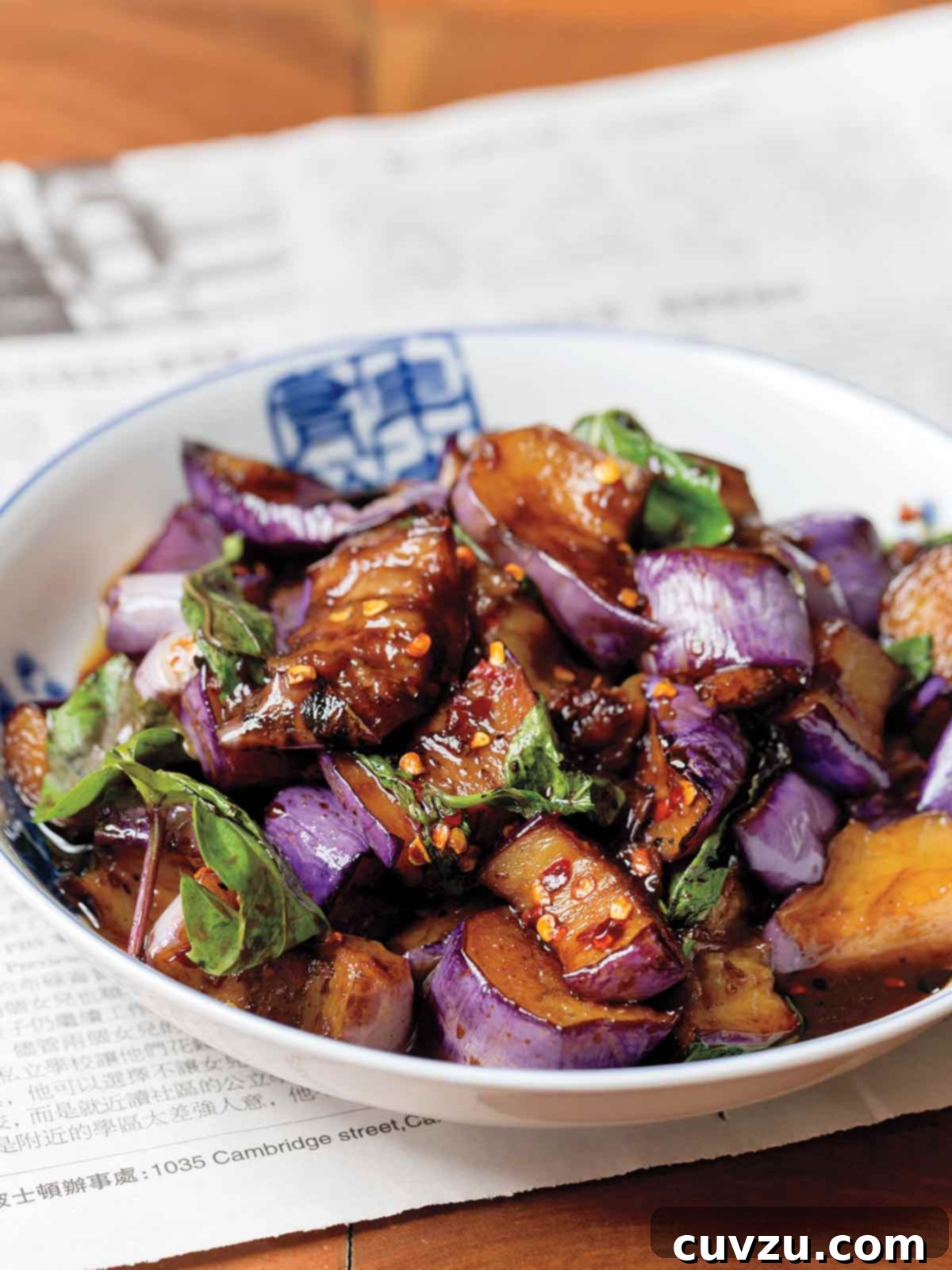
Hakka Eggplant: A Taiwanese Stir-Fry Delight with Basil and Hoisin Sauce
Hakka eggplant is more than just a dish; it’s a vibrant journey into Taiwanese flavors, expertly blending the rich, savory notes of hoisin sauce with the aromatic freshness of basil. This stir-fry is a testament to simple ingredients coming together to create a profoundly satisfying culinary experience, offering a perfect balance of sweet, salty, and umami.
The Story Behind the Sizzle: A Family Favorite and Restaurant Inspiration
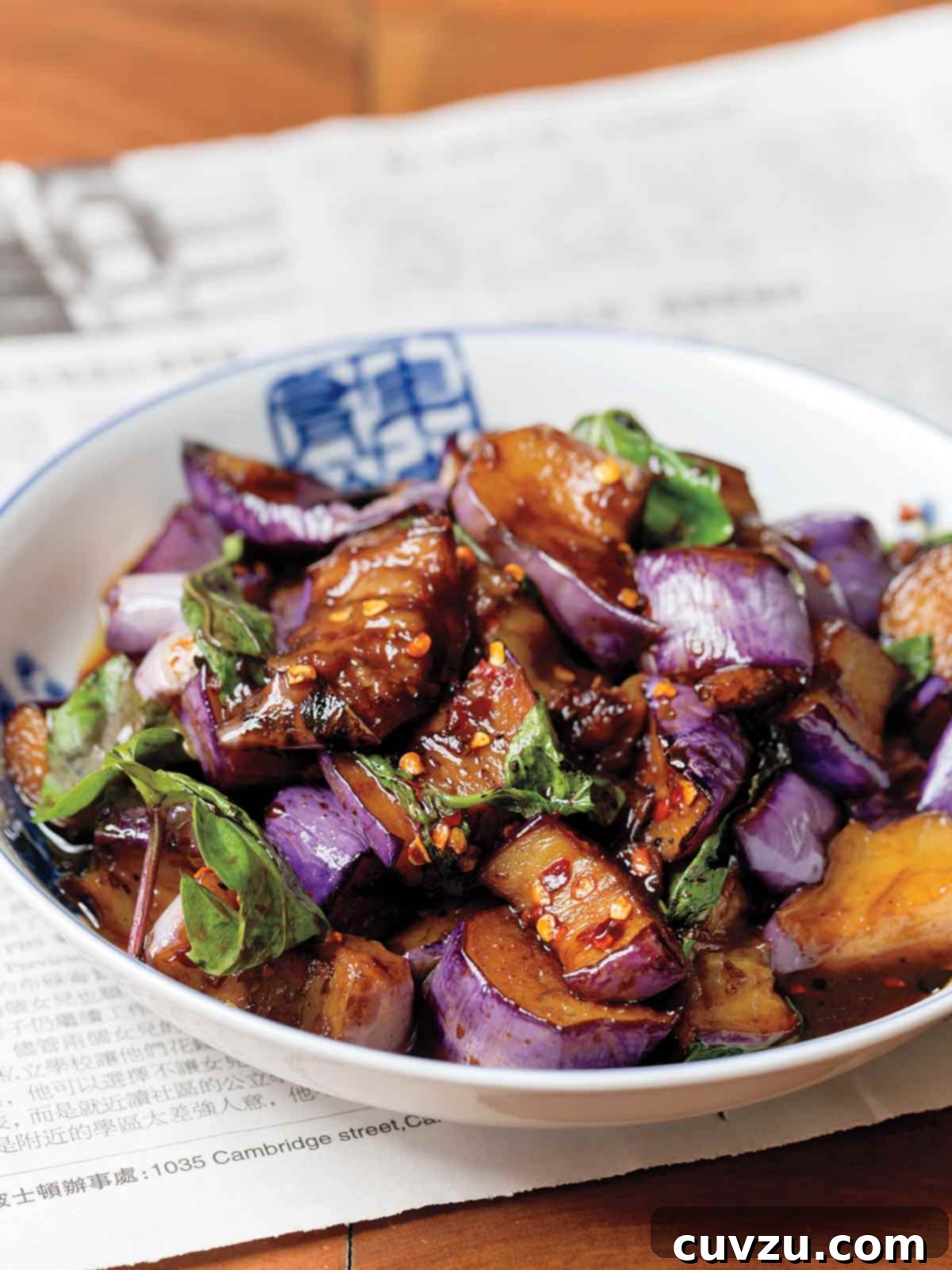
Some dishes just stick with you, becoming synonymous with comfort, family, and good times. For Joanne Chang, the renowned chef behind Myers+Chang, Hakka eggplant holds a special place. It’s intimately tied to her father, Papa Chang, a man known for his incredible appetite and ability to clear any remaining food from the table. His appreciation for this particular Taiwanese stir-fry speaks volumes about its universally appealing qualities.
Before Myers+Chang became a beloved institution, Joanne and Christopher, her husband and business partner, found themselves frequenting Taiwan Cafe, a charming local Taiwanese eatery. There, the Hakka eggplant consistently captured Papa Chang’s heart. He, who usually deferred ordering decisions, would always insist on this dish. This deep family connection and undeniable popularity made it clear: a version of this exceptional eggplant stir-fry simply had to find a home on the Myers+Chang menu.
Joanne Chang highlights the magic in this recipe, emphasizing two critical ingredients: the thick dark soy sauce and a generous amount of Thai basil. The thick dark soy sauce, with its unique “licorice-y” taste, adds unparalleled depth and a beautiful hue. Thai basil, distinct from its Italian counterpart, delivers a potent anise kick, complementing and enhancing the flavors already present in the dish. Beyond ingredients, the technique is key. The initial cooking of the eggplant with a decent amount of oil, followed by a quick, high-heat toss in the wok, is what truly elevates this dish from good to extraordinary, creating an indulgent texture and flavor profile that makes it truly special.
Exploring Hakka Cuisine and Its Signature Flavors
Hakka cuisine, originating from the Hakka people of China, is renowned for its savory, hearty, and often rustic dishes. Traditionally, Hakka cooking emphasizes preservation techniques and makes resourceful use of ingredients, leading to a flavor profile that is deeply satisfying and often features robust, earthy notes. While Hakka cuisine is diverse, many dishes share a common thread of utilizing fermented ingredients, rich soy sauces, and aromatic herbs.
This Hakka eggplant recipe beautifully embodies the spirit of the cuisine with its emphasis on layers of flavor derived from quality soy sauces, fragrant basil, and a balanced sweet-salty profile. It’s a dish that feels both comforting and exotic, a perfect representation of the Hakka culinary tradition’s ability to create complex tastes from seemingly simple components.
What is Japanese Eggplant? And Why It’s Perfect for This Recipe
When it comes to stir-fries like Hakka eggplant, the choice of eggplant variety makes a significant difference. Japanese eggplant stands out as the ideal candidate, offering characteristics superior to the more common globe or Italian eggplants found in North American supermarkets.
Visually, Japanese eggplants are easily identifiable by their slender, elongated shape and typically darker purple, almost black, skin. They are significantly smaller and more delicate than their rounder counterparts. But the real difference lies within: their interior is a beautiful cream color, remarkably spongy in texture, and nearly seedless. This combination means they absorb flavors wonderfully without becoming watery or overly bitter, which can sometimes be an issue with larger eggplant varieties.
Japanese eggplants are generally less bitter and possess a more refined, concentrated “eggplanty” flavor. Their tender flesh cooks down quickly to a creamy consistency, making them perfect for stir-frying where you want a melt-in-your-mouth texture that still holds its shape. If you can source them – often found in Asian markets or specialty grocery stores – the superior flavor and texture they bring to this Hakka eggplant recipe are undeniably worth the effort. Should Japanese eggplant be unavailable, slender Chinese eggplants are a good substitute, sharing many similar characteristics.
The Anatomy of Flavor: Key Ingredients Explained
The magic of Hakka eggplant lies in its carefully selected ingredients, each playing a crucial role in building its signature sweet-salty-umami profile.
- Hoisin Sauce: This foundational ingredient provides a rich, sweet, and tangy base with notes of fermented soybeans, garlic, and chilies. It’s the cornerstone of the Hakka sauce, delivering that irresistible sweet-savory punch.
- Low-Sodium Soy Sauce: Used for its balanced saltiness and umami, it forms the backbone of the sauce without overwhelming the other flavors. Low-sodium is often preferred to allow for better control over the final seasoning.
- Shaoxing Cooking Wine: An essential in Chinese cooking, Shaoxing wine adds unparalleled depth, a subtle sweetness, and a complex aroma. It tenderizes ingredients and contributes to the overall savory profile. If unavailable, dry sherry or dry white wine can be used as a substitute, though the authentic flavor of Shaoxing is highly recommended.
- Black Chinkiang Vinegar: This dark, fragrant rice vinegar provides a distinct tang and a rich, slightly smoky, malty flavor that balances the sweetness of the hoisin. It’s crucial for that authentic Taiwanese zest.
- Thick Soy Sauce: As Joanne Chang noted, this ingredient is vital. Unlike regular soy sauce, thick soy sauce (also known as soy paste or dark soy sauce) is thicker, darker, and slightly sweeter, with a less salty and more complex flavor, often described as having a hint of licorice. It contributes significantly to the dish’s glossy appearance and deep, rich color.
- Granulated Sugar: A touch of sugar helps to round out the flavors, enhancing the natural sweetness and balancing the savory and tangy elements in the sauce.
- Cornstarch and Cold Water (Slurry): This simple mixture is whisked into the sauce to thicken it to the perfect consistency, ensuring it beautifully coats the eggplant and creates a desirable sheen.
- Fresh Thai Basil Leaves: The aromatic star, Thai basil is distinctive for its slightly spicier, peppery, and anise-like flavor compared to sweet Italian basil. Added at the end, its vibrant notes provide a fragrant finish, contrasting beautifully with the rich sauce.
- Red Pepper Flakes: These provide a customizable kick of heat, allowing you to adjust the spice level to your preference.
Mastering the Technique: Two Stages to Perfection
The unique cooking method for Hakka eggplant is what truly sets it apart, transforming humble eggplants into a tender, flavorful masterpiece.
Stage 1: The Oven Roast
Many stir-fry recipes call for deep-frying eggplant, a method that, while effective, can result in an overly oily dish. This Hakka eggplant recipe takes a smarter approach: an initial roast in the oven. By tossing the eggplant chunks with olive oil, salt, pepper, and a bit of water before baking, you achieve several benefits:
- Tenderization: The oven’s gentle, even heat softens the eggplant thoroughly, making it receptive to absorbing the sauce later.
- Reduced Oiliness: Roasting uses significantly less oil than deep-frying, allowing the eggplant to become tender without being saturated in fat. The water helps to steam the eggplant slightly, preventing it from drying out.
- Even Cooking: Spreading the eggplant in a single layer ensures each piece cooks uniformly until it’s soft enough to be easily pricked with a fork. This stage is crucial for building the foundational texture of the dish.
Stage 2: The Wok Finish
Once the eggplant is pre-cooked, it moves to the wok for its grand finale. This is where the flavors truly meld and intensify:
- High-Heat Sauté: Transferring the softened eggplant directly to a hot wok (without additional oil, as it already absorbed some during baking) allows for quick caramelization and a slight crisping of the exterior, if desired. Stir-frying at high heat is characteristic of Asian cooking, creating a smoky depth known as “wok hei.”
- Sauce Integration: The Hakka sauce, with its perfect glossy thickness from the cornstarch slurry, is then added. It beautifully coats each piece of eggplant, ensuring every bite is bursting with flavor. The red pepper flakes are incorporated here to distribute their heat evenly.
- Basil Infusion: The fresh Thai basil is stirred in at the very last moment. This preserves its vibrant color and pungent, anise-like aroma, allowing it to release its essential oils into the warm dish just before serving. The contrast between the rich, savory sauce and the fresh, aromatic basil is a key element of this dish’s appeal.
This two-stage process ensures a perfectly tender eggplant that is deeply flavored, beautifully coated, and never greasy, offering a truly exceptional stir-fry experience.
Serving Suggestions and Customization
Hakka eggplant is a versatile dish that can be enjoyed in many ways. It shines as a flavorful side dish alongside steamed rice, grilled fish, or roasted meats. For a complete vegetarian meal, pair it with some tofu or tempeh, or add other stir-fried vegetables like bell peppers, green beans, or snap peas to the wok alongside the eggplant.
Dietary Adaptations:
- Gluten-Free: Easily made gluten-free by substituting low-sodium tamari for soy sauce and ensuring your hoisin sauce is gluten-free (many brands offer this).
- Vegan/Vegetarian: This recipe is already naturally vegan and vegetarian-friendly, making it an excellent choice for plant-based diets.
- Spice Level: The red pepper flakes allow for easy adjustment. Reduce the amount for a milder dish or increase it for a bolder, spicier flavor.
- Flavor Variations: Feel free to experiment! A touch of fresh ginger or garlic can be added during the wok stir-fry for an extra aromatic boost. A sprinkle of toasted sesame seeds before serving adds a lovely nutty crunch.
Whether you’re serving it as part of a multi-course Asian feast or as a standalone star, Hakka eggplant promises to be a memorable addition to your table.
Hakka Eggplant
David Leite
Sides
Asian
6
servings
300
kcal
15 minutes
30 minutes
45 minutes
Ingredients
For the Hakka Sauce
- 1/2 cup hoisin sauce
- 1/2 cup low-sodium soy sauce
- 3 tablespoons Shaoxing cooking wine (or substitute dry sherry or dry white wine)
- 1 teaspoon Chinkiang vinegar
- 1 teaspoon thick soy sauce
- 1 teaspoon granulated sugar
- 1 tablespoon cornstarch
- 2 tablespoons cold water
For the Eggplant
- 3 pounds medium Japanese eggplant (9 or 10 eggplants)
- 1/2 cup extra-virgin olive oil
- 1 1/2 teaspoons kosher salt
- 1 teaspoon freshly ground black pepper
- 1/2 cup water
- 1 1/2 teaspoons red pepper flakes (use less if you are not a big spice fan)
- 1 cup fresh Thai basil leaves (about 1/2 bunch) or regular basil
Instructions
Make the Hakka Sauce
-
In a medium saucepan over medium-high heat, whisk together the hoisin sauce, low sodium soy sauce, Shaoxing wine, black vinegar, thick soy sauce, and sugar and bring to a boil.
-
In a small bowl, whisk together the cornstarch and cold water until smooth to make a slurry. Whisk the slurry into the saucepan.
-
Simmer, while whisking, until the sauce is shiny and coats the back of a spoon, 1 to 2 minutes. Remove from the heat. The hakka sauce can be made up to 1 week in advance and stored in an airtight container in the refrigerator.
Make the Eggplant
-
Preheat the oven to 350°F (177°C). Place a rack in the center of the oven.
-
With a sharp knife, remove the stem from each eggplant and split the eggplant top to tail into two long pieces. Place the flat sides down on a cutting board and cut each piece into 1-inch (25-mm) chunks. Do the same to the rest of the eggplant. Place all the eggplant in a large bowl.
-
In a small bowl, whisk together the olive oil, salt, black pepper, and water. Pour the mixture over the eggplant and toss well with your hands.
-
Move the eggplant to a large baking dish or a rimmed baking sheet (pouring any remaining liquid over the eggplant) and bake until the eggplant is soft and can be pricked easily with a fork, 20 to 30 minutes.
☞ TESTER TIP: If it’s too crowded to fit all of the eggplant in a single baking dish or baking sheet, go ahead and divvy the eggplant and sauce between two dishes or baking sheets.
-
Place a wok or large, heavy, flat bottomed skillet over high heat. Add the eggplant (no need to add oil) directly to the wok and stir for 1 minute. Add the red pepper flakes and enough Hakka sauce to coat the eggplant. You may not need all of the sauce.
-
Toss and cook until the eggplant is well coated with sauce, 3 to 4 minutes. Add the basil and give the whole thing a good toss.
-
Place in a large bowl and serve family-style.
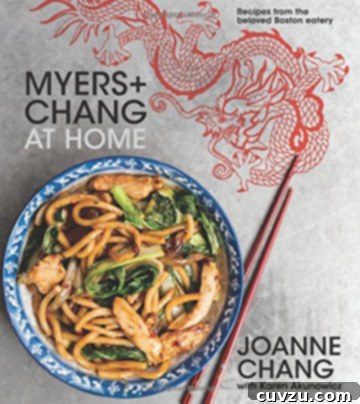
Adapted From
Myers + Chang at Home
Buy On Amazon
Explore More Cooking Resources
Looking for ways to customize this recipe? Consider these options:
- Dietary Options: For gluten-free, use tamari instead of soy sauce and ensure hoisin is gluten-free. This recipe is naturally vegan and vegetarian.
- Ingredient Substitutions: If Shaoxing wine is unavailable, dry sherry or dry white wine can be used. Chinese eggplant can substitute Japanese eggplant.
- Scaling: To adjust serving sizes, simply scale all ingredients proportionally. Remember to monitor cooking times carefully as they may vary.
- Summarize Key Insights: The core of this recipe lies in the two-stage cooking of the eggplant and the balance of sweet, salty, and aromatic flavors from the Hakka sauce and Thai basil.
Nutrition
Serving: 1 portion
Calories: 300 kcal
Carbohydrates: 28 g
Protein: 5 g
Fat: 19 g
Saturated Fat: 3 g
Monounsaturated Fat: 13 g
Cholesterol: 1 mg
Sodium: 1769 mg
Fiber: 8 g
Sugar: 16 g
Nutrition information is automatically calculated, so should only be used as an approximation.
Tried this recipe?
Mention @leitesculinaria or tag #leitesculinaria!
Recipe Testers’ Reviews
Melissa Maedgen
Eggplant is one of those vegetables that, properly cooked, is divine, but done wrong is darn near inedible. Asian preparations are some of my favorites, and this Hakka eggplant is no exception. The pre-cook in the oven is a great way to get the raw edge off the eggplant, so it just needs a quick finish in the wok. It’s also clever advance prep, if you’re making several dishes.
The basil is a really nice touch which makes this eggplant stir-fry stand out from the crowd. As an added bonus, you get the Hakka sauce, which has applications beyond this dish and could be used to flavor any stir-fry.
Trisha T.
I loved this Hakka eggplant and I will make it again. It has such a lovely balance of sweetness from the hoisin, heat from the red pepper, and tang from the vinegar and Shaoxing wine. I once ate a version of this recipe at a Taiwanese restaurant and this was remarkably like this.
I couldn’t find thick soy sauce after going to multiple stores, including an Asian grocery. I liked this recipe enough that I’ll probably order some online, or visit another Asian grocery, to see what else it would bring to this recipe.
When I make this again, I’d also add perhaps a touch more vinegar for a bit more balance. Additionally, my finished eggplant looked nothing like the photo. The eggplant skin didn’t stay purple in the oven and the sauce was so thick that it coated the eggplant, making it all look brown and coated in the thick sauce with flecks of the green basil.
At the end of the day, though, this tasted delicious and I will make it again, with or without the thick soy sauce.
In conclusion, this Hakka Eggplant recipe offers a delightful and authentic taste of Taiwanese cuisine. With its rich, complex sauce, tender Japanese eggplant, and aromatic basil, it’s a dish that promises to impress. Whether you’re a seasoned cook or new to Asian flavors, the step-by-step instructions and helpful tips ensure a successful and delicious outcome. Give this recipe a try and discover your new favorite way to enjoy eggplant!