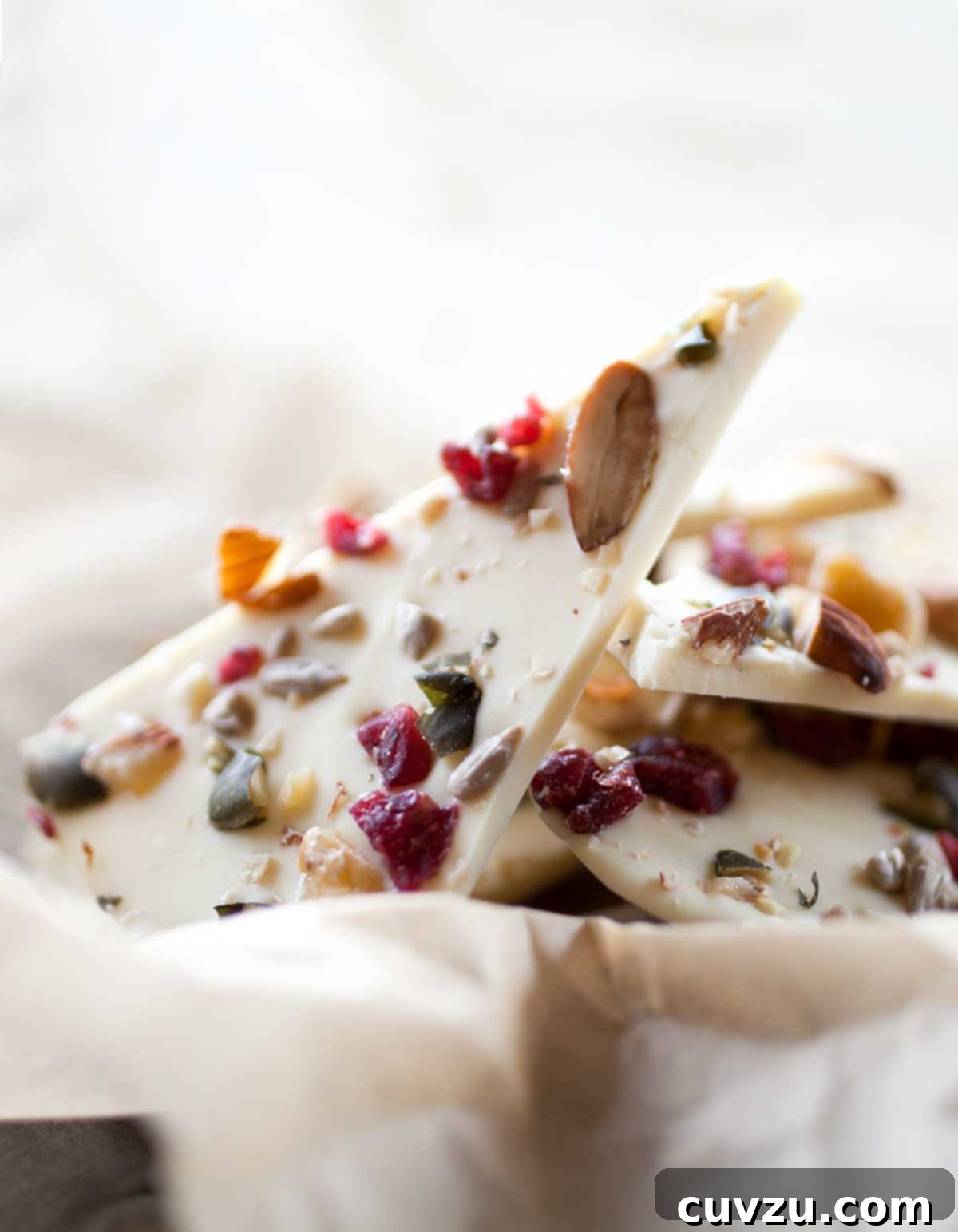
Gourmet Chocolate Bark: An Easy Recipe for Cardamom, Dried Fruit & Nut Delights
Discover the delightful simplicity of homemade chocolate bark, a truly versatile confection that effortlessly transforms into a festive holiday dessert, an elegant gift, or a quick, satisfying treat. This guide focuses on a classic combination featuring rich dark or luscious white chocolate, fragrant cardamom, an assortment of chewy dried fruits, and crunchy nuts, all finished with a sprinkle of delicate sea salt. It’s a culinary creation that promises both ease of preparation and a sophisticated flavor profile, perfect for gifting or indulging yourself.
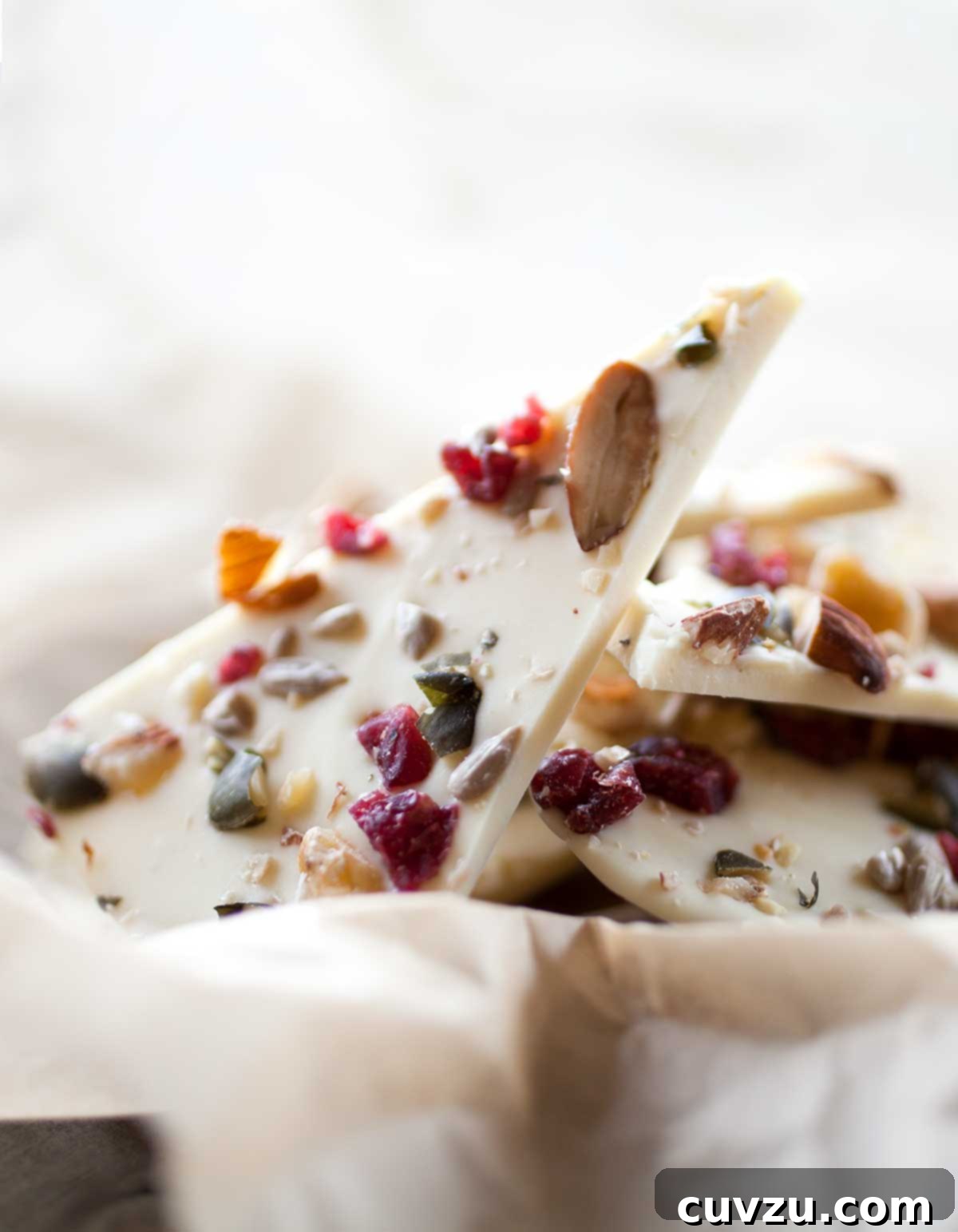
Imagine a spread featuring alluring shards of homemade chocolate bark, nestled alongside a bowl of vibrant tangerines, a plate of sweet dates, a selection of nuts ready to be cracked, or a few simple cookies. This effortless dessert arrangement is a guaranteed crowd-pleaser, easily assembled for any evening gathering. What makes chocolate bark so captivating is its incredible adaptability. It serves as a blank canvas for a myriad of flavors, allowing you to customize it with an array of spices, nuts, and dried fruits to suit any palate or occasion.
Consider the expansive possibilities: the zesty tang of candied ginger or tangerine zest, the rich sweetness of diced prunes or sun-dried apricots, the satisfying crunch of toasted pecans, almonds, or salted cashews. For a more adventurous twist, a hint of freshly ground black pepper, the aromatic warmth of anise seed, or classic cinnamon can elevate the experience. One universal secret to maximizing the flavor of any sweet creation, be it chocolate, caramel, or even fresh fruit, is a touch of salt. A sprinkle of sea salt makes all those sugary notes truly dance on your tongue, creating an exquisite balance of sweet and savory.
This recipe is wonderfully forgiving, so precise measurements are less critical than you might imagine. Your first attempt will likely reveal just how intuitive it is. While a dark chocolate with a 70% cacao content is often recommended for its depth of flavor, feel free to adjust to your personal preference. For those who favor a lighter, creamier profile, a white chocolate variation offers a delightful alternative, particularly when paired with vibrant pistachios, bright orange zest, and delicate edible flower petals, as beautifully illustrated in the accompanying image.
When is the Best Time to Make Chocolate Bark?
Chocolate bark is a remarkably versatile confection, capable of adding a touch of elegance and festivity to a wide range of holidays and celebrations throughout the year. Its simplicity and customizable nature make it an ideal choice for nearly any event.
Holiday Celebrations
- Christmas and Winter Holidays: During the bustling month of December, chocolate bark stands out as a superb alternative to traditional cookies, especially for those seeking gluten-free options or who simply wish to avoid the intricacies of cookie decorating. Its no-fuss preparation and sophisticated presentation make it a stress-free addition to any holiday spread or an excellent last-minute gift.
- Easter: When spring arrives, chocolate bark can be re-imagined as a whimsical, deconstructed “adults-only” Easter bunny treat. Its irregular shards and vibrant toppings offer a charming, less conventional take on seasonal sweets.
- Passover: For Passover, chocolate bark provides a simple yet elegant dessert. Elevate the experience by spreading the melted chocolate over sheets of matzoh before adding toppings. This not only imbues the bark with symbolic significance but also imparts a wonderfully welcome crunch that complements the smooth chocolate beautifully. It’s a thoughtful and delicious way to observe the holiday.
- Beyond Holidays: Don’t limit this delightful treat to special occasions! Chocolate bark is perfect for everyday indulgence, casual entertaining, or simply as a comforting snack to brighten an ordinary weeknight. Its ease of preparation means you can whip up a batch whenever a craving strikes or unexpected guests arrive.
Storage and Freshness
One of the many benefits of chocolate bark is its excellent shelf life. Once prepared, you can store it in an airtight container at room temperature for a few weeks, making it an ideal make-ahead dessert. However, based on its irresistible nature, it’s highly likely that your delicious creation will vanish long before you ever have to worry about it losing its freshness!
Chocolate Bark with Cardamom, Dried Fruits, and Pistachios
★
★
★
★
David Leite
Dessert
American
8
servings
112
kcal
10
20
30
Ingredients
-
4
ounces (more or less)
dark chocolate (or substitute white chocolate),
chopped into chunks -
1/2
teaspoon
cardamom seeds,
toasted in a dry skillet until fragrant -
3
tablespoons
raisins and/or dried apricots, cranberries, figs, or other fruit,
cut into small pieces -
2 to 3
tablespoons
salted green pistachios or other nuts,
some left whole, some cut into large pieces - Maldon sea salt or other flaky salt
Instructions
-
Line a baking sheet with a piece of aluminum foil or parchment paper that measures about 10 by 8 inches.
-
Place the chocolate and toasted cardamom seeds in a heatproof bowl set over a pan of simmering water (a double boiler setup). Ensure the bottom of the bowl does not touch the water. Stir gently until the chocolate has completely melted and is smooth. Once melted, stir in 1 1/2 tablespoons of your chosen dried fruit and 1 to 1 1/2 tablespoons of the nuts.
-
Carefully remove the chocolate mixture from the heat. Immediately pour and spread the warm chocolate into a thin, even layer on the prepared baking sheet. While the chocolate is still warm and pliable, scatter the remaining dried fruits and nuts evenly over the surface. Gently press them into the chocolate to ensure they adhere well. Finish by sprinkling lightly with Maldon sea salt or your preferred flaky salt.
-
Transfer the baking sheet to the refrigerator and chill the chocolate until it is completely set and firm, which usually takes at least one hour. To serve, break the hardened bark into irregular, appealing pieces. Arrange them artfully on a small plate or serving dish. Store any leftover bark in a covered airtight container or a wax paper bag in the refrigerator to maintain its freshness. It will theoretically keep well for a few weeks, though its deliciousness often leads to it disappearing much faster!
Notes
White Chocolate Variation
For a different flavor profile, simply substitute dark chocolate with white chocolate (sometimes labeled “white confection”). White chocolate is incredibly versatile and pairs beautifully with a wide array of ingredients. A particularly lovely combination to try is with salted pistachios, vibrant orange zest, and delicate edible flower petals for a visually stunning and flavorful treat.
Adapted From
Seasonal Fruit Desserts
Buy On Amazon
Nutrition
Serving:
1
portion
Calories:
112
kcal
Carbohydrates:
12
g
Protein:
2
g
Fat:
7
g
Saturated Fat:
4
g
Monounsaturated Fat:
2
g
Trans Fat:
0.004
g
Cholesterol:
0.4
mg
Sodium:
4
mg
Fiber:
2
g
Sugar:
4
g
Tried this recipe?
Mention @leitesculinaria or tag #leitesculinaria!
Insights from Our Kitchen: Recipe Testers’ Experiences and Expert Tips
The beauty of chocolate bark lies in its adaptability, as highlighted by our recipe testers who explored various combinations and shared invaluable insights:
The Cardamom Conundrum and Texture Play
Several testers, including Eydie Desser, lauded the sophisticated and elegant flavor profile, particularly the unique and delightful combination of cardamom, dried apricots, and pistachios. Eydie noted that the mix of chewy apricots, crunchy pistachios, and cardamom, alongside the Maldon salt, created a harmonious blend of sweet, salty, and even a touch of umami. However, a common observation from testers like Eydie was the intensity of whole cardamom seeds. While the flavor was outstanding, a whole seed could be overwhelming. She suggested chopping the cardamom seeds slightly to ensure a more even distribution and a milder, yet still present, spice note throughout each piece of bark. This small adjustment can significantly enhance the eating experience.
Endless Variations and Creative Swaps
The consensus among testers like Melissa Maedgen and Sandy Hill was that this recipe is more of an inspiring concept than a strict set of instructions, offering limitless possibilities. Kim Graham successfully swapped dried cherries, cranberries, blueberries, and golden raisins for apricots, and sliced almonds for pistachios, even spreading the bark over matzoh for a delightful Passover treat. Sandy Hill took customization further, experimenting with candied ginger, toasted pecans and almonds, orange zest, black pepper, and even dried lavender. All her variations were met with rave reviews, proving that the foundation of this chocolate bark recipe is incredibly robust and welcoming to diverse flavors. These experiments demonstrate how you can truly make this recipe your own, adapting it to personal preferences or available ingredients.
Choosing Your Chocolate Base
Melissa Maedgen, while thoroughly enjoying the recipe as written with intense dark chocolate, suggested that a slightly milder chocolate might allow the delicate cardamom flavor to shine more prominently. She noted that the 70% dark chocolate, while a great match for apricots, could sometimes overpower the spice. This insight offers a valuable tip: consider the intensity of your chocolate in relation to your chosen add-ins. For vibrant, strong flavors like bitter orange or chili, a darker chocolate works well. For more subtle spices or delicate fruits, a milder dark chocolate or even milk chocolate might create a more balanced profile. Elsa M. Jacobson, who used Trader Joe’s 72% chocolate, also found the cardamom flavor surprising and distinct, suggesting that the choice of chocolate can significantly impact the overall taste experience.
Melting Methods and Efficiency
Melissa Maedgen also provided a practical tip regarding the melting process. While the recipe instructs melting chocolate over a water bath, she found that melting it in the microwave at 50% power worked just as effectively and was considerably faster. This modern approach offers a convenient alternative for those looking to expedite the preparation without compromising the quality of the melted chocolate.
A Universal Crowd-Pleaser
Perhaps one of the most compelling insights came from Melissa Maedgen’s husband, who typically isn’t a chocolate enthusiast but thoroughly enjoyed this bark. He pointed out that its unique combination of flavors and textures—sweet, salty, crunchy, and chewy—might appeal even to those who aren’t usually “crazy about chocolate.” This speaks volumes about the broad appeal of this particular chocolate bark recipe. Elsa M. Jacobson’s taster also preferred the matzoh bark variation and eagerly sought seconds, underscoring its widespread appeal across different palates.
In conclusion, this chocolate bark recipe is a testament to the power of simple ingredients combined with thoughtful execution. It’s not just a dessert; it’s an experience—a delightful canvas for culinary creativity, suitable for any occasion, and sure to impress even the most discerning palates. Whether you stick to the classic combination or venture into your own innovative variations, this easy-to-make treat is destined to become a staple in your repertoire.
Tried this recipe?
Mention @leitesculinaria or tag #leitesculinaria!
Recipe Testers’ Reviews
Kim Graham
This was quick, easy, and quite tasty. I made the bark with dried cherries, cranberries, blueberries, and golden raisins (instead of the apricots), and used sliced almonds in place of the pistachios. I spread it over matzoh to try it out as a possible Passover treat. Yum!
I have to admit, I was worried that the whole cardamom seeds would be overpowering (and I love cardamom), but when it was all put together, the flavors were outstanding.
Eydie Desser
This chocolate bark is sophisticated and elegant—a surprise and a delight to the taste buds. I followed the recipe as written, using cardamom, dried apricots, and pistachios. I loved it and thought the combination was exquisite. The chewiness of the apricots, the crunch of the pistachios and cardamom, and the Maldon salt—wow, this treat has it all.
It’s sweet and salty and a little bitter with a touch of umami. The only change I’d make is to chop the cardamom seeds just a bit. One whole cardamom seed in the mouth is a bit overwhelming, and just a teaspoon of them leaves many bark pieces without a trace. This bark is very rich, so it only takes a couple of bites to satisfy.
Sandy Hill
Delicious flavors in a melt-in-your-mouth treat. I tried several suggested variations, as well as some not included in the recipe, like candied ginger, toasted pecans and almonds, orange zest, black pepper, golden raisins, and dried lavender. They were ALL awesome. We had company for the weekend and I doubled the recipe. All of the bark was eaten within a few hours.
Melissa Maedgen
Think of this more as an idea than a recipe. The possibilities are limitless. You could use different nuts or fruits, coconut, curry powder, chiles, ginger, pineapple, berries. You can substitute milk chocolate or even white chocolate, as the picture features—whatever you feel goes best with the other ingredients you are using.
I made the recipe exactly as written, and thoroughly enjoyed it. I melted the chocolate over a water bath on the stove, per the instructions, but in the future I’ll melt it in the microwave at 50% power. It works just as well, and is much faster. Next time, I might use a slightly milder chocolate. While the intense dark chocolate was a great match with the apricots, it overwhelmed the cardamom. A milder chocolate would allow the spice to shine.
My husband, who’s not a chocolate eater, liked this recipe and pointed out that even someone who isn’t crazy about chocolate might like it.
Elsa M. Jacobson
I followed this recipe as written, using the combination of cardamom, dried apricots, and salted pistachios. When the directions offered a range for the quantity of nuts, I went with the highest option of 3 tablespoons. I left half of them whole, and cut the other half into large pieces. When Madison suggested using a dark chocolate in the 70% range, I went for Trader Joe’s 72% chocolate bar imported from Belgium.
I made half as bark and the other half atop matzoh. My personal preference was for the straight chocolate bark. My taster, however, preferred the matzoh bark version, asking for seconds, and sneaking a third when he thought I wasn’t looking!
This flavor profile was both delicious, and surprising—especially the cardamom, which is not visible on the finished candy, and which is not an expected flavor for an American palate.