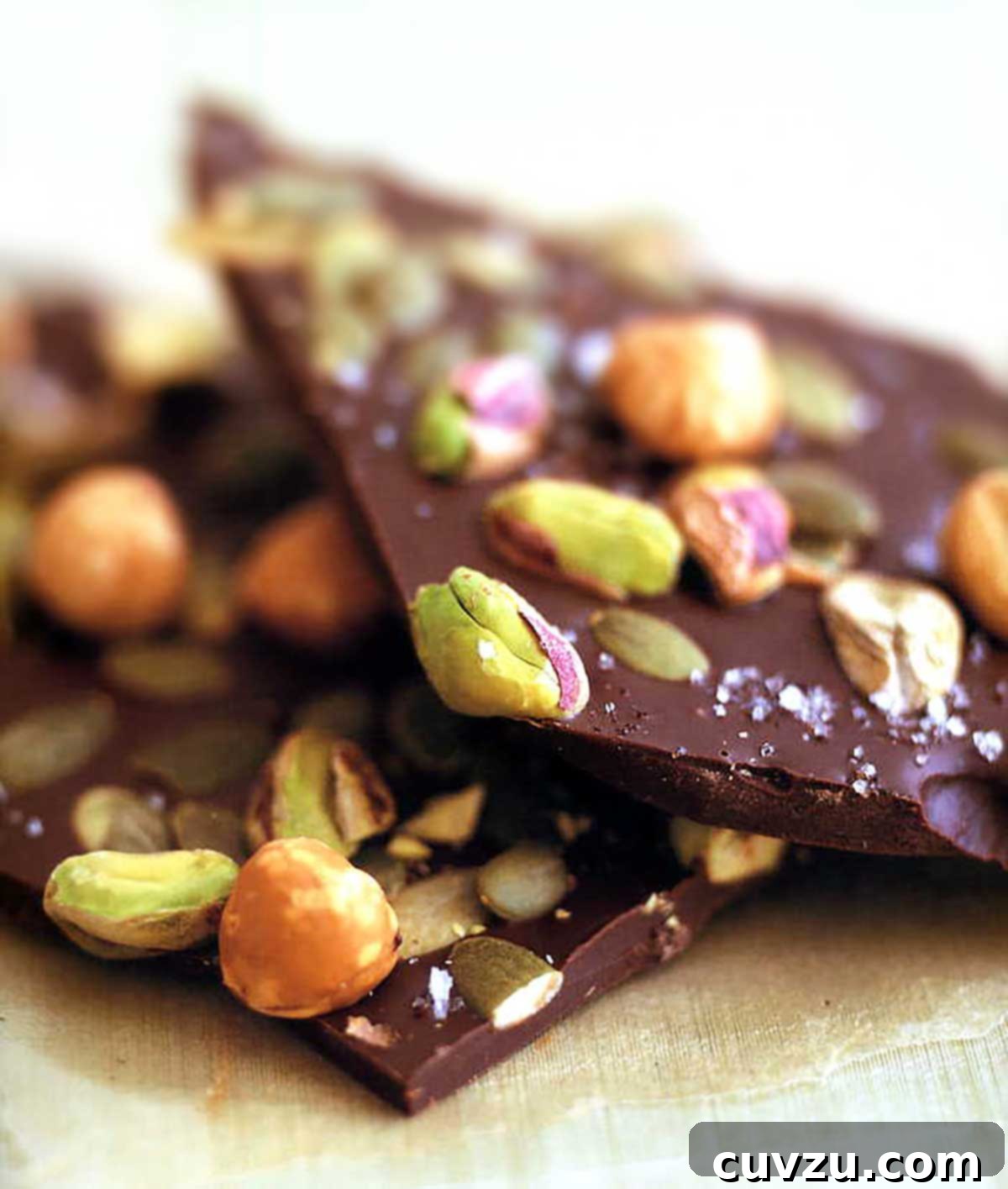
Delight your senses and elevate any occasion with this exquisite Hazelnut Pistachio Chocolate Bark. A perfect harmony of textures and flavors, this gourmet treat combines the creamy richness of high-quality chocolate with the satisfying crunch of perfectly roasted hazelnuts, vibrant pistachios, and earthy pumpkin seeds, all finished with a delicate sprinkle of flaky fleur de sel. Whether you’re searching for a sophisticated edible gift, a delightful after-dinner indulgence, or simply a sweet moment to yourself, this chocolate bark promises an unforgettable experience. Its simple elegance makes it an ideal addition to holiday tables, dessert platters, or as a thoughtful homemade present for friends and family.
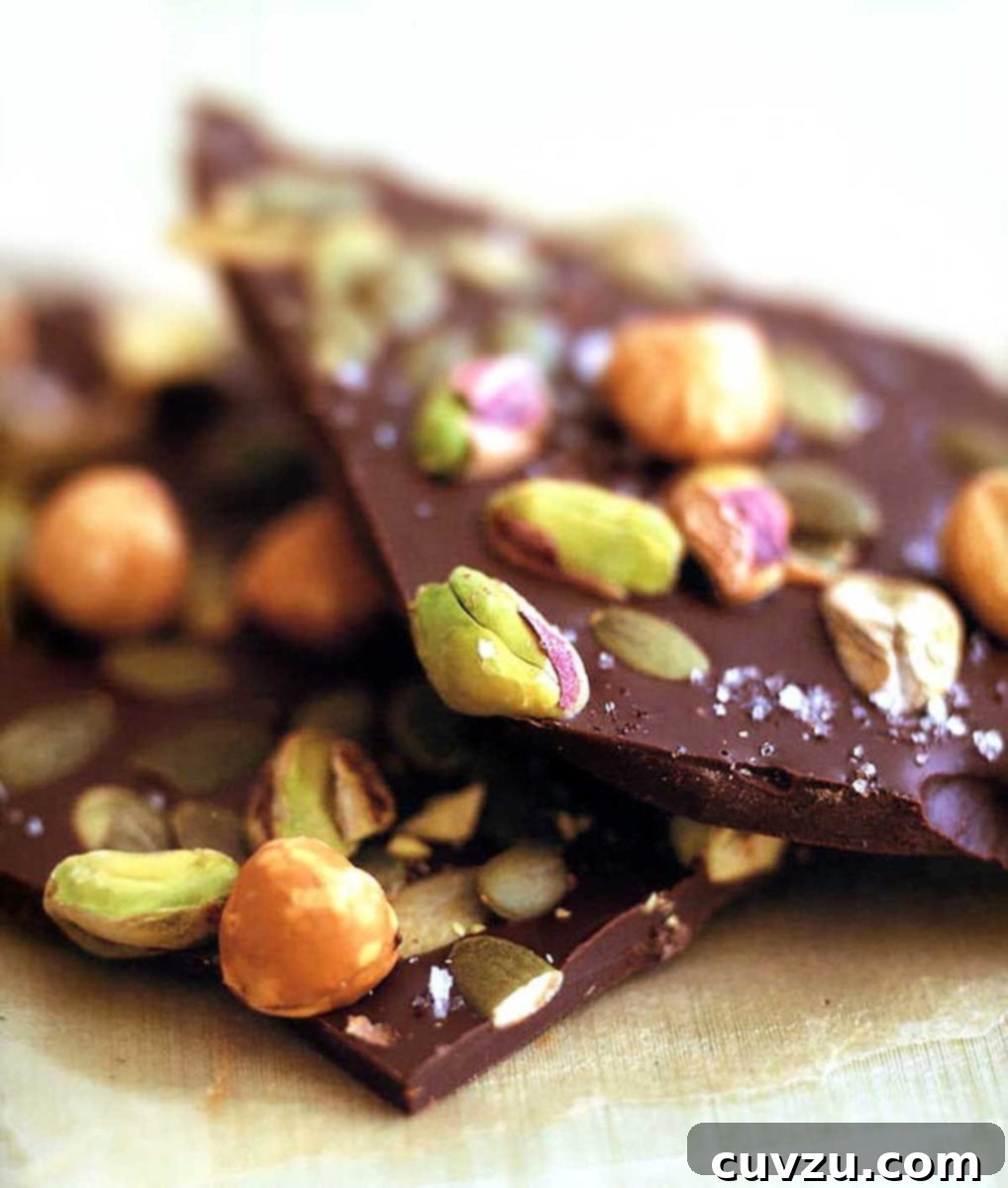
Crafting homemade chocolate bark is a rewarding culinary endeavor, especially when you follow the expert guidance of renowned chocolatiers like Michael Recchiuti. This particular recipe stands out for its thoughtful combination of ingredients and the simple yet impactful technique of roasting the nuts and seeds. The roasting process is key, as it deepens their natural flavors, adding layers of complexity and an irresistible aroma that permeates the entire bark. While optional for home cooks, tempering the chocolate is a step highly recommended by Recchiuti and essential for achieving that professional-grade gloss, crisp snap, and smooth mouthfeel. Properly tempered chocolate not only looks more appealing but also resists melting at room temperature, making it ideal for gifting or extended enjoyment. The addition of a pinch of fleur de sel further enhances the experience, creating a sophisticated sweet and salty balance that makes each bite truly extraordinary. This recipe, contributed by Jenny Latreille, is a testament to how simple ingredients can come together to create something truly spectacular.
Hazelnut, Pistachio, and Chocolate Bark: Frequently Asked Questions
While technically you don’t *have* to temper your chocolate, we strongly recommend it for the best results, especially if you plan to gift this beautiful bark or want it to store well. Tempering is a specific process of heating and cooling chocolate to stabilize its crystal structure. When chocolate is properly tempered, it sets quickly, developing a beautiful glossy sheen and a satisfying, clean snap when broken. It will also be less prone to “blooming”—those unattractive white streaks or splotches that can appear on untempered chocolate as the cocoa butter separates. Untempered chocolate, on the other hand, takes a much longer time to set, often resulting in a dull, streaky, or spotted surface. Once set, it tends to be soft, crumbly, or grainy in texture, and more susceptible to melting at room temperature. The difference in quality, appearance, and shelf life is significant, making tempering a worthwhile step for an elevated homemade chocolate bark.
Absolutely! The wonderful versatility of chocolate bark lies in its adaptability. This recipe expertly features hazelnuts, pistachios, and pumpkin seeds, but feel free to let your creativity soar. If these specific nuts and seeds aren’t your preference, or if you simply want to experiment, almonds, walnuts, cashews, pecans, or even macadamia nuts make fantastic alternatives or additions. Beyond nuts and seeds, consider incorporating dried fruits like cranberries, cherries, apricots, or even candied orange peel for a burst of color and chewy texture. A sprinkle of sea salt or flaked salt (like fleur de sel) is almost always a welcome addition, providing a delightful contrast to the sweetness of the chocolate. For an extra layer of flavor, try a dash of spices like cinnamon, cardamom, or a hint of chili powder for a subtle kick. Miniature marshmallows, crushed pretzels, toffee bits, or even a swirl of contrasting white chocolate can also transform your bark into a unique creation. The possibilities are truly endless, allowing you to customize this treat to your exact taste or to suit various dietary needs. For a festive, nut-free option, you might even consider a Christmas-inspired candy cane bark.
To maintain the optimal texture and flavor of your hazelnut pistachio chocolate bark, proper storage is crucial. Once fully set and broken into pieces, store the bark in an airtight container at cool room temperature, ideally between 65-70°F (18-21°C), and away from direct sunlight or any heat sources. To prevent pieces from sticking together, you can separate layers with parchment paper. Stored this way, the bark will retain its quality and freshness for up to 10 days. We generally advise against storing chocolate, particularly chocolate bark, in the refrigerator unless your kitchen consistently exceeds 75°F (24°C). The refrigerator’s humidity can cause “sugar bloom” (a gritty white film) on the chocolate’s surface, and it can also absorb unwanted odors from other foods, affecting its delicate flavor. If refrigeration is unavoidable due to warm climates, make sure the bark is very tightly sealed in an airtight container to minimize moisture exposure and odor absorption. Allow it to come to room temperature before serving for the best flavor and texture.

Hazelnut Pistachio Chocolate Bark
David Leite
Saved
Dessert
American
24
servings
79
kcal
10 minutes
10 minutes
2 hours
Ingredients
-
1/3
cup
whole shelled hazelnuts -
1/4
cup
shelled pumpkin seeds -
1/3
cup
shelled green pistachios -
1 1/2
cups
melted, preferably tempered, chocolate,
(from 8 to 12 ounces chocolate, preferably 61% to 70% cacao) -
1/2
teaspoon
fleur de sel
Instructions
-
Preheat your oven to 350°F (176°C). Prepare an 8-by-12-inch sheet pan by lining the bottom with parchment paper, ensuring it extends slightly over the edges for easy removal.
-
Spread the hazelnuts, pumpkin seeds, and pistachios evenly on a separate rimmed baking sheet. Toast them in the preheated oven for approximately 7 minutes, shaking the pan once halfway through, until they are wonderfully fragrant and just begin to turn golden at their edges. Immediately transfer the toasted nuts and seeds onto a plate or another cool surface to cool down completely. It is crucial that the nuts and seeds are at room temperature before sprinkling them over the melted chocolate; otherwise, their warmth could melt the chocolate, affecting its temper and marring the smooth surface of your bark.
-
Carefully pour the melted (and preferably tempered) chocolate into your prepared sheet pan. Using a small offset spatula or the back of a spoon, spread the chocolate evenly across the parchment paper to your desired thickness. Gently tap the pan on your counter a few times to release any trapped air bubbles and help create a perfectly smooth, level surface.
-
Evenly sprinkle the thoroughly cooled, roasted nuts and seeds over the still-wet chocolate. Follow this with a scattering of the fleur de sel. Tap the pan again to ensure the toppings settle nicely into the chocolate, securing them in place. Allow the chocolate to begin setting, which typically takes about 15 minutes. As it loses its initial sheen but is not yet completely hard, score or cut the bark with a sharp knife into uniform 2-inch squares or other creative, fanciful shapes that you prefer.
-
Leave the chocolate bark at room temperature until it has fully set and hardened, which usually takes about 1 hour for tempered chocolate. Once firm, separate the pieces along your scored lines. For optimal freshness, store the bark in an airtight container in a cool, dry place, away from direct sunlight or heat. While temptation might be strong, it’s best not to refrigerate chocolate bark, as the humidity can cause sugar bloom and affect its texture and flavor. For maximum enjoyment, consider finding a clever hiding spot – this delicious bark has a tendency to disappear quickly!

Adapted From
This exquisite Hazelnut Pistachio Chocolate Bark recipe is thoughtfully adapted from “Chocolate Obsession,” a definitive work by the celebrated chocolatier, Michael Recchiuti. His expertise in crafting luxurious chocolate confections shines through in this accessible yet sophisticated bark, offering home cooks a taste of gourmet quality.
Buy On Amazon
Explore More with Expert Tools
Substitutions
Scale Recipe
Summarize Key Insights
Nutrition Information
Serving:
1
portion
Calories:
79
kcal
Carbohydrates:
7
g
Protein:
1
g
Fat:
6
g
Saturated Fat:
2
g
Monounsaturated Fat:
3
g
Trans Fat:
1
g
Sodium:
50
mg
Fiber:
1
g
Sugar:
6
g
Nutrition information is automatically calculated, so should only be used as an approximation and is based on the specific ingredients listed. Values may vary.
Tried this recipe?
Mention @leitesculinaria or tag #leitesculinaria!
Recipe Testers’ Reviews: Real Feedback from Our Kitchens
Adrienne Lee
Having a reliable chocolate bark recipe in my repertoire is always a good idea, and given Michael Recchiuti’s stellar reputation, I was incredibly eager to try this one. Chocolate bark is deceptively easy to make, and it’s always fun to experiment with different flavor combinations. I’m a huge fan of nuts, so the inclusion of pumpkin seeds alongside hazelnuts and pistachios immediately piqued my curiosity. The finishing touch of fleur de sel was absolutely perfect, delivering that fantastic sweet and salty dynamic that makes chocolate so addictive.
However, I found the pumpkin seeds to be a bit underwhelming in both taste and appearance; they gave the finished bark a somewhat dull look. For a more vibrant and visually appealing result, I’d suggest incorporating colorful dried fruits like dried apricots, cherries, or even pineapple chunks. These additions would not only make the bark “pop” visually but also introduce lovely chewy textures and tangy notes that complement the rich chocolate beautifully. Dried cherries, in particular, are a personal favorite when paired with dark chocolate.
A minor challenge I faced was with the setting time; my bark didn’t fully set until the next day and remained a tad flimsy. I suspect this was due to the unusually humid weather we’d been experiencing, as chocolate can indeed be quite temperamental with humidity. If you encounter a similar issue, don’t hesitate to pop it into the refrigerator for a while. Since the bark is meant to be broken into irregular pieces anyway, a quick chill won’t affect the final presentation. While this recipe highlights specific nuts and seeds, the inherent versatility of chocolate bark encourages exploration. I’ve enjoyed making bark with other nuts like cashews in the past, and trying a seed-centric combination was certainly an interesting diversion. I even went on to create another batch with pineapple, hazelnuts, and coconut, which, despite the coconut blending in visually, tasted fantastic. Another successful variation I tried included dried cherries and pistachios. This recipe truly showcases how adaptable chocolate bark can be, making it a must-try for anyone new to making homemade chocolate confections.
Erin Bloys
This chocolate bark is an absolute triumph: it’s incredibly fast to prepare, surprisingly easy to execute, tastes decadently rich, and boasts a visually stunning appearance that will undoubtedly impress. I opted for a 70% dark chocolate, finding its bitterness perfectly balanced the sweetness. For those who prefer an even less sweet profile, I wouldn’t hesitate to go up to 72% cacao.
I followed the recipe precisely, diligently tempering the chocolate using the microwave method. This involved heating the chocolate in 20-second intervals at 50% power, stirring thoroughly after each interval, and continuing to stir until the chocolate was completely melted and cooled to room temperature (about 12-15 minutes of continuous stirring). However, at the very last minute, I couldn’t resist adding a personal touch; I incorporated dried dark sweet cherries into half of the batch. This addition truly elevated the recipe, introducing a delightful chewiness and a burst of fruity tartness that complemented the rich dark chocolate and crunchy nuts beautifully. Even without my modification, the bark was exceptional as written. I can easily imagine elegant shards of this chocolate bark serving as a sophisticated and enticing addition to an after-dinner cheese board or a fresh fruit platter, adding a touch of gourmet flair to any gathering.
Patricia M.
Chocolate bark is a truly wonderful and versatile addition to the festive holiday season. Its attractive and often whimsical appearance makes it a beautiful centerpiece on any holiday table, instantly adding a touch of festive cheer. Beyond its visual appeal, a perfectly crafted piece of chocolate bark frequently serves as the ideal sweet bite to conclude a meal, offering just the right amount of indulgence. The thoughtful mixture of roasted nuts in this recipe, particularly the hazelnuts and pistachios, contributes a profound depth of flavor and a delightful textural contrast. The subtle yet impactful addition of fleur de sel is what truly elevates this bark, transforming it into something special and gourmet by creating that irresistible sweet-salty balance.
Moreover, chocolate bark stands out as an exceptionally easy and incredibly beautiful homemade gift option, making it perfect for appreciative family members, dedicated teachers, or cherished friends. Its customizable nature means you can easily adapt it to suit individual preferences, incorporating your favorite nuts, an array of colorful dried fruits, or other creative toppings. A key piece of advice: always make more than one batch! This delectable bark has a reputation for disappearing remarkably quickly, often before you even realize it’s gone. Its ease of preparation and universal appeal make it a holiday staple that you’ll want to revisit year after year.