
Congee, known in many Southeast Asian cultures as Jok Plaw, is far more than just a simple rice porridge. It’s a culinary hug in a bowl, a gentle and profoundly comforting dish revered across Asia for its soothing properties and remarkable versatility. Crafted from humble rice and aromatic ginger, congee forms a creamy, warm base ready to be transformed with an array of toppings. While we particularly favor the fresh crunch of scallions, the vibrant zest of cilantro, and the satisfying texture of chopped peanuts, the possibilities for customization are truly endless. This ancient dish serves as both a restorative meal and a flavorful canvas, making it a beloved staple in countless households.
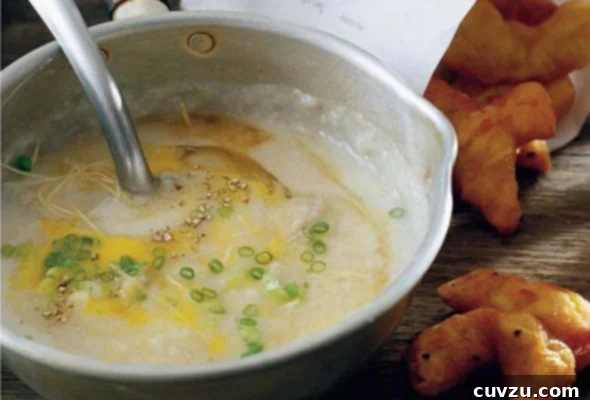
As celebrated chef David Thompson eloquently puts it, “This is a gentle and comforting congee that heals and salves the soul. All is forgiven or forgotten after eating this suave silken potage.” Congee holds a special place in the hearts of many, often enjoyed for supper, as a solitary dinner, or even for a hearty breakfast. It’s particularly cherished when one is feeling unwell, offering its mild, easy-to-digest texture and bland taste as a balm for the body and spirit. This inherent simplicity makes plain congee a perfect base for more elaborate creations.
When Thompson speaks of “complex congees,” he refers to the myriad additions that can elevate this unassuming rice porridge. Imagine stirring in a raw egg just before serving, allowing its warmth to gently cook, or enhancing the flavor with shredded pork, tender chicken, an extra kick of ginger, or a generous sprinkle of peanuts. A dash of soy sauce and a crack of black pepper are classic enhancements that bring a subtle depth to the dish. While traditional plain congee is often considered “invalids’ food” due to its soothing nature, cultures like the Thais and Chinese deeply appreciate its delicate flavor and comforting consistency, making it a regular part of their culinary repertoire.
It’s worth noting that many traditional Chinese congee recipes often substitute water with chicken stock, infusing the porridge with a richer, more savory dimension. If you choose this route, especially with a rich broth, Thompson suggests watering it down slightly to ensure the congee retains its comforting, delicate balance without becoming overly intense. This adjustment allows the natural flavors of the rice and any added garnishes to shine through, contributing to the dish’s universally appealing charm.
The Essence of Congee: A Comfort Food Staple
Congee is a foundational dish in Asian cuisine, especially prevalent in China, Thailand, and other Southeast Asian countries. Its history spans centuries, rooted in the clever utilization of rice to create a nourishing and economical meal. At its core, congee is a rice porridge, typically made by boiling rice in a large amount of water or broth until the grains break down and form a thick, creamy consistency. This extended cooking process renders the rice exceptionally soft and easily digestible, making it an ideal choice for the young, the elderly, and anyone seeking gentle nourishment.
The term “comfort food” perfectly encapsulates congee. Its warmth and smooth texture provide an immediate sense of ease, often evoking feelings of home and care. It’s a dish frequently prepared for those feeling under the weather, as its mildness is gentle on the stomach, while its hydrating properties help in recovery. Beyond its remedial qualities, congee is also a beloved everyday meal, adaptable to various tastes and dietary needs simply by changing its accompaniments.
While often enjoyed as a breakfast staple, congee seamlessly transitions into lunch or dinner, providing a satisfying and wholesome meal. Its neutral flavor profile makes it a superb base, ready to absorb and enhance the flavors of whatever ingredients are added. This adaptability is key to its enduring popularity and why it remains a cherished dish across diverse culinary traditions.

Congee | Jok Plaw: The Classic Recipe
David Leite
Saved
Ingredients
- 2 cups broken rice* (see * below) or substitute long-grain white rice
- 8 cups cold water, plus more as needed
- 1 teaspoon salt
- Shredded ginger (for garnish)
- Freshly cracked black pepper (for garnish)
- Thinly sliced scallions (for garnish)
- Cilantro (for garnish)
- Chopped peanuts (for garnish)
Instructions
-
Rinse the rice thoroughly under cold water until the water runs clear, then drain it. Soak the rinsed rice in a generous amount of cold water for 2 to 3 hours. It is crucial not to exceed this soaking time, as over-soaked rice can result in a thin, dull gruel that lacks the characteristic aroma and texture of well-made congee.
-
In a large, heavy-bottomed pot, bring the 8 cups of cold water to a rolling boil with the salt. Once boiling, drain the soaked rice completely. Gradually pour the drained rice into the vigorously boiling water, stirring gently and continuously. This constant stirring is essential as the mixture returns to a boil, preventing the uncooked rice grains from sticking to the bottom of the pan and scorching, which would ruin the congee.
-
As the rice begins to swell and soften, reduce the heat to the lowest possible setting. Cover the pot with a lid and allow the congee to simmer as gently as possible. Stir regularly to prevent sticking and ensure even cooking. Add more water as needed to maintain a soupy, fluid consistency; the congee should not become too thick or dry. Continue to simmer until the rice grains have almost completely dissolved into a creamy, smooth porridge, which typically takes 45 minutes to 1 hour. If you are using regular whole-grain rice instead of broken rice, you will need to extend the cooking time significantly, potentially up to twice as long, to achieve the desired consistency. The goal is a velvety, uniform texture where individual rice grains are barely discernible.
-
Once cooked to your preferred consistency, remove the pot from the heat, cover it, and let it rest for a short period, or up to a few hours. This resting period allows the congee to further develop its creamy texture. When ready to serve, ladle the warm congee into individual bowls. Pass around the suggested garnishes—shredded ginger, freshly cracked black pepper, thinly sliced scallions, fresh cilantro, and chopped peanuts—allowing each person to add them according to their personal preference. This customizable approach enhances the dining experience and allows for a fresh, vibrant flavor profile with every spoonful.
Notes on Achieving the Perfect Congee
*Understanding Broken Rice: The Secret to Silken Congee
The choice of rice significantly impacts the texture of your congee. As author David Thompson clarifies, “broken rice” refers to grains that have fractured during the milling process. While deemed “damaged goods” and unsuitable for perfectly steamed rice, these broken kernels are prized for congee. The reason? Their compromised structure allows starch to easily release during cooking, creating that signature “gluggy, gluey mass” that is ideal for a smooth, silken porridge. This characteristic is precisely what makes broken rice excellent for soup and congee, delivering a wonderfully supple texture.
For Thai cooks, there’s a debate: some prefer new season’s rice for its perceived suppleness, while others opt for old grains, believing they offer more character and aroma. Thompson leans towards the latter, valuing the depth of flavor. Broken rice is readily available in Asian grocery stores, particularly Chinese ones. If you can’t find it, you can easily create your own by lightly grinding or pounding regular long-grain white rice. If even that is not feasible, don’t despair! You can still enjoy congee using regular whole-grain white rice; simply extend the simmering time as noted in the instructions, often up to twice as long, until the grains break down sufficiently to achieve that creamy consistency. The key is patience and continuous monitoring of the porridge.
Tips for Consistency and Flavor
Achieving the ideal congee consistency is paramount. It should be neither too thick nor too watery, but rather a comforting, almost soup-like porridge. Throughout the cooking process, keep a close eye on the pot and add additional water as needed to maintain this desired texture. The simmering should be very gentle, just barely bubbling, to allow the rice to slowly break down without scorching.
For enhanced flavor, remember that the base congee is intentionally mild. This makes it an excellent vehicle for a wide range of toppings and seasonings. Consider stirring in a teaspoon of sesame oil at the end for an aromatic boost, or adding a splash of fish sauce or light soy sauce to taste. For a richer, more complex flavor profile, using chicken stock instead of water is a popular choice, though remember to dilute rich broths slightly.
The beauty of congee lies in its adaptability. Don’t hesitate to experiment with different additions to create a dish that perfectly suits your palate, whether you’re seeking a simple, healing meal or a vibrant, flavorful experience.

Adapted From
Thai Street Food
Buy On Amazon
Explore More with AI
Substitutions
Scale
Summarize
Nutrition
Calories: 338 kcal
Carbohydrates: 74 g
Protein: 7 g
Fat: 1 g
Saturated Fat: 1 g
Monounsaturated Fat: 1 g
Sodium: 610 mg
Fiber: 1 g
Sugar: 1 g
Nutrition information is automatically calculated, so should only be used as an approximation.
Customizing Your Congee: A World of Toppings
The beauty of congee lies in its ability to serve as a blank canvas for an array of flavors and textures. While the basic recipe provides a soothing and gentle base, the magic truly happens with the toppings. These additions transform simple rice porridge into a personalized culinary experience, whether you’re seeking a hearty, spicy, or subtly flavored meal.
Traditional and Classic Toppings
- Ginger: Freshly shredded ginger is a quintessential congee topping, offering a warm, slightly spicy kick that complements the rice’s mildness and is especially welcome when feeling under the weather.
- Scallions (Green Onions): Thinly sliced scallions provide a fresh, pungent aroma and a vibrant green color, adding a crisp contrast to the soft porridge.
- Cilantro: Fresh cilantro leaves bring a bright, herbaceous note that lightens the dish and adds a refreshing flavor.
- Peanuts: Chopped roasted peanuts contribute a delightful crunch and a nutty richness, enhancing both texture and flavor.
- Black Pepper: A generous crack of freshly ground black pepper adds a subtle warmth and a classic finish.
Elevated and Creative Additions
Beyond the basics, the possibilities for customizing congee are vast, allowing for endless creativity:
- Protein Power-Ups:
- Shredded Chicken or Pork: Leftover roasted or poached chicken and pork can be shredded and stirred in for a more substantial meal.
- Raw Egg: A raw egg, stirred in just before serving, will gently cook in the hot congee, adding creaminess and richness.
- Fried Fish or Seafood: Crispy fried fish pieces or cooked shrimp can add a savory, umami dimension.
- Flavor Boosters:
- Soy Sauce: A drizzle of light or dark soy sauce enhances the savory profile.
- Sesame Oil: Toasted sesame oil offers a deep, aromatic finish.
- Sriracha or Chili Oil: For those who enjoy a fiery kick, a dash of hot sauce or chili oil can dramatically transform the flavor.
- Pickled Vegetables: Pickled mustard greens, radishes, or other Asian pickles provide a tangy, crunchy counterpoint that cuts through the richness.
- Fermented Tofu or Salted Duck Eggs: These traditional additions offer intense salty and umami flavors, often served alongside.
- Textural Enhancements:
- Fried Shallots or Garlic: Crispy fried aromatics add a depth of flavor and a satisfying crunch.
- Roasted Seaweed or Katsuobushi: These Japanese-inspired additions introduce oceanic flavors and delicate textures.
- Tofu: Cubes of soft or fried tofu can provide a gentle protein boost and a different textural element.
Whether you prefer a simple, clean bowl or a complex medley of flavors, congee welcomes all additions. It truly embodies the spirit of adaptable cooking, allowing you to tailor each serving to perfectly match your cravings and needs.
Recipe Testers’ Insights: Real-World Congee Experiences
The collective experiences of our recipe testers highlight the incredible versatility and comforting nature of this congee recipe. While the core preparation remains simple, their feedback reveals how easily the dish adapts to different preferences, dietary needs, and even various types of rice.
Rebecca Marx
Rebecca Marx praises congee as “goopy, soothing, and comfortingly bland,” positioning it as Asia’s answer to classic nursery food. She found it to be an excellent vehicle for “more dynamic ingredients,” enjoying hers with shredded ginger, chopped Spanish peanuts, and soy sauce. Notably, Rebecca experimented by using black wild rice instead of broken or white rice, which, as predicted, extended the cooking time significantly. Despite the longer cook, she found it “worth the wait,” anticipating many more opportunities to make it during New York’s long winters. Her experience underscores the recipe’s flexibility with different rice types, provided one adjusts cooking times accordingly.
Angie Hsing
Angie Hsing declares this recipe “exactly what congee should be: Simple, warm, and satisfying on a cold day.” She highlights its strength as a “great recipe base” for any desired toppings. Angie, who enjoys a bit of spice, added a touch of Sriracha after her initial tasting. Interestingly, she also used regular rice instead of broken rice but found it cooked down within the recommended time for broken rice, though she did add about 2 additional cups of water to achieve the desired consistency. This suggests that while broken rice is preferred, patience and liquid adjustment can yield similar results with standard rice.
Trudy Ngo-Brown
Trudy Ngo-Brown shares a heartfelt connection to the dish, noting how it “evoked so many feelings of comfort from my childhood.” She found the recipe worked “exactly as written and was so, so easy.” Trudy embraced her family’s tradition, serving it with shredded chicken, thinly sliced raw cabbage, ample scallions, and freshly ground pepper, finding it “perfect for cold winter days in the Midwest.” Her experience reinforces the dish’s timeless appeal and its ability to connect us to cherished memories and family customs.
Jo Ann Brown
Jo Ann Brown describes congee as “a very neutral and soothing food,” akin to grits in its role as a vehicle for additional flavors. She appreciated how the recipe’s garnishes kept the dish “light and herbally medicinal,” ideal for when one has the sniffles. Her creativity shone when she transformed leftovers into a “spicy variation” for a hearty lunch, drawing inspiration from banh mi sandwiches with ground pork, Sriracha, and other spices. This experiment truly demonstrated congee’s incredible versatility. Jo Ann also offered a crucial testing tip: maintain a very low heat, almost “nary a bubble,” and be prepared to add extra water to achieve the right consistency, emphasizing the need to keep a “good eye on the pot.”
Carrie S.
Carrie S. found the recipe to be a “solid base recipe for an easy to digest, filling, and comforting meal,” particularly appreciating the “flexibility to make one bowl different from the next.” She enhanced the base flavor by replacing half of the water with low-sodium chicken stock. Her tasters customized their bowls with an impressive array of additions, including roasted seaweed, katsuobushi, egg, scallions, tofu, ginger, cilantro, and Sriracha. Carrie notes that “having something fresh like scallions or cilantro to brighten the flavor” was universally liked, highlighting the importance of fresh elements.
Melissa Moran
Melissa Moran used short-grain rice and substituted chicken stock for water, further demonstrating the recipe’s adaptability. She cooked it for about 75 minutes, aiming for a moist consistency without residual liquid. Garnishes of ginger, scallions, cilantro, peanuts, and spicy Thai red chile sauce completed her bowls. Melissa confirmed that the recipe “worked as written and was perfect for someone with a cold,” reinforcing its reputation as a healing food.
Liz Tarpy
Liz Tarpy echoes the sentiment that the plain dish is “pretty bland,” but intentionally so, serving as either “a comfort when you just need something plain, or becomes the canvas for other ingredients.” She particularly appreciated the “smooth and soft and, well, comforting” consistency. Liz successfully halved the recipe, using a spice grinder to achieve the “broken effect” for the rice, and cooked it for about 30 minutes, adding water to keep it brothy. She wished for a more explicit visual cue for consistency but found her additions of soy sauce, grated ginger, scallion, cilantro, and even Japanese pickles to be tasty. Her note about the rice absorbing water overnight and still being soft for breakfast highlights congee’s excellent leftover potential.
Karen Taylor
Karen Taylor, having grown up in a “congee-loving house,” was keen to try this recipe. She found the use of broken rice to be a valuable “shortcut” due to its shorter cooking time. However, she observed no discernible difference in texture or aroma from the 2 to 3-hour soaking step, preferring the Cantonese method of soaking cleaned rice with a drizzle of oil and a dash of salt for just 20 minutes. Karen emphasizes that plain congee is “VERY bland food” and can be sweet due to cooked starch, urging users to be generous with salt and toppings if not serving it as invalid food. She provides excellent suggestions for toppings like thinly sliced pork or chicken, salted eggs, and pickled mustard greens, reinforcing the importance of customization for flavor.
Robert McCune
Robert McCune, having tried “quick” versions of congee unsuccessfully in the past, found the effort of lightly grinding the rice to achieve a “more silken” dish to be entirely worthwhile. He wisely diluted his rich chicken stock to prevent it from overwhelming the soup’s delicate flavor. Robert’s advice for those feeling unwell is to start “sparingly with the garnishes,” as more can always be added. He champions this congee as “the ultimate in comfort when the weather is dreary and you don’t feel well,” comparing it to the nostalgic warmth of a mother’s cooking. His concluding remark, “A keeper!”, perfectly sums up the sentiment many share about this restorative dish.
In summary, these tester reviews collectively paint a picture of a versatile and deeply comforting congee recipe. They confirm its efficacy as a simple, healing dish, while also demonstrating its potential as a dynamic base for a wide spectrum of flavors and textures. From adjusting rice types and cooking liquids to experimenting with diverse garnishes, the recipe encourages creativity and personal adaptation, ensuring a satisfying bowl for every palate.