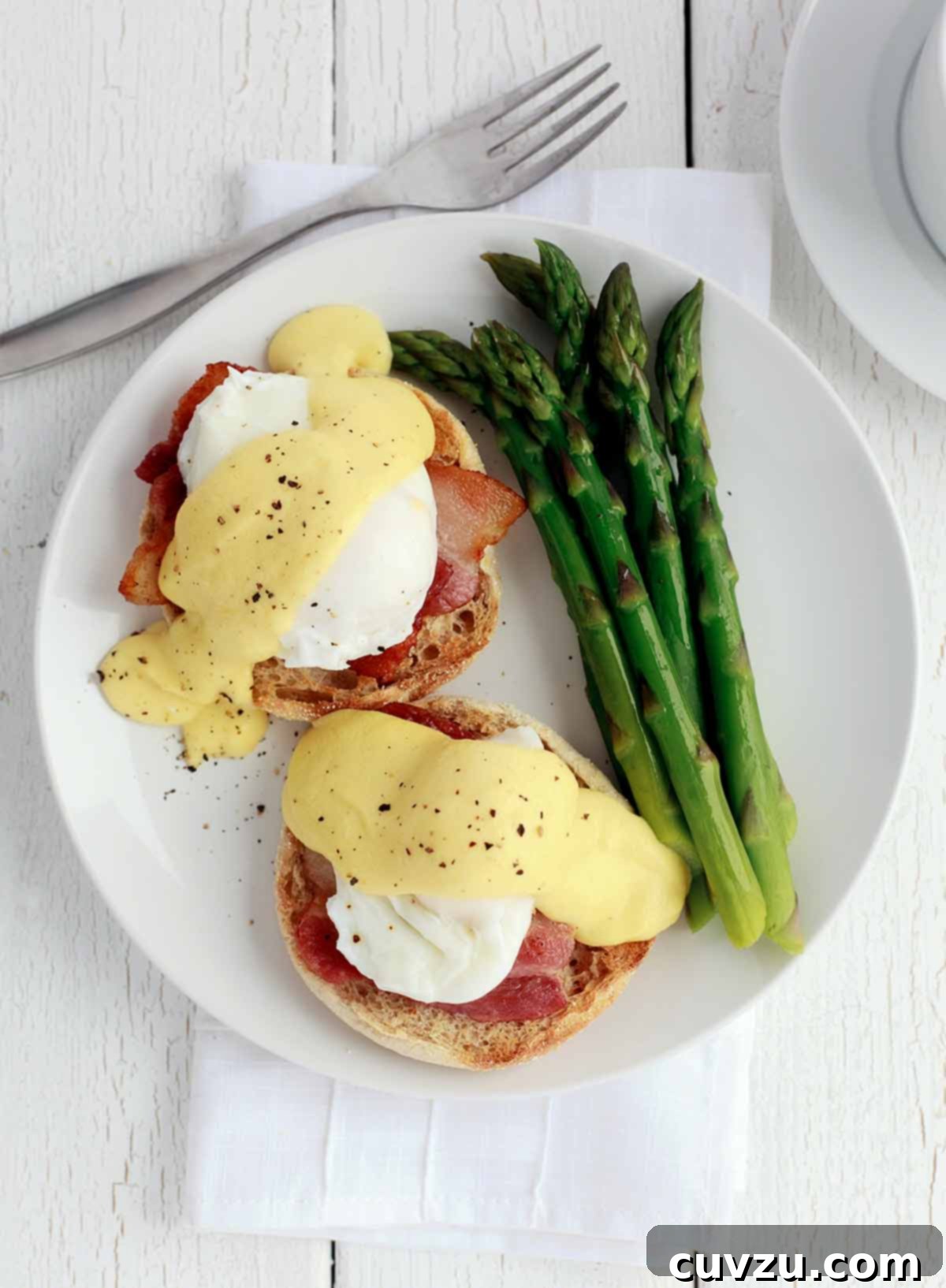
Julia Child’s Classic Eggs Benedict: The Ultimate Brunch Masterpiece
Embark on a culinary journey to master one of the most beloved and elegant brunch dishes: Eggs Benedict, as taught by the one and only Julia Child. This recipe is a testament to her philosophy of making sophisticated French cuisine accessible to every home cook. It meticulously guides you through the creation of a velvety, rich hollandaise sauce, impeccably poached eggs, and the perfect assembly atop buttery brioche (or traditional English muffins) and savory ham. If you’re captivated by Julia Child’s other celebrated dishes like her robust Coq au Vin or the exquisite Steak au Poivre, then preparing her definitive Eggs Benedict will be an equally rewarding and delectable experience.
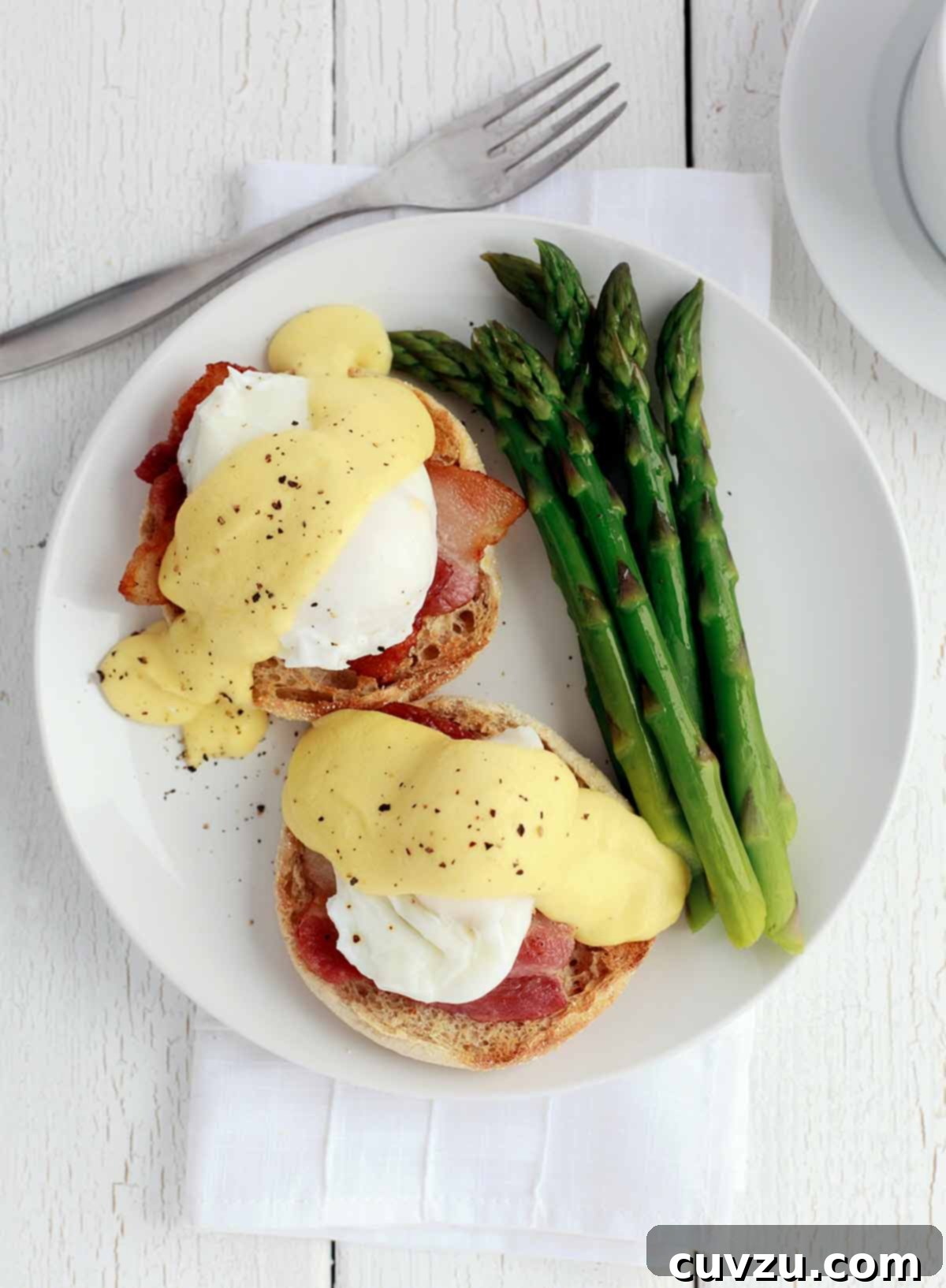
The Enduring Allure of Hollandaise: A Culinary Foundation
At the very core of a truly exceptional Eggs Benedict lies the silken majesty of hollandaise sauce. As culinary legends Julia Child and Jacques Pépin so aptly described in their collaborative work, “Hollandaise sauce is an essential component of eggs Benedict, and a lovely adornment for all kinds of egg and vegetable dishes, like warm asparagus and broccoli, and for delicate fish poached in white wine.” They further elaborate on its nature as a classic “emulsion” sauce, highlighting the extraordinary capacity of an egg yolk to suspend a significantly greater volume of butter, much like mayonnaise incorporates oil. This remarkable property is what gives hollandaise its characteristic rich flavor and thick, smooth texture.
The creation of hollandaise is often perceived as a daunting task, yet it is a fundamental technique that, once mastered, opens up a world of culinary possibilities. It demands a delicate hand, requiring careful heating and relentless whisking to marry the butter and egg yolks into an even more fragile yet profoundly flavorful alliance. The process transforms simple ingredients into a luxurious, golden cascade that elevates any dish it graces. This recipe is your guide to achieving that flawless emulsion, demystifying a technique that has intimidated many for generations. Embrace the challenge, and you’ll soon be pouring liquid gold over your brunch creations, a true testament to Julia’s enduring culinary legacy.
Julia Child’s Eggs Benedict
Recipe by David Leite, adapted from Julia Child.
Breakfast, Brunch
American, French
2 to 4
servings
954
kcal
35
10
45
Ingredients
For the Hollandaise Sauce
- 3 large egg yolks
- 1 tablespoon water
- 1 tablespoon fresh lemon juice, or more if needed for brightness
- 12 to 16 tablespoons very soft unsalted butter
- Salt, to taste
- Freshly ground white pepper, to taste (a tiny dash of cayenne pepper can also be added for a subtle warmth)
For the Poached Eggs
- 2 tablespoons distilled white vinegar, per 2 quarts (1.9 liters) water – essential for neat whites
- 4 large eggs, the fresher the better for beautifully compact poached eggs
For Assembling Eggs Benedict
- 4 slices of brioche or home-style white bread, cut into 4-inch (10-cm) rounds, or 2 split and toasted English muffins
- Butter, for toasting bread/muffins and lightly warming the ham
- 4 to 8 slices prosciutto, boiled ham, cooked strip bacon, or Canadian bacon
- 4 warm poached eggs
- 1 cup freshly made hollandaise sauce
- Freshly ground black pepper, for garnish and a finishing touch
Instructions
Mastering the Hollandaise Sauce
-
In a medium, heavy-bottomed saucepan (off the heat for now), combine the egg yolks, water, and fresh lemon juice. Whisk these ingredients vigorously for a few moments until the mixture transforms into a thick, pale, and airy consistency. This initial aeration and pre-emulsification are vital steps, preparing the yolks to gracefully accept the butter and preventing them from curdling when heat is applied.
-
Place the pan over a very moderately low heat. Continue whisking constantly and at a consistent, brisk pace. Make sure your whisk reaches every nook and cranny of the pan’s bottom and sides, as these are the areas where the eggs are most prone to overcooking. To precisely manage the heat, frequently lift the pan completely off the burner for a few seconds, then return it. This stop-and-go method is key to preventing the eggs from scrambling. If, at any point, you notice the eggs cooking too rapidly or forming lumps, immediately set the pan into a bowl of cold water to halt the cooking process, then resume whisking. As the eggs cook, they will become frothy, increase in volume, and gradually thicken. You’ll know the mixture is perfectly cooked when you can visibly see the bottom of the pan through the streaks created by your whisk, and the sauce appears thick, smooth, and homogenous. Once this stage is reached, remove the pan from the heat immediately.
-
Now, it’s time to incorporate the butter. Begin adding the very soft, unsalted butter in small spoonfuls to the egg mixture. Whisk continuously and vigorously after each addition, ensuring that each spoonful of butter is fully absorbed and integrated into the emulsion before adding the next. As the sauce begins to visibly thicken and stabilize, you may gradually increase the quantity of butter added per interval. Persist with this whisking and adding process until the hollandaise has reached your desired rich, thick, and utterly luxurious consistency. Patience here is paramount for a perfectly smooth sauce.
-
Finally, season your exquisite hollandaise sauce lightly with salt and a touch of freshly ground white pepper (or a subtle dash of cayenne pepper for a classic touch). Whisk it thoroughly to distribute the seasonings evenly. Taste the sauce and adjust as necessary; you might find it benefits from a few more droplets of fresh lemon juice to brighten its flavor profile. The hollandaise is best served lukewarm, ensuring its ideal texture and allowing its rich flavors to truly shine.
Perfecting the Poached Eggs
-
Select a wide, shallow saucepan or pot and fill it with approximately 2 to 3 inches of warm water. Add the distilled white vinegar – this crucial ingredient helps the egg whites set quickly and maintain a neat, compact shape around the yolk, preventing them from feathering excessively in the water. Bring the water to a very slow, gentle simmer. Look for tiny, infrequent bubbles just breaking the surface, not a rapid boil.
-
Carefully crack each large, fresh egg individually into a small ramekin or a shallow bowl. This allows for controlled placement and inspection of each egg. Gently slide each egg into the simmering water, keeping the ramekin as close to the water’s surface as possible to minimize disturbance and maintain the egg’s integrity. The introduction of the eggs will naturally cool the water; adjust your heat to ensure the water returns to and maintains a slow, gentle simmer. After just a few moments, once the whites have barely begun to set, use the back of a slotted spoon to gently nudge and release any eggs that might be sticking to the bottom of the pan. Continue to cook the eggs for approximately 4 minutes for a perfectly runny yolk, adjusting the heat as necessary to sustain that gentle simmer.
-
To accurately test for doneness, delicately lift one egg from the water using your slotted spoon. Gently press on both the white and the yolk. The egg white should feel fully set and firm yet still tender, while the yolk underneath should yield softly to pressure, indicating a wonderfully runny center. If you prefer your yolks firmer, simply continue poaching the eggs for an additional minute or two, checking frequently until they reach your desired consistency.
-
Once the eggs are cooked exactly to your liking, remove them from the saucepan with the slotted spoon or a fine-mesh strainer. Immediately immerse them in a bowl of warm tap water. This crucial step serves to gently wash away any residual vinegar taste and to keep the eggs warm while you prepare the remaining components. Briefly set the slotted spoon, with the egg resting on it, onto a clean kitchen towel or several layers of paper towels to absorb any excess water. It is imperative to assemble your Eggs Benedict without delay to ensure every element is served at its optimal warm temperature.
Assembling Your Divine Eggs Benedict
-
Just moments before serving, lightly toast your brioche rounds or English muffin halves until they achieve a delicate golden hue and are slightly crisp. While still warm, generously butter both sides of the toasted bread. In a small frying pan, melt a tablespoon of butter over medium heat. Briefly warm your chosen meat – be it ham, prosciutto, or bacon slices – in the melted butter until it’s lightly browned and deliciously fragrant. This step ensures every component of your Eggs Benedict is warm and perfectly seasoned.
-
Center the buttered toast rounds or muffin halves gracefully on each warm serving plate. Artfully drape a slice (or two, depending on your preference) of your warmed ham, prosciutto, or bacon over the toast. Carefully place a freshly poached, warm egg directly on top of the meat. With a flourish, spoon a generous amount of your luscious hollandaise sauce over each egg, allowing it to elegantly cascade down the sides. Finish each plate with a few delightful grinds of fresh black pepper for an aromatic and subtly piquant finish. Serve your Julia Child’s Eggs Benedict immediately to savor its exquisite combination of warmth, texture, and flavor.
Notes and Variations for Your Brunch
Eggs Royale: A Sophisticated Twist
For those seeking a touch of gourmet elegance, the Eggs Royale variation offers a truly delightful experience. Instead of traditional prosciutto, ham, or bacon, simply substitute delicate slices of high-quality smoked salmon. This simple swap elevates the dish, introducing a rich, subtly salty flavor that harmonizes beautifully with the creamy hollandaise and perfectly runny poached egg. Serve with a generous spooning of hollandaise, and you have a brunch dish that is both fancy-dancy and trés delicious.
Exploring Other Creative Variations
- Eggs Florentine: For a delightful vegetarian alternative, replace the meat with a generous portion of sautéed spinach. Be sure to squeeze out any excess moisture from the spinach to prevent a watery dish.
- Vegetable-Forward Bases: Move beyond bread by serving your poached eggs and hollandaise over roasted asparagus spears, grilled portobello mushroom caps, or even crispy, homemade hash brown patties. This offers wonderful textural contrasts and can be an excellent gluten-free option.
- Flavor Boosts: Experiment with your hollandaise by adding a pinch of smoked paprika for depth, a touch of Dijon mustard for tang, or even a tiny dash of your favorite hot sauce for a subtle kick.
- Alternative Breads: While brioche and English muffins are iconic, consider toasted sourdough, a hearty multi-grain bread, or even a savory scone for a unique foundation.

Adapted From: Julia and Jacques Cooking at Home
This exceptional recipe for Eggs Benedict is meticulously adapted from the pages of Julia and Jacques Cooking at Home, a truly iconic cookbook born from the collaborative genius of two culinary titans, Julia Child and Jacques Pépin. Their shared expertise, precision, and passion for making great food accessible shine through in every detail, providing home cooks with the confidence to recreate restaurant-quality dishes.
Purchase on Amazon
Nutrition Information
Serving: 1 portion
Calories: 954 kcal
Carbohydrates: 37 g
Protein: 45 g
Fat: 69 g
Saturated Fat: 18 g
Monounsaturated Fat: 9 g
Trans Fat: 0.1 g
Cholesterol: 788 mg
Sodium: 2079 mg
Fiber: 1 g
Sugar: 3 g
Nutrition information is automatically calculated and should be used as an approximation. Actual values may vary based on specific ingredients, portion sizes, and preparation methods.
Expert Tips for Perfecting Your Julia Child Eggs Benedict
Crafting a flawless Eggs Benedict, especially when following the meticulous instructions of Julia Child, is a rewarding culinary achievement. Here are some indispensable tips to help you elevate your brunch masterpiece to absolute perfection:
Hollandaise Sauce Success Secrets:
- Temperature Control is Paramount: The most common pitfall in preparing hollandaise is overheating the egg yolks. Always maintain a truly low heat and exercise patience. Julia’s advice to frequently lift the pan off the burner is your ultimate safeguard against scrambled eggs and a broken sauce.
- Butter Consistency Matters: Ensure the butter you’re incorporating into your hollandaise is very soft, almost at a pourable consistency but not fully melted and hot. This optimal state allows it to emulsify smoothly and seamlessly with the egg yolks, creating a stable and creamy sauce.
- Serving Temperature: Hollandaise sauce is at its best when served lukewarm. If you need to hold it for a short period, place the saucepan over a bowl of very warm (not hot) water, whisking gently every few minutes. Never attempt to reheat hollandaise directly over a flame or in a microwave, as it will inevitably break.
- Rescuing a Broken Sauce: Should your hollandaise regrettably separate, do not despair! In a clean, warm bowl, briskly whisk a teaspoon of hot water or fresh lemon juice. Then, gradually and slowly drizzle in the broken hollandaise sauce, whisking continuously until it miraculously comes back together into a smooth emulsion.
Achieving Flawless Poached Eggs:
- The Fresher, The Better: The absolute key to beautifully shaped poached eggs lies in using the freshest possible eggs. Older eggs tend to have runnier whites that spread out excessively in the water, resulting in an unappealing, wispy appearance.
- The Role of Vinegar: The addition of vinegar to the poaching water serves a crucial purpose: it helps the egg whites to coagulate rapidly, forming a neat, compact parcel around the yolk. While essential, remember to briefly rinse the poached eggs in warm water after cooking to remove any lingering vinegary taste.
- Maintain a Gentle Simmer: A vigorous, rolling boil will mercilessly tear apart your delicate eggs. The ideal poaching environment is a gentle simmer, characterized by small, infrequent bubbles that just barely break the surface of the water.
- Batch Poaching for Crowds: If you’re preparing Eggs Benedict for more than two or four people, consider poaching the eggs in small batches. Overcrowding the pan will significantly drop the water temperature, leading to inconsistent cooking. You can keep finished poached eggs warm by transferring them to a bowl of warm water while the remaining eggs cook.
Expert Assembly and Elegant Serving:
- Warm Your Plates: Always serve your meticulously prepared Eggs Benedict on warm plates. This simple step is vital for maintaining the optimal temperature of the entire dish, especially the delicate hollandaise sauce, from your kitchen to your delighted guests.
- Garnish for Visual Appeal: A sprinkle of finely chopped fresh chives, parsley, or a dash of colorful paprika not only adds a burst of freshness but also elevates the visual appeal of your finished dish, making it look as good as it tastes.
- Perfect Pairing Suggestions: Eggs Benedict pairs exquisitely with a light and refreshing fresh fruit salad, a crisp green salad with a simple vinaigrette, or for a truly celebratory brunch, a sparkling glass of mimosa or prosecco.
Julia Child’s Enduring Culinary Legacy and Influence
Julia Child, the iconic American chef, author, and television personality, revolutionized the way Americans approached cooking and, specifically, French cuisine. Her inimitable style, infectious enthusiasm, and unwavering belief that anyone, regardless of their background, could master the art of cooking, demystified complex techniques and brought the joys of French gastronomy into millions of homes. Her groundbreaking work, “Mastering the Art of French Cooking,” co-authored with Simone Beck and Louisette Bertholle, quickly became a culinary bible, transforming intimidating recipes into achievable triumphs for home cooks across the nation. Julia’s philosophy was elegantly simple yet profoundly impactful: embrace the sheer joy of cooking, don’t be afraid to make mistakes (and learn from them!), and never, ever skimp on the butter!
This meticulously detailed Eggs Benedict recipe, a shining example of her precise yet practical approach to teaching, perfectly embodies her enduring spirit. It takes a historically classic and often intimidating dish, breaks it down into a series of manageable, clear steps, and guides you to achieve a truly professional-level result in your own kitchen. Julia Child’s profound influence continues to inspire countless generations of aspiring chefs and enthusiastic home cooks alike, encouraging them to explore, experiment, and ultimately find immense pleasure and confidence in the culinary arts.