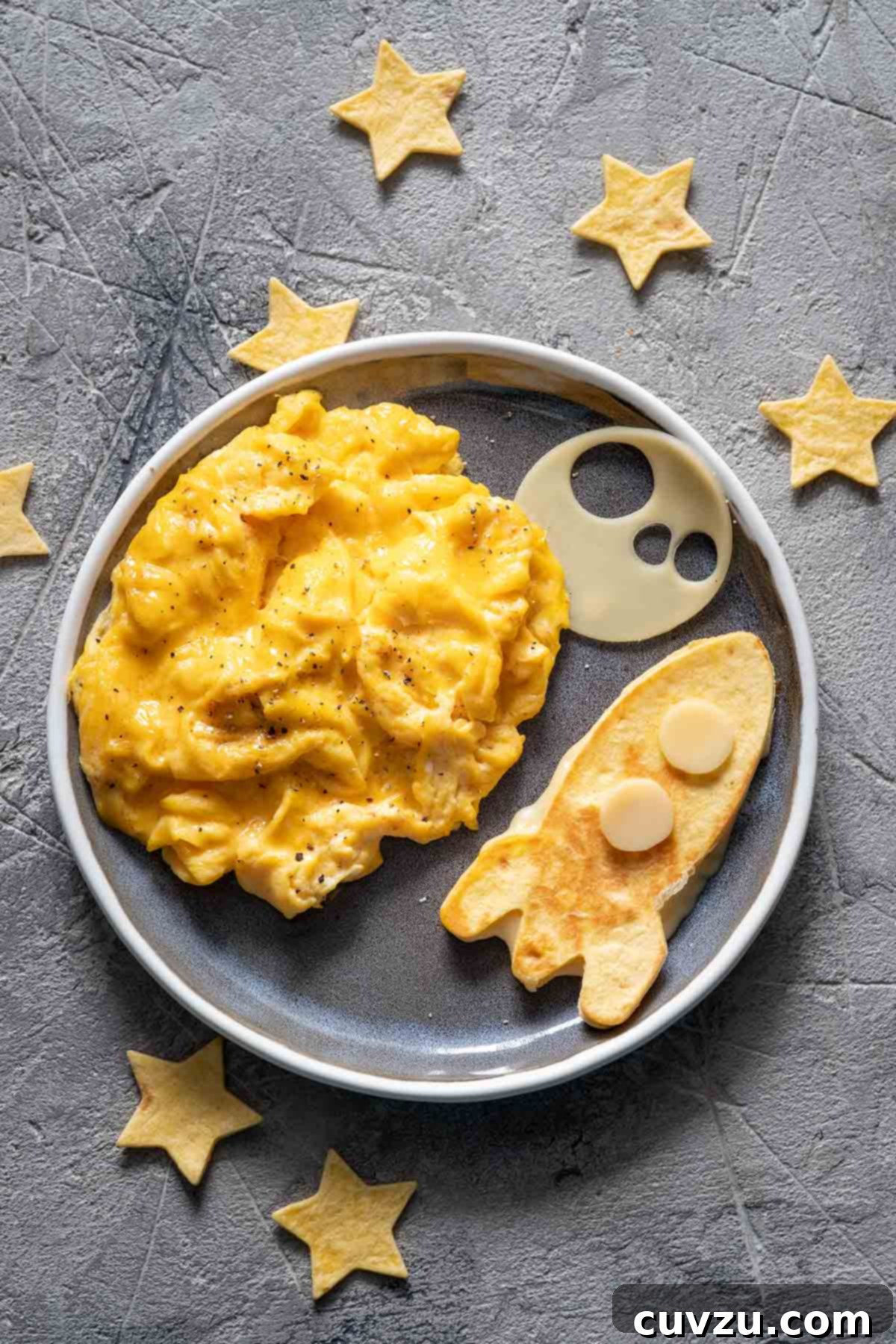
Step into the world of classic French cooking with Julia Child’s iconic scrambled eggs. Far from your everyday breakfast, these eggs are a testament to patience and technique, prepared the authentic French way over very low heat with continuous, gentle stirring. The result? Incredibly pillowy, creamy, and almost custardy eggs that melt in your mouth. This elegant yet simple dish is easy enough for aspiring young chefs to help prepare, and its irresistible texture and flavor will captivate everyone at the table.
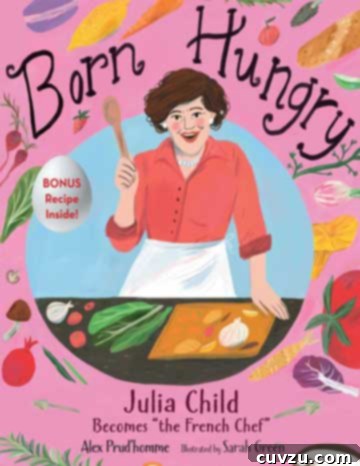
This delightful recipe finds its way into Born Hungry, a charming book by Alex Prud’homme that beautifully chronicles Julia Child’s fascinating journey from her early life to becoming the beloved chef and cookbook author we admire today. Adorned with captivating illustrations, Born Hungry is a treasure for both adults and children, making it an ideal gift for any young culinary enthusiast eager to explore the magic of the kitchen. The book proudly features this very scrambled eggs recipe, originally hailing from Julia’s own revered culinary masterpiece, Mastering the Art of French Cooking, Volume 1 (©1961 Knopf).
Julia Child’s influence extends far beyond these perfect scrambled eggs. Her groundbreaking work demystified French cuisine for American home cooks, making complex dishes approachable and enjoyable. Her philosophy emphasized quality ingredients, proper technique, and a joyous approach to cooking. This particular egg recipe perfectly encapsulates her ethos: simple ingredients transformed into something extraordinary through careful attention. If you’re inspired to explore more of her classic dishes, consider trying her Coq au Vin or her exquisite Steak au Poivre recipe, both iconic examples of her culinary genius.
The French Secret to Perfect Scrambled Eggs: FAQs
The core difference lies in the cooking method and desired texture. French-style scrambled eggs are renowned for their incredibly creamy, almost custardy consistency. This is achieved by cooking them slowly over very low heat with continuous, gentle stirring. The constant motion ensures the eggs never adhere to the pan long enough to dry out, resulting in small, soft curds. In contrast, American-style scrambled eggs are typically cooked at a higher heat with less frequent stirring, leading to firmer, larger curds and a generally drier texture. The French method prioritizes silkiness and richness, while the American method often focuses on speed and a more defined egg structure.
Julia Child’s French scrambled eggs are versatile and pair beautifully with a wide array of breakfast and brunch favorites. Classic choices include perfectly toasted artisanal bread, crispy bacon, savory breakfast sausage, or a vibrant bowl of fresh seasonal fruit. For a truly indulgent experience, consider serving them alongside fluffy buttermilk pancakes or delicate crêpes. A sprinkle of fresh herbs like chives or parsley adds a touch of color and freshness, enhancing the overall presentation and flavor. Don’t forget a rich cup of coffee or tea to complete the meal.
Julia Child’s Easy Scrambled Eggs for Kids
David Leite
Ingredients
- 8 large eggs or 7 large eggs plus 2 yolks
- 1/4 teaspoon salt
- Pinch of freshly ground black pepper
- 2 tablespoons (1 oz) softened butter
- 1 1/2 to 2 tablespoons additional softened butter or whipping cream, to enrich the eggs
- Fresh parsley sprigs, to garnish
Instructions
-
Crack the eggs into a large mixing bowl, season with the specified salt and pepper, and beat them thoroughly with a fork or wire whisk until the yolks and whites are fully blended, typically taking 20 to 30 seconds. Avoid over-beating to prevent too much air incorporation.
-
Generously smear the bottom and sides of a heavy-bottomed saucepan or skillet with the softened butter. Pour the well-beaten eggs into the buttered pan and place it over a moderately low heat. Begin stirring slowly and continuously using a rubber spatula or wooden spoon, ensuring you scrape across the entire bottom surface of the pan. Initially, it may seem as if nothing is happening for 2 to 5 minutes as the eggs gently warm. However, they will suddenly start to thicken and transform into a creamy, custardy consistency.
-
Once the eggs begin to thicken, stir them more rapidly, moving the pan on and off the heat as needed to control the temperature. Continue this process until the eggs have almost reached a soft, creamy, and slightly moist consistency, which should take approximately 3 to 5 minutes. Remove the pan from the heat promptly, as the residual heat will continue to cook and thicken the eggs slightly.
-
Immediately after achieving the desired creamy consistency, stir in the additional softened butter or whipping cream. This final enrichment step not only adds to the luxurious texture and flavor but also effectively stops the cooking process, preventing the eggs from overcooking. Taste and adjust seasoning as needed. Transfer the eggs onto a warm platter, garnish with fresh parsley sprigs for a touch of elegance, and serve them immediately to enjoy their exquisite warmth and creaminess.
Adapted From
Born Hungry
Buy On Amazon
Nutrition
Calories: 213 kcal
Carbohydrates: 1 g
Protein: 13 g
Fat: 17 g
Saturated Fat: 8 g
Monounsaturated Fat: 6 g
Trans Fat: 1 g
Cholesterol: 395 mg
Sodium: 339 mg
Fiber: 1 g
Sugar: 1 g
Nutrition information is automatically calculated, so should only be used as an approximation.
Tried this recipe?
Mention @leitesculinaria or tag #leitesculinaria!
The Universal Appeal: Why Julia Child’s Scrambled Eggs Are a Family Favorite
Beyond their gourmet appeal, these French scrambled eggs are surprisingly kid-friendly. The simple act of cracking eggs, whisking them, and stirring patiently can be a wonderful, engaging activity for children in the kitchen. The gentle, continuous stirring isn’t just a technique; it’s a mindful process that teaches patience and observation – valuable lessons for young cooks. The resulting creamy texture is often a hit with children who might be particular about the rubbery texture of overcooked eggs. The mild, buttery flavor is universally appealing, making this a dish that effortlessly brings smiles to faces of all ages. It transforms a humble breakfast staple into a cherished, shared culinary experience.
Recipe Testers’ Honest Reviews: What Our Cooks Had to Say
We challenged our recipe testers to try Julia Child’s method for scrambled eggs, and their feedback truly highlights the unique experience this recipe offers. From initial skepticism to profound appreciation, their insights underscore the transformative power of this simple yet elegant preparation.
Ilda Costa-Sarnicki
Initially, I almost overlooked this recipe, thinking it involved too much butter and fuss for just scrambled eggs. But I was wonderfully mistaken! These are far from ordinary; they are a festive, celebratory scramble. While my ideal scrambled eggs are usually fluffy, this rendition offered something different: moist, buttery, custardy, and exquisitely soft curds that are incredibly indulgent. My mouth waters just thinking about them!
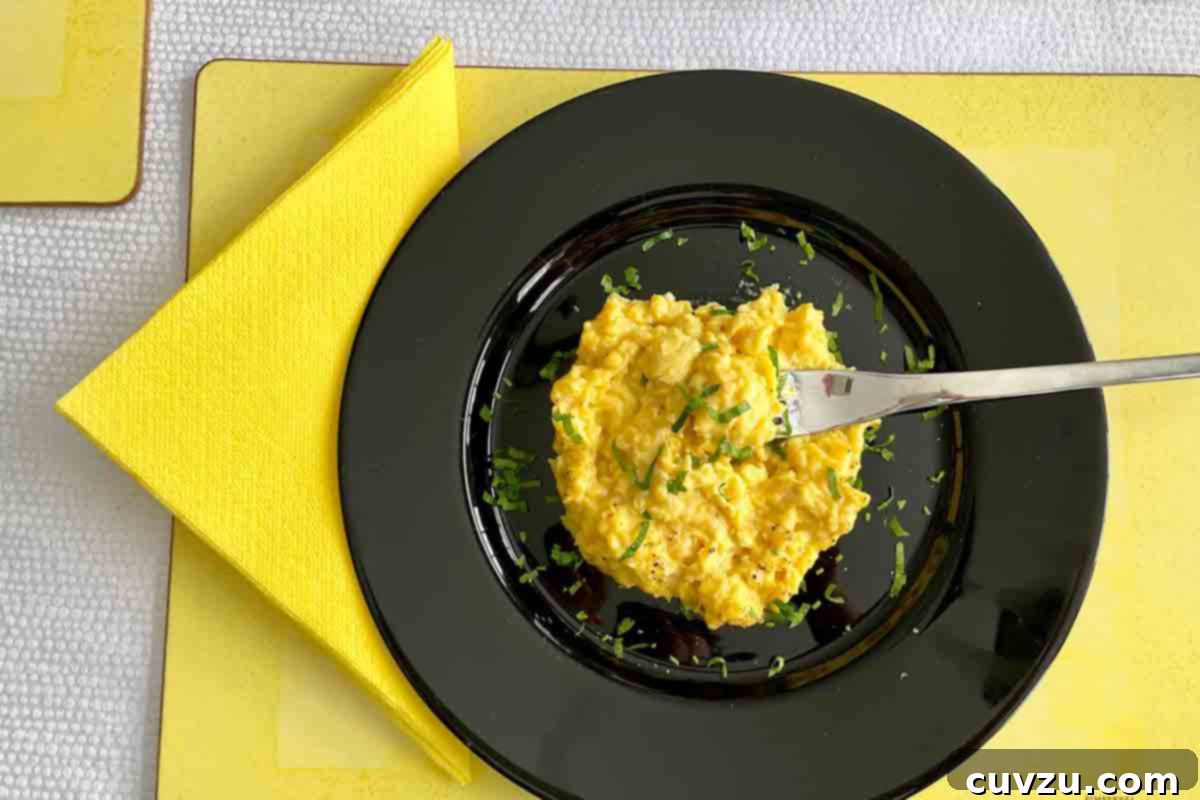
I served mine elegantly garnished with fresh chopped parsley and a pinch of flake salt on scallion pancakes. The flavor and texture were so silky and unctuous that simply a bowl of these eggs with a perfectly brewed coffee would be utterly satisfying. Pure bliss.
Sasha Pravdic
It definitely took some adjustment to realize these aren’t the typical scrambled eggs I’ve been accustomed to. However, I found myself thoroughly enjoying their supremely creamy texture—it was almost more akin to a delicate custard. I cooked the eggs for a total of 10 minutes over relatively low heat, stirring constantly, and they came out wonderfully soft with a lovely mouthfeel. I felt confident they weren’t overcooked. I opted for a non-stick skillet over stainless steel or earthenware, primarily to avoid any sticking.
Erin Bloys
Having made scrambled eggs for most of my life, I honestly thought there was nothing new to learn. But this is more than just a recipe; it’s a method that yields exceptional results. The eggs were soft, delicate, incredibly creamy, and distinctly custardy. The texture reminded me almost of rice pudding or tapioca. My 15-year-old daughter and I devoured all 8 eggs between us for dinner, served with toast points. The key takeaway? Much lower heat and a slower pace than my usual approach, and surprisingly, more eggs in a smaller pan. We absolutely loved them!
Melissa D.
It felt a little unusual to test a recipe as seemingly simple as scrambled eggs, but I decided to give it a try to see if I could discover anything new. I can’t really say I did. They turned out perfectly fine, but not exactly a “knock your socks off” recipe, mainly because of its simplicity. I believe the quality of the ingredients makes the biggest difference here. Nevertheless, it made for a lovely Saturday morning breakfast with bacon for us!
Jenny Howard
This simple breakfast recipe for scrambled eggs isn’t necessarily revolutionary, but it serves as an excellent primer on how to employ patience and low heat to achieve truly creamy, luscious curds. They are, indeed, as ‘custardy’ as promised. So often, we tend to rush the cooking of eggs over excessively high heat, so this recipe offers a refreshing shift in mindset and a powerful reminder: keep it low and slow for the absolute best results. I opted for cream for the final enrichment but found it made the eggs a bit too rich and neutral in flavor. Next time, I’m definitely going with butter!
Dineen Ehrenberg
These scrambled eggs tasted so wonderfully decadent that one would never guess the only ingredients involved are eggs and butter. I typically salt my eggs after cooking, but the small amount of salt added during cooking, combined with using salted butter, rendered any additional seasoning unnecessary. Adding the eggs to a cold pan was a novel technique for me, but it worked flawlessly. I didn’t realize I needed one, but I’ve now found my new go-to recipe for scrambled eggs!