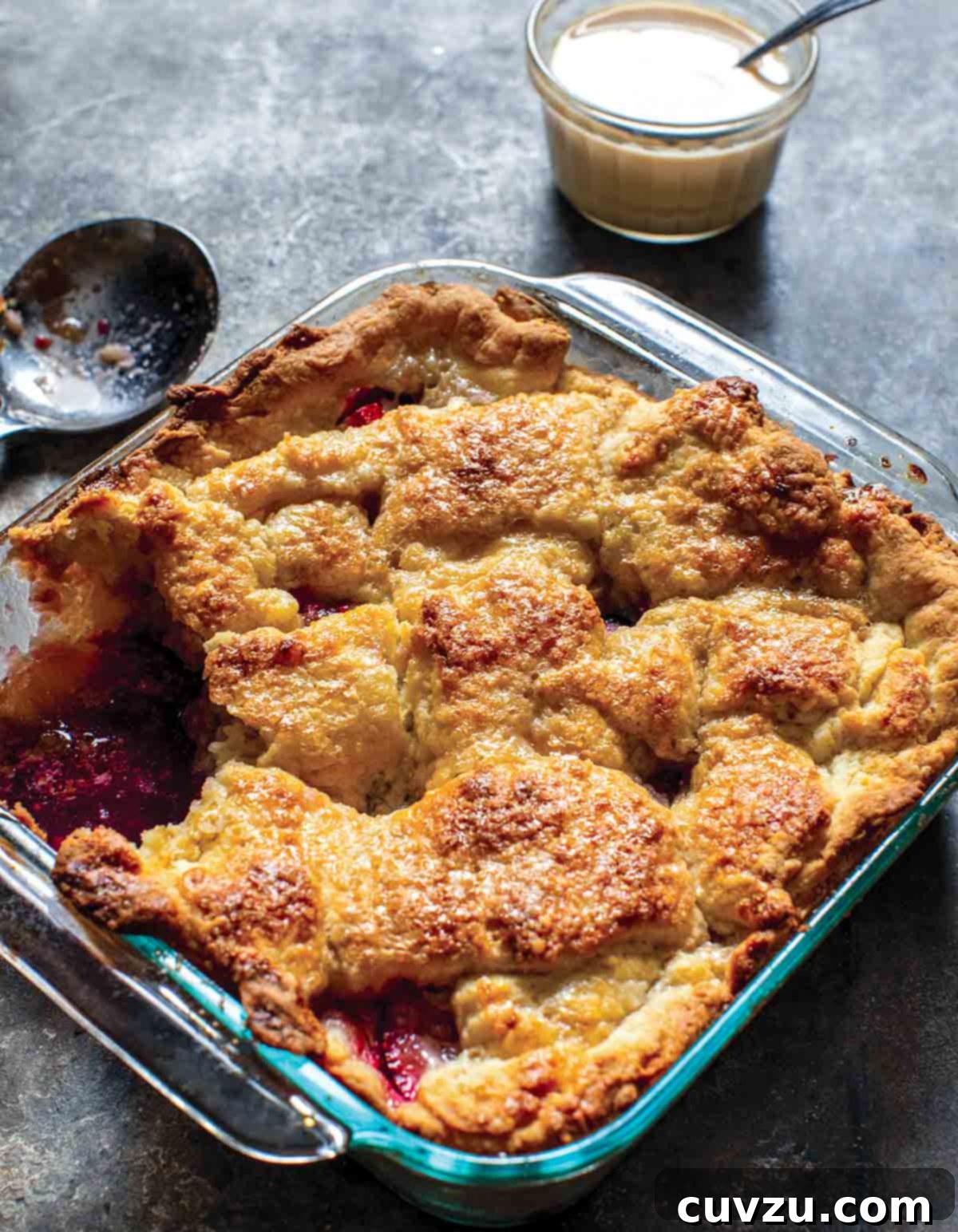
Peach Berry Sonker: A Timeless Southern Comfort Dessert
Step into the heartwarming world of Southern baking with our exquisite Peach Berry Sonker. This dessert is a true culinary masterpiece, elegantly bridging the gap between a classic fruit pie and a rustic cobbler. Featuring a light and tender biscuit-like pastry, generously filled with sweet peaches and vibrant berries, and crowned with a luscious milk dip, it offers a symphony of textures and flavors. Whether you’re a seasoned baker or new to the kitchen, this old-fashioned fruit dessert promises a comforting and unforgettable experience, perfect for family gatherings, special occasions, or simply a sweet everyday indulgence.
Unveiling the Sonker: North Carolina’s Unique Dessert Heritage
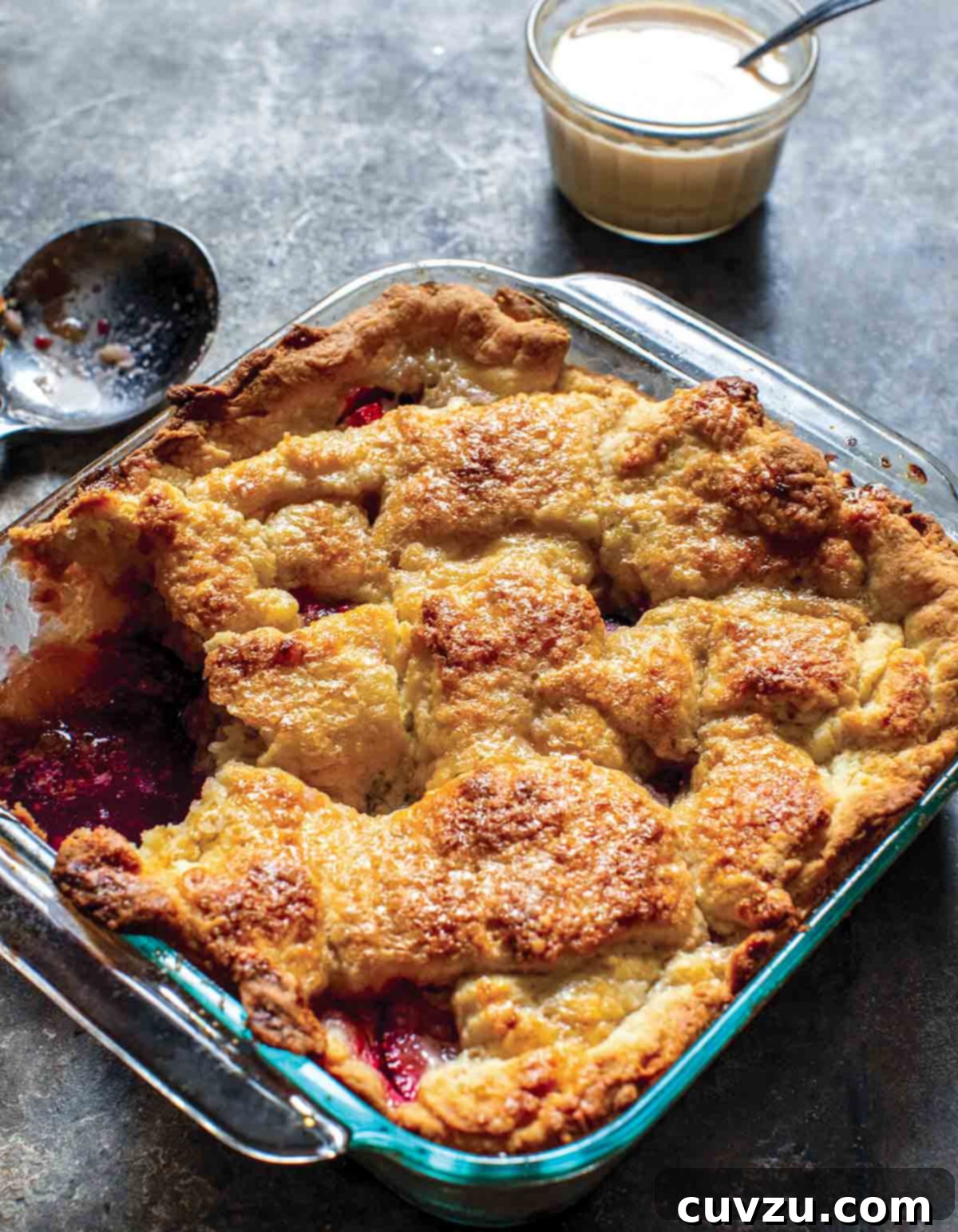
The sonker is far more than just a dessert; it’s a cherished regional specialty with deep roots in the western counties of North Carolina. This unique creation stands proudly alongside other beloved American fruit desserts like crisps, crumbles, and cobblers, yet possesses a character all its own. As food writer and baking expert Kate McDermott describes, a sonker distinguishes itself through its distinctive dough. Unlike the flaky, often butter-rich pastry of a traditional pie or the drop biscuit topping of a cobbler, the sonker’s dough is more akin to a soft biscuit. This versatile dough is carefully rolled out, then cut into strips and meticulously placed along the interior sides of a baking pan, creating a delightful perimeter.
The heart of the sonker lies in its filling: a generous and often wonderfully juicy medley of fresh fruits. Once the fruit is nestled within its doughy embrace, additional dough strips are artfully arranged over the top, forming a rustic, open lattice pattern. This allows the vibrant fruit to peek through, creating an appetizing visual appeal. But the true signature of a sonker, and what many consider its defining feature, is the accompanying “dip.” This sweet, creamy milk sauce is drizzled over the baked sonker, adding a layer of rich moisture and a comforting sweetness that perfectly complements the fruit and pastry. It transforms the dessert into an experience that is both simple and profoundly satisfying, embodying the spirit of Southern hospitality and ingenuity in the kitchen. It’s a dessert that invites discovery, celebrating local traditions and seasonal bounties in the most delicious way.
Peach Berry Sonker FAQs: Your Guide to Perfecting This Southern Delight
How do I select the very best peaches for this sonker?
Choosing peak-season peaches is paramount for a truly exceptional sonker. While we all aspire to find that perfectly sweet, incredibly juicy, and fragrant peach, it can sometimes feel like a quest. Here’s how to improve your chances: Look for peaches with a vibrant, deep yellow or golden-orange undertone; the red blush is merely a tan from sun exposure and doesn’t indicate ripeness. Gently press the peach near the stem end; it should yield slightly to your touch, indicating ripeness without being overly soft or bruised. Most importantly, trust your nose! A ripe peach will exude a beautiful, sweet aroma that hints at the deliciousness within. Avoid peaches that are too firm or have a greenish tint, as they are likely underripe and won’t offer the desired sweetness and juiciness. For even more detailed guidance on assessing peach ripeness, we recommend consulting resources like how to tell if a peach is perfectly ripe.
What is the proper and easiest way to cut a peach for baking?
Efficiently cutting a peach is simple with the right technique, minimizing mess and maximizing usable fruit. Begin by holding your peach with the stem facing upwards. With a sharp paring or small kitchen knife, carefully insert the blade at the stem end, slicing downwards until you feel the pit. Keep the blade in contact with the pit as you rotate the peach 360 degrees around, creating a complete incision. Once you’ve scored the peach all the way around, gently twist the two halves in opposite directions. They should separate cleanly, with the pit usually remaining in one half. You can then easily remove the pit with your fingers or the tip of your knife. For this sonker recipe, slice the pitted peach halves into uniform 3/4-inch (18-mm) thick pieces. This consistent thickness ensures that the peaches cook evenly and integrate beautifully into the berry filling, providing a tender bite in every spoonful.
Can I substitute other berries or fruits in this sonker recipe?
Absolutely! The sonker is wonderfully adaptable to a variety of fruits, making it a perfect vehicle for seasonal produce. While the combination of peaches and blackberries creates a classic and beloved flavor profile, feel empowered to experiment with your personal favorites or whatever fresh fruits are in season. Excellent substitutes or additions include raspberries, blueberries, nectarines, apricots, plums, or even cherries. You can use a single fruit or create your own custom blend for a unique taste experience. Just remember that different fruits possess varying levels of natural sweetness and tartness. For instance, tart cherries might require a little more sugar, while very sweet ripe apricots might need less. Always taste your chosen fruits beforehand to gauge their sweetness and adjust the amount of granulated sugar in the filling accordingly. This flexibility allows you to personalize your sonker and enjoy it with an array of delicious fruit combinations throughout the year.
Classic Peach Berry Sonker Recipe
Average Rating: 5 out of 5 stars based on 4 votes
A delightful hybrid, this peach berry sonker is reminiscent of both a comforting fruit pie and a deeply flavorful cobbler. Topped with a wonderfully tender pastry and generously finished with a sweet milk dip, it stands out as one of the finest old-fashioned desserts you’ll ever bake and enjoy. Its juicy, vibrant filling contrasts beautifully with the soft, rich crust, creating a harmonious and utterly satisfying treat for any dessert lover.
Recipe by David Leite
Dessert
American
10 to 12 servings
615 kcal
1 hour
1 hour 15 minutes
2 hours 15 minutes
Ingredients
For the Dough
- 2 sticks (8 oz) unsalted butter, cold and cut into tablespoon-size pieces, plus more for the baking dish
- 2 1/2 cups all-purpose flour
- 1 tablespoon aluminum-free baking powder
- 1/2 teaspoon kosher salt
- 1 cup whole milk
For the Filling
- 2 1/2 tablespoons all-purpose flour
- 1 1/4 cups plus 2 tablespoons granulated sugar
- 4 to 5 cups (about 2 lbs | 907 g) peaches, pitted and sliced 3/4-inch (18-mm) thick
- 3 cups (about 12 oz) fresh blackberries
- 1 tablespoon vanilla extract
- 5 tablespoons (2 1/2 oz) unsalted butter
- 1 large egg white plus 2 teaspoons water, lightly beaten with a fork
- 2 tablespoons sparkling sugar, demerara sugar, or turbinado sugar, for sprinkling
For the Milk Dip
- 2 1/2 teaspoons cornstarch
- 1/4 cup plus 2 tablespoons granulated sugar
- Pinch of salt
- 1 1/2 cups whole milk
- 1 teaspoon vanilla extract
Instructions
Part 1: Preparing the Sonker Dough
-
Begin by preheating your oven to 375°F (190°C). Then, generously butter the interior sides of an 11-by-11-inch (27-by-27-cm) or 9-by-13-inch (23-by-33-cm) baking dish. This ensures the dough strips do not stick and contributes to a beautiful, golden-brown crust.
-
In a medium mixing bowl, whisk together the all-purpose flour, aluminum-free baking powder, and kosher salt. Add the cold, tablespoon-sized pieces of unsalted butter. Using a pastry cutter, two knives, a mezzaluna, or even your fingertips, work the butter into the dry ingredients. Continue until the mixture resembles coarse crumbs with some larger pea-sized pieces of butter still visible. This specific texture is essential for creating a tender, flaky pastry.
-
Pour in the whole milk and mix gently with a fork or your hands until the dough just comes together and is tacky. Be careful not to overmix, as excessive handling can develop the gluten too much, resulting in a tough pastry.
-
Transfer half of the prepared dough to a well-floured work surface or cutting board. Gently pat the dough out slightly with your hands, then use a rolling pin to roll it evenly to a thickness of about 3/8 inch (1 cm). Once rolled, cut this dough into long strips, approximately 2 1/2-inches (6 cm) wide.
-
Carefully lift each dough strip and line the inner sides of your prepared baking pan, tucking it snugly around the edges. Repeat this process with the other strips until the entire perimeter of the pan is encircled with these wide dough strips. It’s perfectly acceptable if you need to piece shorter strips together; the rustic appearance is part of the sonker’s charm. Note that the bottom of the pan will remain doughless, allowing the fruit filling to shine.
Part 2: Assembling the Fruit Filling and Topping
-
In the base of your buttered baking dish, combine the 2 1/2 tablespoons of all-purpose flour with 1 1/4 cups of granulated sugar. Use your fingers or a fork to thoroughly mix these dry ingredients and spread them evenly across the bottom of the pan. This flour and sugar mixture will contribute to thickening the delicious fruit juices during baking.
☞ TESTER TIP: If your peaches and berries are exceptionally ripe and naturally sweet, or if you simply prefer a less sweet dessert, you may consider reducing the amount of granulated sugar in this step to about 3/4 cup.
-
In a separate medium bowl, gently combine the sliced peaches, fresh blackberries, and vanilla extract. Toss them carefully to ensure the vanilla is evenly distributed and to avoid bruising the delicate fruits. Once mixed, pour this vibrant fruit medley evenly over the flour and sugar base in the baking dish.
-
Evenly sprinkle an additional 2 tablespoons of granulated sugar over the top of the fruit filling. This extra layer of sugar will caramelize beautifully as the sonker bakes, adding depth of flavor and a glistening finish.
-
Break the 5 tablespoons of unsalted butter into small, uniform pieces. Distribute these butter pieces evenly over the top of the fruit filling. As the butter melts during baking, it will infuse the fruit with rich, creamy notes.
-
Roll out the remaining half of the dough to an approximate thickness of 3/8 inch (1 cm) and cut it into long 2 1/2-inch (6 cm) wide strips. Carefully arrange these strips over the top of the fruit filling to form a charming, open lattice pattern. An offset spatula can be particularly useful for gracefully transferring the rolled-out dough strips onto the fruit without stretching or tearing them.
-
In a small bowl, lightly beat the large egg white with 2 teaspoons of water using a fork. Gently brush this egg wash over the lattice dough strips. This will give the crust a beautiful shine and help achieve a golden-brown color. Finally, sprinkle with the remaining 2 tablespoons of sparkling sugar (demerara sugar or turbinado sugar also work beautifully) for an extra textural crunch and a glistening finish.
☞ TESTER TIP: If your baking dish seems precariously full after adding the fruit and lattice, it’s a good idea to place it on a foil-lined baking sheet before transferring it to the oven. This precautionary step will catch any potential fruit filling overflows during baking, simplifying cleanup.
-
Bake the sonker in your preheated oven for an initial 30 minutes. While the sonker is baking, use this time efficiently to prepare the traditional milk dip, which will be added later.
Part 3: Crafting the Milk Dip and Finishing the Bake
-
In a medium saucepan, combine the cornstarch, granulated sugar, and a pinch of salt. Whisk these dry ingredients together thoroughly over low heat to ensure there are no lumps. Gradually whisk in the whole milk until the mixture is smooth.
-
Increase the heat to medium-high and bring the mixture to a gentle boil, whisking constantly. Continue to cook for an additional 2 minutes while maintaining a steady whisk. The dip should visibly thicken to a consistency similar to rich heavy cream, coating the back of a spoon.
-
Remove the saucepan from the heat and stir in the vanilla extract. Allow the milk dip to cool slightly while the sonker continues its initial bake; it should still be warm when poured over the sonker.
-
After the sonker has baked for its initial 30 minutes, carefully remove it from the oven and place it on a heat-safe flat surface. Close the oven door to maintain the internal temperature. Gently pour approximately 1/2 cup of the warm milk dip evenly over the top of the partially baked sonker. This step is crucial for achieving the characteristic moistness and unique flavor profile of a traditional sonker.
-
Return the sonker to the oven and continue baking for approximately 30 minutes more, or until the fruit filling is visibly bubbling vigorously around the edges and through the lattice crust. The pastry crust should achieve a beautiful, deep golden-brown hue. Keep a close watch during this final stage; if the crust appears to be browning too quickly, loosely tent a piece of aluminum foil over the sonker to prevent over-browning while allowing the fruit to finish cooking through.
-
Once baked to perfection, remove the sonker from the oven and allow it to cool for 20 to 30 minutes. This essential resting period permits the fruit filling to set and prevents it from being overly runny when served, ensuring each scoop holds its shape beautifully.
-
Serve the peach berry sonker warm or at comfortable room temperature. For the absolute best flavor and texture, it is ideally enjoyed on the day it’s made. Be sure to pass any remaining milk dip on the side for guests to generously drizzle over their individual servings. Many find that doubling the milk dip recipe ensures there’s ample for everyone to enjoy! Any leftover milk dip can be stored in an airtight container in the refrigerator for a few days.
Recipe Notes & Seasonal Variations
Any Fruit Sonker: Adapting to the Seasons
The fruit filling for this sonker is wonderfully adaptable, making it a perfect recipe to utilize whatever seasonal produce is freshest and most abundant. While the combination of peaches and blackberries offers a classic and irresistible pairing, feel free to experiment with a single fruit or create your own custom medley. Consider ripe summer peaches, a vibrant mix of blueberries, raspberries, or even tart cherries. Kate McDermott, affectionately known as The Pie Lady and the author who inspired this recipe, once crafted a truly unique sonker using an adventurous blend of green gooseberries, white currants, red currants, peaches, and a handful of tart cherries, showcasing the incredible versatility of this dessert. The key is to aim for approximately 7 to 8 cups (about 2 quarts or 1.8 liters) of fruit in total to ensure a generous and satisfying filling that holds its own against the tender pastry.
Serving Suggestions Beyond the Classic Milk Dip
While the homemade milk dip is a traditional and highly recommended accompaniment, your sonker can be served with other delightful toppings. A generous scoop of premium vanilla bean ice cream melting into the warm fruit is always a crowd-pleaser. Alternatively, a dollop of freshly whipped cream, lightly sweetened and flavored with a hint of vanilla, offers a lighter contrast. For a touch of elegant simplicity, a dusting of powdered sugar can suffice, especially if you prefer a less sweet topping or are short on time. However, to truly experience the authentic essence of a sonker, we strongly encourage trying it with the unique, creamy milk dip at least once!

Adapted From
This exquisite Peach Berry Sonker recipe is adapted from Pie Camp, a celebrated cookbook by the talented Kate McDermott.
Buy On Amazon
Nutrition Information (Approximate Per Serving)
Calories: 615 kcal
Carbohydrates: 89 g
Protein: 7 g
Fat: 27 g
Saturated Fat: 16 g
Monounsaturated Fat: 7 g
Trans Fat: 1 g
Cholesterol: 71 mg
Sodium: 257 mg
Fiber: 4 g
Sugar: 60 g
Nutrition information is automatically calculated and should be used only as an approximation. Individual results may vary.
Tried this recipe? Share your culinary creation!
Mention @leitesculinaria or tag #leitesculinaria on Instagram! We love seeing your delicious results.
Recipe Testers’ Insights: Real-World Experiences with Peach Berry Sonker
Our dedicated team of recipe testers enthusiastically took on the task of baking this Peach Berry Sonker, providing invaluable feedback that enriches our understanding of this unique Southern dessert. Their collective experiences highlight the recipe’s distinctive qualities, ease of preparation, and delicious appeal.
Chiyo Ueyama’s Take: Rustic Charm and Ingenious Dough Management
Chiyo Ueyama described the sonker as a curious yet familiar dessert, noting its juicy fruit filling and buttery pastry crust. She affectionately characterized the milk dip as akin to “melted vanilla ice cream.” Chiyo particularly appreciated the recipe’s simplicity, especially the absence of a bottom crust. She efficiently rolled out the dough halves into ovals and cut them into four wide strips, using longer pieces for the pan’s sides and the lattice’s central ‘X’. Embracing a rustic style, she found no need for meticulous trimming, confirming that the sonker still achieved a beautiful appearance. Chiyo also observed that the crust remained delightfully non-soggy, even after cooling. A valuable tip from her was to consider reducing or omitting the additional sugar if using very ripe, sweet fruit. She noted that covering the top crust with foil was necessary after the milk dip was added to prevent over-browning, a practical consideration for other bakers.
Elizabeth and Lena Alvarez: A Delicious Newcomer to Summer Dessert Traditions
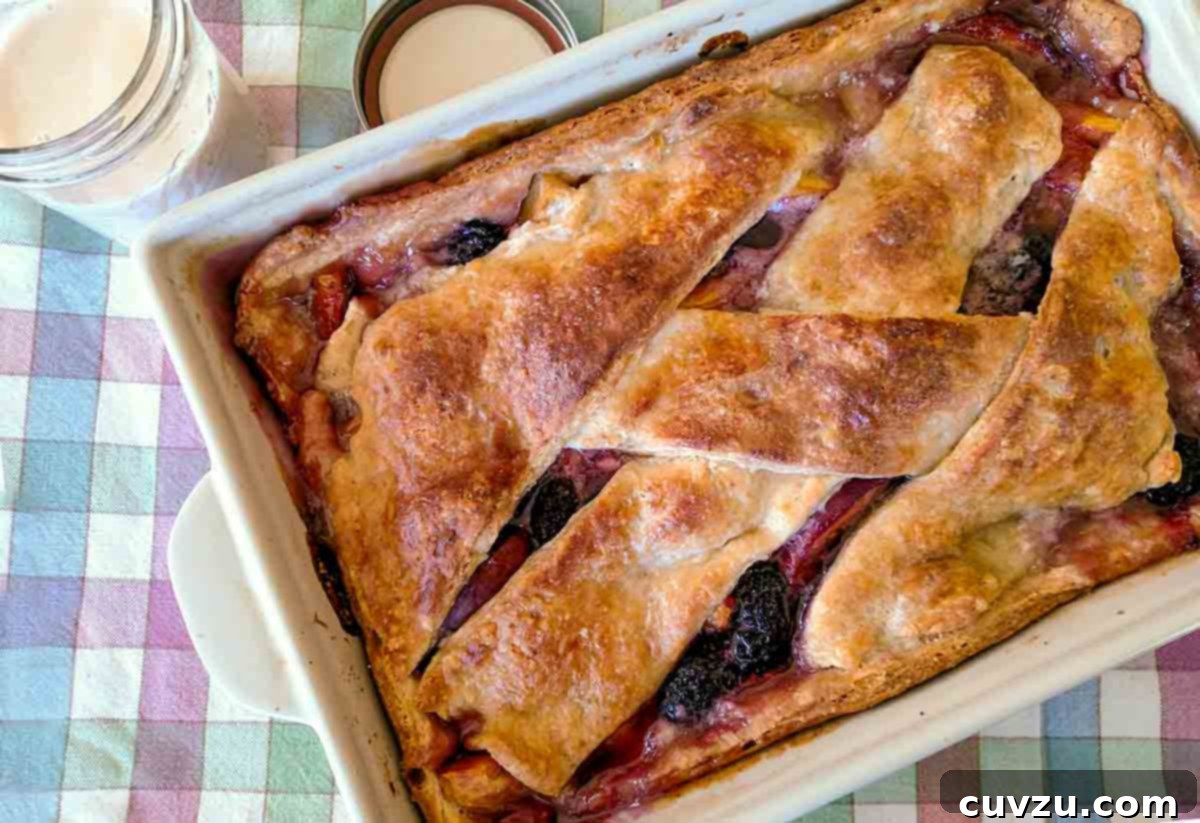
Elizabeth and Lena Alvarez enthusiastically praised the sonker as a “terrific recipe,” noting its beauty, delightful presentation, and delicious taste. As fans of various baked summer fruit desserts, they wholeheartedly welcomed the sonker into their culinary repertoire, vowing to make it again. They found the biscuit dough easy to prepare, with half the recipe perfectly lining the pan edges. Using peaches and blackberries, their lattice pattern was slightly less covering than the sample photo, yet the finished dessert was so visually appealing that it remained a highlight. They opted for turbinado sugar on the crust for added texture. The milk dip, a novel element for them, yielded a sweet, heavy cream-like consistency. They baked their sonker for precisely 60 minutes without needing foil. Recognizing the natural sweetness of their ripe fruit, they suggested using less sugar and potentially adding lemon juice or zest for future batches. While intrigued by the dip, they considered if it was essential for fruit thickening and suggested unsweetened heavy cream as an alternative topping. They also noted the sonker was best on Day 1, with the biscuit drying slightly by Day 2, yet concluded it’s a crowd-pleasing dessert serving 12 to 15.
Irene Seales: A Deep Dive into Pastry and Regional Flavors
Irene Seales eloquently connected the sonker to the anticipation of summer peaches, highlighting how baking fruit, even from a grocery store, evokes nostalgic flavors. She particularly enjoyed the peach and blackberry combination, which yielded a “gorgeous rhubarb color” of comfort. Irene, new to sonkers but quickly enamored, discovered its regional nature firsthand when friends reacted with curiosity to the milk dip. She lauded the recipe’s quick pastry, finding it more satisfying than a batter. She began with a pastry cutter, then finished incorporating butter with her fingers for a moist, shaggy dough. Adding an extra 1/4 cup of flour, she found it rolled out easily with minimal sticking. She also found her lattice cutting roller made the topping simple and visually appealing, using a flexible mat for easy transfer.
The milk dip, which her English spouse likened to a “simple custard (without egg),” was a key element. Irene noted its application mid-baking enhanced caramelization and the lightness of the “milk-doped pastry,” which puffed beautifully due to the baking powder. These details, she explained, truly make the sonker “sing,” setting it apart from standard pastries. It’s a dish suitable for special occasions but tempting enough for abundant fruit. Irene enjoyed it for dessert with the dip and even with yogurt for breakfast. She also suggested sweetening the fruit filling less, especially with prime seasonal peaches. Praising the unsweetened and easy-to-work-with pastry, Irene concluded that sonkers have become a cherished alternative to crumbles or cobblers, even noting a strawberry sonker’s recent inclusion in a popular cookbook, albeit with a different approach.
Daniela Trapani: “Hilarious” Name, Incredible Dough, and Practical Tips
Daniela Trapani revealed that the sonker’s “hilarious name” alone captivated her testers, sparking immediate excitement. Her peach and raspberry version was a resounding success, universally loved, even by her 2-year-old niece. Daniela particularly lauded the dough topping, describing it as “incredible” and a reason to make the recipe again. While acknowledging the dessert’s sweetness, especially with the milk dip, she noted no complaints, suggesting a reduction in fruit sugar for those who prefer less sweetness. Daniela advised that while resembling a cobbler, the sonker is more time-consuming to assemble, though less so than a full lattice pie. Given the effort, she recommended using a large pie dish for a more impressive presentation than a standard rectangular pan and suggested placing a pan underneath during baking to catch any potential overflows.
She also experimented with the initial flour and sugar mixture at the pan’s bottom, expecting a “miracle crust,” but ultimately found no significant advantage over simply tossing it with the fruit. To address her observation of a “soupy” sauce, she suggested adding a teaspoon of cornstarch directly to the fruit for better thickening. Daniela’s insights offer practical enhancements, ensuring a beautifully set and delicious sonker every time.