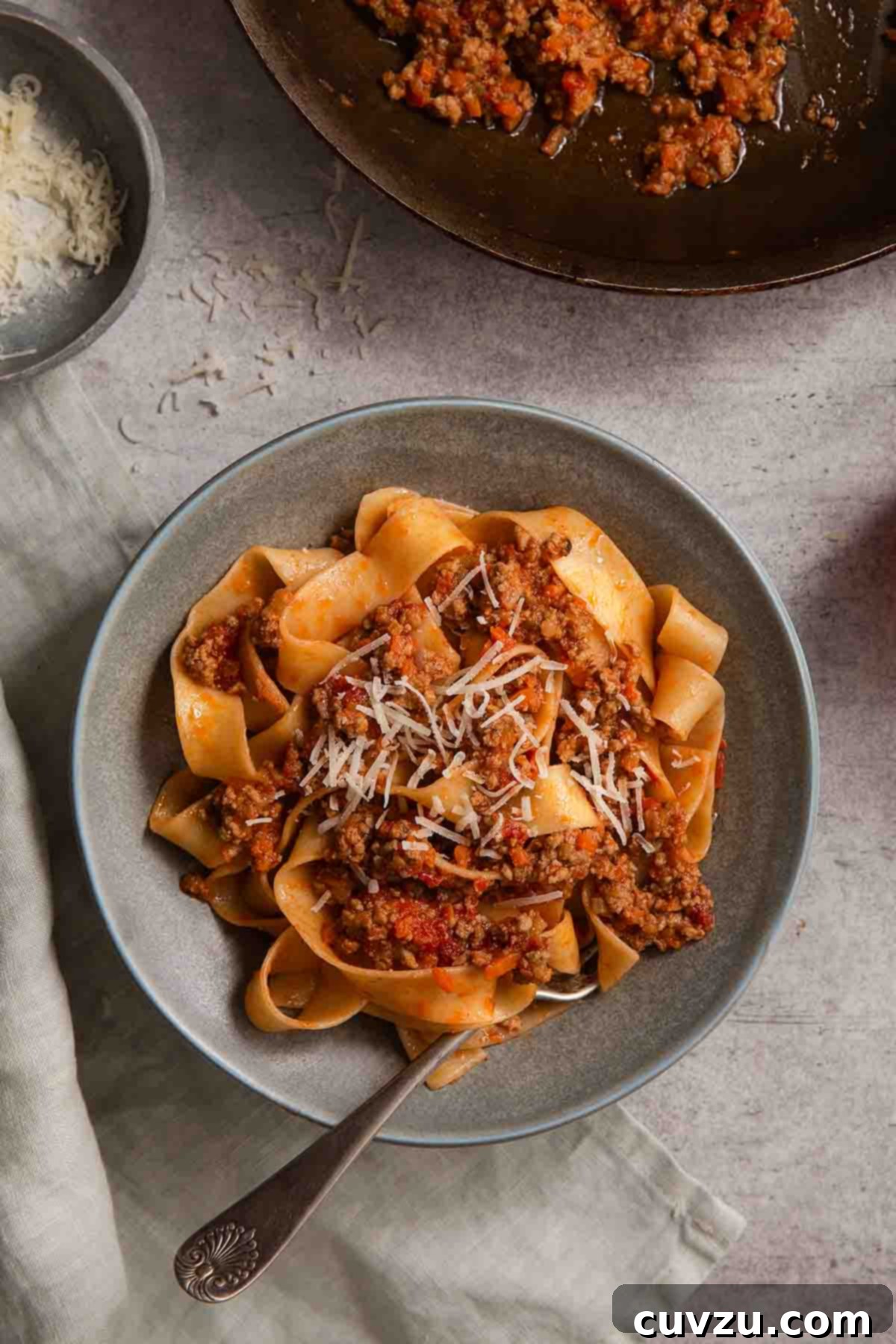
Imagine a sauce so profoundly flavorful and exquisitely rich it instantly transports you to the culinary heart of Bologna. This is the enduring legacy of Marcella Hazan’s iconic Bolognese sauce—a foundational masterpiece of Italian cooking, championed by the woman credited with introducing truly authentic regional Italian cuisine to American kitchens. Through her unwavering dedication, simple, quality ingredients, and the gift of patience, she crafted a ragù that is nothing short of extraordinary, redefining what home cooks understood about Italian food.
TL;DR (Quick-Answer Box)
- What it is: A deeply rich and authentic Bolognese sauce, perfected by Marcella Hazan, featuring a meticulous blend of meats slowly simmered with full-fat milk, dry wine, and a select amount of San Marzano tomatoes, yielding unparalleled depth and tenderness.
- Why you’ll love it: This slow-simmered ragù offers an intensely satisfying flavor profile, luxurious texture, and melt-in-your-mouth tenderness. It’s an elegant choice for special occasions yet comforting enough for any weeknight dinner.
- How to make it: Begin by gently sautéing aromatic vegetables (soffritto), then brown the ground meats. The crucial next step involves simmering the mixture in milk until fully evaporated, followed by wine, and finally, the tomatoes. The sauce then cooks gently for several hours, transforming into a velvety, complex masterpiece.
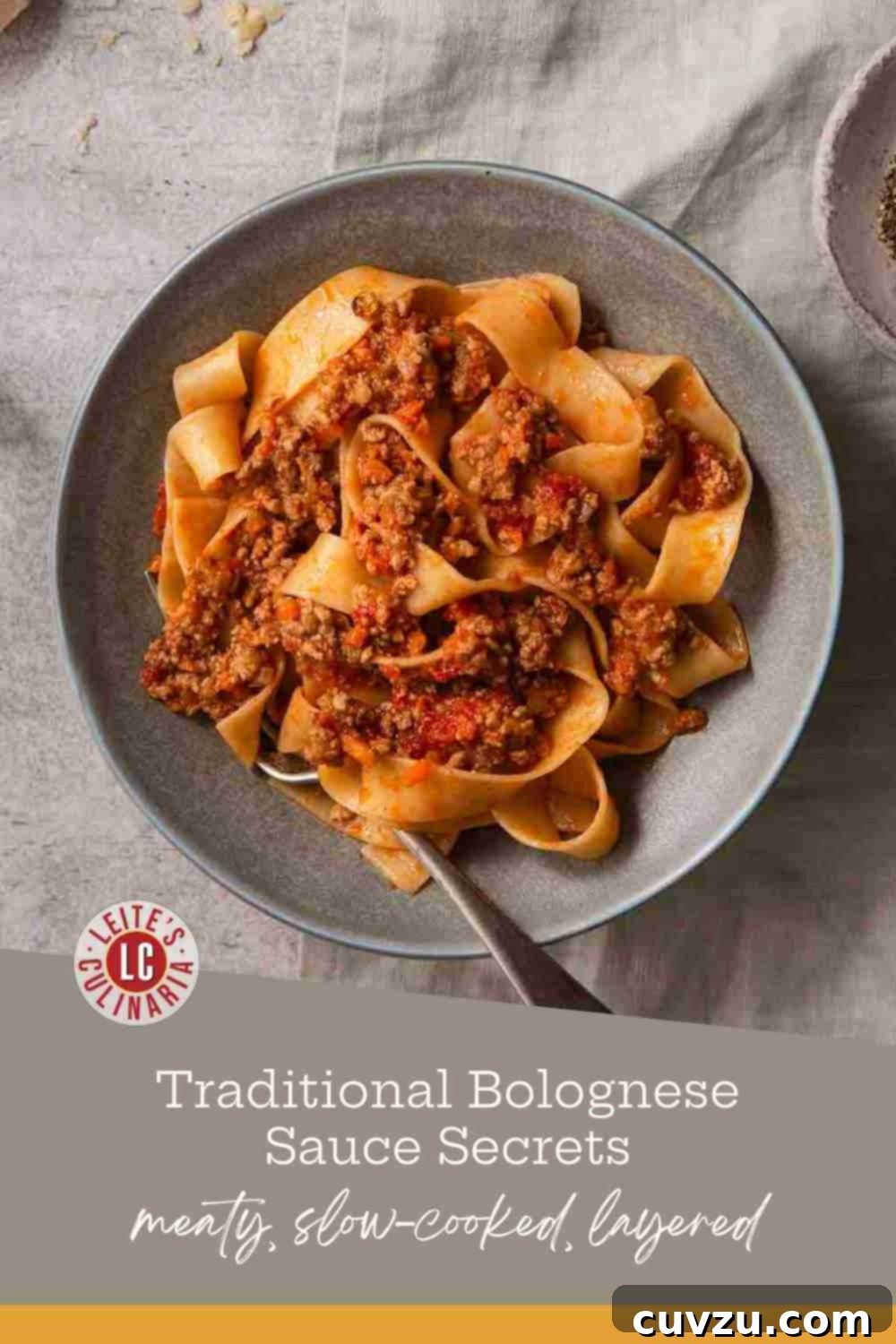
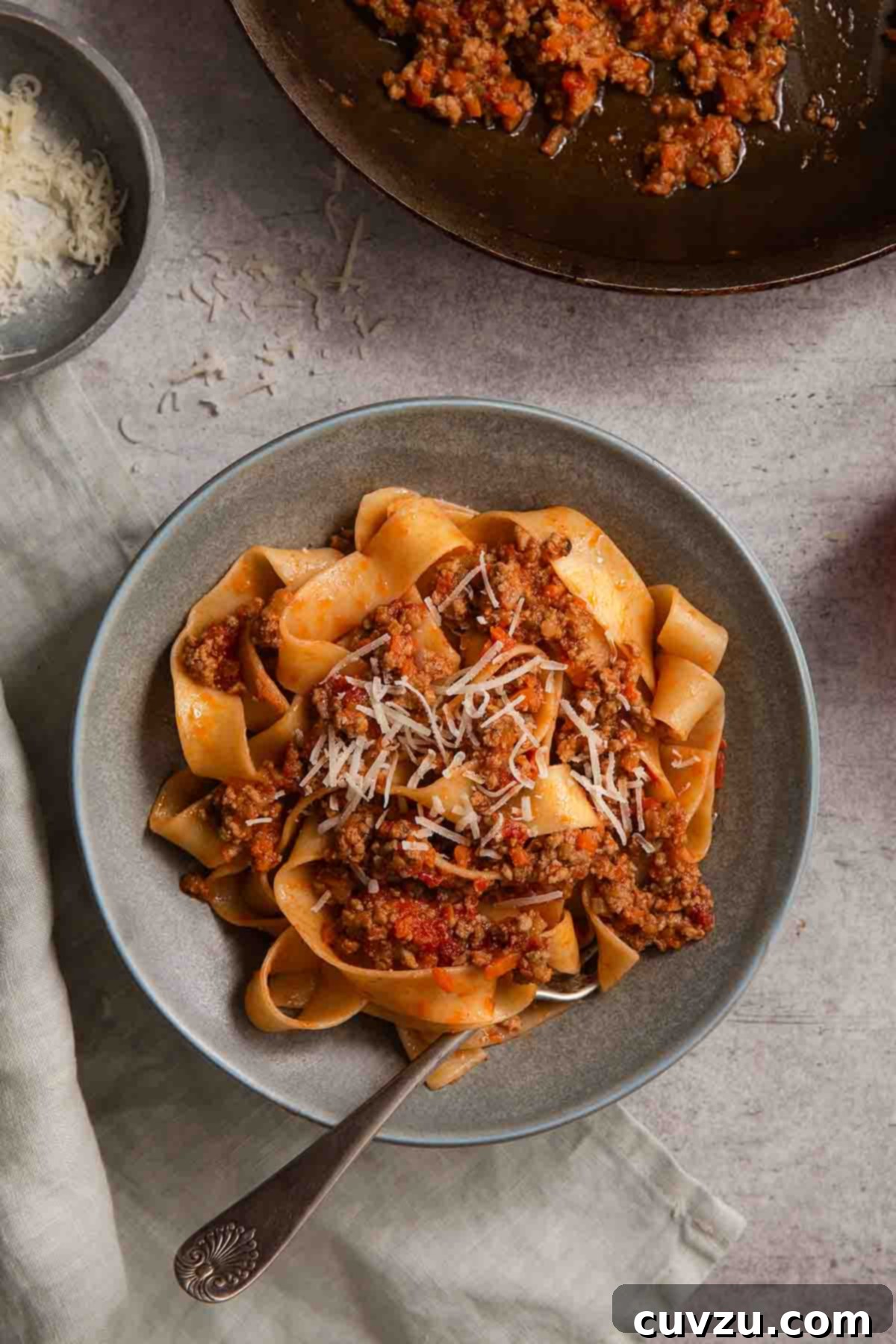
Marcella Hazan’s Bolognese sauce is, without exaggeration, exceptionally lush, deeply meaty, and characterized by a delicate acidity stemming from the notably modest amount of tomato used—a stark contrast to many other sauces claiming the name. It consciously omits aromatic herbs typically found in Americanized Italian dishes, instead deriving its vibrant character, its brio, from the meticulously prepared soffritto—a trinity of gently sautéed onions, carrots, and celery—and the extended, slow simmering of the rich meat blend. This simplicity allows the inherent quality of each ingredient to shine, creating a harmony that defines authentic Emilian cuisine.
Marcella Hazan had already cultivated a devoted following as a revered cooking teacher in New York City throughout the 1970s. However, it was the publication of her seminal work, The Classic Italian Cookbook, in 1973 that truly catapulted her into national recognition, solidifying her status as a culinary icon. Much of this widespread acclaim can be attributed, in large part, to the sheer brilliance and accessibility of this very Bolognese recipe, which taught generations of Americans how to cook Italian food with integrity and passion.
This particular rendition of Marcella’s Bolognese has been a cherished staple in our household for well over three decades. During that time, I confess to having ventured slightly from her original formula, making a few deliberate tweaks. I began incorporating both veal and pork alongside the traditional beef, finding that this trifecta of meats imparts a richer, more nuanced, and wonderfully complex flavor profile. Furthermore, I’ve often doubled the recipe, primarily because, quite simply, there were never any leftovers to freeze! But rest assured, dear cook, these modifications earned the esteemed seal of approval from La Regina (The Queen) herself, Marcella Hazan, who once remarked that veal and sometimes pork are indeed traditionally added to enrich this magnificent dish. Her endorsement validated these slight departures, ensuring the spirit of authenticity remains intact.
Yes, crafting this sauce undeniably requires a considerable investment of time, yet it’s largely hands-off. For the vast majority of its cooking duration, the Bolognese gently simmers, virtually unattended, on a back burner. Your primary task will be to occasionally make leisurely figure-eights with a wooden spoon, ensuring the flavors meld perfectly and the sauce develops its signature velvety consistency.
Featured Review
Nice rendition!!! I do 3/4 beef and 1/4 pork, but almost everything else is the same. So I made it the other day, but had some beef chuck roast. Instead of grinding it, I basically browned it and then cooked it in beef stock for a few hours (it was select grade). Then, using my Chinese cleavers, I chopped it into tiny pieces and proceeded with the recipe.
I like the texture a bit better than the ground version because it was “select”, it took the 3 hrs in the sauce to become soft and beautiful. I did use ground pork, but next time I will try to find the neck meat from both animals.
BTW, thank you for setting it straight that the fat needs to stay. As a pro chef, we know that FAT IS FLAVOR.
Philip Baldwin

Why This Marcella Hazan Bolognese Recipe Works So Exceptionally Well
This particular Bolognese recipe achieves its legendary status because it meticulously respects both culinary science and deep-rooted Italian tradition. The often-questioned step of simmering the meat in milk isn’t merely an old-school technique—it is a brilliant method that significantly enhances the tenderness of the meat by gently breaking down its proteins. The mild lactic acid and calcium present in whole milk work synergistically to activate the meat’s natural enzymes, effectively softening its texture without rendering it mushy. Furthermore, the extended, low-and-slow cooking process is crucial for dissolving the tough connective tissues within the meat, while the milk’s inherent fat and proteins contribute invaluable moisture and profound richness. These elements collectively impart the ragù with its signature, incredibly velvety mouthfeel, a hallmark of an authentic Bolognese.
The use of high-quality San Marzano tomatoes, with their naturally lower acidity and dense, meaty flesh, is paramount. They break down beautifully over the long cooking period, lending a perfectly balanced sweetness and acidity to the finished sauce, rather than overpowering it with harsh tomato flavors. Finally, the strategic addition of that last knob of butter right at the end of cooking isn’t just for flavor; it cleverly works to enrich and emulsify the sauce, binding all the magnificent elements together into a harmonious whole. What truly makes this process enjoyable is that about the only concentration not actively engaged here is yours; this is largely a set-it-and-forget-it sauce, rewarding your patience with unparalleled results.
Essential Notes on Ingredients for Authentic Bolognese
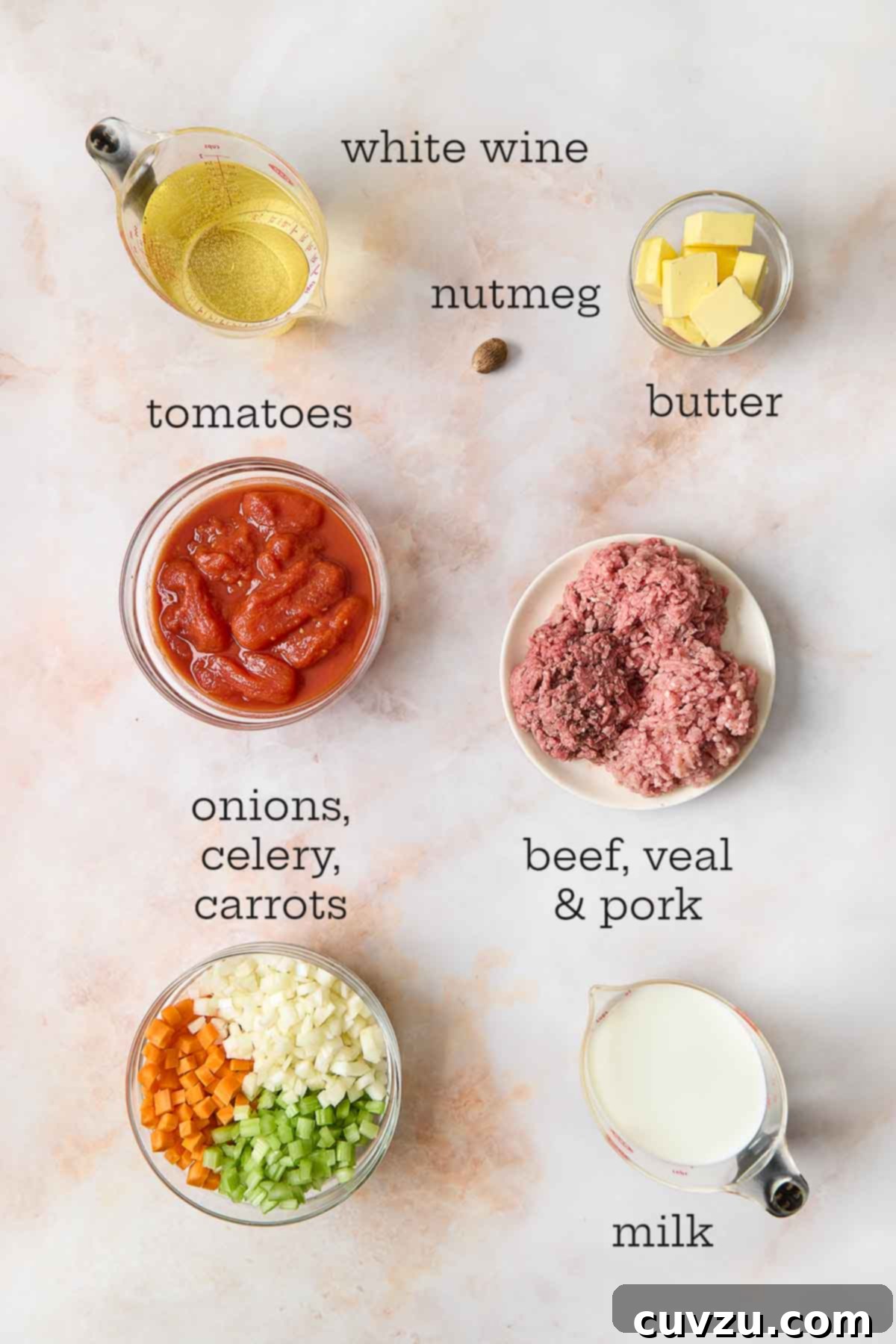
- Ground Chuck—While Marcella Hazan’s original recipe primarily called for ground beef, particularly from the neck portion of the chuck for its optimal fat content, many refined versions, including my adaptation, benefit from a combination of meats. You can certainly use all beef, but a blend of veal and beef, or even beef, veal, and pork, creates a richer, more complex flavor profile. The fat is crucial here; it renders slowly during the lengthy simmering, infusing the sauce with richness and naturally preventing the meat from drying out. If you’re able, ask your butcher for the neck portion of the chuck, which might require a special order, for the most desirable texture and flavor.
- Whole Milk—This is a non-negotiable ingredient and a cornerstone of authentic Bolognese. The enzymes in whole milk play a vital role in softening the meat proteins, resulting in an incredibly tender ragù. It’s imperative not to be tempted by low-fat or skim milk; the natural fat content in whole milk is essential for adding a luxurious, creamy layer of richness to the sauce and contributing to its signature velvety texture.
- San Marzano Tomatoes—The choice of tomatoes is critical, and San Marzano tomatoes are unequivocally the gold standard for Bolognese. Their naturally lower acidity and dense, meaty flesh make them ideally suited for long-simmering sauces. They break down beautifully over hours of cooking without imparting excess water or an overly tart flavor. I personally prefer using whole canned San Marzano tomatoes that I squeeze by hand directly into the pot. This small effort adds a delightful rustic texture that enhances the overall experience.
- Dry White Wine—Selecting the right wine is important for the flavor balance. Stick with a dry white wine such as a crisp Sauvignon Blanc or a light-bodied Pinot Grigio. These wines offer the necessary acidity and aromatic notes without overwhelming the delicate flavors of the meat and milk. Absolutely avoid any sweet wines, as their sugar content will significantly alter and imbalance the traditional taste of the sauce.
- Parmesan Cheese—When it comes to Parmesan, there is no substitute for authenticity. Always use genuine, imported Parmigiano-Reggiano. Its sharp, nutty, and deeply savory flavor profile is unmatched and makes a world of difference to the finished dish, both stirred into the sauce and grated generously at the table. Trust me on this—it’s an investment that truly elevates the entire meal.
Time-Saving Shortcuts & Flavorful Variations for Your Bolognese
While Marcella Hazan’s Bolognese recipe is a testament to tradition, understanding a few intelligent shortcuts and delightful variations can make it more accessible or allow for personalized twists. Here’s how you can adapt this classic without compromising its soul.
Tomato Type
The recipe explicitly calls for authentic San Marzano tomatoes due to their ideal balance of sweetness and acidity. If these specific imported tomatoes are unavailable, prioritize using the best-quality canned whole peeled tomatoes you can find. Look for brands that specify “vine-ripened” or “D.O.P.” for superior flavor. A crucial tip: avoid pre-diced or crushed tomatoes whenever possible. These often contain calcium chloride, an additive used to help them maintain their shape. While useful in other dishes, this additive prevents them from breaking down properly into the smooth, velvety sauce essential for Bolognese.
Meat Mix
Marcella’s original recipe traditionally features ground beef, sometimes paired with veal. My adaptation incorporates beef, veal, and pork for a richer depth. However, don’t feel obligated to use all three or even two meats. You can confidently prepare an exceptional Bolognese using solely ground beef. If you do, opt for ground chuck with a decent fat content (80/20) to ensure the sauce remains moist and flavorful during its long simmer. Alternatively, a combination of beef and pork is also excellent, offering a good balance of flavor and richness.
Wine Swap
The classic recipe recommends a dry white wine for its subtle acidity and brightness. However, a light-bodied dry red wine, such as a Sangiovese (which is traditional in some regions of Emilia-Romagna) or even a lighter Pinot Noir, can be an excellent substitution. Using red wine will yield a slightly darker, more robust, and profoundly richer sauce. This variation is common in different Bolognese styles and offers a delicious departure for those who prefer a deeper, more savory profile. Just ensure it’s dry to avoid unwanted sweetness.
Visual Step-by-Step Guide: Crafting Your Bolognese Sauce
Follow these meticulously detailed steps to create a Marcella Hazan-inspired Bolognese that will impress with its authentic flavors and luxurious texture.
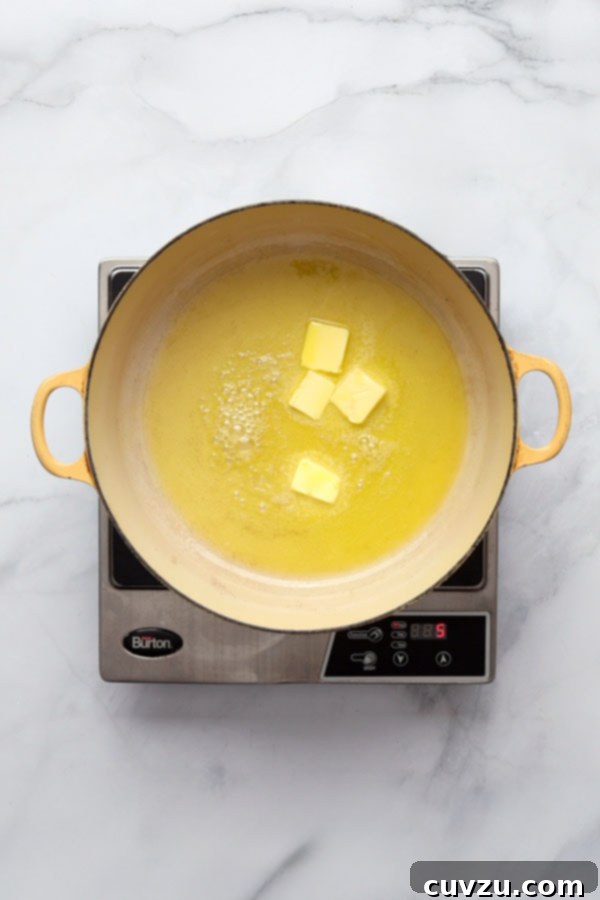
- Heat the oil and 6 tablespoons of the butter in a large, heavy-bottom Dutch oven over medium heat until the butter is completely melted and the foaming subsides. This foundation is key for the soffritto.
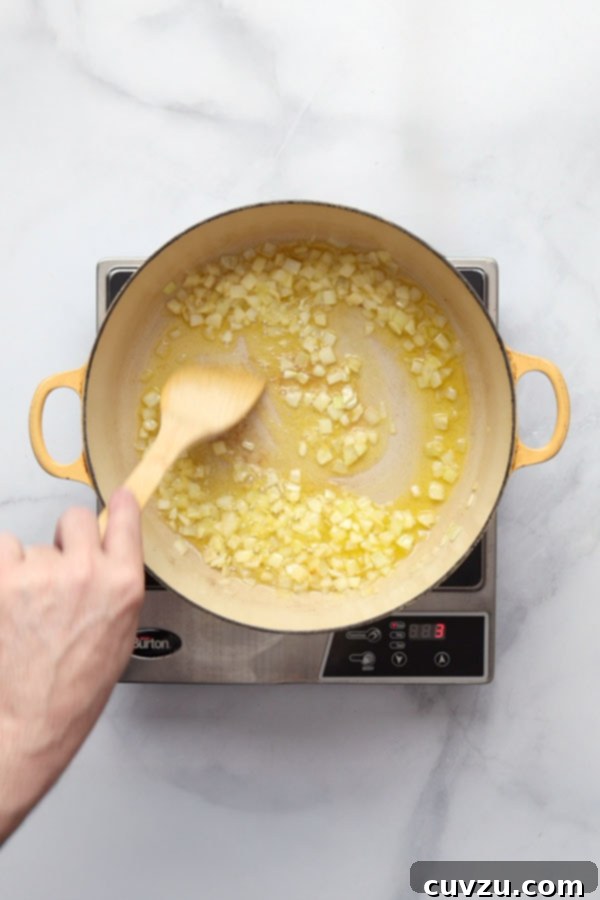
- Add the finely chopped onion to the pot and gently sauté, stirring frequently, until it becomes soft and translucent, typically around 5 minutes. Do not allow it to brown; sweetness is the goal here.
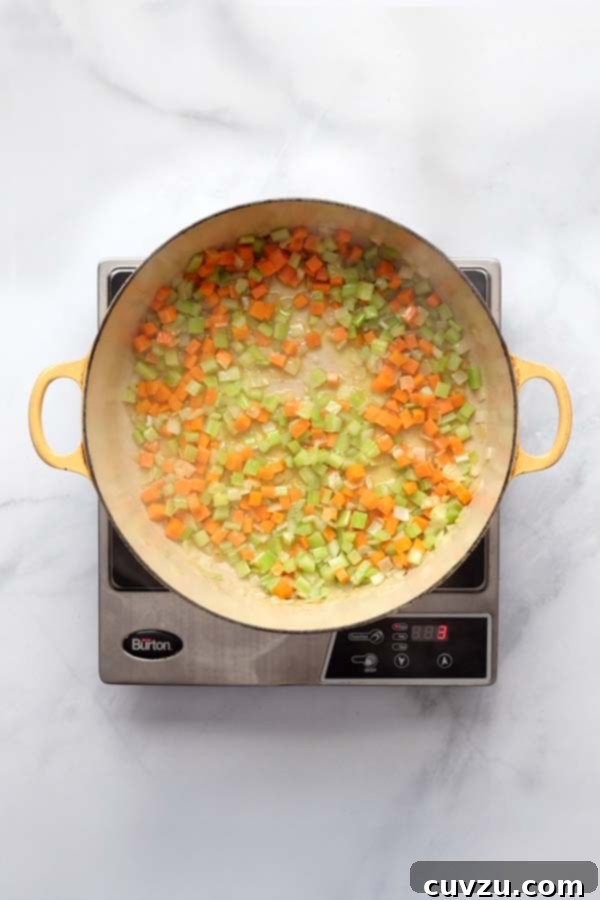
- Stir in the chopped celery and carrot to complete your soffritto. Cook for an additional 2 minutes, ensuring all vegetables are coated and softening without taking on any color.
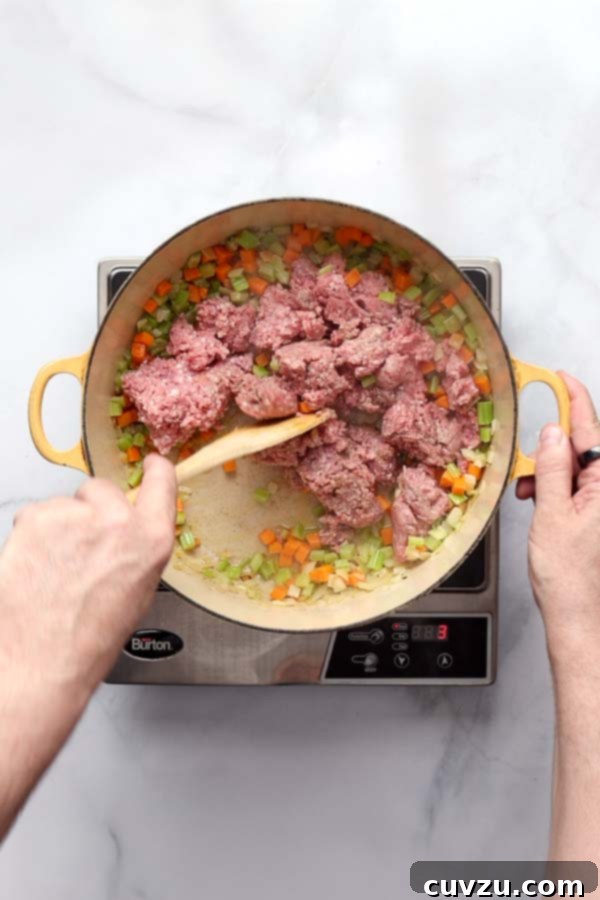
- Add the ground meats and season generously with kosher salt and freshly ground black pepper. Break up the meat with a wooden spoon and cook, stirring occasionally, until it has just lost its raw-red color and is lightly browned. Avoid over-browning.
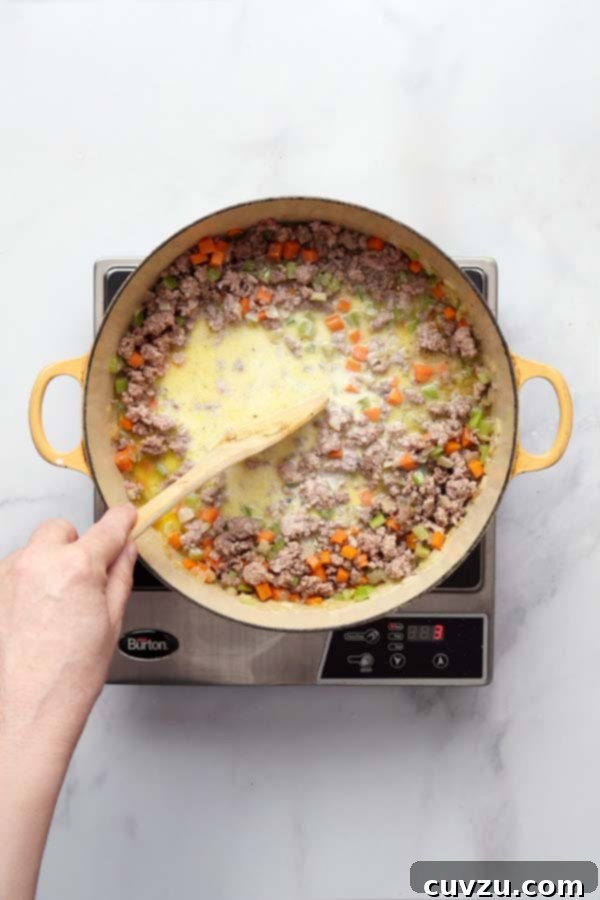
- Pour in the whole milk, reducing the heat to low. Simmer gently, stirring frequently, for about an hour, until the milk has completely evaporated and only a rich coating of fat remains in the bottom of the pan. This step is crucial for tenderizing the meat.
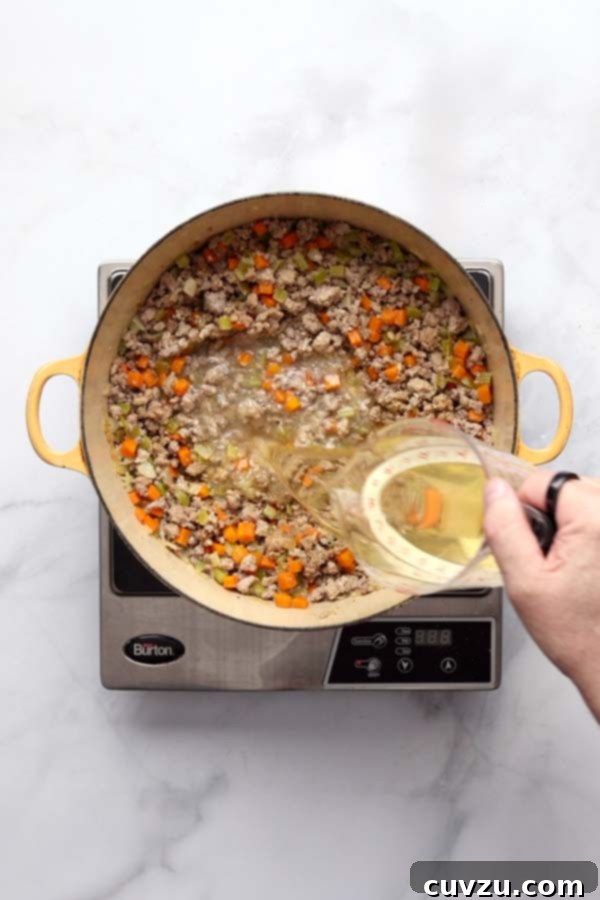
- Add the freshly grated nutmeg and the dry white wine. Continue to simmer gently, stirring occasionally, until the wine has fully evaporated, which can take approximately 1 hour and 15 minutes. This allows the alcohol to cook off and the wine’s flavor to concentrate.
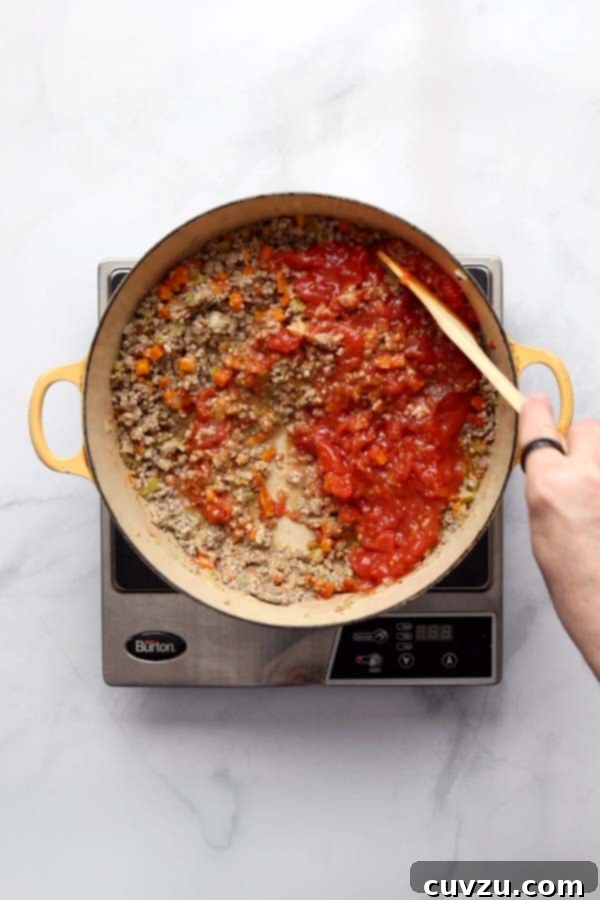
- Stir in the crushed San Marzano tomatoes (or hand-squeezed whole tomatoes) and mix thoroughly. Once the sauce begins to gently bubble, reduce the heat to the absolute lowest setting, maintaining the laziest of simmers—just a few bubbles breaking the surface every few seconds.
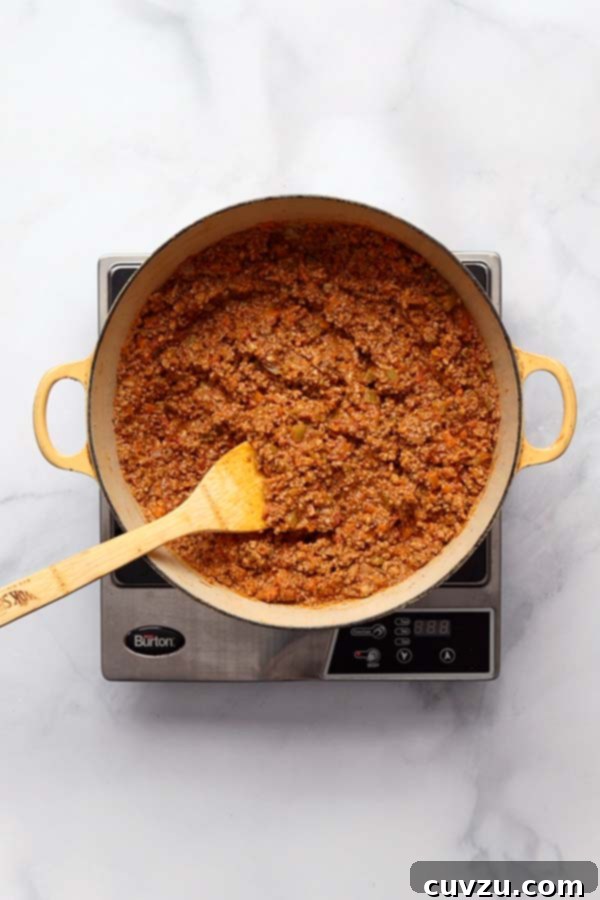
- Cook, uncovered, for a minimum of 3 hours, or even longer, stirring occasionally to prevent sticking. During this extended simmer, watch for the fat to separate and pool on top—a clear sign that the liquids have fully evaporated and the flavors have profoundly deepened. If the sauce becomes too dry, add a splash of hot water, but ensure it evaporates by the end. Finally, season to taste with additional salt and freshly ground black pepper. Serve this magnificent sauce with your preferred cooked pasta, traditionally tagliatelle, and a generous grating of Parmigiano-Reggiano cheese.
Your Marcella Hazan Bolognese Sauce Questions, Expertly Answered
Bolognese, known in Italy as ragù alla bolognese, is a traditional and highly revered Italian meat sauce originating from Bologna, the gastronomic capital of Emilia-Romagna. It is fundamentally different from the tomato-heavy “spaghetti sauce” many are accustomed to. An authentic Bolognese is characterized by a rich blend of ground meats (typically beef, sometimes with pork and veal), a foundational soffritto (finely diced onion, carrot, and celery), whole milk, dry wine, and only a delicate touch of tomato. The true magic lies in its exceptionally long, slow, and gentle simmer, allowing the flavors to meld and deepen over hours. The meat is tenderized in milk and wine before the tomatoes are introduced, creating a uniquely rich, velvety, and complex sauce that traditionally clings beautifully to broad, flat pastas like tagliatelle, or is layered into lasagne. It’s not typically served over spaghetti in Italy, despite popular misconceptions.
The distinctions between authentic Italian Bolognese (ragù alla bolognese) and what is often called “American Bolognese” or “meat sauce” are significant. Traditional Italian Bolognese, like Marcella Hazan’s version, is a rich, slow-simmered meat sauce where meat is the star. It features a harmonious blend of meats, a substantial amount of whole milk, dry wine, and crucially, only a small proportion of high-quality tomatoes. This results in a sauce that is velvety, deeply savory, less acidic, and has a brown hue. It consciously omits strong aromatic herbs like basil and oregano, as well as garlic, letting the natural flavors of the meat and soffritto dominate. It is almost exclusively served with broad, flat egg pastas such as tagliatelle, which are ideal for scooping up the hearty ragù.
In contrast, “American Bolognese” or “meat sauce” typically contains a much higher proportion of tomatoes, making it considerably redder and often more acidic. These versions frequently incorporate copious amounts of garlic, basil, and oregano, flavors that are often absent or minimal in the Italian original. Moreover, the American rendition is famously (and mistakenly, from an Italian perspective) served over spaghetti—leading to the ubiquitous “spaghetti with meat sauce” that is a classic of Americanized Italian cuisine. While delicious in its own right, it’s a departure from the Emilian original.
Believe it or not, this is absolutely true for an authentic, traditional Bolognese ragù. Many home cooks, when making Italian dishes, are tempted to reach for garlic, oregano, and basil, considering them essential. However, in the case of Bolognese, these aromatic herbs and spices are deliberately omitted to allow the deep, complex flavors of the meat, the sweet soffritto, and the richness of the milk and wine to shine through without competition. The sole aromatic addition in Marcella Hazan’s classic recipe is a whisper of freshly grated nutmeg. This subtle spice is a must—it adds a unique warmth and depth that complements the meat beautifully, so please do not leave it out!
This is an excellent question and a cornerstone of authentic Bolognese technique, backed by solid culinary science. Cooking the ground meat in milk is a traditional step that plays a crucial role in achieving the sauce’s signature velvety texture and tenderness. As food science expert Harold McGee meticulously explains in his definitive work, On Food and Cooking, the calcium and mild lactic acid present in milk activate natural enzymes within the meat. These enzymes gently begin to break down the proteins, effectively tenderizing the meat over time without making it mushy or coarse.
Beyond tenderness, the milk’s fat and proteins also infuse the meat with additional moisture and profound richness. As the milk slowly evaporates during simmering, it leaves behind its concentrated flavors and contributes significantly to the ragù’s luxurious, velvety mouthfeel. Some esteemed cooks, including Marcella Hazan herself, believed that adding milk before the wine and tomatoes helped “protect” the meat from the acids in the latter ingredients, though this theory is less definitively proven. Regardless of the precise scientific mechanism, the culinary outcome is consistently the same: a rich, perfectly balanced, and luxuriously tender ragù that stands as a testament to this traditional technique.
Bolognese Pro Tips & Troubleshooting for a Perfect Ragù
- For Best Flavor and Texture
The key to a truly magnificent Bolognese lies in patience during the simmer. Keep the sauce at the absolute laziest simmer possible, allowing it to gently burble away. Your visual cue for perfection is when the fat visibly separates from the sauce and begins to pool on top. This signifies that the liquids have thoroughly evaporated, and the flavors have reached their peak concentration and depth. If, during the long simmer, your sauce starts to look too dry and threatens to stick to the bottom before this stage, simply add a small splash of hot water or, ideally, warm beef broth, and continue cooking. - To Fix Sauce That’s Too Thin or Too Thick
If, after hours of simmering, your sauce still seems a little loose or watery, don’t fret. Simply continue to simmer it, uncovered, for an additional period, allowing more liquid to evaporate until it reaches your desired consistency. Conversely, if you’ve reduced it too much and it’s become overly thick, sticky, or concentrated, easily loosen it with a bit of warm water or high-quality beef stock, stirring until it achieves that perfect, luscious texture that elegantly clings to your pasta. - When the Meat Feels Tough
If the meat in your ragù still has a bite or feels noticeably tough after what seems like ample cooking time, it almost certainly just needs more time on the heat. Gentle, extended simmering is the secret weapon against tough meat in Bolognese. This slow cooking breaks down the connective tissue and collagen in the meat, gradually transforming it into that signature melt-in-your-mouth tender texture that is so highly prized. Be patient, dear reader—this is a dish where time is truly your most important ingredient, and the reward is always worth the wait. - Prevent Scorching and Off-Flavors
Using the right cookware is paramount to preventing scorching and ensuring the best flavor. Always opt for a heavy-bottomed pot that excels at retaining and distributing heat evenly. I highly recommend using a high-quality enameled cast-iron Dutch oven, like my Le Creuset 5-quart Dutch oven. Crucially, avoid using bare cast iron pots when making acidic sauces like Bolognese, as the acid from the tomatoes and wine can interact with the metal, potentially imparting an undesirable metallic taste and even turning the sauce an unappetizing “blech” color.
What to Serve with Your Perfect Bolognese Sauce
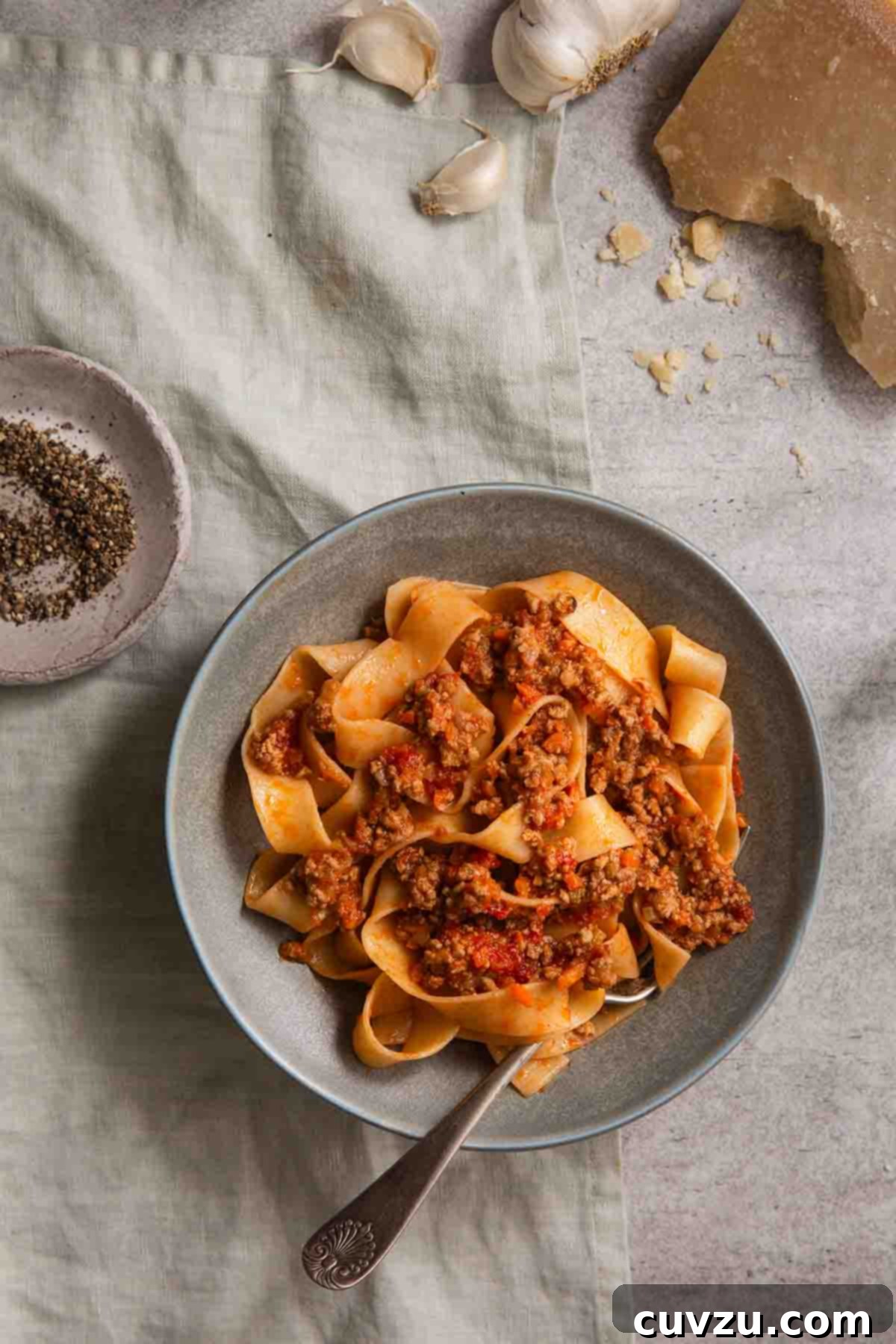
The beauty of Marcella Hazan’s Bolognese sauce lies not only in its exquisite flavor but also in its versatility. While Marcella herself famously recommends serving her rich ragù with tagliatelle, a wide, flat egg noodle perfectly suited to catching every morsel of sauce, your options are not limited. If you have a fondness for spaghetti Bolognese (a popular, albeit less traditional, pairing), you can certainly enjoy it that way. For a truly indulgent experience, you can also layer the sauce between sheets of pasta to create a decadent lasagne Bolognese, a dish that transforms simple ingredients into an unforgettable feast.
To round out your magnificent Italian meal, consider pairing the Bolognese with a crisp, easy Italian salad, offering a refreshing contrast to the rich sauce. A warm, crusty loaf of artisan bread is also essential for soaking up every last drop of that glorious sauce. And for dessert? To truly complete the Italian culinary journey, definitely reach for our best tiramisu recipe – its creamy, coffee-infused layers provide the perfect sweet conclusion.
Storage & Reheating for Your Homemade Bolognese
This Marcella Hazan Bolognese is excellent for making ahead, and its flavors often deepen and improve with time. Proper storage and reheating will ensure you can enjoy this delicious sauce for days or even months to come.
Fridge: Allow your freshly made Bolognese sauce to cool completely to room temperature before transferring it to an airtight container. Store it in the refrigerator for up to 4 days. The flavors will continue to meld and develop beautifully.
Freezer: Bolognese sauce freezes exceptionally well, making it perfect for meal prep. Once cooled, spoon the sauce into freezer-safe zip-top bags (laying them flat for efficient storage) or sturdy freezer-safe containers. It can be stored in the freezer for up to 3 months without compromising quality. For best results, thaw the frozen sauce in the refrigerator overnight before you plan to use it.
Reheating: To reheat your Bolognese sauce, place the desired amount in a large saucepan or Dutch oven over low to medium-low heat. Warm it gently, stirring occasionally, until it is heated through. If the sauce appears too thick after reheating, you can loosen it with a splash of warm water, broth, or a touch of milk.
More Spectacular Pasta Sauce Recipes to Explore
Spicy Marinara Sauce
1 hr
Leftover Meatloaf Pasta Sauce
45 mins
Roasted Tomato Sauce and Pasta
35 mins
Spaghetti with Raw Tomatoes
50 mins
Craving more pasta night magic? After mastering Marcella Hazan’s Bolognese, why not try our bold and spicy marinara sauce, perfect for everything from spaghetti to hearty meatball subs? If you’ve got a favorite meatloaf recipe, you can transform leftovers into culinary gold with this wildly clever leftover meatloaf pasta sauce—yes, really, it’s a game-changer! And for a taste of summer, don’t miss this simple roasted tomato sauce, which brings deep, caramelized flavor to every bite, proving that simple ingredients can yield profound results.
Share Your Experience: Write a Review
If you make this Marcella Hazan Bolognese recipe, or any other dish featured on Leite’s Culinaria, we’d love to hear from you! Please consider leaving a review, a star rating, and your best photo in the comments below. Your feedback helps our community of home cooks, and I personally love hearing about your culinary successes! –David
Insights from Our Recipe Testers’ Reviews
Kim Venglar
This is the perfect Italian Bolognese to make if you’re stuck in the house doing chores and can’t leave. A little prep work and a little stir every now and then give you a wonderful smell throughout your house and a nice, thick sauce for your pasta.
Unlike most commercial jar sauces, this sauce doesn’t have a strong tomato taste. I love that. It is pure, hearty, stick-to-your-ribs comfort food.
All you need is some warm bread, and you have a meal. The next time I make it, I’ll probably omit the oil, as I felt there was a little too much oil floating on top when it was ready to serve.
Marcella Hazan’s Bolognese Sauce: The Definitive Recipe
David Leite
Saved
- PIN
Mains
Italian
8
to 10 servings
445
kcal
20 minutes
5 hours
40 minutes
6 hours
Video
Equipment
-
5-quart Heavy-Bottom Dutch Oven
Ingredients
- 2 tablespoons vegetable oil
- 8 tablespoons (4 oz) unsalted butter, divided
- 1 cup finely chopped onion
- 1 1/3 cups finely chopped celery
- 1 1/3 cups finely chopped carrot
- 1 pound ground chuck, (preferably 80/20; I often use a mix of 1/2 pound chuck and 1/2 pound veal)
- 1/2 pound ground pork (if using a 3-meat blend)
- kosher salt and freshly ground black pepper, to taste
- 2 cups whole milk
- 1/8 teaspoon freshly grated nutmeg, or a generous pinch of pre-ground nutmeg
- 2 cups dry white wine (e.g., Sauvignon Blanc, Pinot Grigio)
- 3 cups canned imported San Marzano tomatoes, (whole or crushed, with their juice)
- 1 pound tagliatelle, (fresh or dried, cooked al dente and drained)
- freshly grated Parmigiano-Reggiano cheese, for serving at the table
Instructions
-
Warm the 2 tablespoons vegetable oil and 6 tablespoons of the butter in a heavy 5-quart Dutch oven over medium heat. Continue until the butter is completely melted and the foaming subsides. Toss in the 1 cup chopped onion and cook, stirring frequently, until the onion is softened and translucent, about 5 minutes. Ensure it doesn’t brown to maintain its sweetness.
-
Toss in the 1 1/3 cups chopped celery and 1 1/3 cups chopped carrot. Cook for another 2 minutes, stirring to ensure they are well coated with the oil and butter. This completes your aromatic soffritto base.
☞ TESTER TIP: It’s crucial that the soffritto (the onions, carrots, and celery) does not brown. This gentle sautéing extracts their natural sweetness and depth without introducing any bitter notes.
-
Add the 1 pound ground chuck (and veal if using) and 1/2 pound ground pork. Season generously with a very healthy pinch of kosher salt and freshly ground black pepper. Crumble the meat with a wooden spoon and cook, stirring occasionally, until the meats have just lost their raw-red color and are lightly browned. Avoid over-browning, which can make the meat tough.
☞ TESTER TIP: If your meat mixture, especially if including pork, renders a significant amount of fat, you can carefully spoon out some of it before proceeding to the next step. This helps prevent an overly greasy sauce.
-
Reduce the heat to low. Pour in the 2 cups whole milk and simmer gently, stirring frequently, until the liquid has completely evaporated. This process, lasting about 1 hour, should leave just a coating of rich fat in the bottom of the pan and tenderize the meat beautifully.
-
Stir in the 1/8 teaspoon freshly grated nutmeg. Pour in the 2 cups dry white wine and continue to gently simmer. Stir frequently until the wine has completely evaporated, which will take approximately 1 hour and 15 minutes. This allows the wine’s flavor to concentrate without the alcohol.
-
Add the 3 cups canned imported San Marzano tomatoes (either crushed or hand-squeezed whole tomatoes) and stir well to combine all ingredients. When the sauce begins to bubble, immediately turn down the heat to its lowest setting so that the sauce cooks at the laziest of simmers, with only a few gentle bubbles breaking the surface every few seconds.
-
Cook, uncovered, for a minimum of 3 hours, or even longer, stirring occasionally to prevent any sticking to the bottom. During this extended, slow simmer, it’s natural for the sauce to reduce. If it starts drying out too much and threatening to scorch, add about 1/2 cup of hot water (or broth) as needed. However, it is absolutely crucial that by the time the sauce has finished simmering, all added water should have completely evaporated, and the fat should have visibly separated and pooled on top of the rich ragù, signaling its readiness.
-
Taste a spoonful—or two—of the deeply flavored sauce. Adjust the seasoning as needed with additional salt and some good grindings of fresh black pepper to achieve your perfect balance.
-
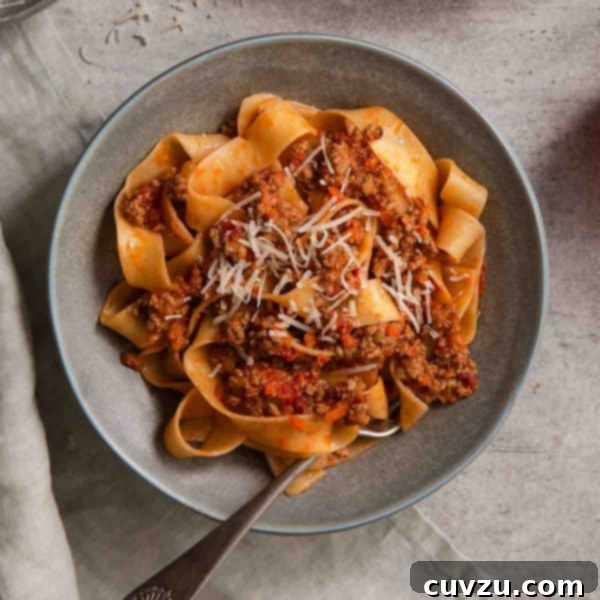
Just before serving, add the remaining 2 tablespoons butter to your cooked, hot pasta (traditionally tagliatelle) and toss gently. Then, ladle the magnificent Bolognese sauce generously over the buttered pasta and toss again to coat thoroughly. Serve immediately with a bowl of freshly grated Parmigiano-Reggiano cheese on the side, allowing everyone to add more to their liking. Buon appetito!
Notes
What You Need To Know About Making The Most Classic Italian Bolognese
- Meat Quality Matters: The more marbled the meat you choose, the sweeter and more succulent your ragù will be. Marcella Hazan herself recommended the neck portion of the chuck for its ideal fat-to-meat ratio, though you may need to special order this specific cut from a dedicated butcher.
- Meat Blend Flexibility: While Marcella’s original recipe primarily specified ground chuck, over the years, many enthusiasts (myself included) have found that incorporating veal and pork creates a richer, more complex flavor profile. Feel free to opt for a full-beef version if you prefer, ensuring it has adequate fat.
- Salting Technique: It’s crucial to season the meat with salt as soon as it hits the hot pan. This important step helps draw out the meat’s natural juices and ensures that the flavor penetrates deeply into every strand of the Bolognese from the very beginning of the cooking process.
- Ideal Cookware: Always use a heavy-bottomed pot that excels at retaining and distributing heat evenly to prevent scorching. My personal favorite is a high-quality enameled 5-quart Dutch oven, such as a Le Creuset. Be mindful to avoid using bare cast iron pots for acidic sauces like Bolognese, as the acid from the tomatoes and wine can react with the metal, potentially imparting a metallic taste and an undesirable color to your sauce.
Adapted From
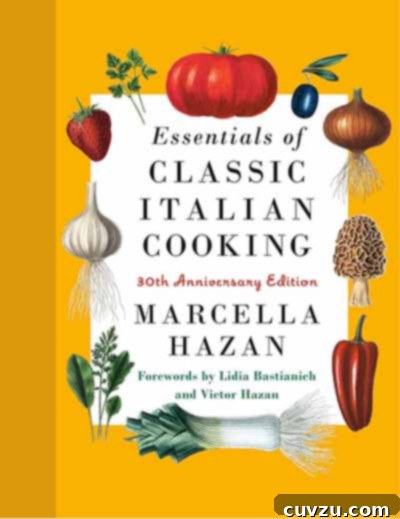
Essentials of Classic Italian Cooking
Buy On Amazon
Explore More with AI
Substitutions
Scale
Summarize
Nutrition
Serving:
1
portion
Calories:
445
kcal
Carbohydrates:
16
g
Protein:
20
g
Fat:
29
g
Saturated Fat:
14
g
Monounsaturated Fat:
10
g
Trans Fat:
1
g
Cholesterol:
95
mg
Sodium:
233
mg
Fiber:
3
g
Sugar:
10
g
Nutrition information is automatically calculated, so should only be used as an approximation.
Tried this recipe?
Mention @leitesculinaria or tag #leitesculinaria!