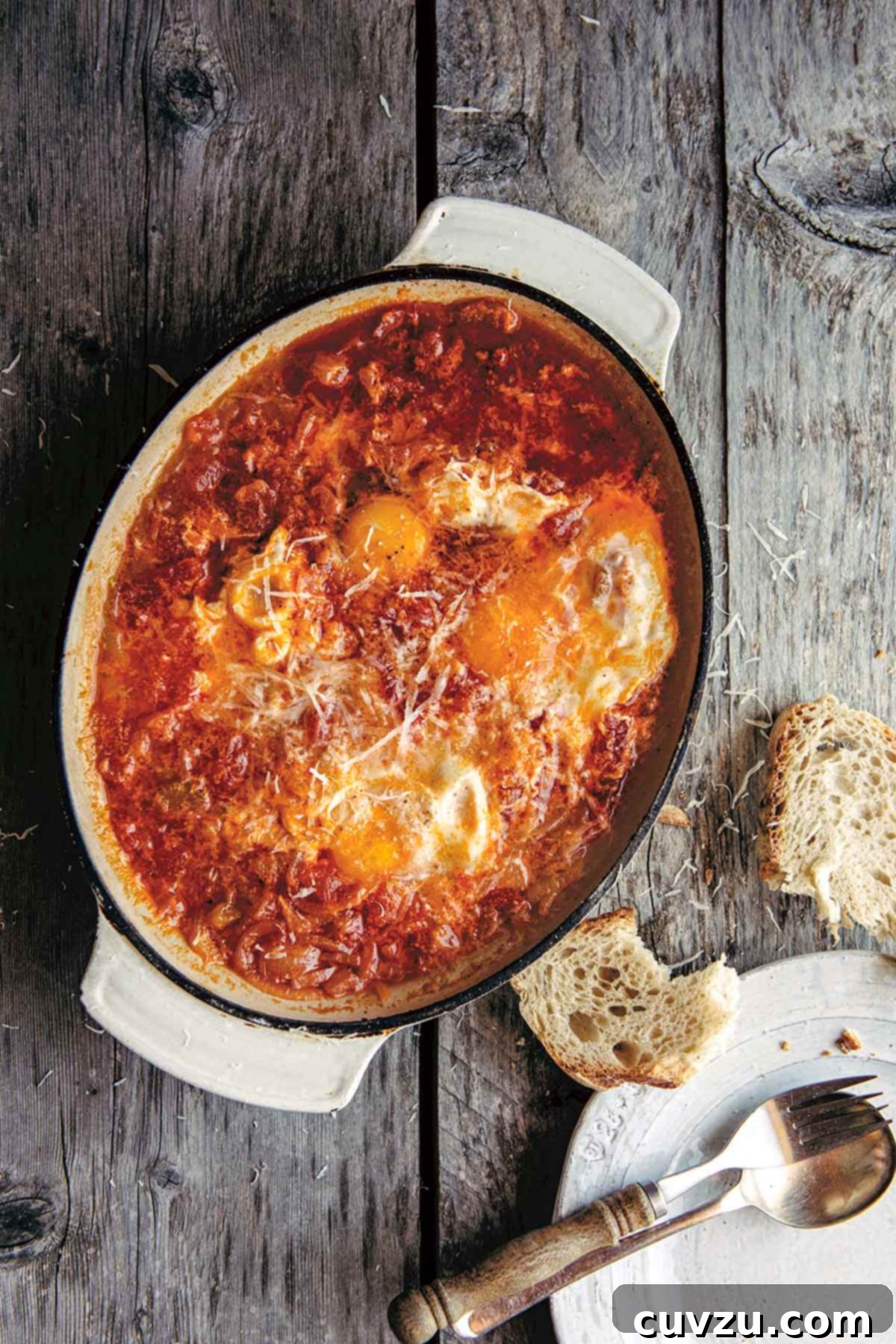
Acquacotta, often described as Tuscany’s answer to Shakshuka, is much more than just “cooked water” – its literal translation. This rustic Italian bread soup, hailing from the coastal Maremma region of southern Tuscany, embodies the very soul of Italian peasant cooking. It’s a comforting, resourceful dish born from necessity, transforming humble ingredients like stale bread, ripe tomatoes, sweet onions, and a touch of chili into a surprisingly rich and deeply satisfying meal. Crowned with perfectly poached eggs and a generous dusting of Parmesan cheese, Acquacotta offers a warm embrace in a bowl, perfect for any time of day. This ancient recipe showcases how simplicity, when executed with care and understanding of local produce, can yield extraordinary flavors and create lasting culinary memories.
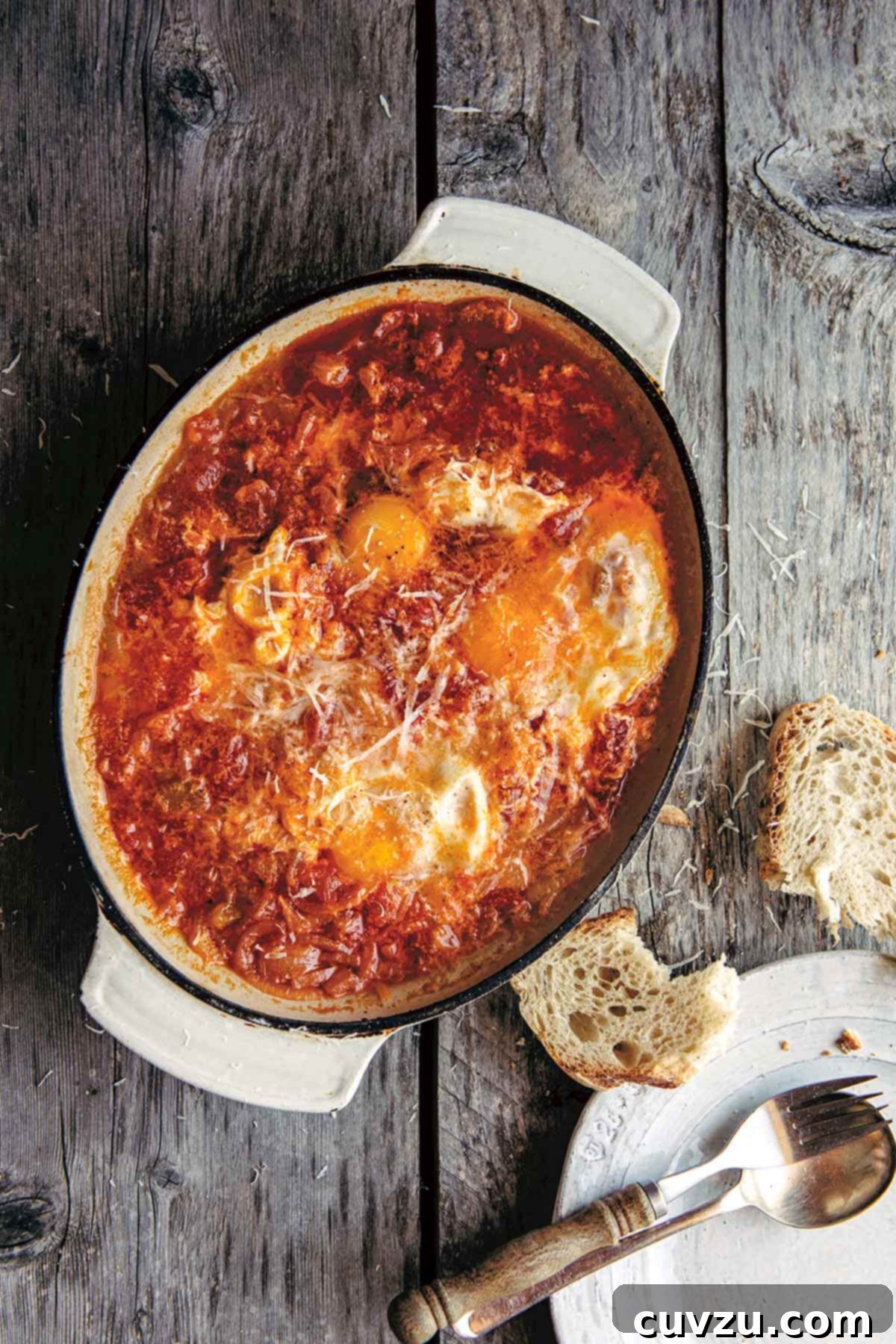
Similar to Shakshuka, this Italian rendition of a classic dish features slow-cooked eggs nestled in a rich sauce. Acquacotta distinguishes itself with its deeply flavorful onion and tomato broth, served over a slice of robust Tuscan bread at the bottom of each bowl. Its ability to provide profound comfort makes it a beloved meal, cherished at breakfast, lunch, or dinner.
What is Acquacotta? A Culinary Journey to Maremma
The name “Acquacotta” literally means “cooked water,” a seemingly unappetizing moniker that truly belies the profound depth and comfort of this historic Tuscan staple. Originating from the rugged Maremma region, a less-traveled, wilder part of southern Tuscany stretching along the coast, Acquacotta is a testament to cucina povera – the “poor kitchen” philosophy of Italian cooking that champions resourcefulness and minimal waste. Dating back to the Middle Ages, this dish was the essential sustenance of shepherds, farmers, and charcoal burners, who would often be away from home for extended periods. They relied on simple, readily available ingredients, cooked together, to create a nourishing and hearty meal.
Maremma, known for its untamed landscapes, rich agricultural traditions, and proximity to both the sea and mountains, developed a distinct culinary identity. Acquacotta perfectly reflects this environment, utilizing sun-ripened tomatoes, abundant onions, fragrant olive oil, and day-old bread – ingredients that were always on hand and integral to daily life. The “cooked water” refers to the broth, which slowly simmers these basic components, extracting and concentrating their flavors into a rich, savory base. It’s a dish that thrives on the inherent quality of its individual elements, allowing each to shine while contributing to a harmonious whole.
More than just a recipe, Acquacotta represents a cultural narrative of resilience and ingenuity. It transforms what might otherwise be discarded – particularly stale bread – into a central, celebrated component. The addition of freshly poached eggs, symbolizing life and sustenance, elevates it from a simple soup to a hearty, complete meal, enjoyed across generations. Its enduring appeal lies in this honest simplicity and the profound satisfaction it delivers, embodying the warmth, history, and generosity of Italian home cooking. It’s a dish that connects diners to the land and the time-honored traditions of Tuscan hospitality.
The Ingredients: Unveiling Acquacotta’s Flavor Profile
The magic of Acquacotta lies in its expertly balanced, humble ingredients. Each component plays a crucial role in creating the soup’s distinctive character, contributing to its rich texture and deeply satisfying taste:
- Tomatoes: The Soul of the Soup. Whether you opt for fresh, ripe summer tomatoes or high-quality canned whole peeled tomatoes, their vibrant flavor forms the backbone of Acquacotta. Fresh tomatoes bring a bright, seasonal sweetness, often requiring a quick blanch and peel to achieve the desired texture in the soup. Canned tomatoes, on the other hand, offer convenience and consistent flavor, especially during off-season months. Crushing them by hand or with a potato masher helps release their juices and integrate them seamlessly into the broth, creating a robust, slightly chunky ragout.
- Onions: The Sweet Foundation. Acquacotta famously calls for a generous quantity of onions, which are slowly cooked until tender and sweet. This extended sautéing process is critical; it mellows their pungent edge and develops a profound sweetness that acts as a superb counterbalance to the acidity of the tomatoes. The choice of yellow onions is common, and their slow caramelization builds a complex flavor base that is surprisingly deep, given the simplicity of the ingredient list. Some recipes also include a small amount of finely chopped celery, contributing to a classic Italian soffritto foundation that adds aromatic depth without overpowering the primary flavors.
- Extra-Virgin Olive Oil: Liquid Gold. As with most authentic Italian dishes, high-quality extra-virgin olive oil is not just a cooking fat but a flavor enhancer. Used to gently cook the vegetables, its fruity, sometimes peppery notes infuse the entire dish, adding richness and a characteristic Tuscan touch that is unmistakable.
- Dry White Wine: Aromatic Lift. A splash of dry white wine is often introduced to deglaze the pot after the vegetables have softened. As it simmers, the alcohol evaporates, leaving behind a subtle acidity and a layer of nuanced flavor that brightens the soup and adds complexity to the overall broth.
- Chiles: A Whisper of Heat. For those who appreciate a gentle warmth, a freshly chopped red chile pepper or a pinch of crushed red pepper flakes can be added. This optional element provides a subtle kick, complementing the sweetness of the onions and the tang of the tomatoes without dominating the dish. It’s a gentle heat that awakens the palate rather than overwhelms it.
- Vegetable Stock or Water: The Simmering Medium. A good quality vegetable stock enriches the soup, adding another layer of savory depth. However, in true cucina povera fashion, plain water can also be used, especially if the tomatoes and onions are particularly flavorful and ripe. The slow simmer ensures that the liquid absorbs all the wonderful flavors from the vegetables, forming a concentrated, aromatic broth perfect for poaching eggs.
- Stale Tuscan Bread: The Essential Sponge. Perhaps the most distinctive ingredient, day-old Tuscan bread is absolutely central to Acquacotta. Tuscan bread is traditionally unsalted, making it an ideal canvas for soaking up the rich, savory broth without making the final dish overly salty. Its slightly firm texture, once stale, holds its shape better than fresh bread. If fresh bread is all you have, a quick bake in a low oven will dry it out sufficiently to achieve the desired effect – a crisp base that softens beautifully as it absorbs the flavorful liquid, adding body and substance to each serving. Any crusty white loaf of bread can be substituted if authentic Tuscan bread is unavailable.
- Eggs: The Creamy Crown Jewel. The crowning glory of Acquacotta is the perfectly poached egg. Cooked directly in the simmering tomato and onion broth, the whites set gently while the yolks remain wonderfully soft and runny. When broken, the luscious yolk mingles with the soup, creating an incredibly rich, creamy mouthfeel that transforms the entire dish. This “wow factor” is what truly elevates Acquacotta from a simple vegetable soup to a gourmet experience.
- Parmesan or Pecorino Cheese: The Salty Finish. A generous sprinkle of freshly grated Parmesan or Pecorino cheese provides the perfect salty, umami-rich finish. These hard Italian cheeses melt slightly into the warm soup, adding a final layer of depth and savory complexity that ties all the flavors together. Pecorino, with its sharper, sheep’s milk tang, is a particularly authentic and traditional choice for Maremma cuisine.
Acquacotta
Author: David Leite
Course: Mains
Cuisine: Italian
Servings: 4 servings
Calories: 449 kcal
Prep Time: 40 minutes
Cook Time: 50 minutes
Total Time: 1 hour 30 minutes
Ingredients
- 2 pounds, 3 ounces fresh ripe tomatoes or 1 pound 12 ounces (800 grams) canned whole, peeled tomatoes
- 3 tablespoons extra-virgin olive oil
- 2 to 3 (26 oz) yellow onions, thinly sliced
- 1/2 celery stalk, finely chopped
- 1/2 cup dry white wine
- 1 freshly chopped red chile pepper or 1/2 to 1 teaspoon crushed red pepper flakes, to taste (optional)
- 4 cups store-bought or homemade vegetable stock or water
- Sea salt and freshly ground black pepper, to taste
- 4 large eggs
- 4 slices day-old Tuscan bread (or any crusty white loaf of bread; if your bread is fresh, gently bake it in a low oven until dry but not browned)
- About 1/2 cup grated Parmesan or Pecorino cheese
Instructions
-
1. Prepare the Tomatoes:
If you’re using fresh tomatoes: Set a medium pot filled with water over high heat and bring it to a rolling boil. In a separate medium bowl, fill it halfway with ice water. Using the tip of a sharp knife, make a small cross on the bottom of each ripe tomato. Carefully plunge the tomatoes into the boiling water for about 30 seconds. Using a slotted spoon or tongs, remove the tomatoes and immediately transfer them to the bowl of ice-cold water until they are cool enough to handle. The tomato skins should now be very easy to slip off. Chop the peeled tomatoes into quarters and carefully remove the watery seeds, discarding them with the skins. Dice the remaining tomato flesh and set aside.
If you’re using canned tomatoes: Dump the canned whole, peeled tomatoes into a large bowl. Use your clean hands, a sturdy wooden spoon, or a potato masher to break them up into smaller, rustic pieces. This method allows for a pleasant texture in the final sauce.
-
2. Build the Flavor Base (Soffritto):
In a large, heavy pot or Dutch oven, set over low heat, warm the 3 tablespoons of extra-virgin olive oil. Add the thinly sliced onions and finely chopped celery along with a good pinch of sea salt. Cook gently, stirring occasionally, until the vegetables soften considerably and become translucent and sweet, which will take about 15 to 20 minutes. Patience in this step is crucial, as it develops the essential aromatic foundation of your Acquacotta.
-
3. Deglaze with Wine:
Increase the heat to medium. Add the 1/2 cup of dry white wine to the pot. Allow it to simmer, stirring occasionally, until the liquid has slightly reduced, which typically takes 3 to 4 minutes. This step adds a subtle complexity and helps to deglaze the pot, incorporating any flavorful bits into the sauce.
-
4. Simmer the Sauce:
Stir in the prepared tomatoes. Add another pinch of sea salt and the chile (freshly chopped or crushed flakes), if using, adjusting to your preferred level of heat. Pour in half of the vegetable stock or water and bring the mixture to a gentle simmer. Then, reduce the heat to low and let it cook gently and slowly, uncovered, for about 45 minutes, stirring occasionally. During this time, the liquid should reduce, thickening into a rich, flavorful consistency, but there should still be enough liquid to be able to poach the eggs. If necessary, top with the rest of the stock or water to maintain the desired consistency.
-
5. Season and Refine:
Taste the simmering Acquacotta sauce and adjust the seasoning with sea salt and freshly ground black pepper as necessary. If a smoother consistency is desired, you can use an immersion blender to gently purée a portion of the soup a little, creating a slightly more refined texture while still retaining some rustic chunks.
-
6. Poach the Eggs:
With the sauce gently simmering over low heat, crack each of the 4 large eggs into separate small bowls. Use the back of a spoon to make a small indentation or “well” in the hot tomato and onion mixture for each egg. Bring each small bowl close to the surface of the simmering sauce and carefully tip the egg into its designated well, being careful not to situate the eggs too close together. Poach the eggs until the whites are cooked and set but the yolks are still wonderfully soft and runny, which typically takes 4 to 6 minutes. (If you prefer your egg yolks firm, gently spoon some of the hot sauce over the top of the yolks as they cook.) You may need to increase the heat ever-so-slightly to keep the sauce gently simmering for even poaching. When the eggs are done to your liking, remove the pot from the heat.
-
7. Assemble and Serve:
Place a slice of the day-old Tuscan bread at the bottom of each serving bowl. With a ladle, carefully scoop out the poached eggs one by one and place each on a slice of bread. Scoop out more of the rich tomato and onion sauce and ladle it generously around the egg, ensuring the bread is well-submerged to soak up the flavorful liquid. Sprinkle each dish with the grated Parmesan or Pecorino cheese. Allow it to sit for a minute or two before serving, giving the flavors a chance to meld beautifully and the bread to absorb the comforting broth.
Nutrition (Approximate)
Serving: 1 portion
Calories: 449 kcal
Carbohydrates: 45 g
Protein: 18 g
Fat: 20 g
Saturated Fat: 6 g
Trans Fat: 1 g
Cholesterol: 197 mg
Sodium: 1660 mg
Fiber: 7 g
Sugar: 19 g
Nutrition information is automatically calculated and should only be used as an approximation.
Variations and Personal Touches: Making Acquacotta Your Own
One of the true beauties of Acquacotta, rooted deeply in its cucina povera origins, is its inherent adaptability. While the core recipe is a testament to perfect simplicity, it offers ample room for personalization based on seasonal availability, dietary preferences, or simply what you happen to have on hand. Embracing this flexibility allows you to make this classic Tuscan dish uniquely your own.
- Heartier Additions: For a more substantial and filling meal, consider incorporating legumes. A can of drained chickpeas or a scoop of cooked lentils added during the simmering phase can significantly boost the protein and fiber content, making the soup even more robust. For those who enjoy meat, a touch of crumbled Italian sausage or even crispy bacon (as some enthusiasts have experimented with) could introduce a savory, smoky dimension to the rich broth, though these additions deviate from the traditional peasant recipe.
- Greens and Vegetables: Towards the end of the simmering process, stir in some fresh, tender greens such as spinach, kale, or Swiss chard. Their slight bitterness offers a wonderful contrast and nutritional boost to the sweet onions and tart tomatoes. Small cubes of zucchini, diced bell peppers, or even thinly sliced mushrooms could also be added for extra texture and vegetable goodness.
- Herbaceous Notes: While the traditional recipe eloquently relies on the pure flavors of tomato and onion, a sprinkle of fresh basil, finely chopped parsley, or even a hint of dried oregano added just before serving can brighten the dish and add an aromatic layer. These additions are often found in modern interpretations.
- Cheese Choices: Experiment with different types of hard, salty cheeses beyond Parmesan or Pecorino. A sharper aged provolone, a grating of Fontina, or another regional Italian cheese could offer a unique flavor profile and a delightful melting quality.
- Bread Alternatives: While day-old Tuscan bread is undoubtedly ideal, don’t hesitate to use other crusty artisanal loaves if Tuscan bread is unavailable. The key is a bread that can absorb the flavorful broth without disintegrating too quickly. You can even lightly toast or grill the bread slices before placing them in the bowl for an added layer of texture and a slightly smoky flavor.
Embrace the spirit of resourcefulness that defines Acquacotta. Let your pantry and culinary creativity guide you in making this classic Tuscan dish a comforting and personalized experience every time you prepare it.
The Essence of Tuscan Peasant Cuisine: A Philosophy on a Plate
Acquacotta is more than just a soup; it’s a culinary philosophy rooted deeply in the history and culture of Tuscany. The concept of cucina povera, or “poor kitchen,” isn’t about lacking flavor or quality, but about celebrating ingenuity, sustainability, and maximizing taste from the simplest, most readily available ingredients. It’s a culinary approach born from necessity, where nothing goes to waste and every ingredient is honored for its full potential.
This rustic bread soup perfectly encapsulates this ethos. It transforms stale bread, often considered waste, into a fundamental and celebrated component, soaking up rich flavors and providing hearty sustenance. The slow cooking of inexpensive but incredibly flavorful onions and tomatoes highlights how patience and a gentle hand can extract profound sweetness and depth from humble produce. The addition of eggs, a simple yet potent source of protein, elevates the dish to a complete and satisfying meal, embodying comfort, nourishment, and a connection to the land.
In a modern world increasingly focused on exotic ingredients and complex culinary techniques, Acquacotta serves as a delicious and timely reminder of the enduring power of simplicity. It teaches us to appreciate the intrinsic flavors of good produce, to respect food by minimizing waste, and to find immense joy in a warm, honest meal prepared with care. This Tuscan classic invites us to slow down, savor each spoonful, and connect with a culinary heritage that values substance, authentic flavor, and the warmth of shared community over extravagance. It’s a dish that embodies the very heart of Italian home cooking.
Recipe Testers’ Insights: A Collective Appreciation
Our team of dedicated recipe testers enthusiastically embraced Acquacotta, unanimously praising its comforting qualities, remarkable simplicity, and inherent adaptability. Their detailed feedback offers invaluable perspectives and reinforces why this rustic Tuscan soup holds such widespread and enduring appeal.
Many testers highlighted the dish’s incredible ability to transform humble ingredients into something deeply satisfying and memorable. They noted that Acquacotta quickly earned a spot on their “easy comfort food” lists, making it perfect for busy weeknight dinners or leisurely weekend brunches. The consensus was clear: it’s a warming, rich, and surprisingly filling meal without being heavy, making it an ideal choice for a cold winter night or an unusually overcast summer day. Its inherent coziness makes it an instant classic in any home kitchen.
A recurring theme in the feedback was the profound depth of flavor achieved with such a minimal ingredient list. Testers consistently pointed to the generous quantity of slowly cooked onions as a major contributor to the soup’s overall sweetness and complexity. This extensive, patient cooking process mellows the onions and balances the acidity of the tomatoes beautifully. One tester, Irene Seales, thoughtfully suggested that the optimal onion-to-tomato ratio might require some personal adjustment based on the ripeness and flavor intensity of the tomatoes, and recommended cooking the onions longer for maximum sweetness. Jennifer Combs specifically noted how the well-cooked onions “break down slightly and offset the acid from the tomatoes,” creating a harmonious balance.
The poached eggs were universally hailed as the definitive “wow factor” of the dish. The creamy, wonderfully runny yolks, once gently broken and mixed into the rich, simmering broth, create an incredibly luscious and velvety texture that truly elevates the entire eating experience. Chiyo Ueyama offered a practical tip for achieving more even poaching: covering the pot can help the eggs cook faster and more uniformly, ensuring perfectly set whites and tender yolks.
The versatility of Acquacotta was also a key takeaway for our testers. They successfully used both fresh, ripe tomatoes and high-quality canned whole, peeled tomatoes, confirming that the dish is equally delicious and authentic with either option, making it accessible year-round. Similarly, both freshly chopped red chile pepper and crushed red pepper flakes were used effectively to add a subtle warmth and gentle kick, tailored to individual preferences.
For the essential bread component, the advice was to ensure it was sufficiently dry. Chiyo Ueyama cleverly “staled” her fresh ciabatta in a toaster on the lowest setting, demonstrating a resourceful trick if day-old bread isn’t readily available. Paula D. noted that while the bread beautifully absorbs the liquid, strategically placing a “bed of onions” on top of the bread before nestling the egg could help keep the delicate poached egg centered in the bowl for a more appealing presentation.
Several testers, in true *cucina povera* spirit, offered imaginative suggestions for further customization and enhancement. Olivia G. felt the soup could benefit from more substance and recommended adding chickpeas, lentils, or even rice during the simmering process for a heartier, more complete meal. Jennifer Combs’ family suggested that adding Italian sausage would be a tasty addition, while Barb P. playfully considered incorporating bacon, indicating the soup’s robust nature can admirably accommodate various savory additions. Fresh herbs, particularly basil, were also frequently suggested as a lovely and aromatic finishing touch that brightens the entire dish.
Ultimately, the collective insights from our recipe testers underscore Acquacotta’s enduring appeal: a straightforward, profoundly satisfying, and wonderfully adaptable dish that truly embodies the warmth, resourcefulness, and simple elegance of traditional Tuscan cooking. It’s a recipe that invites experimentation and personal touches while consistently delivering a comforting and richly flavored culinary experience, proving that sometimes, the simplest dishes are indeed the most delightful.
Concluding Thoughts: Savoring the Tuscan Tradition
Acquacotta stands as a beautiful and heartfelt representation of Tuscany’s rich culinary heritage. Far from its humble translation of “cooked water,” this soup is a true celebration of flavor, resourcefulness, and the profound comfort found in simple, quality ingredients. From the sun-drenched fields and rugged landscapes of Maremma, it brings an authentic taste of Italian peasant cooking right to your table, proving unequivocally that often, the most cherished and deeply satisfying dishes are those born from the purest ingredients and the warmest intentions.
Whether enjoyed as a hearty breakfast to start the day, a satisfying lunch to warm the soul, or a cozy dinner to gather with loved ones, Acquacotta promises a truly heartwarming and unforgettable experience. Its rustic charm, combined with the creamy richness of perfectly poached eggs and the savory depth of Parmesan or Pecorino cheese, creates a meal that is both nourishing and deeply memorable. We encourage you to embark on this culinary journey and discover for yourself why Acquacotta is much more than just a soup – it’s a timeless Tuscan tradition waiting to be savored, a spoonful at a time, bringing a piece of Maremma’s soul into your home.