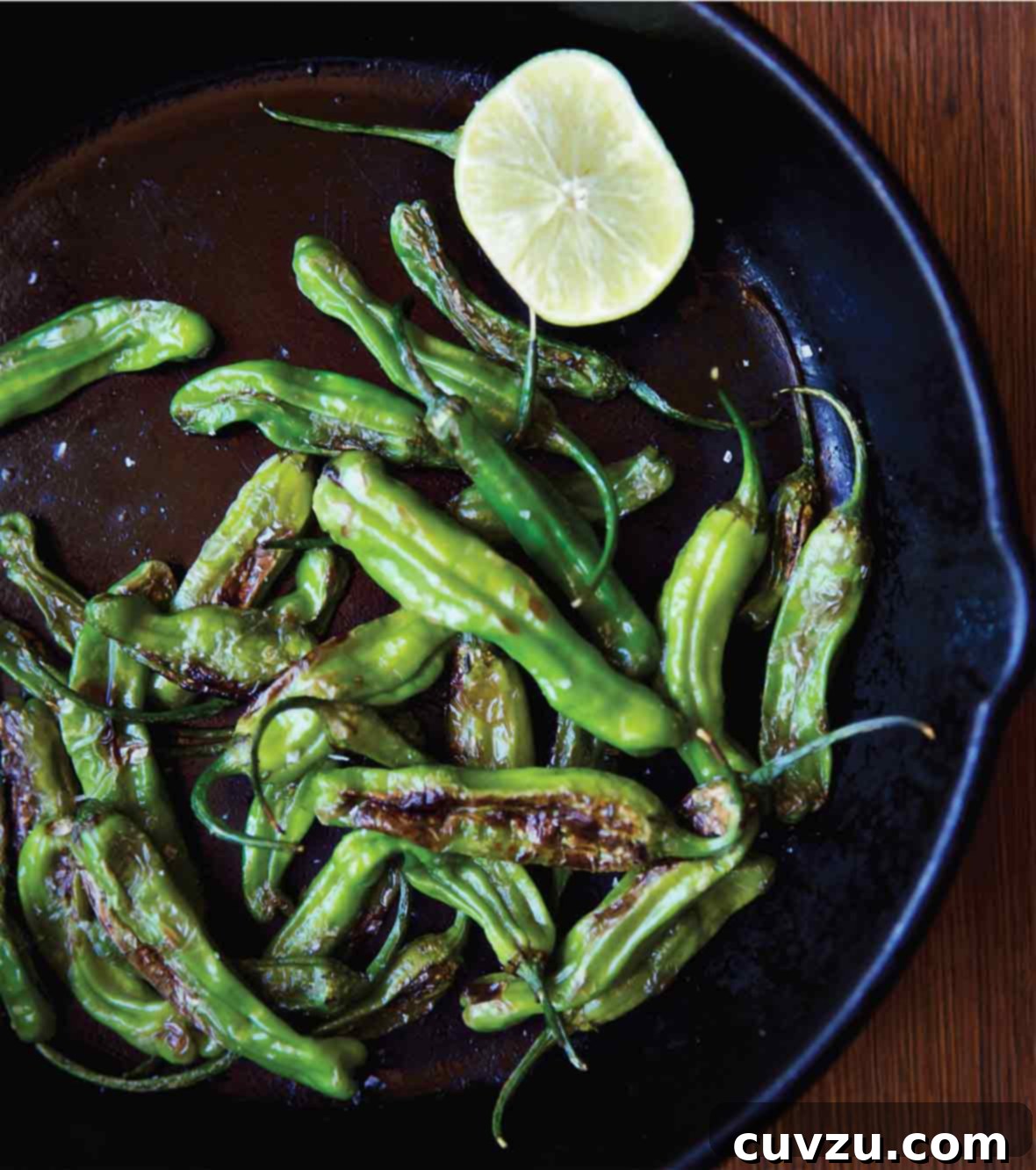
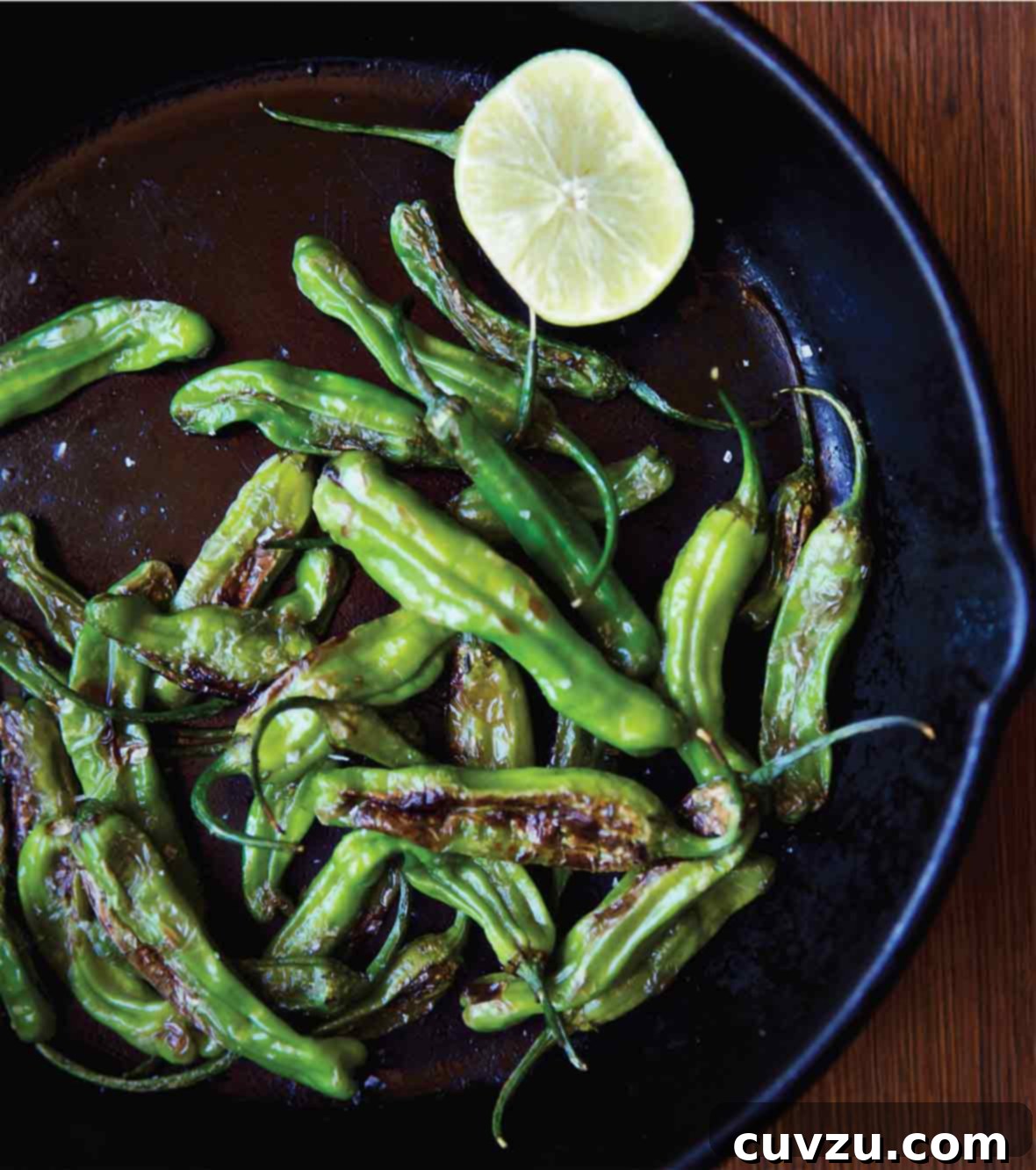
Unlock the secrets to perfectly blistered shishito peppers, a delightfully addictive appetizer that boasts a unique, mildly tingly, and almost sweet heat. These Japanese culinary gems are distinct in flavor and incredibly versatile. Whether you’re hosting a sophisticated cocktail party, enjoying a casual backyard barbecue, or simply seeking a quick and flavorful snack, sautéed shishito peppers are guaranteed to be a crowd-pleaser. Serve them alongside frosty beers or refreshing margaritas and watch them vanish almost as quickly as they appear.
How To Cook Shishito Peppers: A Simple & Flavorful Recipe
Recipe by David Leite
- PIN
Print Recipe
Appetizers
American
5
servings
26
kcal
5 minutes
10 minutes
15 minutes
Ingredients
- Olive oil: High-quality extra virgin olive oil for best flavor.
- Shishito peppers: rinsed and patted very dry. Look for vibrant green, firm peppers. (You’ll find shishitos at farmers markets, specialty grocery stores, and often at Trader Joe’s).
- Sea salt: Flaky sea salt works wonderfully for seasoning after cooking.
- Lemon or lime wedges, (optional, but highly recommended for a bright finish).
Instructions for Blistered Shishito Peppers
-
Prepare your pan: Heat a generous drizzle of olive oil in a wide sauté pan or cast-iron skillet over medium-high heat. Wait until the oil is shimmering and hot, but not yet smoking. This initial high heat is crucial for achieving that desirable blistered exterior.
-
Sauté the peppers: Carefully add the dry shishito peppers to the hot pan, keeping their stems intact. Cook them over medium to medium-high heat, tossing and turning them frequently with tongs. The goal is to get them perfectly blistered and slightly charred in spots. Resist the urge to rush this process. Depending on your pan and the heat intensity, this can take anywhere from 5 to 15 minutes. The blistering indicates that the peppers are softening and their natural sugars are caramelizing.
-
Season and finish: Once the peppers are beautifully blistered and tender, remove them from the heat. Transfer them to a serving bowl and toss immediately with a generous pinch of flaky sea salt. For an extra burst of freshness and flavor, add a squeeze of fresh lemon or lime juice if desired. The citrus brightens the earthy notes of the peppers.
-
Serve immediately: Slide the sizzling hot peppers into a serving bowl. Instruct your guests to pick them up by the stem end and enjoy the entire pepper, leaving the stem behind. These are best served hot off the pan. Originally published July 29, 2013.
Chef’s Notes & Pro Tips for Shishito Peppers
What You Need To Know About Shishito (Or Padrón) Peppers
The Peppers Themselves
Shishito peppers are typically mild, with a sweet, slightly smoky flavor when blistered. However, there’s a playful “Russian roulette” aspect to them: approximately one in ten shishito peppers will deliver a surprising kick of heat. This makes eating them an exciting culinary adventure! Padrón peppers, a Spanish cousin, can be prepared using the exact same method. Be warned, though, Padróns tend to have a higher ratio of spicy peppers, making their “roulette” even more intense.
Beyond the Basics: Creative Uses & Serving Ideas
While simply blistered with salt and citrus is a classic and delightful preparation, shishitos are incredibly versatile. Many New York City chefs have embraced them, often tossing blistered shishitos with roasted or sautéed fingerling potatoes for a substantial side dish or appetizer. You can also explore their raw potential by dunking them in a brine to create delicious pickled peppers, similar to jalapeños. For the adventurous, shishitos can even infuse spirits like gin or tequila, adding a subtle peppery nuance to cocktails. However, the most popular and arguably best way to enjoy shishitos remains this simple, spectacular blistered preparation, perfect alongside your favorite drinks.
Leftovers (If You Have Any!)
As the original recipe author notes, leftovers are “an unlikely event.” But should you find yourself with a few stray peppers, simply trim their stems and chop them. They make a fantastic addition to omelets or scrambled eggs the following morning, adding a unique flavor and soft texture. They can also be incorporated into stir-fries or chopped into salsas.
Explore Culinary Wisdom from “Vegetable Literacy”
Adapted From
Vegetable Literacy
Buy On Amazon
Nutrition Information
Serving:
2
peppers
Calories:
26
kcal
Carbohydrates:
0.3
g
Protein:
0.1
g
Fat:
3
g
Saturated Fat:
0.4
g
Monounsaturated Fat:
2
g
Sodium:
0.2
mg
Fiber:
0.1
g
Sugar:
0.2
g
Nutrition information is automatically calculated, so should only be used as an approximation.
Tried this recipe?
Mention @leitesculinaria or tag #leitesculinaria on Instagram!
Insights from Our Recipe Testers
Sofia Reino’s Experience
Sofia Reino raves about these shishito peppers, sharing her long-standing desire to try this blistered recipe. Her search for shishito peppers in South Carolina finally ended with their availability at Trader Joe’s. She followed the recipe precisely, finding it remarkably easy, especially given her prior experience preparing Padrón peppers in the same manner (though without the lemon). Sofia notes the strong similarities to Padrón peppers, including the exciting uncertainty of biting into a spicy one versus a mildly zesty, flavorful one. She finds shishito peppers to be less sweet than Padróns but equally delicious, declaring them a must-buy on every future Trader Joe’s trip.
Elsa M. Jacobson’s Take
Elsa M. Jacobson rediscovered shishito peppers at a farmers market, prompting her to immediately sauté them in her cast-iron skillet upon returning home. She recalled enjoying them as a bar snack years ago and was thrilled to find them again. Elsa highlights the quick and easy preparation, noting the peppers’ highly addictive quality. She believes there’s no need to complicate this dish with “fancier, chef-ier turf.” Unsurprisingly, there were no leftovers, leading her to plan for a double purchase next time: one bag for this simple sauté, and another for experimental preparations.
Elsa suggests a 50/50 mix of grapeseed and olive oil, or even just grapeseed oil, for cooking Japanese peppers, especially when aiming for high heat without smoking. She cooked hers for the full 15 minutes to achieve a perfect char. Her key advice: “Salt generously and squeeze the citrus generously,” as both greatly enhance the charred, softened peppers. She even contemplates serving salt and lime wedges alongside them, if she were willing to share! Elsa hopes to grow her own shishitos next year.
In her pursuit of variations, Elsa successfully tried Padrón peppers, thanks to an urban gardening friend. She couldn’t tell the difference between Padróns and shishitos, even without knowing which was which. Luckily, her “Russian roulette” with the Padróns yielded no surprises; none were exceptionally hot, matching the mild heat of the shishitos she enjoyed previously. For her, Padróns didn’t require the optional lemon or lime. Her verdict for both varieties: “Just sauté till charred, toss with salt, and dive right in!” She still dreams of pairing them with roasted or sautéed fingerlings someday, if she ever has enough to share.
Additional Perspectives from Our Community
Cooking shishito peppers is often hailed as a fantastic dinner party secret weapon. During summer in New York City, these peppers are abundant at farmers markets. Many enthusiasts, like our community members, stock up on them for both hosting and visiting, drawn by how little time and effort they demand for charring. Guests are consistently intrigued and surprised by their unique taste – and, of course, by the exciting “Russian roulette” element that comes with each bite. Some even playfully suggest a drinking game: a sip for every hot shishito! Ultimately, these delightful peppers serve as a wonderful precursor to almost any meal and pair exceptionally well with a wide range of beers, making them a consistently popular choice.