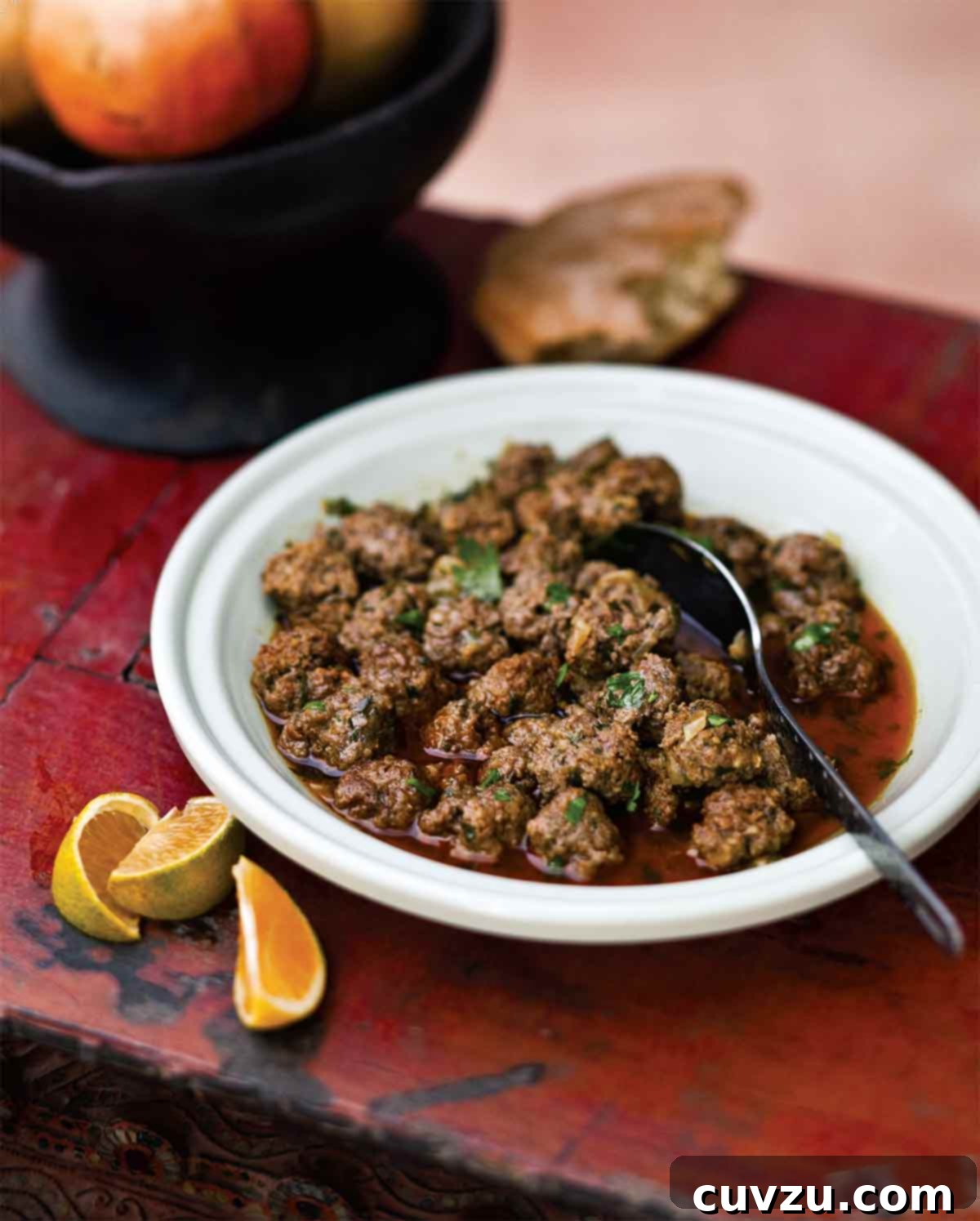
Authentic Moroccan Kefta Tagine: Spiced Meatballs in Saffron-Cilantro Sauce
Embark on a culinary journey to the heart of North Africa with this exquisite Moroccan Kefta Tagine. These succulent meatballs, known as kefta, are crafted from perfectly spiced ground beef or lamb and gently simmered in an aromatic, buttery saffron-cilantro sauce. This recipe promises a harmonious blend of warming spices and fresh herbs, delivering a truly authentic taste of Morocco right to your table, making it a perfect gluten-free option for any day of the week.
As celebrated cookbook author and Mediterranean cooking expert, Paula Wolfert, eloquently states: “Kefta is the savory spiced ground meat of Morocco, served in meatball form or used as stuffing. Serve the kefta directly from the tagine or pot, with warm slices of toasted bread for mopping up the sauce. In some Moroccan homes where fiery dishes are appreciated, a whole dried red pepper is added to the sauce.” This sentiment perfectly captures the essence of this beloved dish, highlighting its versatility and the traditional way it’s enjoyed.
The Secret Ingredient: Unlocking Flavor with Saffron Water
What truly sets this Kefta Tagine recipe apart, and indeed, many of Paula Wolfert’s Mediterranean creations, is her ingenious approach to harnessing the full potential of saffron. Often considered the world’s most luxurious spice, saffron’s delicate threads carry a profound aroma and vibrant color. While many recipes simply call for crumbling dry saffron directly into a dish, Wolfert employs a unique technique that transforms this precious spice into what she terms “saffron water,” elevating its impact significantly.
Her method involves gently soaking delicate saffron threads in hot water, creating an elixir that far surpasses the aromatic and flavor intensity achieved by simply crumbling dry saffron. This isn’t just a clever cooking hack; it’s a savvy strategy for maximizing the justifiable investment in saffron. By extracting its essence more effectively into a liquid medium, you require less of the costly spice to achieve a profound and beautifully distributed flavor and color throughout your dish.
Wolfert’s culinary wisdom extends even further: “I’ve discovered that if I soak all the ground spices called for in a recipe in a little saffron water before adding them to the dish, their combined flavors are intensified and better distributed.” This pre-soaking technique is a game-changer. It ensures that every spice in your kefta and sauce integrates seamlessly, allowing the individual notes to bloom and meld into a cohesive, deeply aromatic, and truly remarkable flavor profile that is the hallmark of authentic Moroccan cuisine.
Beyond the Tagine: Versatile Uses for Saffron Water
One of the surprising revelations from Wolfert’s technique is the concept of keeping a reserve of saffron water on hand for everyday culinary applications. This foresight not only minimizes waste of a valuable ingredient but also opens up a world of possibilities for infusing subtle elegance into various dishes. While the original article offered a brief list, the potential of this golden elixir is vast. Here are several imaginative ways to incorporate leftover saffron water into your cooking, effortlessly elevating ordinary meals to extraordinary culinary experiences:
- Enhance Rice Dishes: Integrate saffron water as part of the liquid when preparing a variety of rice dishes, such as fragrant pilafs, creamy risottos, or even simple steamed rice. It will infuse a beautiful golden hue and a subtle, complex flavor that transforms a basic side into a captivating centerpiece.
- Rich Cream Sauces: Stir a tablespoon or two of saffron water into cream-based sauces designed for pasta, chicken, fish, or vegetables. Its nuanced flavor pairs exquisitely with creamy textures, adding an unexpected layer of sophistication and a hint of exotic warmth that will impress any palate.
- Soothing Tonics: Saffron is historically renowned for its restorative and mood-lifting properties. For a comforting and invigorating experience, simply sip warm saffron water as a delightful tonic, enjoying its unique taste and potential health benefits.
- Flavorful Soups and Stews: Introduce a splash of saffron water to vegetable broths, hearty lentil soups, or delicate seafood stews. It brightens the broth and adds an exotic depth that complements a wide array of ingredients, creating a more complex and inviting flavor base.
- Deglazing Pan Juices: After roasting meats or pan-searing vegetables, use saffron water to deglaze the pan. This process captures all the delicious caramelized bits, creating a deeply flavorful sauce or gravy with a beautiful golden shimmer, ensuring no flavor is left behind.
- Elegant Carrot Glaze: For a stunning vegetable side, drizzle saffron water over partially cooked sliced carrots. Then, reduce it down with a touch of honey or maple syrup for a vibrant, fragrant glaze that makes a humble vegetable truly shine, offering both visual appeal and exquisite taste.
- Exotic Vinaigrettes: Whisk saffron water into your homemade vinaigrettes. Imagine it blended with fresh lemon juice and a hint of honey for a dressing that would perfectly complement a fresh green salad, grilled halloumi, or delicate white fish, adding an unexpected burst of flavor.
- Warm Adult Beverages: For an adventurous twist, consider adding a splash of saffron water to a hot toddy, perhaps with brandy or bourbon. It promises a warming, aromatic drink unlike any other, perfect for a cozy evening or a celebratory toast.
Moroccan Meatballs ~ Kefta Tagine
David Leite
Ingredients
For the Saffron Water (yields 1 cup; use 1/4 cup for this recipe, reserve the rest)
- 1/2 teaspoon crumbled saffron strands
- 1 cup hot water
For the Kefta (Meatballs)
- 1 pound lean ground lamb or beef
- 3 tablespoons crème fraîche or grated beef suet
- 2 teaspoons sweet paprika
- 1 teaspoon ground cumin, preferably Moroccan
- 1 teaspoon ground coriander
- 3/4 teaspoon ground cinnamon, preferably Ceylon
- 1/4 teaspoon grated nutmeg
- 1/4 teaspoon cayenne pepper
- Salt and freshly ground black pepper, to taste
- 2 tablespoons roughly chopped flat-leaf parsley
- 2 tablespoons roughly chopped cilantro
For the Sauce
- 1 medium red onion, grated
- 2 tablespoons (1 oz) unsalted butter
- 1/4 cup saffron water
- 1 teaspoon sweet paprika
- 1/2 teaspoon ground cumin, preferably Moroccan
- 1/4 teaspoon ground ginger
- 1/4 teaspoon freshly ground black pepper, or to taste
- 2 to 3 pinches cayenne pepper
- Pinch of ground turmeric
- 1/2 teaspoon salt, or to taste
- 1 cup roughly chopped cilantro
- 1/2 cup hot water
- 2 tablespoons fresh lemon juice
Instructions
1. Prepare the Saffron Water
-
Gently toast the saffron strands in a warm (not hot) skillet for approximately one minute. This brief toasting enhances their aroma. Then, remove from heat and crush them further into smaller pieces.
-
Soak the crushed, toasted saffron strands in 1 cup of hot water. This will create a vibrant saffron infusion. Store this saffron water in a small, airtight jar in the refrigerator for up to a week. For this specific Kefta Tagine recipe, you will need 1/4 cup of this saffron water. The remaining 3/4 cup can be reserved for the other versatile culinary uses described in the section above. For extended storage, consider making a larger batch: quadruple the recipe quantities, then pour the saffron water into ice cube trays and freeze until solid. Once frozen, transfer the saffron cubes to a freezer bag for convenient, long-term storage. Each cube will approximately equate to 2 tablespoons of saffron water or a generous pinch of dried saffron threads.
2. Form the Kefta (Meatballs)
-
In a food processor, combine the ground lamb or beef, crème fraîche (or grated beef suet for a richer, more traditional flavor), sweet paprika, ground cumin, ground coriander, ground cinnamon, grated nutmeg, cayenne pepper, salt, freshly ground black pepper, flat-leaf parsley, and cilantro. Process the mixture until it forms a smooth, cohesive paste. Transfer the kefta mixture to a bowl, cover it tightly, and refrigerate for at least 30 minutes, or until you are ready to cook. This chilling period is crucial as it helps the flavors meld deeply and makes the mixture much easier to handle and shape.
-
Once chilled, roll the meat mixture into approximately 24 olive-sized balls and arrange them neatly on a plate. A helpful tip: if you are unsure about the seasoning, pinch off a tiny bit of the meatball mixture, quickly sizzle it in a small skillet until cooked, and then taste it. Adjust the salt and pepper in the main mixture as needed before rolling all the meatballs.
3. Cook the Sauce and Kefta
-
Place an 11- or 12-inch tagine, cazuela, or Dutch oven on a heat diffuser (if using a tagine) over medium-low heat. Add the grated red onion, unsalted butter, 1/4 cup of the prepared saffron water, 1 teaspoon sweet paprika, 1/2 teaspoon ground cumin, 1/4 teaspoon ground ginger, 1/4 teaspoon freshly ground black pepper, 2 to 3 pinches of cayenne pepper, a pinch of ground turmeric, 1/2 teaspoon salt, 3/4 cup of the chopped cilantro, and 1/2 cup hot water.
-
Slowly raise the heat and bring the sauce mixture to a gentle boil. Once boiling, immediately reduce the heat to medium-low, cover the pot, and let it simmer gently for about 10 minutes. This crucial step allows the spices to infuse and the flavors to deepen and meld beautifully, creating a rich base for your kefta.
-
Carefully add the formed kefta (meatballs) to the simmering sauce, arranging them in a single layer if possible. Cover the pot again and poach the meatballs for 30 minutes. Be sure to gently turn them midway through the cooking time to ensure they cook evenly and absorb all the delightful flavors of the sauce.
-
Stir in the fresh lemon juice to brighten and balance the rich flavors of the sauce. Taste the sauce and correct the seasoning with additional salt and pepper if necessary to achieve your desired flavor profile. Carefully transfer the hot pot (tagine, cazuela, or Dutch oven) to a wooden surface or a folded towel placed on a serving platter to protect your table. Garnish generously with the remaining 1/4 cup of fresh cilantro, adding a burst of freshness and color.
-
Serve the kefta and its luscious, aromatic sauce directly from the pot. It is essential to provide plenty of warm slices of toasted bread—preferably a rustic, crusty variety like a good baguette or flatbread—for dipping and mopping up every last drop of the rich, fragrant sauce. This is the traditional Moroccan way to enjoy kefta tagine.

Adapted From
This recipe is a delightful adaptation from the seminal work, The Food of Morocco by Paula Wolfert. Her authoritative guide is a cornerstone for anyone seeking to explore authentic Moroccan cuisine, offering deep insights into its history, ingredients, and techniques.
Buy On Amazon
Nutrition Information (per serving)
Calories: 372 kcal
Carbohydrates: 6 g
Protein: 24 g
Fat: 28 g
Saturated Fat: 14 g
Monounsaturated Fat: 10 g
Trans Fat: 1 g
Cholesterol: 96 mg
Sodium: 388 mg
Fiber: 2 g
Sugar: 2 g
Note: Nutrition information is an approximation and may vary based on specific ingredients, portion sizes, and preparation methods. It should be used as a general guide.
Tried this recipe? We love to see your culinary creations! Share your experience and photos on Instagram. Don’t forget to mention @leitesculinaria or tag your posts with #leitesculinaria!
Recipe Testers’ Insights and Tips
Our dedicated team of recipe testers meticulously prepared and reviewed this Kefta Tagine, offering valuable feedback and helpful tips to ensure your cooking experience is a resounding success. Their collective insights highlight the dish’s appeal and offer practical advice for home cooks:

Lila Ferrari
Lila found this recipe a joy to make, especially when using her new tagine. She noted that all instructions were clear and easy to follow, leading to a smooth cooking process. A key takeaway from her experience was the importance of fresh saffron—a quick search confirmed that saffron doesn’t last indefinitely! She highly recommends making extra saffron water and freezing it, as this dish is certainly worth repeating for its vibrant flavors. Lila particularly appreciated how the blend of spices created a complex sauce without any single spice dominating the palate. She opted for crème fraîche in the kefta, which she felt effectively mellowed the lamb’s distinct flavor, making it more universally appealing. While she personally preferred larger meatballs, she acknowledged this was a matter of individual taste. Her only minor query was about the grating side for the onion; using the larger holes added a pleasant texture to the sauce. Ultimately, her testers thoroughly enjoyed the delicious outcome.

Melissa Maedgen
Melissa, confessing a personal bias towards any kind of lamb meatball, enthusiastically declared this tagine wonderful. She highlighted how the inherent richness of the kefta was beautifully counterbalanced by the bright, lemony sauce, resulting in an incredibly delicious and harmonious dish. She praised its surprising ease of preparation, noting that utilizing a food processor made quick work of combining the meatball ingredients. The 30-minute poaching time, relatively short compared to many traditional tagine recipes, makes this an excellent and feasible option for any weeknight dinner. Melissa did observe that following the “olive-sized” instruction yielded 36 meatballs for her, rather than the specified 24. This, however, was a pleasant and unexpected bonus, as the increased number of smaller meatballs still fit perfectly in her tagine in one layer and cooked perfectly within the suggested timeframe, without any compromise on flavor or texture.

Natalie Reebel
Natalie found this recipe ideal for preparing an exotic meal with minimal stress involved in the preparation. She particularly loved how simple the saffron water was to create and wholeheartedly endorsed the idea of freezing any leftovers for use in future dishes, emphasizing its versatility. By incorporating the sauce spices into the saffron water, as suggested by the recipe, she experienced a truly wonderful and intoxicating aroma wafting from her stove, instantly transforming her kitchen. The resulting meatballs were delightful, characterized by a delicate and warm spice flavor that was neither overwhelming nor aggressively bold, making it approachable for diverse palates. Her entire household, including her initially skeptical teenage son, thoroughly enjoyed their first foray into Moroccan cuisine, making this a fantastic and memorable way to explore unique global flavors.

Sandy Hill
Sandy raved about the delicious combination of flavors in this Kefta Tagine, noting how perfectly all the herbs and spices harmonized, creating a complex yet balanced profile. She highlighted that the fresh lemon juice added a wonderfully refreshing and bright punch at the finish, cutting through the richness beautifully. She found it effortlessly adaptable for a quick weeknight dinner, proving its practicality for busy schedules. Serving it with ample toasted bread for soaking up every last drop of the flavorful sauce was a hit with everyone at her table, indicating its universal appeal. Sandy enthusiastically recommends this as the perfect introductory recipe for anyone wanting to delve into Moroccan food, confidently confirming its permanent place in her personal recipe collection for years to come.

Jackie Gorman
Jackie initially considered increasing the spice levels for her next attempt, but made a significant discovery: the leftovers the following day were perfectly spicy and intensely flavorful. This demonstrated that the spices in the meatballs needed time to fully develop and permeate the meat. She questioned the initial perceived amount of liquid for poaching but found that the meatballs cooked surprisingly quickly—in fact, in less than half the stated time. She attributes this accelerated cooking to the size of her meatballs; what she considered “large olive-sized” yielded 35 meatballs instead of the recipe’s specified 24. This experience suggests that “olive-sized” can be open to interpretation, and she recommends home cooks to check cooking progress much earlier than the suggested halfway point. Despite these minor sizing and timing adjustments, Jackie found the meal utterly delicious and praised the ease of making the saffron water, foreseeing its use in many other dishes. She also noted that leftover creamy mashed potatoes served as a wonderful base for the meatballs and sauce, proving to be an excellent and comforting accompaniment.

Lydia Brimage
Lydia found the measuring of the numerous ingredients somewhat tedious but affirmed that the delicious end result was entirely worth the meticulous effort. She highlighted the dish’s well-spiced profile, noting it was wonderfully flavorful without being overpoweringly spicy, showcasing a balanced use of aromatics. The saffron water truly delivered a significant saffron flavor and wonderfully filled her home with its wonderful aroma, creating an immersive culinary experience. While she would typically fry onions and spices first to build a flavor base, she found the suggested poaching method effectively cooked them, yielding excellent results and a beautifully integrated sauce. She did find turning the kefta challenging without damaging their delicate structure, especially since her pan was full with meatballs, suggesting that they might benefit from being turned earlier than halfway through the cooking process. Despite this minor logistical challenge, the recipe was a definite hit with her household, though she admitted she might be less precise with spice measurements in future preparations. She also strongly recommended having plenty of crusty bread on hand to enjoy all the flavorful sauce, emphasizing its irresistible quality.

Joel Jenkins
Joel deemed this recipe an excellent introduction to Moroccan cuisine, describing it as fairly simple and straightforward, albeit requiring a fair amount of time for rolling the numerous small meatballs. He offered a practical tip: keeping half of the meat mixture refrigerated while working on the other half helps maintain its firmness and makes the rolling process easier. Emphasizing the benefit of truly olive-sized meatballs, he noted that their smaller size allows flavors to penetrate more deeply, justifying the effort involved in shaping them. His only suggested adjustment would be to use a slightly higher fat content meat, perhaps an 85/15 blend, as the small meatballs, despite the poaching process, were a touch drier than he personally preferred. He unequivocally stressed that serving with plenty of crusty bread to soak up the flavorful poaching liquid is an absolute must, declaring the sauce nearly as good as the meatballs themselves. This flavorful and comforting recipe is a definite repeat for Joel, promising satisfaction with every bite.